9 Timeless Entryway Styles Found Throughout Pennsylvania’s Old Towns
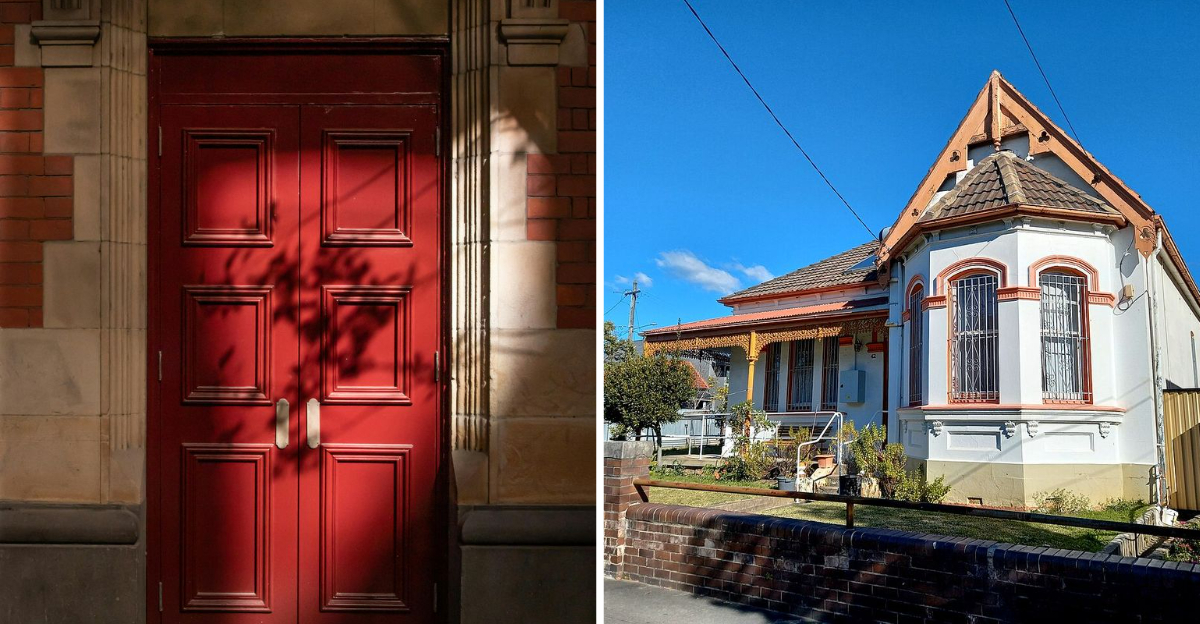
Pennsylvania’s old towns have a way of revealing their history before you even step inside a building.
The first clue is often the entryway, which quietly tells you when the home was built and who it was built for.
These doorways were designed with intention rather than trends.
Materials were chosen to last and details were added to signal pride and permanence. In many towns, entryways became a form of local identity.
Brick, stone, wood, and iron all play their part in shaping that first impression.
Some entrances feel formal and symmetrical, reflecting early colonial influence.
Others lean more decorative, hinting at Victorian tastes and craftsmanship.
You will often notice how closely these entryways relate to the street.
They were built for walking towns where neighbors passed by daily.
Porches, transoms, and heavy doors served both function and style.
Even modest homes received thoughtful entry details.
Over time, these features became familiar markers of place.
Locals recognize them without thinking about it.
Visitors often stop to admire them without knowing why.
The charm lies in consistency rather than extravagance.
These entryway styles have survived because they work visually and practically.
They continue to shape the character of Pennsylvania’s old towns in quiet but lasting ways!
1. Federal Fanlight Doorways
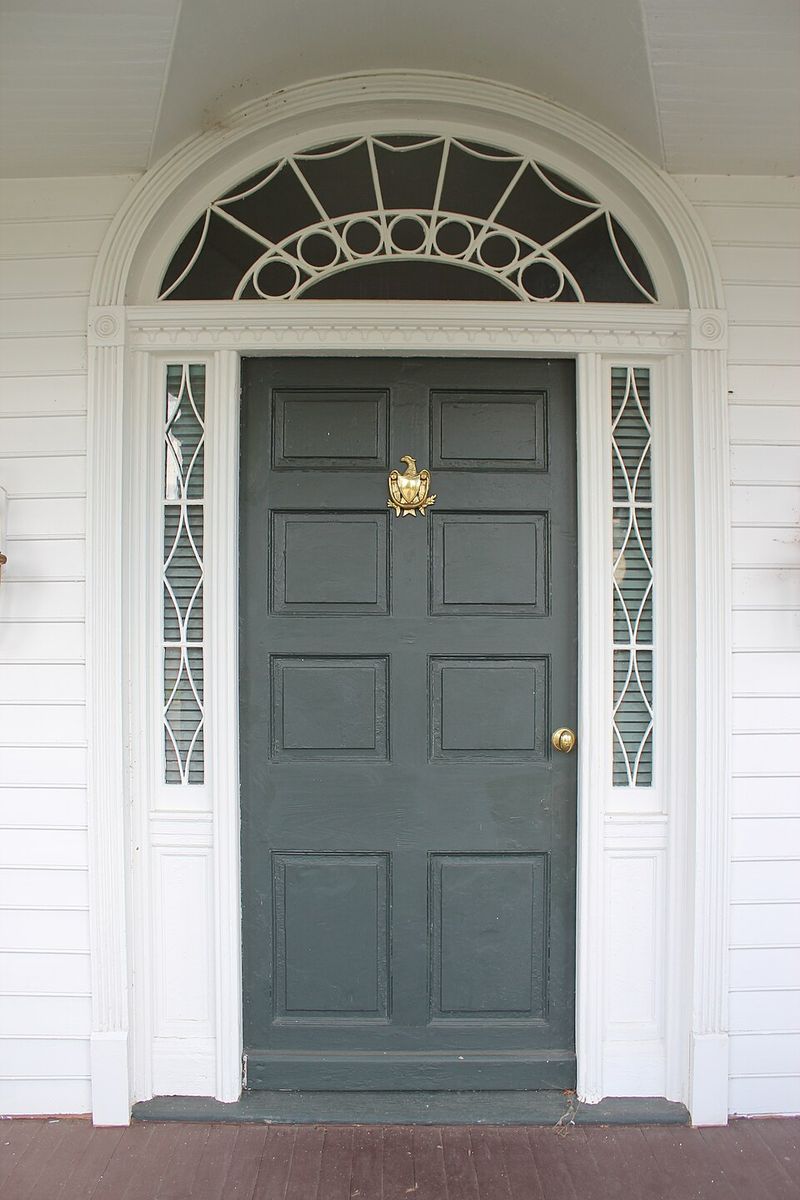
Look up when you see a slender, elegant Federal facade, and the fanlight practically greets you.
That half-moon window above the door is not just pretty, it was the period’s favorite solution for daylighting tight hallways.
Between about 1780 and 1820, builders in places like Philadelphia’s Society Hill and Lancaster adopted these refined arches, often with delicate tracery that reads like lace in glass.
The sidelights flanking the door pull more glow inside, while understated moldings keep the entry poised rather than flashy.
Federal entries tend to sit on brick townhouses with restrained ornament, thin muntins, and symmetrically placed windows.
You will sometimes spot an elliptical fanlight instead of a perfect semicircle, a subtle clue to regional taste.
Brass knobs and slim knockers suit the scale, and colors skew to earthy reds, cream, and deep green.
When you stand beneath a fanlight, notice how the curvature softens the facade, almost like a smile at the threshold.
If you want to identify one quickly, follow the arc: arch above, sidelights vertical, door paneled and dignified.
Compared with later revival versions, originals feel lighter and more finely cut.
In Pennsylvania’s older cores, few details announce refinement so quietly yet so confidently.
2. Victorian-Painted Lady Porches
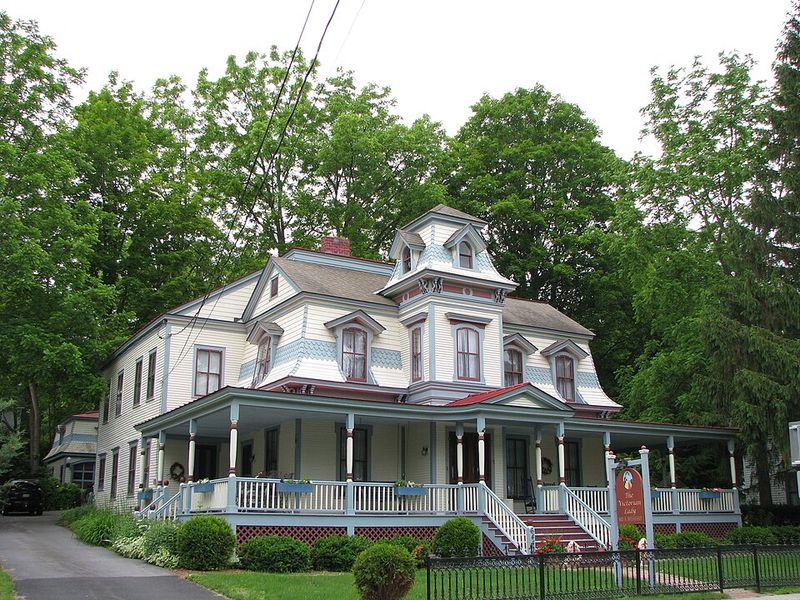
Victorian porches in towns like Jim Thorpe and Bellefonte arrive with a flourish, then add another flourish for good measure.
Turned spindles rhythmically line the railings, brackets curl like icing under rooflines, and gingerbread trim traces lacey shadows at noon.
Painted Lady palettes make the carvings pop, switching from soft pastels to saturated jewel tones across friezes, posts, and doors.
You feel welcomed before you step up a single tread because the porch is a room, a stage, and a handshake.
Historically, these porches were social statements, proof that a household had taste, time, and means.
The entry door often features etched or beveled glass that flickers in angled light, while transoms invite breezes through grand foyers.
Tile or wood thresholds transition from public to semi-private space, and porch ceilings sometimes wear haint blue for a skyward calm.
Rockers and planters reinforce the gracious pause between street and hall.
To spot the real thing, look for pattern density and craft: spindle friezes, sunburst gables, scroll-sawn brackets that mirror each other.
The best painted schemes highlight depth so every carving casts a crisp silhouette.
When restored with care, these porches turn a block into a living postcard, and the entry becomes a daily celebration.
3. Quaker Simplicity Doorways
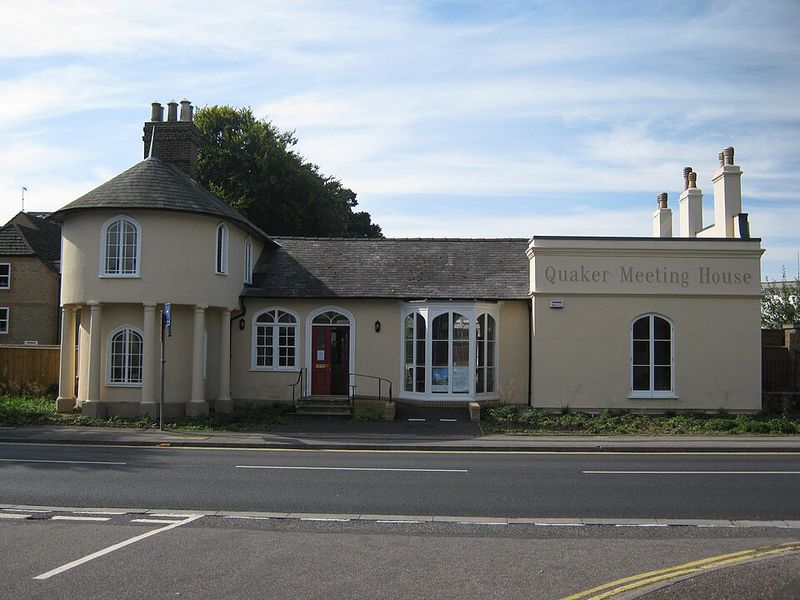
Quaker doorway design does not whisper, it rests in quiet clarity.
In Pennsylvania’s earliest settlements, Friends favored unadorned entries: sturdy wood doors, straightforward frames, and hardware that worked without fanfare.
Even when a transom appears, it is functional glass rather than artful show.
The threshold is a threshold, not a stage, and you read the values immediately: modesty, honesty, durability.
These doorways often rest in stone or clapboard houses with clean lines and balanced, but not fussy, proportions.
Paint colors stay grounded, with soft whites, grays, and muted greens that settle into the landscape.
You might find a simple latch, a box lock, or a plain iron knocker that has darkened with age.
The entry tends to feel slightly recessed, creating a sheltered pause without overt decoration.
To recognize Quaker simplicity, look for what is missing: no carved fanlights, no exuberant brackets, no theatrical pediments.
Instead, materials carry the story, from dense grain in the wood to limewashed stone that breathes.
There is a timeless kindness to stepping through such a door, as if the house is saying come in and be at ease.
In a district full of competing flourishes, this quiet welcome stands out.
4. Dutch Colonial Divided Doors
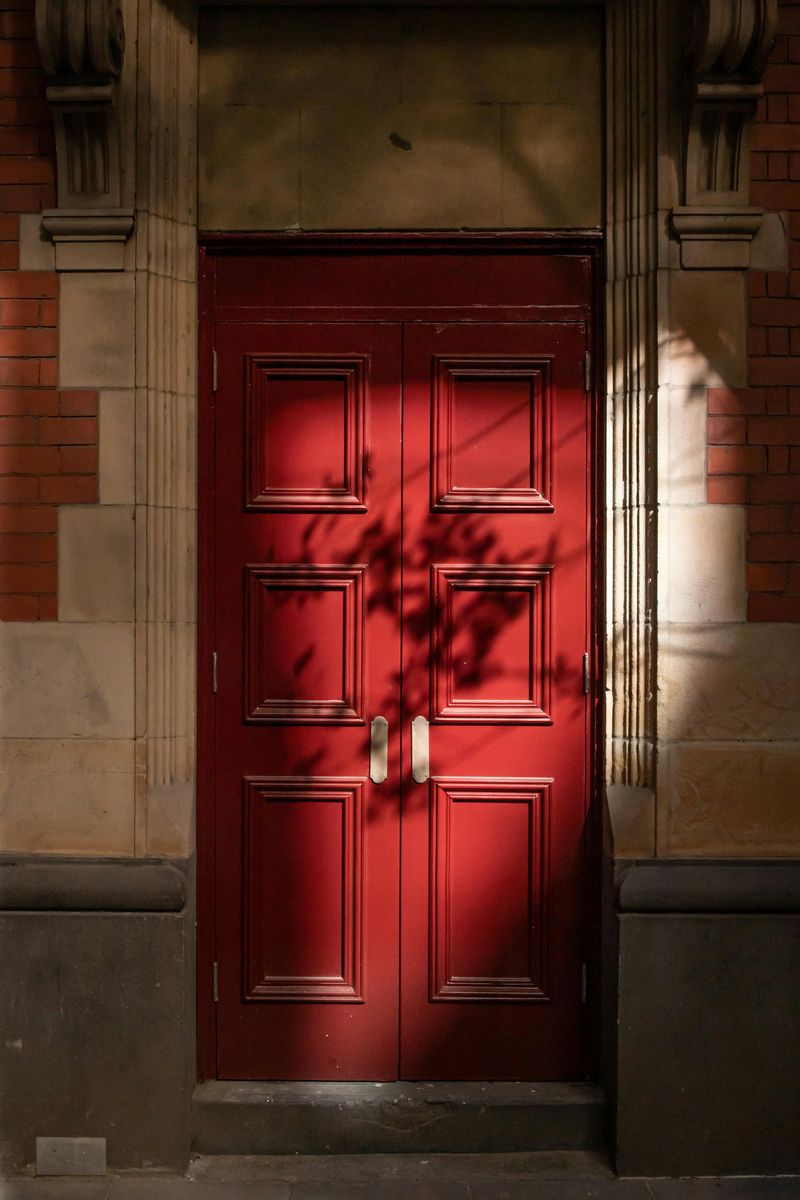
A Dutch door invites conversation like few others: the top opens to greet neighbors, the bottom holds the line.
In Pennsylvania’s old towns and farmsteads, this split design kept animals out while letting breezes and voices in.
You may spot traditional hues like Prussian blue or barn red, with strap hinges and a simple thumb latch.
The entry feels practical and cheerful, as if it understands daily life and meets it halfway.
Many Dutch Colonial examples pair the door with small-pane windows, low eaves, and sturdy stone or clapboard walls.
A shelf-like ledge sometimes caps the lower half, perfect for passing notes, bread, or a quick hello.
Transoms or side windows can appear, yet ornament stays modest.
The charm lives in the hinge line, a visible promise of flexibility and welcome.
To ID one at a glance, look for the horizontal split midway up the panel and hardware that secures halves together.
The top leaf may have divided lights, while the lower remains solid to anchor the facade.
In towns settled by German and Dutch communities, these doors feel like old friends.
They turn threshold etiquette into a daily ritual of openness and order.
5. Gothic Revival Pointed Arches
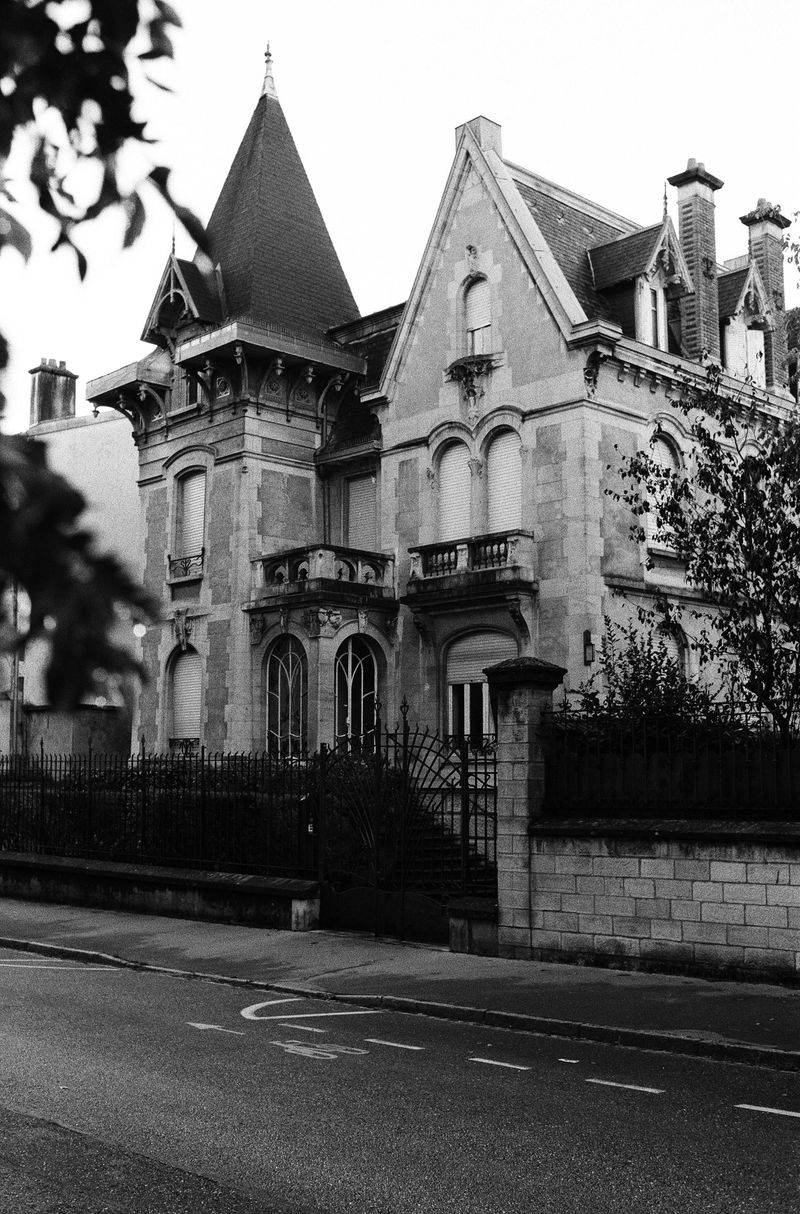
Gothic Revival doorways pull the eye upward with pointed arches that channel medieval romance.
In Pennsylvania towns, you might find them on cottages and small churches where steep gables and lancet windows complete the picture.
The entry often sits within a projecting porch or gabled vestibule, framed by bargeboards carved like filigree.
Light and shadow dance across the tracery, and the pointed shape makes even a compact house feel taller.
Expect vertical emphasis and a sense of storybook drama without tipping into excess.
Doors can be plank-style with iron straps, or paneled with a lancet window set high to catch light.
Where the style brushes against Carpenter Gothic, woodwork becomes the star: scallops, trefoils, and pierced details.
Paint can lean dark for mood or pale to highlight shadows along the cutwork.
You will recognize the silhouette immediately: the arch is neither Roman round nor Tudor flattened, but a true point.
Paired with steep roof pitches and finials, the entry reads like a small sanctuary.
These thresholds set a tone of mystery and welcome at once, suggesting poetry inside.
On block after block, a single pointed arch can transform an entire streetscape.
6. Colonial Revival Porticos
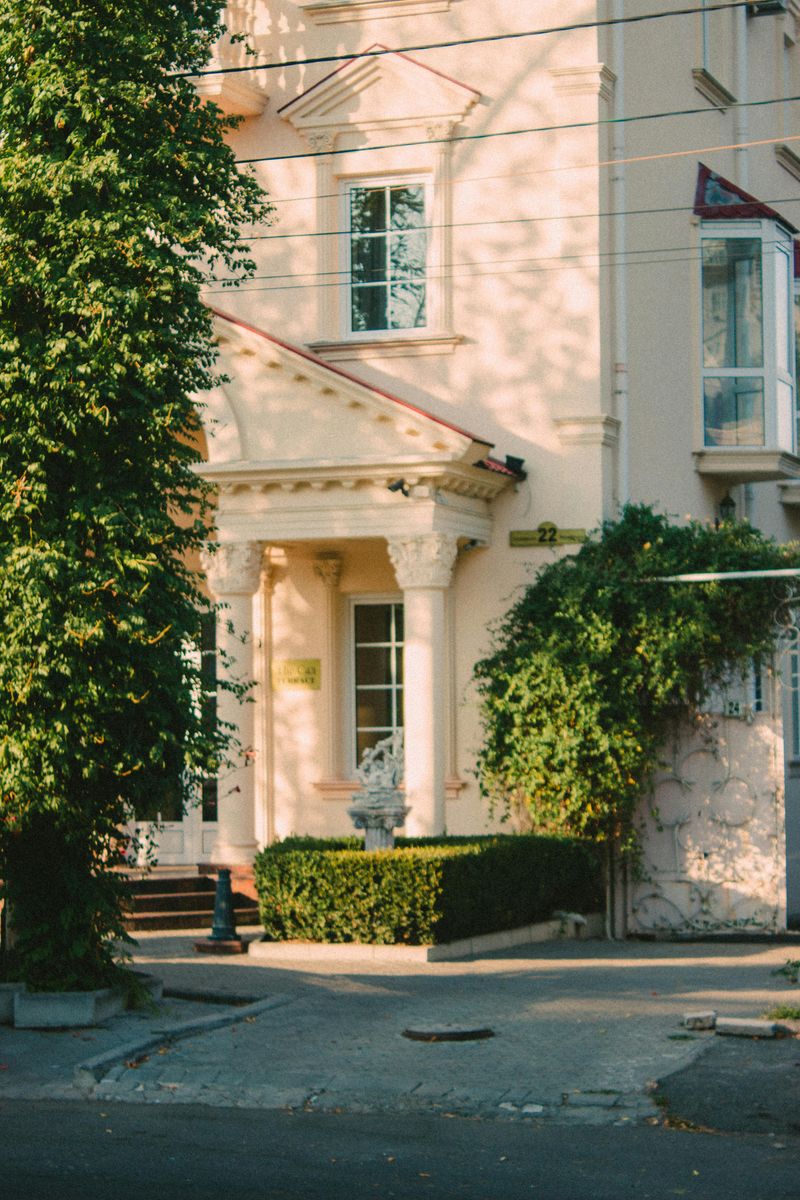
Colonial Revival porticos look neatly pressed, like a starched collar on a familiar shirt.
A shallow porch with classical columns projects just enough to shelter the steps, often capped by a pediment trimmed in dentils.
You will see these entries across Pennsylvania suburbs grown around older town cores, and within historic districts where early 20th-century houses mingle with earlier stock.
The door may carry a fanlight or rectangular transom, flanked by sidelights for that gracious, even glow.
Proportion is the secret!
The portico should sit comfortably on the facade, neither bulky nor starved, with columns that match the entablature’s weight.
Brick or clapboard walls provide a stable backdrop, allowing the entry to act as a calm focal point.
Hardware stays traditional: polished brass, classic knockers, paneled doors painted in navy, black, or deep green.
To pick one out, look for those round columns, clean pediment triangle, and crisp molding lines.
Compared with Federal, Colonial Revival feels sturdier and a touch more formal, yet still friendly.
These porticos nod to early American ideals without turning the volume too high.
They give a house a firm handshake, promising order and comfort inside.
7. Italianate Hooded Entrances
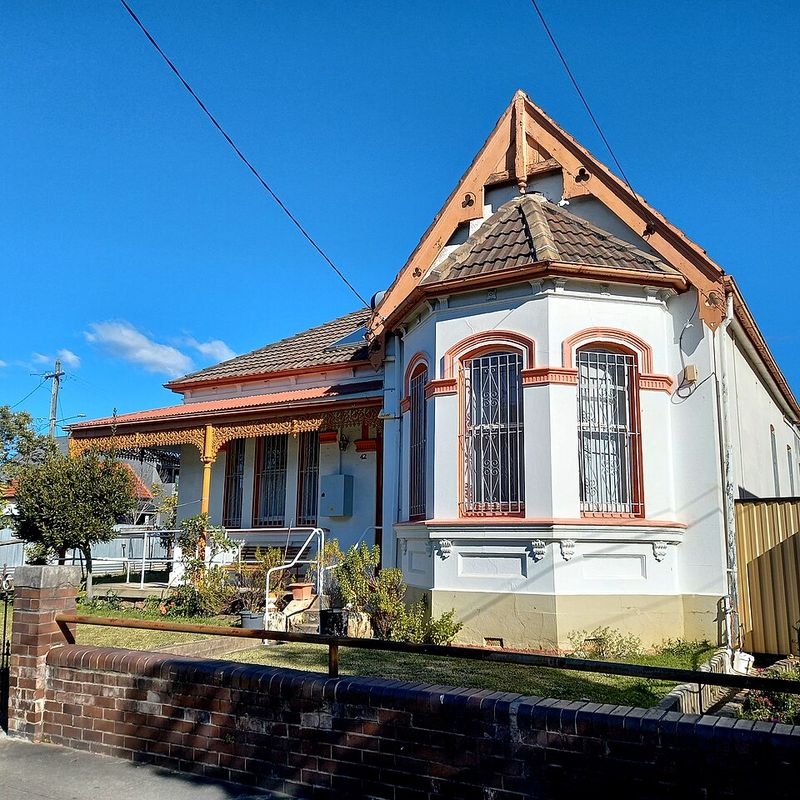
Italianate entries bring drama with a wink.
The door is tall and narrow, often rounded at the top, and a heavy hood projects outward like a small canopy.
Brackets carry the load, and those brackets love to preen, scrolling and curving with confident flair.
In Pennsylvania’s 19th-century town streets, these hoods line up above stoops, casting handsome shadows across brick.
Look closely and you may find etched or frosted glass in the door, a transom glazed to draw light deep inside, and elongated proportions that make the facade feel urbane.
The trim is deeper than Federal, the palette richer, and the hardware a shade more decorative.
Cast-iron railings and stone steps complete the procession, guiding you up with flourish.
Even a small townhouse gains grand posture at this threshold.
To identify one fast, follow the brackets. If the hood sits proud of the wall with bold supports, and the door arcs at the head, you have likely found it.
Compared with Gothic, the arch is softer and more rounded, less pointed and more palazzo.
These entrances turn everyday comings and goings into a stylish arrival.
8. Greek Revival Temple Fronts
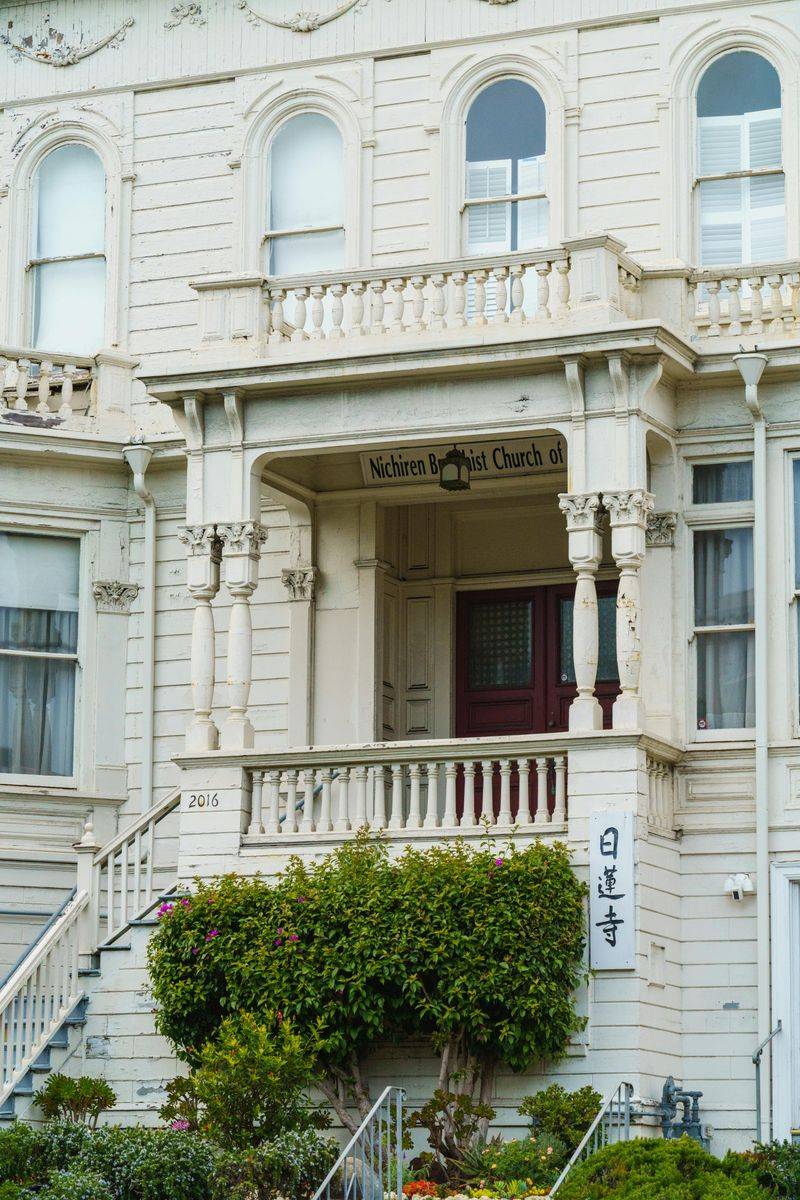
Greek Revival does not tiptoe, it arrives in full columns and a firm pediment.
In Pennsylvania’s canal and railroad era, builders embraced temple fronts that turned houses into miniature civic statements.
Full-height columns support a triangular gable, while the entry stands centered with a robust surround, transom, and sidelights.
The effect is solemn yet welcoming, like a porch that doubles as a portico to shared ideals.
Details matter: square or round columns, wide entablatures, and thick cornices throw proud shadows at noon.
Doorways can be slightly recessed, with heavy pilasters articulating the frame.
Paint is often white to underscore classical purity, though stone and muted colors appear too.
These entries read as architecture with a capital A, even on smaller houses.
To spot one, step back and let the elevation do the talking.
If the columns are full height and the pediment frames the sky, you are in Greek Revival territory.
Compared with Colonial Revival, this version feels bolder and more elemental, with broad planes and generous scale.
Crossing the threshold feels ceremonial, like passing between pillars into a brighter hall.
9. Georgian Symmetrical Entrances
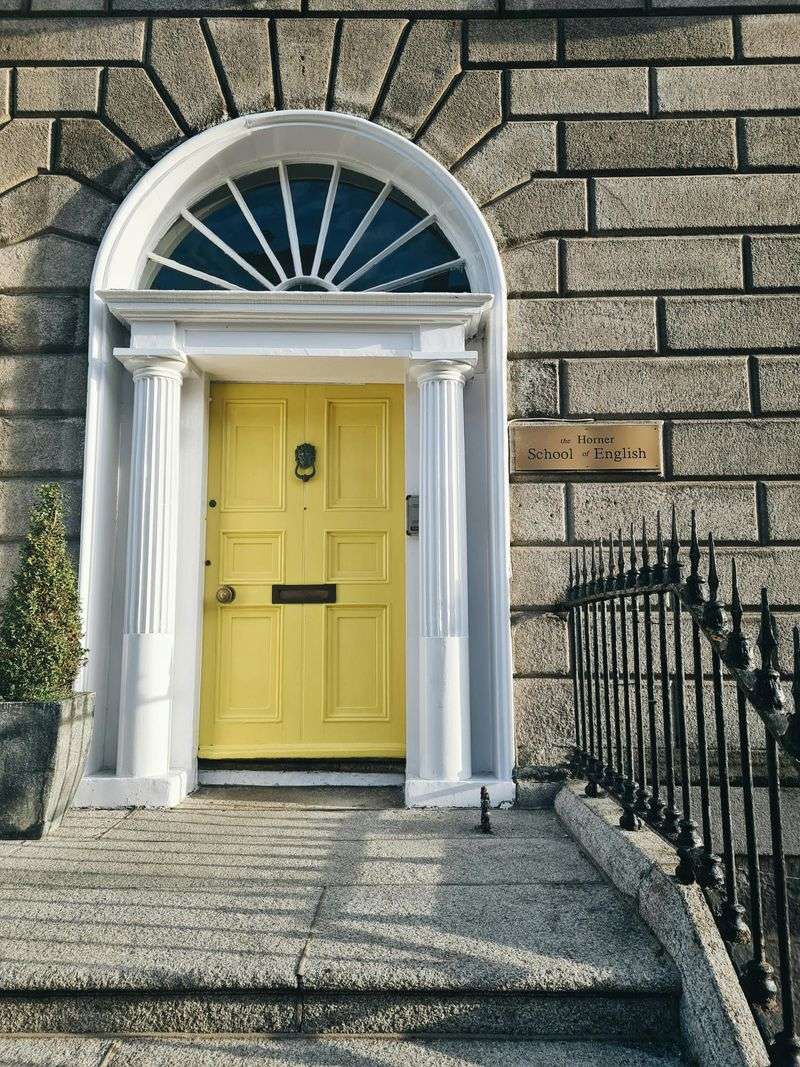
Georgian doorways compose order like a measured chord.
The door sits perfectly centered, framed by pilasters, and crowned by a pediment or entablature that signals calm authority.
Flanking windows match in size and spacing, creating a balanced facade that feels settled on its foundation.
In Pennsylvania’s older cores, you will spot them in brick with limestone lintels and tidy joints.
Hardware tends to be traditional, with brass knobs and a restrained knocker.
Colors lean classic: black or oxblood doors against red brick, cream trim setting off the geometry.
Some entries include a rectangular transom with small panes, while others rely on the pediment alone for emphasis.
The steps rise in short, confident runs to a threshold aligned like a compass point.
To identify one, look for symmetry first and ornament second.
If the door and windows form a rhythmic grid, and the entry feels centered in both spirit and math, you are likely in Georgian territory.
Compared with Federal, proportions are slightly heavier, moldings broader, and the mood a bit more anchored.
Standing at such a door, you feel the cadence of centuries settling into place.