10 Reno Heirlooms That Prove Nevada Has A Design Legacy Worth Knowing
Reno’s design story often gets overshadowed by flashier narratives from nearby regions.
Yet this Nevadan city quietly holds onto pieces that reflect craftsmanship, intention, and a strong sense of place.
Heirloom finds here feel grounded rather than ornamental, shaped by practicality and long-term use.
Many of these were made to last because replacement was never the plan.
Nevada’s design legacy grew from necessity, resilience, and pride in doing things well the first time.
Reno became a crossroads where materials, ideas, and styles blended naturally over time.
That mix created objects that feel both functional and personal.
You see it in solid wood furniture, worn finishes, and thoughtful details that age gracefully.
These heirloom finds tell stories without needing explanation.
They carry the marks of daily life rather than showroom perfection.
Design in Reno has always leaned honest instead of flashy.
That honesty shows up clearly in the pieces that survive generations.
Better yet, each find connects modern spaces to Nevada’s past.
They remind people that good design does not need constant reinvention.
It needs care, respect, and room to endure.
Here are some Reno heirloom finds that celebrate a true Nevada design legacy that deserves far more attention!
1. Peleg Brown Ranch, 1864 Greek Revival Workhorse
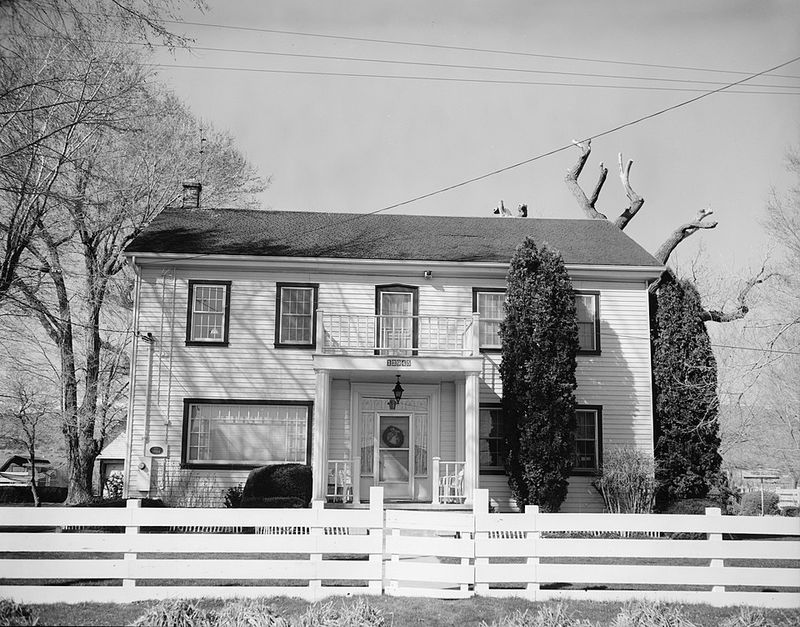
Set in the Truckee Meadows and dating to 1864, the Peleg Brown Ranch wears Greek Revival lines with Nevada honesty.
You notice the symmetrical elevation, modest pediments, and sturdy massing that adapted an East Coast style to high desert weather.
The ranch’s listing on the National Register of Historic Places validates what locals already know, this is a rare surviving blend of agriculture and architecture.
Walk the site and the proportions start teaching you, how restrained trim, rhythmically placed windows, and functional porches create calm.
The ranch documents early irrigation, freight routes, and the business of feeding a young state, making its barns and outbuildings as telling as the house.
You can almost read the weather in the wood grain and stone.
As an heirloom, it anchors a timeline for Reno’s taste, proving that refinement did not skip the frontier.
Greek Revival here is not about grandeur, it is about clarity, utility, and dignity.
If you love modern farmhouses, this is a blueprint with integrity.
Bring your notebook, the ranch shows how to scale beauty to purpose without shouting.
2. Galena Creek Schoolhouse, 1860 Stone Simplicity
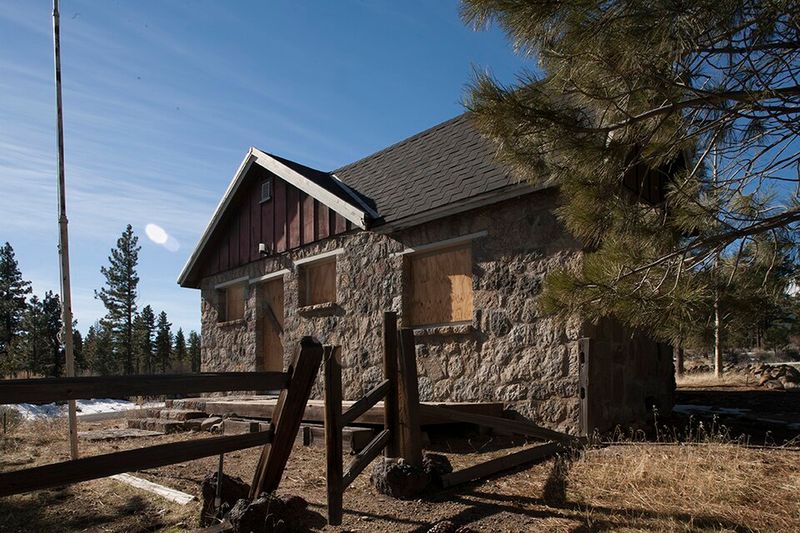
Built in 1860 from local stone, the Galena Creek Schoolhouse proves that education and design arrived together in Nevada.
The one room plan, tight masonry joints, and small window openings show how builders balanced daylight with mountain cold.
Its survival tells you the material choices worked, they were beautiful because they were necessary.
Stand by the doorway and imagine boots crunching snow while a stove glows inside.
The schoolhouse’s lessons are tactile, proportion, shelter, and civic pride at human scale.
Recognized for historical significance, it marks the era when Galena was a milling and timber hub feeding Comstock mining.
As an heirloom, the building is a manual for durable craft.
If you renovate or design small spaces, note how the modest roof pitch, stone thickness, and simple trim create visual weight without clutter.
The structure demonstrates a desert mountain palette, granite hues, wood accents, and crisp shadows.
You feel how good design often starts with one goal, keep people warm, learning, and together.
3. Twaddle Mansion, 1905 Colonial Revival With Western Polish
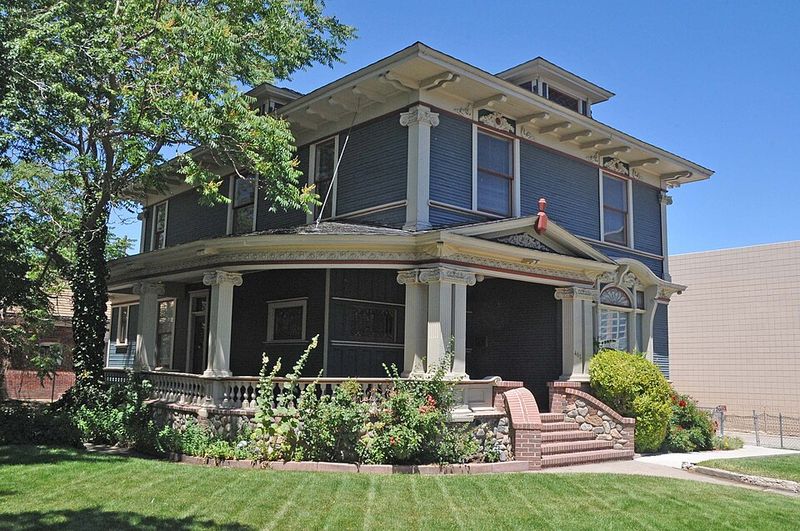
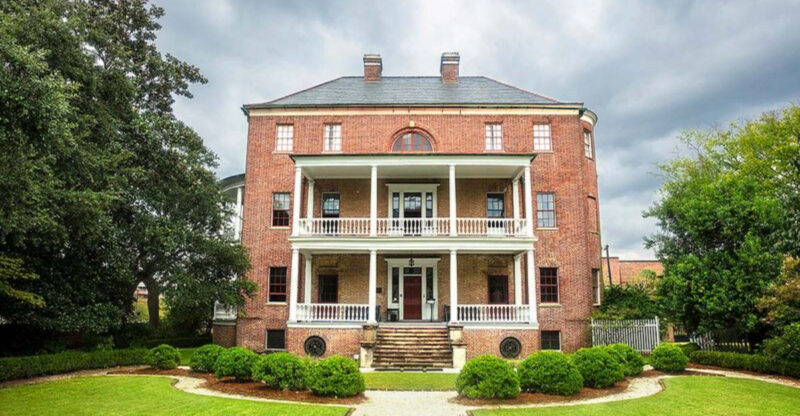
The Twaddle Mansion, completed in 1905, brings Colonial Revival elegance to Reno with confident symmetry and refined detail.
Designed by architect Benjamin Leon, it features a balanced facade, classical porch supports, and carefully proportioned windows.
Its National Register status underscores its role as a civic showpiece during Reno’s early 20th century growth.
What stands out is the way the mansion translates East Coast polish into Sierra practicality.
The plan breathes, porches mediate sun and snow, and detailing feels crisp rather than fussy.
Up close, you notice the cadence of trim, eaves that frame the sky, and a front entry that signals welcome without excess.
As an heirloom, it demonstrates how Reno absorbed national trends while editing for climate and lifestyle.
If you love balanced rooms and light filled staircases, this house explains why those ideas endure.
It also maps social history, a period when Reno used architecture to express cultural confidence.
Take a slow walk around the block and let the proportions tune your eye.
4. Newlands Historic District, Artful Streetcar Suburb
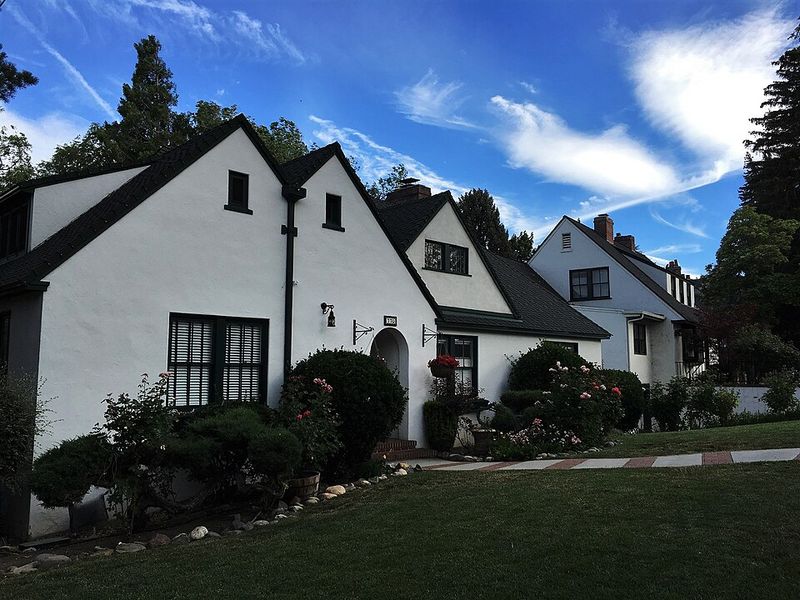
Newlands Historic District is Reno’s open air design syllabus.
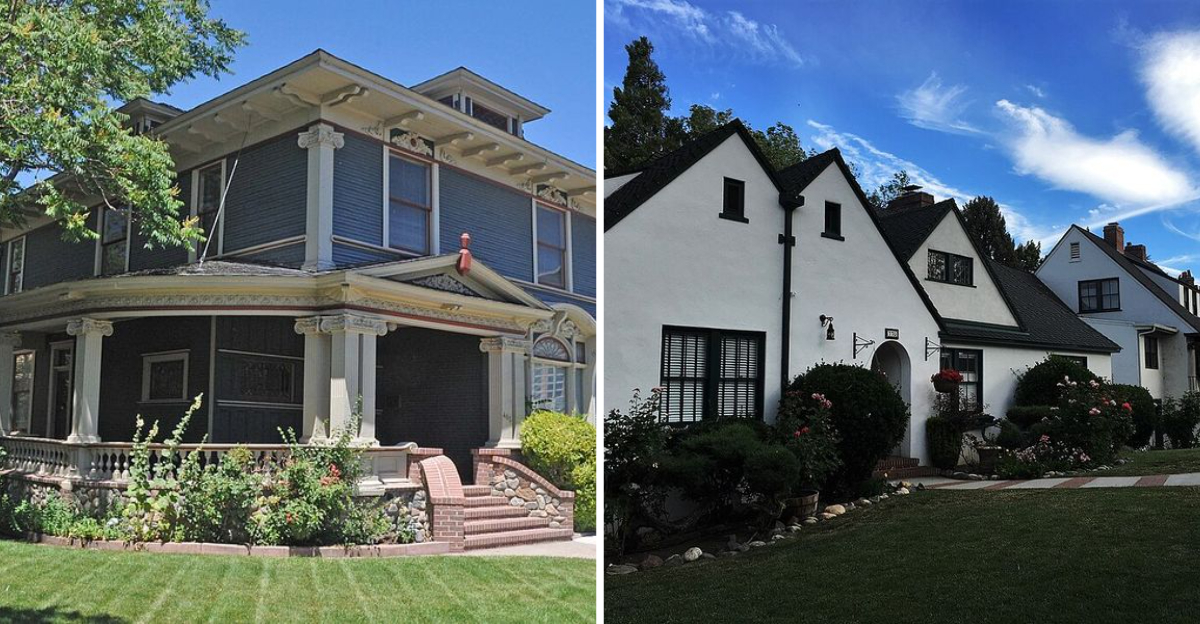
Walk shaded streets and you will meet Period Revival, Tudor, Mediterranean, and Craftsman homes that grew alongside early 20th century prosperity.
The variety is not chaotic because proportions, setbacks, and mature trees knit everything together.
Many houses were architect designed, which explains the sharp rooflines, clinker brick, stucco textures, and deep porches that feel perfect in high desert light.
Craftsman bungalows showcase expressive rafters and low slung profiles, while revival homes bring arched entries and tile accents.
The district’s listing underscores its cohesive character and planning DNA.
As an heirloom, Newlands shows how neighborhoods can be eclectic yet harmonious.
You learn about scale, materials, and slow evolution lot by lot.
If you love curb appeal, this is graduate school, from window groupings to walkway arcs.
Stroll at dusk, listen to sprinklers, and study how designers balanced shade, privacy, and social life on the stoop.
It is a living lab for beautiful everyday housing.
5. Reno Arch, 1926 Icon Of Electric Optimism
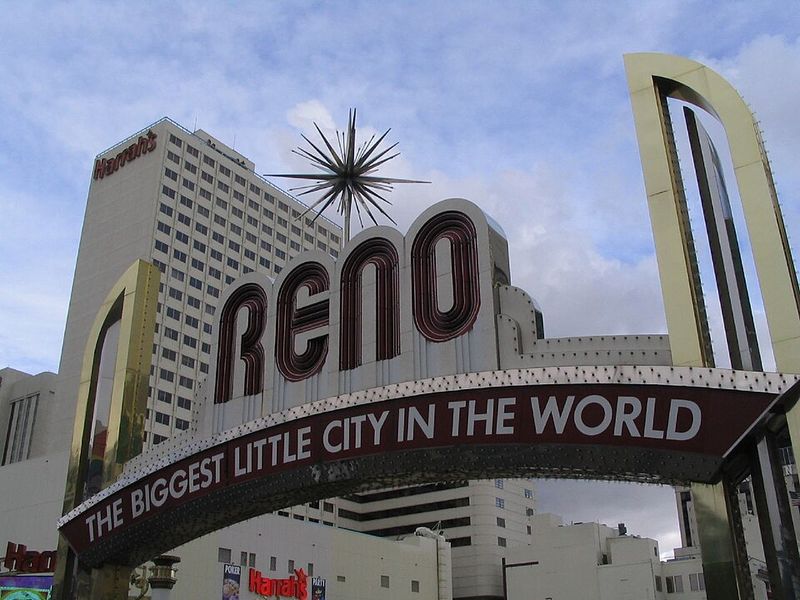
Erected in 1926 over Virginia Street, the Reno Arch is kinetic typography in steel and neon.
The slogan The Biggest Little City in the World compresses ambition into a single glowing ribbon.
Different versions have spanned decades, but the idea remains constant, a city welcoming you with light.
Design wise, the arch frames the street and stages arrivals, like a proscenium for daily life.
Letterforms, starbursts, and color temperature matter here, you feel scale as you pass beneath.
It is a civic heirloom that people photograph, rally under, and use as a compass.
At night the arch teaches branding, wayfinding, and how public art becomes identity.
If you work with signage, study the relationship between font, curvature, and traffic flow.
During the day, its structure reads as clean steel geometry, proof that a simple span can hold cultural weight.
Every time you look up, you are reminded that design can be both greeting and promise in one line.
6. Fleischmann Atmospherium-Planetarium, 1963 Concrete Poetry
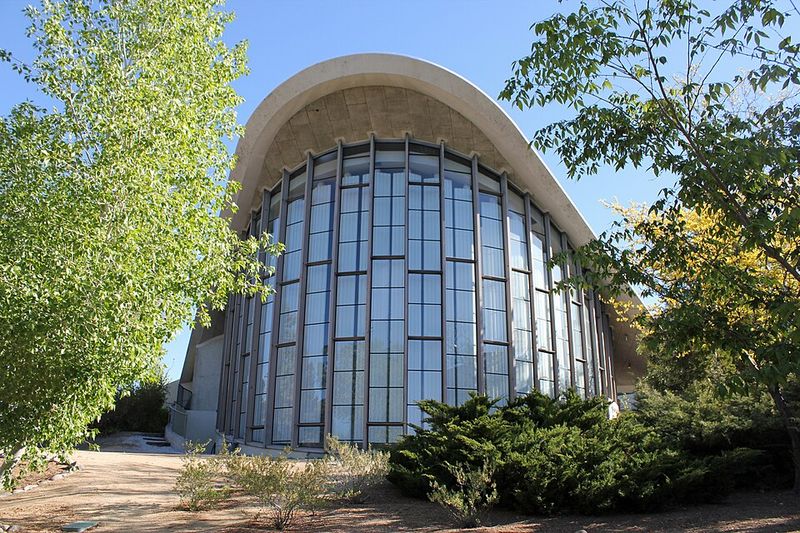
Opened in 1963, the Fleischmann Atmospherium-Planetarium experiments with a hyperbolic paraboloid shell and immersive projection technology.
The thin concrete form feels like a frozen wave, expressive yet efficient.
It was among the first to combine atmospherium and planetarium projectors, pushing education into a spatial experience.
Stand outside and trace the saddle curve with your eyes, the geometry reads like math you can touch.
Inside, the dome envelopes you, turning audiences into explorers.
Midcentury optimism lives here, but so does structural intelligence, using minimal material for maximum effect.
As an heirloom, it captures Reno’s appetite for innovation beyond casinos.
If you care about STEM spaces or performance architecture, note how circulation, sound, and darkness are choreographed together.
The building proves that daring forms can still be practical classrooms.
It also anchors memories of field trips, star shows, and first encounters with scale.
Design is not just seen here, it is felt across your whole horizon.
7. Washoe County Library, 1966 Atrium Of Quiet Light
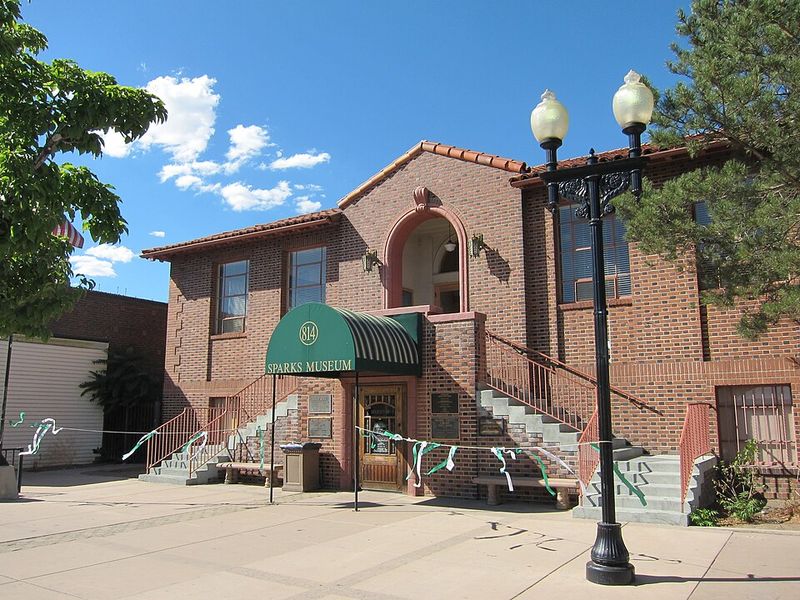
Designed by Hewitt C. Wells and opened in 1966, the Downtown Washoe County Library wraps books around an internal garden atrium.
You step inside and the noise of the city unhooks, replaced by filtered daylight and greenery.
The structure uses clean lines, honest materials, and a plan that makes wandering feel intentional.
The atrium is the point, a calm void that organizes movement and frames sky.
It teaches how public buildings can restore you while serving function.
Midcentury details, slender columns, and rhythmic glazing carry a graceful seriousness that never feels cold.
As an heirloom, the library is a manifesto for humane civic space.
If you design offices or schools, study how a planted core improves orientation and mood.
The building is a quiet teacher, showing how structure, light, and landscape work like a trio.
You leave with pages and a steady heartbeat.
That is design doing its best work.
8. Pioneer Theater-Auditorium, 1967 Geodesic Drama
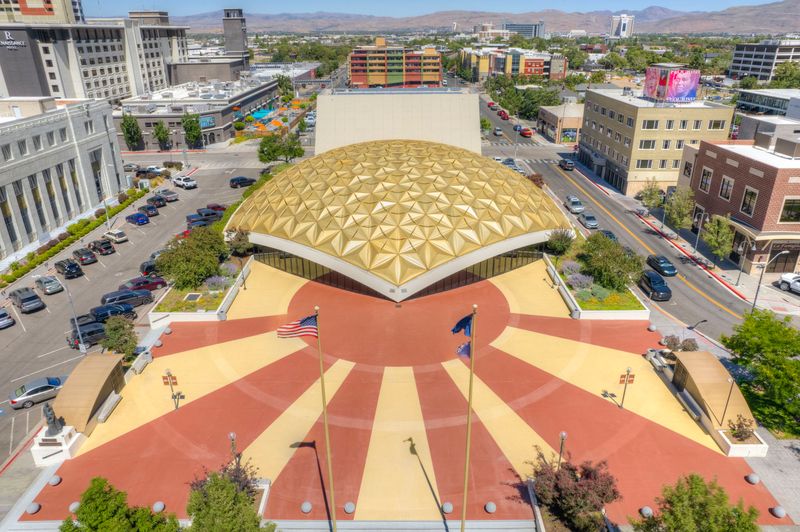
The Pioneer Theater-Auditorium, completed in 1967, swings for the fences with a geodesic dome and a civic plaza that still energizes downtown.
The shell’s triangular network is both structure and ornament, throwing lively shadows in Nevada sun.
Inside, the auditorium supports concerts, theater, and conventions with flexible staging.
What you feel is Buckminster Fuller era confidence, lightness spanning big volumes.
The lobby sequence builds anticipation, wide doors, tapered ceilings, then a reveal of the dome’s lattice.
It is playful without being flimsy, a geometry lesson you can sit beneath.
As an heirloom, the building proves that bold shapes can become beloved neighbors.
If you are sketching a venue, note the clean circulation paths and how the plaza invites lingering before and after events.
The Pioneer shows how performance buildings double as public squares.
It is a memory factory for graduations, symphonies, and first standing ovations.
Design becomes a stage for life.
9. Nevada Museum Of Art, Desert Geometry Refined
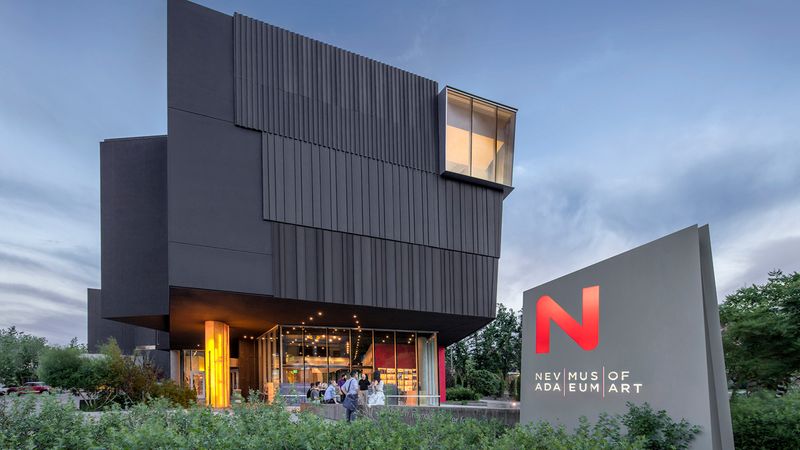
The Nevada Museum Of Art wears a sleek, angular skin inspired by the Black Rock Desert’s carved landforms.
You read the massing as strata, shadow cuts, and tight joints that feel sculpted by wind.
The building frames views of the mountains while funneling light into galleries with care.
Inside, circulation is intuitive, moving from intimate rooms to open volumes that encourage pause.
Materials feel precise, dark cladding outside and luminous surfaces within, a desert to gallery transition.
The architecture supports changing exhibitions while holding a strong identity of its own.
As an heirloom, it shows how contemporary design can honor landscape without imitation.
If you are chasing a modern aesthetic, study the way edges, reveals, and glazing control glare.
The museum has become a cultural anchor, proving Reno can host serious art with serious architecture.
Stand on the terrace and you will see how the city and desert converse through line and light.
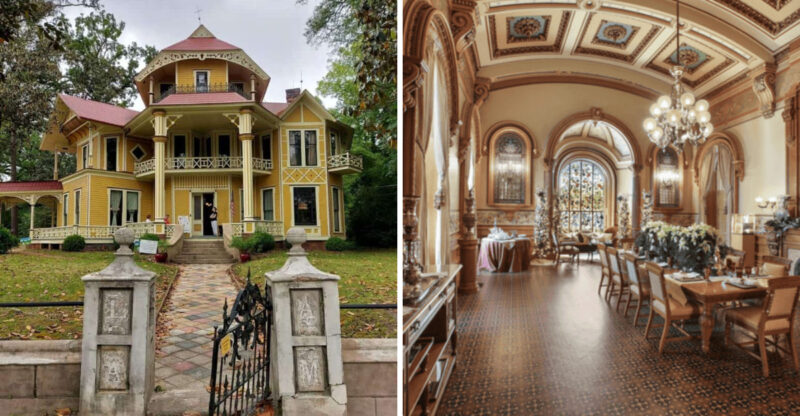
10. Lake Mansion Arts And Cultural Center, 1877 Victorian Grace
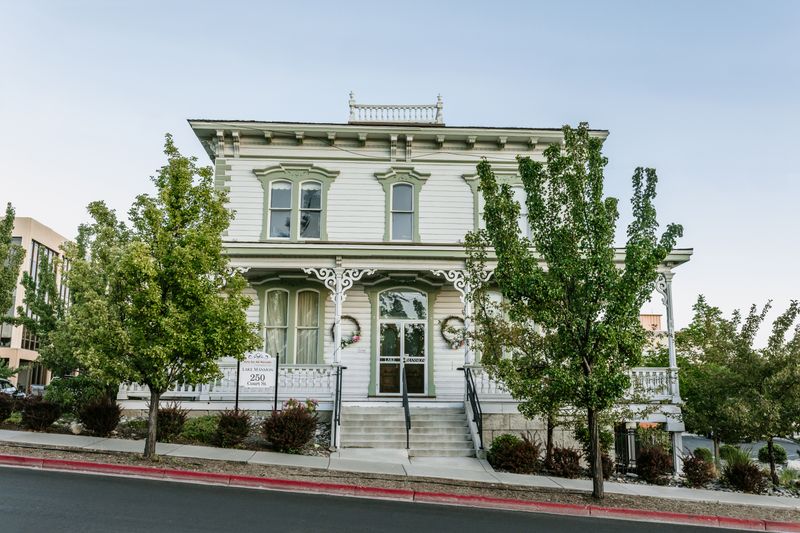
Built in 1877, the Lake Mansion carries Victorian detailing that reads as handcrafted care, from turned posts to sawn brackets and a wraparound porch.
It has moved locations to ensure preservation, but the spirit remains intact, a parlor ready to host community life.
The house now serves arts programming, keeping creativity woven into its rooms.
Look closely at the woodwork and you will see how small gestures add up, beadboard textures, narrow window trim, and delicate balusters.
Sunlight slides across those surfaces, making pattern into performance.
This is ornament with purpose, signaling hospitality and civic pride.
As an heirloom, the mansion shows how adaptive reuse can feel seamless.
If you value craft, study the porch rhythm and the way corner details hold a facade together.
The building is a gentle teacher, reminding you that welcoming spaces do not have to be loud.
Sit for a moment and you will hear the city’s past chatting with its present through timber and shade.