14 Unmissable California Road Trip Stops You Can’t Afford To Skip
Few places in the world reward a road trip quite like California.
Stretching nearly 900 miles along the Pacific Coast, the state unfolds like a living travel documentary, shifting dramatically from sunbaked deserts to misty redwood forests, from cliff-hugging highways to laid-back coastal towns.
One hour you’re driving past crashing waves and sea stacks, the next you’re winding through mountain passes or pulling over to soak in a bubbling geothermal wonder.
California doesn’t just change scenery – it changes moods, climates, and rhythms, often within the same day.
What makes a California road trip truly unforgettable is the sheer contrast packed into every stretch of pavement.
Historic landmarks sit just miles from natural marvels, while hidden gems appear between famous stops, tempting travelers to slow down and explore.
Whether you’re cruising iconic Highway 1, navigating quiet backroads, or chasing sunsets along the coast, each destination feels like a new chapter in a constantly evolving journey.
These fourteen stops showcase the diversity, beauty, and sense of discovery that make California one of the most exciting places in the country to explore by car – and why once you start driving, you’ll never want the road to end.
1. Santa Cruz Beach Boardwalk
Wooden planks creak underfoot as the scent of saltwater mixes with cotton candy and popcorn drifting through the air.
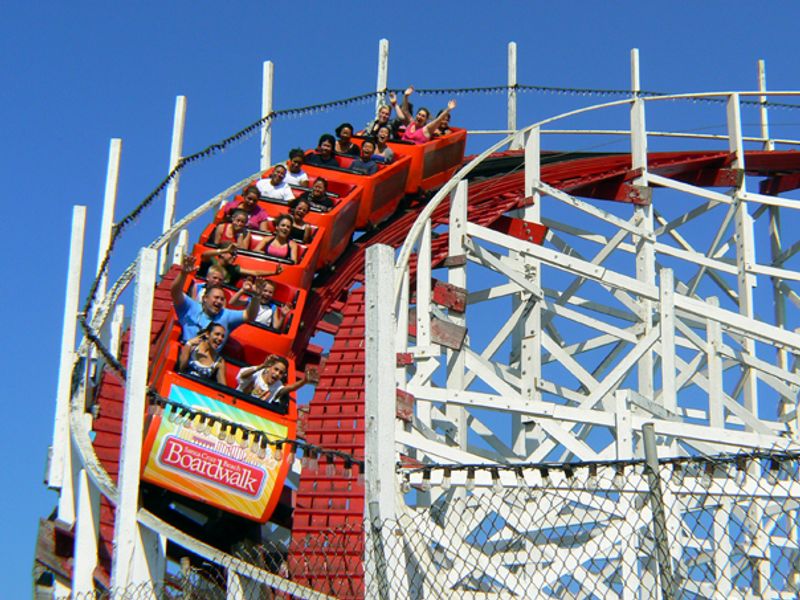
The Santa Cruz Beach Boardwalk sits along Monterey Bay and has been welcoming visitors since 1907, making it California’s oldest surviving amusement park.
The Giant Dipper roller coaster, built in 1924, still rattles along its wooden track, while the hand-carved carousel horses spin to vintage organ music.
Arcade games line the indoor areas, and outdoor food stands offer corn dogs and funnel cakes steps from the sand.
Families spread blankets on the beach while seagulls circle overhead, and the sound of waves blends with laughter from the rides.
Sunset brings softer light across the water, and the boardwalk lights begin to glow against the dimming sky.
Weekdays tend to feel less crowded than summer weekends, and parking fills up quickly during peak season.
The mix of nostalgia and oceanfront energy makes this a stop that appeals to all ages, offering both thrills and simple seaside relaxation.
2. Carmel-By-The-Sea
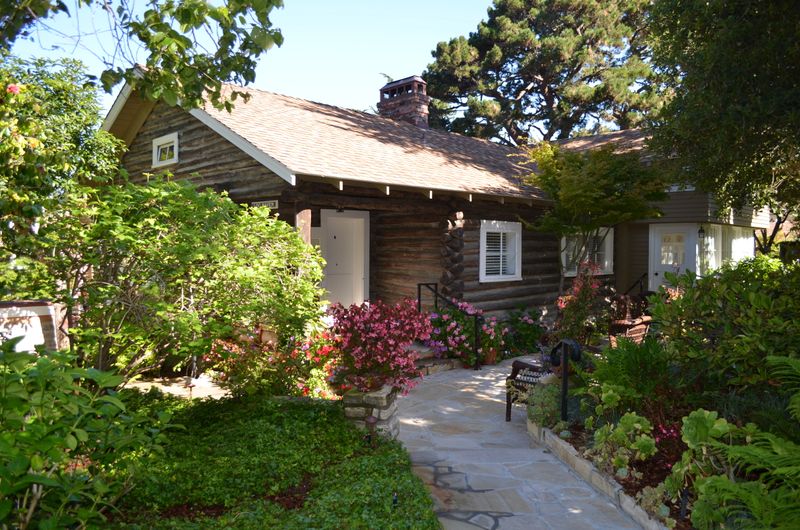
Storybook cottages with stone chimneys and flower-covered gates line narrow streets without sidewalks, giving this coastal village a feeling that belongs in a European fairy tale.
Carmel-by-the-Sea sits just south of Monterey and has long attracted artists, writers, and anyone drawn to its quiet charm and stunning natural surroundings.
Small art galleries occupy converted cottages, and window displays change with the seasons, showcasing paintings, sculptures, and handmade crafts.
The main street winds gently downhill toward Carmel Beach, where white sand meets turquoise water and cypress trees frame the shoreline.
Dogs run off-leash along the sand, and visitors sit on driftwood logs watching the waves roll in. The town prohibits chain restaurants and neon signs, which keeps the atmosphere calm and uncommercial.
Mornings bring softer light and fewer visitors, making it easier to explore the galleries and pathways at a relaxed pace. Parking can be tricky near the beach on weekends, but side streets usually offer spots within a short walk.
3. 17-Mile Drive
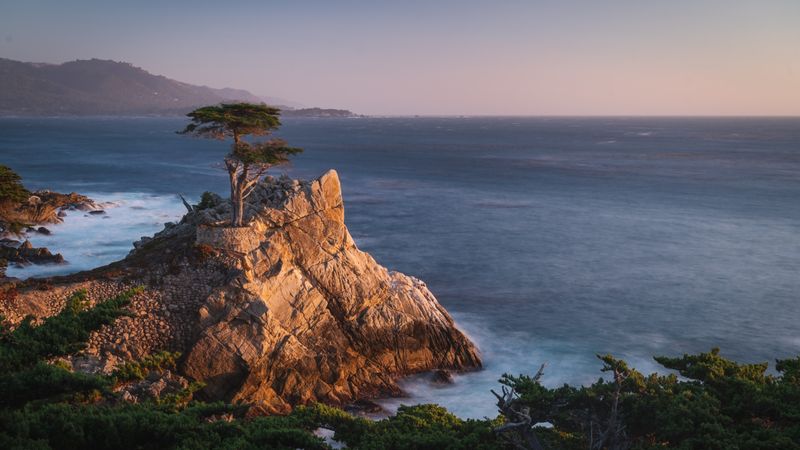
Winding through Pebble Beach between Carmel and Monterey, this private toll road offers some of the most photographed coastal scenery in California.
Rocky cliffs drop sharply into the Pacific, and waves crash against jagged rocks while sea lions bark from offshore perches.
The Lone Cypress, a windswept tree clinging to a granite outcrop, has become an iconic symbol of the California coast and sits roughly midway along the route.
Pullouts and viewing areas allow travelers to stop and take in the scenery without rushing, and benches face the water at several points.
Luxurious estates peek through the trees, and golf courses spread across the hillsides with fairways that seem to blend into the ocean.
Bird Rock hosts colonies of seabirds and seals, and binoculars help spot the activity from the designated overlook.
The drive takes about two hours if stopping frequently, though it can be completed faster if time is limited.
Morning fog sometimes rolls in, softening the views, while afternoon sun brings sharper colors and clearer visibility.
4. Big Sur
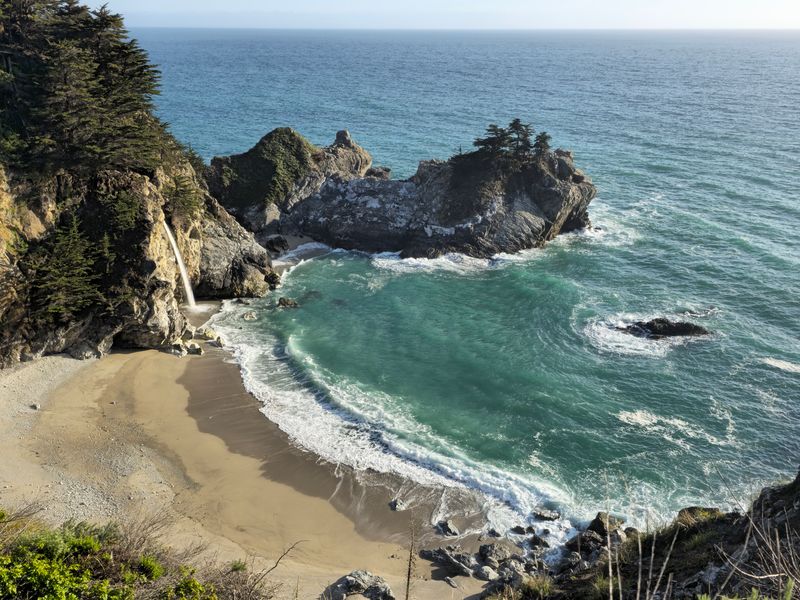
Dramatic cliffs plunge hundreds of feet into the Pacific along this legendary stretch of Highway 1, where redwood forests meet the ocean and fog drifts through canyon walls.
Big Sur isn’t a single town but rather a rugged, 90-mile section of coastline between Carmel and San Simeon, where nature dominates and development remains sparse.
McWay Falls at Julia Pfeiffer Burns State Park drops 80 feet onto a secluded beach, creating one of the most photographed waterfalls in the state.
Hiking trails wind through towering redwoods and lead to overlooks where the view stretches endlessly across the water.
Bixby Creek Bridge arches gracefully over a deep canyon, and many travelers pull over just to photograph its elegant span against the coastal backdrop.
The air smells like pine and salt, and the sound of crashing waves echoes up from below. Cell service can be spotty, and gas stations are few, so planning ahead helps avoid surprises.
Weekdays and early mornings offer quieter roads, while summer weekends bring heavier traffic and slower progress through the curves.
5. Hearst Castle
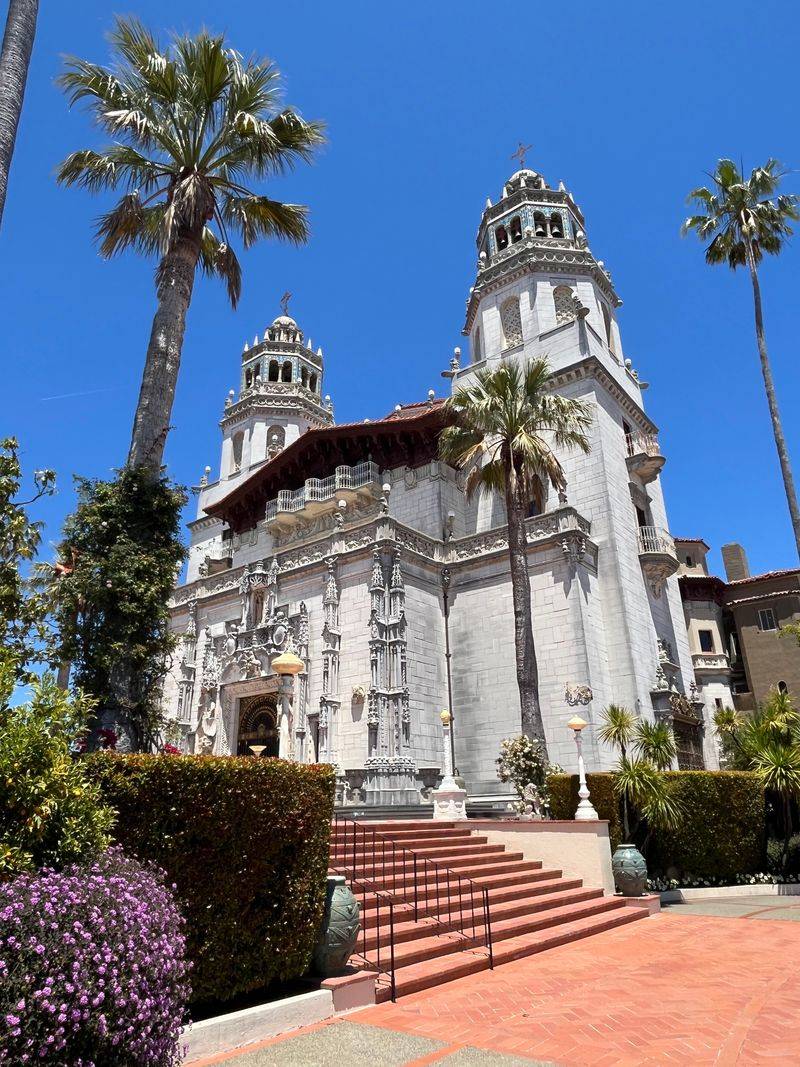
Perched on a hilltop overlooking the Pacific near San Simeon, this sprawling estate at 750 Hearst Castle Rd, San Simeon, CA 93452 was built by newspaper magnate William Randolph Hearst between 1919 and 1947.
The main house, called Casa Grande, features 165 rooms filled with European antiques, tapestries, and artwork collected from around the world.
Guided tours lead visitors through grand halls, ornate bedrooms, and terraces that offer sweeping ocean views stretching for miles.
Two outdoor pools showcase intricate tile work and classical sculptures, with the Neptune Pool standing out for its colonnades and temple facade that reflect in the shimmering water.
The estate blends Mediterranean Revival architecture with opulent details, creating a setting that feels both historic and theatrical.
Hearst Castle, 750 Hearst Castle Road, San Simeon, CA 93452, requires advance reservations for all tours, and visitors board shuttle buses at the visitor center for the ride up the hill.
Tours last about two hours, and comfortable walking shoes help navigate the stairs and pathways. The hilltop location can be breezy, so bringing a light jacket makes sense even on warm days.
6. Santa Barbara
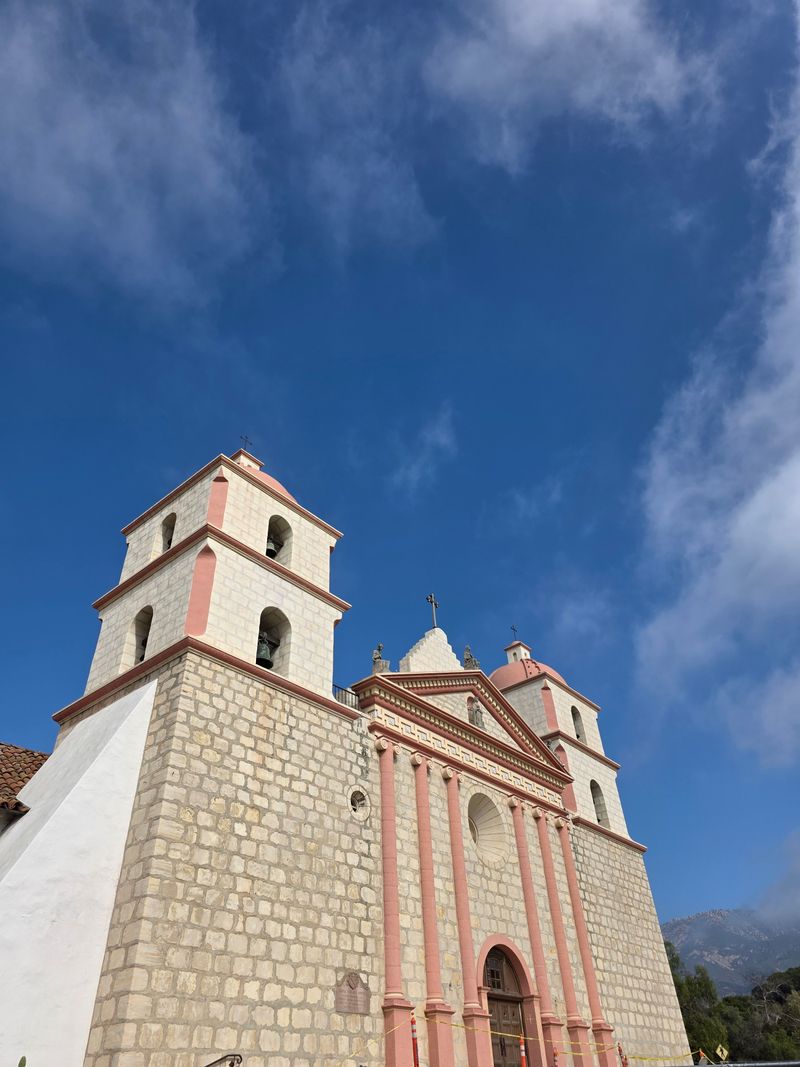
Red-tile roofs and white stucco buildings give this coastal city a Mediterranean feel that earned it the nickname American Riviera.
Santa Barbara sits between the Santa Ynez Mountains and the Pacific, with palm-lined streets, Spanish colonial architecture, and beaches that stretch for miles.
State Street runs through the heart of downtown, lined with shops, restaurants, and historic buildings that reflect the city’s Spanish heritage.
The Santa Barbara Mission at 2201 Laguna St, Santa Barbara, CA 93105, founded in 1786, still stands as a working church and museum, with gardens, fountains, and a view over the city toward the ocean.
The waterfront includes Stearns Wharf, where visitors can walk out over the water and watch pelicans dive for fish below.
The beach areas range from busy spots near the wharf to quieter stretches further east, offering options depending on the mood.
Mornings bring cooler temperatures and softer light, making it a pleasant time for walking or cycling along the beachfront path.
Parking near the mission and downtown can be competitive during midday, but side streets and public lots usually have availability within a few blocks.
7. Sequoia National Park
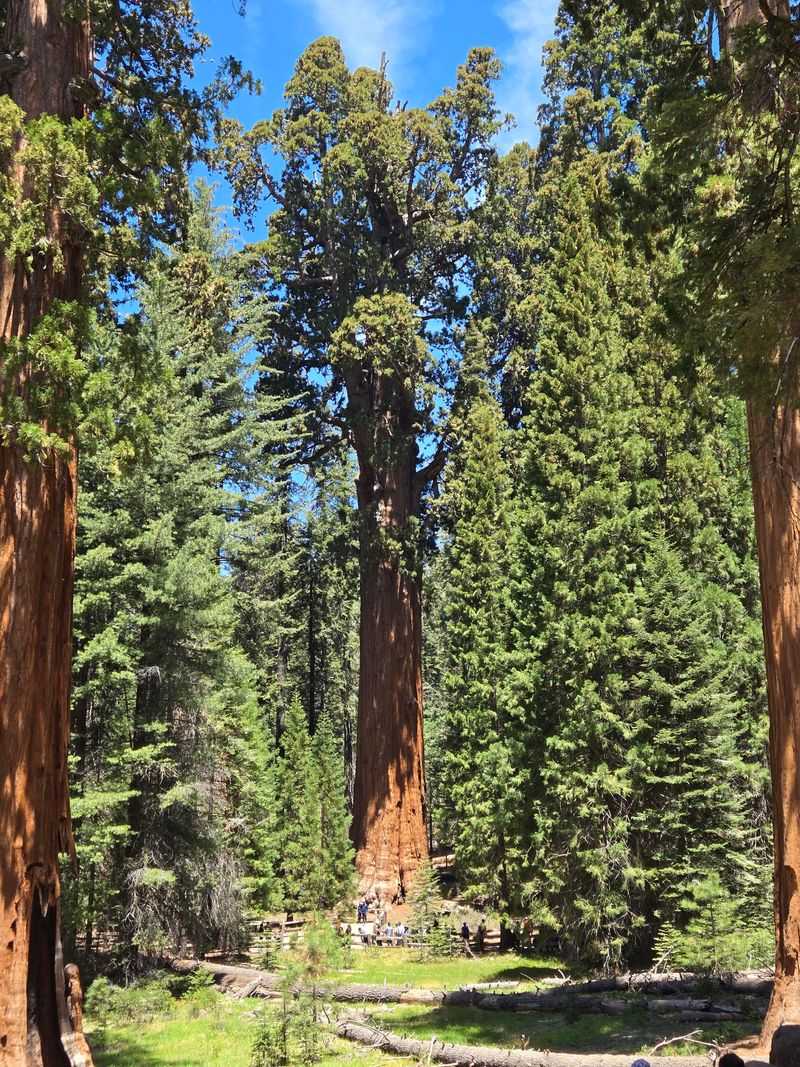
Giant sequoia trees rise hundreds of feet into the air, their massive trunks wider than most living rooms and bark thick enough to survive wildfires.
Sequoia National Park protects some of the largest trees on Earth, including the General Sherman Tree, which holds the title of the largest living tree by volume.
Walking among these ancient giants creates a sense of scale that photographs struggle to capture, as sunlight filters through the canopy and the forest floor remains soft and quiet.
The park sits in the southern Sierra Nevada, where elevation ranges from foothills to alpine peaks, and trails wind through groves, meadows, and granite formations.
The Giant Forest Museum offers context about the trees and the ecosystem, and paved pathways make some groves accessible to visitors of all mobility levels.
The air smells like pine and earth, and the silence between bird calls feels almost sacred. Summer brings the most visitors, while spring and fall offer cooler temperatures and thinner crowds.
Snow closes some roads in winter, but the park remains open year-round, and chains may be required during certain months.
8. Mono Lake
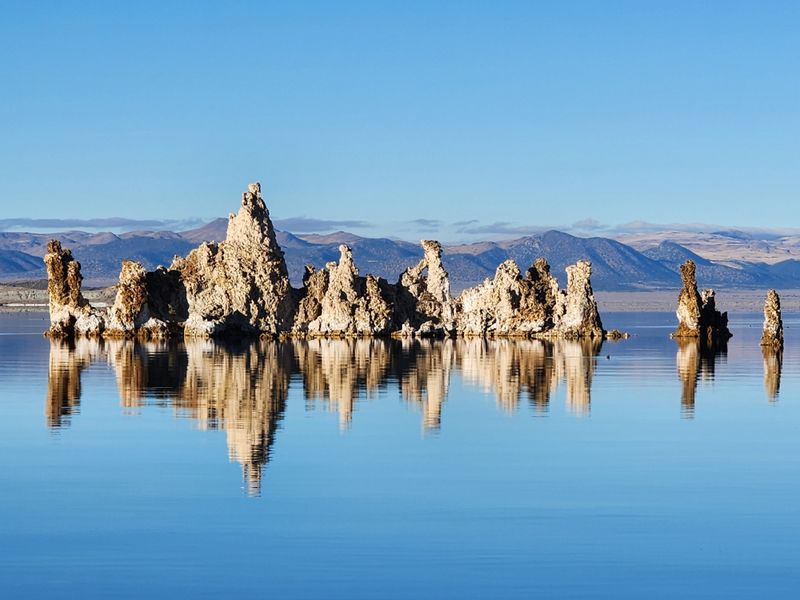
Strange limestone towers rise from the water like sculptures left by an ancient civilization, their twisted shapes formed over thousands of years by calcium-rich springs.
Mono Lake sits near the eastern Sierra Nevada, a saline body of water that has no outlet and supports a unique ecosystem of brine shrimp and alkali flies.
The tufa formations become exposed when water levels drop, creating an otherworldly landscape that changes color with the light.
Sunrise and sunset bring the most dramatic colors, with pink and orange hues reflecting off the water and illuminating the towers.
Birds migrate through the area in large numbers, and the shores can be busy with feeding activity during spring and fall.
The Mono Basin Scenic Area Visitor Center at 1 Visitor Center Dr, Lee Vining, CA 93541 provides information about the lake’s geology, history, and ongoing conservation efforts.
The South Tufa Area offers the easiest access to the formations, with a short boardwalk trail leading to the water’s edge.
The high elevation means cooler temperatures even in summer, and sunscreen becomes essential due to the intense sunlight and reflective water surface.
9. Mammoth Lakes
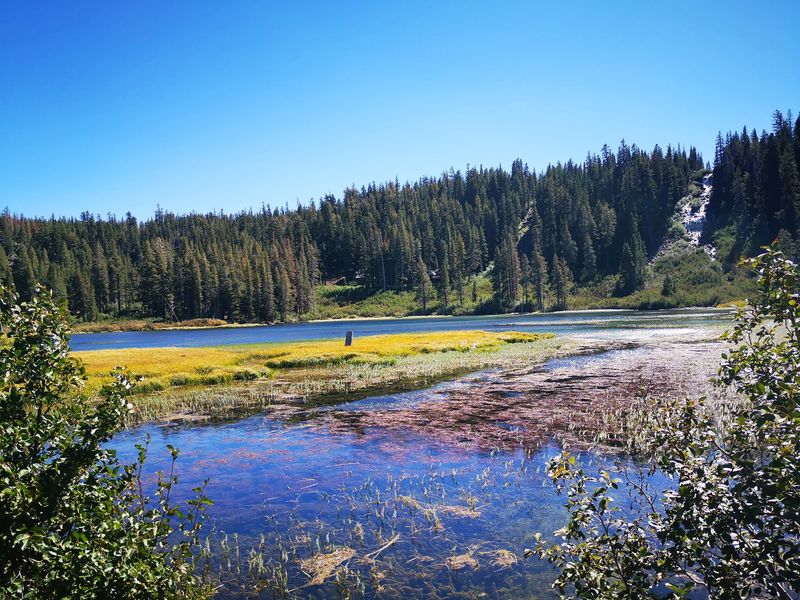
Surrounded by jagged peaks and alpine forests, this mountain town offers year-round recreation in one of California’s most scenic settings.
Mammoth Lakes sits at over 7,800 feet elevation in the eastern Sierra Nevada, where winter brings deep snow for skiing and summer opens up hundreds of miles of hiking and mountain biking trails.
The town itself remains compact and walkable, with shops, restaurants, and lodging clustered near the main road.
Crystal-clear lakes dot the landscape, and trails range from easy strolls to challenging climbs that reward effort with panoramic views.
Fishing draws anglers to the lakes and streams, while hot springs tucked into the hills provide natural soaking spots after a day outdoors.
The Mammoth Mountain ski area operates from November through May, and the gondola runs in summer, offering access to high-elevation trails without the climb.
Weekdays see lighter crowds than weekends, especially during ski season, and booking accommodations in advance helps secure better options. The high elevation means thinner air, so taking it slow on the first day helps with adjustment.
10. Lassen Volcanic National Park
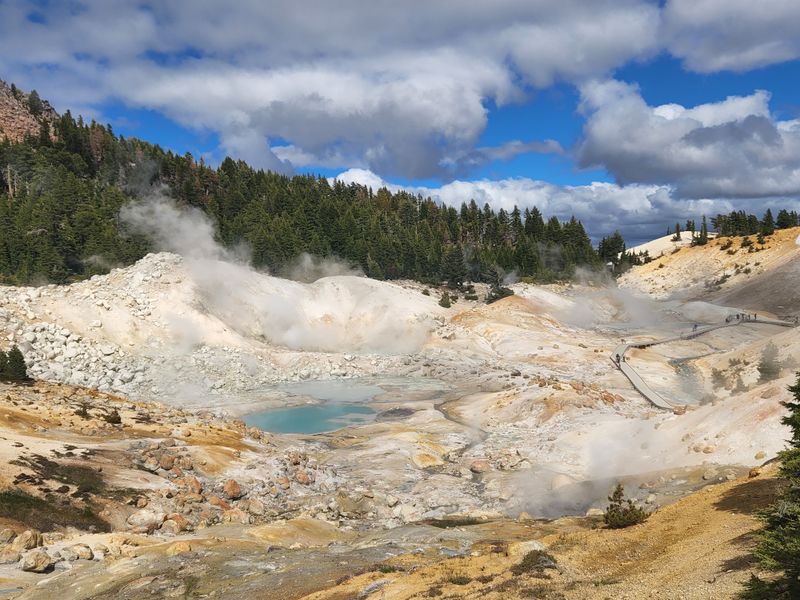
Steam rises from boiling mud pots, and the smell of sulfur drifts across boardwalks that wind through a landscape shaped by volcanic activity.
Lassen Volcanic National Park sits in the southern Cascade Range, where all four types of volcanoes found on Earth can be seen within its boundaries.
Lassen Peak, which last erupted in 1915, dominates the skyline, and trails lead through lava flows, past fumaroles, and up to alpine lakes that reflect the surrounding peaks.
Bumpass Hell, the park’s largest hydrothermal area, features bubbling springs, steaming vents, and colorful mineral deposits that paint the ground in shades of yellow, orange, and red.
The boardwalk keeps visitors safe while allowing close views of the geothermal features, and interpretive signs explain the volcanic processes at work.
The park receives far fewer visitors than Yosemite or Sequoia, which means trails and viewpoints often feel quiet and uncrowded.
Snow closes the main park road from roughly November through May, though the park remains accessible from the northwest entrance year-round.
Summer brings wildflowers to the meadows, and clear skies make for excellent stargazing after dark.
11. Santa Cruz Surfing Museum
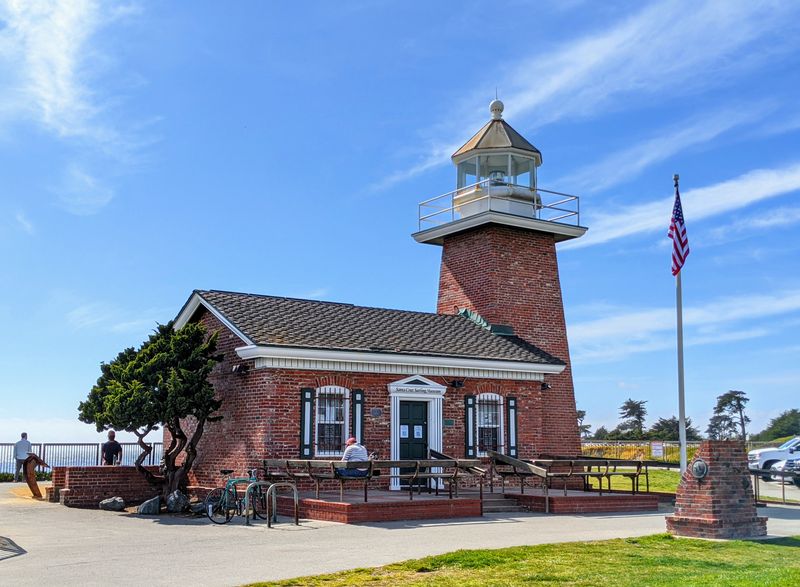
Housed inside a small lighthouse overlooking Steamer Lane, this museum celebrates the history of surfing in California and its deep roots in Santa Cruz culture.
The Santa Cruz Surfing Museum, 701 West Cliff Drive, Santa Cruz, CA 95060, displays vintage surfboards, photographs, and memorabilia that trace the sport’s evolution from the early 1900s to the present day.
Exhibits highlight local surf legends, board design innovations, and the role Santa Cruz played in popularizing surfing along the mainland United States.
Large windows face the ocean, and visitors can watch surfers riding waves at one of the area’s most famous breaks while learning about the sport’s heritage.
The lighthouse itself adds charm to the setting, and the compact space makes for a quick but engaging stop. Admission is free, though donations are encouraged to support the museum’s preservation efforts.
The museum operates most days of the week, but hours can vary seasonally, so checking ahead helps avoid disappointment.
The nearby coastal path offers excellent walking with ocean views, and benches provide spots to sit and watch the surfers in action.
12. Avenue Of The Giants
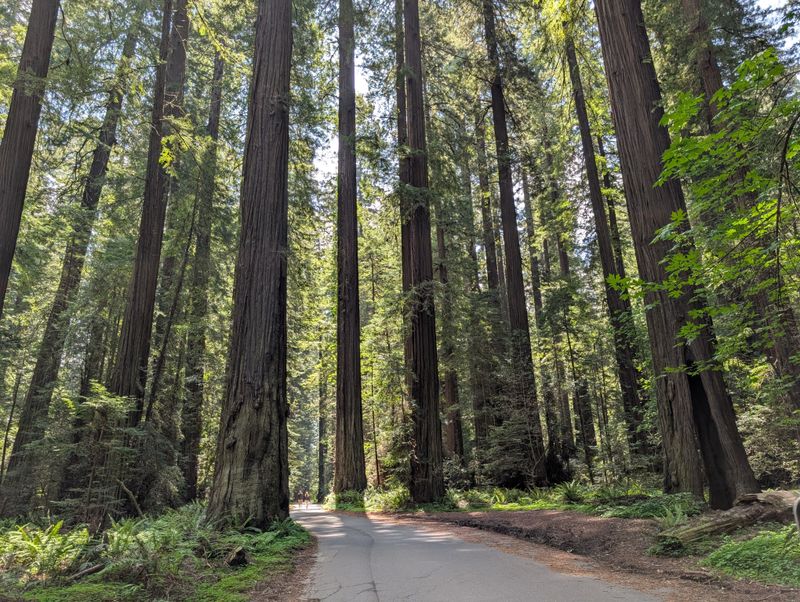
Towering redwood trees create a living cathedral along this 31-mile scenic route through Humboldt Redwoods State Park in Northern California.
Avenue of the Giants runs parallel to Highway 101, offering a slower, more intimate alternative that winds through some of the tallest trees on the planet.
Sunlight filters through the canopy in soft beams, and the forest floor remains shaded and cool even on warm days.
Pullouts and short trails allow travelers to step out of the car and walk among the giants, feeling the texture of the bark and breathing in the earthy scent of the forest.
Some trees measure over 300 feet tall and have stood for more than a thousand years, their sheer size difficult to comprehend until standing at their base.
The Founder’s Grove and Rockefeller Forest offer particularly impressive examples and well-maintained paths.
The route can be driven in under an hour without stops, but allowing two or three hours makes room for exploring the trails and soaking in the atmosphere.
Summer weekends bring more traffic, while weekdays and off-season visits offer a quieter, more reflective experience.
13. Pioneertown
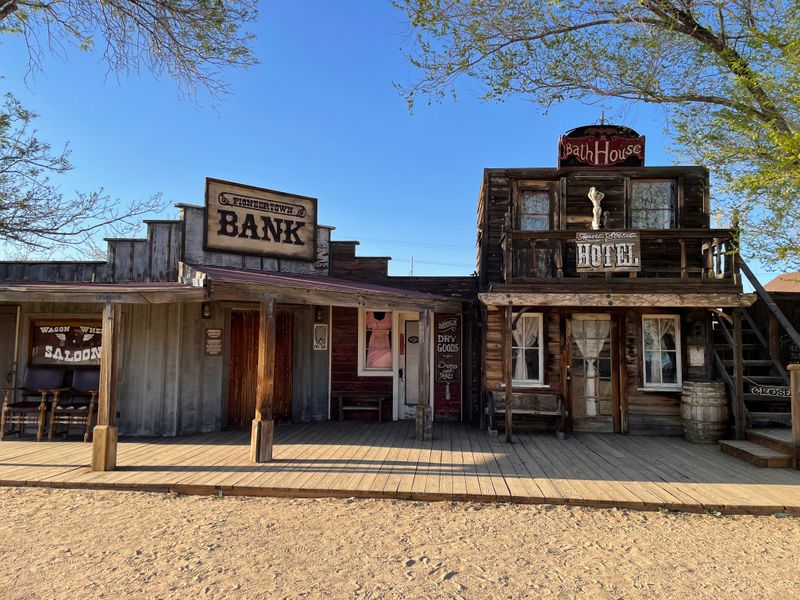
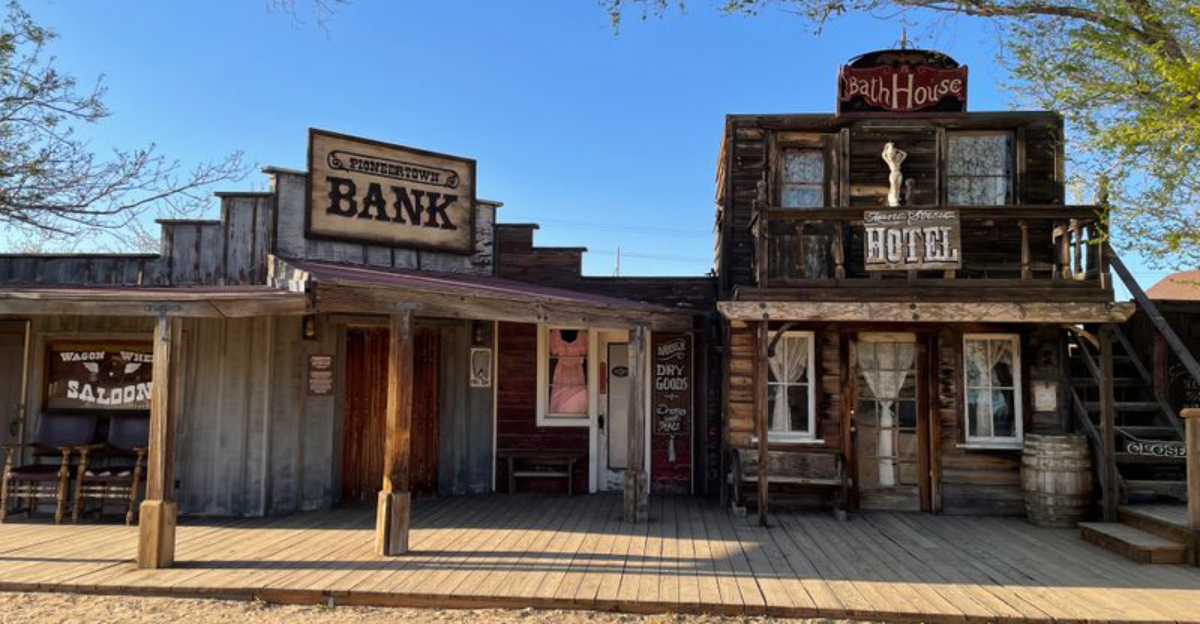
Built in 1946 as a living movie set for Western films, this quirky desert town still looks like something out of an old cowboy show.
Pioneertown sits about four miles north of Yucca Valley in the Mojave Desert, where wooden storefronts, hitching posts, and dusty streets create an authentic Old West atmosphere.
The town was designed so actors could stay on-site between filming, and many of the buildings functioned as real businesses while also serving as movie backdrops.
Today, a handful of shops, a cantina, and a motel keep the town alive, and live music performances at Pappy and Harriet’s draw visitors from across Southern California.
The surrounding desert landscape offers hiking and rock formations, and the clear skies make for stunning stargazing after sunset.
The main street remains largely unchanged from its original design, and walking through it feels like stepping back in time.
Weekends bring more activity, especially when concerts are scheduled, while weekdays offer a quieter, more laid-back vibe.
The desert heat can be intense during summer, so visiting in spring or fall provides more comfortable temperatures for exploring.
14. Joshua Tree National Park
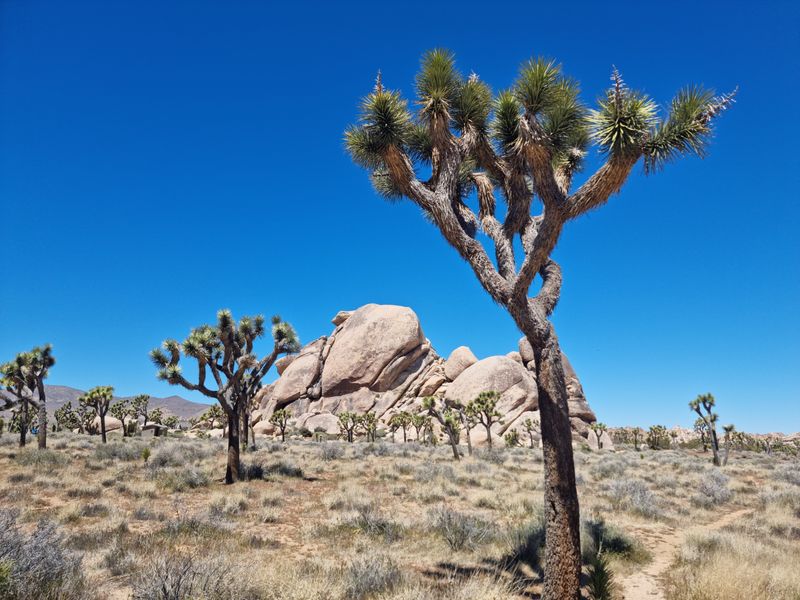
Twisted Joshua trees stand scattered across a desert landscape where two distinct ecosystems meet, creating a surreal environment unlike anywhere else in California.
Joshua Tree National Park straddles the transition between the Mojave and Colorado deserts, where elevation and rainfall patterns determine which plants and animals thrive.
The park’s signature trees, actually a type of yucca, reach toward the sky with spiky branches that seem to gesture in all directions.
Massive granite rock formations rise from the desert floor, popular with rock climbers and photographers who chase the changing light across the boulders.
Hiking trails range from short nature walks to longer backcountry routes, and the open landscape makes navigation straightforward.
Sunrise and sunset bring the most dramatic colors, with the rocks glowing orange and pink against the deepening blue sky.
The park sits about two and a half hours east of Los Angeles, and entrance stations can have lines during peak season.
Spring wildflower blooms attract large crowds, while summer heat keeps many visitors away, making fall and winter ideal for comfortable exploration.