This North Carolina Outdoor Museum Turns A Walk Into A Work Of Art
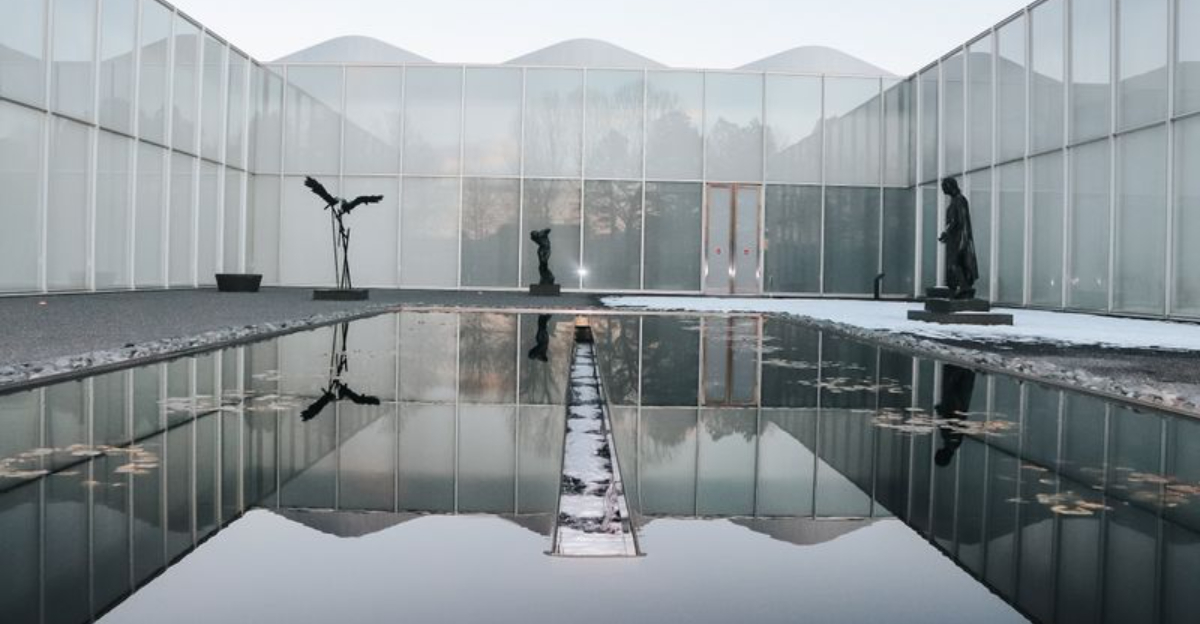
Art doesn’t always live behind velvet ropes and museum glass. Sometimes it sprawls across 164 acres of rolling hills, waiting to surprise you around every bend in the trail. Sometimes it’s a camera obscura projecting trees onto stone walls, or a Rodin sculpture catching afternoon light.
You’ll find 5,000 years of artistic history indoors and miles of sculpture-dotted trails outdoors, all wrapped up in one free-admission package that feels almost too good to be true. Whether you’re an art aficionado or just someone who enjoys a good walk with unexpected moments of beauty, this place transforms every step into something memorable.
1. Free Admission Opens Doors To Everyone
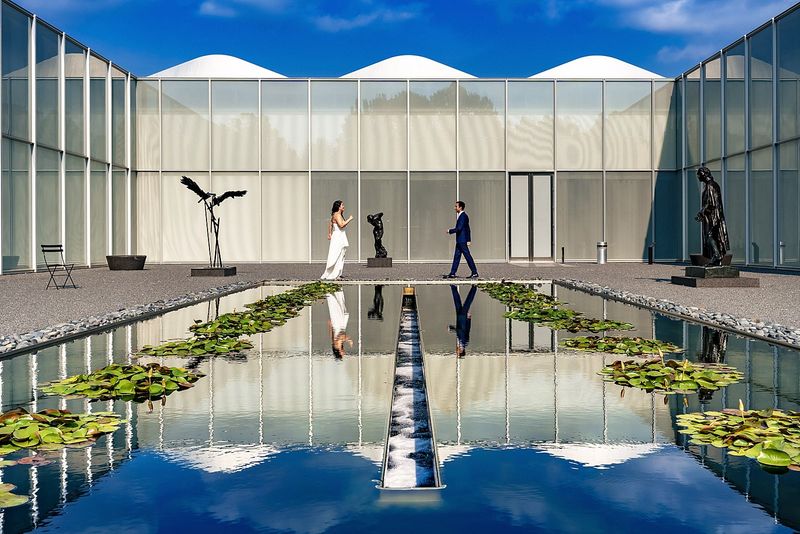
Walking through those museum doors costs absolutely nothing, which might be the best plot twist in Raleigh’s cultural scene. The North Carolina Museum of Art decided long ago that art shouldn’t require emptying your wallet first. You can explore galleries filled with masterpieces from ancient Egypt to contemporary installations without spending a dime.
This approach changes everything about how people experience art. Families can visit regularly without budget stress. Students can return again and again to study their favorite pieces.
Even spontaneous visits become possible when you’re driving by and suddenly feel like soaking up some culture.
Free admission doesn’t mean lower quality either. The collection rivals museums that charge hefty entrance fees, proving that accessibility and excellence can absolutely coexist. Special exhibitions might require tickets, but the permanent collection remains gloriously free.
That policy turns casual visitors into regular guests, building a community that genuinely connects with art instead of treating it like an expensive, once-in-a-while luxury.
2. Museum Park Stretches Across 164 Acres
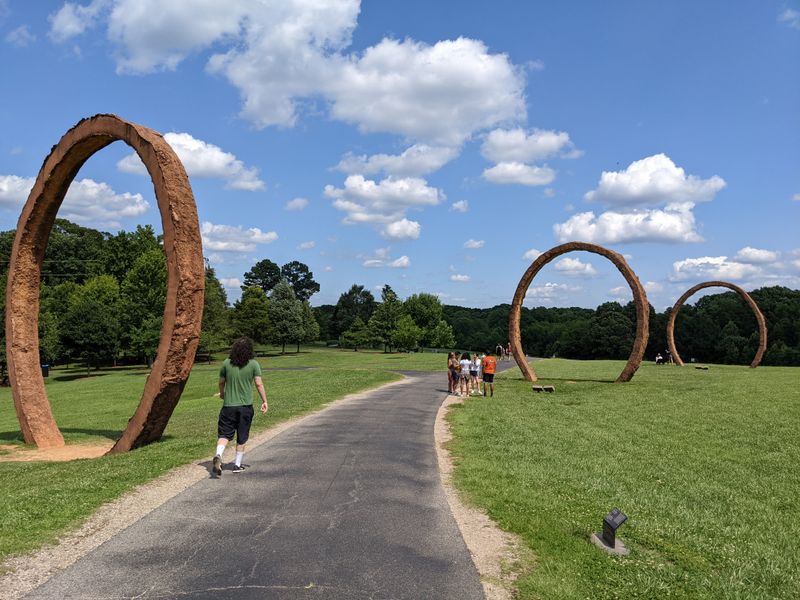
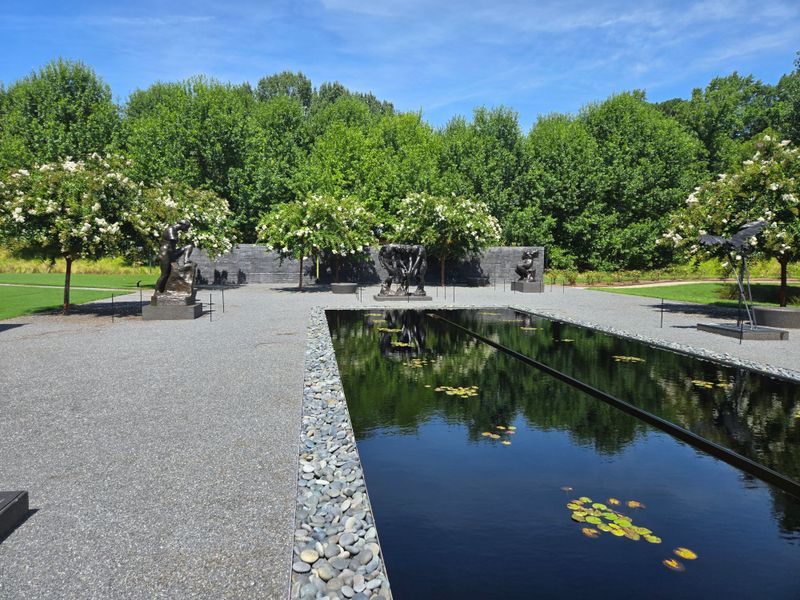
Stepping outside the main buildings reveals something unexpected: a massive park where art installations punctuate the landscape like exclamation points in a green sentence. The Museum Park at the North Carolina Museum of Art spans 164 acres of carefully designed trails and natural spaces. More than a dozen monumental artworks live here permanently, turning a simple walk into a treasure hunt for creativity.
Two miles of trails wind through forests and open fields, offering different routes for different moods. Some visitors power-walk the paths for exercise while admiring the sculptures. Others meander slowly, pausing at each installation to photograph, contemplate, or simply enjoy the intersection of nature and human imagination.
The park welcomes everyone from serious art students to families with energetic kids who need space to run. Dogs on leashes join their owners for artistic strolls. Cyclists cruise the paths, getting their exercise with a side of culture.
This outdoor gallery proves that experiencing art doesn’t require hushed voices and careful steps, sometimes it just needs fresh air and open space.
3. Cloud Chamber Creates Natural Magic
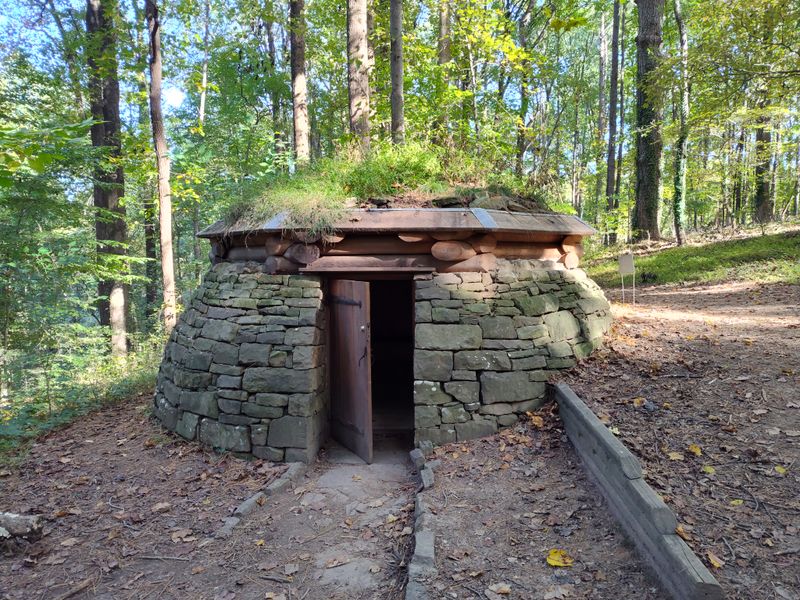
Artist Chris Drury built something quietly miraculous in the Museum Park: a stone chamber that works like a giant camera. The Cloud Chamber for the Trees and Sky uses a simple pinhole to project the outside world onto its interior walls, upside-down and in real-time. Stand inside and watch trees sway across the curved surface, clouds drift past, sunlight dance through leaves.
This installation doesn’t rely on electricity or screens or any modern technology. Physics and clever design do all the work, creating an experience that feels almost magical despite being entirely scientific. The projected image shifts constantly as wind moves branches and clouds travel overhead, meaning you never see exactly the same thing twice.
Visitors often enter skeptically and emerge amazed, having witnessed something that bridges ancient optical principles and contemporary art. Kids especially love the upside-down projection, trying to spot birds flying past or their friends walking outside.
The chamber becomes a meditation space, a science lesson, and an art installation all at once, proving that sometimes the simplest concepts create the most memorable experiences.
4. Rodin Collection Showcases Sculptural Evolution
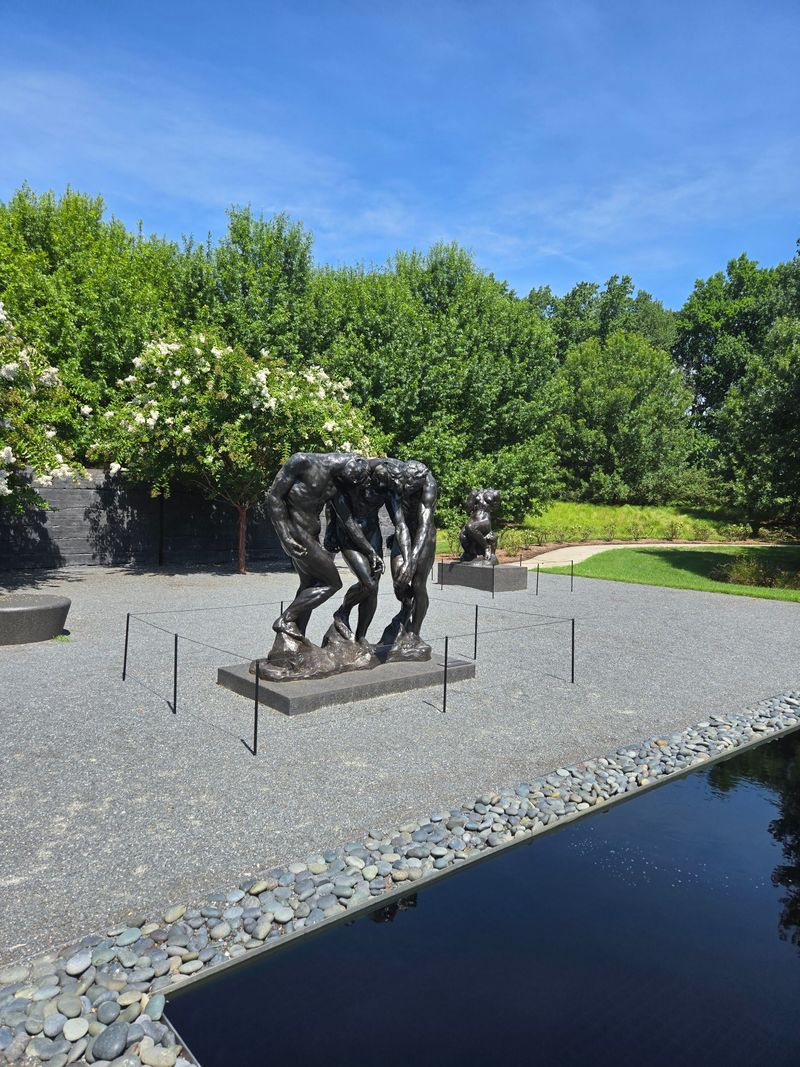
Twenty-nine sculptures by Auguste Rodin call this museum home, which ranks as one of the most significant Rodin collections in the American South. Walking through this gallery at 2110 Blue Ridge Rd, Raleigh, feels like watching an artist’s mind evolve across decades. You’ll encounter “The Thinker” in his famous contemplative pose and “The Kiss” capturing eternal romance in bronze.
Rodin revolutionized sculpture by showing movement, emotion, and psychological depth in ways previous generations hadn’t attempted. His figures twist and strain, capturing moments of intense feeling rather than static poses. Seeing multiple works together reveals how he experimented with form, texture, and expression throughout his career.
The collection includes both finished masterpieces and smaller studies, offering insight into Rodin’s creative process. Some pieces show rough textures where his fingers shaped clay, while others gleam with polished perfection.
Standing before these sculptures, you understand why Rodin became known as the father of modern sculpture, his innovations still influence artists today, more than a century after his death.
5. Judaic Art Gallery Preserves Religious Traditions
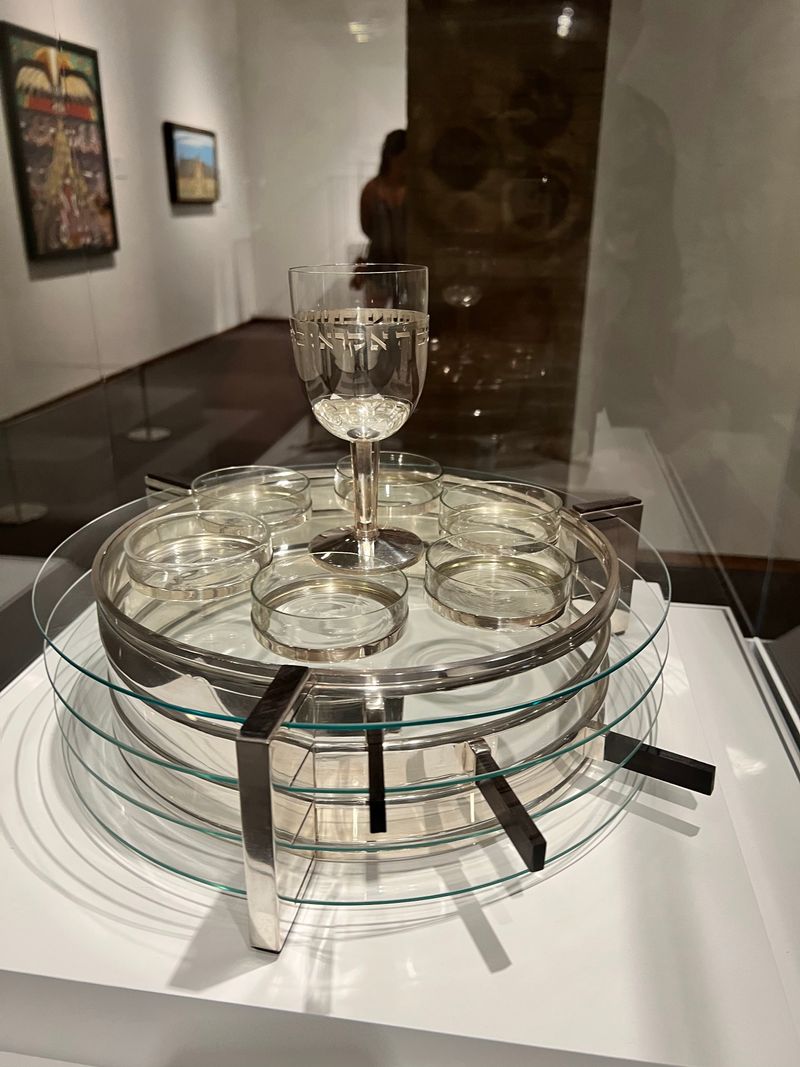
Only two galleries in the entire United States dedicate themselves exclusively to Jewish ceremonial art, and one of them exists right here in Raleigh. This specialized collection preserves centuries of religious tradition through objects both beautiful and meaningful. Ceremonial items from various Jewish communities showcase how different cultures interpreted shared religious practices through their unique artistic lenses.
Torah scrolls with elaborate silver crowns sit alongside menorahs crafted in different historical periods and geographic regions. Marriage contracts feature intricate calligraphy and illumination. Ritual objects for Sabbath observances demonstrate how everyday religious practice inspired artistic expression across generations.
The gallery serves multiple purposes beyond simple display. It educates visitors about Jewish traditions and history while preserving artifacts that might otherwise disappear. For Jewish visitors, seeing these objects honored in a major museum validates their cultural heritage.
For others, the collection offers windows into traditions they might not otherwise encounter, building understanding through beauty. The North Carolina Museum of Art recognized the importance of preserving this specific artistic tradition, creating a space where religious art receives the same respect as any masterpiece.
6. Modern Art Fills The West Building
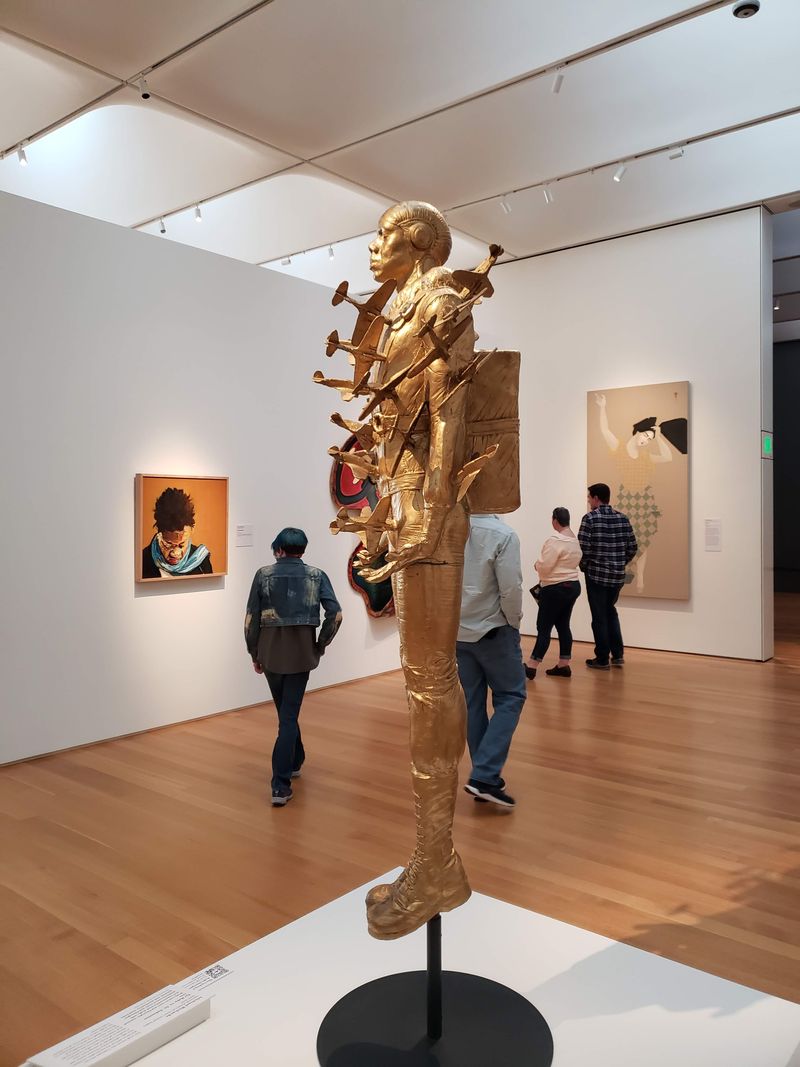
Twentieth-century art movements explode across the West Building galleries in all their experimental glory. Works by Franz Kline showcase bold gestural abstraction, while Lyonel Feininger’s paintings demonstrate Cubist influences meeting architectural precision. Alberto Giacometti’s elongated sculptures stand like philosophical questions rendered in bronze, asking what it means to represent the human figure in modern times.
These galleries trace how artists broke from traditional representation to explore new visual languages. Abstract Expressionism, Cubism, Surrealism, and other movements that shocked audiences in their day now help us understand how dramatically art evolved during the 1900s. Each work represents artists questioning assumptions, pushing boundaries, and discovering fresh ways to communicate through visual media.
Walking through these spaces, you witness the conversations artists had across decades and continents. One painter’s innovation inspired another’s experiment, creating cascading influences that shaped modern visual culture. The collection doesn’t just show beautiful objects; it reveals how creative thinking transformed what art could be and do, preparing the ground for everything that followed in contemporary practice.
7. Audubon’s Birds Come To Life
John James Audubon spent years tramping through American wilderness, observing birds with scientific precision and artistic passion. His monumental work “The Birds of America” combined naturalist documentation with stunning visual artistry, creating images that remain unsurpassed nearly two centuries later. The museum’s dedicated Audubon space displays these remarkable illustrations, where each bird practically leaps off the page with life and personality.
Audubon didn’t just draw birds sitting on branches looking polite. He showed them hunting, preening, fighting, and feeding, capturing behavior alongside physical detail. His compositions feel dynamic rather than static, as though you’ve caught these creatures mid-motion during actual wilderness encounters.
The technical achievement alone impresses: Audubon worked life-sized, meaning his prints of large birds like herons and eagles required enormous copper plates. Seeing these illustrations up close reveals incredible detail in feather texture, eye expression, and environmental context. For bird enthusiasts, the collection offers historical documentation of species as Audubon observed them.
For art lovers, it demonstrates how scientific illustration can achieve genuine artistic beauty when created by someone who truly loved his subjects.
8. African Art Celebrates Continental Diversity
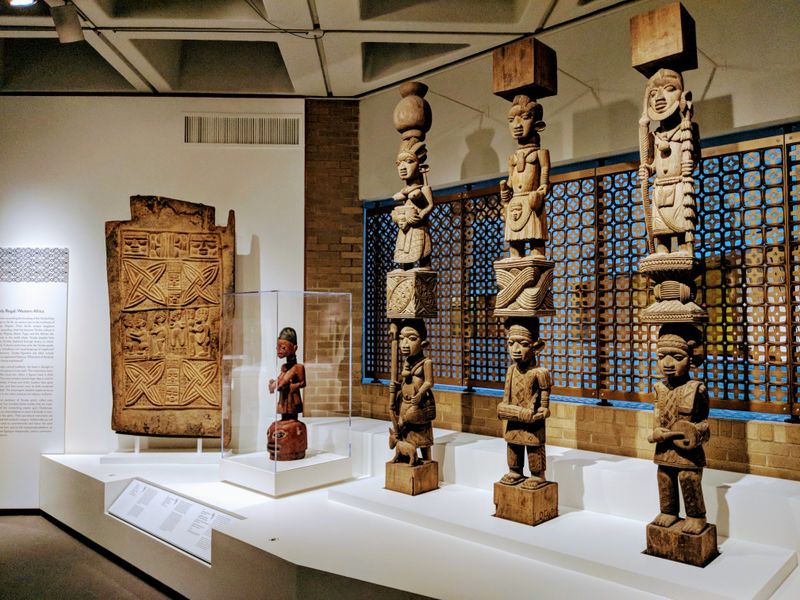
Africa’s artistic traditions span thousands of years, and countless distinct cultures, and the museum’s African Art Gallery honors that incredible diversity. Nineteenth and twentieth-century works from the Chokwe and Luba peoples demonstrate how different African societies developed unique aesthetic styles while sharing certain cultural values. Masks, sculptures, textiles, and ceremonial objects reveal sophisticated artistic traditions that European colonizers often failed to appreciate or understand.
Each piece carries multiple meanings beyond pure aesthetics. Masks served ceremonial purposes, connecting wearers to spiritual realms during important rituals. Sculptures might commemorate ancestors or embody cultural ideals about leadership, beauty, or moral character.
Understanding these contexts transforms how you see the objects, they’re not just visually striking, they’re deeply meaningful within their original cultural frameworks.
The gallery challenges Western assumptions about what constitutes fine art. These African artists mastered complex techniques, developed distinct regional styles, and created works that communicated cultural values across generations. Displaying them in the North Carolina Museum of Art places African artistic achievements alongside European and American traditions, where they absolutely belong.
9. Educational Programs Build Community Connections
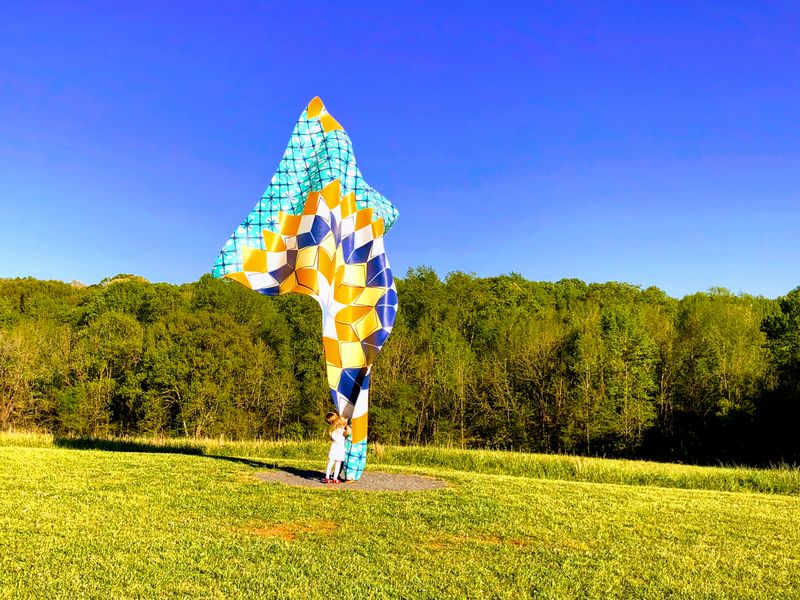
Museums become truly valuable when they actively engage their communities rather than just displaying objects behind glass. The educational programs here range from family workshops to teen art-making sessions to college student events, each designed to make art accessible and personally relevant. Kids don’t just look at paintings; they create their own artworks inspired by what they’ve seen, transforming passive observation into active participation.
Teen programs recognize that adolescents need different approaches than younger children or adults. These workshops often explore contemporary issues through artistic lenses, giving young people tools to express their perspectives creatively. College students get opportunities to engage with professional artists, curators, and arts administrators, potentially shaping future career paths.
Family programs deserve special mention for making art museums less intimidating for parents worried about keeping kids quiet and still. When museums actively welcome families with hands-on activities and child-friendly spaces, they build the next generation of art enthusiasts.
These programs prove that appreciating art isn’t some innate talent certain people possess, it’s a skill anyone can develop with exposure, encouragement, and opportunities to engage creatively rather than just consume passively.
10. Iris Restaurant Elevates Museum Dining
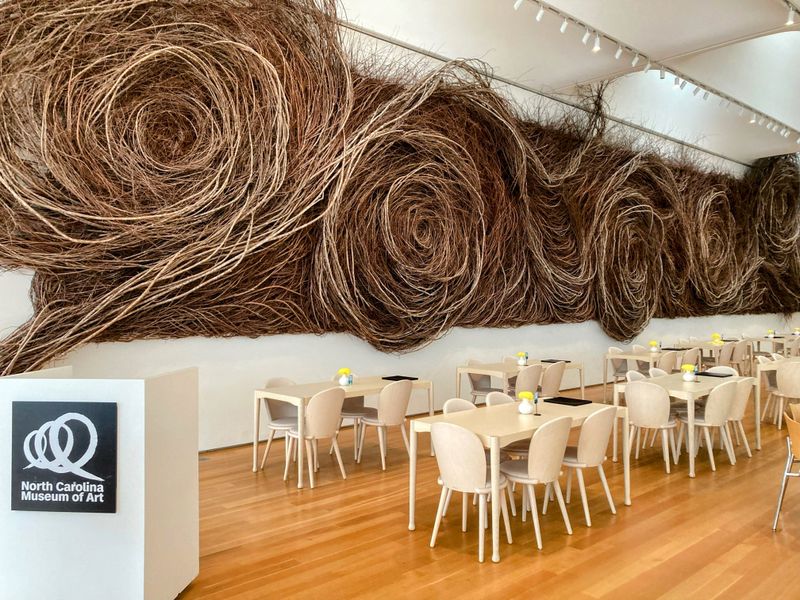
Museum cafeterias often serve forgettable sandwiches and overpriced coffee, but Iris Restaurant took a completely different approach. This full-service restaurant at the North Carolina Museum of Art features contemporary American cuisine with regional and international influences, using locally sourced ingredients whenever possible. You might start with a Carolina shrimp appetizer before moving to pan-seared duck or seasonal vegetable risotto.
The pricing reflects the upscale quality, as multiple reviewers noted, but the food justifies the cost. Chef-driven menus change seasonally, highlighting what’s fresh and available from nearby farms and producers. The dining room itself feels like an extension of the museum’s aesthetic, with clean lines, natural light, and an atmosphere that encourages leisurely meals rather than rushed eating.
Having a genuinely good restaurant on-site transforms how people experience the museum. You can spend an entire day here, exploring galleries, walking trails, enjoying lunch, then returning to see more art without ever leaving the campus. The restaurant makes the museum feel like a destination rather than just a quick cultural stop, encouraging visitors to slow down and fully immerse themselves in the experience of being surrounded by art, nature, and good food.
11. Special Exhibitions Bring Fresh Perspectives
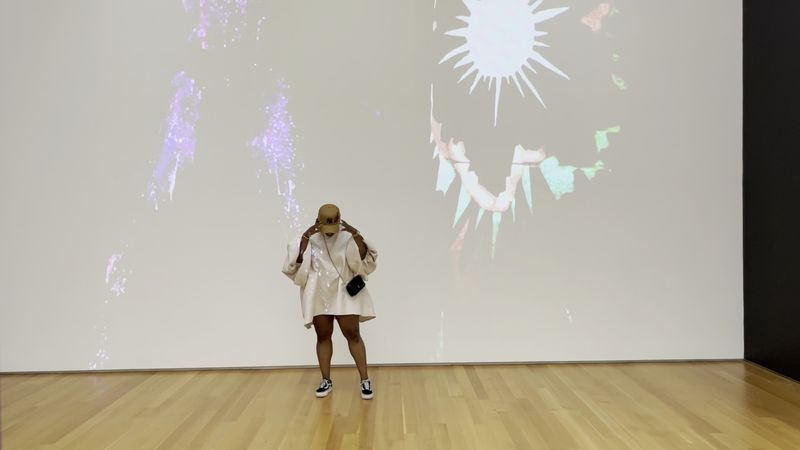
While permanent collections provide reliable anchors, special exhibitions inject excitement and variety into museum experiences. Past shows like “You Are Here: Light, Color, and Sound Experience” demonstrated how contemporary artists use immersive installations to engage viewers in completely new ways. These temporary exhibitions often feature living artists pushing boundaries, experimenting with new media, or addressing current cultural conversations through their work.
Special exhibitions require separate tickets, but they offer experiences you can’t get from the permanent collection. You might encounter virtual reality art one season, politically engaged photography the next, then massive sculptural installations that transform entire galleries. These rotating shows give regular visitors reasons to return frequently rather than assuming they’ve already seen everything.
The museum’s willingness to showcase challenging contemporary work alongside historical masterpieces signals confidence in its audience. Not every visitor will love every special exhibition, and that’s perfectly fine. Art should sometimes provoke, question, and challenge rather than just please.
These temporary shows keep the museum feeling alive and relevant, connected to ongoing artistic conversations rather than frozen in historical reverence. They remind us that art-making didn’t stop with the old masters; it continues evolving right now.
12. Ancient Collections Span Millennia
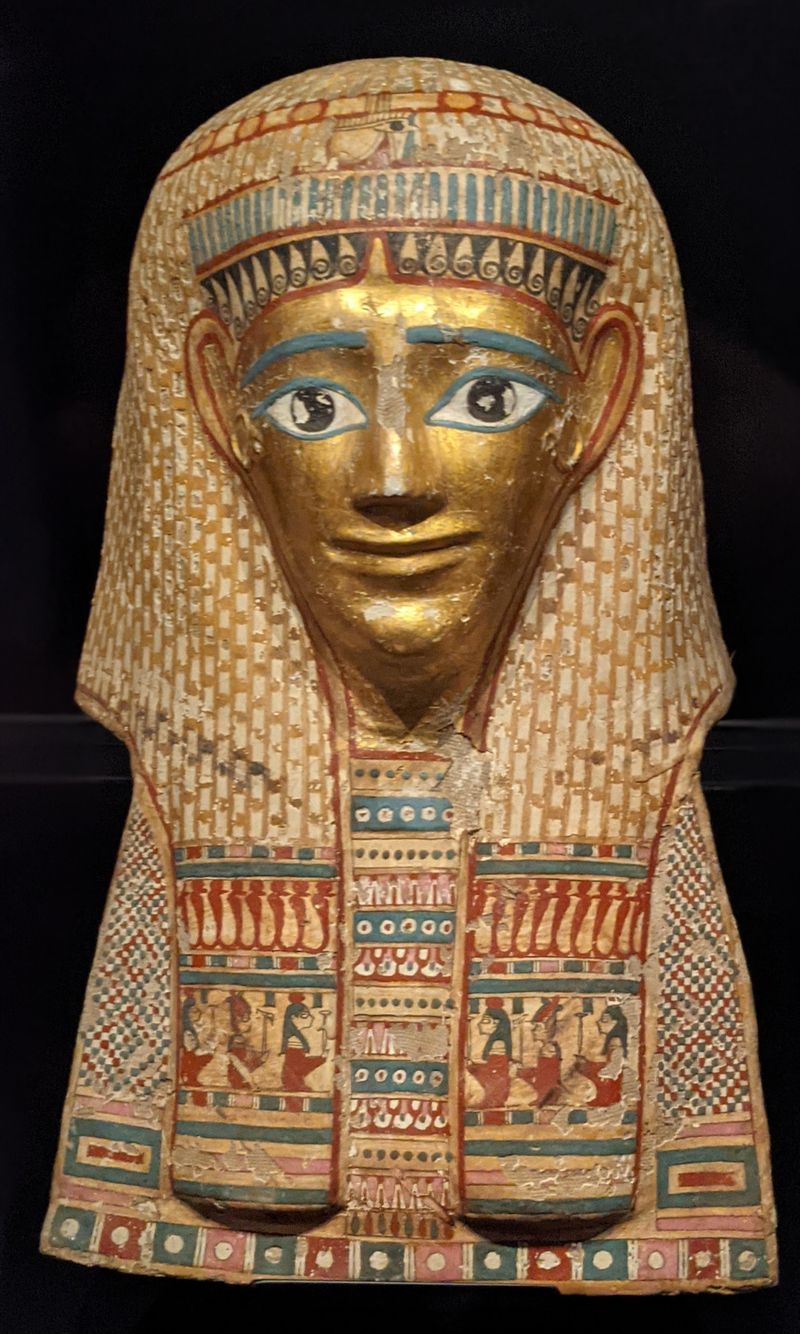
Five thousand years of human creativity lives within these walls, starting with objects from ancient civilizations that built pyramids, developed democracy, and created artistic traditions still influencing us today. Egyptian antiquities include funerary objects, jewelry, and sculptures that reveal how that culture understood death, divinity, and the afterlife. Greek and Roman pieces demonstrate classical ideals of beauty, proportion, and storytelling through visual means.
Walking through these galleries feels like time-traveling backward through human history. You see how ancient artists solved technical challenges without modern tools, how they represented their gods and heroes, how they decorated everyday objects with care and skill. These aren’t just historical curiosities; they’re evidence of human creativity persisting across centuries and cultures.
The collection helps visitors understand that art-making is fundamentally human. People have always created objects that serve purposes beyond pure utility, adding beauty, meaning, and cultural significance to the things around them. Seeing ancient works displayed alongside modern pieces emphasizes artistic continuity across vast time spans, showing how humans have always needed to express themselves visually, tell stories, honor what they value, and leave marks proving they existed.
13. Campus Renovations Promise Enhanced Experiences
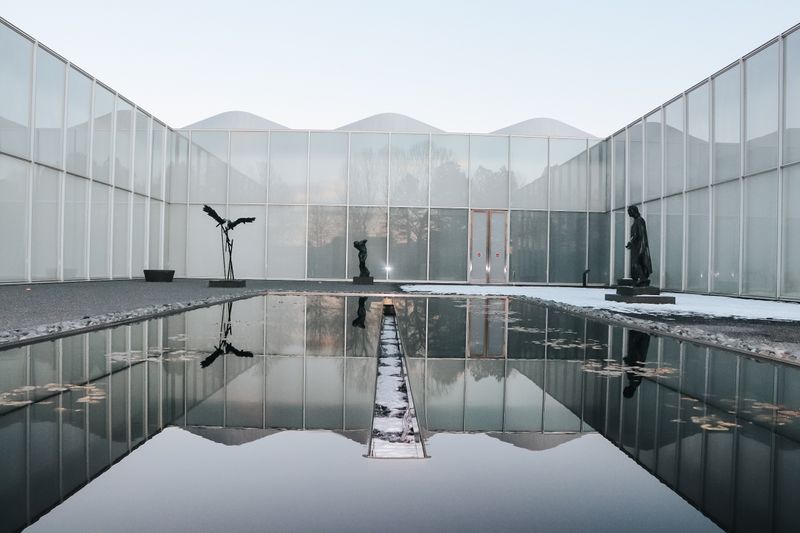
Great museums never stop evolving, and current renovations signal exciting changes ahead for this already impressive institution. The East Building and Museum Park are both receiving updates designed to enhance visitor experiences while preserving what already works beautifully. These improvements demonstrate the museum’s commitment to remaining relevant, accessible, and engaging for future generations of art lovers.
Renovations often address both visible and invisible needs. Updated climate control systems protect artworks better. Improved accessibility features ensure everyone can navigate spaces comfortably.
Enhanced lighting makes viewing art easier on the eyes. Sometimes the best upgrades are ones visitors barely notice because they simply make everything work more smoothly.
The fact that the North Carolina Museum of Art continues investing in improvements speaks to institutional confidence and community support. Museums require ongoing care and adaptation to serve their communities well.
These renovations promise that this already beloved institution will keep getting better, offering enhanced experiences while maintaining the free admission and welcoming atmosphere that made it special in the first place.
The best museums understand they’re never truly finished, they’re always becoming something even better. 2110 Blue Ridge Rd, Raleigh, NC 27607, United States