This North Carolina Military Icon Turns Into A Haunted Overnight Adventure
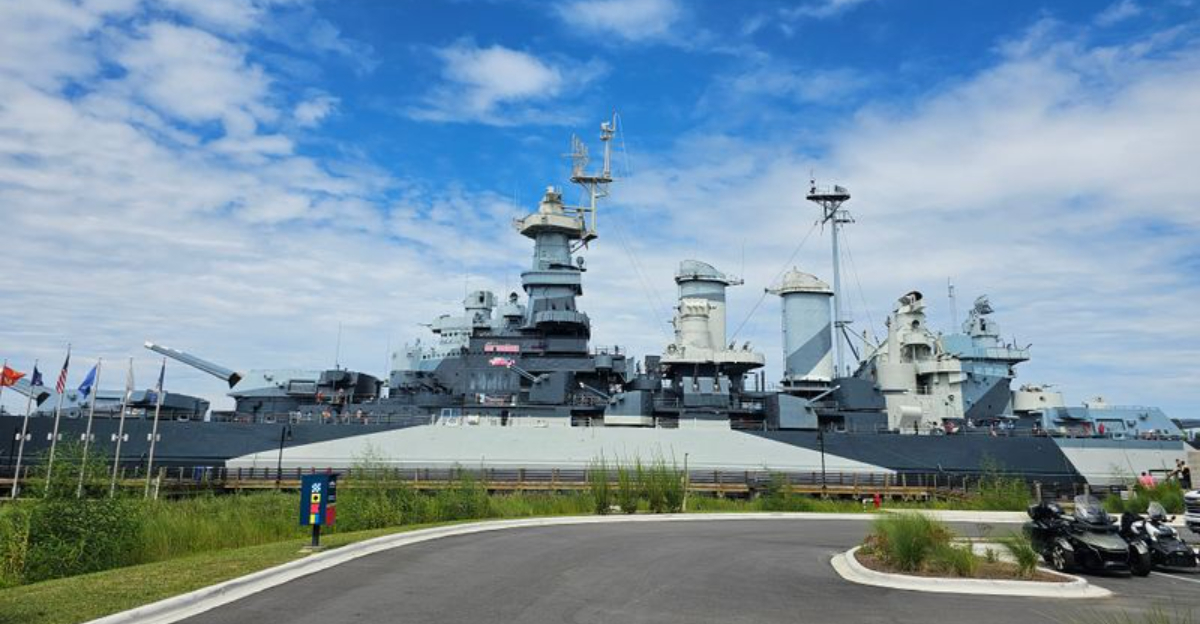
By day, this towering military icon feels like a powerful history lesson anchored in steel and courage. By night, it transforms into something far more mysterious, inviting brave visitors to experience it after the lights go out.
Moored along the Cape Fear River, this legendary vessel has witnessed decades of service, secrets, and stories that refuse to stay silent. A few paragraphs into the experience, you’ll find yourself standing at 1 Battleship Rd NE, Wilmington, realizing this is no ordinary museum visit.
Narrow corridors, echoing footsteps, and dimly lit decks create an atmosphere where imagination runs wild and history feels uncomfortably close. Here’s the kind of place that proves North Carolina knows how to turn history into an unforgettable after-dark adventure.
Guests can explore living quarters, mess halls, and command areas, then settle in for the night surrounded by creaks, shadows, and whispered legends. It’s equal parts educational, thrilling, and unforgettable, perfect for anyone who thinks history is best experienced, not just observed.
1. World War II Combat Legacy
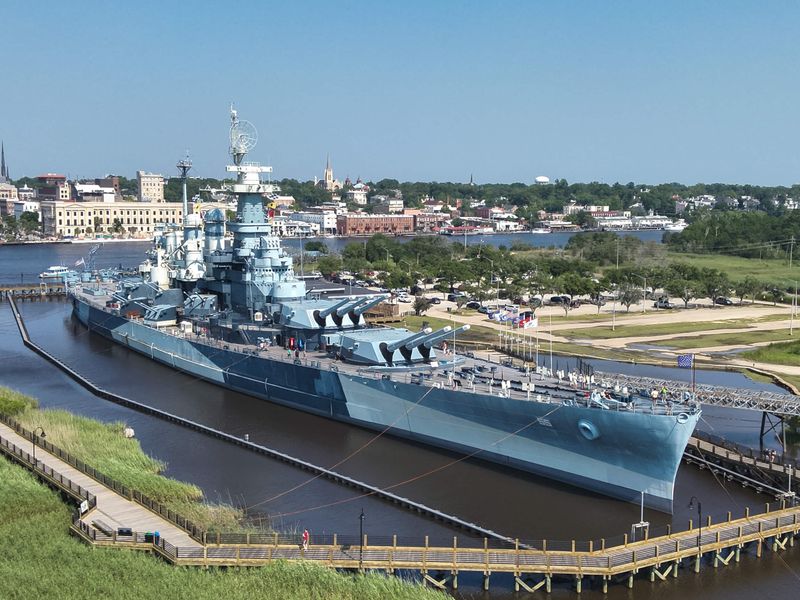
Fifteen battle stars gleam in the service record of this remarkable warship that participated in every major Pacific offensive during World War II. Commissioned in April 1941, the USS North Carolina arrived just in time to reshape naval warfare in the Pacific theater.
From Guadalcanal to Okinawa, this battleship stood as a symbol of American naval power and determination.
The ship earned its nickname “The Showboat” partly because of its impressive appearance and partly due to skeptics who doubted battleships would prove useful in modern warfare. Those doubters were quickly proven wrong as the North Carolina demonstrated its worth time and again.
Each battle star represents a major engagement where sailors risked everything for victory.
Walking the decks today visitors can almost hear the thunder of those historic battles. The ship’s combat record includes providing crucial fire support for amphibious landings and defending aircraft carriers from enemy attacks.
This floating fortress protected American lives while projecting overwhelming firepower against enemy positions across thousands of miles of Pacific Ocean.
2. Massive Engineering Marvel
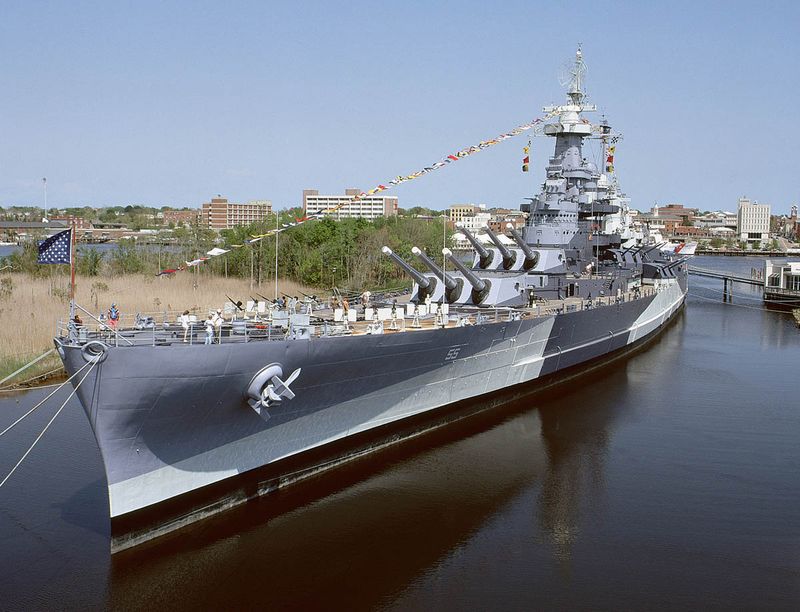
Standing before this steel giant reveals engineering brilliance that still impresses modern visitors decades after construction. The battleship stretches 728 feet from bow to stern, with a beam measuring 108 feet across and drawing 35 feet of water beneath the keel.
Standard displacement reaches 35,000 tons, making this vessel a true heavyweight champion of naval engineering.
Nine 16-inch guns mounted in three massive turrets represent the ship’s primary armament, each capable of hurling shells weighing as much as a small car over 20 miles. Secondary batteries and anti-aircraft weapons bristled from every available mounting point.
The ship carried enough firepower to level entire coastal fortifications or defend against waves of enemy aircraft.
Visitors exploring the vessel gain appreciation for the incredible complexity of this floating city. Thousands of tons of armor plate protected vital spaces while sophisticated machinery powered everything from propulsion to fire control systems.
The engineering required to make such a massive structure both powerful and seaworthy represents one of humanity’s greatest technical achievements during that era.
3. Surviving Enemy Attacks
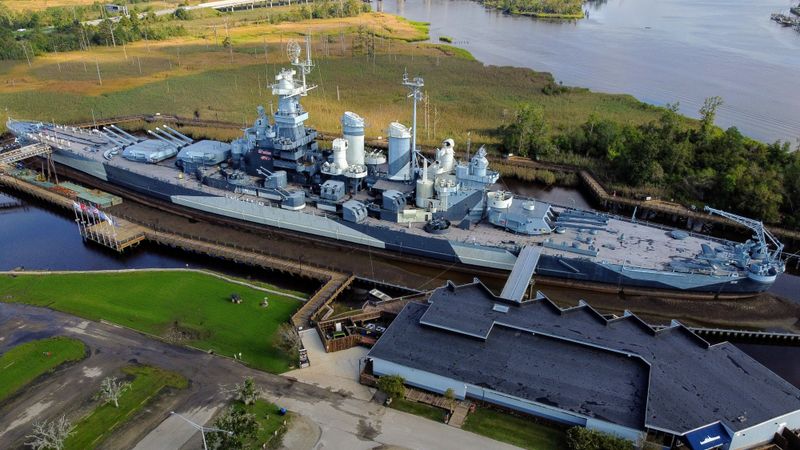
Over thirty enemy attacks tested this warship’s strength during its Pacific service, including direct torpedo hits and aerial bombardments that would have sunk lesser vessels. The ship’s survival speaks volumes about both its robust design and the skilled damage control teams who kept her fighting.
Each attack created stories of heroism and technical ingenuity that visitors can discover throughout the museum.
One particularly harrowing torpedo strike occurred in September 1942 when a Japanese submarine’s weapon tore into the hull below the waterline. The explosion killed five sailors and flooded several compartments, but the ship’s watertight integrity and her crew’s quick response prevented catastrophic damage.
The North Carolina limped to safety and returned to action after repairs, tougher than ever.
Self-guided tours include areas where visitors can see evidence of the ship’s battle experiences. Informative displays explain how damage control parties worked frantically to save their ship during combat.
The vessel’s ability to absorb punishment and continue fighting earned respect from both allies and enemies, proving that American shipbuilding had created something truly special in this remarkable warship.
4. Speed And Operational Flexibility
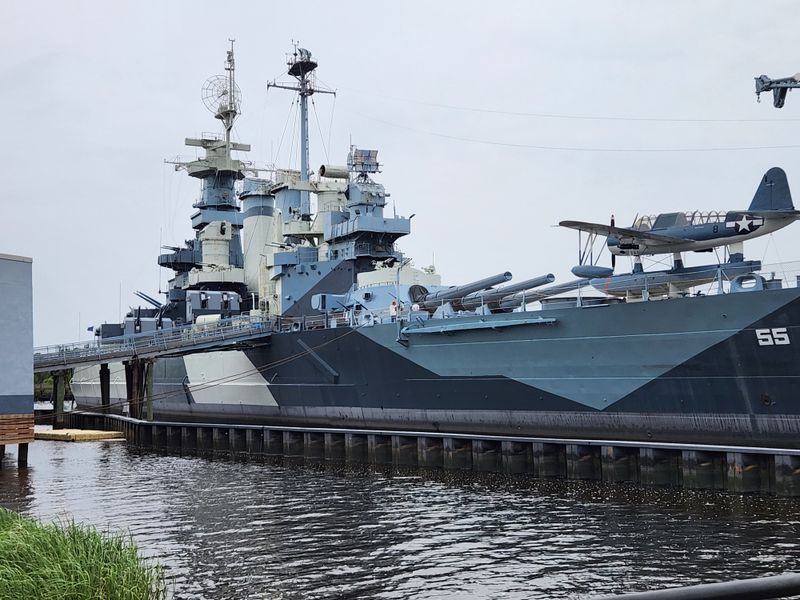
Despite weighing 35,000 tons, this battleship could race through the waves at 28 knots, outrunning many smaller warships and keeping pace with fast carrier task forces. This speed revolutionized how battleships could be deployed, allowing them to escort aircraft carriers and respond quickly to developing tactical situations.
The North Carolina’s powerful propulsion system represented cutting-edge naval engineering of its era.
Four sets of geared turbines drove the massive propellers, generating 121,000 shaft horsepower that pushed the ship through any sea condition. This speed advantage proved crucial during carrier operations when the battleship needed to maintain position within protective formations.
Enemy submarines and surface raiders found this fast battleship a challenging target to intercept or escape.
Exploring the engine rooms reveals the massive machinery that made such performance possible. Visitors descend into spaces where temperatures once soared above 100 degrees while engineers coaxed maximum power from the turbines.
The scale of these mechanical systems impresses everyone who ventures into the ship’s mechanical heart, offering perspective on what kept this steel city moving across vast ocean distances.
5. Revolutionary Radar Technology
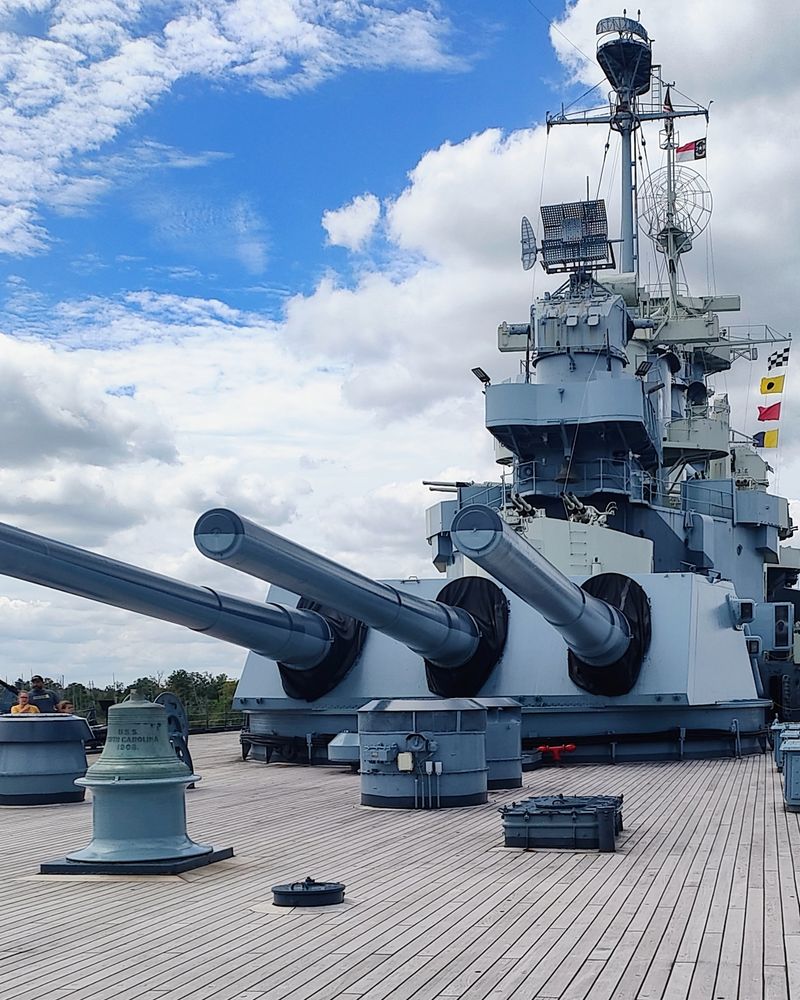
Among the first American battleships equipped with radar-controlled fire systems, the North Carolina gained a significant tactical advantage over enemy forces. This groundbreaking technology dramatically improved the accuracy of the ship’s 16-inch guns, allowing gunners to engage targets beyond visual range and during poor visibility conditions.
The integration of radar into fire control systems represented a quantum leap in naval warfare capabilities.
The ship’s sophisticated Mark 3 fire control radar worked in conjunction with mechanical computers to calculate firing solutions accounting for range, target movement, wind, and ship motion. This system gave the North Carolina’s guns unprecedented accuracy, turning already fearsome weapons into precision instruments.
Enemy ships that thought themselves safe at extreme ranges discovered their miscalculation too late.
Museum exhibits showcase original radar equipment and fire control systems that visitors can examine up close. Interpretive displays explain how these revolutionary technologies worked and why they mattered so much during combat operations.
Standing beside these vintage electronic systems provides insight into the technological race that helped determine the war’s outcome in the Pacific theater.
6. Museum Transformation Story
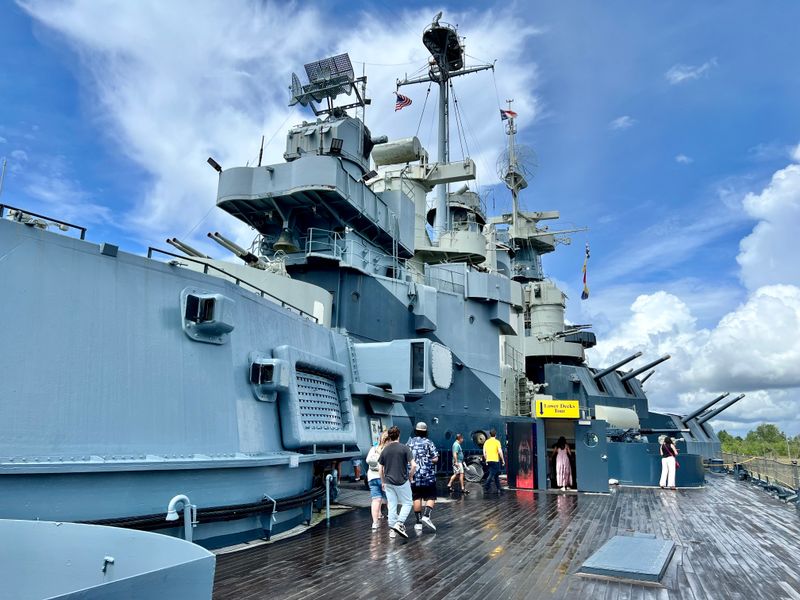
After decommissioning in 1947, this proud warship faced an uncertain future that nearly ended in a scrapyard’s cutting torches. The state of North Carolina purchased the vessel in 1961 for just $250,000, launching an ambitious project to preserve this piece of history.
Opening as a museum on April 29, 1962, the battleship began its second career educating and inspiring visitors from around the world.
The grassroots campaign to save the ship captured public imagination, with schoolchildren across North Carolina contributing pennies and nickels to the preservation fund. This collective effort demonstrated how much the battleship meant to the state and the nation.
The successful transformation from active warship to museum required extensive work to make the vessel safe and accessible for civilian visitors.
Today, the museum welcomes over 200,000 visitors annually who explore nine levels of this historic vessel. Recent improvements include enhanced accessibility features and environmental protection measures to ensure the ship survives for future generations.
The museum operates as a self-sustaining nonprofit, relying on admission fees and donations rather than government funding to maintain this national treasure.
7. Self-Guided Exploration Experience
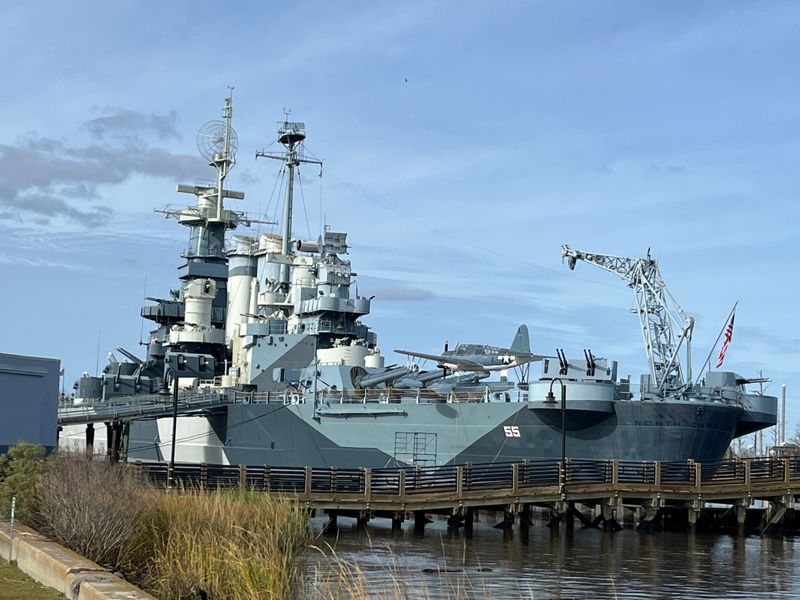
Nine levels of authentic spaces await curious explorers who board this floating museum for a self-paced journey through naval history. Visitors can wander from the bridge where officers commanded the ship to the deepest engine rooms where mechanics kept the turbines running.
Each deck reveals different aspects of life aboard a World War II battleship, from sleeping quarters to mess halls to weapons stations.
Well-placed informational plaques throughout the ship explain what happened in each space and how sailors lived and worked there. The self-guided format allows visitors to spend as much time as they want in areas that interest them most.
Some guests race through in an hour while history enthusiasts easily spend three or four hours discovering every corner.
Planning at least two hours ensures adequate time to appreciate the ship’s complexity. Comfortable shoes become essential when climbing steep ladders and navigating narrow passageways designed for sailors rather than tourists.
Guided tours led by knowledgeable volunteers offer deeper insights for visitors who want expert commentary about specific areas or historical events that shaped the ship’s remarkable service record.
8. Educational Programs And Events
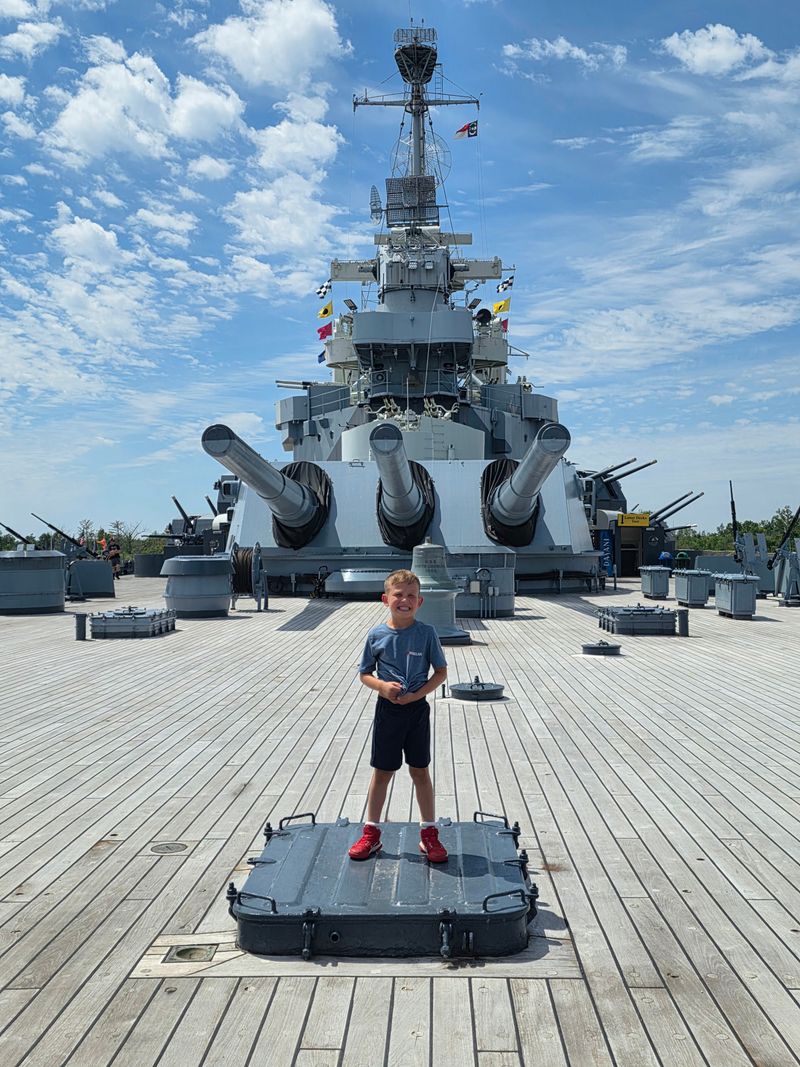
Year-round educational programming transforms this museum into an active learning laboratory where history comes alive through demonstrations and special events. Living history presentations feature volunteers in period uniforms demonstrating everything from damage control procedures to daily routines that sailors followed during wartime.
These immersive programs help younger visitors understand what life was really like aboard a combat vessel.
Special commemorations mark significant dates in the ship’s history and American naval heritage, bringing veterans and their families together with new generations. School groups receive customized educational experiences aligned with curriculum standards, making the battleship a valuable classroom extension.
Interactive programs encourage hands-on learning that textbooks cannot replicate.
The museum’s commitment to education extends beyond simple tours. Workshops, lectures, and special access programs provide deeper dives into specific topics like naval engineering, military strategy, or daily life during World War II.
Overnight encampment programs even allow scouts and youth groups to sleep aboard the ship, experiencing a taste of what sailors endured during their service on this historic vessel.
9. Environmental Preservation Efforts
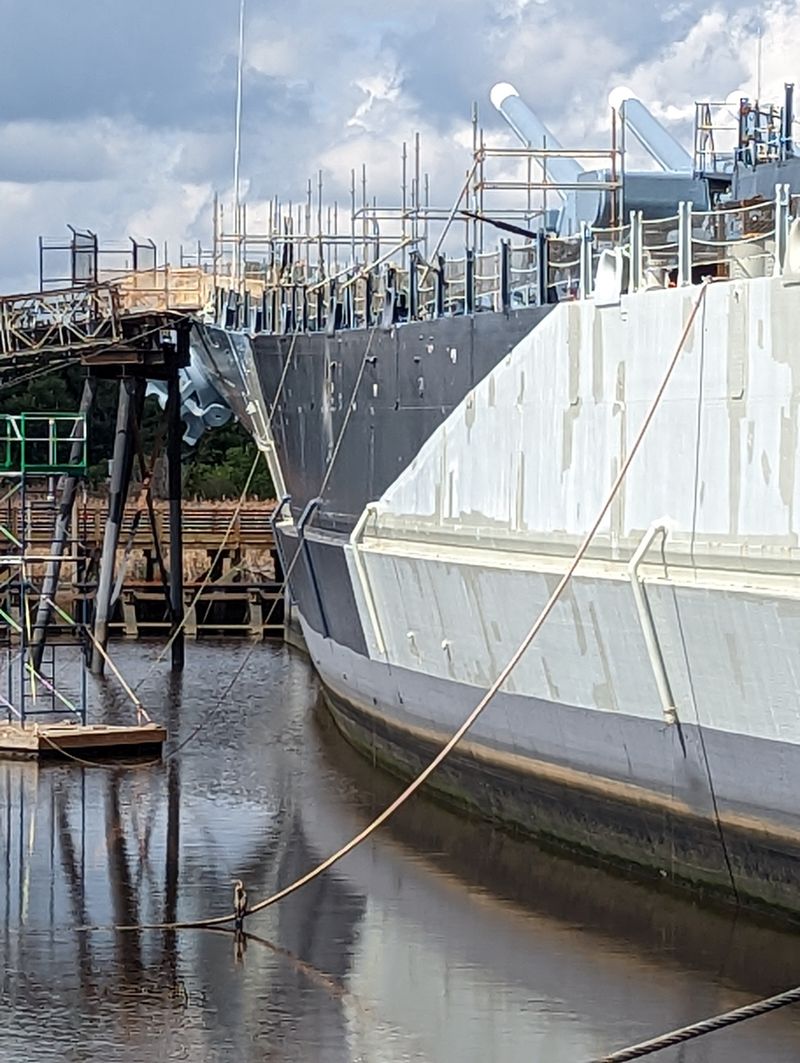
Rising sea levels and increased flooding pose serious threats to this historic vessel, prompting innovative responses to protect the ship for future generations. Engineers constructed a permanent steel cofferdam around portions of the hull, creating a dry environment for ongoing repair work.
These preservation efforts represent a significant investment in keeping the battleship shipshape despite environmental challenges.
The museum developed a nature marine trail dock featuring ADA-accessible kayak launches that serve dual purposes of recreation and education. This initiative connects visitors to the Cape Fear River ecosystem while demonstrating how historic preservation can coexist with environmental stewardship.
Sustainable practices guide all maintenance and improvement projects affecting the ship and surrounding grounds.
Climate adaptation strategies implemented serve as models for other waterfront historic sites facing similar challenges. The “Living with Water” project explores ways to protect the battleship while embracing its riverfront location.
These forward-thinking approaches ensure that this irreplaceable piece of American history survives the environmental changes affecting coastal regions, allowing countless future visitors to connect with the sacrifices and achievements of the Greatest Generation.
10. Haunted Reputation And Mysteries
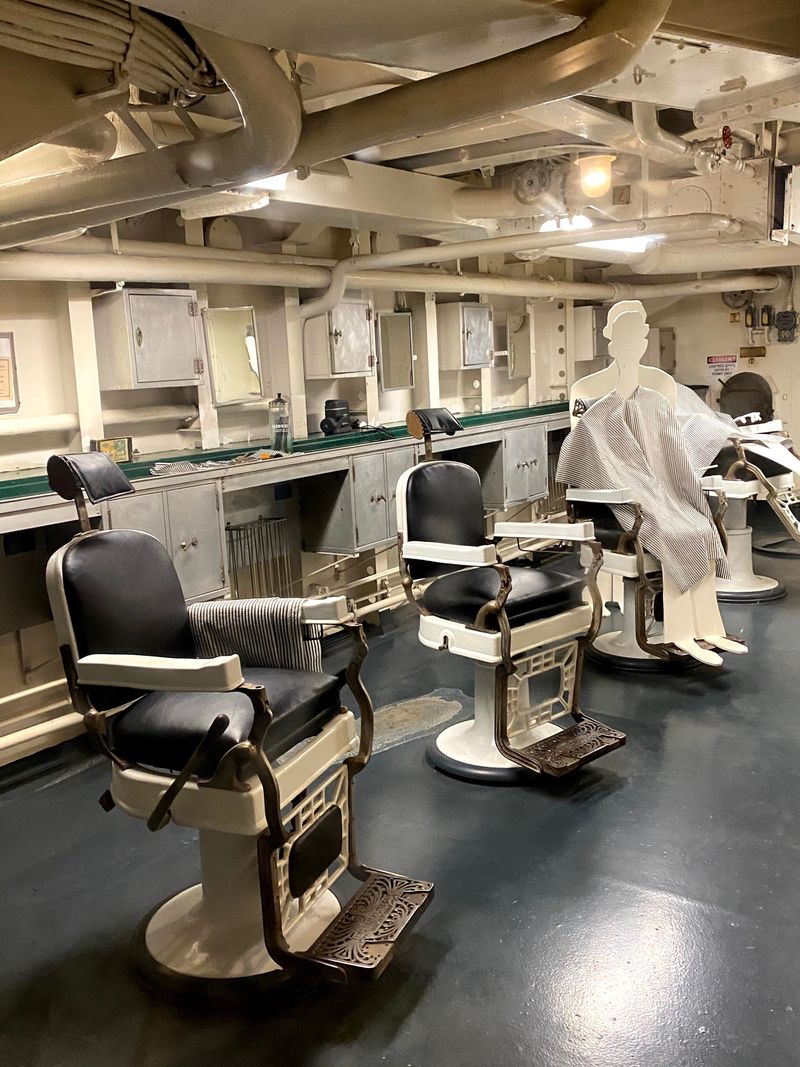
Unexplained footsteps echo through empty passageways after closing time, and shadowy figures appear where no living person should be, according to numerous visitors and staff members. The sounds of machinery operating in the dead of night puzzle security personnel who find all equipment properly shut down.
These paranormal reports have given the battleship a reputation as one of the most haunted locations in North Carolina.
Some believe the spirits of sailors who died aboard the ship during its wartime service remain attached to their former home. The five men killed by the 1942 torpedo strike might account for some manifestations, though reports describe multiple different apparitions.
Skeptics suggest creaking metal and settling structures explain the mysterious sounds, but believers point to experiences that defy rational explanation.
Ghost tours and paranormal investigations occasionally take place, attracting visitors interested in the supernatural alongside history buffs. Whether you believe in ghosts or not, exploring the ship’s dimly lit lower decks certainly creates an eerie atmosphere.
The combination of authentic historical setting and reported paranormal activity adds an extra dimension to the visitor experience that makes the battleship memorable long after you return home.
11. Accessibility And Physical Challenges
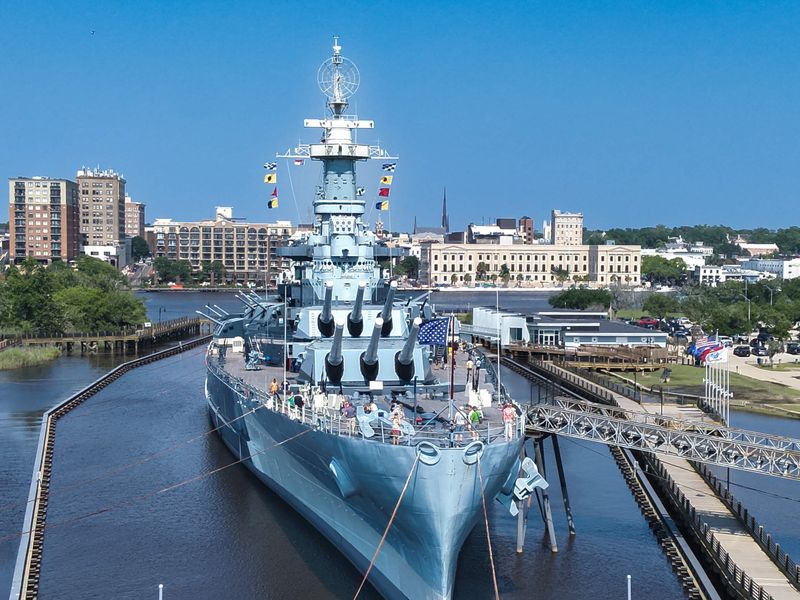
The main deck welcomes visitors with mobility challenges, offering relatively flat surfaces and accessible viewing areas of key features. However, exploring the upper and lower decks requires navigating steep ladders and squeezing through narrow passages designed for fit young sailors rather than tourists.
This authentic preservation means the ship retains its original character but presents physical challenges for some guests.
Vertical ladders with rails connect different deck levels, requiring visitors to climb hand-over-hand in some areas. Doorways feature high thresholds called knee-knockers that sailors stepped over countless times but can trip unsuspecting visitors.
The confined spaces and industrial environment faithfully represent what sailors experienced, though this authenticity limits full accessibility throughout the entire vessel.
Visitors should honestly assess their physical capabilities before attempting all areas. The museum provides clear information about which sections require ladder climbing and which areas remain accessible to everyone.
Families with young children or elderly members can still enjoy significant portions of the ship while respecting limitations. The authentic preservation philosophy means some compromises on modern accessibility standards, but this approach maintains the vessel’s historical integrity and educational value.
12. Visitor Amenities And Practical Information
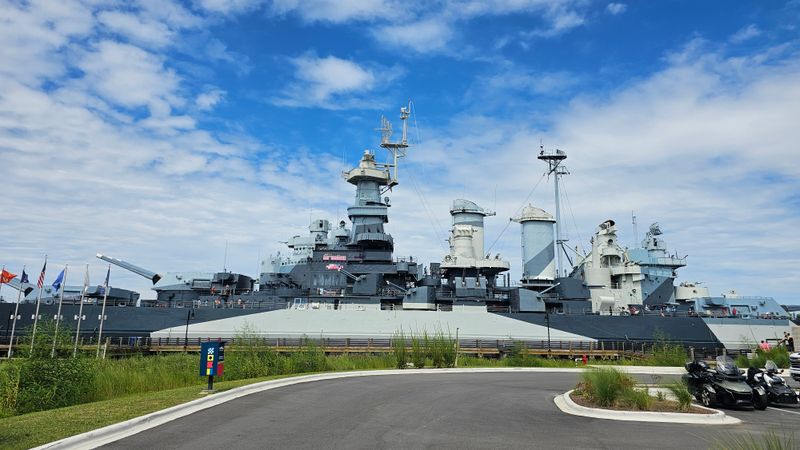
Free parking accommodates cars, buses, and RVs in spacious lots adjacent to the ship, eliminating one common tourist frustration before your visit even begins. The museum operates daily from 8 AM to 5 PM, giving visitors ample time to explore without feeling rushed.
Admission prices remain reasonable considering the extensive access provided to this massive historic vessel and its exhibits.
A visitor center houses a gift shop stocked with naval memorabilia, books, and souvenirs alongside vending machines offering snacks and beverages. Restroom facilities serve guests before they board the ship, though facilities aboard the vessel remain limited.
The canteen area provides a comfortable spot to rest and refresh between exploring different sections of the battleship.
Planning your visit to 1 Battleship Rd NE, Wilmington, becomes easier with information available on the museum’s website, including special event schedules and educational program calendars. Arriving early helps beat crowds and avoid the hottest part of summer days when temperatures inside the steel ship can become uncomfortable.
The museum’s location offers beautiful views across the Cape Fear River toward downtown Wilmington, creating photo opportunities that capture both the battleship’s majesty and the scenic coastal setting that now cradles this warrior in peaceful retirement.