This North Carolina Village Is A Springtime Fairy Tale You Can Visit

Picture a miniature stone village sparkling with quartz crystals under the Carolina sun, where every building tells a story and tiny toys become permanent residents. Shangri-La Stone Village represents one man’s incredible nine-year journey to create something magical from rocks, concrete, and pure imagination.
Hidden along a quiet stretch of Highway 86 in Prospect Hill, this enchanting roadside attraction proves that retirement can be the beginning of your greatest adventure. North Carolina hides fairy-tale villages in the most unexpected places, and this one costs absolutely nothing to explore.
Henry Warren started building his stone masterpiece at age 72, constructing 27 miniature buildings that stand about five feet tall and capture the hearts of everyone who wanders through. Each structure features intricate stonework, recycled treasures, and enough whimsy to make you believe in magic again.
Visitors leave behind small toys and trinkets that become part of the village’s charm, creating an ever-evolving folk art display that honors one tobacco farmer’s beautiful vision.
1. A Retired Farmer’s Dream Made Real
Creating something extraordinary doesn’t require youth or formal training. Henry Warren proved this when he picked up his first stone at 72 years old and decided to build an entire village.
Most people think retirement means slowing down, but Warren saw it as his chance to finally pursue the creative vision dancing in his imagination.
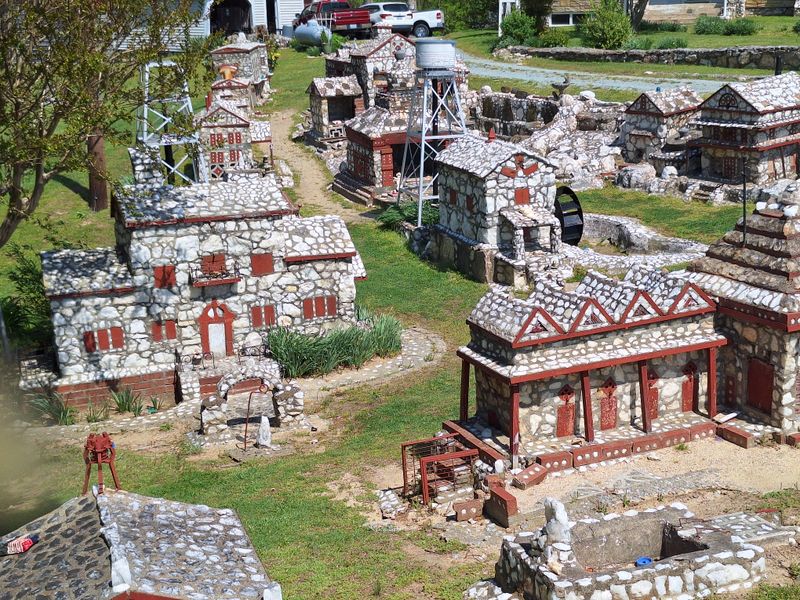
From 1968 to 1977, he dedicated nine years to constructing 27 individual stone buildings on his property at 11535 NC-86, Prospect Hill. Each structure required careful planning, heavy lifting, and artistic vision that transformed ordinary rocks into architectural miniatures.
Warren gathered stones from around his property, including a quarry right on the land, giving his village authentic local character.
The buildings stand roughly five feet tall, making them accessible enough for children to peer inside while maintaining impressive detail. Warren incorporated recycled materials like milk crates for porches and gear shifts for mill wheels, proving that creativity matters more than expensive supplies.
His determination to complete this massive project in his seventies inspires visitors who realize it’s never too late to build something beautiful and lasting.
2. Twenty-Seven Structures Of Pure Imagination
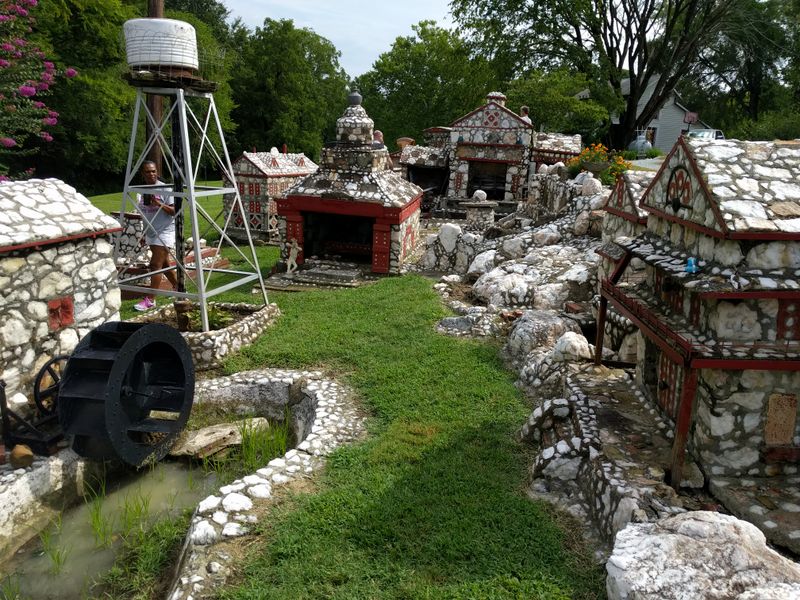
Walking through Shangri-La feels like stepping into a storybook where every building serves a purpose in this tiny community. Warren didn’t just create random structures; he designed a complete functioning village with all the establishments a real town would need.
You’ll discover a church with a steeple, a schoolhouse for learning, a theater for entertainment, a hospital for healing, and a mill for grinding grain.
Each of the 27 buildings showcases unique architectural details that reward careful observation. Some feature phone insulators as decorative roof toppers, adding unexpected pops of aqua color against the natural stone.
Others incorporate arrowheads into their walls, connecting the village to the indigenous history of North Carolina’s Piedmont region.
The structures arrange themselves naturally across the sloping yard, looking like they were carved directly from the hillside rather than built upon it. This intentional placement creates wonderful sightlines where you constantly discover new buildings as you explore different angles.
Warren’s attention to proportion ensures each structure maintains believable scale, making the village feel genuinely inhabited by invisible residents going about their daily lives in this peaceful stone sanctuary.
3. Sparkling Quartz Crystals Everywhere
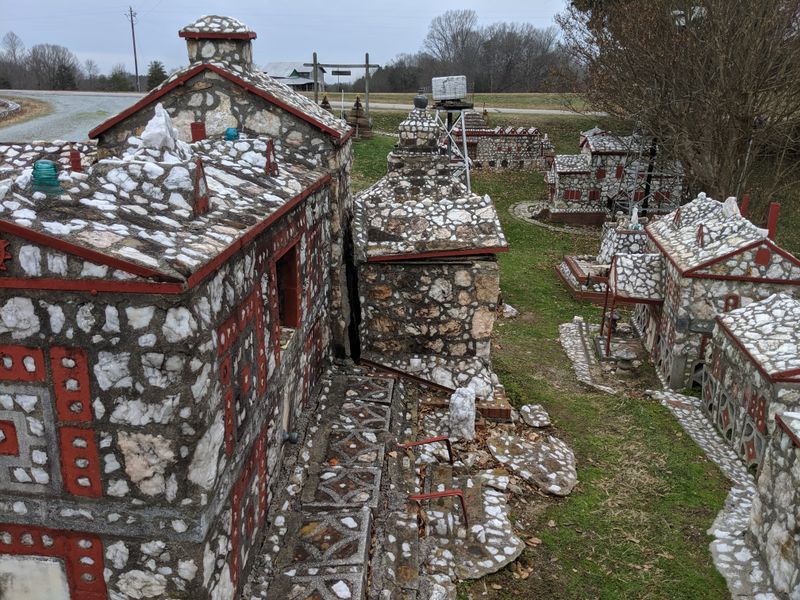
Sunlight transforms Shangri-La into something truly magical when it catches the countless quartz crystals embedded throughout the village. Warren didn’t just use ordinary rocks; he specifically incorporated quartz and rose quartz into his designs, creating buildings that literally sparkle.
The roofs especially showcase this glittering effect, with crystals positioned to catch maximum light throughout the day.
Many visitors admit they completely miss the quartz on their first pass through the village. Only when they slow down and really examine each structure do they notice the incredible abundance of crystals worked into walls, roofs, and decorative elements.
Some reviewers wonder how Warren collected so many crystals, suggesting he must have spent years gathering these precious stones from his property and beyond.
The quartz adds both beauty and energetic qualities that some visitors find spiritually significant. On sunny days, the entire village seems to glow with an inner light that photographs beautifully.
Rose quartz pieces provide soft pink accents against the gray and white stones, adding warmth to the color palette. This attention to materials elevates Shangri-La from simple roadside curiosity to genuine folk art masterpiece worth studying closely.
4. Free Admission, Open Always

Some of life’s best experiences don’t cost a penny, and Shangri-La Stone Village proves this beautifully. Warren’s family maintains the village as a free public attraction with no gates, no tickets, and no set hours.
You simply pull up alongside the property, park safely, and start exploring whenever the mood strikes you.
This generous accessibility means you can visit during golden hour for photography, stop by on a whim during a road trip, or plan a leisurely afternoon exploring every detail. Friendly signs welcome visitors to wander freely and respectfully through the grounds.
A visitor’s journal sits in a box near the entrance where you can read entries from people worldwide and add your own reflections about the experience.
The Prospect Hill Volunteer Fire Department sits right next door, and their gravel lot offers additional parking if needed, though visitors should avoid blocking garage doors. This informal arrangement works because guests treat the property with care and appreciation.
While there’s no admission fee, some visitors wish there were a way to leave tips for maintenance, showing how much people value this special place and want to support its preservation.
5. Leave A Toy, Join The Community
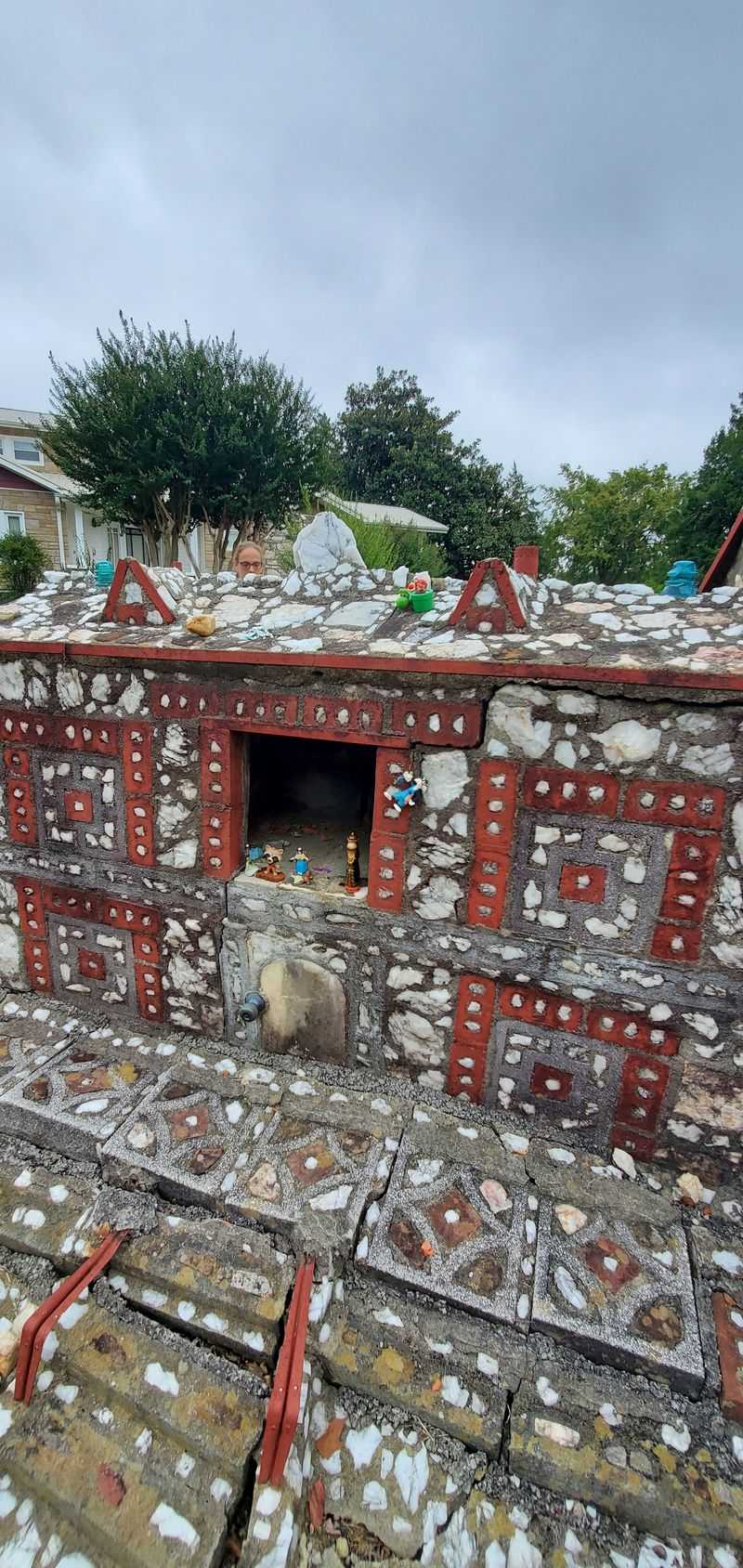
Shangri-La has developed a charming tradition where visitors leave small toys, trinkets, or painted rocks to become permanent village residents. This custom transforms the site from static display into living, evolving folk art that grows with each guest’s contribution.
Tiny plastic animals peer from windows, miniature cars park beside buildings, and colorful painted stones nestle into landscaping throughout the grounds.
Nobody enforces this tradition or requires participation; it simply emerged organically as visitors felt moved to add their own touch to Warren’s creation. Some people bring specific items they’ve prepared, like painted rocks with inspirational messages or small figurines that match the village aesthetic.
Others leave single earrings, coins, or whatever small treasures they happen to have in their pockets at the moment.
These additions honor Warren’s creative spirit by continuing his legacy of building and beautifying the village. Children especially love this interactive element, carefully selecting the perfect spot for their contribution and imagining the stories of toys left by previous visitors.
The accumulating treasures create treasure-hunt excitement as you explore, discovering unexpected items tucked into corners and displayed on rooftops throughout this ever-growing community of miniature inhabitants.
6. Masterful Stonework And Recycled Treasures
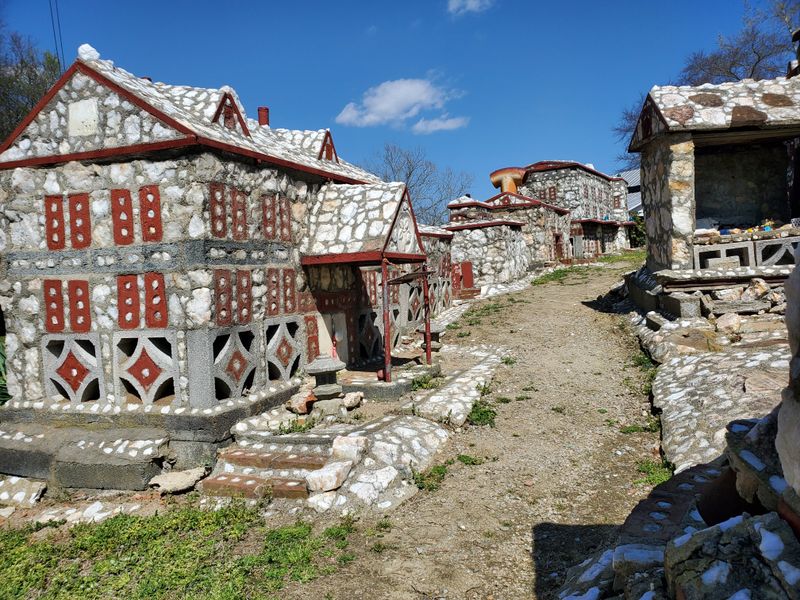
Warren’s genius shines through his resourceful use of everyday objects transformed into architectural elements. Walk slowly through the village and you’ll spot milk crates cleverly repurposed as front porches, their grid pattern creating perfect miniature railings.
A gear shift becomes the working mechanism for a grist mill wheel, demonstrating both mechanical understanding and artistic vision that turns junk into essential village infrastructure.
Aqua-colored telephone insulators crown several rooftops like decorative finials, their glass catching light and adding unexpected pops of color. These vintage pieces, once common on telephone poles, now serve as whimsical architectural details that showcase Warren’s eye for beauty in discarded items.
Every recycled element tells a story about rural North Carolina life in the mid-twentieth century.
The stonework itself displays impressive craftsmanship that many visitors compare to professional masonry. Warren fitted irregular stones together with precision, creating stable walls that have weathered decades of Carolina weather.
His mortar work remains solid, holding structures together through rain, heat, and cold. Some reviewers wonder if Warren had architectural training or natural talent, as the buildings show sophisticated understanding of proportion, balance, and structural integrity beyond typical hobby projects.
7. Perfect Stop On A Day Trip
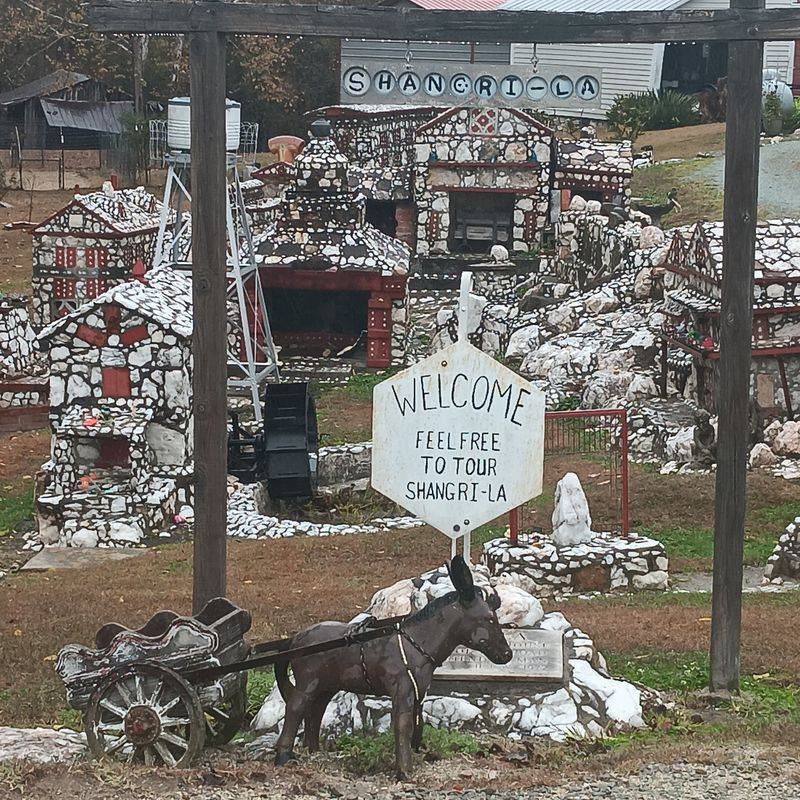
Road trips through North Carolina’s Piedmont region gain extra magic when you add Shangri-La to your itinerary. The village sits conveniently along Highway 86, making it an easy addition to any route through the area.
Most visitors spend 20 to 30 minutes exploring, though you can easily stretch it longer if you examine every detail and read through the visitor journal entries.
The compact size works perfectly for families with restless kids who need a stretch break but won’t tolerate hours at a single attraction. Dogs are welcome too, making this an ideal pit stop where everyone in your travel party can enjoy fresh air and something interesting to see.
The village provides just enough novelty to reset everyone’s mood without derailing your day’s larger plans.
Several reviewers recommend combining Shangri-La with other nearby stops to create a full afternoon of exploration. Just a couple miles up the road, you’ll find Cackawacky Vintage, the old Warren’s Store now selling antiques and vintage items Friday through Sunday.
This pairing creates a perfect mini-adventure celebrating local history and folk art. The fire department next door occasionally hosts fundraisers where you might learn additional village history while supporting the community that helps preserve this treasure.
8. Immerse Yourself For The Full Experience
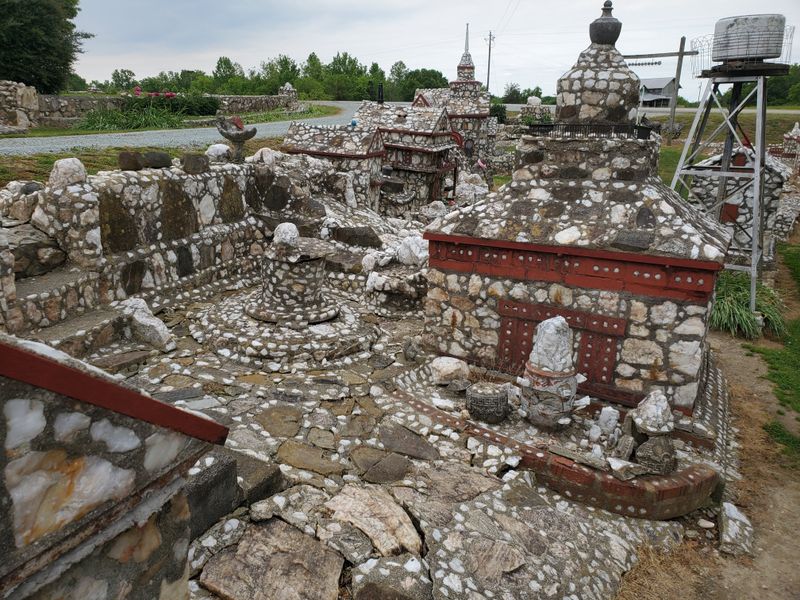
Rushing through Shangri-La means missing most of what makes it special. The village rewards patient observation and willingness to crouch down for building-level perspectives.
Some visitors admit they initially planned a quick five-minute look but ended up staying 30 minutes or longer once they started noticing intricate details. Each structure contains surprises that only reveal themselves when you stop and truly look.
Get down to the buildings’ eye level to peer through windows and doorways, imagining the miniature lives unfolding inside. Notice how light plays across different stone textures throughout the day, creating constantly changing shadows and highlights.
Read the names and messages on toys left by previous visitors, connecting with the thousands of people who’ve stood exactly where you’re standing now.
The sloped terrain encourages natural wandering as you discover buildings positioned at different elevations. Some visitors bring sketchbooks to capture architectural details, while others take hundreds of photographs trying to document every angle.
The visitor journal provides wonderful context, sharing stories and observations from guests worldwide. Taking time to write your own entry completes the experience, adding your voice to the ongoing conversation about Warren’s remarkable achievement and how it touched your heart.
9. Great For Kids And Adults Alike

Shangri-La’s five-foot scale creates perfect accessibility for children who can actually see into buildings and interact with the space at their level. Kids love the treasure hunt aspect of finding toys left by previous visitors and choosing the perfect spot for their own contributions.
The village sparks imagination as children invent stories about who lives in each building and what adventures unfold in this tiny stone town.
Adults appreciate different aspects, from Warren’s craftsmanship to the folk art significance to the meditative quality of the peaceful grounds. Photographers find endless compositional opportunities in the textures, patterns, and details throughout the village.
History enthusiasts connect with the mid-century rural North Carolina culture reflected in Warren’s material choices and architectural styles. Garden lovers admire the landscaping and how the structures integrate naturally into the sloping terrain.
This multi-generational appeal makes Shangri-La ideal for family outings where everyone genuinely enjoys themselves rather than tolerating an activity for someone else’s benefit. Grandparents share memories of similar folk art they’ve encountered, parents appreciate the free educational experience, and children get hands-on interaction with something truly unique.
The shared wonder creates bonding moments and memories that last far beyond the 30-minute visit itself.
10. A Labor Of Love, Not Commercial Venture
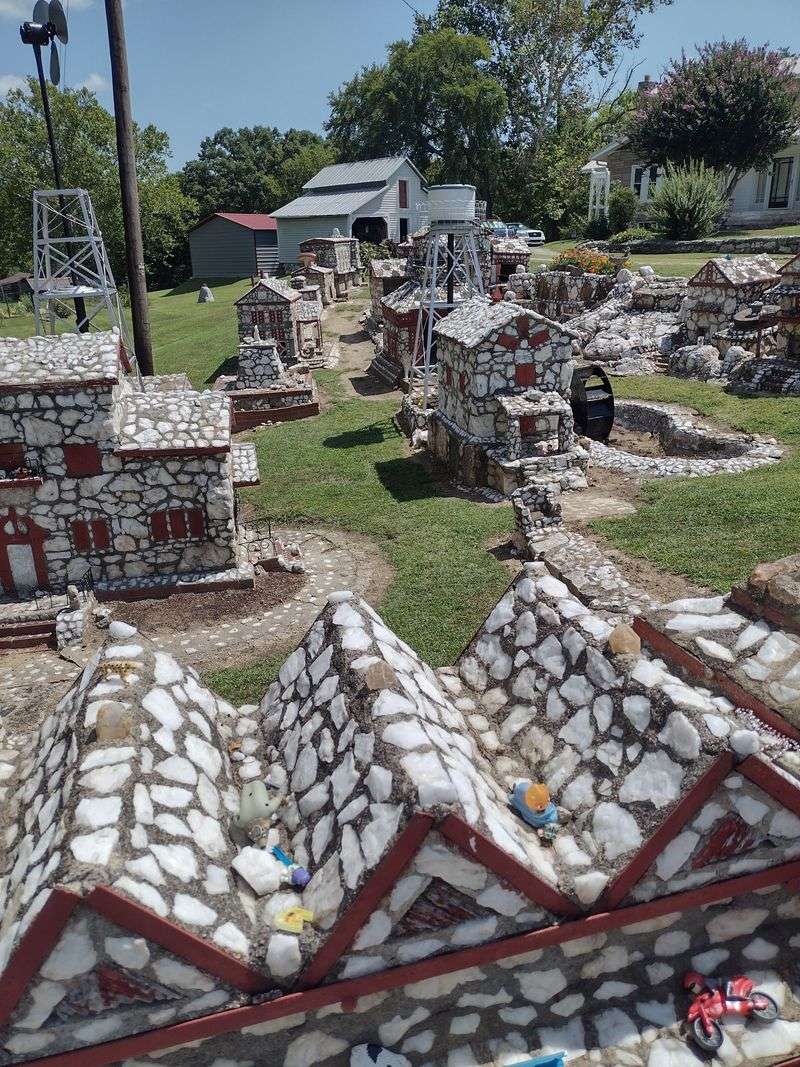
What makes Shangri-La truly special is knowing Warren built it for pure creative satisfaction, not profit or fame. He didn’t charge admission during his lifetime and his family continues honoring that generous spirit.
This wasn’t a business plan or tourist trap; it was one man’s artistic expression and gift to his community and passing travelers who might need a moment of beauty in their day.
The village reflects Warren’s personal vision without compromise or committee decisions smoothing away individual quirks. Every choice, from building placement to material selection to architectural style, came from his imagination and hands alone.
This singular creative control gives Shangri-La an authenticity that commercial attractions can never replicate, no matter their budget or professional designers.
Visitors sense this difference immediately upon arrival. There are no gift shops pushing merchandise, no staged photo opportunities with branded backdrops, no admission booths or turnstiles controlling access.
Just honest folk art created by someone who wanted to build something beautiful and share it freely. This purity of purpose touches people deeply, reminding them that the best human creations often spring from love rather than financial motivation, and that sharing generously multiplies joy rather than diminishing it.
11. Stones From The Property’s Own Quarry
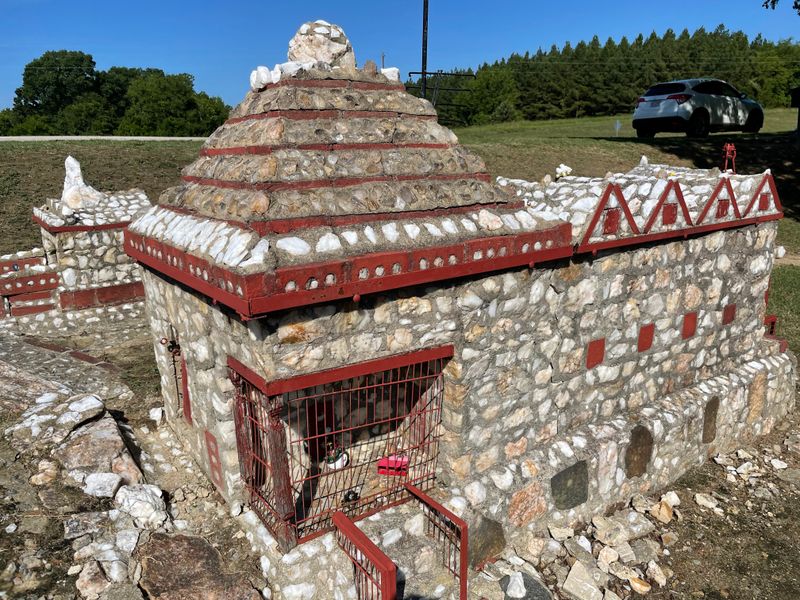
Warren didn’t need to travel far for building materials; his own property provided the foundation for his entire village. A quarry right on the land at 11535 NC-86, Prospect Hill, supplied the bulk of stones used in construction.
This meant Warren could select exactly the rocks he wanted, returning repeatedly to find pieces with perfect shapes, colors, or crystal inclusions for specific architectural needs.
Using local stone gives the village authentic connection to its place, literally rising from the North Carolina earth beneath it. The rocks carry geological history spanning millions of years, now arranged into human-scale structures telling more recent stories.
This relationship between ancient materials and modern creation adds philosophical depth to what might otherwise seem like simple roadside curiosity.
Visitors familiar with stone work appreciate the massive physical labor involved in quarrying, hauling, and placing these materials. Warren accomplished all this heavy lifting in his seventies, demonstrating remarkable strength and determination.
The quarry itself remains visible on the property, allowing guests to see where the village originated. Some reviewers mention gathering their own small stones as mementos, continuing the tradition of stones traveling from this special place to spread its magic elsewhere through people who carry pieces home.
12. Needs Love But Still Inspires

Time and weather inevitably affect outdoor folk art, and some visitors note that Shangri-La shows signs of aging. Certain structures need repair work, mortar has crumbled in places, and the grounds could use maintenance attention.
These observations come from people who care deeply about preservation and want this treasure protected for future generations rather than from critics dismissing the site’s value.
The village has survived remarkably well considering it was built by one elderly man using available materials rather than engineered by professionals with modern preservation techniques. Most structures remain stable and intact after nearly 50 years of exposure to Carolina’s humid summers, occasional ice storms, and everything between.
Warren’s solid craftsmanship ensures the village’s bones remain strong even where surface details have weathered.
Several reviewers express willingness to contribute financially toward maintenance if donation systems existed. This shows how much Shangri-La means to visitors who recognize its cultural value and want to support preservation efforts.
The Prospect Hill community, including the neighboring fire department, helps watch over the property. While it may not look pristine, the village’s slight weathering adds authenticity, showing these structures have lived through real seasons and survived, much like Warren’s legacy continues inspiring new visitors daily.
13. Finding Shangri-La Along Highway 86

Locating Shangri-La requires no treasure map or complicated directions. The village sits directly along Highway 86 in Prospect Hill at 11535 NC-86, Prospect Hill, visible from the road itself.
Look for the Prospect Hill Volunteer Fire Department, which shares the old stretch of Highway 86 with the village and provides a reliable landmark for navigation.
Most GPS systems and map applications recognize the address, making modern navigation straightforward. However, some visitors recommend searching for the fire department if your GPS struggles with the village itself.
Once you spot the fire department, you’ve arrived; the stone village sits right there on the adjacent property, impossible to miss once you know where to look.
Parking happens informally along the roadside or in the fire department’s gravel lot if you’re careful not to block their garage doors. The casual arrangement works well because visitor traffic remains manageable and guests respect the shared space.
Several reviewers mention how easy they found parking and access, with nobody bothering them during their visit. This laid-back accessibility reflects rural North Carolina hospitality and trust, creating welcoming atmosphere where you can explore at your own pace without time limits or pressure from staff or crowds.