This California Sky Walk Lets You Stroll High Above Towering Redwoods On Valentine’s Day
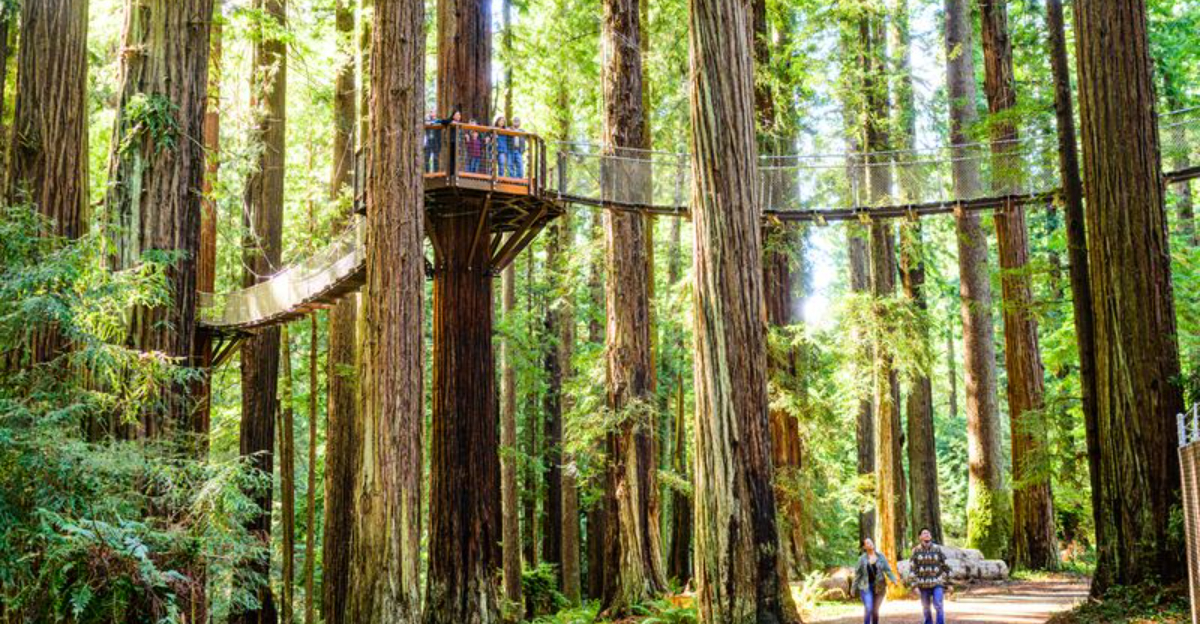
Walking among treetops sounds like something from a storybook, but it’s a real experience waiting in the heart of Northern California’s ancient forest.
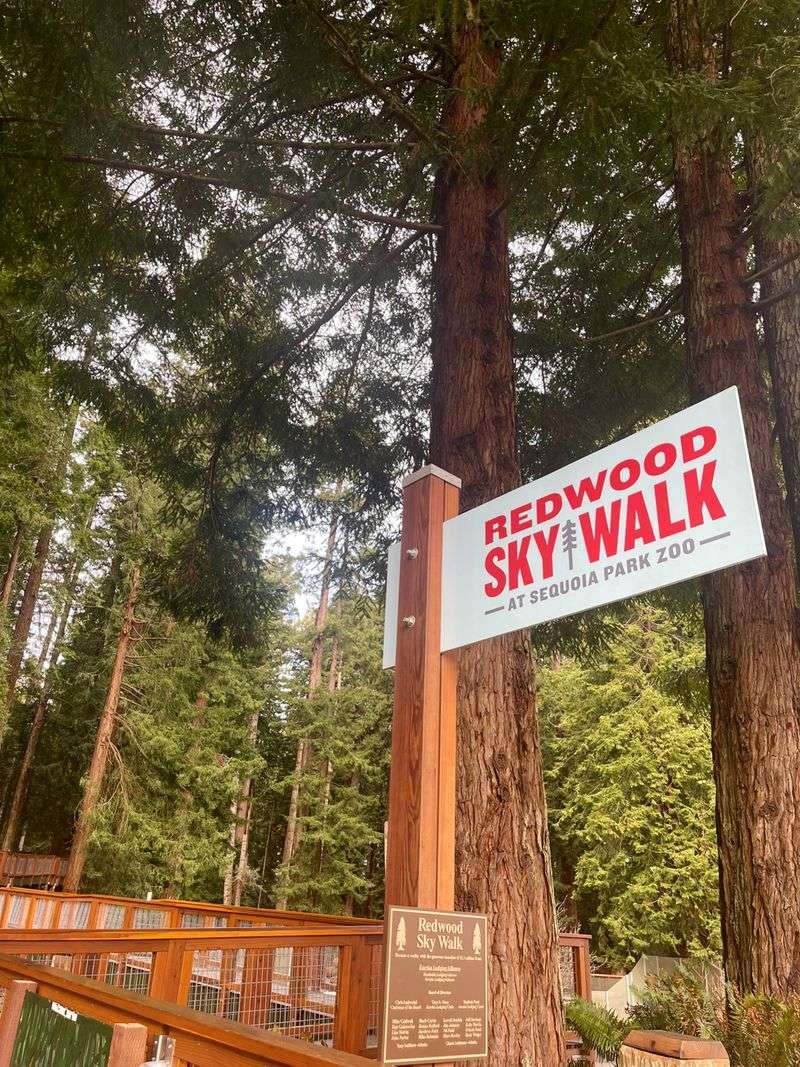
The Redwood Sky Walk at Sequoia Park Zoo in Eureka offers visitors a chance to step into the canopy layer and see the world from a perspective few ever witness.
Suspended bridges and platforms carry guests 100 feet above the ground, weaving through some of the planet’s tallest and oldest living things.
The structure blends engineering with nature, creating a path that respects the forest while revealing its hidden wonders.
Families, couples, and solo adventurers find something magical about being eye-level with the upper branches where birds nest and sunlight filters through in golden streaks.
Whether planning a Valentine’s Day outing or simply seeking a memorable day trip, this sky walk combines accessibility with adventure in a way that feels both thrilling and peaceful.
The experience connects people to the redwood ecosystem in a manner that ground-level trails simply cannot match, making it a destination worth the journey to California’s rugged North Coast.
1. Soaring 100 Feet Above The Forest Floor
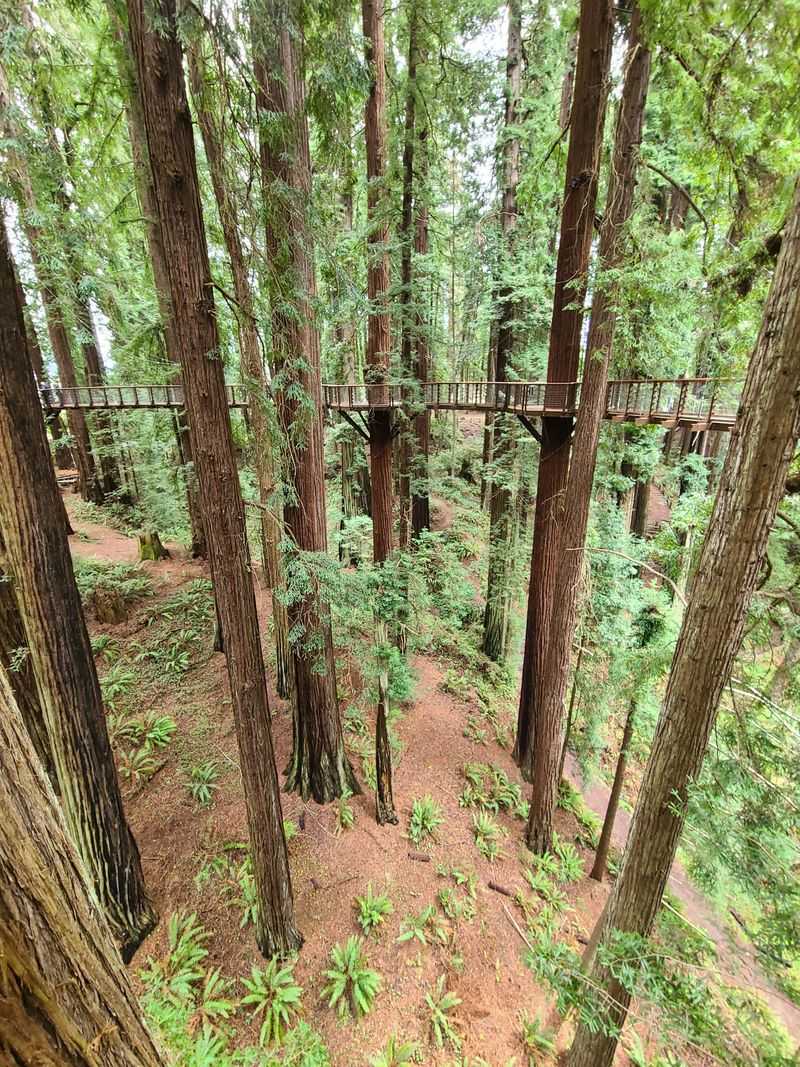
Standing on a platform that hovers 100 feet above the ground changes everything about how the forest feels.
The air moves differently up here, carrying cooler drafts and the scent of bark and moss mixed together.
Sounds from below become muffled while bird calls grow clearer, creating an audio landscape that feels removed from the everyday world.
The height might seem intimidating at first, but the sturdy construction and wide walkways quickly put most visitors at ease.
Looking down through the gaps in the decking reveals the forest floor carpeted in ferns and fallen needles, a view that highlights just how much vertical space these redwoods command.
The perspective shift makes familiar woodland scenes feel brand new. Reaching this elevation requires no climbing skills or special equipment.
The gradual ascent ramp brings visitors up smoothly, making the journey accessible for many ability levels.
By the time the highest point arrives, the sense of accomplishment mixes with wonder at being surrounded by treetops that stretch even higher overhead, reminding everyone just how small humans are compared to these ancient giants.
2. A Quarter-Mile Journey Through The Canopy
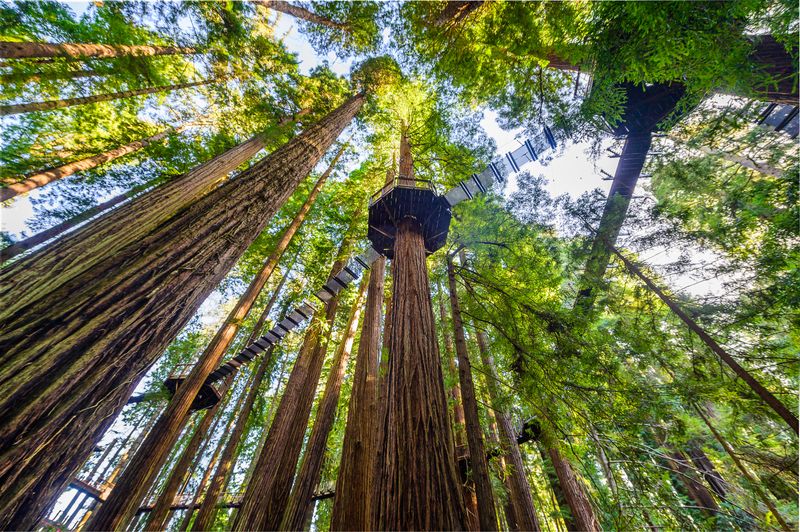
Stretching just under a quarter-mile, the sky walk offers more than a quick peek into the canopy.
The 1,104-foot path winds between trees in a way that reveals different angles and lighting conditions as visitors progress.
Each section brings new views, from glimpses of the zoo below to moments where the forest feels endless in every direction.
The length allows for a leisurely pace without feeling rushed. Some visitors move quickly, eager to see it all, while others pause frequently to absorb the details.
Benches along the route provide spots to rest and simply exist in the moment, watching how light plays across bark and leaves.
This distance also means the experience feels substantial rather than fleeting.
Unlike quick observation decks that offer only a snapshot, this extended pathway creates a genuine sense of traveling through the ecosystem.
The journey becomes meditative for some, energizing for others, but always memorable in how it transforms a simple walk into an exploration of vertical wilderness that few places can offer.
3. Fully Accessible Design For All Visitors
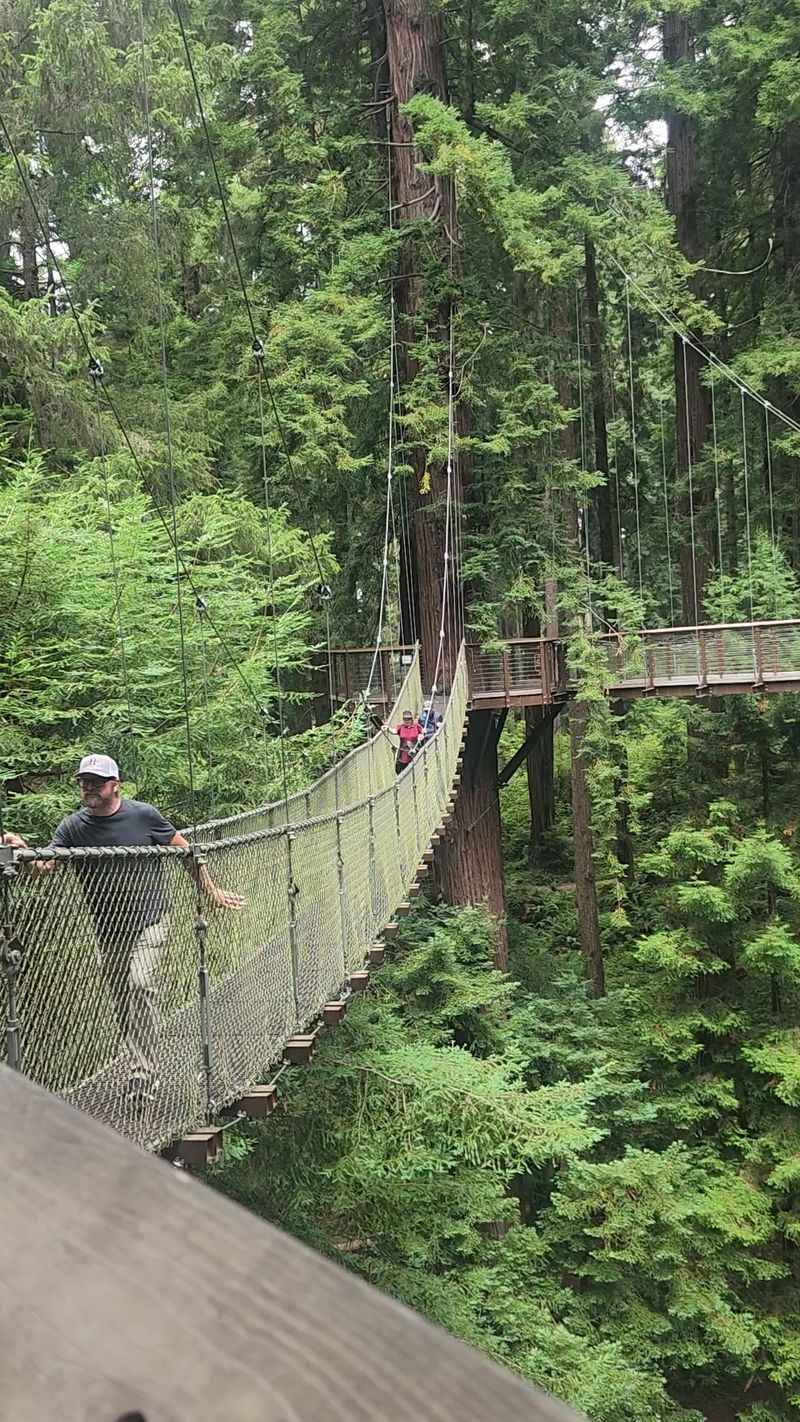
Accessibility often gets mentioned as an afterthought, but here it shaped the entire design from the beginning.
The 360-foot ascent ramp rises gradually enough that wheelchairs, strollers, and visitors with mobility challenges can navigate without strain.
The smooth Dynaplank surface eliminates bumps and gaps that might cause difficulties, while railings provide support throughout.
This thoughtful construction means families with young children in strollers and older adults who might struggle with stairs can all share the experience together.
The main route welcomes everyone, creating opportunities for memories that might not exist if steep stairs were the only option.
The inclusive approach reflects a broader understanding that nature experiences should not require peak physical fitness.
An optional 369-foot “adventure segment” offers a more exposed experience for those seeking additional thrills, but it’s clearly marked as separate from the main accessible path.
This dual approach satisfies both accessibility needs and adventure preferences without forcing anyone to choose between safety and excitement.
The result is a destination where diverse groups can visit together, each person finding their comfort level while still sharing the overall journey.
4. Constructed With Minimal Forest Impact
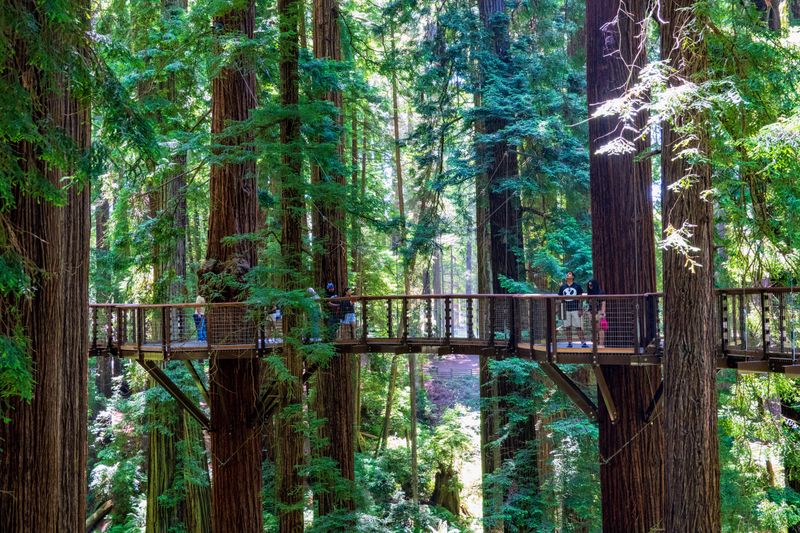
Building a structure among ancient trees presents obvious challenges when preservation matters.
The sky walk suspends from the redwoods without drilling into trunks or disturbing root systems below.
This engineering approach allows the trees to continue their growth cycles undisturbed, maintaining the forest ecosystem while creating human access through it.
The launch deck and ascent ramp use wood materials that blend visually with the surroundings, while the bridges and platforms utilize fabricated aluminum for strength without excessive weight.
These material choices reflect careful planning about both function and environmental responsibility. Nothing about the construction blocks natural processes like water flow or wildlife movement.
Visitors walking the path might not notice these details at first, but they matter significantly for the forest’s long-term health.
The trees will outlive the structure by centuries if cared for properly, and this design ensures they can do exactly that.
The minimal footprint approach proves that human recreation and ecological preservation can coexist when planners prioritize both equally from the start rather than treating conservation as a secondary concern.
5. Safety Features Built For California Conditions
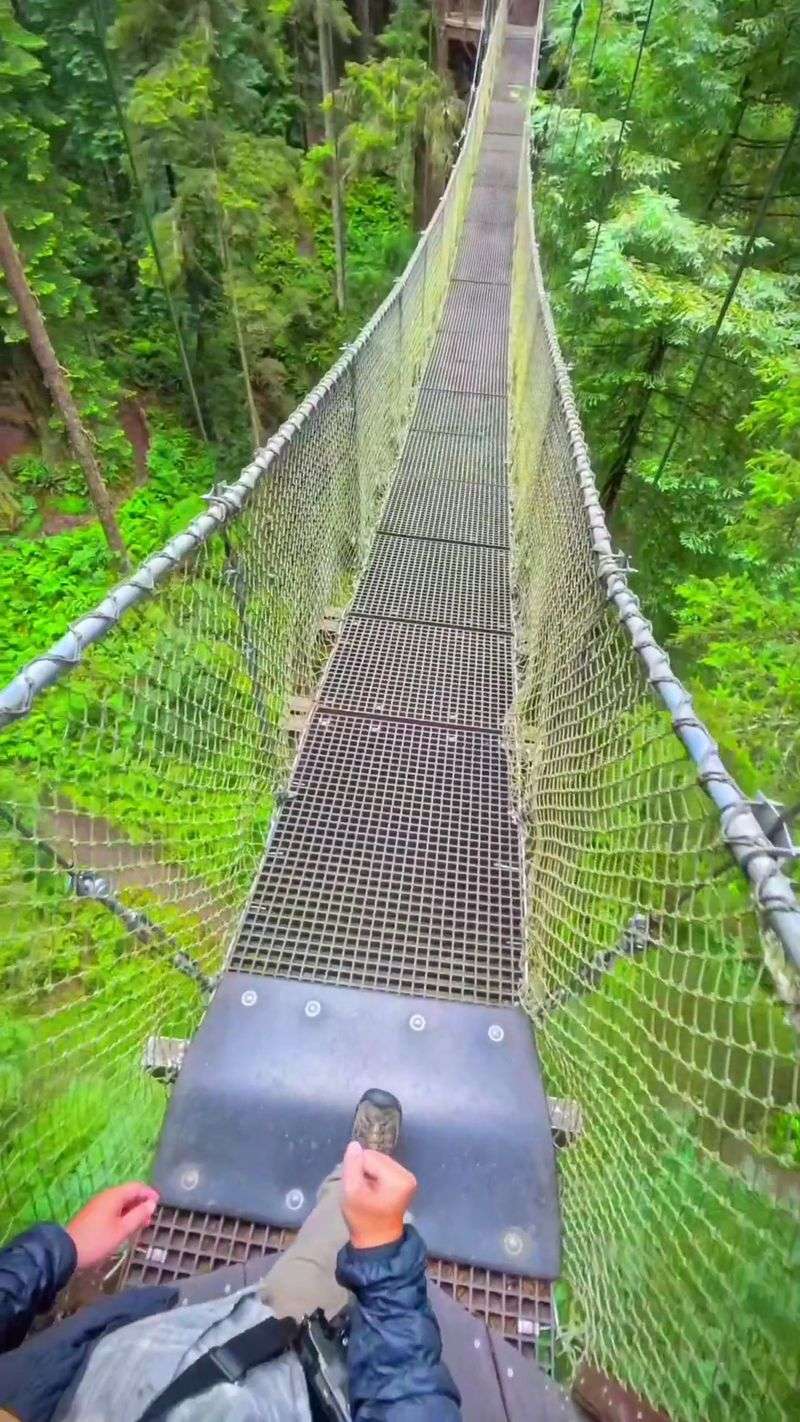
California’s seismic activity and coastal winds demand structures that can flex without failing.
The sky walk incorporates engineering specifically designed to withstand both earthquakes and high wind events that occasionally sweep through the region.
Regular inspections maintain these safety standards, ensuring the structure remains secure as conditions change over time.
Guardrails between 3.5 and 4 feet high line the entire walkway, providing protection without blocking views.
The height balances safety needs with the visual openness that makes the experience special. These barriers feel reassuring without creating a caged-in sensation that would diminish the sense of being among the treetops.
The Dynaplank decking surface resists slipping even when damp from fog or light rain, a crucial feature in this climate where moisture is common. Visitors can focus on the surroundings rather than worrying about footing.
This attention to practical safety details allows people to relax into the experience, knowing the structure will hold steady regardless of weather shifts or ground movements that might occur in this dynamic landscape.
6. Educational Signage Throughout The Journey
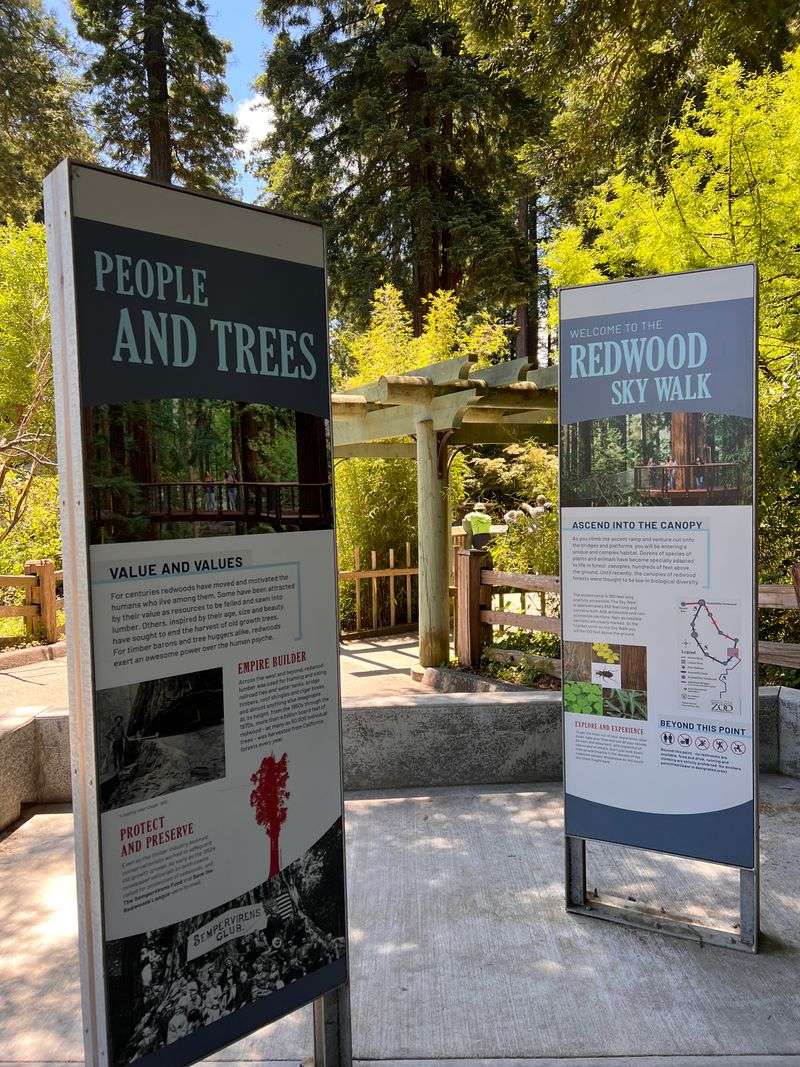
Scattered along the route, interpretive signs share information about redwood ecology that most visitors would otherwise miss.
These panels explain how the canopy layer functions as a distinct ecosystem, supporting species that rarely touch the ground.
Details about bark thickness, fire resistance, and the trees’ remarkable longevity add context to what eyes can see.
The educational component transforms a scenic walk into a learning experience without feeling like a classroom.
Information arrives in digestible chunks, allowing visitors to absorb what interests them while skipping past topics that don’t capture their attention.
Families with curious children find these signs particularly valuable for sparking conversations about nature and science.
Some panels focus on specific trees visible from that spot, creating direct connections between information and observation.
Others discuss broader ecological concepts like nutrient cycling or climate regulation that redwood forests provide.
This layered approach to education respects different learning styles and interest levels, making the sky walk valuable for both casual visitors seeking pretty views and dedicated nature enthusiasts wanting deeper understanding of what they’re experiencing.
7. Located Within Sequoia Park Zoo Grounds
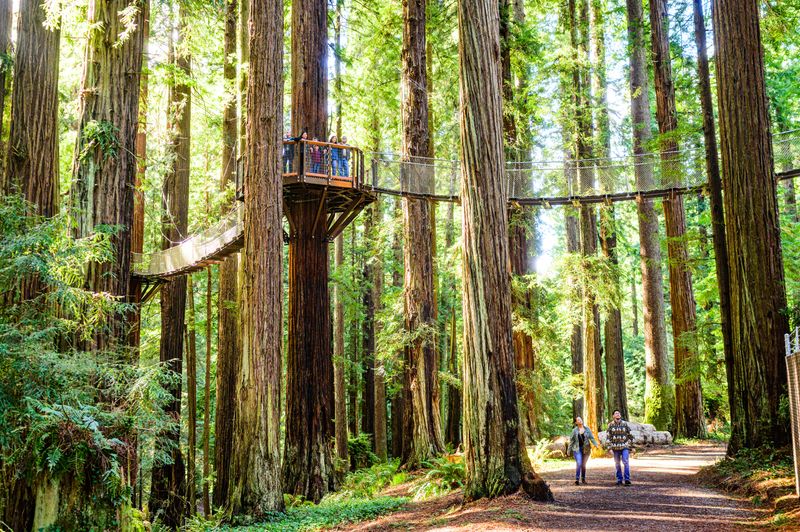
Finding the sky walk requires first entering Sequoia Park Zoo at 3414 W Street in Eureka, California 95503. This location means visitors can combine the canopy experience with zoo exhibits, creating a fuller day of exploration.
The zoo itself focuses on conservation and education, making the pairing with the sky walk feel thematically consistent.
Parking at the zoo provides direct access to both attractions without requiring separate drives or complicated navigation.
The combined admission covers everything, simplifying planning for families or groups trying to maximize their visit. This integration makes the sky walk feel like part of a larger experience rather than an isolated attraction.
Eureka’s location on California’s North Coast places it within reasonable driving distance of several major cities while maintaining a quieter, less crowded atmosphere than Southern California destinations.
The zoo grounds offer amenities like restrooms and places to sit, practical considerations that matter when spending several hours exploring.
This setting balances wilderness access with visitor comfort in a way that makes the day feel adventurous without becoming uncomfortable or overly challenging for most people.
8. Operating Hours Tuesday Through Sunday
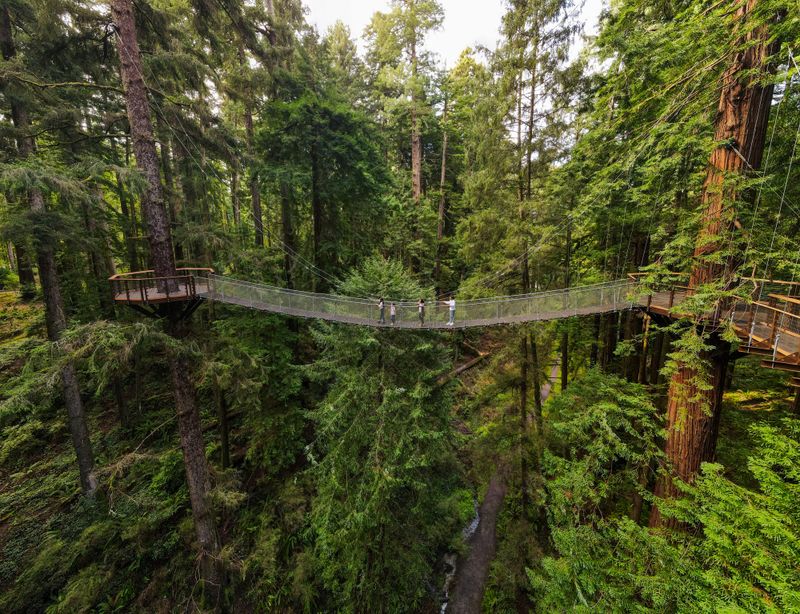
Planning a visit requires knowing the sky walk operates Tuesday through Sunday year-round, with seasonal hours that shift alongside daylight patterns.
During winter months (October through March), the attraction is open from 10 AM to 5 PM, with final entry at 4:30 PM.
In summer (April through September), hours extend from 10 AM to 6 PM, with last entry at 5:30 PM.
Mondays remain closed, allowing staff time for maintenance and safety inspections that keep the structure in peak condition.
The final entry cutoff ensures visitors have adequate daylight to complete the walk safely and comfortably.
Rushing through defeats the purpose of the experience, and these time limits prevent guests from feeling hurried as natural light begins to fade.
Arriving earlier in the day often means lighter crowds and more tranquil moments among the trees.
Seasonal scheduling reflects longer summer daylight hours while maintaining consistency in opening times, making trip planning straightforward throughout the year.
Visitors should still check the official website before traveling, as special events or weather conditions may occasionally affect operations.
The Tuesday–Sunday schedule accommodates weekend travelers while preserving regular downtime that helps maintain the high-quality experience guests expect.
9. Admission Included with Zoo Entry
Budgeting for the visit becomes straightforward since sky walk access comes with zoo admission rather than requiring separate tickets.
General admission for non-residents costs $24.95 for adults aged 13-59, $12.95 for children 3-12, and children under 2 enter free.
Residents and seniors receive discounted rates, rewarding local support and acknowledging fixed-income realities.
This pricing structure means visitors get two major attractions for a single admission cost, creating good value compared to paying separately for each experience.
Families calculating total expenses can plan more easily without worrying about surprise upcharges or confusing tiered pricing systems.
The transparency helps visitors decide whether the trip fits their budget before making the drive.
Comparing these rates to similar attractions elsewhere in California shows competitive pricing that doesn’t feel exploitative of the unique experience offered.
The combined ticket also encourages visitors to explore both the zoo and sky walk rather than rushing through one to get to the other.
This approach benefits both the visitor experience and the institution’s educational mission by creating more opportunities for meaningful engagement with wildlife and forest ecosystems during a single visit.
10. Special Events And Unique Programming
Beyond regular walk-through visits, the sky walk occasionally hosts special programming that adds new dimensions to the experience.
Past events have included “Yoga on the Redwood Sky Walk,” where participants practice poses while suspended among the trees, and talks by subject matter experts who share deeper knowledge about forest ecology and conservation.
These offerings transform the space from passive observation to active engagement. Special events typically require advance registration and may carry additional fees beyond standard admission.
The limited capacity of the elevated structure means these programs stay small and intimate, creating opportunities for questions and interaction that larger venues cannot match.
Valentine’s Day programming has appeared in past years, making the sky walk a romantic destination for couples seeking something more memorable than typical dinner dates.
Checking the official website reveals upcoming special events that might align with visit plans.
These programs appeal particularly to repeat visitors who have already experienced the basic walk and want fresh perspectives on the space.
The willingness to experiment with different uses of the sky walk shows creative thinking about how to maximize the unique setting while maintaining respect for the natural environment that makes it special.