These Prehistoric Caves In California Were Once A Route 66 Attraction (Now Only 30 People Can Visit Per Day)
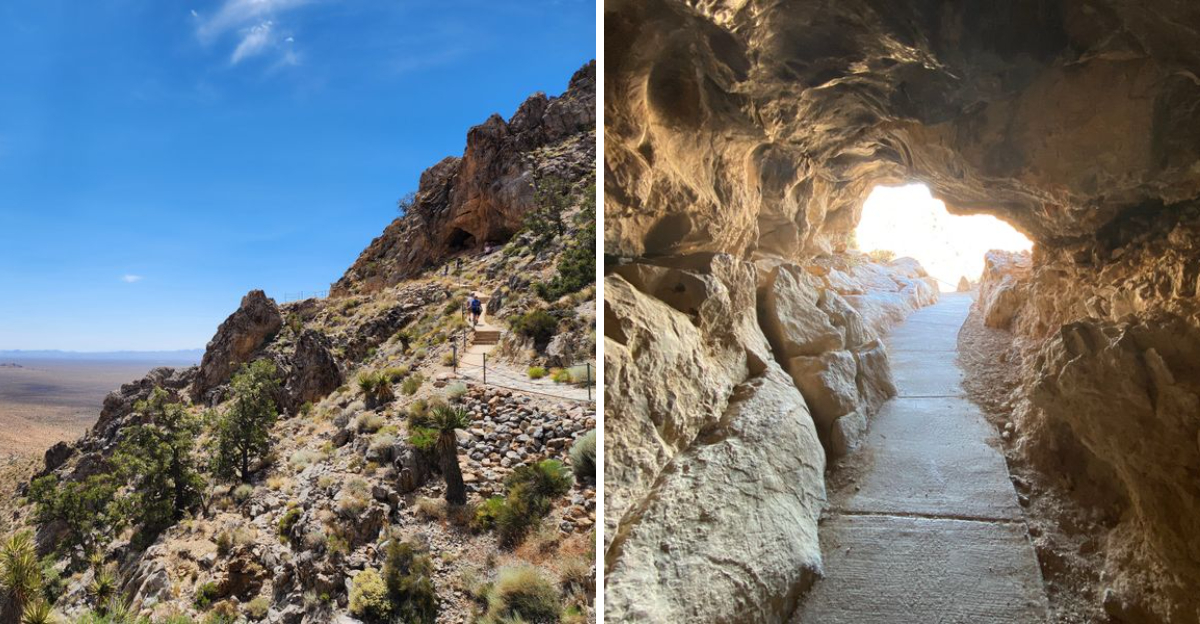
Deep in the Mojave Desert, far from crowded highways and neon city lights, hides a cave system most travelers don’t even know exists.
Mitchell Caverns once lured Route 66 road-trippers looking for adventure beyond the pavement – and today, it feels even more exclusive.
Carved into limestone cliffs over millions of years, these underground chambers reveal towering formations, echoing chambers, and cathedral-like passageways that feel almost unreal.
What was once a roadside stop has become one of California’s most tightly controlled natural experiences, with only a small number of visitors allowed inside each day.
That limited access has turned Mitchell Caverns into a bucket-list destination for explorers willing to plan ahead.
Those who make the journey don’t just see caves – they step into a hidden desert world few people ever get to witness.
1. An Overview Of These Prehistoric Caves Near Los Angeles
Mitchell Caverns sits within the Providence Mountains State Recreation Area, roughly 200 miles from Los Angeles in the heart of the Mojave Desert.
The caves formed over millions of years within Permian limestone, creating a network of underground chambers filled with delicate mineral formations.
Two main caverns make up the system, known as El Pakiva and Tecopa, connected by a natural passageway that visitors traverse during guided tours.
The caves maintain a constant temperature around 65 degrees Fahrenheit year-round, offering natural air conditioning in an otherwise scorching landscape.
Elevation at the cave entrance reaches approximately 4,300 feet above sea level, providing sweeping views of the surrounding desert valleys and distant mountain ranges.
The limestone itself dates back roughly 250 million years to the Permian period, when this area lay beneath an ancient sea.
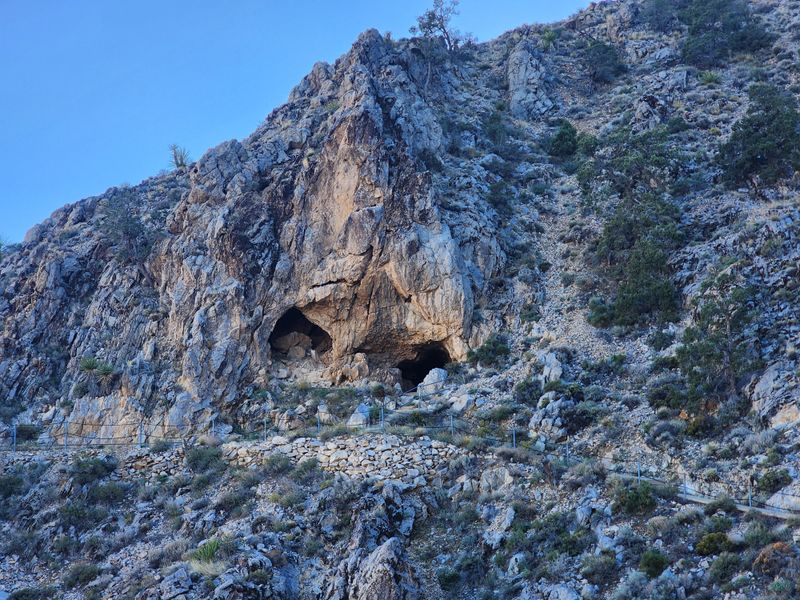
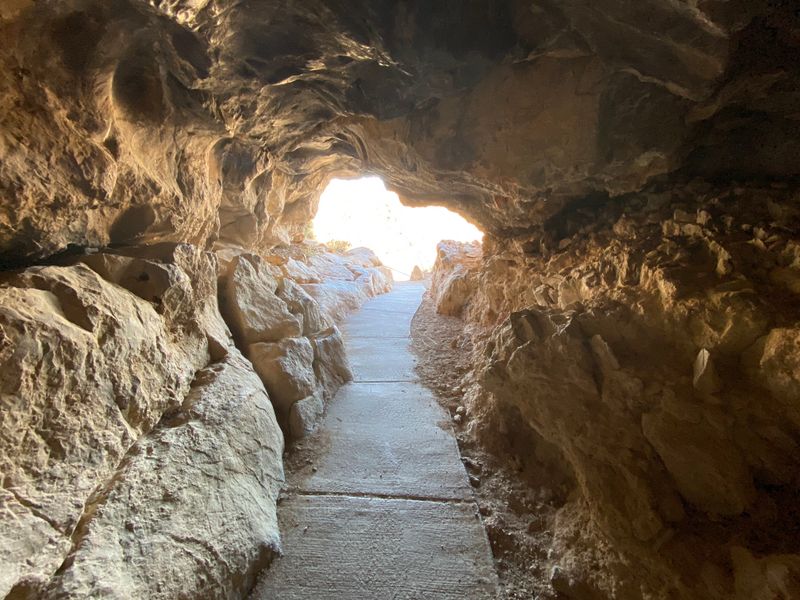
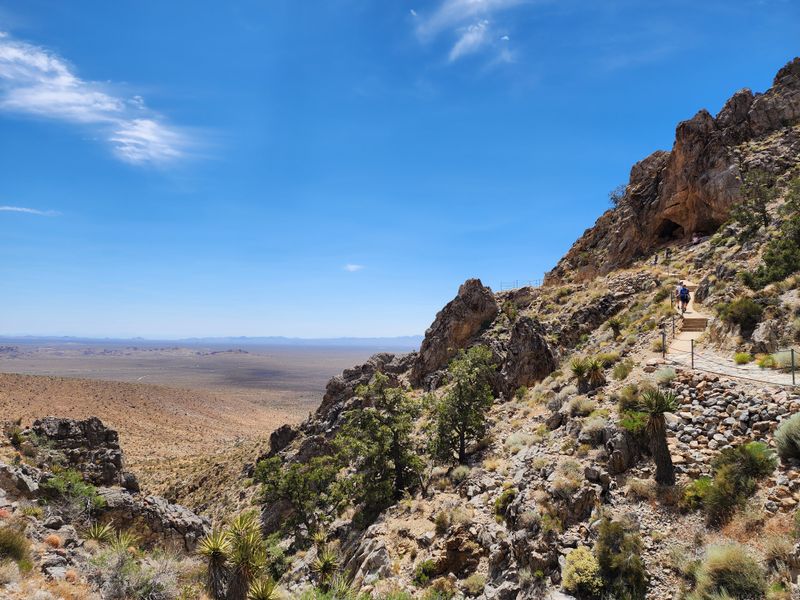
Visitors approach the caves through a series of stone pathways and steps constructed during the site’s early days as a tourist attraction.
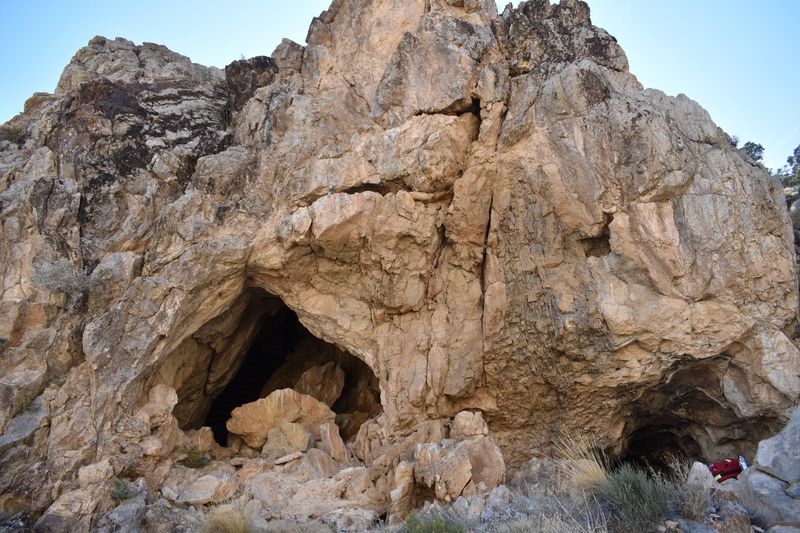
The dual cave entrances appear as dark voids in the pale limestone cliff face, visible from the parking area below and earning the site its indigenous name meaning eyes of the mountain.
2. How The Caves Date Back To The Miocene Era
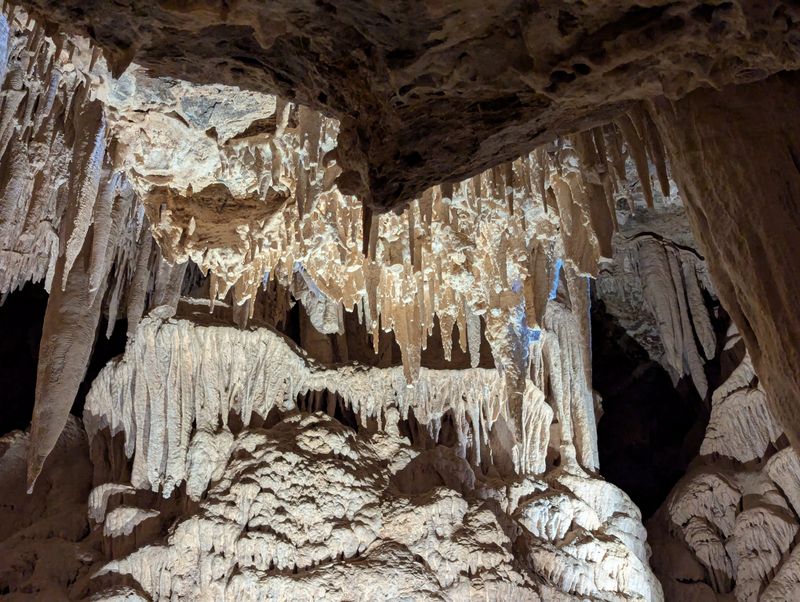
While the limestone that hosts Mitchell Caverns dates back roughly 250 million years to the Permian period – when this region lay beneath an ancient sea – the caves themselves are believed to have formed much later.
Over millions of years, slightly acidic groundwater seeped through fractures in the uplifted limestone, slowly dissolving the rock and carving out chambers and passageways.
Mineral-rich water dripping from cave ceilings deposited calcium carbonate layer by layer, creating the stalactites, stalagmites, and flowstone seen today.
This process continues, though at an extremely slow pace measured in fractions of an inch over centuries.
Many of the cave’s visible formations grew during wetter climate cycles, including periods associated with Ice Age conditions, when increased rainfall accelerated mineral deposition and cave development.
Scientists study these speleothems because their layered growth can preserve long-term records of regional climate patterns, offering insights into how environments in the Mojave Desert have shifted over thousands of years.
3. Their History As A Route 66 Roadside Attraction
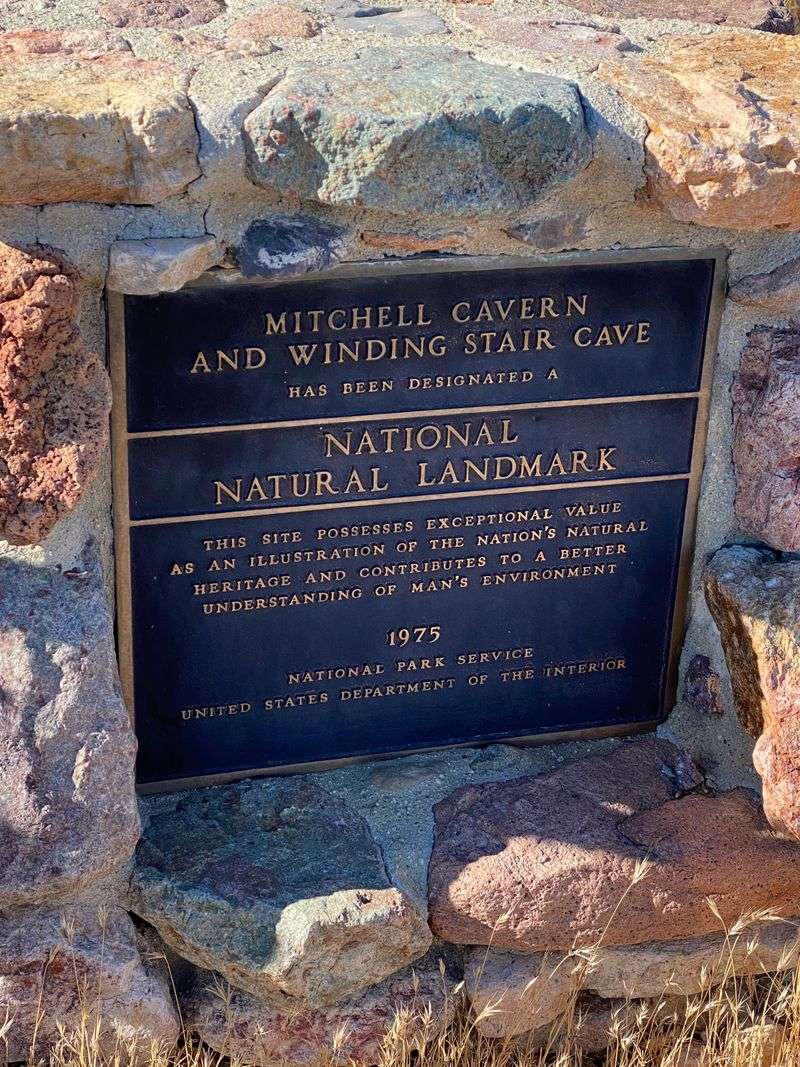
Jack and Ida Mitchell discovered the caves in 1929 and immediately recognized their potential as a tourist destination.
The couple purchased the land and spent years developing trails, installing lighting, and constructing stone buildings to house a visitor center and living quarters.
By 1934, Mitchell Caverns officially opened to the public, capitalizing on the steady stream of travelers motoring along Route 66 through the Mojave Desert.
The Mitchells offered guided tours, sold refreshments, and provided a welcome break from hours of desert driving during an era when air-conditioned cars remained rare.
Route 66 passed within a reasonable detour distance, and roadside signs directed curious travelers to turn off the main highway and venture into the Providence Mountains.
Families would stretch their legs, explore the cool caves, and hear Jack Mitchell’s colorful commentary about the formations and local history.
The attraction thrived through the 1940s and early 1950s, becoming a beloved stop for cross-country travelers seeking adventure and natural wonders.
The Mitchells operated the site until 1954, when they sold the property to the state of California, ending twenty years of private ownership and beginning a new chapter as a protected public resource.
4. Why Public Access Is Now Limited
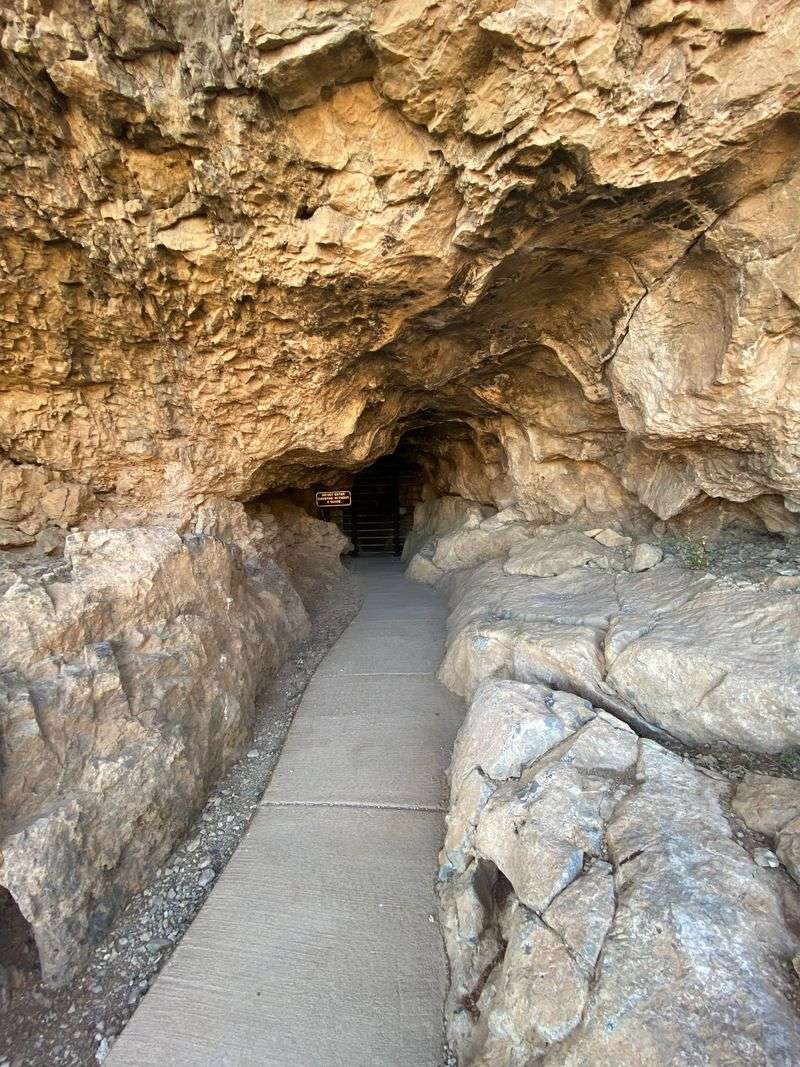
Mitchell Caverns closed to public tours in 2010 due to state budget constraints and the need for significant infrastructure repairs.
The aging electrical systems, deteriorating pathways, and safety concerns required extensive work before visitors could safely return.
California State Parks faced difficult decisions during the economic recession, prioritizing resources across hundreds of facilities statewide.
Mitchell Caverns, despite its unique geological significance, remained shuttered for nearly seven years while funding and planning progressed slowly.
The remote location and specialized nature of cave tours meant that reopening required trained rangers, proper equipment, and careful management protocols to protect fragile formations.
Unlike surface trails that visitors can explore independently, cave environments demand guided supervision to prevent damage to irreplaceable geological features.
When tours finally resumed in November 2017, park officials implemented strict limits on daily visitor numbers to balance public access with conservation needs.
The delicate formations inside the caves can be damaged by touching, and even changes in air circulation from large groups can affect the cave environment over time, making limited access essential for long-term preservation of this natural wonder.
5. How The 30-Person Daily Permit System Works
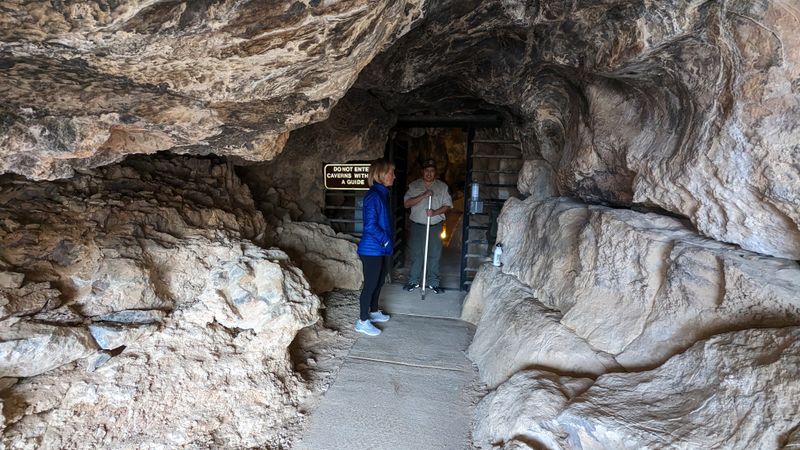
Current tour operations at Mitchell Caverns limit access to approximately 15 visitors per tour, with two tours offered each day on Fridays, Saturdays, Sundays, and holiday Mondays.
Tours depart at 11 a.m. and 2 p.m., giving visitors two options to choose from when making reservations.
Each tour lasts approximately two hours and includes both the cave exploration and a 1.5-mile round-trip hike to reach the entrance.
The small group size ensures that rangers can provide detailed interpretation while maintaining close supervision of visitors in the delicate cave environment.
Fewer people means less impact on formations, better air quality inside the caves, and a more intimate educational experience.
This permit system represents a significant shift from the unlimited access available during the Route 66 era, when the Mitchells welcomed anyone who stopped by.
Modern conservation priorities recognize that some natural areas require restricted access to remain intact for future generations, even if it means fewer people can experience them firsthand at any given time.
6. How To Reserve A Spot To Visit
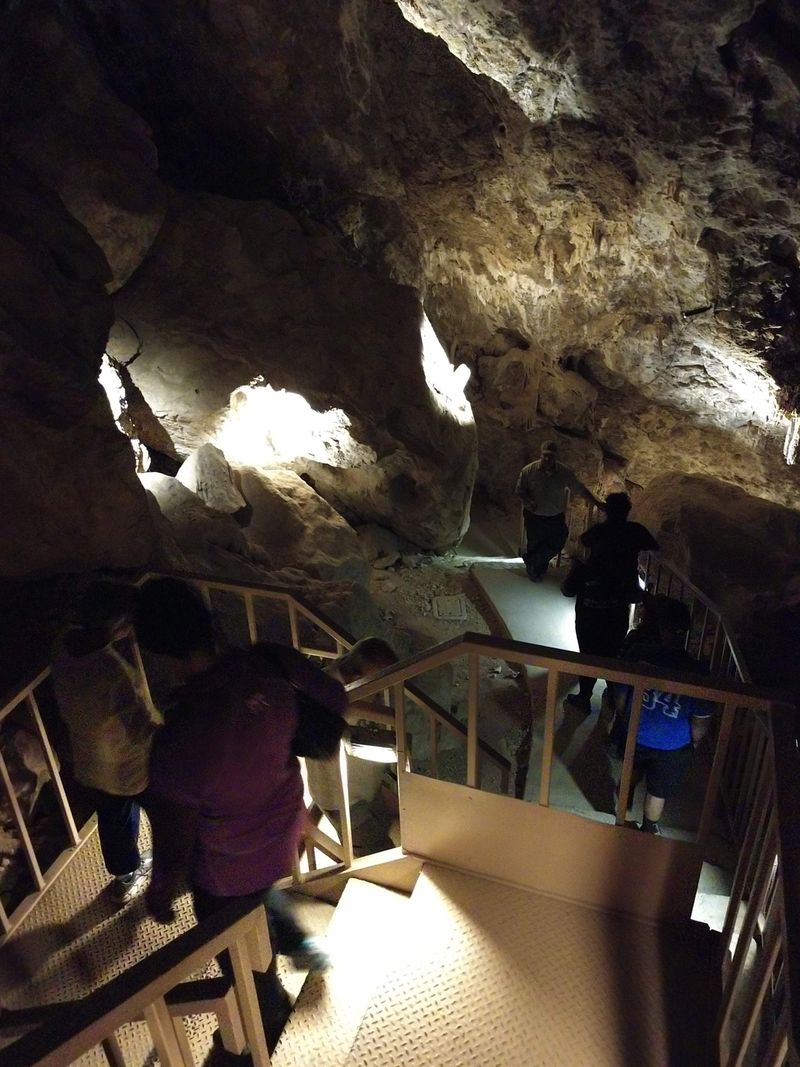
Reservations for Mitchell Caverns tours must be made in advance through the California State Parks reservation system.
Walk-up visitors cannot join tours without prior booking, as the limited capacity fills quickly, especially during cooler months when desert conditions are most pleasant.
The reservation process requires selecting a specific date and tour time, then completing the booking online with payment information.
Tour fees apply per person and help support ongoing maintenance and ranger programs at the site.
Booking opens several months in advance, and popular weekend dates may fill within days of becoming available.
Visitors planning trips to the Mojave Desert should check availability and make reservations as early as possible to secure preferred dates.
Confirmation emails provide important information about where to meet, what to bring, and physical requirements for the tour.
The system allows cancellations with appropriate notice, freeing spots for other interested visitors.
Some visitors check regularly for cancellations if their desired date shows as full, as last-minute openings do occur when others change plans.
Persistence sometimes pays off for determined travelers hoping to experience these remarkable caves during their visit to California’s desert regions.
7. What To Expect Inside The Caves
Tours begin with a moderately strenuous uphill walk from the visitor center to the cave entrance, gaining several hundred feet of elevation.
Rangers set a comfortable pace and provide interpretation about the desert ecosystem and geological history along the way.
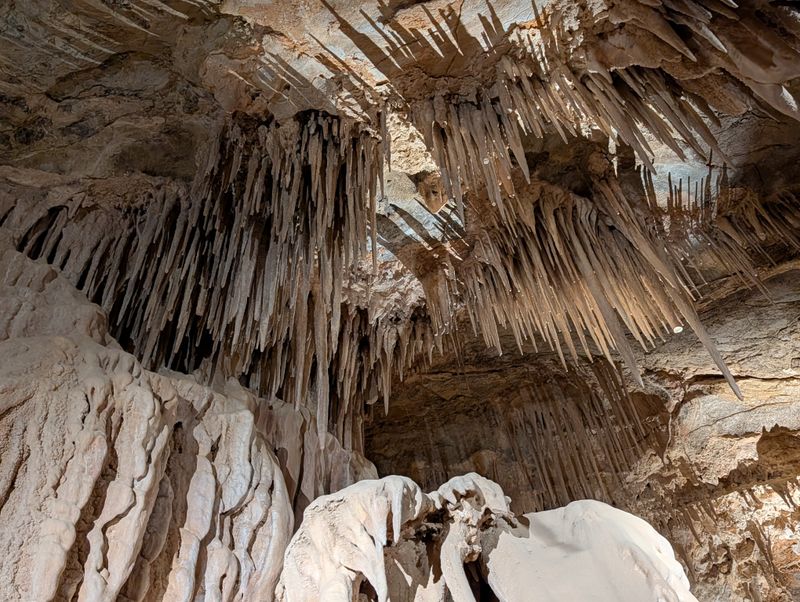
Once inside, the temperature drops noticeably, and artificial lighting reveals chambers filled with calcium carbonate formations in various shapes and sizes.
Stalactites hang like icicles from the ceiling, while stalagmites rise from the floor, and in rare cases, the two meet to form columns.
Flowstone cascades down walls in frozen waves of mineral deposits, and delicate soda straws dangle like hollow tubes where water drips through their centers.
Rangers point out specific formations and explain the processes that created them over thousands of years.
The tour route follows established pathways through both El Pakiva and Tecopa caverns, connected by a natural passage.
Lighting remains dim to protect formations and preserve the cave atmosphere, so eyes need time to adjust.
Rangers share stories about the Chemehuevi people who knew these caves long before European settlement, and about Jack and Ida Mitchell who opened them to tourists.
The entire underground portion lasts roughly an hour before the group returns to the surface.
8. Wildlife And Geological Features You’ll See
Several bat species inhabit Mitchell Caverns, though visitors may not see them during daytime tours when bats roost in darker recesses.
Rangers discuss the important ecological role bats play in desert environments, controlling insect populations and pollinating native plants.
Outside the caves, the surrounding Providence Mountains support desert bighorn sheep, which occasionally appear on rocky slopes visible from the trail. These magnificent animals thrive in steep terrain where few predators can follow.
Geological features include not only the cave formations but also the limestone cliffs themselves, which display layers of ancient seabed compressed into rock.
Fossils occasionally appear in the stone, remnants of marine organisms that lived when this desert lay underwater.
One particularly rare formation inside the caves shows where a stalactite growing down met a stalagmite growing up, fusing into a single column.
Such features occur in rarely in caves worldwide, making Mitchell Caverns geologically exceptional.
The desert landscape surrounding the caves hosts typical Mojave vegetation including creosote bush, Joshua trees at higher elevations, and various cacti species adapted to extreme heat and limited rainfall.
Spring wildflower blooms can transform the area when winter rains provide sufficient moisture.
9. Safety Rules And Preservation Efforts
Rangers emphasize the absolute prohibition on touching cave formations, as oils from human skin disrupt the mineral deposition process and discolor the calcium carbonate.
Even a single touch can leave a mark that persists for decades or permanently halt growth in that spot.
Visitors must stay on designated paths throughout the tour, as stepping off trails can damage fragile formations or disturb the cave floor’s delicate ecosystem.
The pathways installed decades ago remain the only approved routes through the caverns. Photography is permitted, but flash use may be restricted in certain areas to protect formations sensitive to light exposure.
Rangers provide guidance on where and how to take pictures without impacting the cave environment.
Food, drinks, and chewing gum are prohibited inside the caves, as dropped items or residue can introduce foreign substances that alter the delicate chemical balance.
Even seemingly harmless crumbs can feed bacteria or fungi that damage formations. California State Parks monitors the cave environment regularly, measuring temperature, humidity, and air quality to detect any changes that might indicate problems.
Limited visitor numbers help maintain stable conditions, and ongoing research informs management decisions about tour frequency and group sizes to ensure Mitchell Caverns remains intact for future generations to experience and study.
10. Tips For Planning Your Visit
Timing visits for cooler months between October and April provides the most comfortable experience, as summer temperatures in the Mojave Desert regularly exceed 100 degrees Fahrenheit.
The hike to the cave entrance, while not extremely long, becomes challenging in intense heat. Arriving at the visitor center at least 15 minutes before tour departure allows time for check-in and preparation.
Rangers provide brief orientation and safety information before groups begin the uphill walk.
Sturdy closed-toe shoes with good traction are essential, as the trail includes uneven surfaces and rocky sections. Sandals and flip-flops are inappropriate for the terrain and may result in denied tour participation.
Bringing adequate water is critical, especially during warmer months, though containers must remain outside the caves.
The visitor center area has limited shade, so sun protection including hats and sunscreen helps prevent discomfort.
The nearest services including gas, food, and lodging are located in towns roughly an hour away, so visitors should plan accordingly and arrive with full fuel tanks.
Cell phone service is unreliable in this remote area, making advance planning and navigation preparation important for a smooth visit to this unique California destination.