This Vintage Train Ride Through California Feels Like Traveling Back In Time
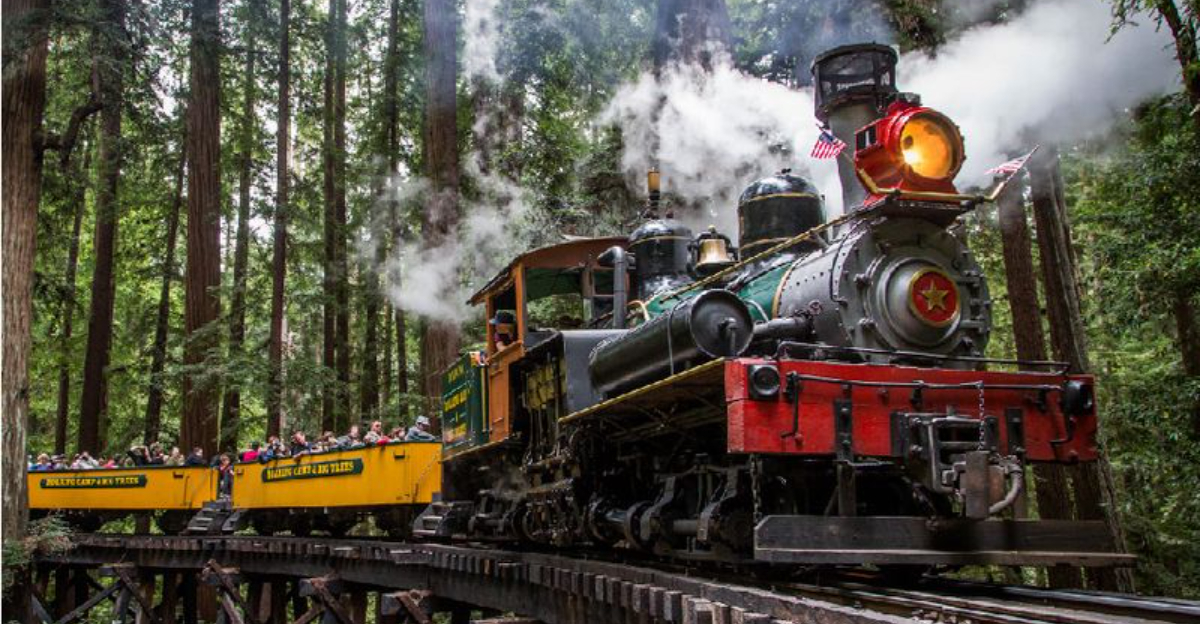
Hidden deep within the misty redwood forests of the Santa Cruz Mountains lies a train ride that feels like stepping straight into California’s past.
Roaring Camp Railroads isn’t just another tourist attraction – it’s a full-blown time machine powered by steam, steel, and pure nostalgia.
The moment the whistle echoes through the trees and the locomotive begins to chug forward, the modern world fades away, replaced by the sights, sounds, and rhythms of 19th-century rail travel.
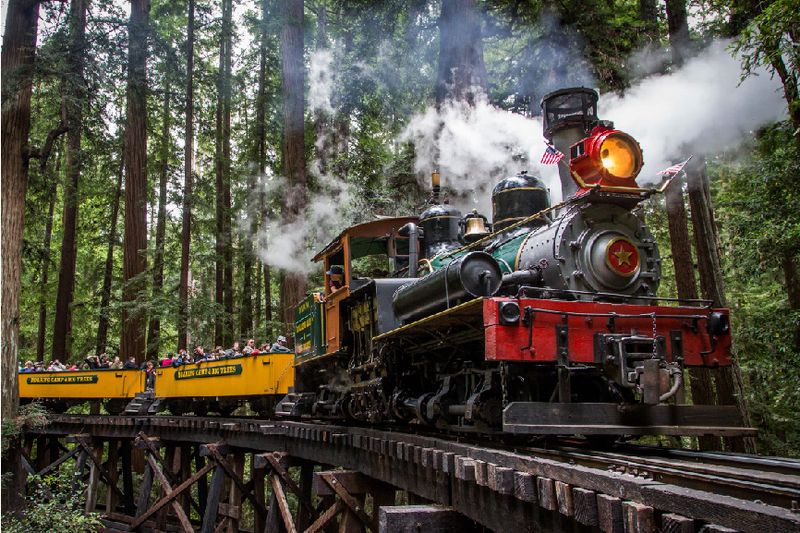
Passengers rumble over hand-built trestles, wind through towering groves of ancient redwoods, and climb mountain grades that once tested the limits of early logging railways.
Every detail – from the vintage cars to the coal-fired engines – feels meticulously preserved, creating an experience that’s immersive rather than staged.
It’s the kind of journey where kids stare wide-eyed out the windows and adults rediscover a sense of wonder they didn’t realize they’d lost.
Whether you’re chasing history, scenery, or simply a day that feels wildly different from everyday California life, this ride delivers something unforgettable from the very first blast of the whistle.
1. Historic Steam Locomotives Power Every Journey
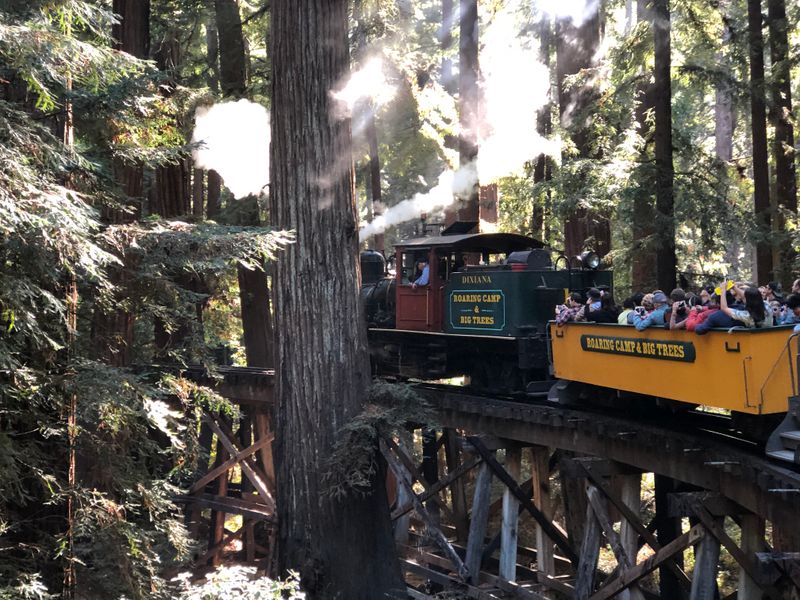
Roaring Camp at 5401 Graham Hill Rd, Felton, CA 95018 operates some of the oldest narrow-gauge steam locomotives still carrying passengers in the United States today.
These engines date back to the 1890s and have been meticulously preserved to maintain their authentic character and mechanical integrity.
Every whistle, every puff of steam, and every rhythmic chug comes from machinery that was built more than 130 years ago.
The collection includes Shay, Heisler, and Climax locomotives, each designed with unique gearing systems that allowed them to climb steep mountain grades.
These weren’t just passenger engines in their original lives – they hauled massive redwood logs down from the mountains during California’s logging boom.
Today, they carry visitors instead of timber, but the experience remains remarkably true to the past. Riding behind one of these historic engines means feeling the vibration of real steam power beneath your feet.
The smell of coal smoke drifts through the air, and the mechanical symphony of pistons and wheels creates a soundtrack that no modern train can replicate.
This isn’t a recreation or a theme park imitation – these are genuine working locomotives that have survived more than a century of service.
2. Redwood Forest Steam Train Climbs Bear Mountain
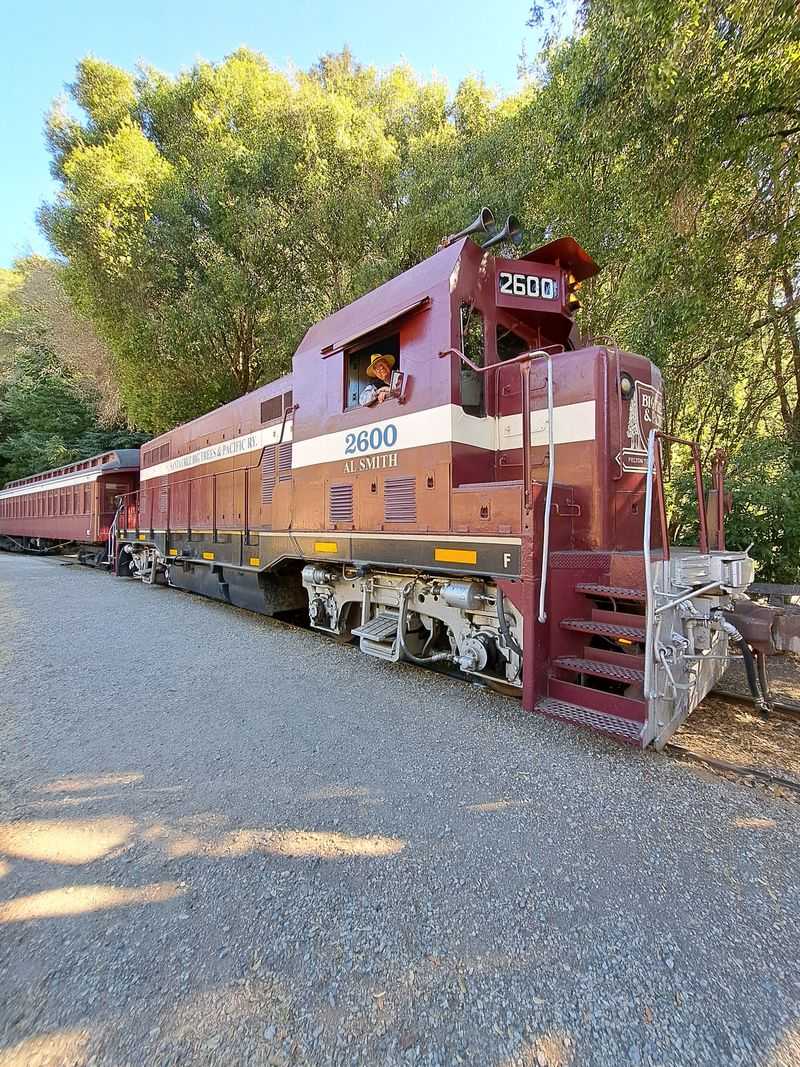
The signature 75-minute Redwood Forest Steam Train excursion takes passengers on a winding climb up Bear Mountain through some of California’s most spectacular coastal redwood groves.
The narrow-gauge track snakes through dense forest where sunlight filters down in golden shafts between trees that tower hundreds of feet overhead.
Wooden trestles carry the train over small canyons and creeks that have carved through the mountain for thousands of years.
Conductors narrate the entire journey, sharing stories about the railroad’s history, the logging industry that once dominated these mountains, and the ecology of the redwood forest ecosystem.
The grade reaches a 7 percent incline in some sections, which explains why those specially geared steam locomotives were necessary in the first days of mountain railroading.
Passengers can feel the engine working harder as it pulls the train steadily upward. At the summit, the train pauses briefly before beginning its descent back to Roaring Camp.
The return journey offers completely different views, and the downhill ride showcases the engineer’s skill in controlling the heavy train with steam brakes and careful throttle work.
Every season brings different light, fog patterns, and forest colors, making each trip unique even for repeat visitors.
3. Santa Cruz Beach Train Connects Mountains To Ocean
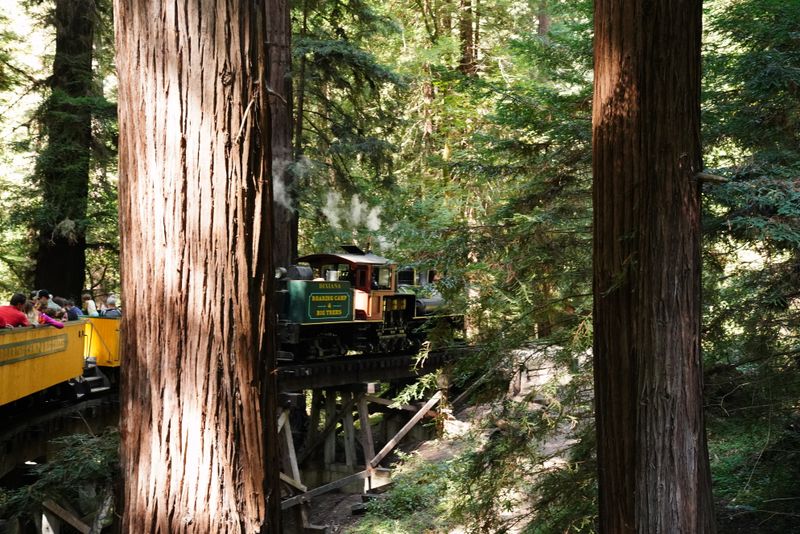
For a longer adventure, the Santa Cruz Beach Train offers a three-hour round-trip journey from the mountain forest down to the Pacific Ocean.
This route follows the historic Santa Cruz, Big Trees and Pacific Railway line, one of California’s oldest operating rail corridors.
The train departs from Roaring Camp and immediately plunges into Henry Cowell Redwoods State Park, where ancient trees create a cathedral-like canopy overhead.
As the train descends, it follows the scenic San Lorenzo River Gorge, where the landscape gradually transitions from dense forest to more open terrain.
The track crosses a steel truss bridge built in 1909, its iron framework still solid after more than a century of use.
Shortly after, the train passes through an 1875 tunnel carved directly through solid rock – a remarkable feat of 19th-century engineering that still serves its original purpose today.
The journey ends at the Santa Cruz Beach Boardwalk, California’s oldest surviving seaside amusement park.
Passengers have time to explore the boardwalk, enjoy the beach, or grab lunch before the return trip back up into the mountains.
The contrast between the cool, quiet redwood forest and the bustling oceanfront makes this route feel like traveling through two completely different worlds in a single afternoon.
4. Authentic 1880s Logging Camp Recreation
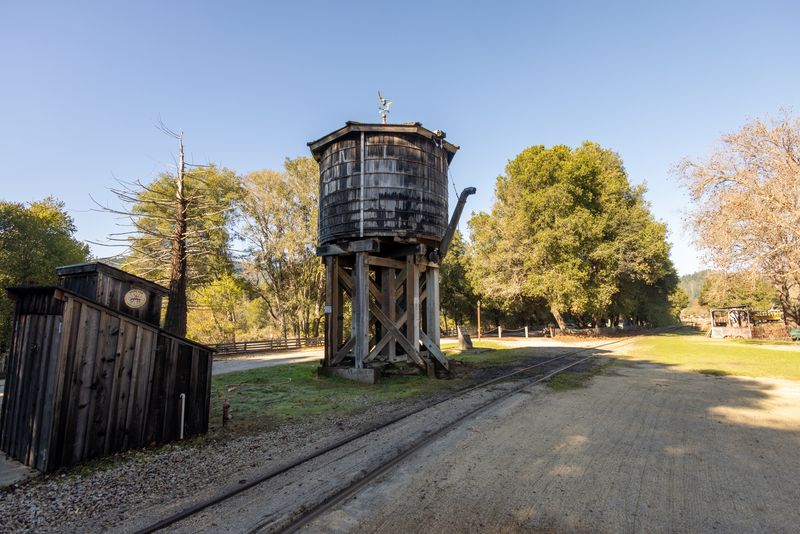
Roaring Camp isn’t just a train ride – it’s a fully realized recreation of an 1880s mountain logging camp.
The grounds feature period-appropriate buildings including a wooden depot, an engine house where locomotives are maintained, and several antique cabooses that have been preserved in their original condition.
Walking through the camp feels like stepping onto a movie set, except everything here is historically authentic rather than constructed for appearance.
The depot serves as the ticket office and waiting area, with wooden benches and vintage signage that transport visitors back to the 19th century before they even board the train.
The engine house allows glimpses of the mechanics and engineers at work maintaining the steam locomotives, offering a behind-the-scenes look at what it takes to keep century-old machinery running safely.
Old photographs and interpretive displays throughout the camp tell the stories of the loggers, engineers, and families who once lived and worked in these mountains.
Picnic grounds with tables and benches provide space for families to relax before or after their train journey.
The entire camp sits in a clearing surrounded by redwood forest, creating an atmosphere of peaceful isolation that mirrors what the original logging camps would have felt like when they were active operations far from any town or city.
5. Diverse Locomotive Collection With Unique Histories
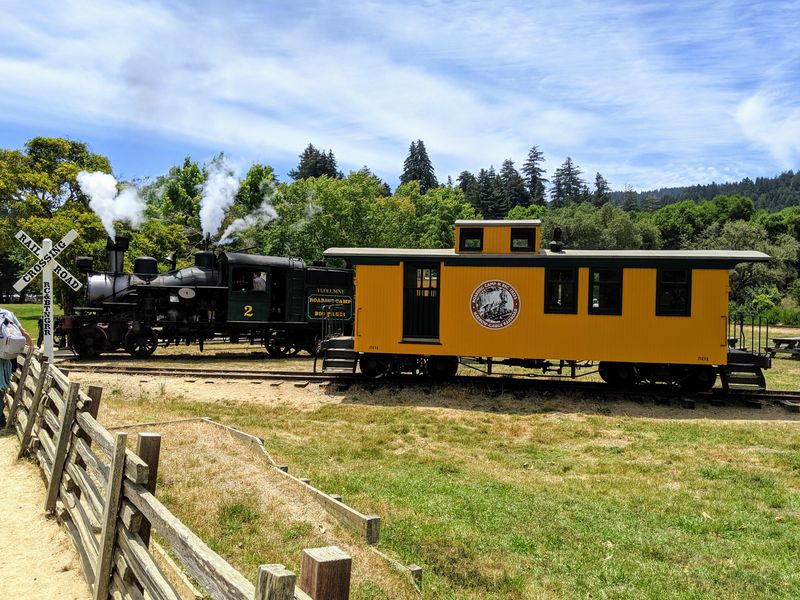
Railroad enthusiasts travel from around the world to see Roaring Camp’s collection of geared steam locomotives, which represents one of the most complete assemblages of these specialized machines anywhere in North America.
Unlike standard locomotives that use direct drive from pistons to wheels, geared engines use a system of shafts and gears that provide tremendous pulling power at slow speeds – perfect for steep mountain grades and tight curves.
The Shay locomotives use a distinctive side-mounted engine with vertical cylinders that drive a crankshaft running along the side of the boiler.
Heisler engines mount their cylinders in a V-pattern beneath the boiler, driving the wheels through a central driveshaft.
Climax locomotives position their cylinders at an angle, creating yet another variation on the geared locomotive theme.
Each design has its own mechanical personality, sound, and operating characteristics. Beyond their mechanical interest, each locomotive has its own story.
Some hauled redwood logs in California, others worked in logging operations in Washington or Oregon, and a few spent decades in industrial service before being rescued and restored.
The railroad’s maintenance team works year-round to keep these machines operational, performing both routine maintenance and major overhauls as needed to preserve them for future generations.
6. Scenic Hiking Trails Surround The Railroad
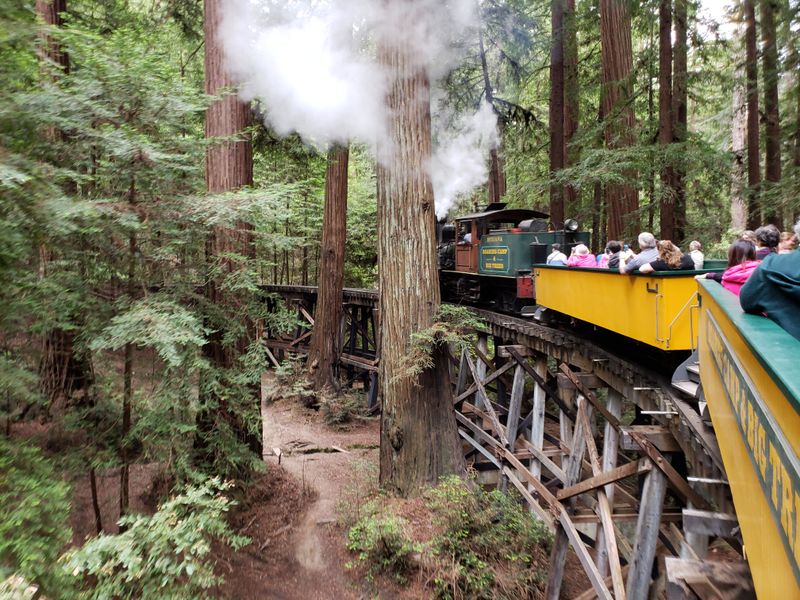
Visitors who want to experience the forest on foot can explore numerous hiking trails that wind through the redwoods surrounding Roaring Camp.
The Redwood Grove and Cowell Highlights Loop offers a particularly stunning walk through old-growth forest where some trees have been standing for more than 1,500 years.
These trails provide perspectives on the landscape that aren’t visible from the train, including intimate views of the forest floor, seasonal wildflowers, and small creeks that flow year-round.
The trails vary in difficulty from easy, flat paths suitable for families with young children to more challenging routes that climb hillsides and offer elevated views of the forest canopy.
Many visitors choose to combine a train ride with a hike, arriving early to walk the trails before their scheduled departure or spending time exploring after their return.
The forest remains relatively cool even during summer months, making hiking comfortable throughout most of the year.
Interpretive signs along some trails explain the ecology of redwood forests, including how these trees survive fires, why they grow in specific locations, and what other plants and animals depend on them.
The same landscape that made logging profitable in the 1800s now serves as a living classroom where visitors can learn about forest conservation and the importance of preserving these ancient ecosystems for future generations.
7. Seasonal Events Enhance the Historical Experience
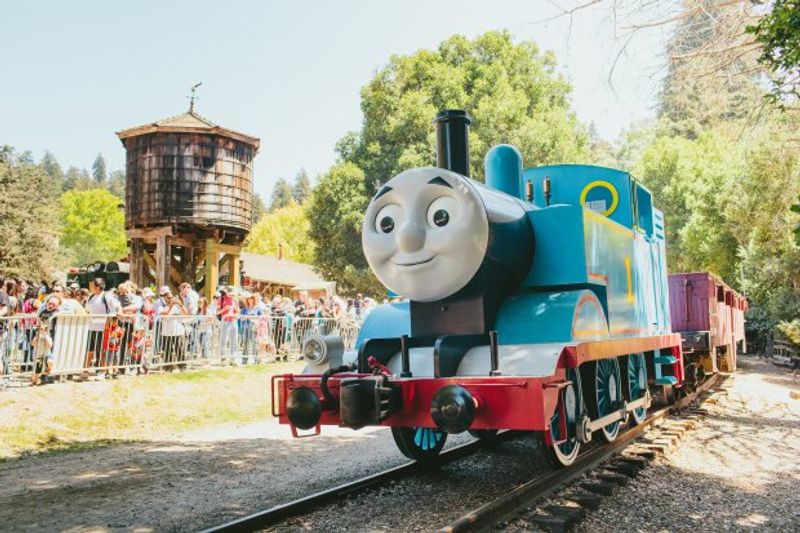
Throughout the year, Roaring Camp hosts special events that add extra dimensions to the vintage railroad experience.
Moonlight steam train dinner parties combine the romance of night-time rail travel with meals served aboard historic passenger cars, all illuminated by lanterns and starlight.
Holiday-themed rides transform the trains with seasonal decorations while maintaining historical authenticity, creating memorable experiences that blend celebration with education.
Summer festivals often feature live music, historical reenactors in period costume, and demonstrations of 19th-century crafts and skills.
These events help visitors understand not just how the trains operated, but how people lived, worked, and entertained themselves in California’s mountain logging camps.
Children particularly enjoy events where they can try activities like gold panning, rope making, or other hands-on historical activities.
The railroad also offers photography-focused excursions for serious train enthusiasts who want to capture the locomotives in action with optimal lighting and positioning.
These special runs often use routes or timing specifically chosen for photographic opportunities, and participants learn about both railroad history and the art of capturing vintage machinery on film or digital sensors.
Each seasonal event brings different crowds and atmospheres, ensuring that even local visitors who ride regularly can find new experiences throughout the year.
8. Educational Narratives From Knowledgeable Conductors
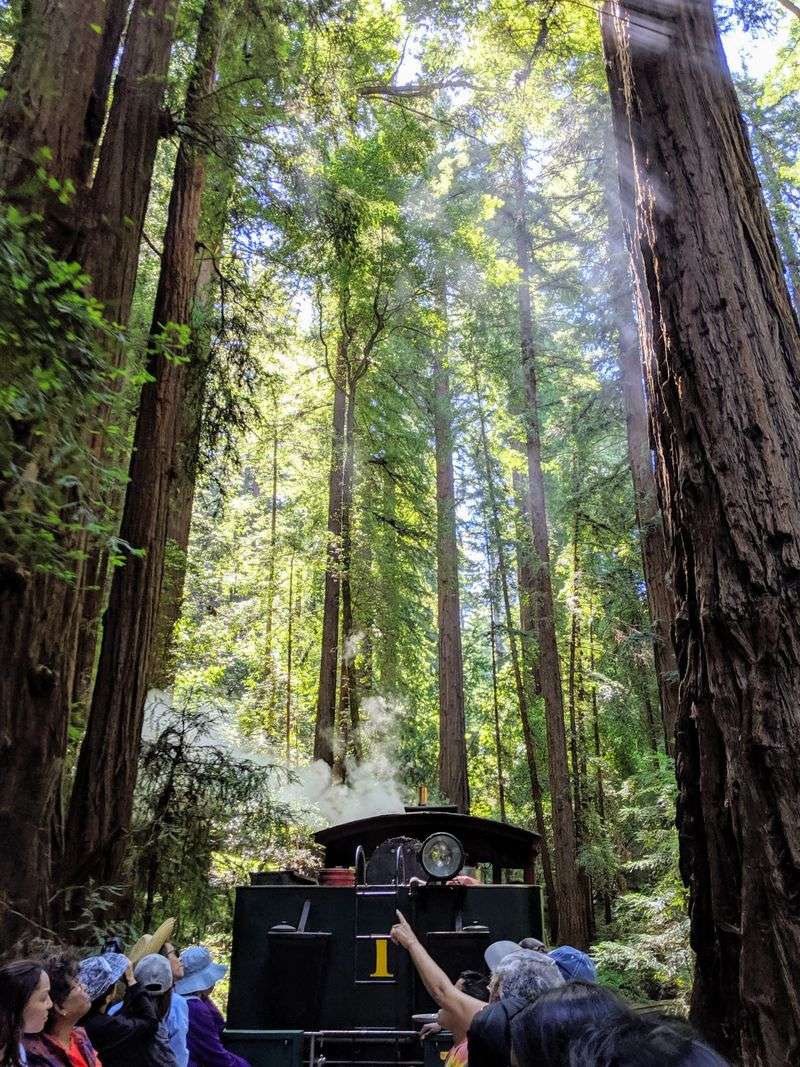
Every journey on Roaring Camp’s trains includes live narration from conductors who combine deep historical knowledge with engaging storytelling abilities.
These aren’t recorded announcements or scripted speeches – they’re genuine conversations about the railroad, the forest, and the history of the Santa Cruz Mountains.
Conductors answer questions, point out features of interest along the route, and share anecdotes that bring the past to life in ways that signs or brochures never could.
The narratives cover multiple topics, from the mechanics of how steam locomotives work to the ecology of redwood forests, the economics of the 19th-century logging industry, and the stories of individual people who built and operated these railroads.
Conductors explain how loggers felled massive redwoods using only hand tools, how the logs were transported down the mountains, and why narrow-gauge railroads became the preferred solution for this challenging terrain.
Many conductors have worked at Roaring Camp for years or even decades, accumulating knowledge from historical research, conversations with railroad veterans, and their own experiences maintaining and operating the trains.
Their passion for railroad history comes through in every story they tell, making even technical details about locomotive operation interesting to passengers who have never thought much about trains before.
This human element transforms what could be a simple scenic ride into a genuine educational experience.
9. Family-Friendly Atmosphere Welcomes All Ages
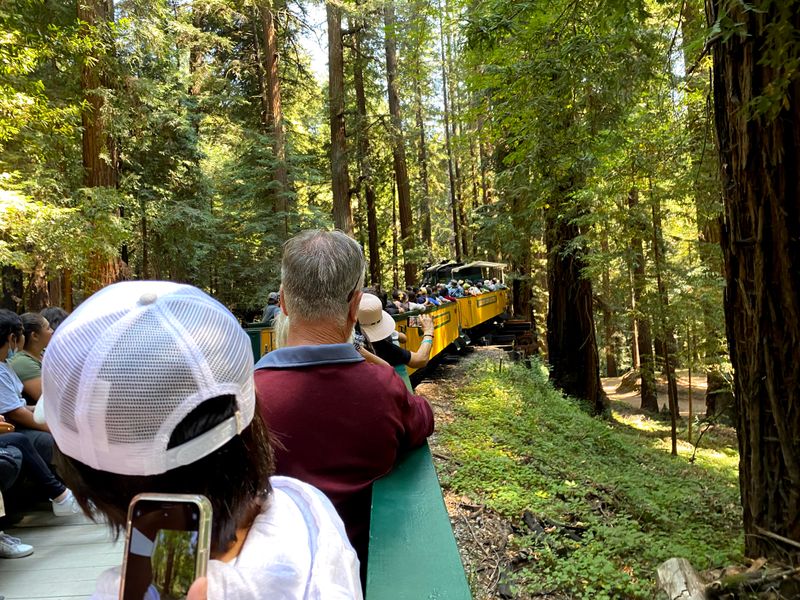
Roaring Camp has cultivated a welcoming atmosphere that makes the experience accessible and enjoyable for visitors of all ages, from toddlers to great-grandparents.
The trains themselves move at a gentle pace that allows everyone to take in the scenery without feeling rushed, and the open-air cars on many trains let children stand safely at the railings to watch the forest pass by.
Special family-oriented events throughout the year include activities designed specifically for younger visitors while still maintaining interest for adults.
The grounds include facilities that make visits with children easier, including restrooms, picnic areas where families can eat their own food, and a gift shop with reasonably priced souvenirs.
Staff members throughout the property show patience with questions from curious kids and help ensure that everyone boards and rides safely.
The historical nature of the experience often sparks multi-generational conversations, with grandparents sharing their own memories of train travel while children experience something entirely new to them.
Unlike many historical attractions that feel formal or restrictive, Roaring Camp maintains a relaxed atmosphere where children can express excitement without feeling constrained by excessive rules.
The combination of outdoor setting, moving machinery, and forest scenery naturally engages young attention spans while the historical and mechanical details satisfy adult interests.
Many families make annual visits, creating traditions that span generations and building memories associated with the sights, sounds, and smells of vintage railroad travel.
10. Preservation Efforts Keep History Alive For Future Generations
Behind every journey on Roaring Camp’s historic trains lies an enormous ongoing effort to preserve and maintain machinery, track, and structures that are more than a century old.
The railroad’s maintenance team includes skilled mechanics who understand the specialized knowledge required to keep steam locomotives running safely and efficiently.
These aren’t common skills in the 21st century – they represent crafts and techniques that have been passed down through generations of railroad workers and are actively taught to new team members to ensure continuity.
The preservation work extends beyond just the locomotives to include the passenger cars, the track infrastructure, the buildings at Roaring Camp, and the historical artifacts displayed throughout the property.
Each element requires specific conservation techniques to prevent deterioration while allowing continued public use.
The railroad balances the need to maintain authentic historical character with modern safety standards, ensuring that visitors can experience genuine vintage equipment without unnecessary risk.
This commitment to preservation means that Roaring Camp functions as both a tourist attraction and a working museum of railroad history.
The locomotives and cars that operate today will, with proper care, continue operating for decades or even centuries to come.
By purchasing tickets and visiting, guests directly support this preservation work, ensuring that future generations will also have the opportunity to experience authentic steam railroad travel through California’s magnificent redwood forests.