This Surreal Art Wonderland In Georgia Feels Like Stepping Into Another World And 2026 Is The Year To Go
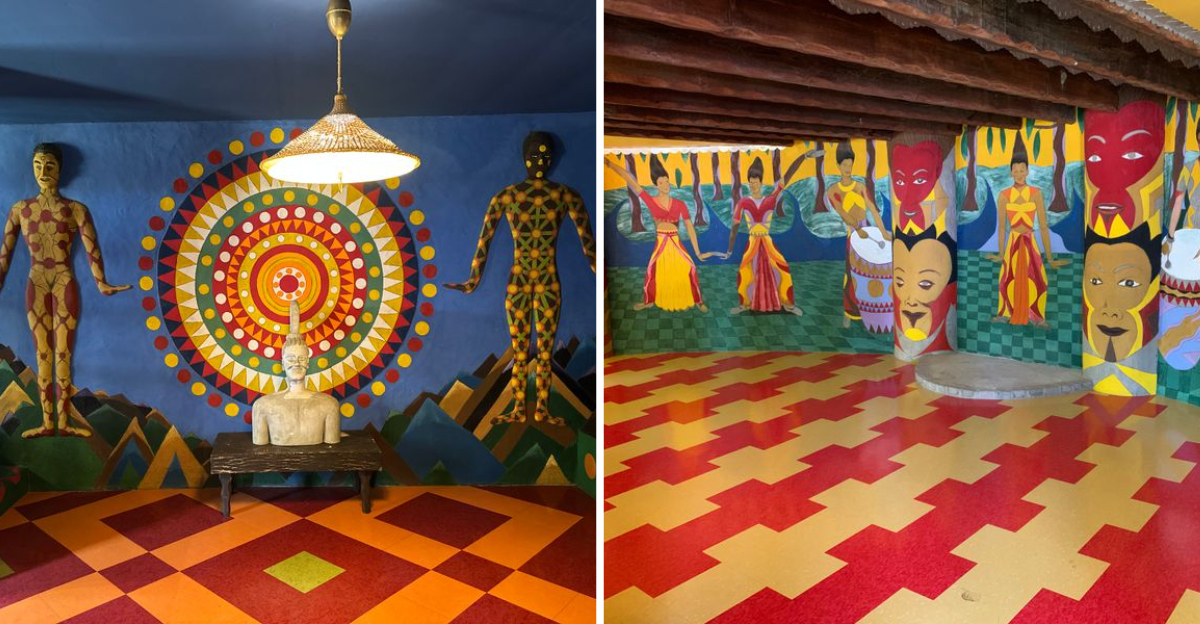
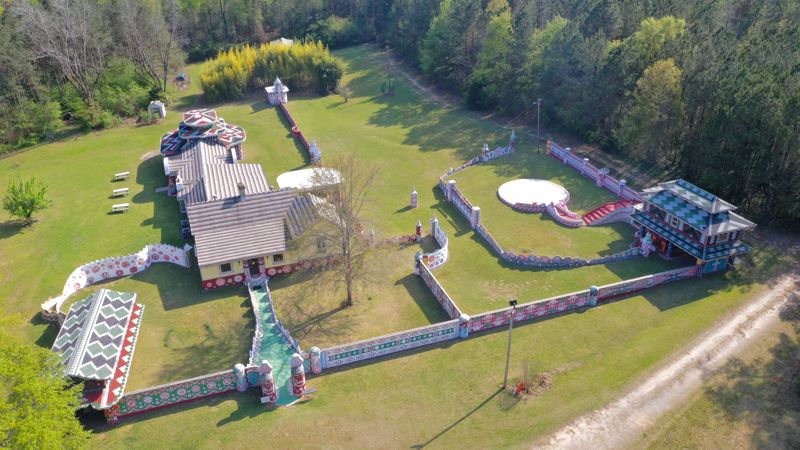
Have you ever wanted to step inside a living kaleidoscope where every surface bursts with color and imagination? Pasaquan in Buena Vista, Georgia offers exactly that kind of surreal experience. Located at 238 Eddie Martin Road, this extraordinary outdoor art compound transforms six acres of countryside into a world that feels pulled from a vivid dream.
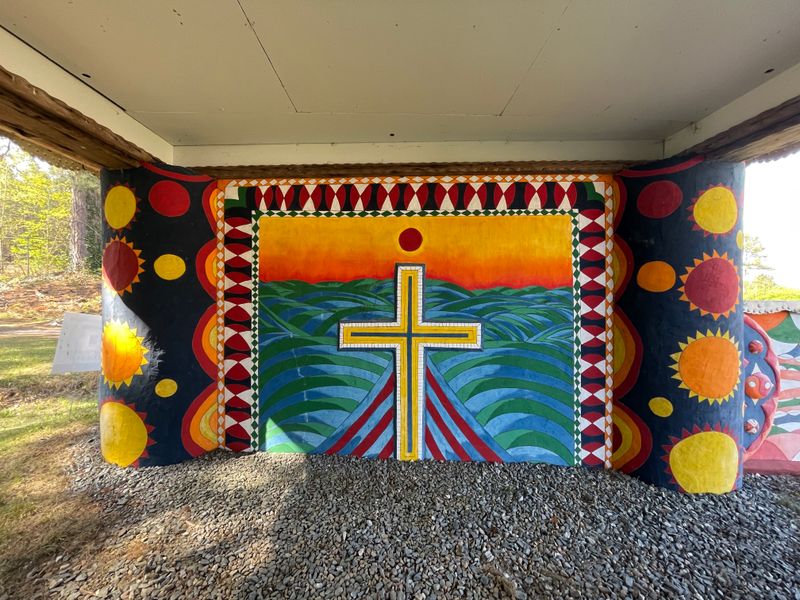
Visionary artist Eddie Owens Martin created the site as a personal sanctuary, covering buildings, walls, and sculptures in psychedelic murals and hypnotic geometric patterns. Towering totems rise from the landscape, each one layered with symbolism, color, and intricate detail that invites endless interpretation. Walking through the grounds feels immersive, as if art surrounds you from every direction.
The environment challenges perception, blurring the line between reality and imagination. Pasaquan stands as proof that creativity has no limits, turning an ordinary backyard into an awe inspiring masterpiece that continues to captivate every visitor who steps inside.
1. A Self-Taught Visionary Created This Masterpiece
Eddie Owens Martin never attended art school, yet he created one of America’s most remarkable folk art environments. Born in 1908, he left Georgia as a teenager and spent years traveling, working as a fortune teller in New York City. His visions and dreams guided him to create something unlike anything else in the South.
For three decades, he transformed ordinary buildings and land into a cosmic sanctuary. His work combined Native American imagery, Asian motifs, and his own invented mythology into something completely original.
The compound reflects his spiritual beliefs and artistic philosophy without formal training. Every wall, structure, and totem pole emerged from his imagination and determination. His dedication proves that true artistry comes from within, not from degrees or institutions.
2. Seven Towering Totems Stand Guard
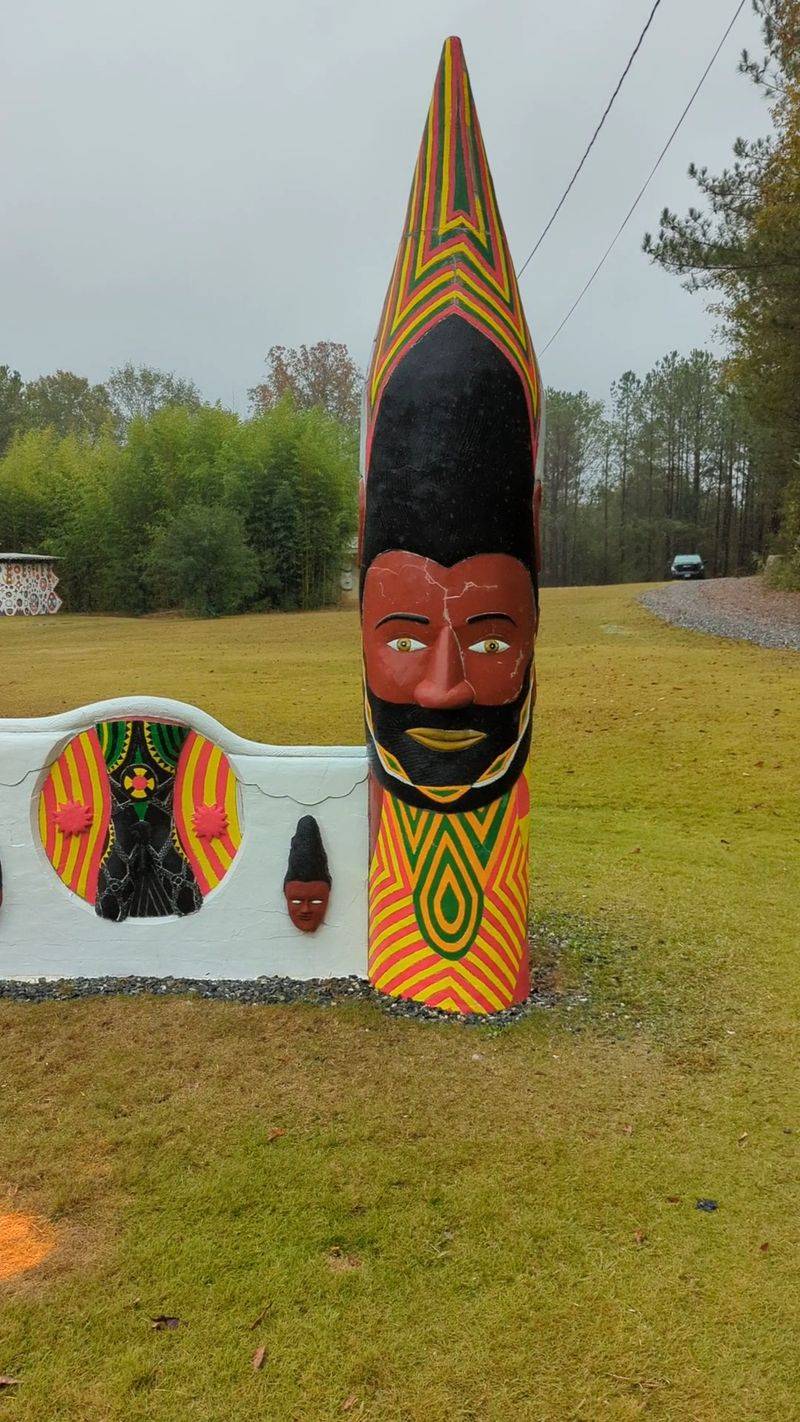
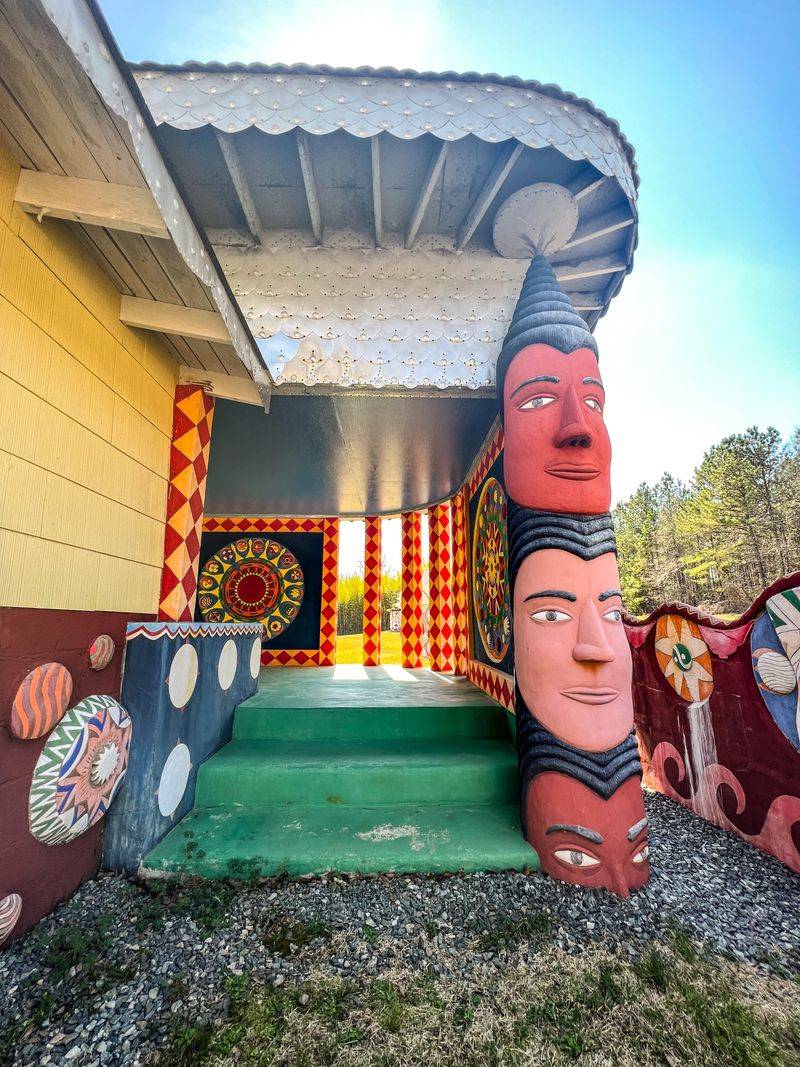
Walking onto the property, you’ll immediately spot seven massive totems reaching toward the sky. Each one features bold geometric faces painted in electric blues, fiery reds, and sunshine yellows. These guardians stand between 12 and 20 feet tall, watching over the compound with their stylized expressions.
Martin carved and painted each totem by hand using concrete and house paint. The faces blend human features with abstract designs that feel both ancient and futuristic. Some totems have multiple faces stacked vertically, creating a sense of spiritual hierarchy.
You can walk right up to these sculptures and examine every detail up close. The weathering and patina add character that wasn’t there when Martin first completed them. These totems set the tone for everything else you’ll encounter, signaling that normal rules don’t apply here.
3. Every Surface Explodes With Color
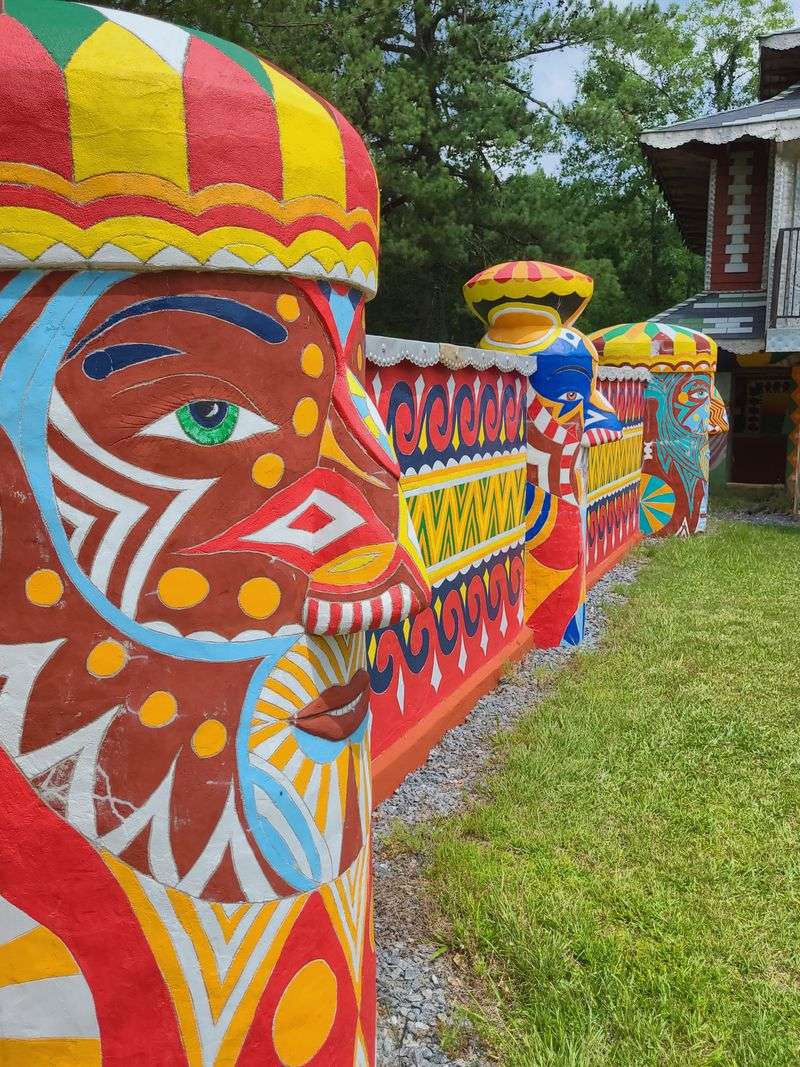
Forget white walls and neutral tones. Martin painted absolutely everything in sight with the most intense colors you can imagine. Walls, walkways, benches, and structures all receive the same treatment of bold pigments arranged in mesmerizing patterns.
The color combinations shouldn’t work together, but somehow they do perfectly. Hot pink sits next to electric blue, which touches bright orange and lime green. Martin mixed his own paints and applied them with brushes, creating layers of hues that shift depending on the sunlight.
You’ll find yourself photographing the same wall from different angles because the light changes everything. The intensity never lets up, keeping your eyes constantly moving and discovering new details you missed the first time around.
4. Geometric Patterns Create Hypnotic Effects
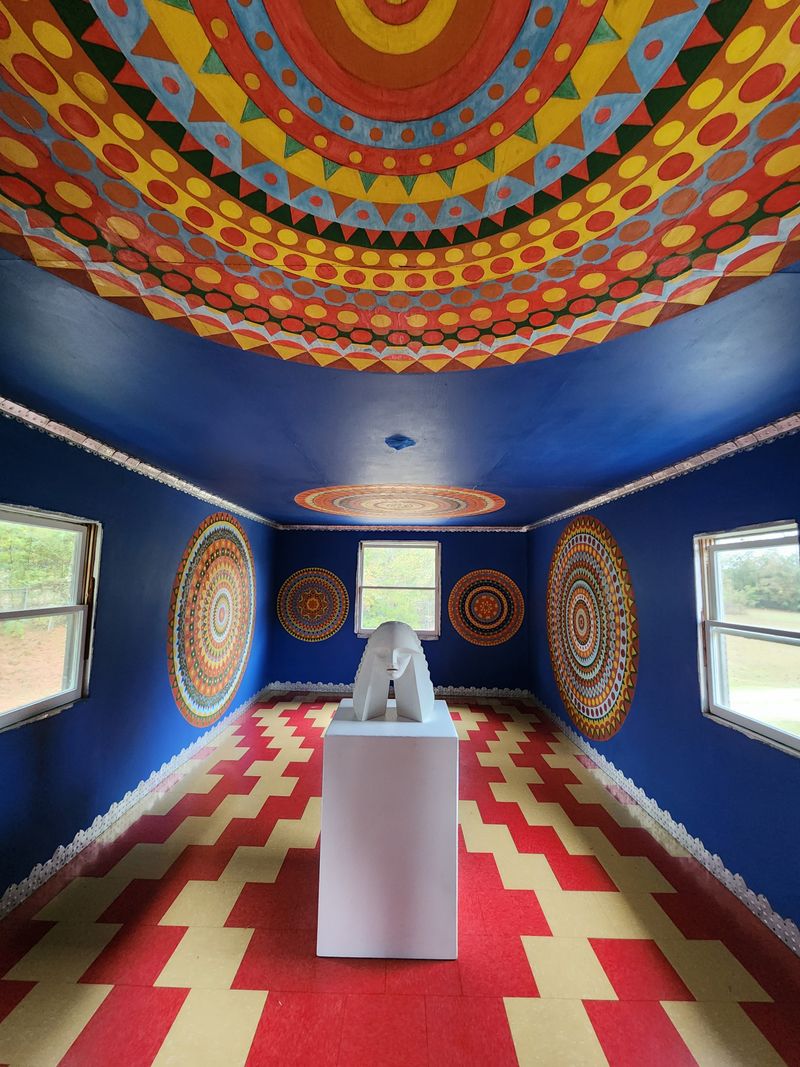
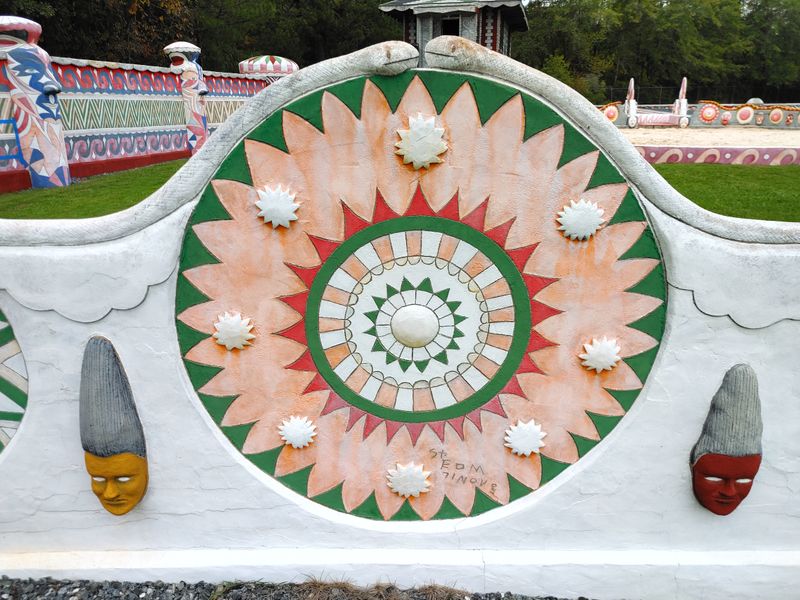
Martin had an obsession with geometry that shows in every square inch of Pasaquan. Circles, triangles, diamonds, and zigzags repeat across surfaces in rhythmic sequences. The patterns feel mathematical yet organic, as if they’re following some universal code only Martin understood.
Some designs resemble Native American textiles, while others look like mandalas or cosmic diagrams. He layered these shapes on top of each other, creating depth and movement on flat surfaces. Your eyes naturally follow the lines, getting pulled into the visual flow.
The geometric precision is remarkable considering Martin worked freehand without stencils or rulers. Each pattern connects to the next, forming a continuous visual language throughout the compound. Standing in the middle of it all creates a mild sensory overload that’s both overwhelming and oddly meditative at the same time.
5. The Main Temple Building Anchors Everything
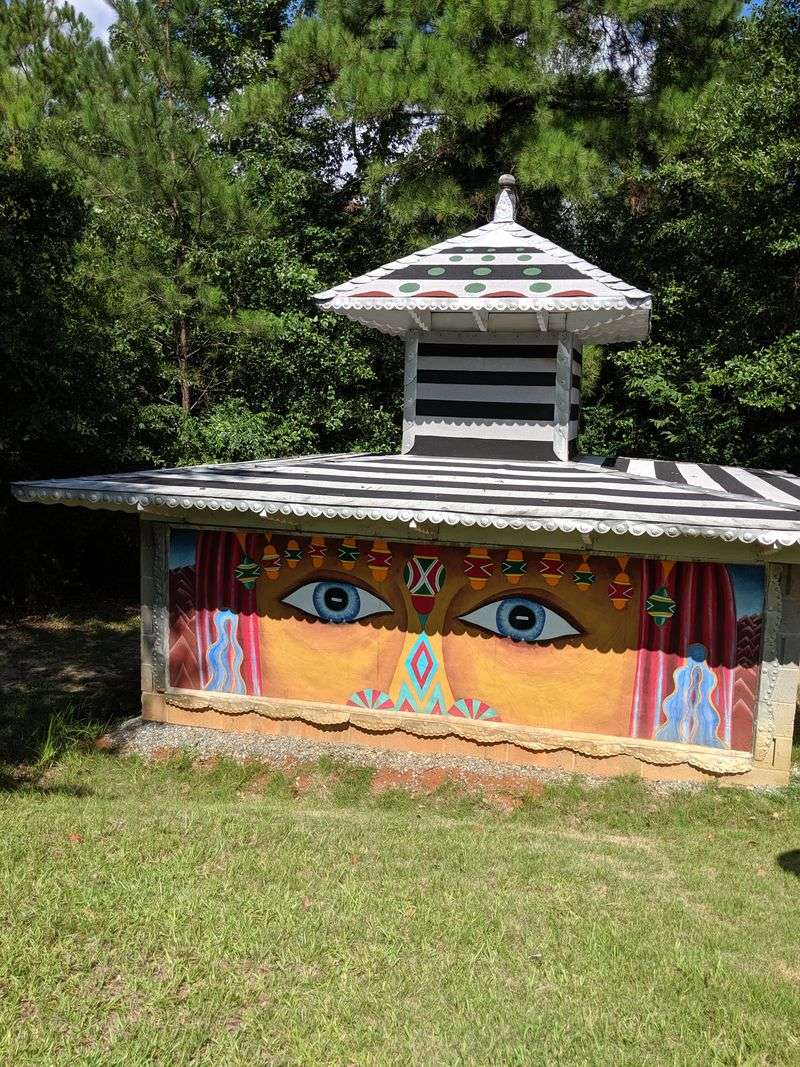
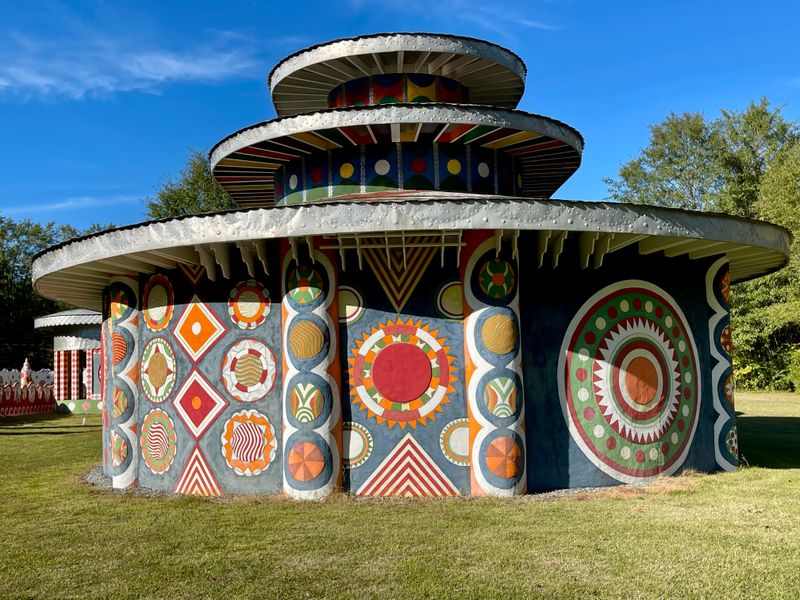
At the heart of Pasaquan sits a small temple building that served as Martin’s spiritual center. The structure features painted walls inside and out, with a pagoda-style roof that hints at Asian architectural influence. This wasn’t just decoration for him but a sacred space for meditation and ritual.
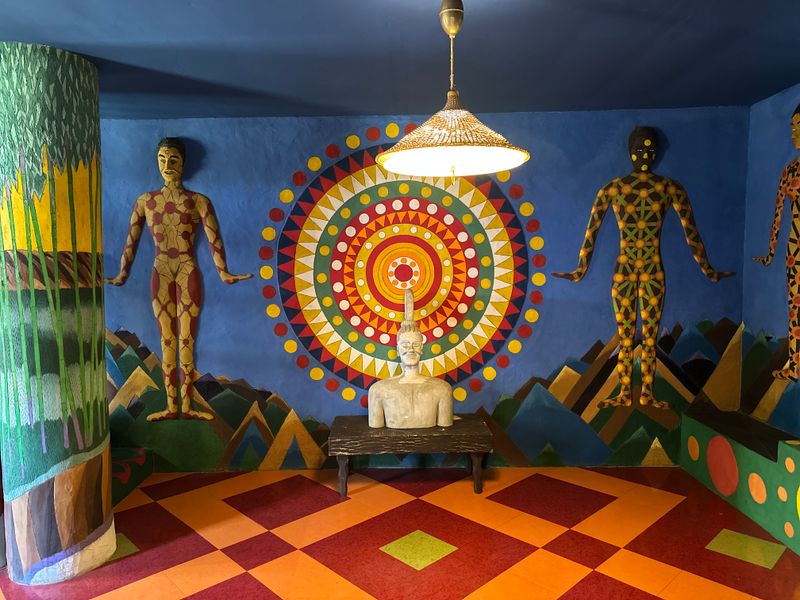
Inside, the walls continue the geometric theme with even more intricate detail work. Martin performed fortune-telling sessions here and conducted personal ceremonies based on his self-created belief system. The intimate space feels powerful despite its modest size.
The building represents the spiritual core that motivated all the exterior artwork. Everything radiates outward from this central point, making it the true heart of the entire compound.
6. A Six-Acre Canvas of Pure Imagination
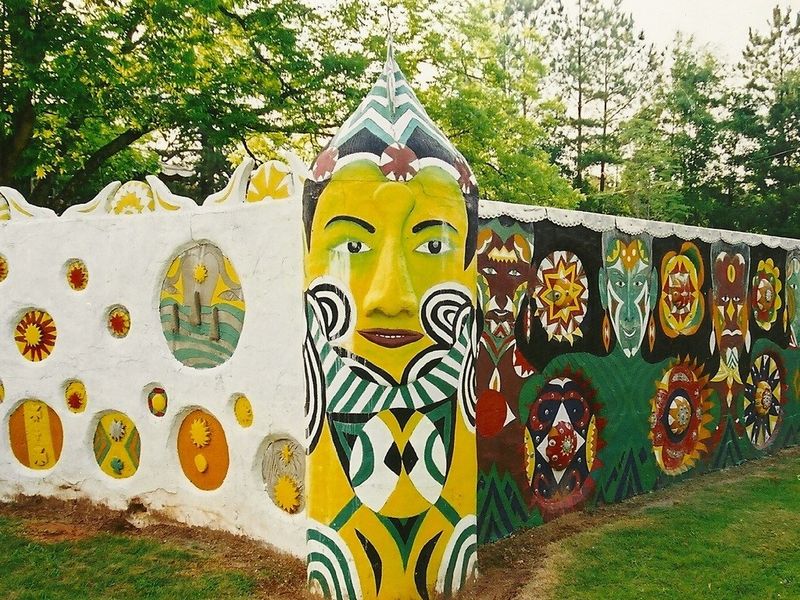
Most artists work on canvases or sculptures, but Martin claimed six entire acres as his medium. The property includes multiple buildings, walkways, walls, and outdoor spaces all transformed into art. Walking the grounds takes time because there’s so much to absorb in every direction.
He designed pathways that guide visitors through different zones of the compound. Each area has its own character while maintaining the overall aesthetic unity. The scale of the project becomes apparent when you realize one person created all of this over thirty years.
Trees and natural landscape elements peek through the artwork, creating interesting contrasts between nature and human creation. Martin worked with the existing topography rather than fighting it. The six acres never feel crowded despite the visual intensity, giving you space to process what you’re seeing between each painted structure.
7. Concrete Becomes Sculpture
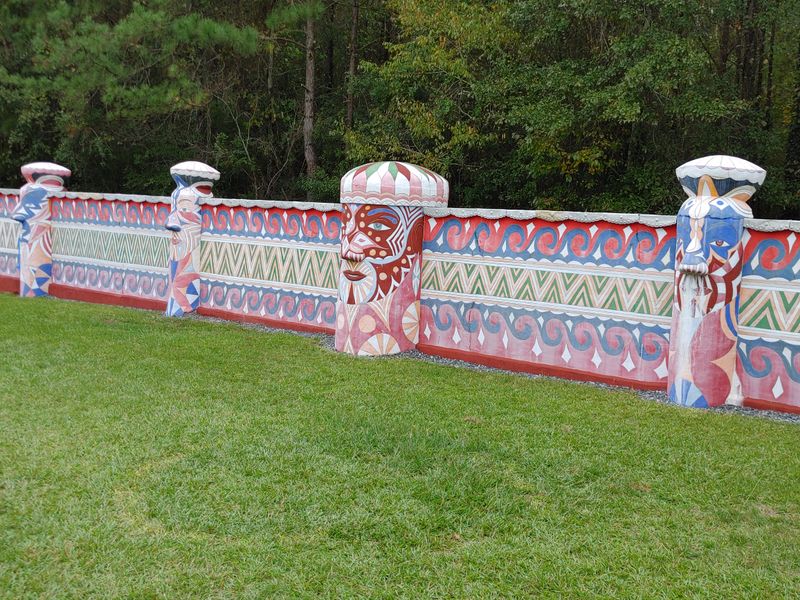
Martin’s primary building material was concrete, which he molded into walls, benches, and sculptural elements. He mixed and poured the concrete himself, shaping it while wet into the forms he envisioned. The material gave him durability and the ability to create three-dimensional structures.
Some concrete sections feature relief patterns pressed into the surface before it dried. Others have smooth finishes that became perfect canvases for his painted designs. He built up layers over time, adding extensions and modifications as new visions came to him.
Walls stand straight, benches support weight, and structures have survived decades of Georgia weather. His practical building skills matched his artistic vision, allowing him to execute ideas that existed only in his imagination.
8. A Personal Mythology Comes to Life
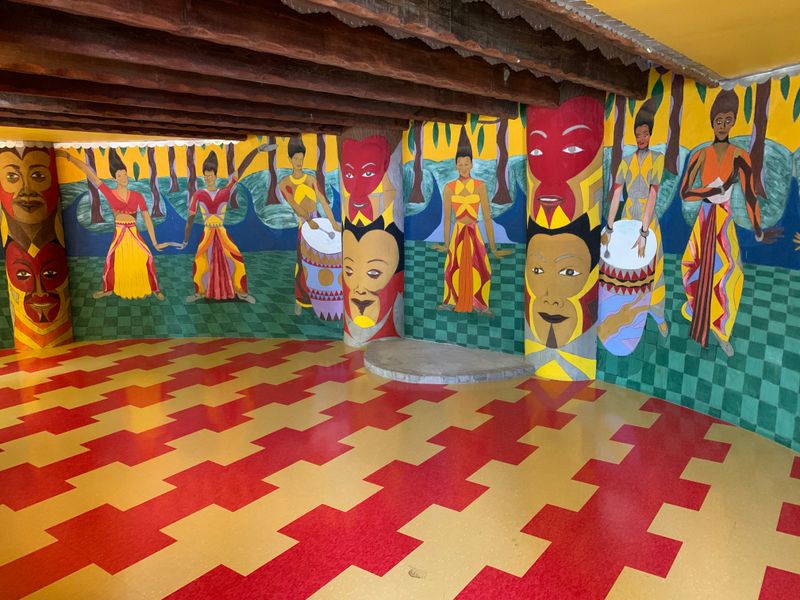
Martin didn’t follow existing religions but invented his own spiritual system called Pasaquoyan. The compound serves as a physical manifestation of this belief system, with symbols and imagery representing his cosmology. He claimed to receive visions that guided both his philosophy and his artwork.
The name Pasaquan itself comes from his spiritual revelations. He adopted the persona St. EOM (Eddie Owens Martin) and dressed in elaborate robes and headdresses he designed. His mythology blended elements from various cultures he encountered during his travels into something uniquely his own.
Understanding his beliefs isn’t necessary to appreciate the art, but it adds depth to the experience. The totems, patterns, and color choices all had spiritual significance in his system. Walking through Pasaquan means entering someone else’s complete worldview made visible and permanent in paint and concrete.
9. Restoration Saved This Treasure
After Martin’s death in 1986, Pasaquan fell into serious disrepair. Weather, vandalism, and neglect took their toll on the painted surfaces and structures. By the 1990s, this incredible artwork faced potential destruction, with colors fading and concrete crumbling in places.
The Columbus State University’s Pasaquan Preservation Society stepped in to save the compound. They raised funds, organized volunteers, and began the painstaking restoration process. Experts carefully documented original colors and patterns before repainting damaged sections.
The restoration respects Martin’s original vision while ensuring future generations can experience his work. Visiting now means seeing the compound closer to its original glory than it’s been in decades, making this the perfect time to plan your trip.
10. Photography Opportunities Everywhere
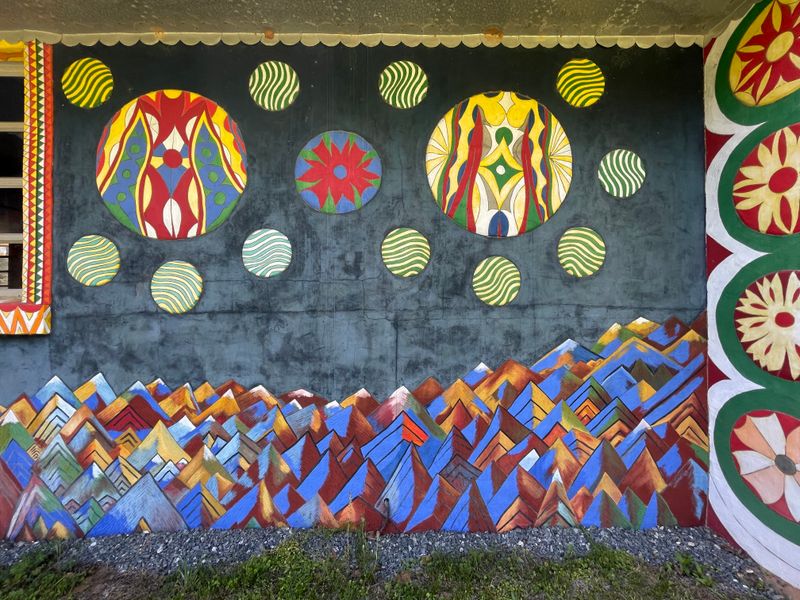
If you love photography, bring extra memory cards because you’ll want to capture everything. The bold colors and patterns photograph beautifully, creating images that look almost too vibrant to be real. Every angle offers a different composition worth shooting.
The changing light throughout the day dramatically affects how the colors appear. Morning light creates different shadows and tones than afternoon sun. Some photographers visit multiple times to capture the compound in various lighting conditions.
You’ll find yourself getting creative with framing and perspective. Close-ups of pattern details work as well as wide shots showing the full scope. The three-dimensional totems and structures provide depth that makes for compelling images.
Your social media followers won’t believe these photos weren’t edited, even though the colors are completely real and unfiltered.
11. Small Town Setting Adds Charm
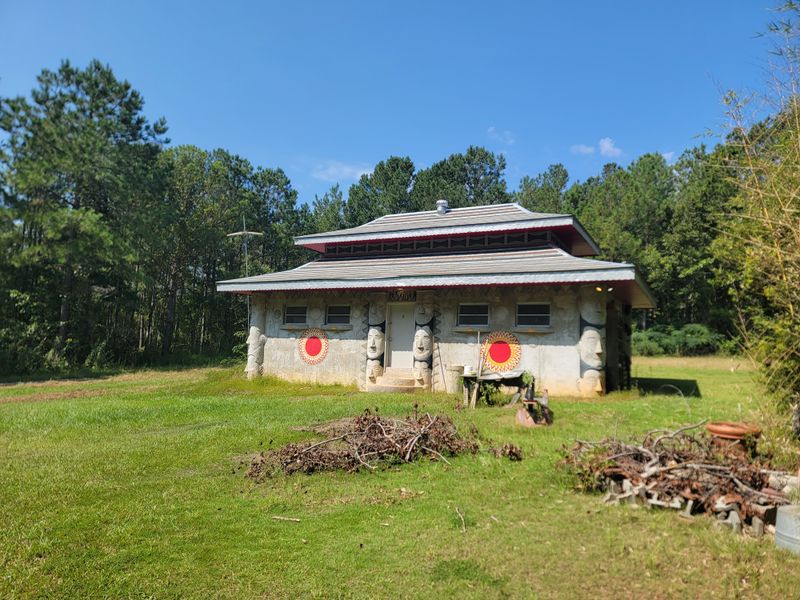
Pasaquan sits in Buena Vista, a small Georgia town with fewer than 2,000 residents. The contrast between the quiet rural setting and the explosive artwork makes the experience even more surreal. You drive through peaceful farmland and suddenly encounter this riot of color.
No strip malls or chain restaurants surround it, just genuine small-town Georgia. The journey to get there becomes part of the adventure.
Buena Vista itself has a few local restaurants and shops worth checking out before or after your visit. The townspeople take pride in having this unique attraction in their community. The small-town atmosphere means you’ll likely have the compound to yourself or share it with just a few other visitors, making for a more intimate experience.
12. Affordable Admission Makes It Accessible
Experiencing world-class folk art doesn’t require breaking your budget. Admission to Pasaquan costs just a few dollars, making it one of the best art values in the Southeast. The low price ensures that people from all economic backgrounds can enjoy Martin’s vision.
The Columbus State University Foundation manages the site as a nonprofit, keeping costs minimal. They rely partly on admission fees and donations to maintain the property and continue restoration work. Your ticket price directly supports preservation efforts.
Guided tours are available for slightly more than general admission if you want deeper context about Martin’s life and artistic process. Self-guided visits work perfectly well too, with informational signs explaining key features. The affordability removes barriers that keep many people from experiencing art, honoring Martin’s outsider artist spirit by welcoming everyone regardless of means.
13. Educational Value for All Ages
Teachers and parents appreciate Pasaquan as an educational destination that kids actually enjoy. The visual spectacle captures young attention spans while teaching about folk art, outsider artists, and individual creative vision. Students learn that art doesn’t require formal training or expensive materials.
School groups regularly visit for field trips combining art, history, and Georgia studies. The compound demonstrates how one person’s dedication and imagination can create something meaningful and lasting. Kids see that being different and following your own vision can lead to remarkable results.
Adults learn plenty too, often discovering folk art for the first time. The site challenges conventional ideas about what art should look like and where it belongs. Visiting sparks conversations about creativity, persistence, and the value of preserving unusual cultural treasures.
Families leave with shared memories and new appreciation for art that exists outside museum walls.
14. Folk Art Context and Significance
Pasaquan ranks among America’s most important folk art environments, standing alongside places like Howard Finster’s Paradise Garden and the Watts Towers. Martin’s work represents the outsider art tradition where self-taught artists create entire worlds according to their personal visions. These sites exist outside the mainstream art world but carry immense cultural value.
Art historians recognize Pasaquan as a prime example of visionary art environments. Martin’s complete commitment to his vision over three decades created something that can’t be replicated or faked. The authenticity comes through in every brushstroke and concrete pour.
Its preservation ensures that future generations can study and experience this unique artistic achievement. Understanding Pasaquan’s place in American folk art history adds appreciation for what Martin accomplished working alone in rural Georgia.
15. An Experience That Changes Perspectives
Most people leave Pasaquan thinking differently about art, creativity, and possibility. Seeing what one determined person created without resources or formal training inspires visitors to reconsider their own limitations. Martin’s compound proves that grand visions can become reality through persistence and dedication.
The sensory overload of colors and patterns creates a memorable experience that stays with you long after leaving. Many visitors report feeling energized and creatively sparked by their time at the compound. Something about the uncompromising boldness of Martin’s vision gives others permission to think bigger.
You’ll catch yourself telling friends and family about this wild place you discovered in rural Georgia. The story of Eddie Owens Martin and his life’s work resonates on multiple levels, offering different meanings to different people. Whether you see it as art, spiritual expression, or simply something wonderfully weird, Pasaquan delivers an experience that’s genuinely unforgettable and unlike anything else you’ll encounter.