This California Restaurant In Yosemite Feels Like Dining Inside A Mountain Cathedral
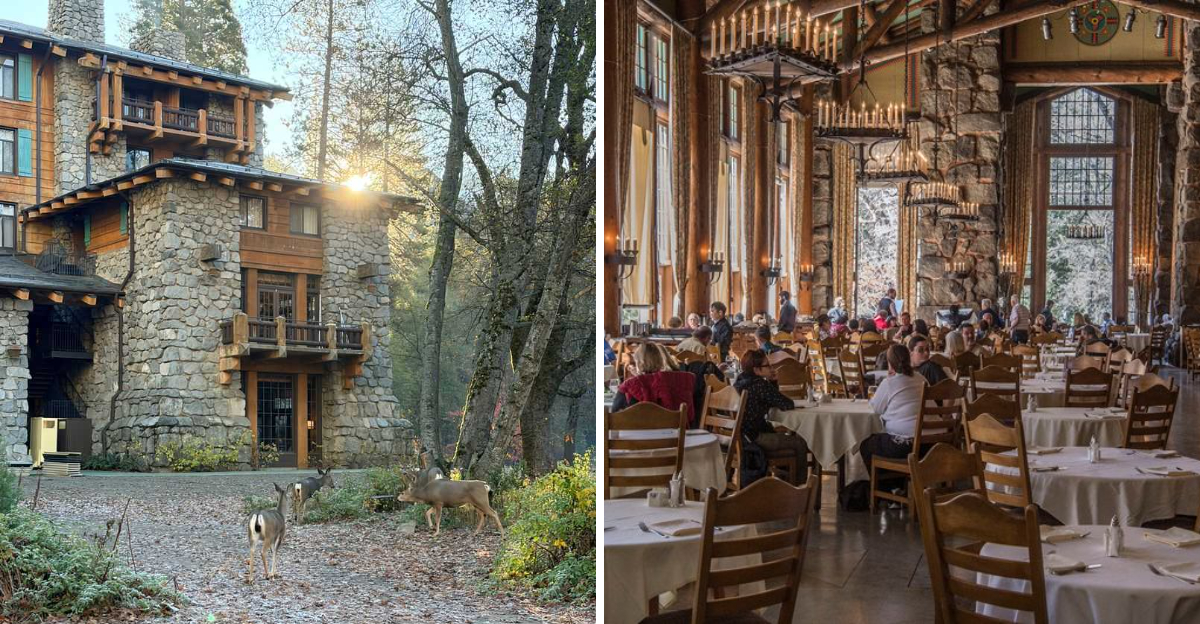
Hidden deep inside Yosemite Valley sits a dining room so breathtaking it barely feels real.
The Ahwahnee Dining Room rises from the landscape with towering ceilings, colossal wooden beams, and walls of glass that frame waterfalls and granite cliffs just beyond the tables.
Sitting down here does not feel like entering a restaurant. It feels like stepping into a mountain cathedral. Light pours through floor to ceiling windows. Stone pillars stretch skyward.
Every glance outside reveals another postcard view carved straight from California wilderness. Since opening in 1927, this legendary space has drawn travelers not just for the food but for the atmosphere itself.
Meals unfold beneath soaring architecture while Yosemite’s raw beauty becomes part of the experience.
The setting feels grand yet intimate. Historic yet alive. A place where dinner turns into something far more memorable than a reservation on a calendar.
Dining here is less about what’s on the plate and more about where you are when you take that first bite – surrounded by one of California’s most awe inspiring landscapes.
1. Soaring Cathedral Ceilings That Command Attention
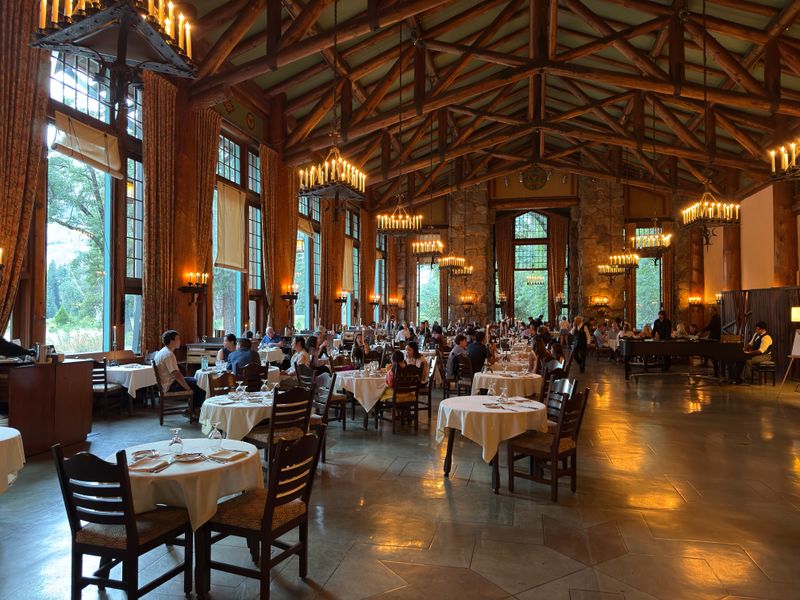
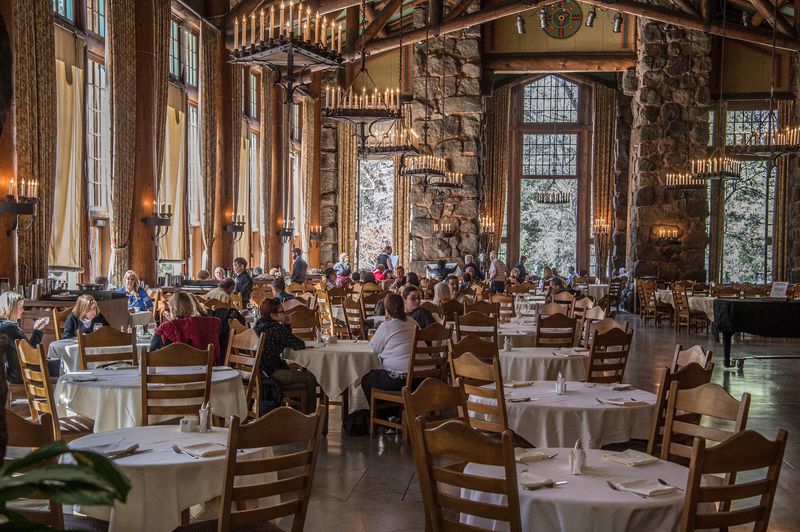
Walking into The Ahwahnee Dining Room means looking up at a ceiling that towers 34 feet overhead, supported by enormous sugar pine trusses that stretch across the space like the ribs of a great wooden ship.
The beams create visual lines that draw eyes upward, mimicking the feeling of standing inside a Gothic cathedral where height and structure inspire quiet reverence.
Natural light filters through tall windows during the day, casting shadows that shift across the wood and stone as the sun moves over Yosemite Valley.
Granite columns rise from the floor to meet the ceiling, their rough-hewn surfaces contrasting with the smooth polish of the dining tables below.
The scale of the room makes individual diners feel small yet connected to something larger, a sensation that mirrors the experience of hiking beneath Yosemite’s towering cliffs.
Sound moves differently in such a tall space, with conversations softening into a gentle hum rather than echoing sharply.
Every structural element at serves both function and beauty, holding up the roof while also framing the experience of dining surrounded by mountain grandeur.
The dining room is located at 1 Ahwahnee Drive, Yosemite National Park, CA 95389, within The Ahwahnee Hotel complex.
The design honors the landscape outside by bringing elements of stone and timber indoors, creating continuity between the building and the wilderness that surrounds it.
2. Historic Roots Dating Back To 1927
The Ahwahnee Hotel opened its doors in 1927 with a clear mission: to attract wealthy travelers to Yosemite by offering luxury accommodations in a wilderness setting.
Architects Gilbert Stanley Underwood designed the building to blend rustic materials with elegant proportions, creating a structure that felt both rugged and refined.
The dining room became the heart of the hotel, a gathering place where guests could enjoy fine meals while surrounded by the beauty of the Sierra Nevada.
During the Great Depression, the hotel struggled financially but remained open, serving as a symbol of resilience and optimism.
Over the decades, it hosted presidents, celebrities, and countless families who came to experience Yosemite’s wonders.
The dining room witnessed countless celebrations, anniversaries, and quiet breakfasts before long days of hiking.
Preservation efforts have kept the original character intact, with careful renovations maintaining the historic integrity of the space.
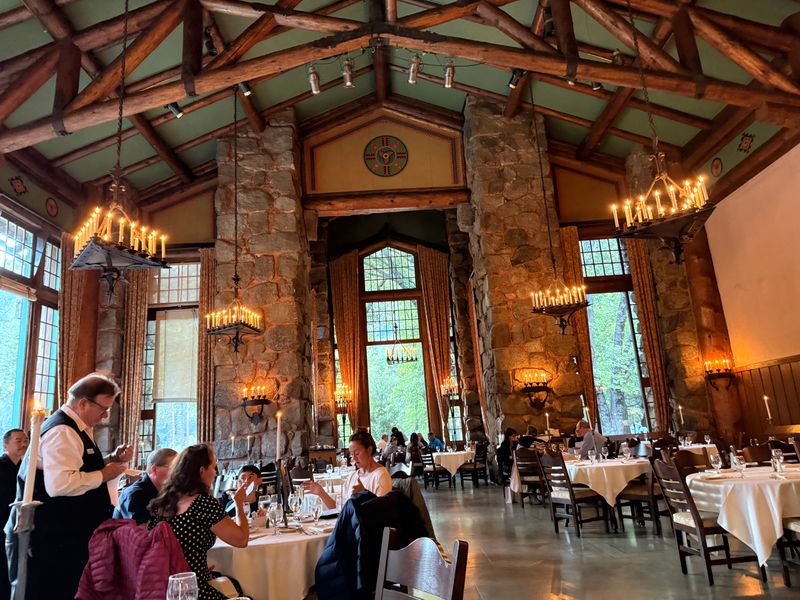
The room still uses many of its original design elements, from the massive trusses to the wrought iron chandeliers that hang from the ceiling.
Dining here means participating in a tradition that stretches back almost a century, connecting present-day visitors to generations of travelers who came before.
3. Recent Seismic Renovation For Safety And Preservation
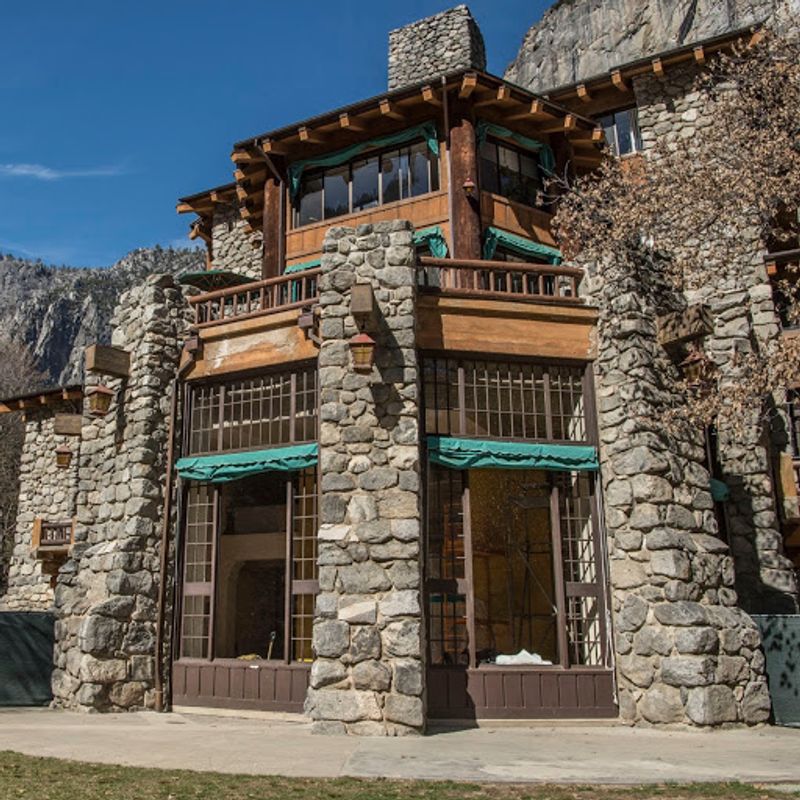
In 2023, The Ahwahnee Dining Room completed a major seismic renovation costing $31.6 million, designed to protect the historic structure from earthquake damage while preserving its original character.
Engineers installed steel reinforcements throughout the building, strengthening the foundation and framework without altering the visible design elements that guests cherish.
Windows were replaced with modern versions that match the original appearance but offer better insulation and structural support.
The project required closing the dining room temporarily, a rare interruption in its nearly century-long operation.
Workers carefully documented every detail before beginning, ensuring that renovations would remain invisible to visitors while dramatically improving safety.
The upgrades included foundation work, roof stabilization, and reinforcement of the granite columns that support the massive ceiling trusses.
Reopening after the renovation meant guests could once again enjoy the dining room with confidence that the building would withstand seismic activity common in California.
The investment reflects a commitment to preserving this landmark for future generations, balancing modern engineering with respect for historic architecture.
Visitors today benefit from these improvements without noticing the extensive work hidden within walls and beneath floors, allowing the cathedral-like atmosphere to remain unchanged.
4. California Mediterranean Cuisine With Local Ingredients
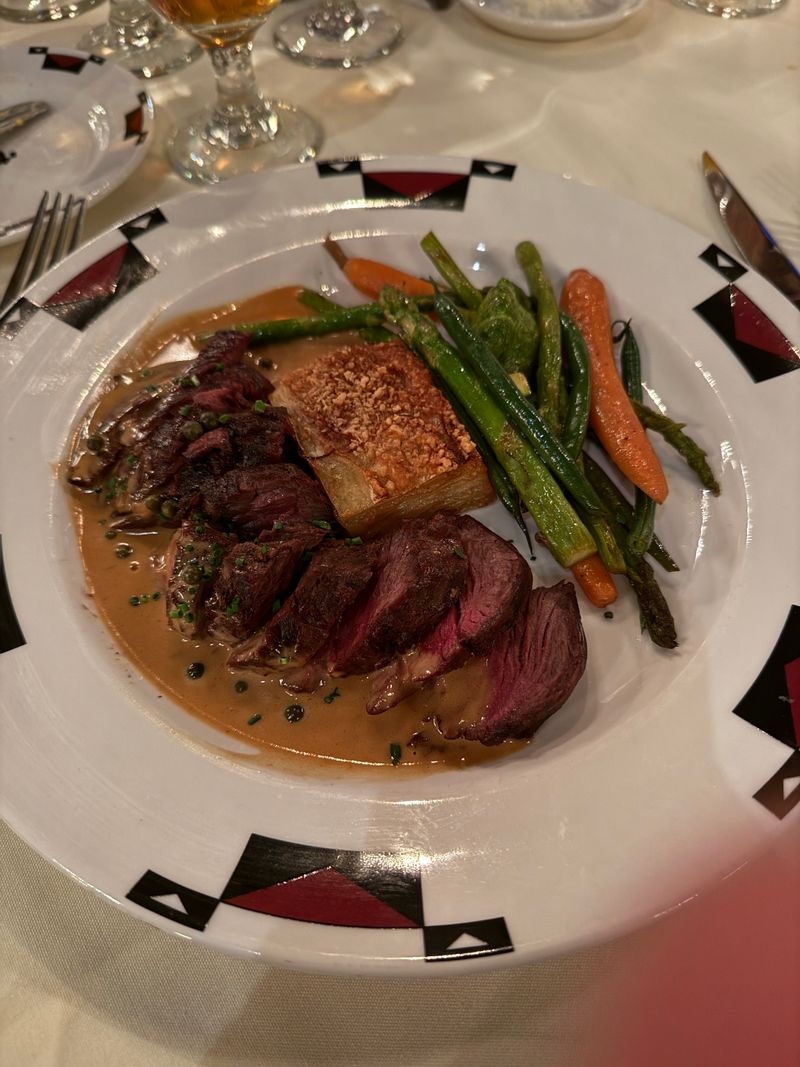
The menu at The Ahwahnee Dining Room focuses on California Mediterranean cuisine, emphasizing fresh ingredients sourced from local farms and producers whenever possible.
Chefs prepare dishes that balance classic techniques with seasonal availability, creating meals that taste both familiar and special.
Signature offerings include the Berkshire Pork Chop “Milanese,” a breaded cutlet served with bright accompaniments, and the Angus Beef Filet “Oscar,” topped with crab and asparagus.
Breakfast and brunch menus feature lighter fare, from omelets to pancakes, while dinner shifts toward more elaborate preparations that showcase the kitchen’s skill.
Vegetarian and dietary-conscious options appear throughout the menu, though availability can vary by season.
The cooking style avoids heavy sauces, instead letting the quality of ingredients shine through with simple enhancements.
Portion sizes tend toward generous without becoming overwhelming, allowing diners to finish their meals comfortably before considering dessert.
The kitchen maintains consistency across service times, whether guests arrive for a quiet weekday lunch or a busy Saturday dinner.
Ordering happens at the table with attentive staff who can explain preparations and suggest pairings, making the experience approachable even for those unfamiliar with fine dining conventions.
5. The Annual Bracebridge Dinner Tradition
Each winter, The Ahwahnee Dining Room transforms into the setting for the Bracebridge Dinner, a seven-course feast inspired by Washington Irving’s descriptions of 19th-century English Christmas celebrations.
The event combines food with theater, as costumed performers act out scenes throughout the meal, creating an immersive experience that blends dining with storytelling.
Musicians play period instruments while servers present dishes with ceremonial flourish, turning dinner into a participatory pageant.
The tradition began in 1927, the same year the hotel opened, and has continued almost every year since. Tickets sell out months in advance, with many families returning annually to experience the spectacle.
The dining room’s cathedral-like architecture enhances the theatrical atmosphere, with performers moving through the space as if it were a stage.
Menus for the Bracebridge Dinner differ from regular service, featuring dishes chosen to evoke historical banquets while remaining accessible to modern palates.
The event runs for multiple nights, allowing more guests to participate while maintaining an intimate feel.
Attending requires planning ahead and securing reservations early, but those who participate often describe it as a highlight of their Yosemite visit, combining culinary excellence with cultural tradition in a uniquely memorable way.
6. Dress Code That Elevates The Evening Experience
Dinner service at The Ahwahnee Dining Room requests that guests wear long pants and either a collared shirt or a dress, skirt, or blouse, creating an atmosphere that feels special without becoming overly formal.
The dress code helps establish a sense of occasion, encouraging diners to treat the meal as an event rather than casual refueling.
Staff enforce the policy gently, though they keep extra jackets available for guests who arrive unprepared.
Breakfast and brunch service allows casual attire, recognizing that many visitors come straight from their lodging or plan to hike immediately after eating.
This flexibility accommodates the practical realities of traveling in a national park while preserving the elevated atmosphere for evening meals.
The distinction between daytime and nighttime expectations helps set different moods throughout the day.
Most guests appreciate the dress code as part of what makes dining here feel different from other park restaurants.
Families with children can meet the requirements easily with simple planning, packing one nicer outfit for dinner.
The policy also contributes to quieter, more relaxed evening service, as the slightly formal environment encourages conversation at reasonable volumes and discourages rushed eating, allowing everyone to savor both food and surroundings at a comfortable pace.
7. Intimate Seating Despite Grand Proportions
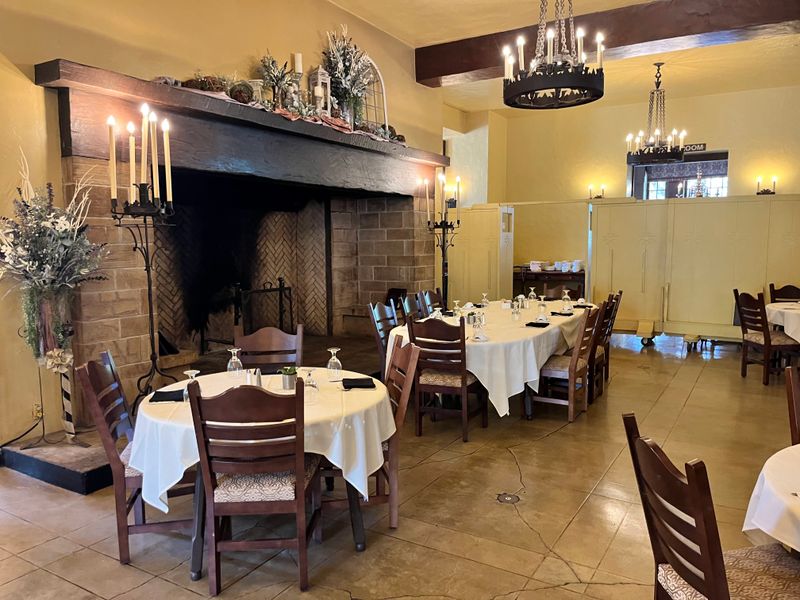
Although the dining room was originally designed to accommodate up to 1,000 guests, current seating capacity sits around 350, creating a more intimate experience within the grand space.
Tables are spaced to allow comfortable conversation without feeling crowded, with enough distance between parties to maintain privacy.
The reduced capacity means service can remain attentive, with staff able to monitor tables without rushing between too many stations.
Seating arrangements vary from small two-person tables near windows to larger configurations that can accommodate families or groups celebrating special occasions.
The layout takes advantage of the room’s length, creating distinct zones that feel connected yet separate.
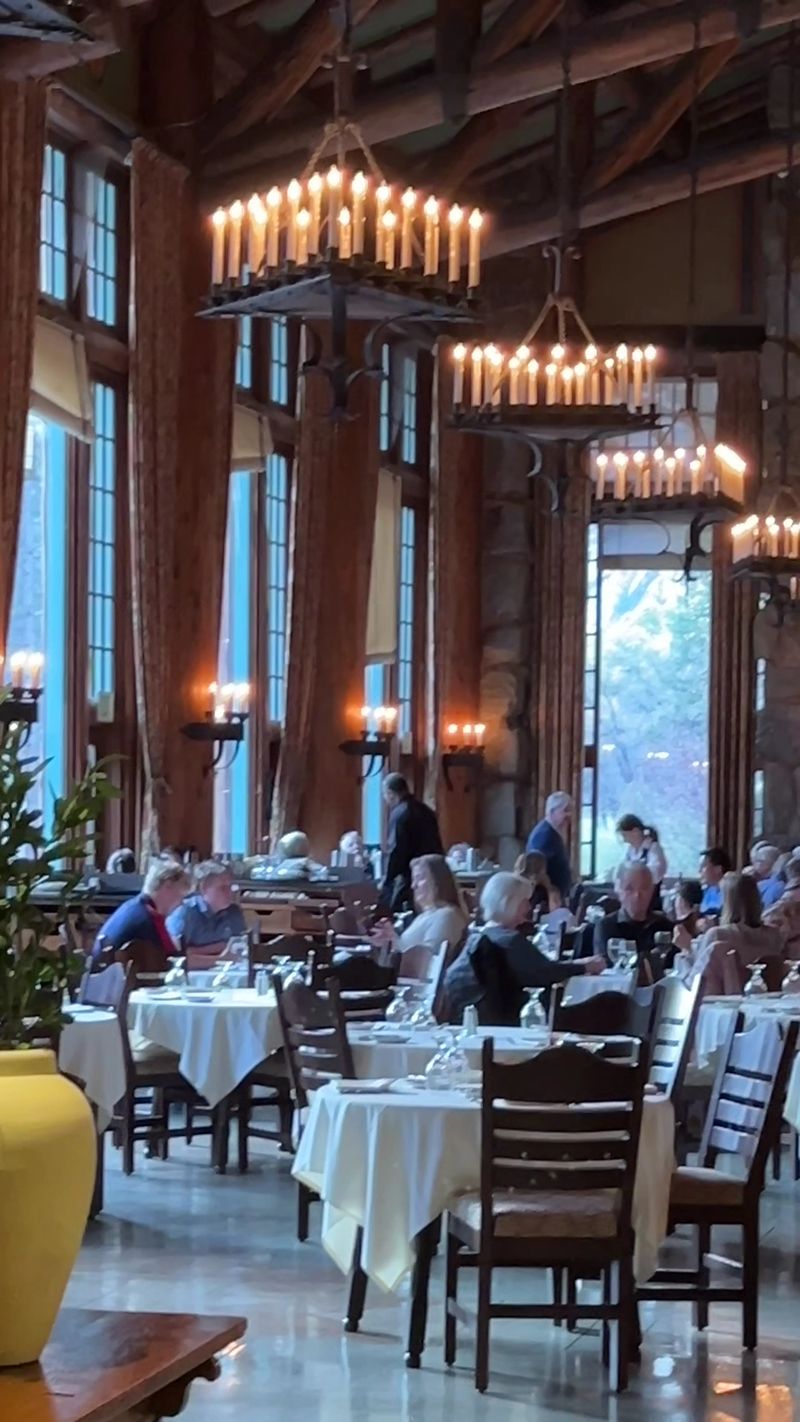
Natural light from the tall windows reaches most tables during daytime service, though evening meals rely on the warm glow of chandeliers and wall sconces.
Reservation systems help manage the limited seating, preventing overcrowding while ensuring the dining room maintains a lively atmosphere.
Peak times during summer and holiday weekends may see every table occupied, but the room’s size prevents the cramped feeling common in smaller restaurants.
The balance between grandeur and intimacy defines the experience, allowing diners to feel both impressed by the architecture and comfortable enough to relax and enjoy their meal without distraction.
8. Live Piano Music During Dinner Service
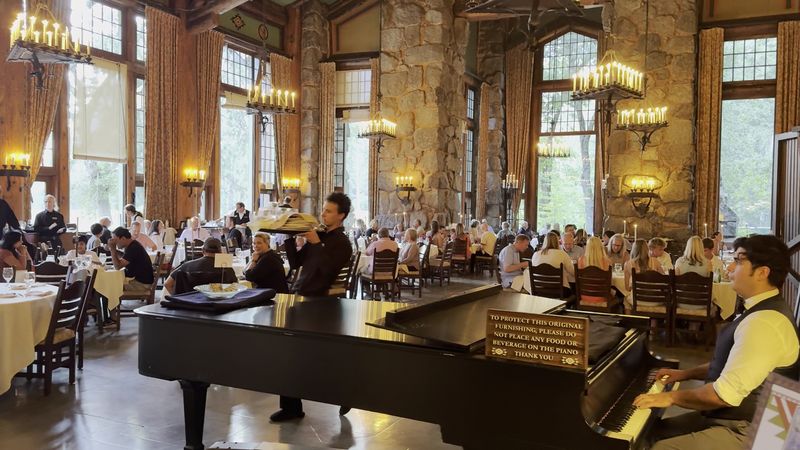
Evening meals at The Ahwahnee Dining Room come with the accompaniment of live piano music, adding another layer to the already impressive atmosphere.
A pianist plays from a grand piano positioned to fill the space with sound without overwhelming conversation, choosing repertoire that ranges from classical pieces to familiar standards.
The music volume stays low enough to allow diners to talk comfortably while still creating a sophisticated ambiance.
The presence of live music distinguishes dinner service from breakfast and lunch, marking evening meals as occasions worth dressing up for and savoring slowly.
Musicians rotate, bringing different styles and selections to each performance. The high ceiling and hard surfaces of the dining room create natural acoustics that carry piano notes clearly throughout the space.
Guests seated near the piano get a closer view of the performance, though the room’s design ensures everyone can hear equally well.
The music helps establish pacing for the meal, encouraging diners to linger over courses rather than rushing through.
Children often find the live performance engaging, giving them something to watch between courses.
The combination of visual grandeur, fine food, and live music creates a multisensory experience that extends beyond taste alone, making dinner feel like a complete evening out rather than just another meal.
9. Floor-To-Ceiling Windows Framing Yosemite Views
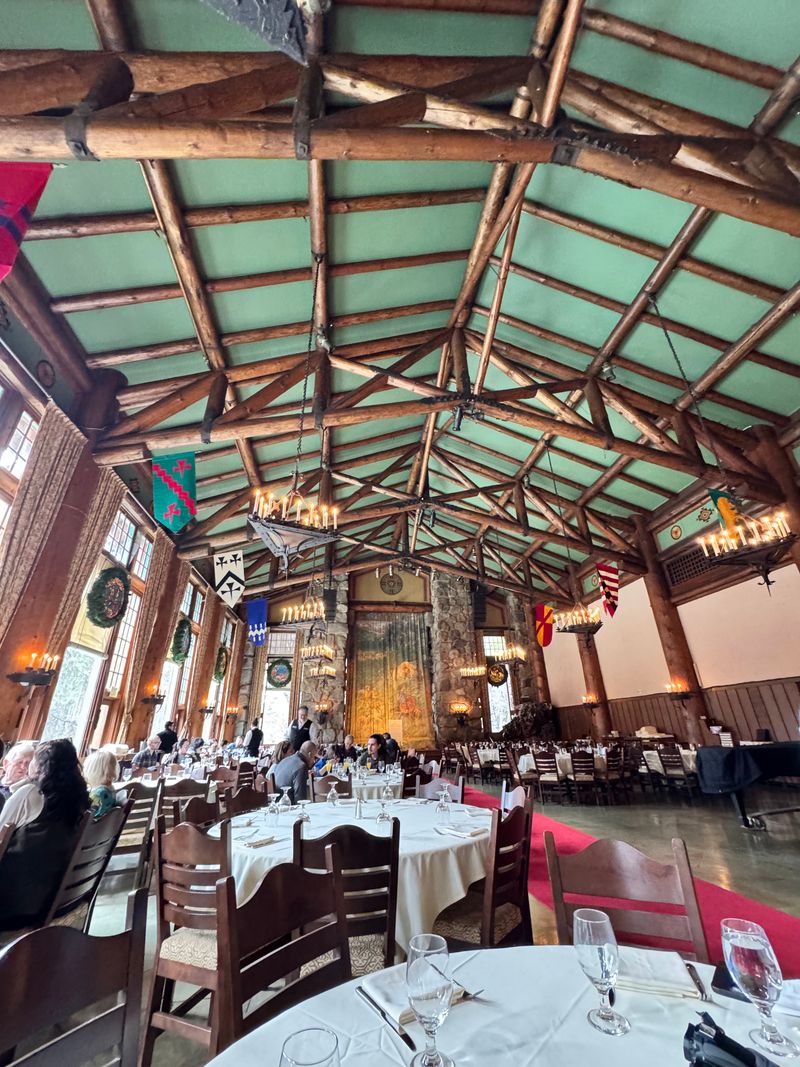
Massive windows line the walls of The Ahwahnee Dining Room, offering views of Yosemite’s granite cliffs, waterfalls, and pine forests that change with the seasons and time of day.
Morning light illuminates the valley as mist rises from the Merced River, while afternoon sun casts long shadows across meadows visible in the distance.
The windows were designed to frame the landscape like living paintings, bringing the outside environment into the dining experience.
During spring, waterfalls swell with snowmelt, creating dramatic white ribbons against gray rock faces. Summer brings lush green foliage and clear blue skies, while autumn turns aspens golden.
Winter occasionally dusts the valley floor with snow, transforming the view into a monochrome study of white and gray.
The recent seismic renovation replaced windows with modern versions that maintain the original appearance while improving insulation and structural integrity.
Glass quality allows clear views without distortion, and the size of each pane maximizes the amount of landscape visible from every angle.
Diners seated near windows get the most direct views, but the room’s layout ensures most tables offer at least partial sightlines to the outside.
The interplay between the cathedral-like interior and the natural cathedral of Yosemite Valley creates a unique dining environment found nowhere else in California.
10. Reservations Essential For This Popular Destination
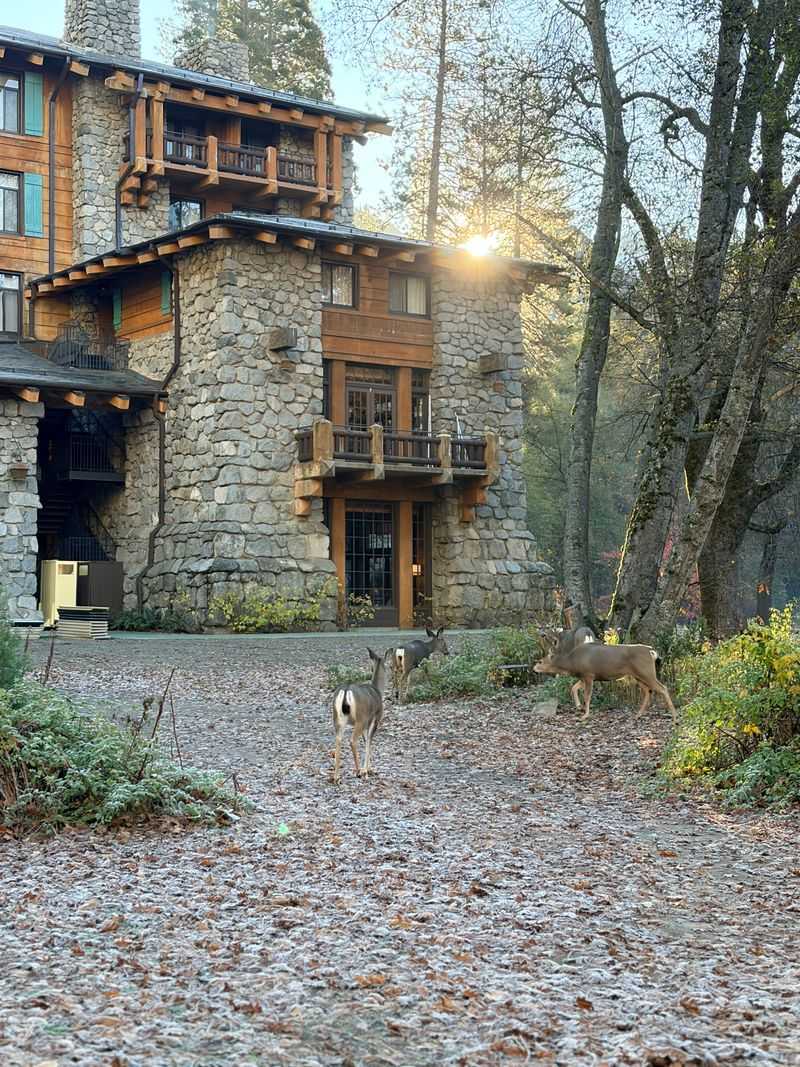
The Ahwahnee Dining Room’s popularity means reservations are strongly recommended, especially during peak visitation periods from late spring through early fall.
Booking can be done through OpenTable or by calling the dining room directly, with both methods offering similar availability.
Tables for dinner fill fastest, particularly for weekend evenings and holidays, so planning several weeks ahead increases the chances of securing preferred times.
Walk-in seating may be available during slower periods or for breakfast and lunch service, but relying on spontaneous access risks disappointment.
The reservation system helps manage flow and ensures the kitchen can prepare for expected volume without compromising quality.
Parties larger than six may need to book farther in advance, as the dining room has limited large tables. Cancellation policies allow some flexibility, though last-minute cancellations may incur fees.
Arriving on time for reservations helps maintain the schedule for all guests, as delays can cascade through the evening service.
Confirming reservations before traveling to Yosemite ensures a spot in this iconic space, allowing visitors to plan their day around a guaranteed dining experience rather than hoping for availability upon arrival.