This 14,000-Acre State Park In California Is One Of America’s Top Secrets
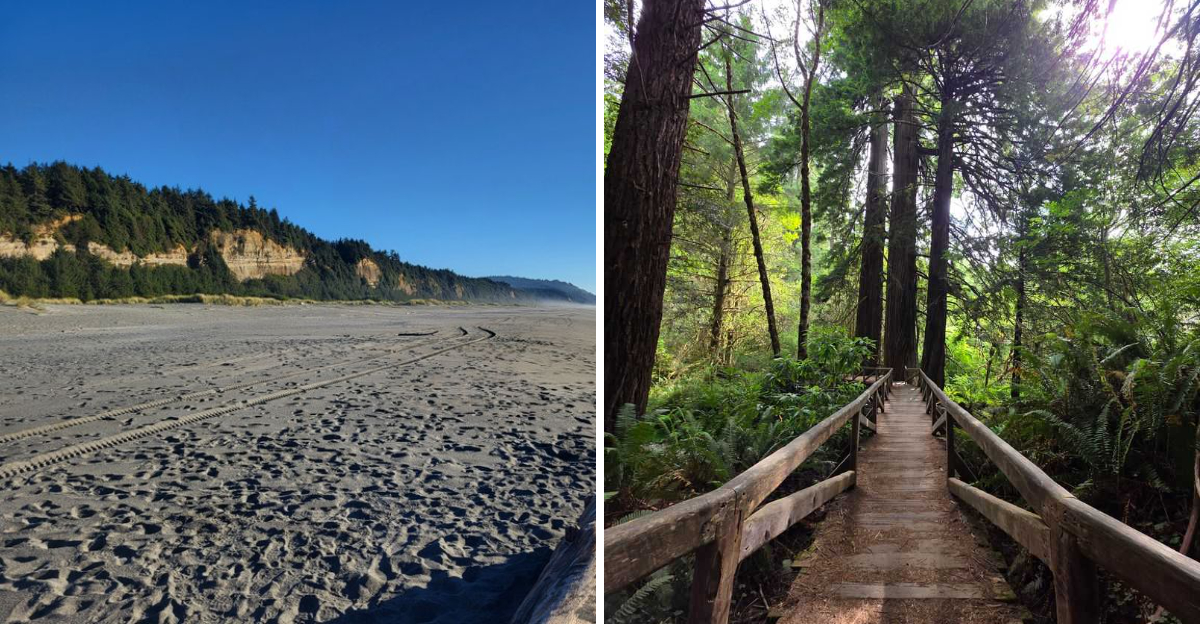
Towering redwoods rise so high along California’s northern coast they almost seem unreal, their trunks stretching skyward like pillars inside a living cathedral.
Prairie Creek Redwoods State Park in Orick drops visitors straight into that larger-than-life landscape, where ancient forest meets wild Pacific coastline in a setting that feels frozen in time.
Every turn feels cinematic. Elk wander through open meadows without warning. Fern-covered canyons glow deep green beneath filtered sunlight.
Massive trees that have stood for centuries surround the trails, making even short walks feel epic in scale.
Despite its jaw-dropping scenery, the park remains one of Northern California’s quieter redwood escapes, giving visitors space to wander without the heavy crowds found at more famous stops.
The result feels almost surreal. Prehistoric scenery, close wildlife encounters, and endless forest views create an experience that lingers long after you leave, turning a simple visit into a true California wilderness adventure.
1. Ancient Giants Reaching Toward The Clouds
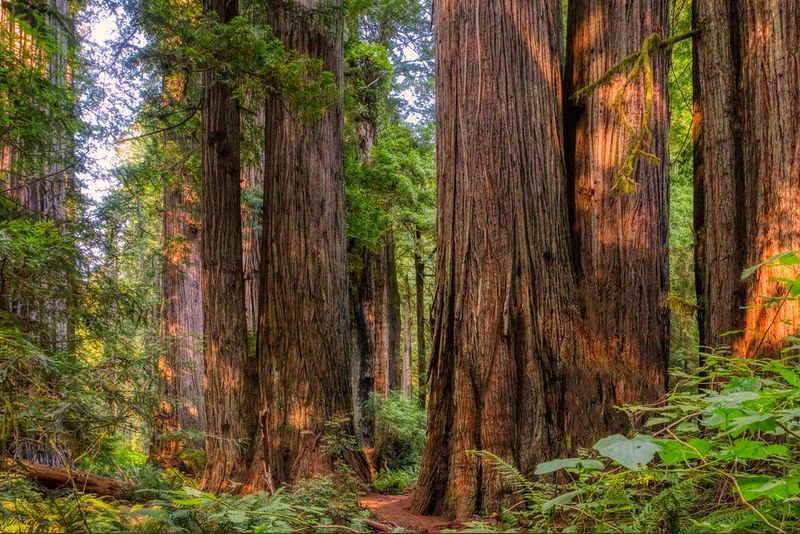
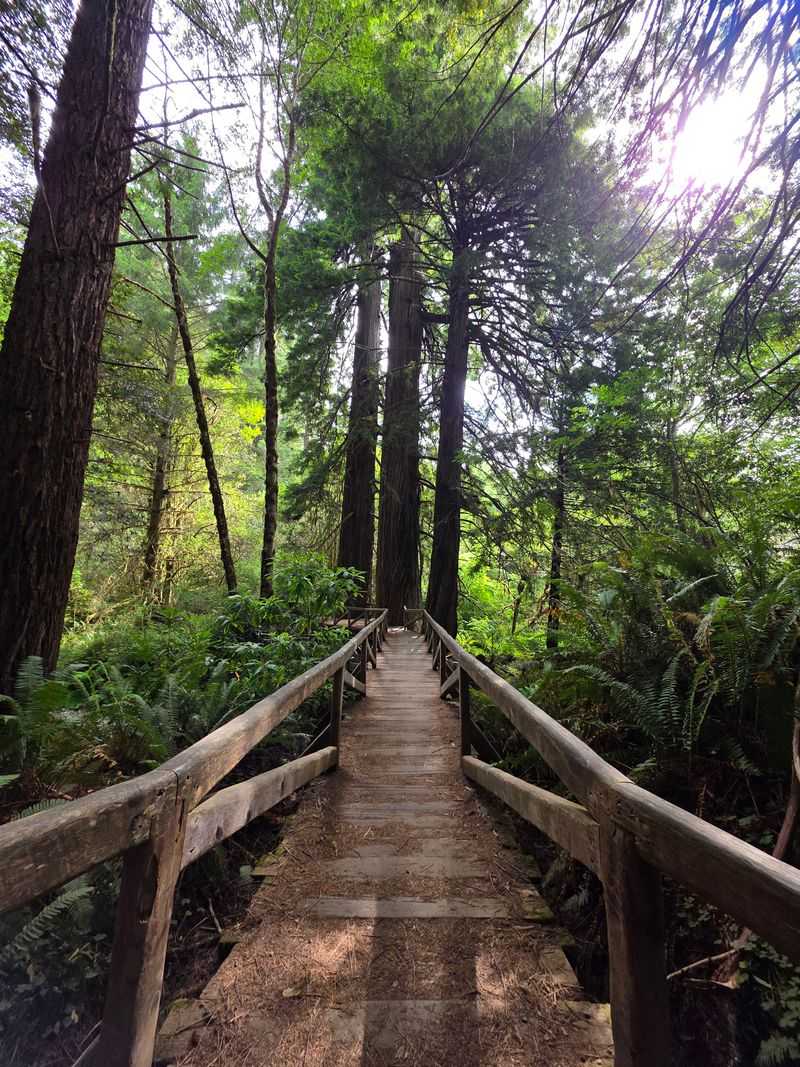
Coast redwoods in Prairie Creek Redwoods State Park grow to heights that challenge human comprehension of scale.
Some of these ancient trees stretch more than 300 feet into the sky, creating a canopy so dense that sunlight filters through in golden beams that shift throughout the day.
Walking among these giants feels different from any other forest experience because the trees command attention in ways that smaller woodlands cannot.
The bark alone tells stories of survival, with thick, fibrous layers that have protected these living monuments through centuries of storms, fires, and changing climates.
The root systems spread wide rather than deep, which seems impossible given the height these trees achieve.
Visitors often pause to touch the trunks, realizing that their arms cannot span even a fraction of the circumference. The silence beneath the canopy carries a weight that modern life rarely allows people to experience.
Birds call from heights that remain invisible, and the air smells of earth and growing things in a combination that cannot be replicated.
These trees represent some of the oldest living organisms on the planet, and standing among them provides perspective that photographs cannot capture.
2. Roosevelt Elk Making The Meadows Their Home
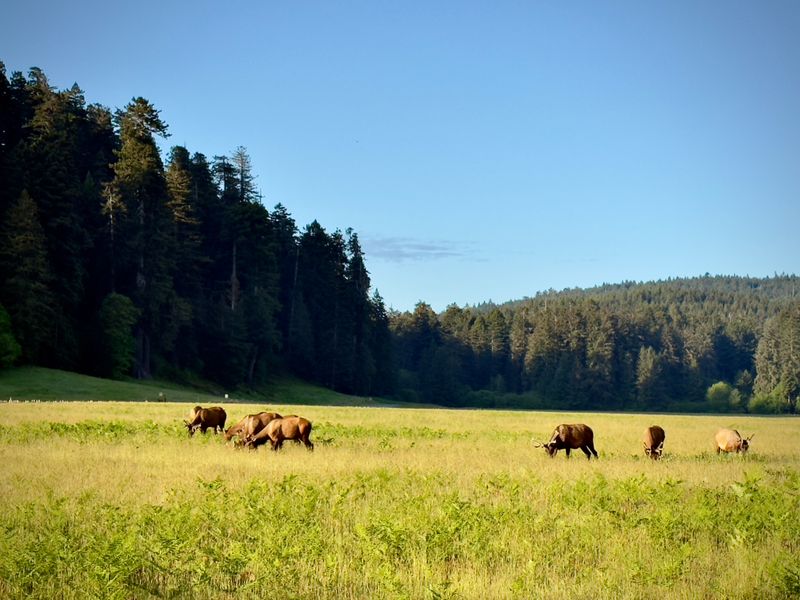
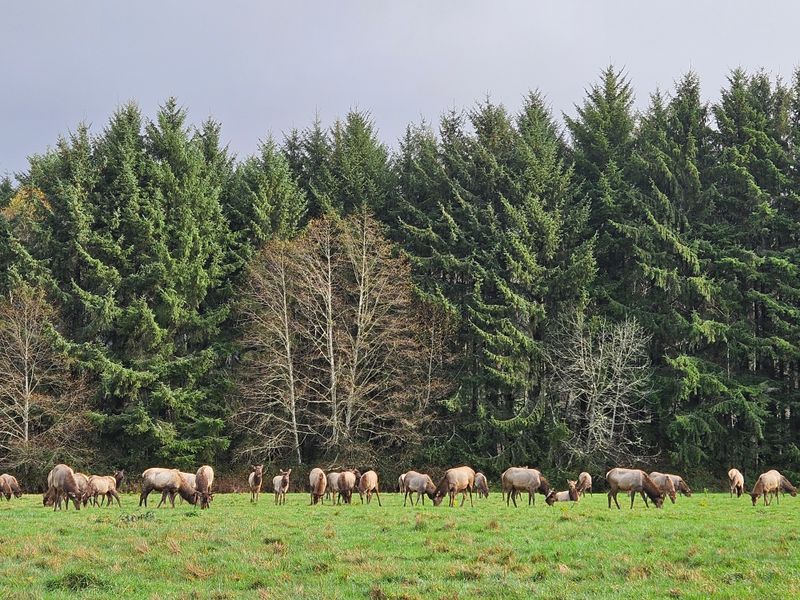
Roosevelt elk gather in the meadows of Prairie Creek with a casualness that surprises first-time visitors.
These massive animals graze openly, seemingly unconcerned by human observers who maintain respectful distances along designated viewing areas.
Males can weigh up to 1,000 pounds, with antlers that spread in impressive racks during certain seasons.
The females travel in groups with their young, creating family units that move across the grasslands with surprising grace despite their size.
Early morning and late afternoon provide the best viewing opportunities when the elk emerge from the forest edges to feed.
The sight of dozens of these animals against a backdrop of towering redwoods creates scenes that feel pulled from another era.
Watching elk behavior reveals social dynamics that mirror human family structures in interesting ways.
The protective stance of mothers near calves, the dominance displays between males, and the coordinated movement of the herd all unfold naturally for those patient enough to observe.
This represents one of the few remaining places where Roosevelt elk maintain stable populations in protected habitat, making every sighting valuable for both wildlife enthusiasts and casual visitors.
3. Fern Canyon’s Living Prehistoric Walls
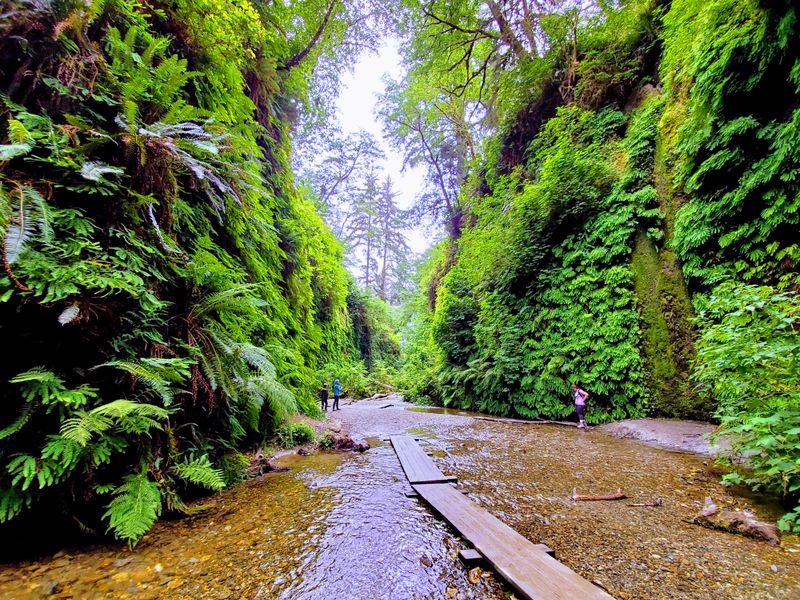
Fern Canyon earned its place in cinema history when filmmakers chose its otherworldly landscape for Jurassic Park 2.
The canyon walls rise fifty feet on both sides, completely blanketed in five-finger ferns, lady ferns, and chain ferns that create a living green tapestry.
A small creek runs along the canyon floor, requiring visitors to hop across stones or wade through shallow water depending on seasonal flow.
The narrow passage amplifies every sound, from dripping water to bird calls echoing off the fern-covered walls.
The microclimate within the canyon maintains constant moisture that allows ferns to thrive in densities rarely seen elsewhere.
Sunlight reaches the canyon floor only at specific times of day, creating dramatic lighting that shifts the appearance of the space throughout visiting hours.
The walk through Fern Canyon takes less than an hour for most visitors, but the sensory experience packs more wonder into that time than many full-day excursions.
The smell of wet earth and growing plants, the cool air even on warm days, and the visual impact of unbroken green create memories that outlast the actual visit.
Accessibility varies by season, with some periods requiring creek crossings that may not suit all mobility levels.
4. Over 280 Bird Species Finding Refuge
Bird watchers consider Prairie Creek Redwoods State Park a premier destination because the diverse habitats support more than 280 different species.
Old-growth forests provide nesting sites for spotted owls and marbled murrelets, both rare species that depend on ancient trees for survival.
The marbled murrelet presents a particular curiosity because this seabird nests miles inland on the broad branches of old-growth redwoods.
Parents fly daily from ocean to forest, feeding on fish while raising young in treetop nests that remain hidden from ground observers.
Varied thrushes, Steller’s jays, and pileated woodpeckers create a constant soundtrack in the forest understory.
Each species occupies specific niches within the ecosystem, from ground-feeding wrens to canopy-dwelling warblers that visitors hear more often than see.
The park’s location along the Pacific Flyway means seasonal migrations bring additional species through the area. Spring and fall offer the most variety, though resident birds maintain interest throughout the year.
Bringing binoculars enhances the experience significantly because many species remain high in the canopy or deep in the understory.
Patient observers who spend time sitting quietly often spot more birds than those who walk quickly through the trails.
5. Seventy-Five Miles Of Trail Networks
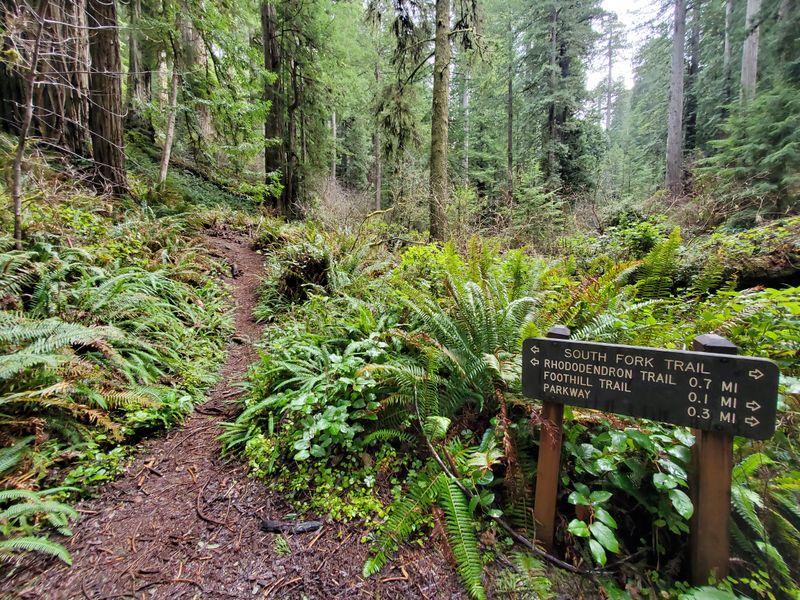
Prairie Creek offers 75 miles of hiking trails that range from easy loops suitable for families with young children to challenging backcountry routes that test experienced hikers.
The trail system connects various ecosystems, allowing visitors to experience coastal beaches, dense forests, open meadows, and stream canyons all within a single park.
The James Irvine Trail ranks among the most popular routes because it connects the visitor center to Fern Canyon through pristine old-growth forest.
This 4.5-mile one-way trail loses elevation gradually, making the return trip more challenging for those not prepared for the uphill sections.
Shorter options like the Nature Trail and Revelation Trail provide accessible experiences for visitors with limited time or mobility concerns.
These paths feature interpretive signs that explain forest ecology, indigenous history, and wildlife behavior in language that engages without overwhelming.
Trail conditions vary seasonally, with some routes becoming muddy during winter rains while others remain passable year-round.
The park’s coastal location means weather can change quickly, making layers and rain gear practical regardless of initial conditions.
Maps available at the visitor center show current trail statuses and help visitors plan routes matching their fitness levels and time constraints.
6. Gold Bluffs Beach And Mining History
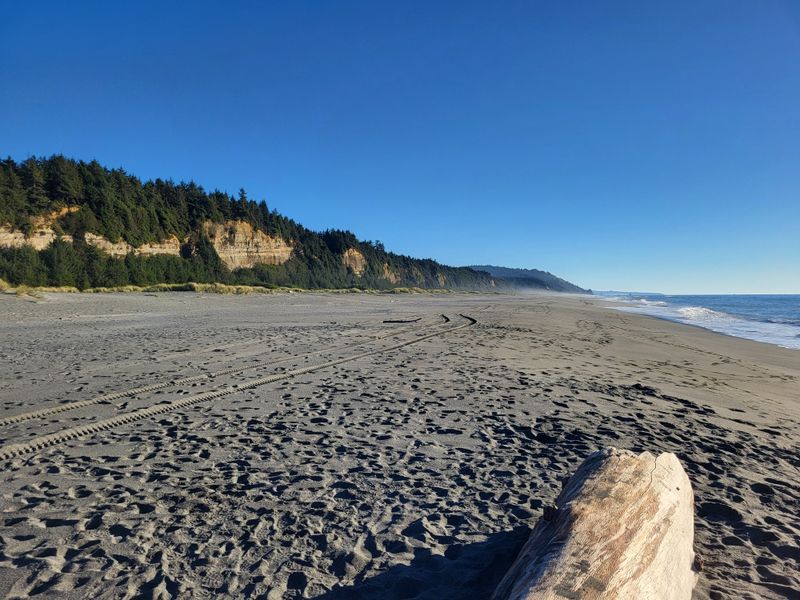
Gold Bluffs Beach carries a name that reflects its 1850s history when miners worked the sands searching for precious metal.
The gold rush brought temporary settlements to this remote stretch of coast, though the deposits never yielded the wealth that prospectors hoped to find.
Today the beach offers a completely different kind of treasure in the form of scenic beauty and wildlife viewing opportunities.
The wide sandy expanse stretches for miles with minimal development, backed by bluffs that rise dramatically from the shoreline.
Roosevelt elk often graze on the beach grass near the dunes, creating photo opportunities that combine ocean, wildlife, and dramatic coastal landscape.
The juxtaposition of massive elk against crashing waves produces images that capture the wild character of California’s north coast.
The beach provides access to Fern Canyon from the coastal side, offering an alternative route for visitors who prefer beach driving to forest roads.
The approach requires navigating Home Creek, which varies in depth and may not be passable for all vehicles during high water.
Beachcombing yields driftwood, interesting stones, and occasional agates for those willing to walk the tide line.
The consistent sound of waves creates a meditative backdrop that contrasts beautifully with the forest silence found elsewhere in the park.
7. Prairie Creek Visitor Center Resources
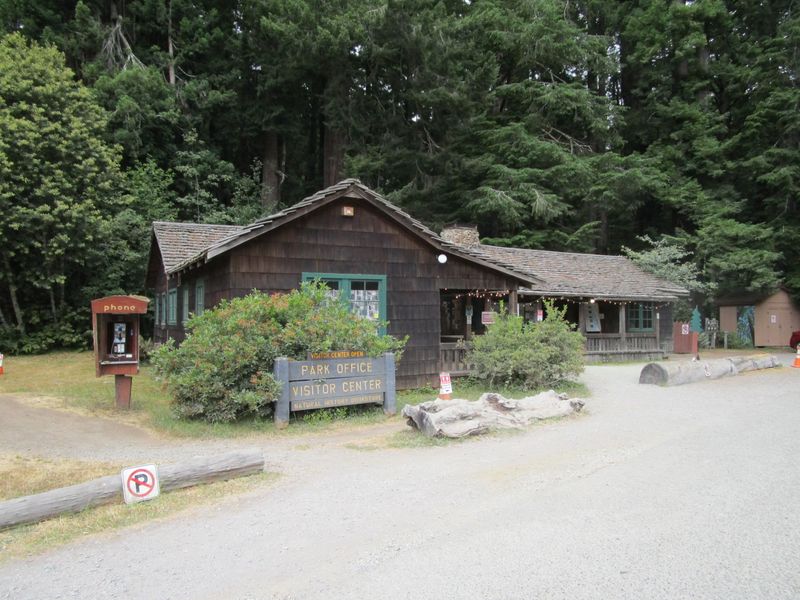
The Prairie Creek Visitor Center serves as the perfect starting point for park exploration, offering exhibits that explain coast redwood ecology, wildlife behavior, and cultural history.
The building itself reflects rustic architecture that blends with the surrounding forest rather than competing with it.
Inside, displays showcase the unique characteristics of old-growth forests and the species that depend on them.
Interactive elements engage younger visitors while providing depth that satisfies adults seeking detailed information about what makes this ecosystem special.
Rangers staff the center during operating hours, answering questions and providing current conditions for trails, wildlife sighting locations, and seasonal highlights.
Their local knowledge often reveals hidden gems that guidebooks miss, from quiet trails to optimal viewing times for specific species.
The bookstore stocks field guides, regional history books, and children’s nature literature along with maps and practical supplies.
Proceeds support park programs and conservation efforts, making purchases contribute directly to preserving the resources visitors come to experience.
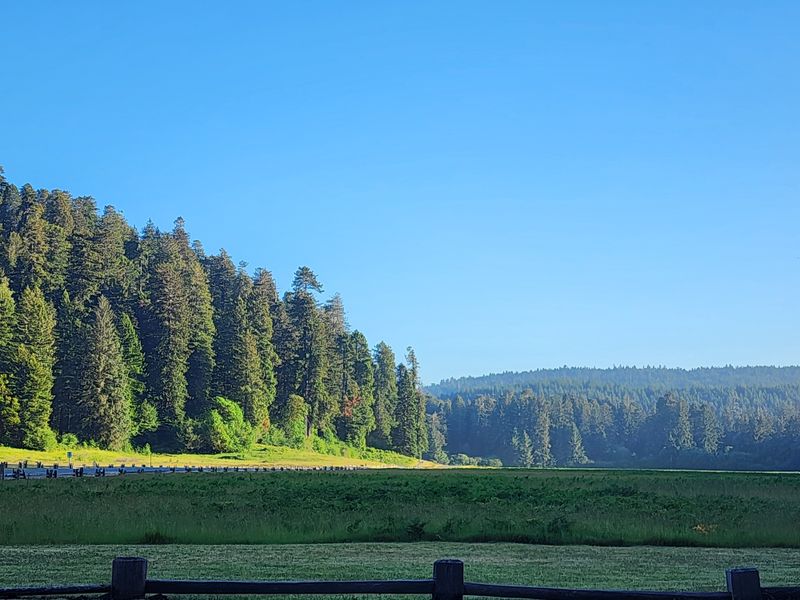
Picnic tables near the visitor center provide shaded spots for meals with views of the surrounding meadow where elk frequently appear.
Restroom facilities and water make this a practical stop before heading out on longer hikes or beach excursions.
8. Two Developed Campgrounds For Overnight Stays
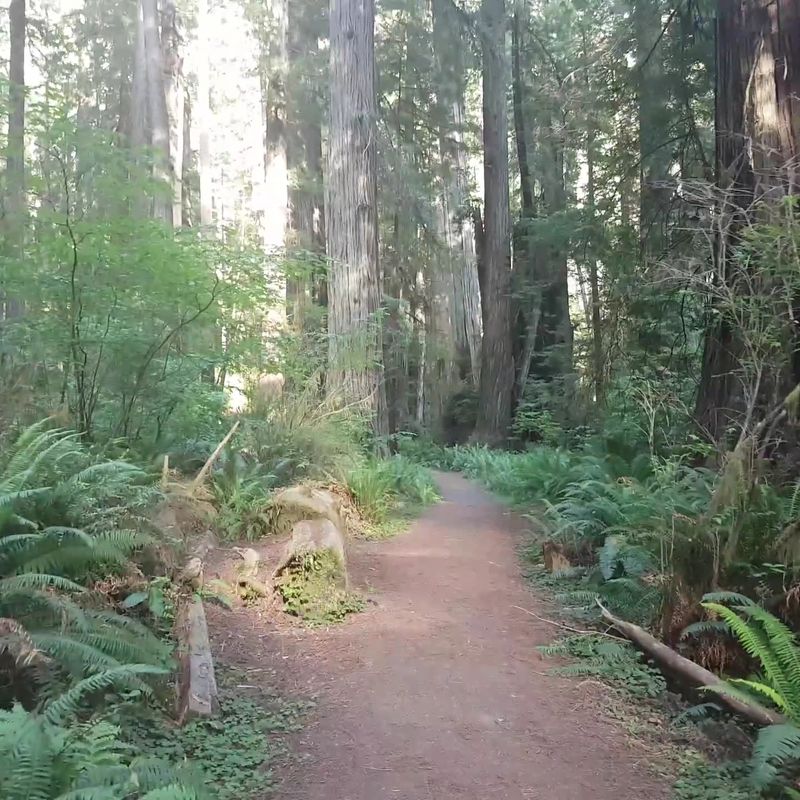
Spending the night inside Prairie Creek Redwoods State Park transforms a day visit into something more immersive.
Elk Prairie Campground offers 75 sites nestled among the redwoods, with some spots providing views of the meadow where elk graze at dawn and dusk.
The campground remains open year-round, though winter brings rain that tests camping gear and patience.
Sites include picnic tables and fire rings, with shared facilities providing restrooms and water access throughout the camping area.
Gold Bluffs Beach Campground takes a different approach with 25 sites located near the ocean, where the sound of waves replaces the forest silence found at Elk Prairie.
This coastal option suits visitors who prefer beach access and the unique experience of camping where the redwood ecosystem meets the Pacific.
Both campgrounds operate on a reservation system during peak season, with some first-come sites available during quieter periods.
The camping experience allows visitors to witness the forest at times day-trippers miss, from early morning mist rising through the trees to night skies visible through gaps in the canopy.
Wildlife becomes more active during evening and early morning hours, making overnight stays valuable for those hoping to observe natural behaviors without crowds.
9. Newton B. Drury Scenic Parkway Drive
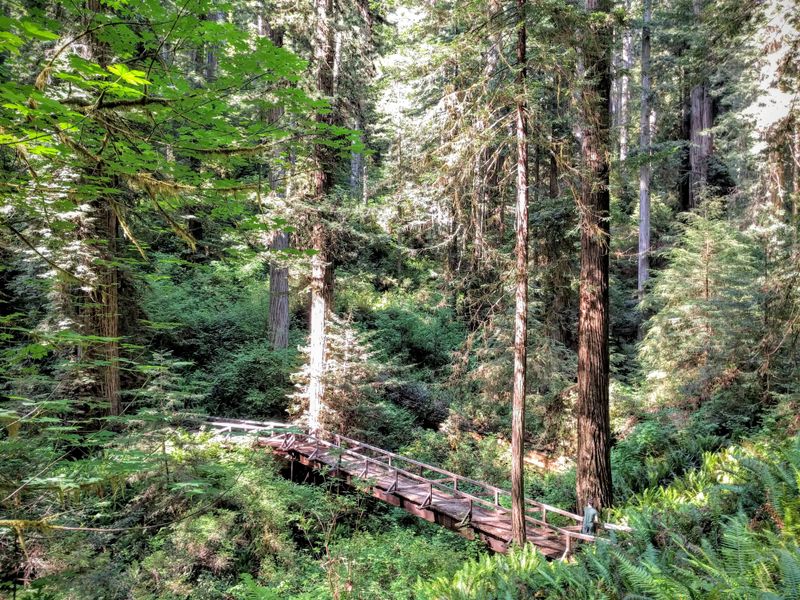
The Newton B. Drury Scenic Parkway provides an alternative to Highway 101, winding 8 miles through the heart of Prairie Creek’s old-growth forest.
The two-lane road moves slowly by design, with frequent pullouts encouraging drivers to stop and experience the forest on foot.
Driving beneath the redwood canopy creates a tunnel effect as trees tower on both sides, their branches meeting overhead to filter sunlight into shifting patterns.
The road surface itself feels different from modern highways, with gentle curves that follow the natural contours rather than cutting straight paths through the landscape.
Wildlife sightings occur frequently along the parkway, particularly during early morning and evening hours when elk move between feeding areas.
Drivers need to maintain awareness because animals may appear suddenly, and stopping in the roadway creates hazards for following vehicles.
Several trailheads connect directly to the parkway, making it easy to combine scenic driving with short walks into particularly impressive grove sections.
The Big Tree pullout marks one such spot, where a short path leads to a massive redwood that illustrates the maximum size these trees can achieve.
The parkway offers wheelchair-accessible viewing areas at several pullouts, ensuring that mobility limitations need not prevent appreciation of the ancient forest.
10. World Heritage Site International Recognition
Prairie Creek Redwoods State Park shares World Heritage Site designation with the other parks comprising Redwood National and State Parks.
This international recognition places the area alongside global treasures like the Grand Canyon and Yellowstone, acknowledging the irreplaceable value of these ancient forests.
The designation as an International Biosphere Reserve adds another layer of protection and study, with scientists from around the world conducting research on everything from climate change impacts to species adaptation.
These studies contribute to global understanding of forest ecosystems and conservation strategies. Such recognition brings responsibilities along with prestige, as park managers balance public access with resource protection.
The goal involves allowing people to experience these remarkable places while ensuring that future generations inherit forests as magnificent as those standing today.
International visitors often specifically seek out World Heritage Sites, understanding that the designation indicates something truly special.
The global perspective helps local residents appreciate what exists in their region, sometimes sparking greater investment in conservation and education efforts.
The parks work together to maintain standards worthy of their international status, coordinating management practices and sharing resources to address challenges ranging from invasive species to climate adaptation.
11. Save-The-Redwoods League Foundation
Prairie Creek Redwoods State Park exists today because the Save-the-Redwoods League recognized the threat to ancient forests during the early 1920s.
Logging operations were rapidly clearing old-growth redwoods throughout California, with entire groves disappearing to feed lumber demands of a growing state.
The League raised funds to purchase lands that would otherwise have been logged, working with donors who understood that once cut, these ancient forests could never be replaced within human timescales.
The organization’s efforts resulted in the establishment of Prairie Creek and several other redwood parks that now protect the remaining old-growth stands.
This conservation success story demonstrates what private citizens and organizations can accomplish when they commit to long-term environmental protection.
The League continues working today, still purchasing lands and conservation easements to expand protected areas and create wildlife corridors.
Understanding this history adds depth to park visits, as the trees standing today represent conscious choices made by people who valued preservation over profit.
The decision to save these forests rather than harvest them required vision that extended beyond immediate economic concerns.
Visitors can support ongoing conservation by becoming League members or making donations that fund current land acquisition and restoration projects throughout the redwood region.
12. Yurok Ancestral Lands And Cultural Heritage
The lands now protected as Prairie Creek Redwoods State Park served as home to the Yurok people for thousands of years before European contact.
The Yurok developed sophisticated relationships with the redwood forest ecosystem, using resources sustainably while maintaining spiritual connections to the land.
Redwood trees provided materials for plank houses, canoes, and countless tools that supported daily life.
The bark yielded fibers for clothing and baskets, while the forest supported game animals and plant foods that varied seasonally.
The Yurok understanding of forest management included controlled burning practices that reduced fuel loads and promoted certain plant species.
Modern land managers now recognize the wisdom in these traditional practices, which maintained forest health through active stewardship rather than hands-off preservation.
Cultural sites within and around the park include village locations, ceremonial areas, and resource gathering spots that hold ongoing significance for Yurok people.
Respecting these places means following posted guidelines and understanding that some areas may have restricted access to protect cultural values.
The park works with Yurok tribal representatives to incorporate indigenous perspectives into interpretation and management decisions.
This collaboration acknowledges that conservation involves more than protecting trees and wildlife, extending to the human cultural heritage intertwined with these landscapes across millennia.