13 Surreal Natural Wonders In California That Feel Like They’re From Another Planet
Some landscapes feel so unreal that your brain needs a second to process what you’re seeing.
Steam curls out of the earth like the ground is breathing, blinding white salt stretches to the horizon, and jagged rock towers rise from still water like something built by another civilization.
California holds all of it – deserts that look lunar, valleys that sink below sea level, and mineral-stained cliffs glowing in colors that don’t seem natural.
The variety feels impossible until you start seeing it for yourself.
You can walk across cracked basins that shimmer in the heat, stand near bubbling geothermal pools, and watch waterfalls catch fire in the right light for just a few minutes each year.
Every stop feels pulled from a different planet, yet they all exist within driving distance of each other. The geology here doesn’t just shape the land – it bends your sense of scale and reality. Colors feel brighter. Formations feel sharper. Silence feels deeper.
These aren’t just beautiful places. They’re disorienting in the best way – landscapes sculpted by time, pressure, and extremes that make California feel less like one state and more like a collection of worlds waiting to be explored.
1. Lassen Volcanic National Park
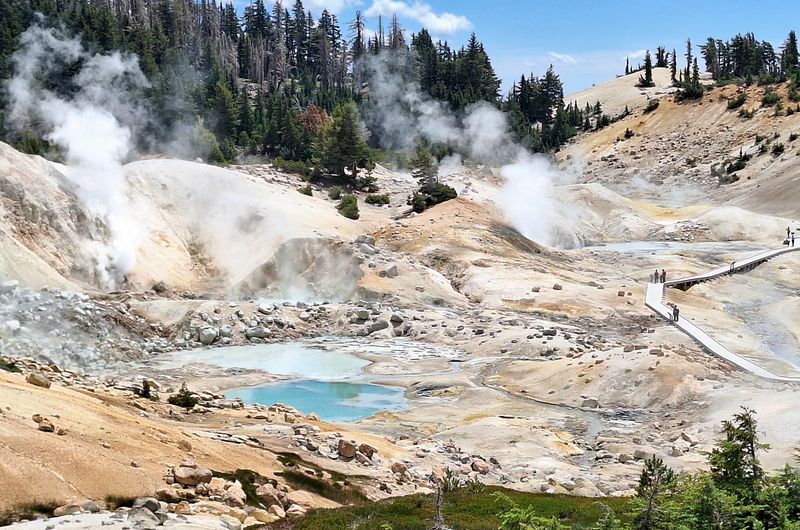
Volcanic activity still shapes the ground at Lassen Volcanic National Park, where steam rises from cracks in the earth and mud bubbles in pools heated from below.
The park sits in the southernmost part of the Cascade Range, where four types of volcanoes exist within the same protected area.
Visitors walk past sulfur-scented fumaroles, boiling springs, and mudpots that gurgle and pop throughout the day.
The Bumpass Hell trail leads to the largest hydrothermal area in the park, where boardwalks wind past steaming vents and turquoise pools.
The ground temperature here reaches levels that would cook food, yet the trail remains safe thanks to careful construction.
Colors shift from rust orange to bright yellow depending on the minerals present in each thermal feature.
Painted Dunes near Cinder Cone show what happens when lava meets oxidized volcanic rock, creating swirls of red, pink, and purple across hillsides.
Snow often lingers into summer at higher elevations, creating sharp contrasts between white drifts and dark volcanic stone.
The park stays relatively quiet compared to other California destinations, with fewer crowds even during peak season.
Timing matters here – many roads close from October through June due to heavy snowfall, so planning ahead ensures access to the most dramatic areas.
2. Death Valley National Park
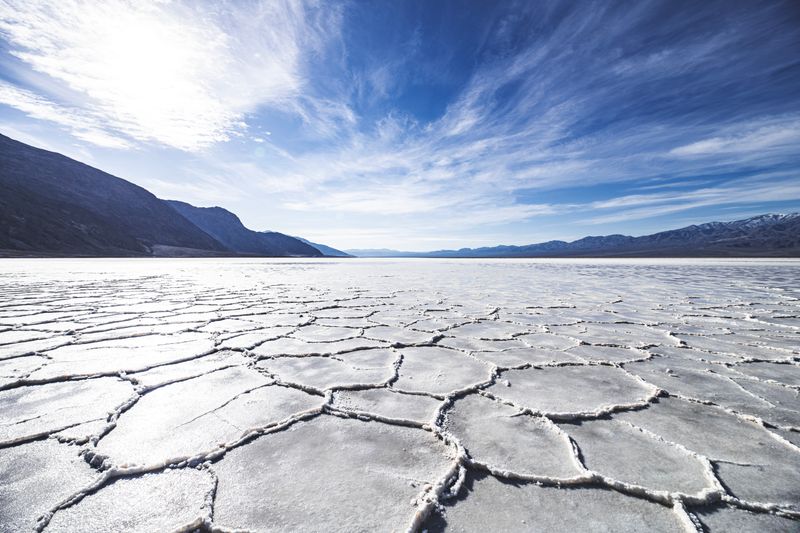
Badwater Basin holds the title of the lowest point in North America at 282 feet below sea level, marked by white salt polygons that crack and buckle under extreme heat.
Death Valley earns its reputation through temperature records that regularly exceed 120 degrees Fahrenheit during summer months.
The basin stretches for miles in every direction, creating an optical illusion where distances become impossible to judge accurately.
Salt formations here grow in hexagonal patterns as groundwater rises through the soil, evaporates, and leaves behind crystalline deposits.
Walking across the flats produces a crunching sound with each step, and the white surface reflects sunlight with blinding intensity.
The valley floor sits in a rain shadow between mountain ranges, receiving less than two inches of precipitation annually.
Mesquite Flat Sand Dunes offer another otherworldly landscape within the same park, where wind sculpts golden sand into constantly shifting ridges.
Sunrise and sunset provide the best lighting for photography, when shadows define the dunes’ curves and the heat becomes bearable.
Winter months bring milder temperatures that make exploration more comfortable, though nights can drop below freezing.
The park requires serious preparation – water, sun protection, and a full fuel tank matter here more than in most places.
3. Trona Pinnacles
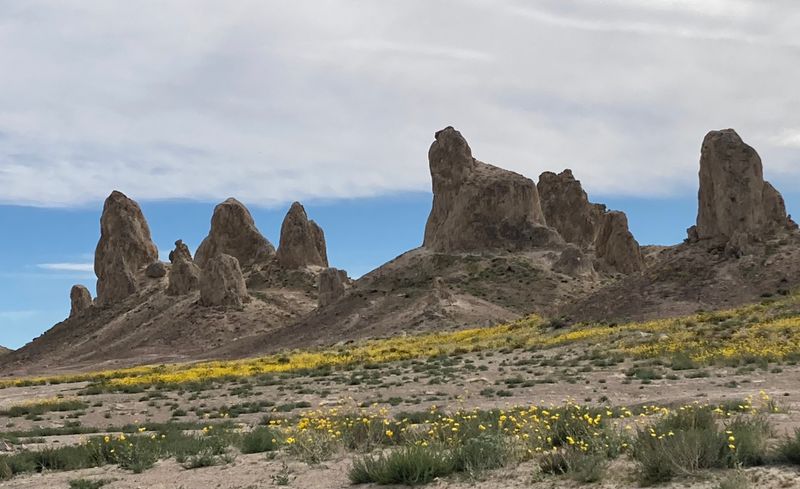
More than 500 tufa spires punctuate the desert floor at Trona Pinnacles, some reaching 140 feet tall and creating a landscape that filmmakers use for alien planets.
These formations emerged from an ancient lakebed that covered this part of the Mojave Desert between 10,000 and 100,000 years ago.
Calcium carbonate deposits accumulated around underwater springs, hardening into towers that remained standing after the lake dried completely.
The pinnacles cluster in groups across a relatively small area, allowing visitors to walk among them and appreciate their varied shapes and textures.
Some stand as single columns while others form clusters, and weathering has carved grooves and holes through the softer sections.
The site has appeared in dozens of movies and television shows, from Star Trek to Planet of the Apes.
A dirt road leads to the pinnacles from Highway 178, requiring about five miles of unpaved driving that most vehicles handle without difficulty in dry conditions.
The Bureau of Land Management maintains the area as a National Natural Landmark, with no facilities or services on site.
Spring and fall offer the most comfortable temperatures for exploration, while summer heat can become dangerous.
The isolation adds to the experience – few places in California feel this remote while remaining this accessible to anyone willing to drive a short distance off the main highway.
4. Rainbow Basin Natural Area
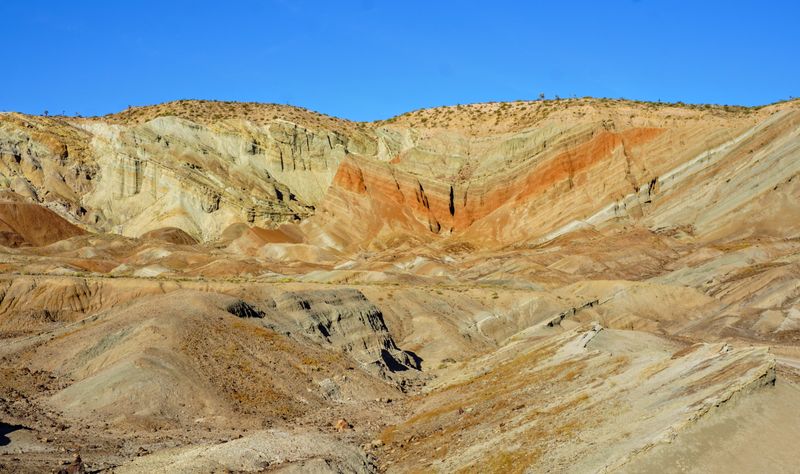
Sedimentary layers fold and twist through Rainbow Basin like a geology textbook come to life, displaying millions of years of deposits in bands of red, white, green, and brown.
The basin sits in the Mojave Desert north of Barstow, where ancient lake beds, volcanic ash, and river sediments compressed into rock before tectonic forces tilted and warped them.
Erosion has carved the soft stone into hoodoos, ridges, and small canyons that change appearance throughout the day as sunlight shifts.
A three-mile loop drive winds through the basin, with pullouts that allow closer inspection of the most dramatic formations.
Fossil discoveries here include remains of ancient camels, mastodons, and three-toed horses that lived when this desert was a lush environment.
The colors intensify after rare rainstorms, when moisture darkens some layers while brightening others.
Owl Canyon Campground provides the nearest overnight option for those wanting to photograph sunrise or sunset when the rock bands show their strongest contrasts.
The basin receives few visitors compared to other desert attractions, creating opportunities for quiet exploration.
Spring wildflowers occasionally carpet the valley floor between the colored hills, adding temporary greens and yellows to the permanent earth tones.
The unpaved road requires attention but remains passable for standard vehicles during dry weather, and the entire loop takes about an hour at a leisurely pace with stops.
5. Mobius Arch
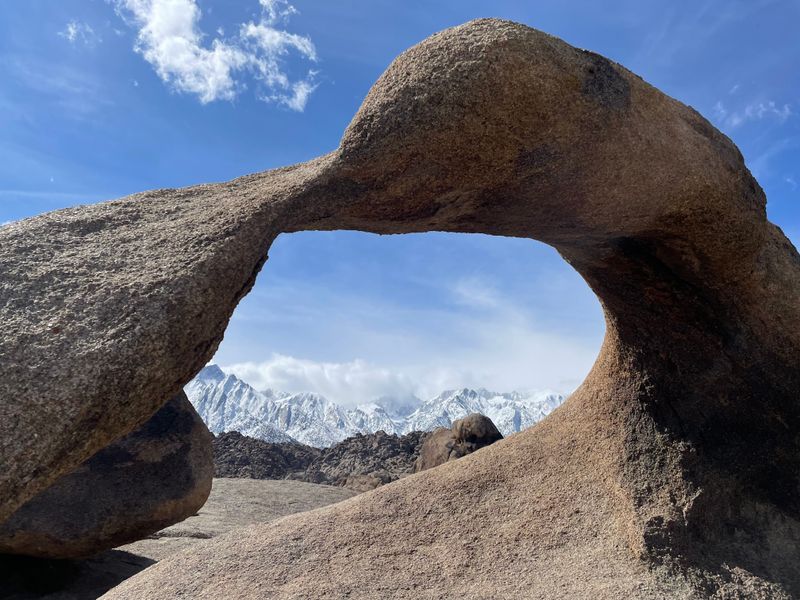
Weathered granite forms a perfect frame at Mobius Arch, where photographers position themselves to capture Mount Whitney through the curved opening.
The arch sits in the Alabama Hills near Lone Pine, where rounded boulders and smooth rock formations contrast sharply with the jagged Sierra Nevada peaks rising just miles away.
Wind and water sculpted these rocks over millions of years, creating curves and hollows that seem almost deliberate in their composition.
A short trail of less than a mile leads from the Movie Flat Road to the arch, with minimal elevation gain that makes the hike accessible to most visitors.
The Alabama Hills have served as a backdrop for hundreds of Western films and commercials, with their distinctive shapes recognized even by people who have never visited.
Sunrise lights the eastern face of the Sierra while leaving the arch in shadow, creating dramatic contrasts.
Rock climbers favor the area for its abundance of problems and routes on solid granite. The Bureau of Land Management maintains the area with basic facilities including vault toilets but no water.
Clear desert air makes stargazing exceptional here, with the Milky Way visible on moonless nights.
Spring and fall provide ideal temperatures, while summer heat and winter cold can make the exposed terrain uncomfortable.
The arch and surrounding formations demonstrate how different rock types weather in distinct ways, creating landscapes that feel both ancient and somehow temporary.
6. Devils Postpile National Monument
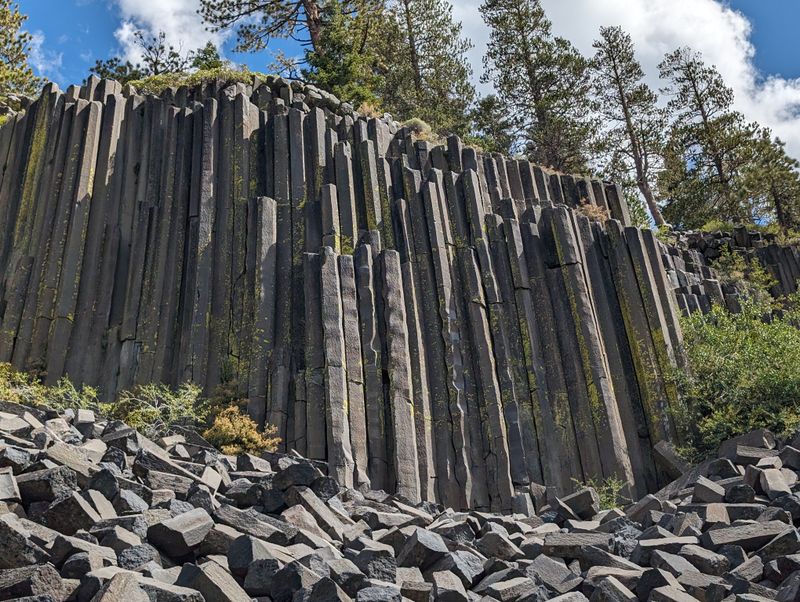
Basalt columns stand in near-perfect hexagonal formation at Devils Postpile, created when lava cooled slowly and cracked into geometric pillars that reach heights of 60 feet.
The monument sits in the Sierra Nevada near Mammoth Lakes, where a volcanic eruption about 82,000 years ago produced the lava flow that formed these structures.
Glaciers later carved away part of the formation, exposing both the columnar sides and a polished top surface where ice scraped across the stone.
A short trail from the parking area leads to the base of the columns, where visitors can see how uniform the shapes remain even after thousands of years of weathering.
Another path climbs to the top, revealing the hexagonal pattern from above like a giant’s tile floor. Rainbow Falls lies just two miles downstream, where the Middle Fork of the San Joaquin River drops 101 feet over a cliff.
Access requires a shuttle bus during summer months due to limited parking and narrow roads, with the system running from roughly late June through early September depending on snow conditions.
The area attracts far fewer crowds than nearby Yosemite despite offering equally striking geology.
Afternoon light brings out the texture and color variations in the basalt, though morning visits provide cooler temperatures for the walk.
The monument demonstrates how volcanic activity shapes landscapes in ways that remain visible long after the fire and ash have settled.
7. Bowling Ball Beach
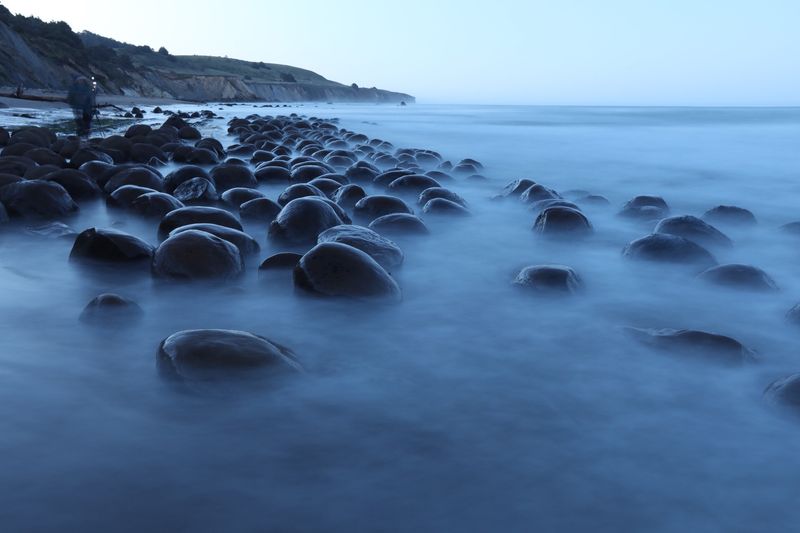
Round boulders cluster along the shore at Bowling Ball Beach, where sandstone concretions formed around mineral cores and weathered into near-perfect spheres.
The beach lies along the Mendocino Coast in Schooner Gulch State Beach, accessible only during low tide when the rocks emerge from the surf.
These concretions range from a few inches to several feet in diameter, scattered across the sand like giant marbles abandoned by some enormous child.
Timing visits requires checking tide tables carefully, as high water covers the bowling balls completely and makes the beach approach dangerous.
A steep trail descends about a quarter mile from the parking area to the shore, requiring good balance and sturdy footwear.
The rocks formed over millions of years as minerals cemented sand grains together, with the spherical shape resulting from even weathering in all directions.
Morning low tides during winter often provide the longest viewing windows, though the beach can be visited year-round with proper planning.
The exposed rocks show various stages of weathering, from perfectly smooth spheres to cracked and fragmenting ones.
Fog frequently rolls in along this stretch of coast, creating atmospheric conditions that enhance photographs.
The beach sees relatively few visitors compared to other Mendocino County attractions, partly due to the tide requirements and partly due to the somewhat obscure location.
Respect for the fragile coastal environment matters here – climbing on the concretions damages them and disrupts the natural processes that continue shaping these formations.
8. Painted Dunes
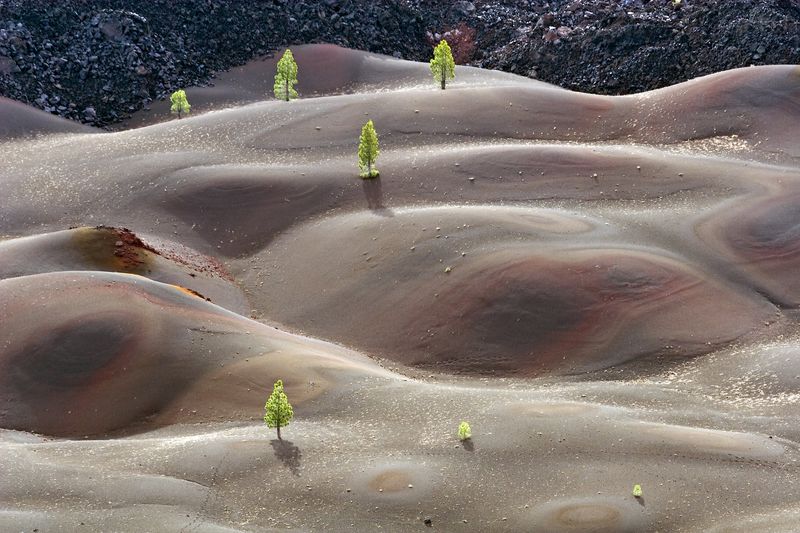
Oxidized volcanic ash creates sweeping bands of color across the Painted Dunes, where reds, oranges, pinks, and purples blend across hillsides near Cinder Cone in Lassen Volcanic National Park.
Hot lava flowed over still-wet volcanic ash thousands of years ago, and the heat oxidized iron compounds in the ash to produce the vivid pigments.
The dunes shift in appearance throughout the day as sunlight changes angle and intensity, with early morning and late afternoon bringing out the most saturated hues.
The trail to Cinder Cone passes directly through the Painted Dunes, offering close views of the color transitions and texture variations.
Loose volcanic material makes walking more difficult than on solid trails, with each step sinking slightly into the ash and cinders.
The contrast between the multicolored dunes and the black Cinder Cone creates one of the park’s most photographed scenes.
Summer represents the most reliable time for access, as snow blocks the road to Butte Lake during winter and spring.
The hike covers about four miles round trip with significant elevation gain, requiring several hours for most visitors.
Bring more water than seems necessary – the exposed terrain and volcanic substrate reflect heat intensely.
The dunes demonstrate how chemistry and geology combine to create landscapes that seem painted rather than formed by natural processes, though every color comes from minerals present in the original volcanic material.
9. Mono Lake
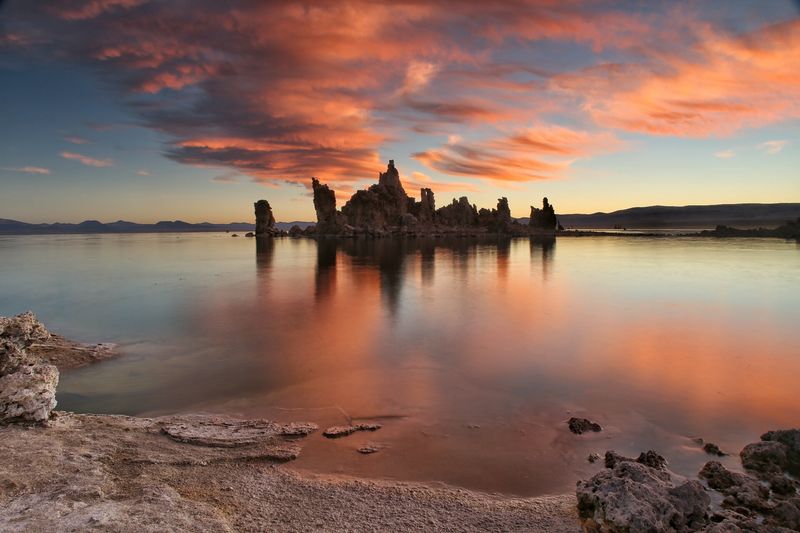
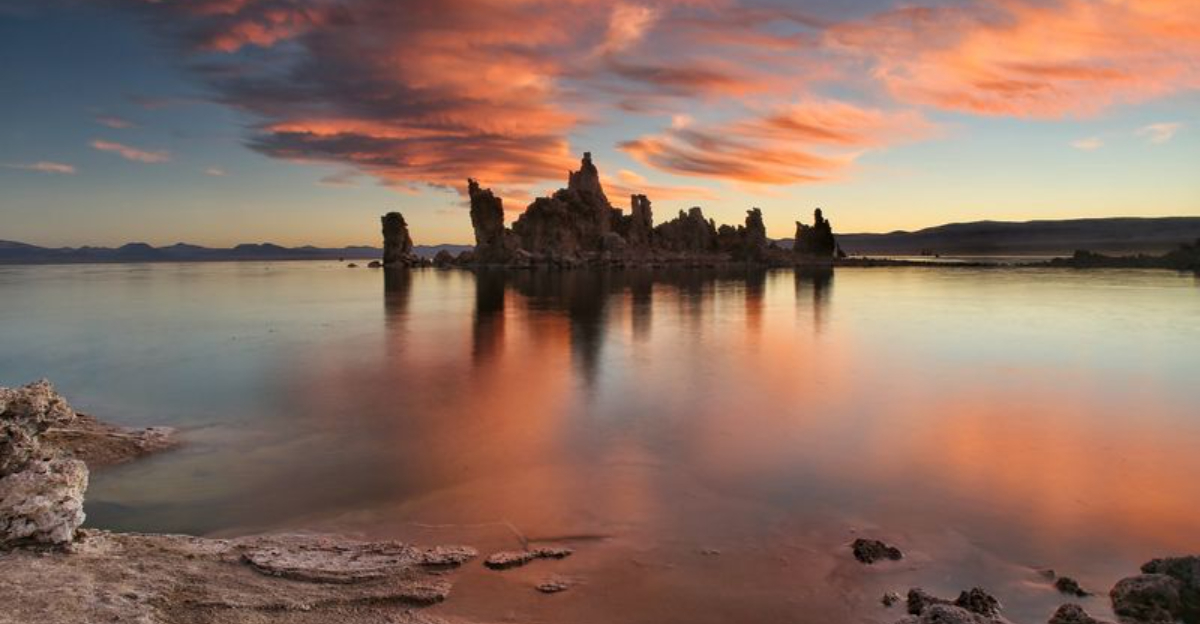
Limestone towers rise from Mono Lake like ancient ruins, formed when calcium-rich springs met the alkaline lake water and hardened into tufa formations.
The lake itself stretches across 65 square miles near the eastern Sierra Nevada, with water so salty that swimmers float effortlessly on its surface.
These tufa spires stood underwater for decades until Los Angeles diverted streams that fed the lake, dropping water levels and exposing the formations.
South Tufa Area provides the most accessible viewing spot, where a boardwalk trail leads through clusters of towers that reach heights of 30 feet or more.
The lake supports trillions of brine shrimp and alkali flies, which in turn feed millions of migratory birds each year. Photographers favor dawn and dusk when the tufa reflects golden and pink light from the sky.
Navy Beach offers another perspective, with smaller formations scattered along the shoreline and views across the water toward distant peaks.
The lake has no fish due to its high pH level, but the ecosystem thrives in ways that surprise most visitors.
Summer brings warm weather and clear skies, while winter can dust the tufa with snow against blue water.
The area sits about 13 miles east of Lee Vining along Highway 395, making it an easy stop during Sierra Nevada road trips.
10. Antelope Valley California Poppy Reserve
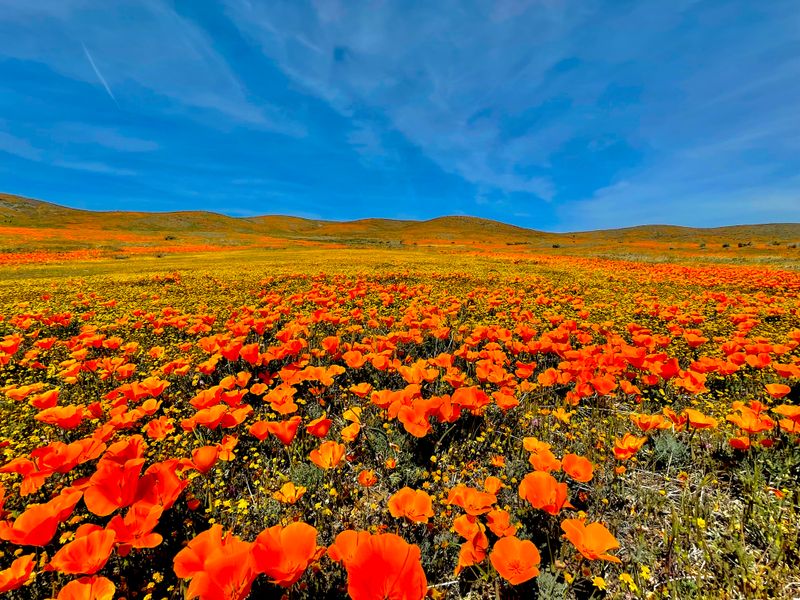
Orange poppies carpet the hillsides at Antelope Valley California Poppy Reserve during spring, transforming normally brown terrain into waves of color that ripple in the breeze.
The reserve protects 1,745 acres in the western Mojave Desert, where California’s state flower blooms in concentrations that create what locals call a super bloom during wet years.
The flowers open with morning sun and close again in late afternoon or when clouds block the light, creating a landscape that changes hour by hour.
Eight miles of trails wind through the reserve, ranging from easy loops to longer routes that climb for panoramic views of the flower-covered valleys.
Peak bloom typically occurs between mid-March and early May, though timing varies significantly based on rainfall patterns.
The Jane S. Pinheiro Interpretive Center sits at 15101 Lancaster Road in Lancaster, providing information about the reserve’s ecology and bloom conditions.
Years with abundant winter rain produce the most spectacular displays, while drought years result in sparse flowers or none at all.
Checking the reserve’s website or calling ahead prevents disappointment when conditions fall short of expectations.
Weekends during peak bloom bring crowds and parking challenges, making weekday visits more pleasant.
The reserve asks visitors to stay on trails to protect both poppies and the many other wildflower species that bloom alongside them.
The flowers represent just one part of a complex desert ecosystem that includes goldfields, lupines, and other species that time their blooms to brief periods of moisture.
11. Subway Cave
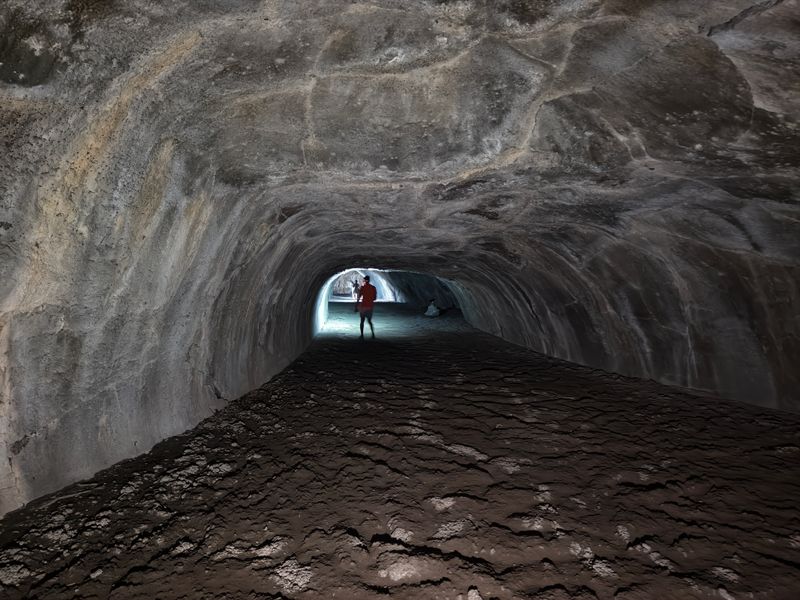
A lava tube stretches for a third of a mile beneath the ground at Subway Cave, where molten rock once flowed through a hardened crust before draining away and leaving a tunnel.
The cave sits in Lassen National Forest near Old Station, formed about 20,000 years ago during an eruption from the Hat Creek area.
The tube maintains a consistent diameter of about 17 feet, with smooth walls that show the flow patterns of the original lava.
The cave entrance sits just off Highway 89, with a stairway leading down into the tube and a maintained trail running through to the exit.
Temperatures inside remain cool year-round, typically in the 40s Fahrenheit regardless of surface conditions. Visitors need flashlights or headlamps to navigate safely, as the cave has no artificial lighting.
The floor stays relatively level throughout most of the passage, though some sections require ducking or careful footing over uneven rock.
Lucifer’s Cul-de-sac marks the deepest point, where the tube narrows before opening again toward the exit.
The cave demonstrates how volcanic activity creates underground features as well as surface formations. Ice can form near the entrance during winter, making the stairs slippery and potentially dangerous.
Summer brings the most comfortable conditions for exploration, with the cool interior offering relief from outside heat.
The cave is opening in late April after the snowmelt when safe to access, providing one of the easiest ways to experience the inside of a lava tube without technical equipment or challenging crawls.
12. Emerald Bay State Park
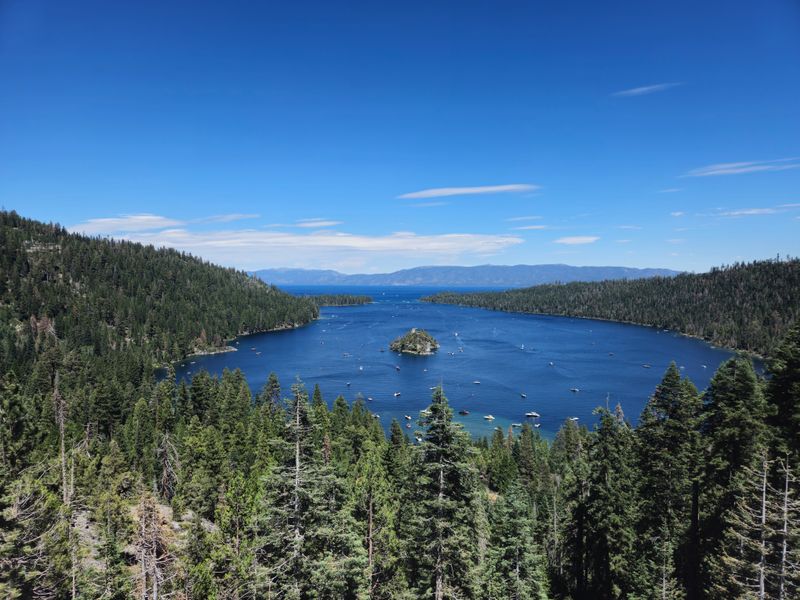
Turquoise water fills Emerald Bay, a glacially carved inlet of Lake Tahoe where Fannette Island rises as the only island in the entire lake.
The bay’s color comes from its depth and the angle of sunlight penetrating the clear water, creating shades that shift from deep blue to bright green depending on time of day and season.
Steep granite cliffs surround the bay on three sides, covered with conifers that remain green year-round against the often snow-covered peaks beyond.
Vikingsholm castle sits at the head of the bay at 2 Emerald Bay Road in South Lake Tahoe, built in 1929 as a Scandinavian-style summer home and now open for tours during summer months.
The castle represents one of the finest examples of Nordic architecture in North America, though reaching it requires a steep one-mile hike down from the parking area.
Eagle Falls drops nearby, accessible via a short trail that offers views of both the waterfall and the bay.
Winter transforms the area into a snow-covered landscape, though the road often closes due to heavy accumulation. Summer brings crowds but also the warmest water temperatures and clearest skies.
Kayakers and paddleboarders favor the calm waters of the bay, while photographers work to capture the famous view from the overlook on Highway 89.
The bay demonstrates how glacial activity shaped the Sierra Nevada, carving deep valleys that later filled with water to create Lake Tahoe and its distinctive features.
13. Horsetail Fall
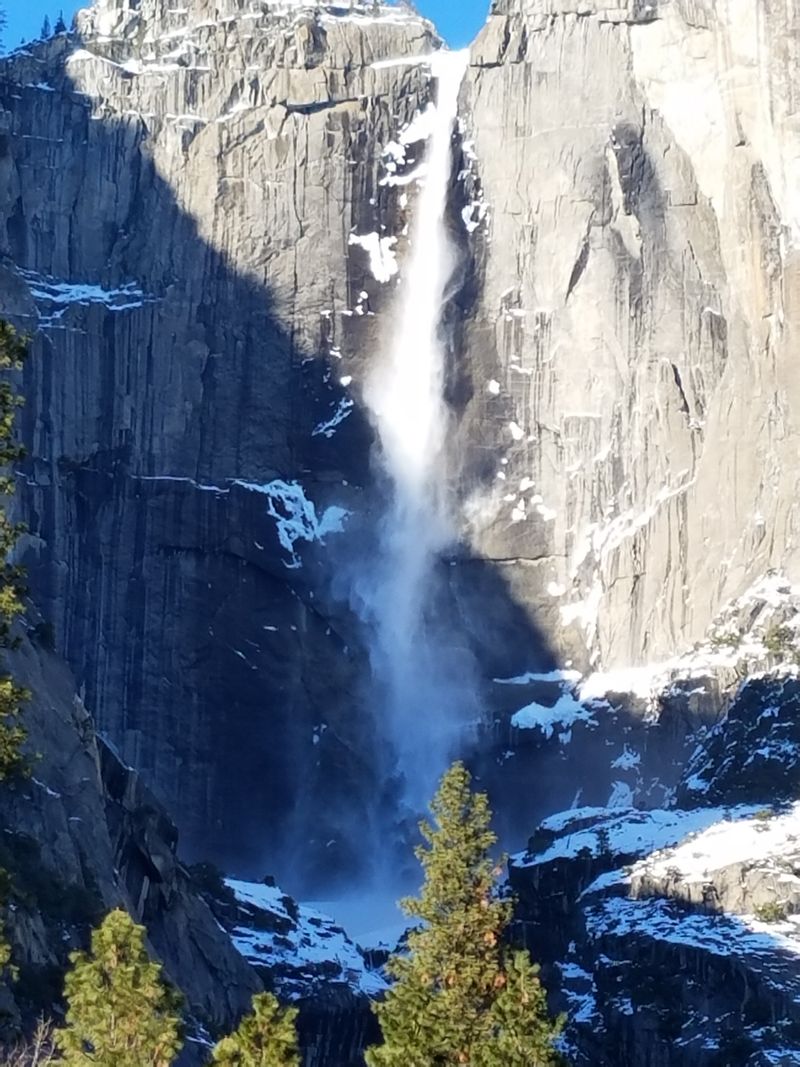
Horsetail Fall glows orange and red for a few minutes each February when conditions align perfectly, creating what photographers call the firefall effect on El Capitan in Yosemite National Park.
The waterfall itself runs only during winter and early spring when snowmelt provides enough water, flowing about 1,500 feet down the eastern edge of the granite monolith.
The glow occurs when clear skies allow sunset light to hit the falling water at exactly the right angle, typically during a two-week window in mid-February.
The phenomenon requires several factors to coincide: adequate water flow, clear weather, and the sun’s position at a specific point in its annual path.
Many visitors arrive to find cloudy skies, insufficient water, or lighting that falls just short of the dramatic effect shown in photographs.
The best viewing spots fill quickly during the prime window, with photographers claiming positions hours before sunset.
Yosemite Valley offers several vantage points, with areas near the picnic grounds east of El Capitan providing the most popular angles.
Park rangers manage crowds during peak firefall season to prevent damage to vegetation and ensure visitor safety.
The event lasts only about ten minutes at most, and even slight changes in conditions can prevent the glow from appearing.
The waterfall demonstrates how light, water, and timing combine to create fleeting natural displays that draw people from around the world, even though the spectacle may not materialize despite careful planning and long waits.