These Perspective-Shifting Displays Make Museum Of Illusions Georgia A 2026 Highlight
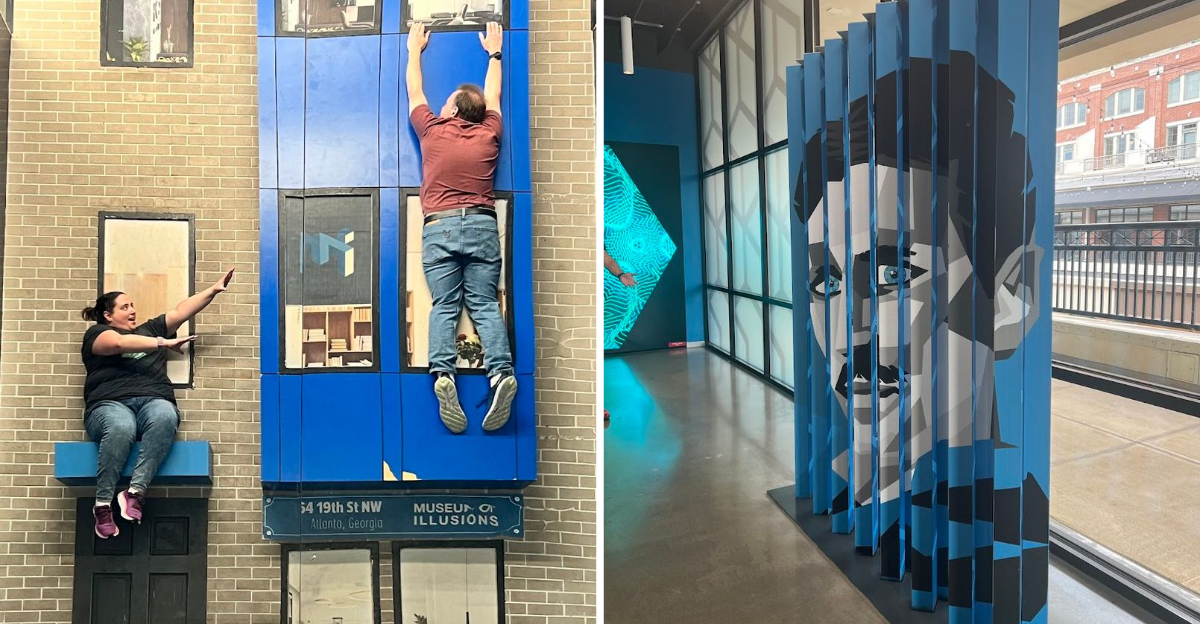
Have you ever stepped into a place where gravity feels uncertain and your own eyes seem to play tricks on you? The Museum of Illusions in Georgia delivers exactly that kind of mind bending adventure. From the moment you enter, immersive exhibits begin challenging your sense of space, balance, and perception.
Optical installations twist perspective in surprising ways, while interactive rooms invite you to become part of the illusion itself. Visitors can capture photos that look impossible, turning simple moments into unforgettable memories. Beyond the fun, each display is rooted in science and psychology, revealing how the brain interprets the world around it.
The experience blends learning with laughter, making it perfect for friends, families, and curious explorers alike. By the time you leave, reality feels just a little less certain and far more fascinating.
1. The Vortex Tunnel Challenges Your Balance
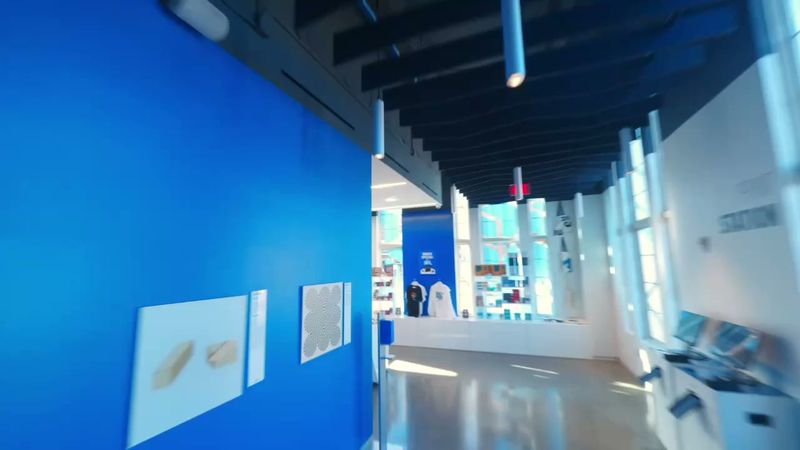
Walking through a spinning tunnel while standing on solid ground sounds impossible until you try it yourself. The Vortex Tunnel at the Museum of Illusions creates a sensation that makes your brain fight against your body. You’ll find this attraction at 264 19th St NW, Atlanta, GA 30363, where reality gets twisted in the most entertaining ways.
Your eyes tell you the world is spinning while your feet know you’re standing still. This conflict between sight and balance creates a wobbly feeling that’s totally safe but completely disorienting. Many visitors grab the handrails even though they don’t actually need them.
The colorful lights and rotating patterns make this tunnel perfect for videos. Your friends won’t believe how dizzy you look when you’re actually fine. This exhibit demonstrates how much your brain relies on visual cues to maintain balance and orientation in space.
2. The Ames Room Creates Size-Shifting Magic
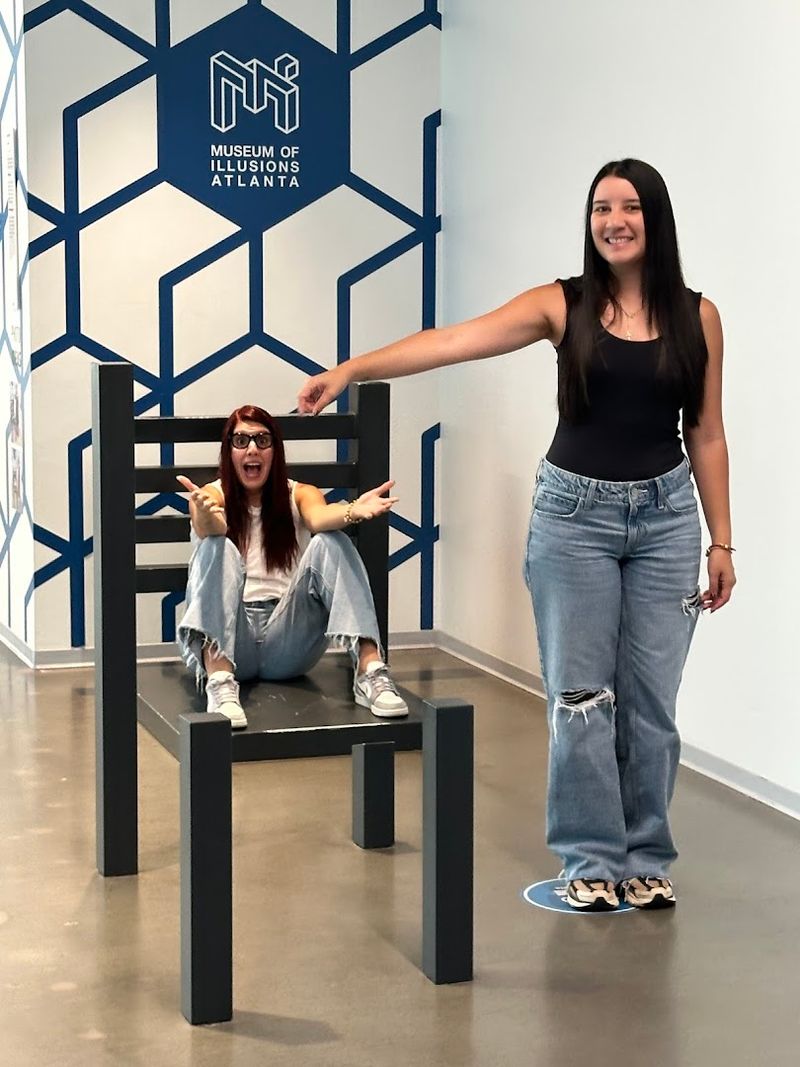
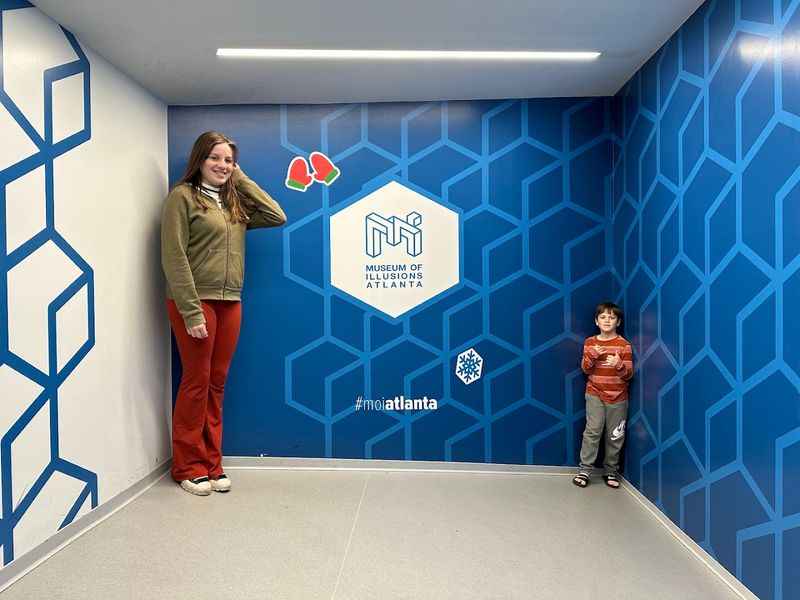
Imagine standing in a corner where you suddenly become a giant while your friend shrinks to the size of a toy. The Ames Room uses clever architectural angles to create this impossible transformation. What looks like a normal rectangular room is actually a trapezoid designed to trick your depth perception completely.
Photographers love this exhibit because the illusion works perfectly through a camera lens. You can create hilarious pictures where someone appears tiny enough to fit in your hand. The effect is so convincing that even knowing how it works doesn’t make it less amazing.
This classic optical illusion was invented by American ophthalmologist Adelbert Ames Jr. in 1946. The specially angled walls and ceiling force a false perspective that your brain can’t resist. Switching positions with your friend and watching them transform in size never gets old, no matter how many times you try it.
3. The Infinity Room Stretches Forever
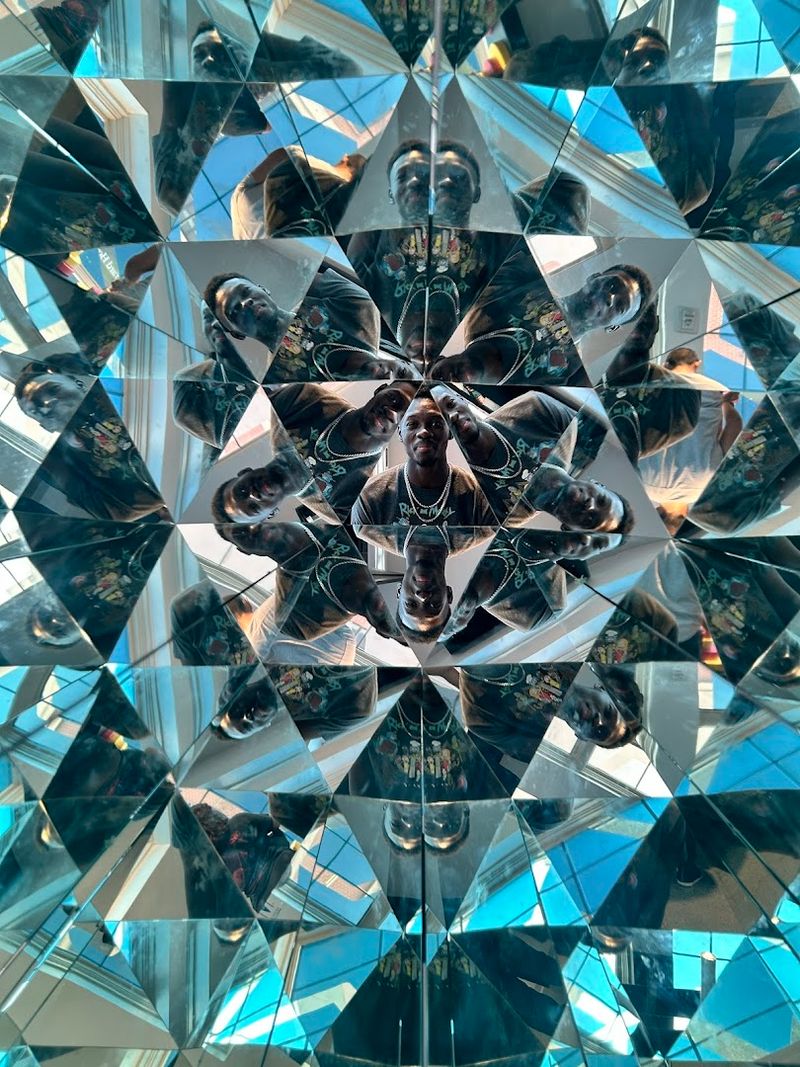
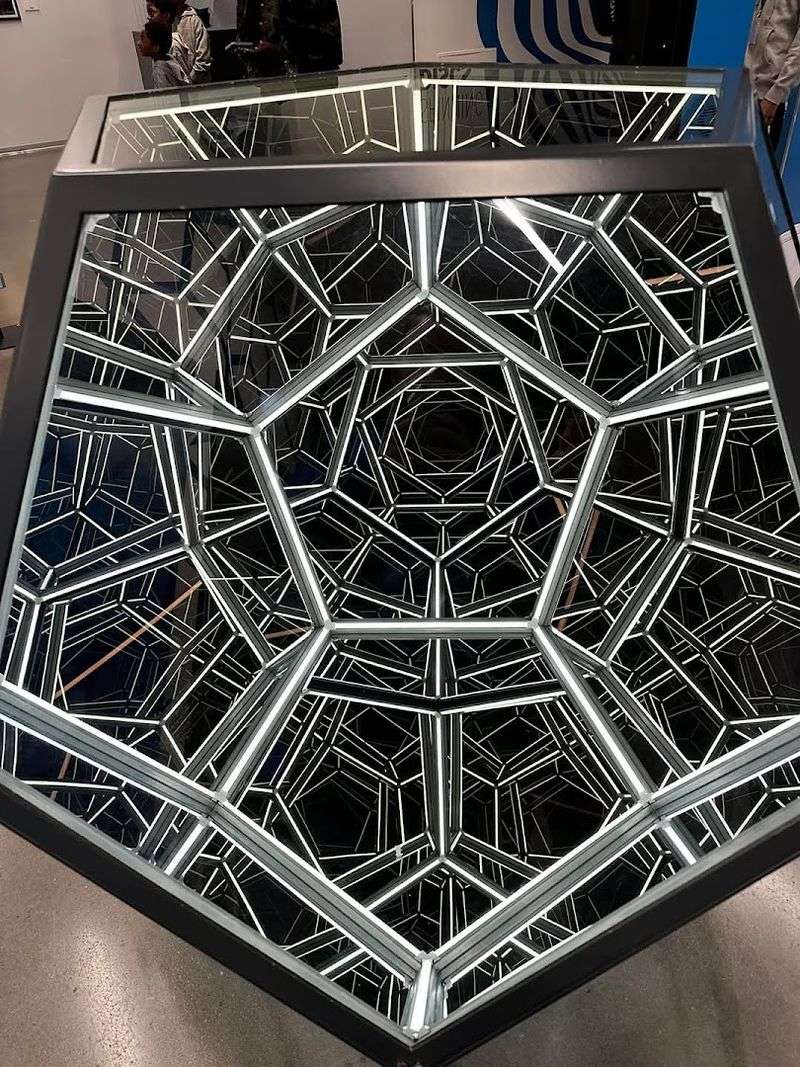
Step into a space where the walls disappear and the room extends endlessly in all directions. The Infinity Room uses strategically placed mirrors to create reflections that bounce back and forth forever. Your reflection multiplies into countless copies that fade into the distance like a tunnel with no end.
LED lights arranged in patterns enhance the effect by creating glowing pathways that seem to stretch into another dimension. The experience feels like standing inside a kaleidoscope or floating in outer space. Some visitors report feeling like they’re in a science fiction movie or a dream sequence.
This installation plays with your brain’s understanding of space and boundaries. Mirrors facing each other create optical infinity by reflecting light back and forth continuously. The effect is mesmerizing and slightly overwhelming in the best possible way.
You’ll want to spend several minutes just turning in circles and watching how your movements multiply across infinite space.
4. The Anti-Gravity Room Defies Physics
Lean at a 45-degree angle without falling over in a room where the laws of physics seem completely broken. The Anti-Gravity Room is actually built on a slant, but the visual cues around you suggest everything is level. Your brain gets confused trying to reconcile what it sees with what your body feels.
Furniture attached to the walls at odd angles reinforces the illusion that gravity is pulling sideways. Water appears to flow uphill and balls roll in directions that seem impossible. The disorientation is real enough that some visitors need a moment to adjust after leaving.
This exhibit demonstrates how heavily your sense of balance depends on visual reference points. When your eyes and inner ear disagree about which way is up, your brain struggles to make sense of the situation. Taking photos here produces images that look photoshopped but are completely real and unedited.
5. The Head on a Platter Display Amazes Everyone
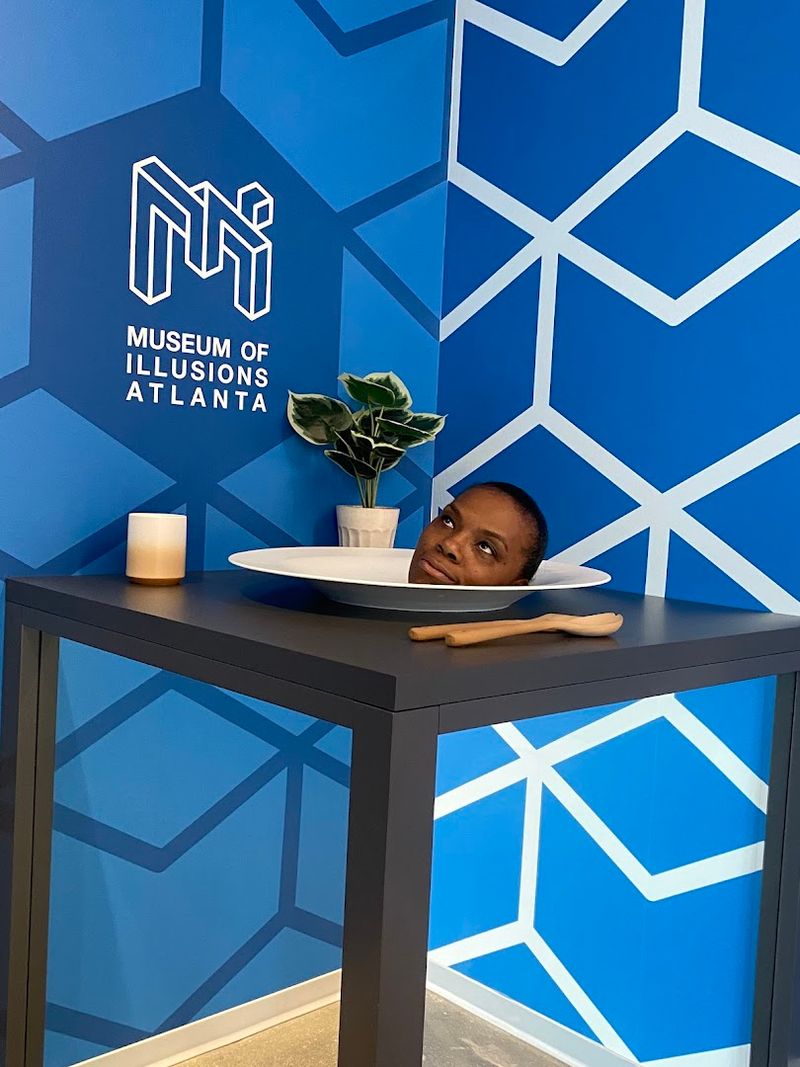
Your head appears to sit on a table while your body completely vanishes in this classic but shocking illusion. The Head on a Platter exhibit uses mirrors and clever construction to hide your body while reflecting the table surface. The result looks like something from a magic show or a medieval dungeon.
Friends and family members love taking pictures of each other in this setup. The illusion is convincing enough to make people do a double-take even when they know it’s a trick. Your disembodied head can make funny faces while appearing to float on a serving tray.
This type of illusion has entertained audiences for over a century in magic shows and sideshows. The Museum of Illusions version is perfectly designed for selfies and group photos. You’ll laugh at how realistic and creepy the effect looks, especially when you add dramatic expressions to enhance the comedy or horror factor.
6. The Rotated Room Turns Your World Upside Down
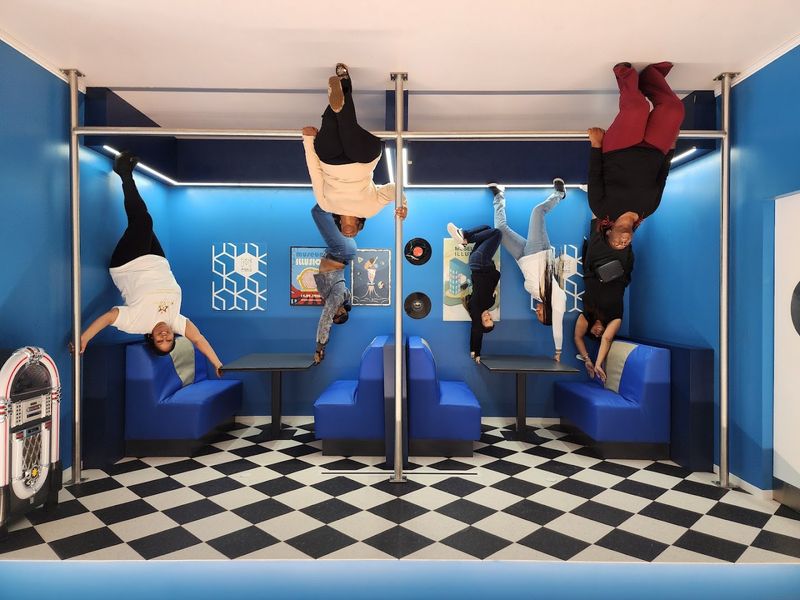
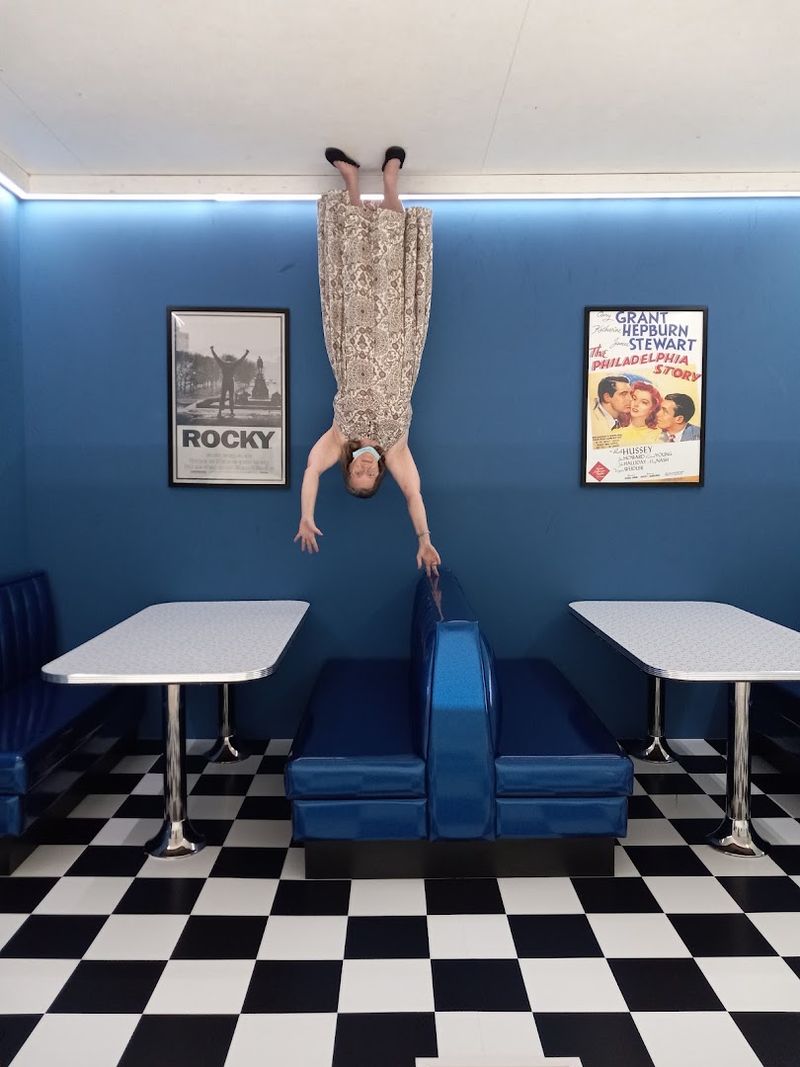
Furniture hangs from the ceiling while you stand on the walls in a room that’s been completely flipped. The Rotated Room creates photos where you appear to casually lounge on the ceiling or walk up walls like a superhero. Everything is built at a 90-degree rotation to normal orientation.
Your photos will show you defying gravity in ways that look absolutely impossible. Chairs, tables, and decorations attached to what’s actually the wall appear to be on the floor in your pictures. The trick is positioning yourself correctly so the camera captures the illusion from the perfect angle.
This exhibit requires some creativity and experimentation to get the best shots. You might need several attempts to nail the positioning that makes you look like you’re truly floating or standing upside down. The effort is worth it because the resulting images are guaranteed to confuse and impress everyone who sees them on social media.
7. The Beuchet Chair Creates Giant Transformations
Two identical chairs placed at different distances create an illusion where people appear to grow or shrink dramatically. The Beuchet Chair exhibit uses forced perspective to make someone sitting in the far chair look like a miniature person. The person in the near chair appears gigantic by comparison.
This illusion works because your brain assumes both chairs are the same distance away. When they’re actually positioned at different depths, the size difference becomes extreme. Switching seats with a friend creates a hilarious transformation that looks like magic or special effects.
Movie makers use this same technique to create size differences between actors without computer effects. The Lord of the Rings films famously used forced perspective to make hobbits appear smaller than wizards. You can recreate that movie magic yourself and understand exactly how filmmakers fool audiences.
The effect is simple but incredibly powerful and fun to experience firsthand.
8. The Clone Table Multiplies Your Presence
Sit down at a table and suddenly find yourself surrounded by copies of yourself. The Clone Table uses angled mirrors to create multiple reflections that appear as separate people sitting around you. The illusion is so convincing that it looks like you’re having a meeting with four or five versions of yourself.
Each reflection moves exactly as you do, creating a synchronized dance when you wave or make gestures. The effect is both funny and slightly eerie. You can pretend to have a conversation with your clones or create choreographed movements for amazing video content.
This exhibit demonstrates the power of mirror placement and angles in creating optical illusions. The mirrors are positioned so precisely that the seams become invisible and the reflections blend seamlessly. You’ll find yourself staring at your duplicates and marveling at how real they appear even though you know they’re just reflections.
9. The Kaleidoscope Room Surrounds You With Patterns
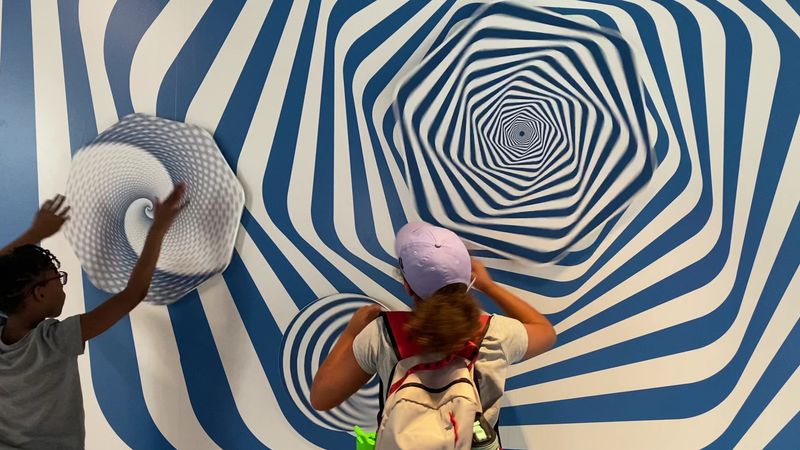
Stand in the center of triangular mirrors that create endlessly repeating patterns all around you. The Kaleidoscope Room transforms you into part of a living, moving mandala. Every gesture you make multiplies into a symmetrical design that extends in all directions.
Colorful lighting enhances the effect by adding vibrant hues to the geometric patterns. You become the center of a constantly shifting artwork that changes with your movements. Raising your arms creates star-like patterns while spinning generates mesmerizing spirals of color and form.
Kaleidoscopes work by reflecting light between mirrors set at specific angles to each other. This room-sized version puts you inside the kaleidoscope instead of looking into a small tube. The experience is immersive and slightly hypnotic.
You’ll want to experiment with different poses and movements to see what patterns you can create in this interactive art installation.
10. The Reverse Room Photographs Defy Logic
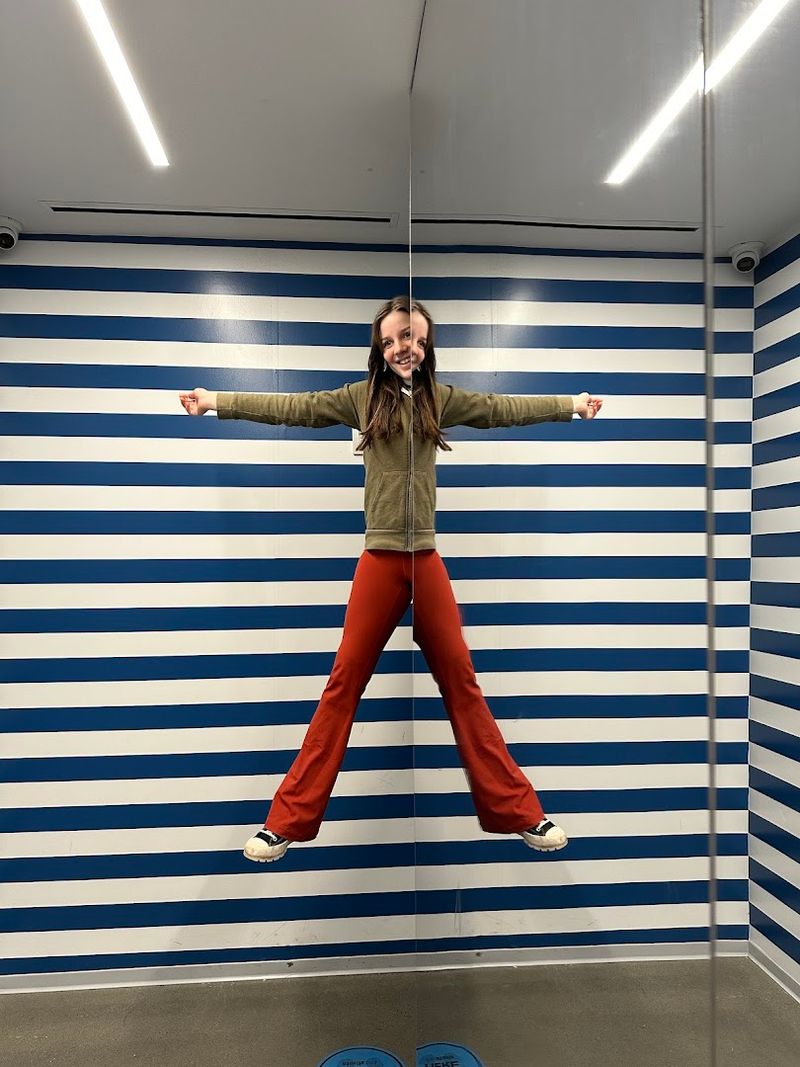
Objects that should look smaller in the distance actually appear larger in this backwards perspective room. The Reverse Room constructs space in a way that contradicts everything your eyes expect to see. People standing at the back of the room look enormous while those in front appear tiny.
The secret is in the room’s construction where the back wall is actually much larger than the front. Your brain assumes the room follows normal rules of perspective. When it doesn’t, the resulting confusion creates photographs that look digitally manipulated but are completely authentic.
This exhibit shows how much your perception depends on assumptions about how spaces are built. When those assumptions are violated, your brain struggles to make sense of what it sees. The photos you take here will puzzle everyone who looks at them because they violate fundamental rules of how distance and size are supposed to work together in visual space.
11. The Chair Illusion Challenges Your Sitting Skills
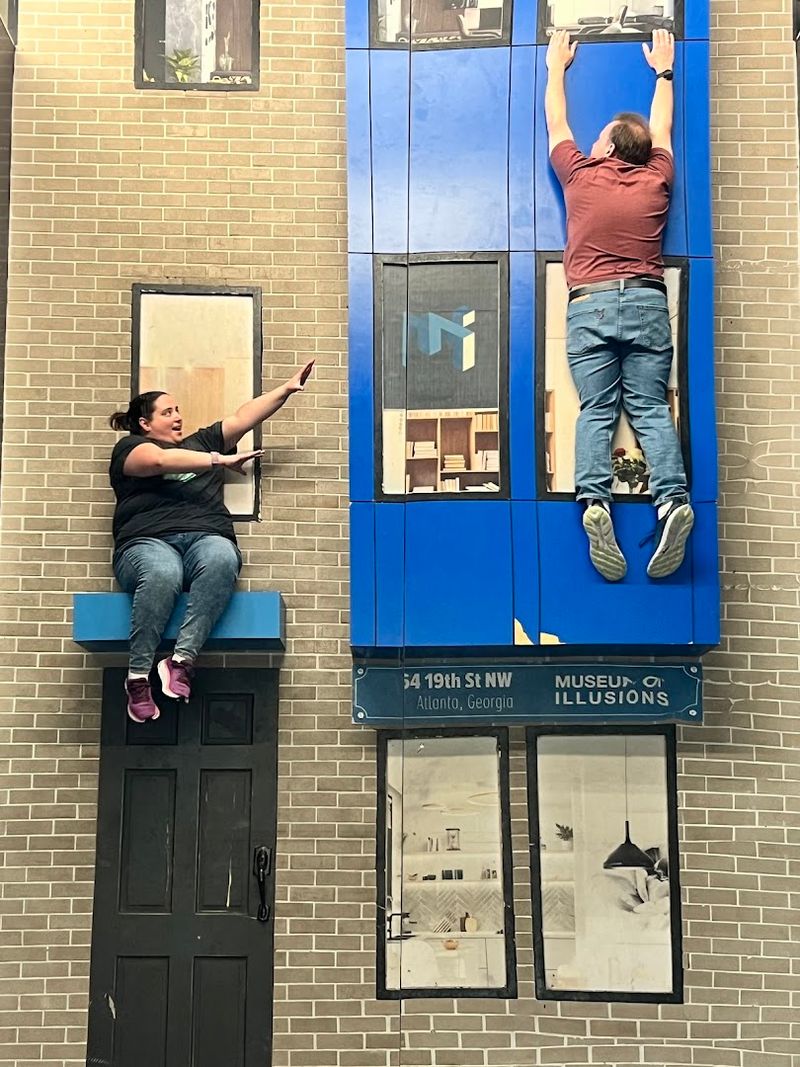
A chair that looks like it’s missing crucial parts somehow still supports your weight perfectly. The Chair Illusion uses clever angles and construction to hide supporting structures while making the seat appear impossible. From one viewing angle, the chair looks completely broken or floating in mid-air.
When you actually sit down, the chair is totally stable and comfortable. The trick is that the support structures are positioned where they become invisible from the camera’s perspective. Your photo shows you sitting on what appears to be a physically impossible piece of furniture.
This exhibit teaches you about sightlines and how three-dimensional objects can look completely different from various viewing angles. Magicians use similar principles to create stage illusions that baffle audiences. Walking around the chair and viewing it from different positions reveals how the trick works, but the photos from the designated spot remain convincingly impossible-looking and wonderfully confusing to observers.
12. The Stereogram Wall Hides 3D Images
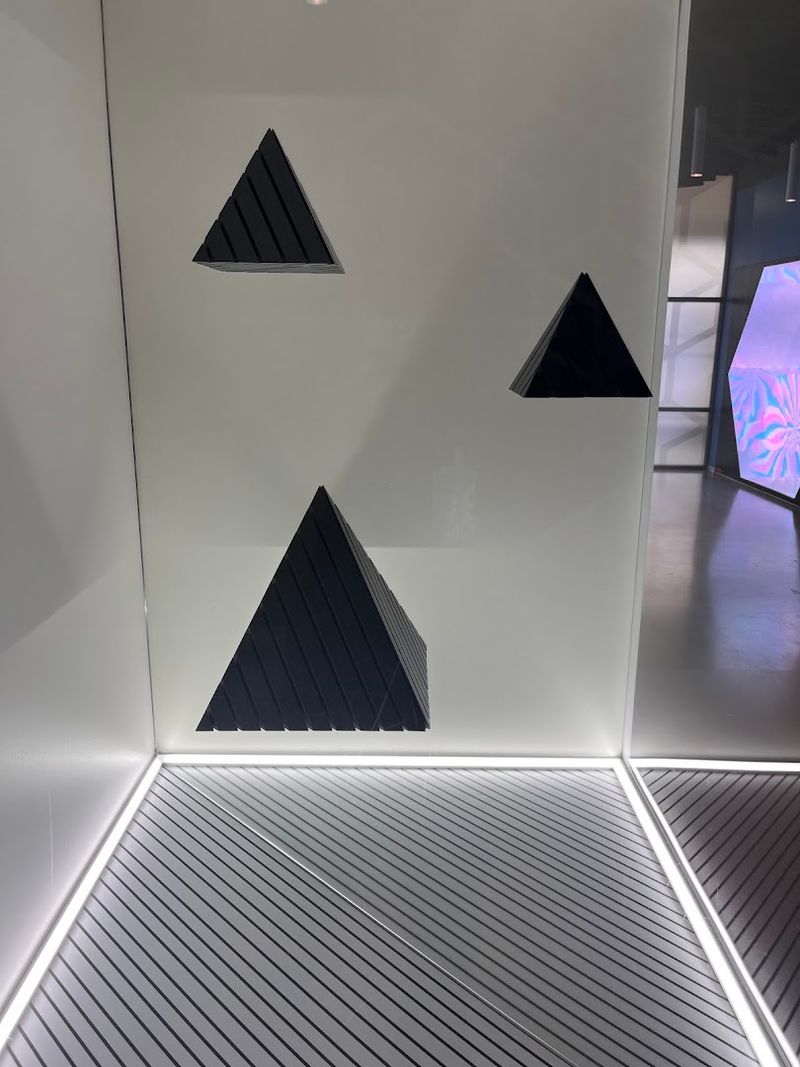
Repeating patterns on the wall suddenly transform into three-dimensional images floating in space when you focus your eyes correctly. The Stereogram Wall displays autostereograms that hide pictures within what first appears to be random designs. Learning to see the hidden images requires patience and a special viewing technique.
You need to relax your eyes and look through the pattern rather than at it. Suddenly, shapes and objects pop out in stunning 3D depth. Some people see the hidden images immediately while others need several minutes of practice.
Once you learn the technique, you’ll never forget it.
Stereograms became wildly popular in the 1990s through Magic Eye books and posters. They work by presenting slightly different images to each eye, tricking your brain into perceiving depth. The Museum’s collection includes various difficulty levels and hidden images ranging from simple shapes to complex scenes that seem to float in layers.
13. The Mirror Maze Tests Your Navigation
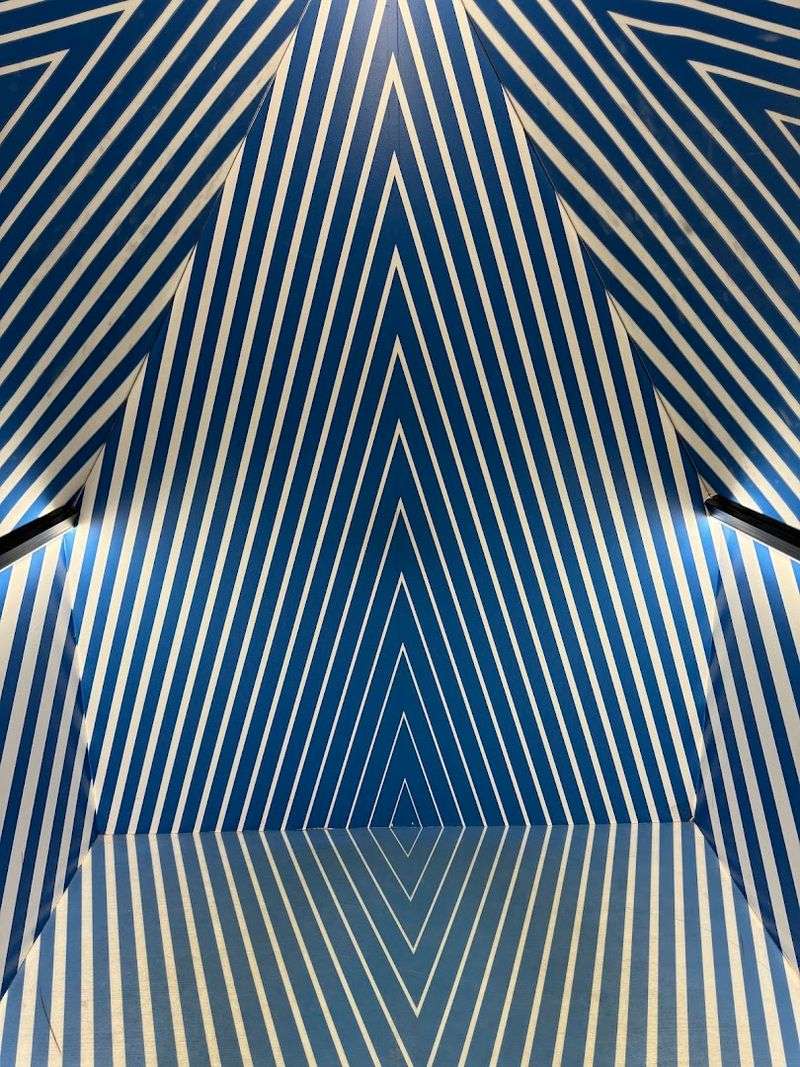
Countless reflections create a confusing labyrinth where every path might be real or might be a mirror. The Mirror Maze challenges you to find your way through a space where walls are sometimes glass and sometimes empty air. You’ll bump into barriers you didn’t see and walk through openings that looked solid.
Your reflection appears dozens of times from different angles, making it hard to track which direction you’re actually facing. The maze is designed to disorient and confuse while remaining safe and fun. Some people solve it quickly while others wander for several minutes before finding the exit.
Mirror mazes have entertained visitors at carnivals and amusement parks for generations. The Museum of Illusions version is modern and well-lit, eliminating the creepy factor while maintaining the challenge. Working together with friends makes the experience more fun as you can guide each other around obstacles and share the confusion of not knowing which reflections are real pathways.
14. The Hologram Display Shows Floating Images
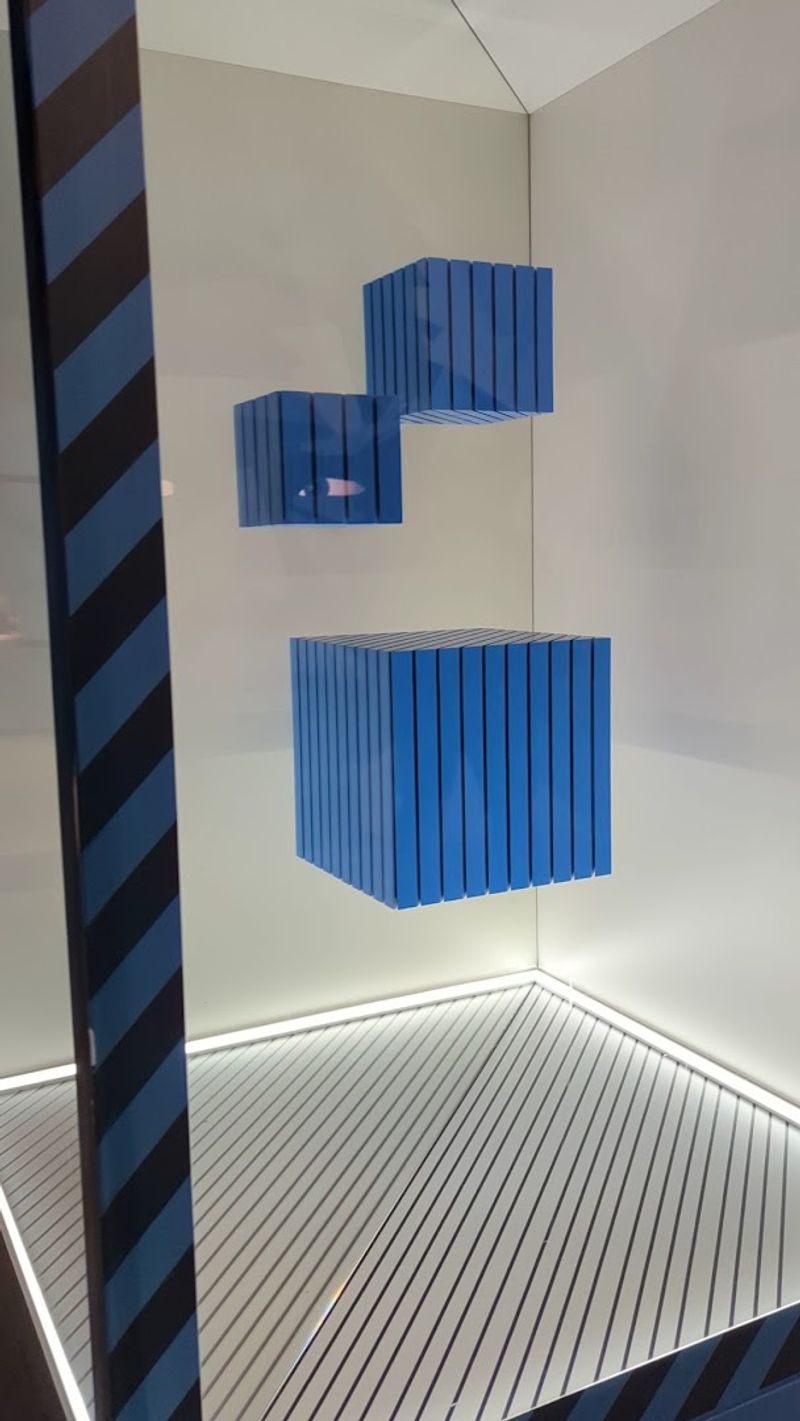
Three-dimensional images appear to float in empty space without any screen or surface supporting them. The Hologram Display uses advanced projection technology to create images with depth and dimension. You can walk around some holograms and see them from different angles just like real objects.
Unlike flat screens or pictures, holograms capture the light field of an object in a way that recreates its three-dimensional appearance. Your brain perceives depth and solidity even though nothing physical exists in that space. The effect is futuristic and slightly magical.
Holographic technology is advancing rapidly and may become common in future displays and communications. The Museum showcases both classic hologram techniques and newer innovations. You’ll see everything from simple floating shapes to complex animated scenes that demonstrate the incredible potential of this technology.
The experience feels like science fiction becoming reality right before your eyes in ways that were impossible just years ago.
15. The Educational Workshops Explain The Science
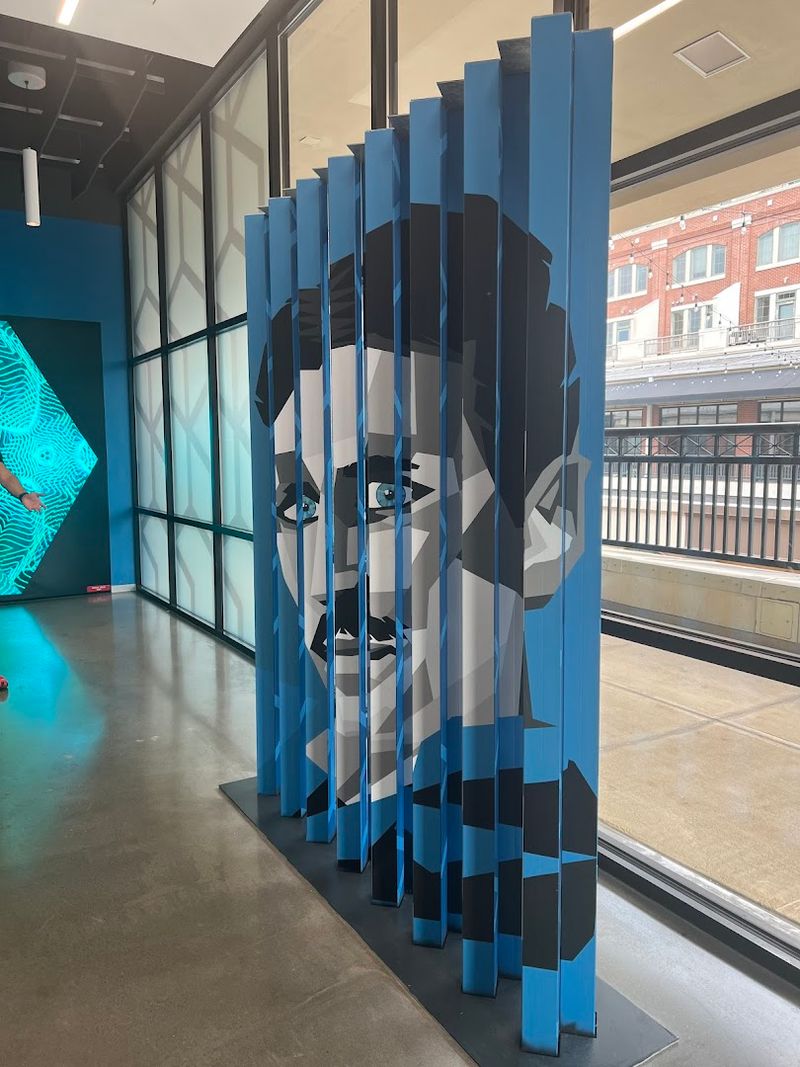
Understanding why illusions work makes them even more fascinating than just experiencing them. The Educational Workshops at the Museum explain the science behind what you’re seeing. Instructors break down how your brain processes visual information and why it gets fooled by certain patterns and arrangements.
You’ll learn about concepts like perspective, depth perception, and how your eyes and brain work together to create your sense of reality. The workshops include hands-on demonstrations and experiments you can try yourself. This knowledge enhances your appreciation of all the exhibits throughout the Museum.
Teachers often bring school groups to these workshops because they align perfectly with lessons about human biology, physics, and psychology. The information is presented in an entertaining way that makes complex scientific concepts accessible and interesting. Even young visitors can grasp the basic principles while adults appreciate the deeper explanations of neural processing and visual cognition that make illusions possible and endlessly fascinating.