This California Desert Trail Leads To A Rock Formation That Looks Like A Giant Skull
It looks unreal at first glance. Almost staged.
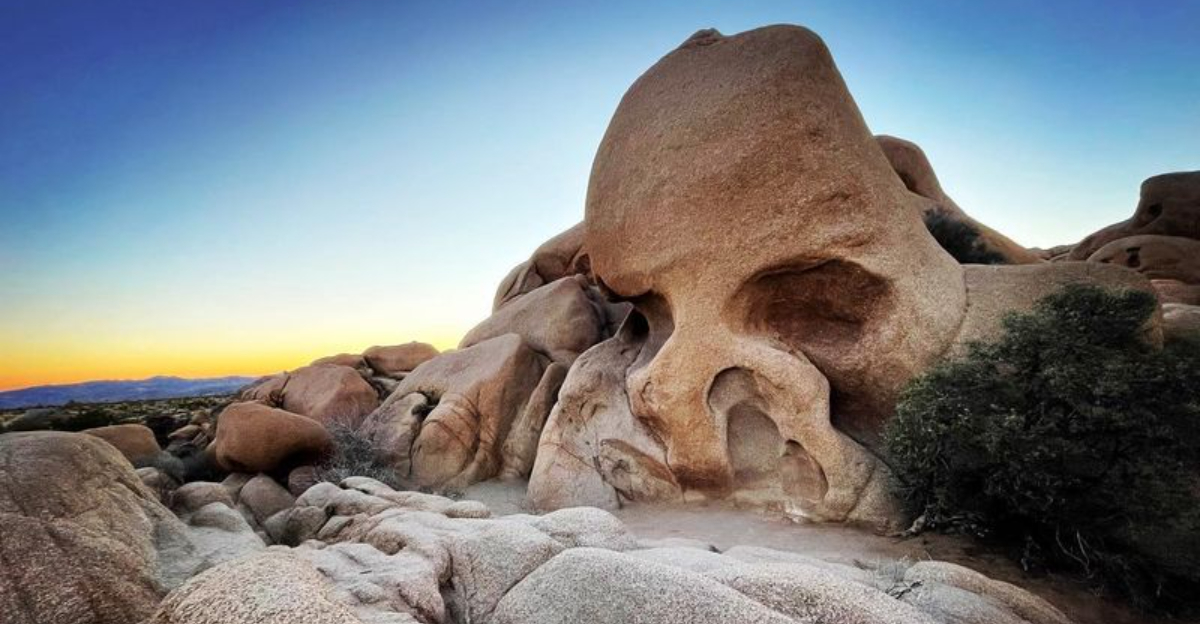
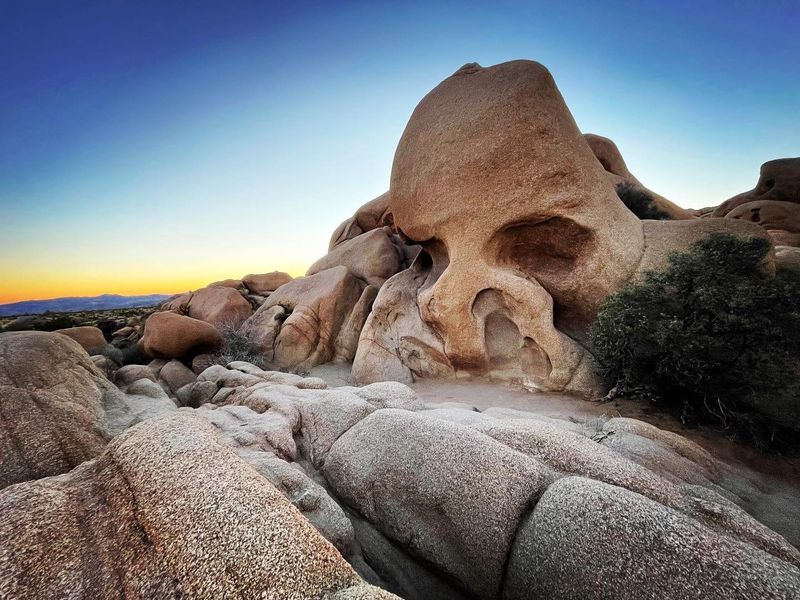
Right in the middle of the desert, a massive rock formation seems to stare back at you – hollow “eye sockets,” a carved-out “nose,” the outline of a skull shaped entirely by nature. No artist touched it.
Wind, rain, and time did all the work. Skull Rock has been stopping hikers in their tracks long before it became a social media favorite.
The short loop trail leading to it winds through a landscape of stacked boulders and twisted Joshua trees, building anticipation with every step. Then suddenly, the formation comes into view, rising from the sand like something ancient and watchful.
One of those California desert moments that makes you pull over without hesitation and rethink what nature is capable of.
Up close, the details become even more impressive. Smooth granite curves inward where water once pooled and slowly carved into the stone. Surrounding boulder fields invite wandering, climbing, and lingering longer than planned.
Few trails capture the strange beauty of Joshua Tree so perfectly – easy to reach, impossible to forget.
1. The Trail Measures Just Under Two Miles
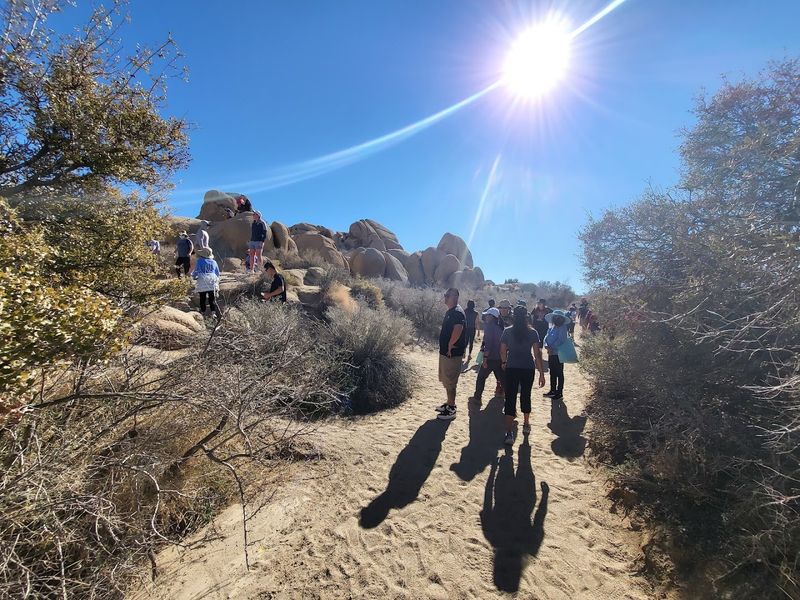
Skull Rock Trail forms a complete loop of 1.8 miles through some of Joshua Tree’s most interesting terrain.
The path starts across from Jumbo Rocks Campground along Park Boulevard and takes most visitors between 45 minutes to an hour to complete at a relaxed pace.
Families with young children often finish the walk without difficulty since the elevation gain totals only 120 feet throughout the entire route.
The trail surface alternates between packed dirt, sandy washes, and a short section of paved campground road near the end.
Hikers can begin the loop from either the main parking area or from within the campground itself if staying overnight.
The circular route means visitors end up back where they started without needing to retrace their steps along the same path.
Trail markers and interpretive signs appear at regular intervals to help with navigation and provide information about the surrounding environment.
The relatively short distance makes this hike accessible for visitors with limited time who still want to experience Joshua Tree’s unique landscape.
Most people walk the loop counterclockwise though either direction works equally well depending on personal preference and parking location.
2. Rainwater Carved The Skull Features Over Thousands Of Years
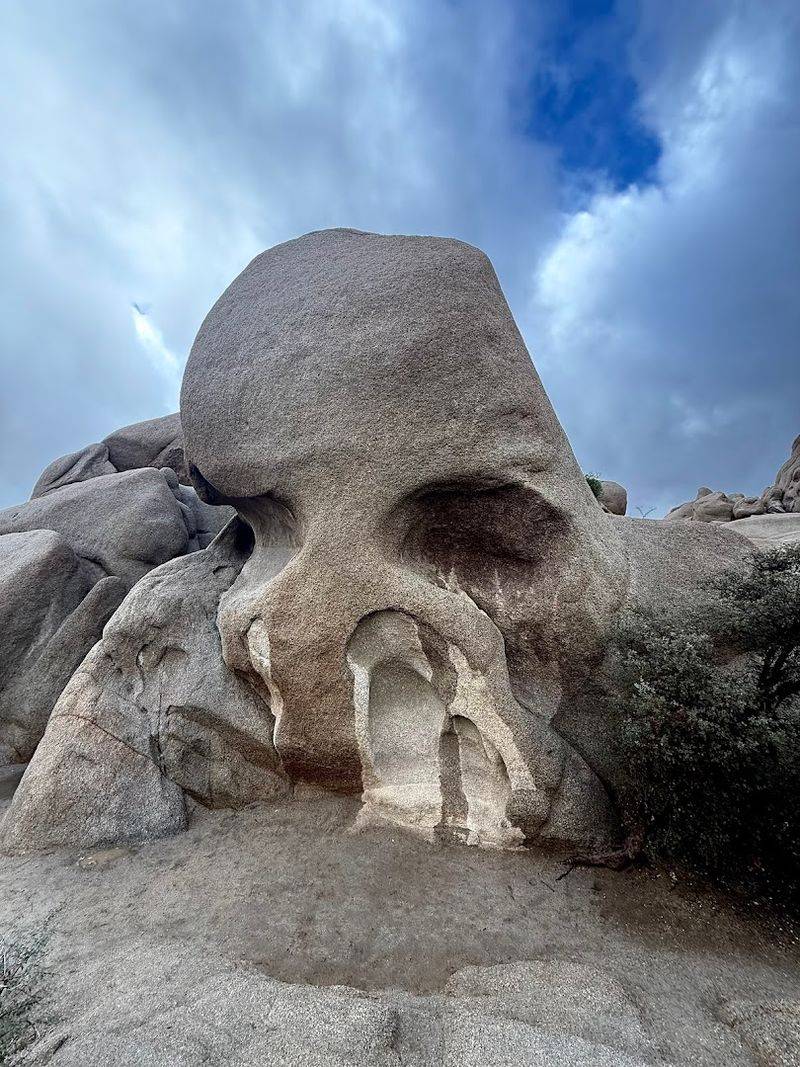
The skull-like appearance resulted from a geological process called tafoni weathering that took millennia to create.
Small depressions on the granite surface collected rainwater that slowly dissolved minerals and weakened the rock structure.
Over countless wet and dry cycles that happened in California the hollows deepened into the eye sockets and nose cavity that give the formation its haunting resemblance to a human skull.
The rock itself consists of monzogranite that formed underground millions of years ago before erosion exposed it to the elements.
Cracks and joints in the granite allowed water to penetrate deeper into certain areas while other sections remained more resistant.
The specific pattern of weathering happened to create features that human brains instantly recognize as a face staring out across the desert.
Scientists estimate the visible skull features developed over thousands of years of exposure to desert weather patterns.
The process continues today though changes happen so slowly that visitors would need to return across many lifetimes to notice any difference.
Other rocks along the trail show earlier stages of the same weathering process with shallow pits that may eventually deepen into dramatic cavities.
3. The Trailhead Sits Along Park Boulevard Near Jumbo Rocks
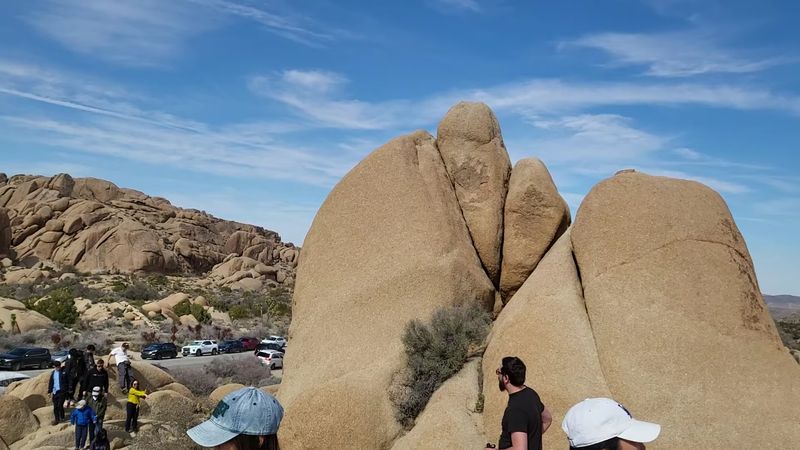
Visitors find the main Skull Rock parking area along Park Boulevard roughly midway between the north and west entrances to Joshua Tree National Park.
Clear signage marks the turnoff and the lot provides space for approximately 20 vehicles though it fills quickly during peak visiting months.
An alternative starting point exists within Jumbo Rocks Campground itself for those camping overnight or willing to walk through the camping area.
The parking area includes basic amenities like vault toilets but no running water or shade structures.
A large informational sign near the trailhead displays a map of the loop and highlights points of interest along the route.
Park Boulevard connects to Interstate 10 and serves as the main thoroughfare through the central portion of Joshua Tree.
Cell phone service remains unreliable throughout this section of the park so visitors should download maps or take photos of trail information before starting.
The parking lot sits at approximately 4,400 feet elevation which means temperatures stay somewhat cooler than lower desert areas.
Rangers recommend arriving early in the morning during busy seasons to secure parking since the small lot reaches capacity before noon on weekends and holidays.
4. Boulder Fields Create Natural Climbing Opportunities
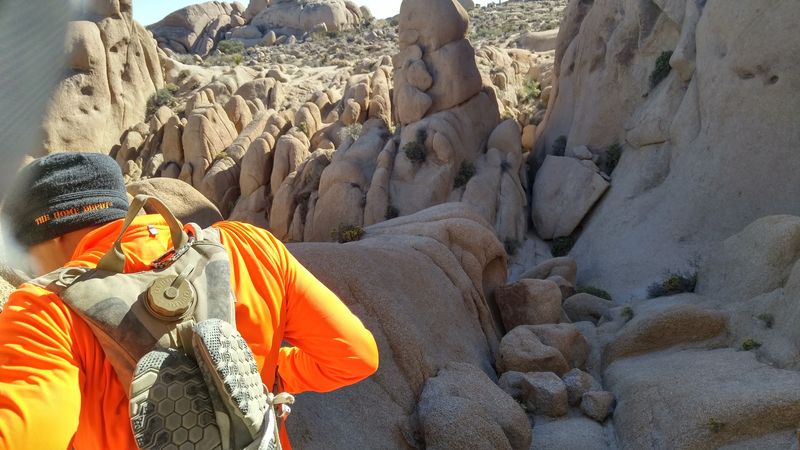
Massive granite boulders line both sides of the trail and create tempting opportunities for scrambling and exploration.
Joshua Tree in California attracts rock climbers from around the world and the Skull Rock area offers accessible bouldering for beginners and families.
Children especially enjoy navigating between the rocks and finding small caves and passages formed by boulders leaning against each other.
Park regulations allow visitors to climb on rocks away from designated trails though disturbing plants or wildlife remains prohibited.
The rough granite surface provides excellent friction for climbing even without specialized equipment.
Many boulders feature natural handholds and footholds that make scaling them possible for people with basic physical fitness.
Climbers should exercise caution since the rocks can become dangerously hot during summer months and surfaces may be slippery after rare rain events.
Parents need to supervise children closely as falls from even modest heights can cause serious injuries on the hard rock surfaces.
The area around Skull Rock sees particularly heavy foot traffic so climbers should remain aware of other visitors and avoid dropping items from elevated positions.
5. Desert Plants Line The Entire Route
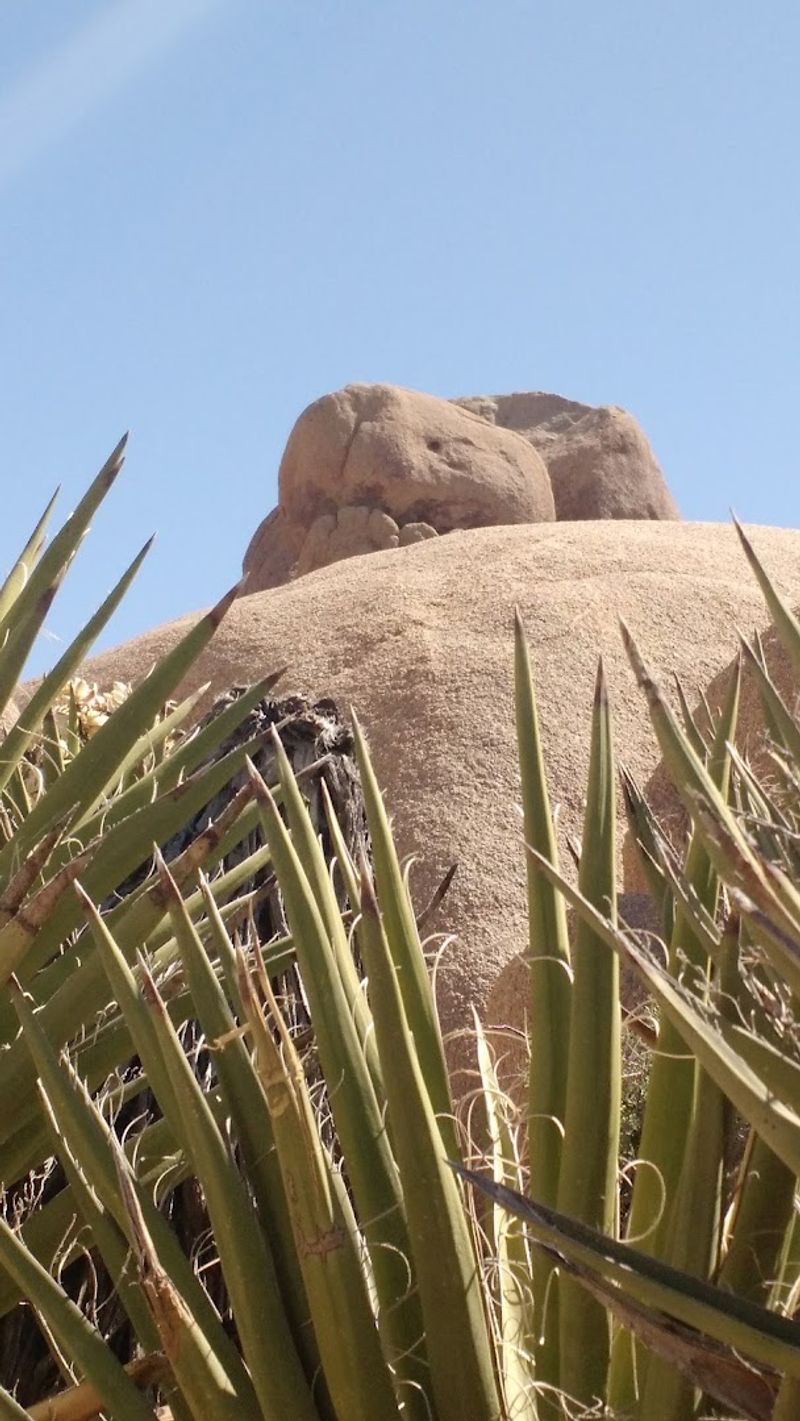
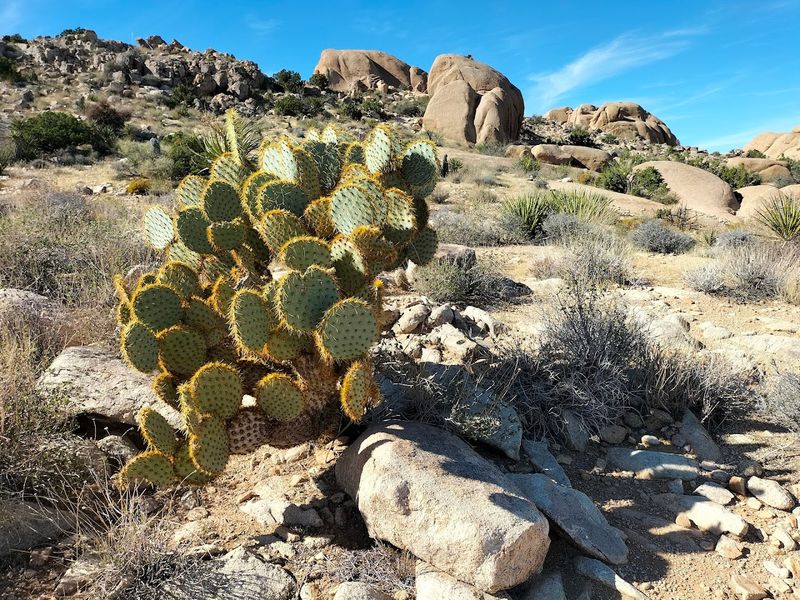
The trail passes through classic Mojave Desert habitat filled with specially adapted plants that thrive in extreme conditions.
Mojave yucca plants with their spiky leaves and tall flower stalks appear frequently along the path.
Desert almond shrubs produce small pink flowers in spring while cat’s claw acacia earns its name from curved thorns that catch on clothing.
Interpretive signs identify common plant species and explain how each survives with minimal rainfall and intense summer heat.
Creosote bushes release their distinctive smell after rain and can live for thousands of years by cloning themselves outward in rings.
Brittlebush displays bright yellow flowers that contrast beautifully against gray-green foliage and tan rock backgrounds.
Visitors should stay on the established trail to avoid damaging fragile desert vegetation that may take decades to recover from a single footstep.
Many desert plants protect themselves with thorns or spines so keeping a respectful distance prevents painful encounters.
The variety of plant life surprises many first-time desert visitors who expected to see nothing but bare sand and rock.
6. Wildlife Finds Shelter Among The Rocks
The boulder-strewn landscape provides essential habitat for numerous desert animals that depend on rock crevices for shelter from temperature extremes and predators.
Desert tortoises dig burrows under large rocks where they spend up to 95 percent of their lives avoiding the hottest and coldest weather.
Lizards including chuckwallas and desert spiny lizards bask on sun-warmed rocks in the morning before retreating to shade during peak heat.
Birds such as rock wrens and canyon wrens nest in protected spaces between boulders and fill the air with distinctive songs.
Small rodents like antelope ground squirrels and desert woodrats create homes in rock piles where multiple escape routes help them evade predators.
Larger animals including bighorn sheep and bobcats pass through the area though sightings remain relatively rare due to their elusive nature.
Visitors should observe all wildlife from a distance and never attempt to touch or feed any animals encountered along the trail.
Staying quiet and moving slowly increases chances of spotting shy creatures that freeze or flee when they detect human presence.
The best wildlife viewing happens during cooler morning and evening hours when animals emerge to forage and move between shelter sites.
7. October Through April Offers Ideal Hiking Conditions
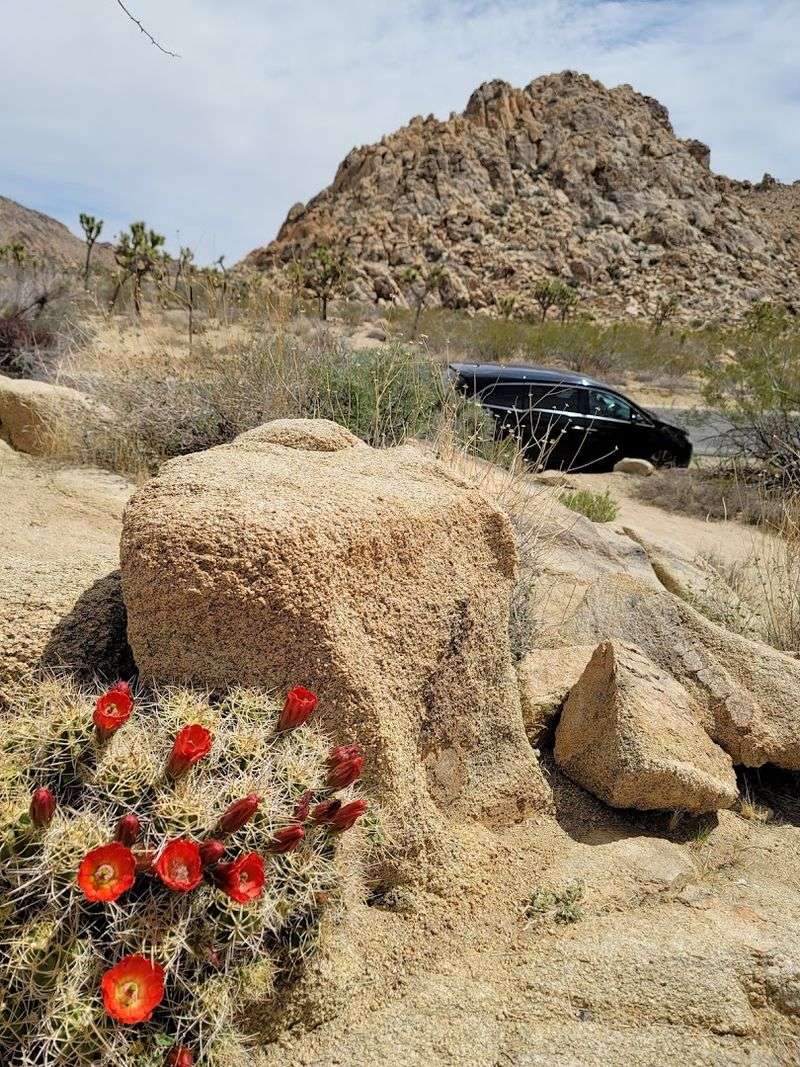
The National Park Service strongly recommends visiting California’s Skull Rock Trail between October and April when temperatures remain comfortable for outdoor activity.
Daytime highs during these months typically range from the 60s to low 80s Fahrenheit making walking pleasant without excessive heat stress.
Winter nights can drop below freezing though daytime hiking rarely requires more than light layers that can be removed as the sun climbs higher.
Summer temperatures regularly exceed 100 degrees Fahrenheit and can reach 115 degrees or higher during heat waves.
The trail offers virtually no shade and the dark rocks absorb solar radiation making the environment feel even hotter than air temperature alone suggests.
Heat-related illness becomes a serious risk during summer months and several hikers require rescue each year after underestimating desert conditions.
Spring brings wildflower blooms that transform the desert into a colorful garden though timing varies based on winter rainfall patterns. Fall offers comfortable temperatures and smaller crowds compared to the peak spring season.
Checking current weather conditions before visiting helps ensure a safe and enjoyable experience regardless of the season chosen for the hike.
8. The Loop Passes Through Jumbo Rocks Campground
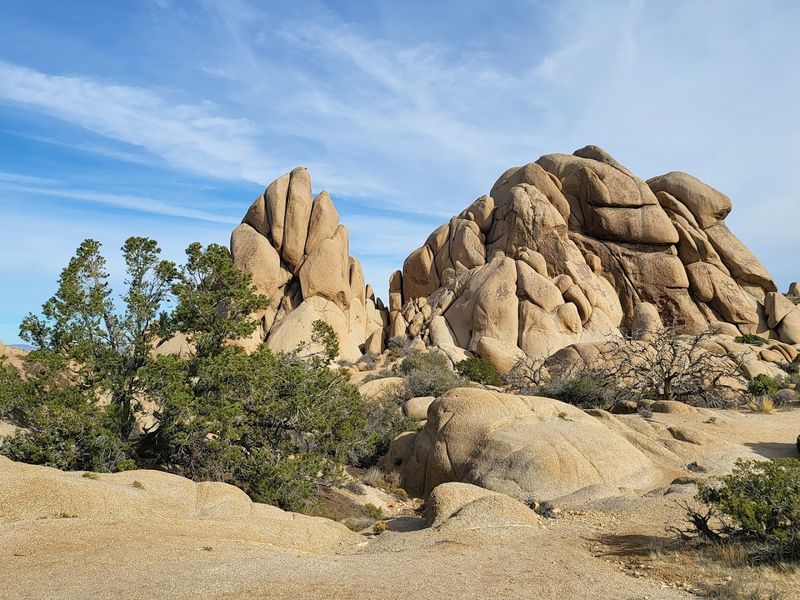
A section of the Skull Rock Trail follows a paved road directly through Jumbo Rocks Campground where overnight visitors set up tents and RVs among the spectacular boulder formations.
The campground contains 124 individual sites that fill months in advance during the popular spring season.
Walking through the camping area gives day hikers a glimpse of what staying overnight in Joshua Tree feels like and may inspire future camping trips.
Campers at Jumbo Rocks enjoy immediate access to the trail and can easily hike to Skull Rock for sunrise or sunset photography.
The campground sits at the same elevation as the trailhead and experiences identical weather conditions.
Each campsite includes a picnic table and fire ring though gathering firewood within the park remains prohibited.
Day hikers should respect the privacy of campers and stay on the designated trail route through the camping area.
The paved campground road provides the easiest walking surface along the entire loop though it lacks the natural beauty of the boulder-lined sections.
Some visitors choose to skip the campground portion by turning around at Skull Rock though completing the full loop offers the intended experience.
9. Minimal Shade Requires Sun Protection
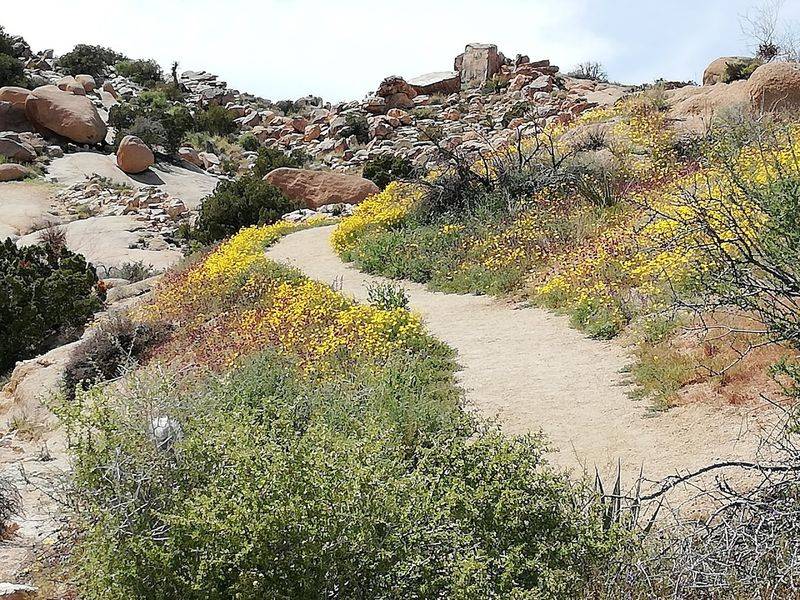
The exposed nature of California’s Skull Rock Trail means hikers walk in direct sunlight for nearly the entire route with only brief shade from occasional large boulders.
Desert sun at Joshua Tree’s elevation feels more intense than at sea level and causes sunburn much faster than many visitors expect.
Wearing a wide-brimmed hat protects the face and neck while long sleeves made from lightweight breathable fabric shield arms from ultraviolet radiation.
Sunscreen with high SPF should be applied before starting the hike and reapplied every two hours or after sweating heavily. Sunglasses protect eyes from bright glare reflecting off light-colored rocks and sand.
The combination of intense sun and low humidity causes rapid moisture loss through skin even when not actively sweating.
Children need extra attention regarding sun protection since their skin burns more easily and they may not recognize symptoms of overheating until problems become serious.
Starting the hike early in the morning provides the most comfortable conditions with cooler air and lower sun angles.
Cloud cover remains rare in the desert so visitors should plan for full sun exposure regardless of the season.
10. Carrying Adequate Water Prevents Dehydration
No water sources exist along the Skull Rock Trail and the dry desert air causes dehydration much faster than humid environments.
Adults should carry at least one liter of water for this short hike during moderate weather and double that amount during warmer months.
Children need frequent reminders to drink since they may not feel thirsty until dehydration has already begun affecting their bodies.
Symptoms of dehydration include headache, dizziness, decreased urination, and dark-colored urine that indicate the body needs more fluids.
Waiting until feeling thirsty means dehydration has already started so drinking small amounts at regular intervals works better than consuming large quantities all at once.
The combination of dry air, physical exertion, and altitude causes moisture loss through breathing in addition to sweating.
Bringing more water than seems necessary provides a safety margin if the hike takes longer than expected or weather conditions change.
Insulated bottles help keep water cool though even warm water serves the essential function of maintaining hydration.
The nearest reliable water sources are at park visitor centers miles away from the trailhead so self-sufficiency remains critical for safety.
11. Photography Opportunities Abound Throughout The Hike
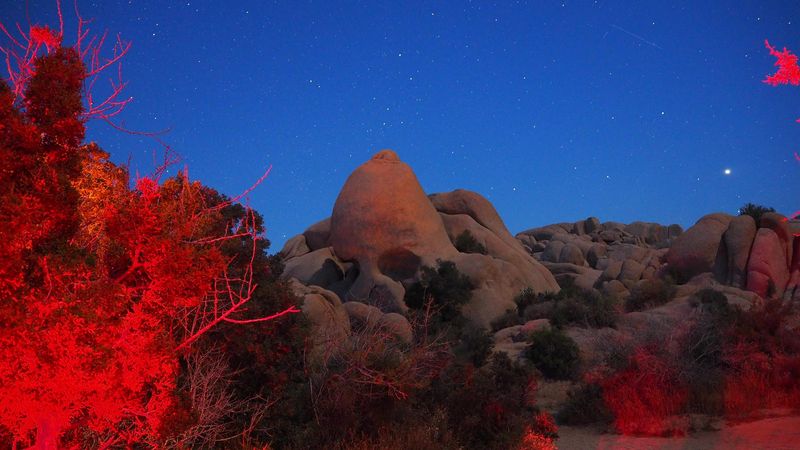
Skull Rock ranks among the most photographed features in Joshua Tree National Park and attracts both casual smartphone users and serious photographers with professional equipment.
The skull formation itself offers endless angles and compositions that change dramatically based on time of day and lighting conditions.
Early morning and late afternoon provide warm golden light that enhances the texture of the granite and creates long dramatic shadows.
The surrounding boulder fields and desert vegetation create compelling foreground and background elements for landscape photography.
Climbing on rocks near Skull Rock allows photographers to capture unique perspectives though safety should always take priority over getting a particular shot.
The clear desert air and lack of light pollution make the area excellent for night photography including star trails and Milky Way images.
Visitors should be mindful of other people wanting to photograph the skull and take turns rather than monopolizing the best viewing spots.
Drones remain prohibited throughout Joshua Tree National Park to protect wilderness character and prevent disturbance to wildlife.
Sharing photos on social media has increased visitation to Skull Rock considerably so photographers bear some responsibility for encouraging respectful behavior among followers who may visit based on their images.