This San Francisco, California Staircase Turns Every Step Into A Colorful Work Of Art
At first glance, it looks like just another staircase tucked into a California neighborhood. Then the color stops you in your tracks.
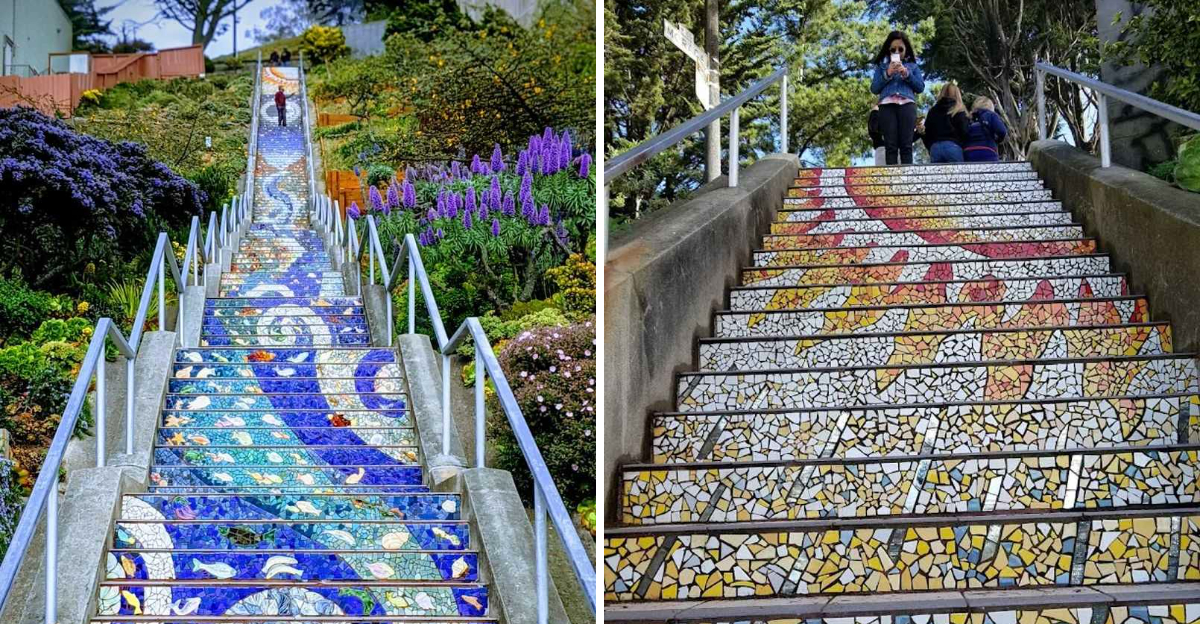
163 steps rise from street level to the hilltop, and every riser forms part of a sweeping mosaic that moves from ocean blues to a star-filled sky. What was once plain concrete is now a vertical canvas woven into daily life.
Neighbors in California didn’t just approve the transformation. They built it.
Hundreds of residents shaped tiles, painted details, and helped turn an ordinary public stairway into a landmark that pulls in visitors from across the city and beyond.
Morning walkers slow their pace. Tourists pause every few steps for photos. Kids search for small details hidden in the glass and ceramic. The climb feels immersive, almost cinematic, as the design shifts with each step upward.
The idea began with two residents who saw potential where others saw blank space. That spark grew into a full community effort that redefined the block.
Now the staircase stands as proof that public art in California does not have to come from major institutions or big budgets. Sometimes it rises step by step, built by the very people who use it every day.
1. The Sea-To-Sky Design Journey
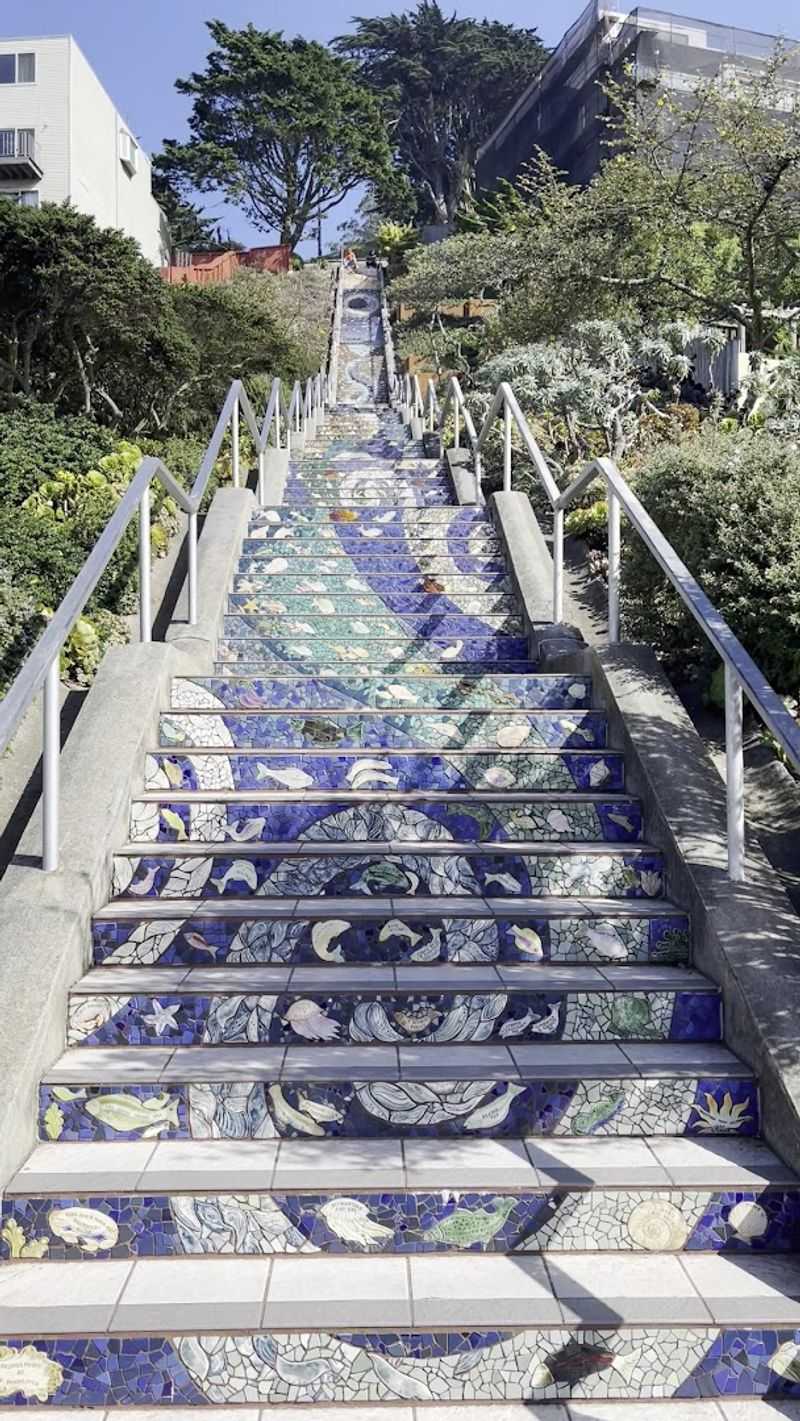
Walking up these steps means following a story told in tile and glass. The design begins at street level with deep blues and greens representing ocean water, where mosaic sea creatures swim across the risers.
Artists Aileen Barr and Colette Crutcher planned the progression to mirror a journey from sea floor to outer space. Each section of stairs represents a different realm, with imagery shifting as elevation increases.
The lower third features marine life rendered in blues, teals, and aqua tones that catch sunlight differently throughout the day. Midway up, the palette warms as land animals and plants appear in earth tones and greens.
Birds take over the upper sections, their wings spreading across multiple steps in yellows, oranges, and reds. The final risers reach toward celestial imagery with suns, moons, and stars in gold and deep purple.
This vertical progression creates a sense of ascending through ecosystems and elements. The design concept gives climbers a reason to pause and notice where they stand in the sequence.
Over 75,000 fragments of glass and ceramic form the complete picture, each piece positioned to contribute to the flowing narrative that connects bottom to top.
2. Community Funding And Tile Sponsorship
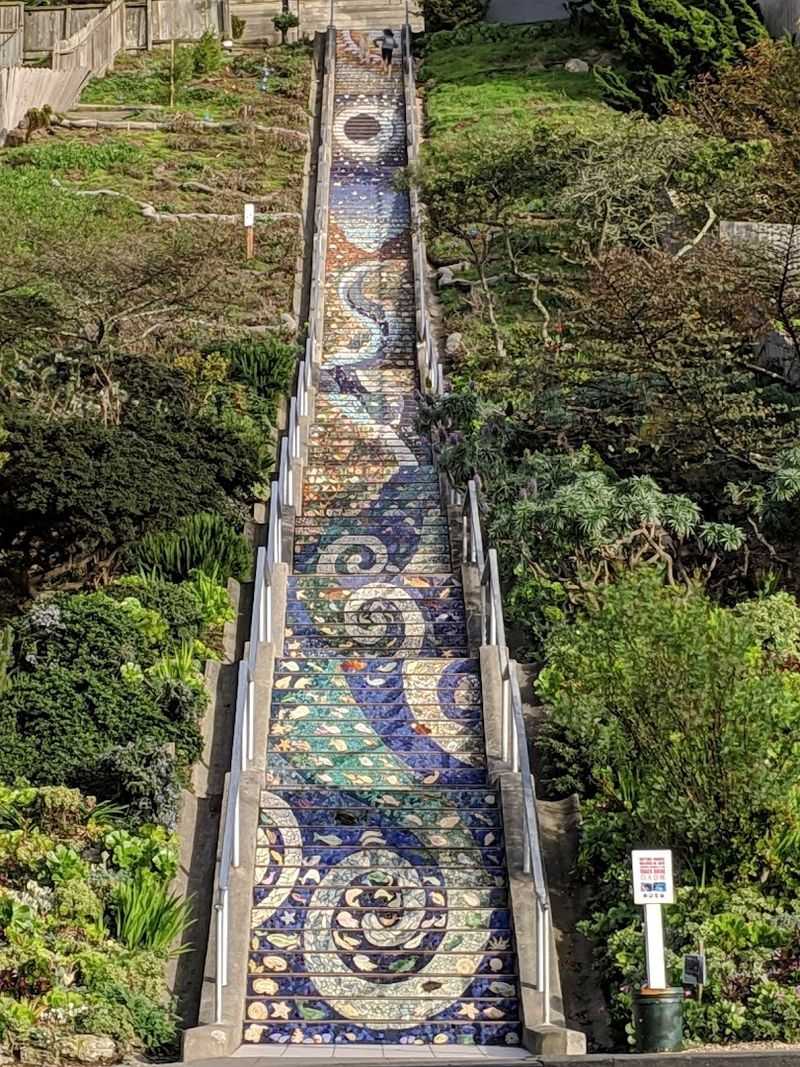
The project came to life through contributions from more than 220 households and businesses in the Golden Gate Heights area.
Residents Jessie Audette and Alice Yee Xavier initiated the effort in 2003, believing their neighborhood deserved a distinctive landmark.
Funding arrived tile by tile as community members sponsored individual pieces of the mosaic. Each sponsored tile allowed contributors to become part of the permanent artwork.
Additional support came from the Mayor’s Neighborhood Beautification Fund, which recognized the project’s potential to enhance public space.
The combination of grassroots fundraising and city backing made the ambitious design financially possible.
Installation took place over several years as artists assembled the complex patterns. Volunteers helped with preparation work, turning the construction phase into a series of community gatherings.
The official opening on August 27, 2005, featured lion dancers and drew neighbors who had watched the transformation unfold.
The celebration marked the moment when the steps shifted from construction zone to finished landmark.
This funding model showed how public art can emerge from collective investment rather than single donors or government budgets alone.
The sponsorship structure gave many people ownership in something larger than any individual contribution.
3. Native Gardens Flanking The Steps
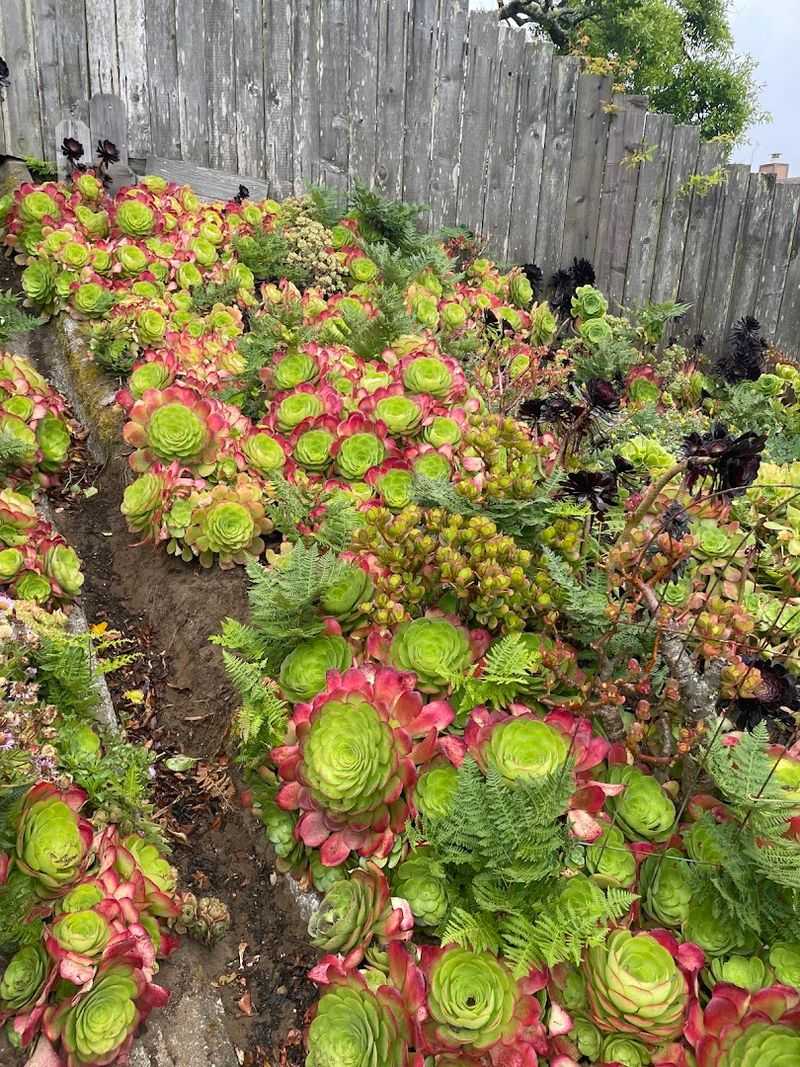
Gardens line both sides of the stairway, planted with species native to California coastal regions. Succulents and drought-resistant plants create texture and color that complements the mosaic without competing for attention.
The south side garden came from a donation by the Xavier family, one of the project’s founding households. The north side received development funding in 2006 through a grant from San Francisco Beautiful.
These plantings serve ecological purposes beyond aesthetics. The native species support local insect populations, including the endangered green hairstreak butterfly that depends on specific plant hosts.
Garden maintenance happens through volunteer efforts coordinated among neighbors. The low-water plants suit the site’s hillside exposure and reduce irrigation needs.
Seasonal changes bring different blooms and foliage colors, adding another layer of variation to visits throughout the year. Spring typically shows the most dramatic flowering, while succulents provide consistent structure.
The integration of landscaping with the steps demonstrates how public art projects can address multiple goals simultaneously.
Beauty, environmental stewardship, and habitat creation all coexist in the same narrow corridor. Visitors often pause in the gardens between climbing sections, using planted areas as natural rest stops.
4. Panoramic Views From The Top
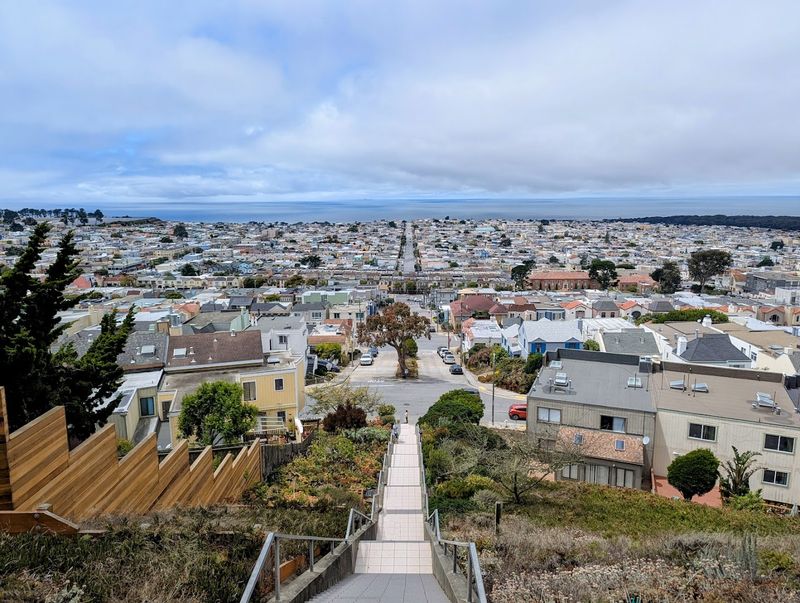
Reaching the top landing delivers visual rewards beyond the mosaic itself. The elevation gain of 90 feet opens sightlines across western San Francisco neighborhoods and beyond.
Ocean Beach appears in the distance, a ribbon of sand meeting the Pacific. On clear days, the view extends to the Marin Headlands across the Golden Gate, their ridges forming the northern horizon.
Golden Gate Park’s tree canopy fills the middle distance, a green expanse that helps orient visitors to the city’s geography. The perspective from the top helps people understand how neighborhoods fit together.
Weather dramatically affects visibility, with fog often obscuring distant landmarks while creating atmospheric effects closer in. Morning tends to offer the clearest views before afternoon fog rolls inland.
The top landing provides space to turn around and appreciate the stairs from above, where the full mosaic design becomes visible as a complete composition. This reverse view reveals patterns that aren’t apparent while climbing.
Benches near the summit let people rest and take in the surroundings without blocking the stairway. The viewing area sees steady traffic during weekends and less crowding on weekday mornings.
Photographers favor late afternoon light for capturing both the cityscape and the steps themselves.
5. The Artists Behind The Design
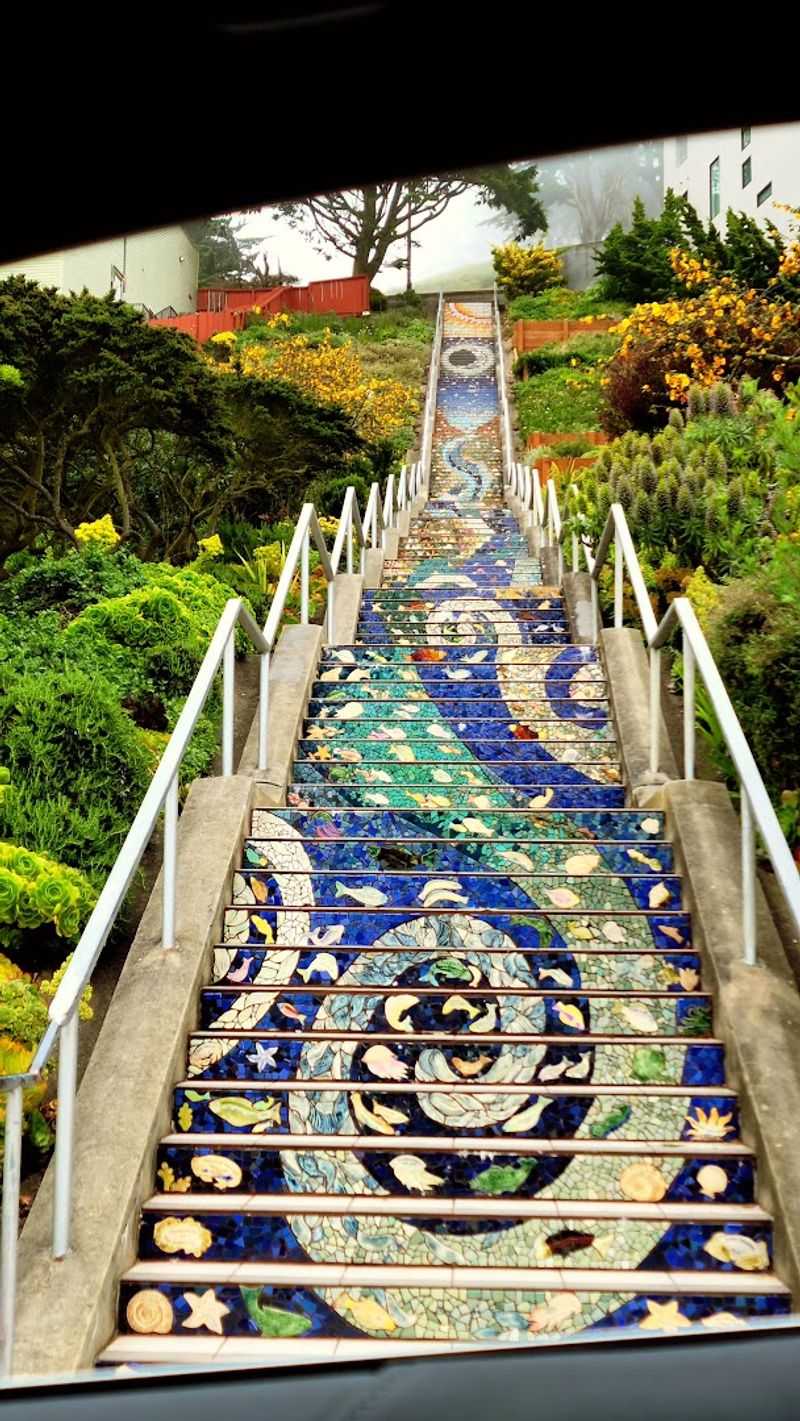
Aileen Barr and Colette Crutcher brought professional mosaic experience to the community’s vision. Both artists had worked on public installations before taking on the 16th Avenue project.
Their design process involved listening to neighborhood input while maintaining artistic coherence. The sea-to-sky concept emerged from conversations about what would give the steps meaning beyond decoration.
Creating patterns that would work across 163 individual risers required detailed planning. Each step needed to function as both an independent piece and part of the continuous vertical image.
The artists selected materials for durability and color range, knowing the installation would face weather exposure and foot traffic.
Glass fragments provide shimmer and light reflection that changes with viewing angle and time of day.
Installation work demanded precision in placing thousands of small pieces according to the master design.
The artists worked with volunteers who helped prepare materials and assist with technical aspects of mounting tiles.
Their collaboration balanced creative vision with practical construction requirements. The finished work shows how professional artists can channel community aspirations into lasting public installations.
The project added to both artists’ portfolios while giving the neighborhood a signature landmark that reflects their combined aesthetic sensibilities.
6. Visiting Logistics And Neighborhood Context
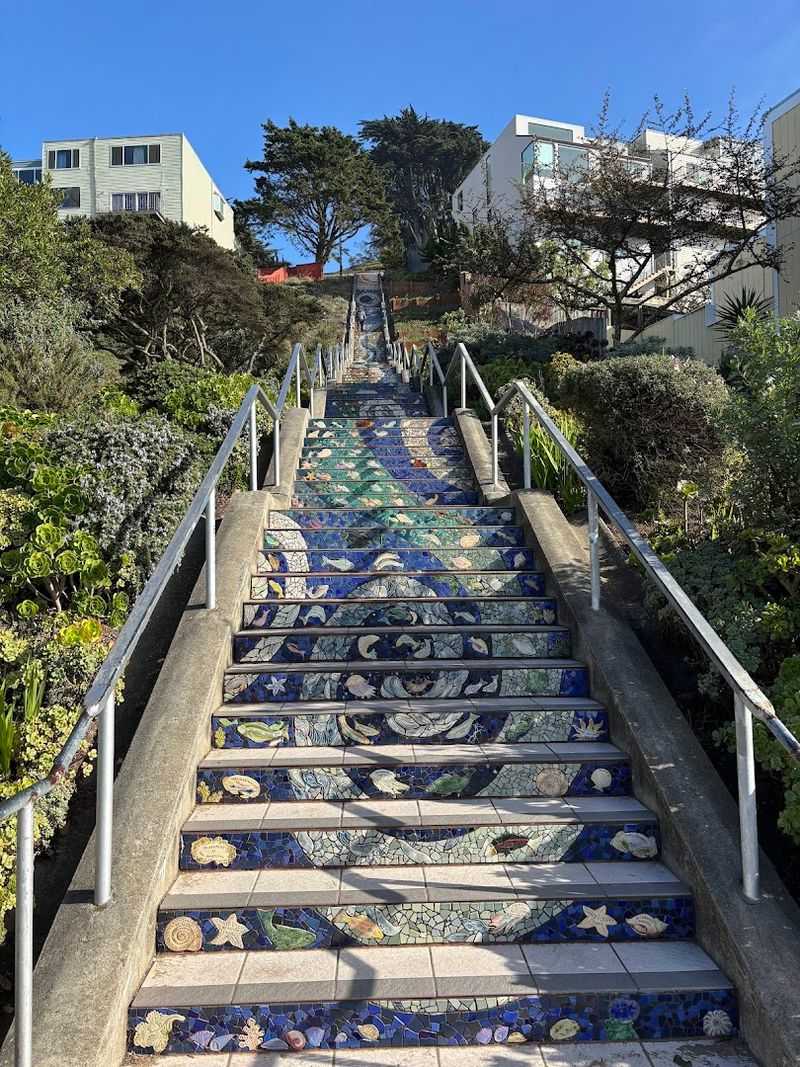
The steps sit in a residential area of Golden Gate Heights, reached by city bus lines or personal vehicle. Street parking exists on surrounding blocks, though availability varies by time and day.
The stairway runs between Moraga Street and 15th Avenue, accessible from either top or bottom. Most visitors start at the lower entrance to experience the design sequence as intended.
No admission fee or restricted hours apply since the steps function as public infrastructure. Early morning sees fewer people, while midday and late afternoon bring more visitors, especially on weekends.
The climb requires moderate fitness, with 163 steps rising continuously without switchbacks or extended landings. Handrails provide support, and the pace can adjust to individual comfort levels.
Nearby residents go about daily routines, so visitors should keep noise levels considerate. The steps serve as a neighborhood amenity first and tourist destination second.
No commercial facilities exist immediately adjacent to the steps. Planning should include water and any needed supplies since the location is purely residential.
Combining a visit with exploration of Golden Gate Heights or nearby Grandview Park makes geographic sense. The neighborhood offers other stairways and hilltop viewpoints worth discovering.
7. Photography And Social Sharing Culture
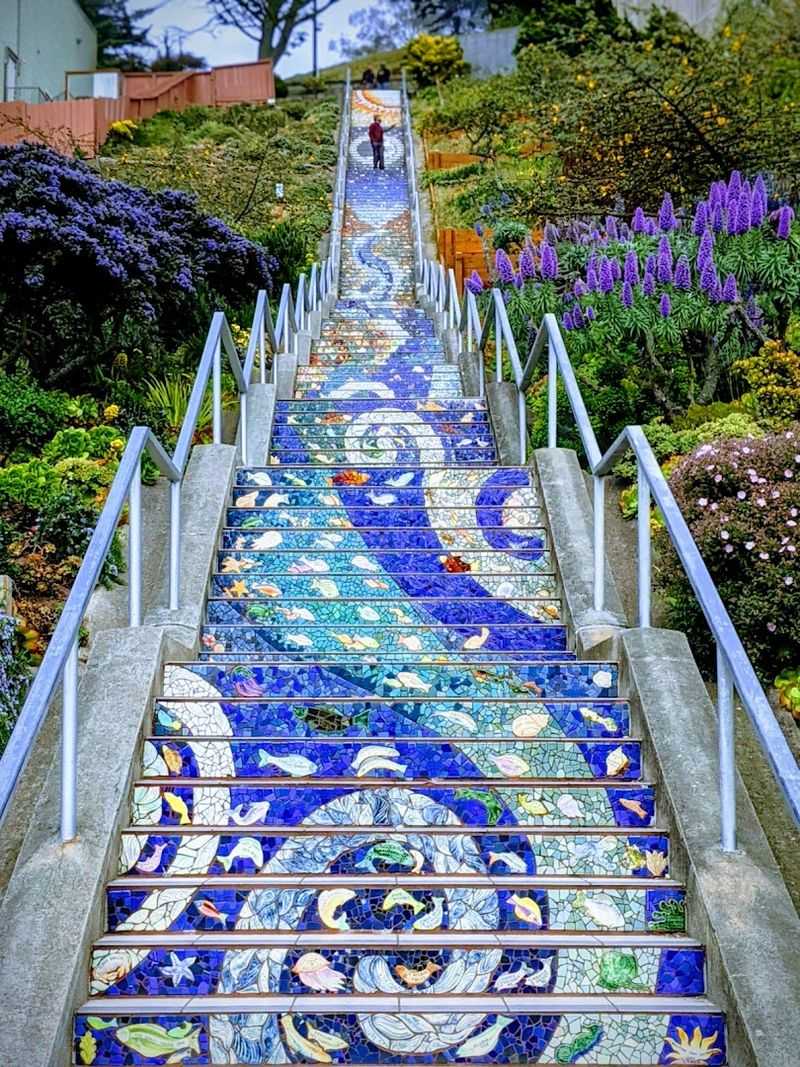
The steps have become a frequently photographed San Francisco landmark, appearing regularly on social media feeds and travel blogs. The vivid colors and unique subject matter make it visually distinctive in photos.
Different times of day offer varying light conditions that affect how the tiles appear in images. Morning light hits the steps directly, while afternoon creates shadows that emphasize texture and depth.
Photographers often shoot from the bottom looking up to capture the full vertical sweep of the design. Side angles from the gardens show the steps in context with surrounding vegetation.
The challenge lies in photographing the steps without including other visitors, given steady foot traffic during popular hours. Patience and timing help capture clearer compositions.
Detail shots of individual sections reveal the intricacy of the mosaic work that wide-angle views compress. Close-ups show how glass fragments catch and refract light.
Social media has increased the site’s visibility, bringing more visitors while raising questions about balancing access with neighborhood character.
The steps handle the attention better than some residential landmarks because they were designed as public art.
Respectful photography means staying aware of residents and other visitors, avoiding blocking the stairway for extended shoots.
8. Tile-Making Workshops And Public Participation
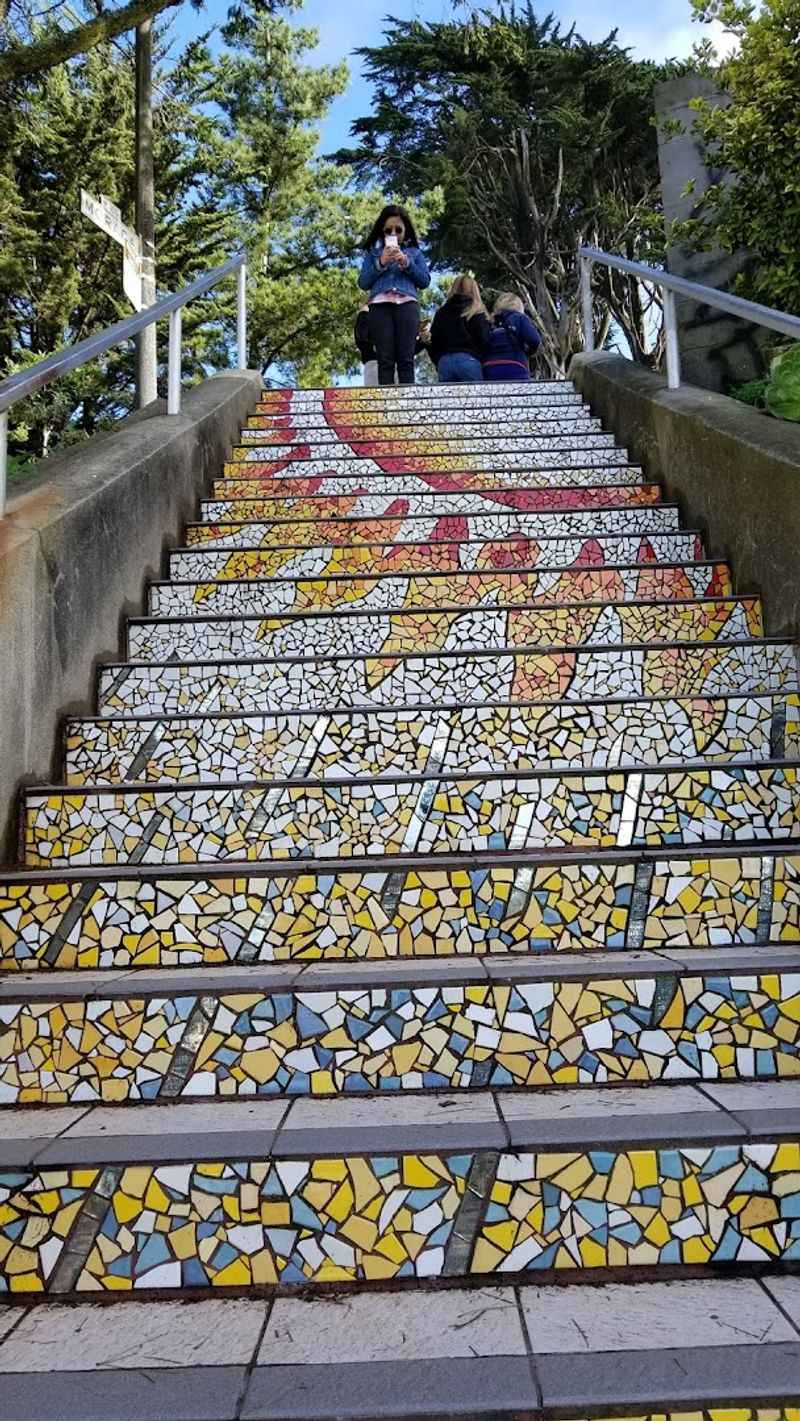
Before installation began, the project invited the neighborhood to take part in something lasting.
Weekend workshops filled with folding tables, buckets of clay, and trays of colorful tiles brought together residents of all ages.
Families arrived with children eager to press handprints and initials into soft clay. Grandparents leaned carefully over tables, painting detailed flowers, suns, and geometric patterns that reflected their personalities.
The atmosphere felt less like a construction effort and more like a block party with a purpose.
Neighbors who had never spoken before found themselves side by side, comparing designs and sharing stories while they worked.
Professional mosaic artists moved through the crowd, demonstrating techniques and offering guidance on color choices, spacing, and glazing. Volunteers learned how individual tiles would eventually fit into a much larger image.
Workshops continued for months, building anticipation as boxes of finished tiles stacked up, each one tagged with a name. Participants returned week after week to refine their pieces or simply to be part of the energy.
When installation finally began, many recognized their own contributions embedded within the sweeping design. That direct involvement transformed the finished artwork into more than decoration.
It became a shared achievement rooted in community pride and personal connection.
9. Hidden Creatures And Easter Eggs
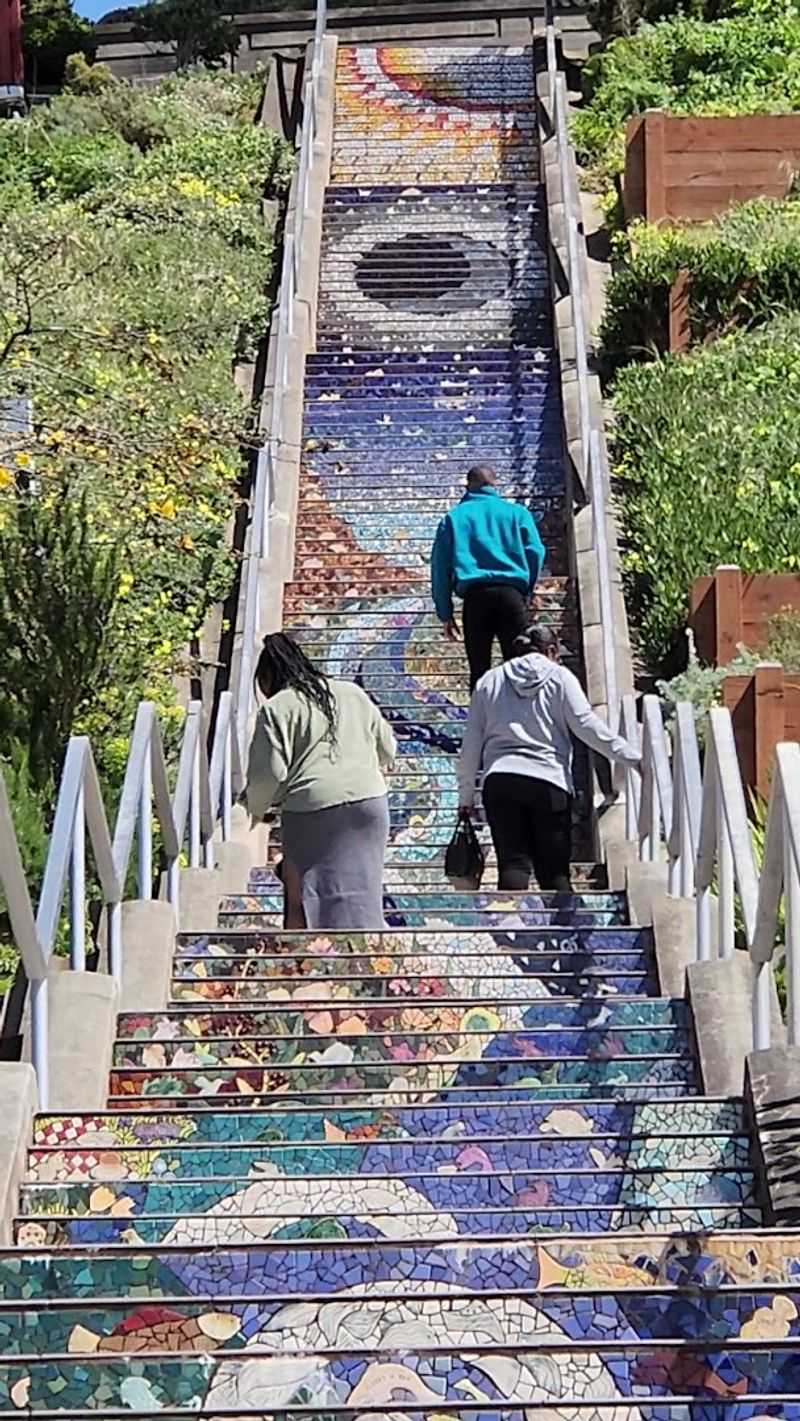
Sharp-eyed visitors quickly realize the mosaic holds more than bold colors and sweeping patterns. Look closely and tiny salamanders appear between clusters of flowers.
Butterflies stretch their wings across the seams of different steps. At the base, small fish weave through curling blue waves, easy to miss if you rush past.
These details were not accidental. The artists deliberately tucked miniature creatures throughout the design to reward anyone willing to slow down.
What seems like a simple staircase at first glance gradually reveals layers of personality and humor. Every few steps offer another reason to pause.
Children turn the climb into a game, scanning each tile for the next hidden animal. Parents often find themselves just as invested, pointing out discoveries and comparing favorites.
The experience becomes less about reaching the top and more about what you notice along the way.
Light changes everything, too. Morning sun highlights certain shapes, while late afternoon shadows bring out others.
Colors shift subtly, and small figures stand out differently depending on the time of day. Even frequent visitors say they catch something new each visit, proof that the mosaic continues to unfold long after the first impression.
10. Maintenance And Preservation Efforts
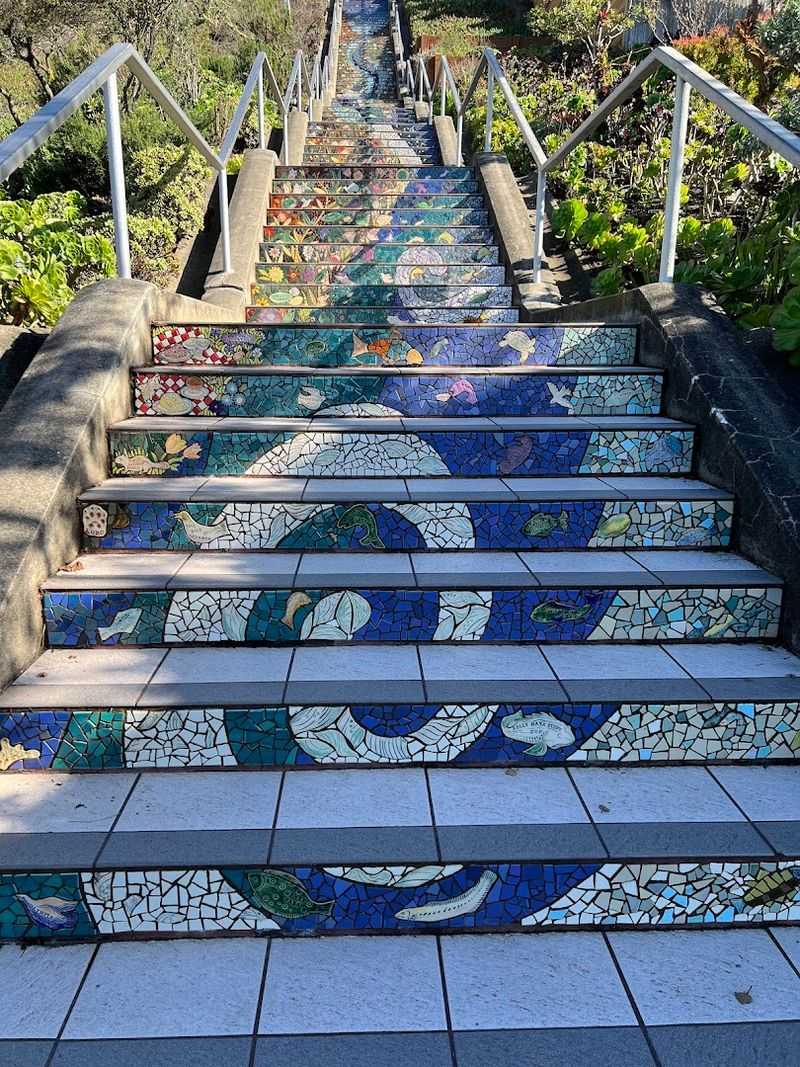
Keeping the mosaic bright and intact takes more than admiration. It takes effort. Neighborhood volunteers show up month after month with buckets, brushes, and plenty of patience.
Dust, rain, and thousands of footsteps slowly wear down the shine, so regular cleanings help restore the tiles to their original glow.
Cleanup days feel part maintenance, part reunion. Neighbors chat while scrubbing grout lines and rinsing away city grime.
New residents often join in, learning the story behind the artwork as they help care for it. The process strengthens the same sense of community that built the steps in the first place.
A dedicated stewardship group keeps watch year-round. Members inspect for cracked tiles, fading sections, or loose pieces that need attention.
When repairs go beyond volunteer skills, they coordinate with professional artists to ensure restorations match the original craftsmanship. Local tile suppliers frequently contribute materials, recognizing the landmark’s importance to the neighborhood.
Fundraisers and small donation drives help cover specialized repair costs. That steady commitment ensures the mosaic remains as vivid as the day it was completed.
Public art can fade without care, but here, ongoing involvement keeps it alive. The steps endure because the community refuses to let them fade into the background.