This Three-Mile California Hike Winds Past Steaming Vents, Bubbling Mud Pots, And Surreal Mineral Colors
Not every hike feels grounded. Some feel alive beneath your feet.
The trail begins quietly enough, winding through forest and volcanic terrain before the air shifts and the smell of sulfur settles in.
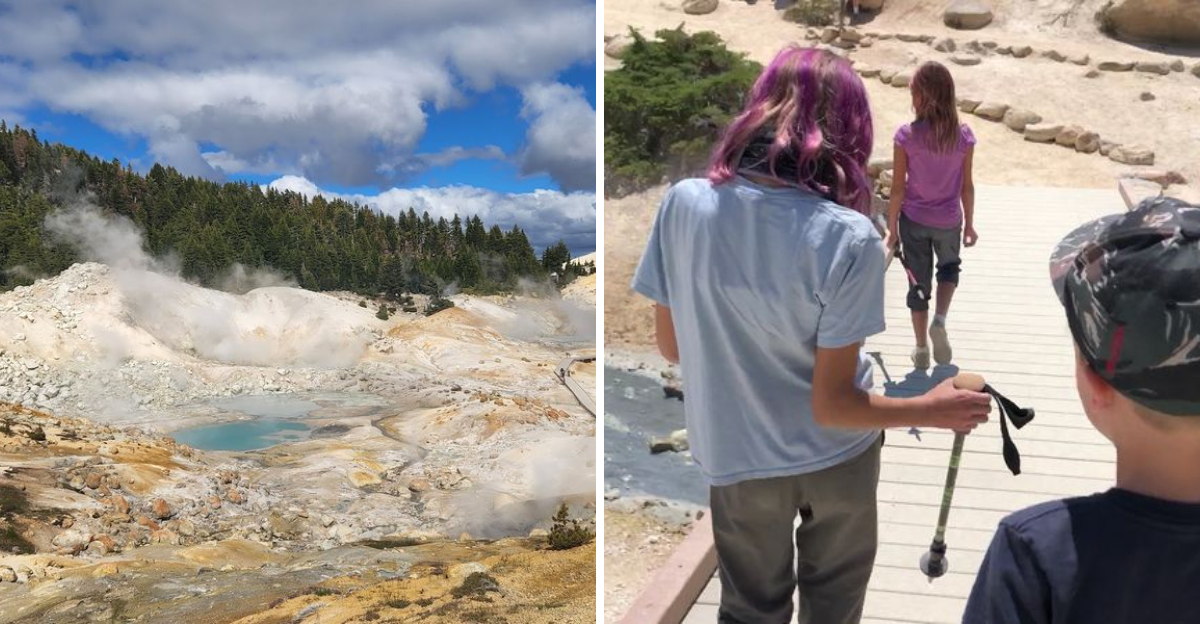
Steam drifts across the path. The earth hisses. Mud bubbles in thick gray pools that look almost unreal.
Then the basin opens up. Boardwalks guide visitors past vents and boiling features that are constantly moving and changing.
The ground here is fragile, heated from below, and shaped by pressure that has been building for centuries.
This is Bumpass Hell Trail, one of the most active hydrothermal areas in Lassen Volcanic National Park. The full hike runs about three miles round trip, with a loop through the geothermal basin that keeps visitors safely above the unstable ground.
Few trails in California let you stand this close to the raw power of the earth and actually feel the heat rising around you.
Knowing what to expect before stepping onto the boardwalk makes the experience safer and far more rewarding.
1. A Trail Built For All Skill Levels
Not every volcanic adventure requires elite fitness or technical climbing gear.
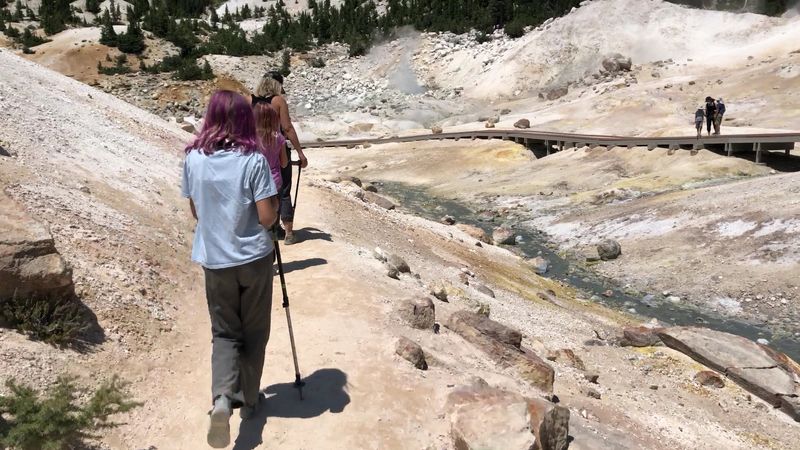
The Bumpass Hell Trail covers approximately three miles round-trip with a modest elevation gain of around 300 feet, making it one of the more accessible hikes inside Lassen Volcanic National Park in California.
The path is wide and well-maintained for most of its length, with gradual inclines that allow hikers to move at a comfortable pace.
Families with older children, casual hikers, and first-time visitors to the park tend to find the trail manageable without needing specialized equipment or advanced trail experience.
That said, the terrain does include some uneven rocky sections, and trail conditions can shift depending on the season.
Wearing sturdy footwear with good grip is strongly recommended, as loose gravel and occasional wet patches near the hydrothermal basin can make smooth-soled shoes a poor choice.
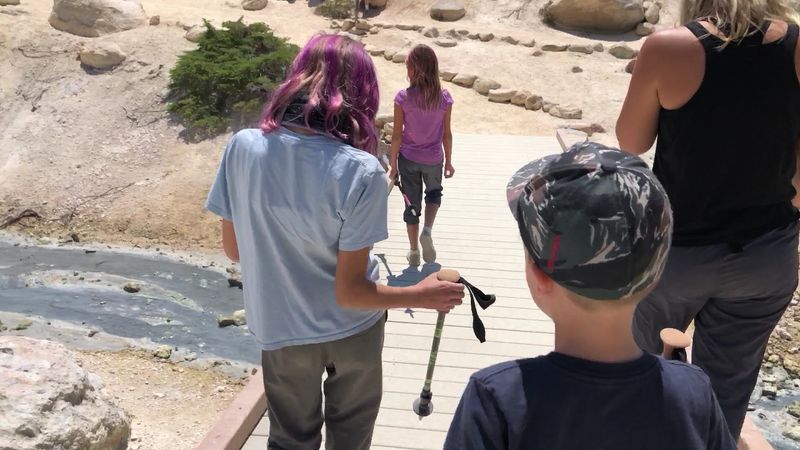
Trekking poles could help on steeper descents, especially for hikers who prefer extra stability.
The round-trip typically takes between one and a half to three hours depending on pace, rest stops, and time spent exploring the basin.
Starting early in the morning tends to mean cooler temperatures and fewer crowds at the trailhead.
2. The Largest Hydrothermal Area In The Park
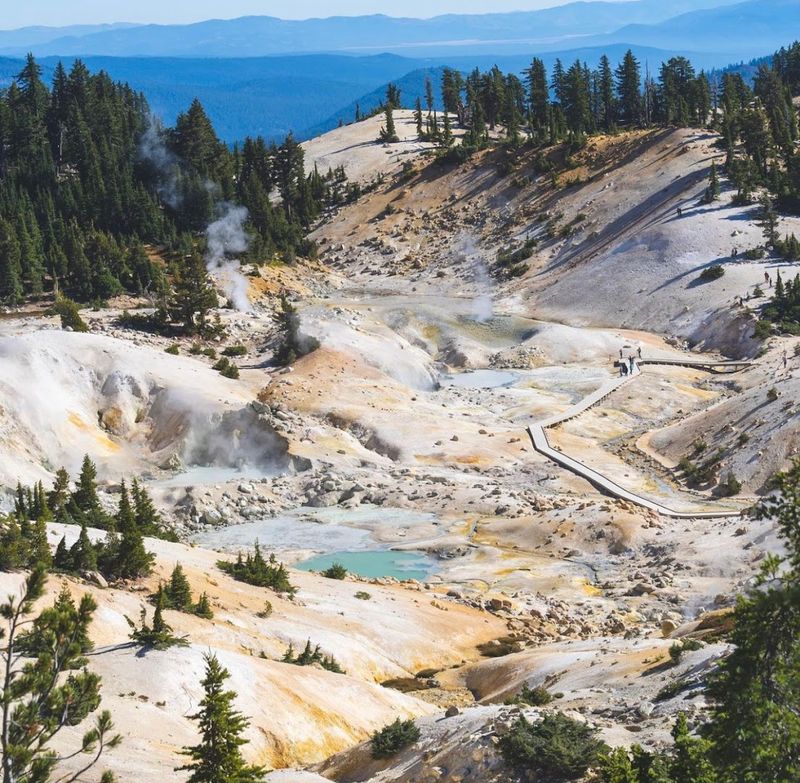
Bumpass Hell holds the title of the largest hydrothermal area within Lassen Volcanic National Park, and standing at its edge makes that fact feel entirely believable.
The basin spreads across roughly sixteen acres of actively boiling, steaming, and bubbling ground that looks almost nothing like the forests surrounding it.
Fumaroles shoot jets of steam several feet into the air while boiling mud pots churn in shades of gray and brown.
Bright yellow sulfur deposits ring the vents, and mineral-rich pools shift between pale blue and murky white depending on temperature and chemical composition.
The visual contrast between the dead volcanic ground of the basin and the green pine slopes above it is striking.
The boardwalk system within the basin allows visitors to observe these features up close while remaining on safe ground.
Spending extra time walking the full length of the boardwalk rather than rushing through rewards visitors with a fuller picture of just how varied and dynamic the hydrothermal features actually are.
Each section of the basin tends to look noticeably different from the last.
3. The Story Behind The Name
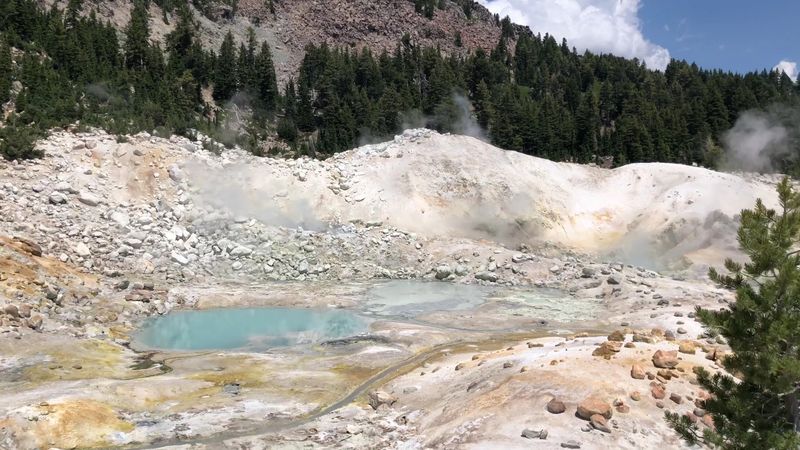
Behind the unusual name lies one of the more memorable cautionary tales in California hiking history.
Kendall Vanhook Bumpass was an early settler and guide in the Lassen region during the 1860s who made the costly mistake of stepping through the thin crust of a boiling mud pot while leading a group of visitors through the area.
The accident severely burned his leg, and the injury eventually led to amputation.
Despite the painful outcome, Bumpass had been promoting the area as a tourist attraction, and his name stuck to the hydrothermal basin as a lasting reminder of both his adventurous spirit and his misfortune.
The story is not just a piece of quirky trivia. It carries a real warning that remains relevant for every visitor today.
The ground in hydrothermal areas can appear solid while concealing boiling water just inches below the surface.
Park rangers and trail signage consistently remind visitors that stepping off the boardwalk in the basin is genuinely dangerous, not just a rule for rule’s sake.
Bumpass himself learned that lesson in the hardest possible way, and the name of the trail quietly keeps that lesson alive for every hiker who passes through.
4. Seasonal Access And Trail Openings
Timing a visit to the Bumpass Hell Trail requires some planning because the trail does not stay open year-round.
Heavy snowfall typically closes the trail from late fall through late spring, with the trailhead road along Highway 89 often remaining inaccessible well into summer depending on the snow year.
The trail generally opens sometime between mid-July and early August, though that window can shift earlier or later based on annual snowpack levels.
The National Park Service posts current trail and road conditions on the official Lassen Volcanic National Park website, which is the most reliable source for up-to-date access information before making the drive.
Spring visits to the surrounding park landscape are possible in lower elevation areas, but the Bumpass Hell Trail itself sits at an elevation of roughly 8,200 feet at the trailhead, meaning snow lingers much longer there than in valleys below.
Visitors hoping to catch the trail just after it opens in summer tend to find particularly dramatic scenery, as residual snowfields sit alongside steaming vents in a striking visual contrast.
Checking conditions at least a week before visiting and again the day before departure helps avoid a long drive to a closed gate.
5. Safety Rules That Actually Matter
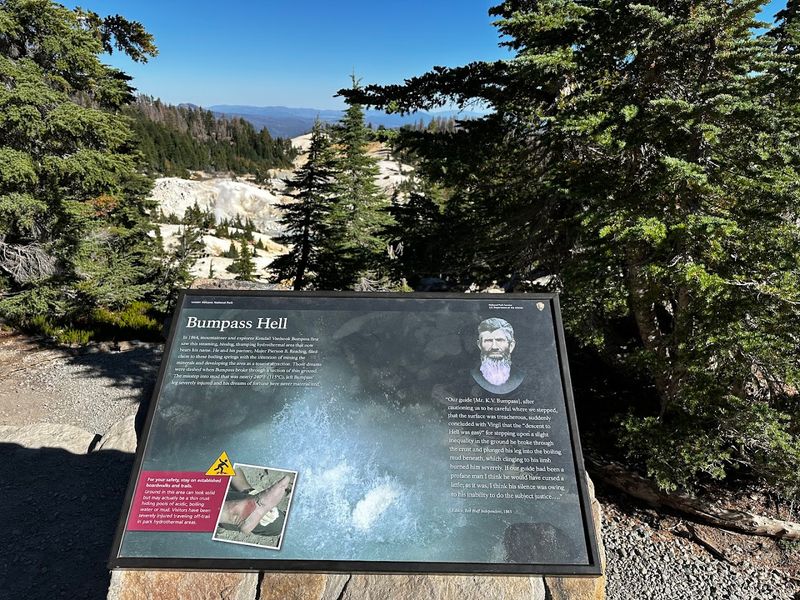
Safety at Bumpass Hell is not a casual suggestion printed on a brochure.
The hydrothermal features in the basin involve water temperatures around 198–203 degrees Fahrenheit, and the ground crust separating visitors from that boiling water can be surprisingly thin and fragile in certain areas.
Staying on the established boardwalk and marked trail is the single most important rule in the basin.
Park rangers have documented incidents over the years where visitors who stepped off the boardwalk broke through the crust and suffered serious burns.
Children should be kept close and supervised at all times, particularly near the edges of the boardwalk where the temptation to lean over or touch the mud pots could be strong.
Pets are not allowed on the Bumpass Hell Trail, which helps reduce the risk of animals pulling owners off the safe path unexpectedly.
Closed-toe shoes are strongly advised rather than sandals, as even the spray from nearby fumaroles can carry hot water droplets.
The sulfur smell in the basin can also be strong, and visitors with respiratory sensitivities may want to move through more quickly or take breaks upwind.
The rules exist because the consequences of ignoring them are genuinely serious.
6. Volcanic Rocks That Tell An Ancient Story
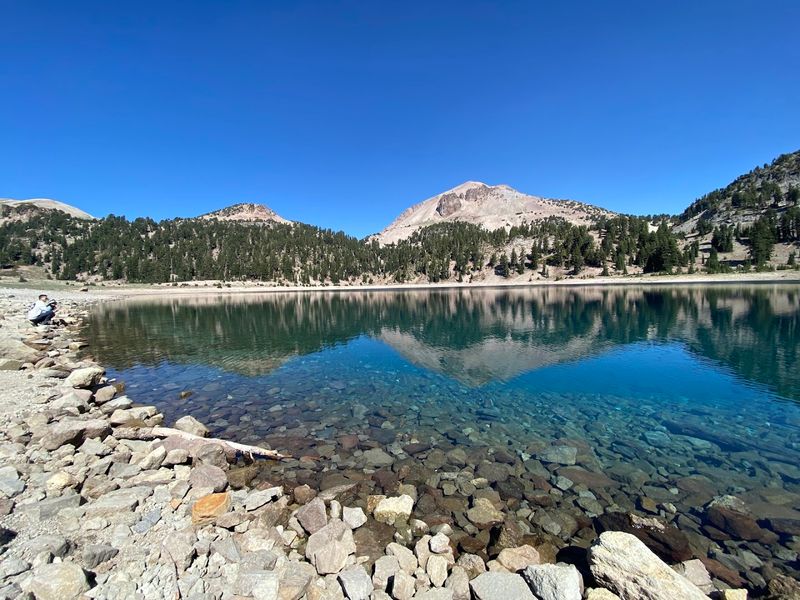
The geology along the Bumpass Hell Trail reads like a textbook on volcanic processes, except the textbook is underfoot and still actively being written.
The area features a mix of volcanic rock types including dacite, andesite, and basalt, each formed under different conditions and at different points in the region’s long eruptive history.
Dacite is particularly common near Lassen Peak itself, which is one of the largest dacite dome volcanoes in the world.
The varied rock types reflect the complex layering of eruptions that built and reshaped this landscape over hundreds of thousands of years.
Color variations in the rock, ranging from dark gray to rust orange to pale yellow, often indicate where hydrothermal activity has altered the original mineral composition through heat and chemical reactions.
Geology enthusiasts tend to find the Bumpass Hell area especially rewarding because the active hydrothermal processes happening right now mirror the same forces that shaped the rock underfoot long ago.
Reading the interpretive signs along the trail and boardwalk adds significant context to what would otherwise look like just a collection of interesting-colored stones.
The National Park Service has placed informative markers throughout the basin that explain specific geological features in plain and accessible language.
7. Plants And Wildlife Along The Way
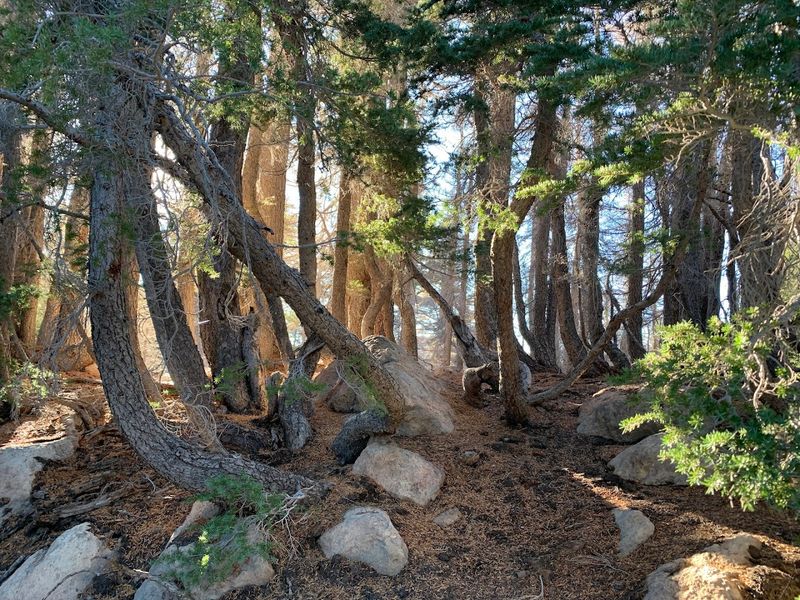
Before the trail drops into the stark volcanic basin, it passes through a genuinely beautiful stretch of subalpine forest and open meadow that rewards hikers who take their time.
Whitebark pine and mountain hemlock line the upper sections of the trail, their gnarled shapes reflecting decades of exposure to wind and heavy snow.
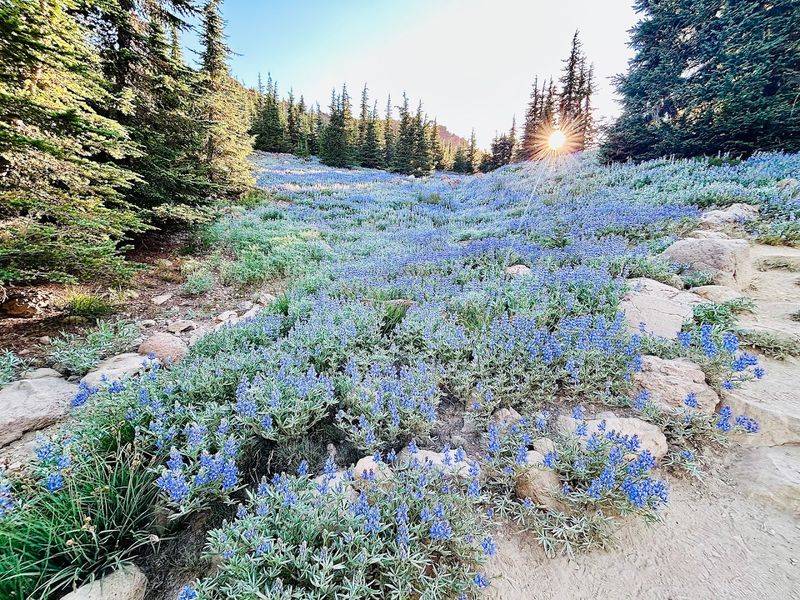
Ground cover species like silverleaf lupine and mountain heather bloom along the trail margins during the summer months, adding splashes of purple and pink against the rocky soil.
The contrast between these delicate wildflowers and the barren hydrothermal basin waiting at the end of the trail is part of what makes the hike feel so dramatically varied from start to finish.
Wildlife sightings are possible along the forested sections of the trail, with golden-mantled ground squirrels and Clark’s nutcrackers being among the more commonly spotted species.
Black bears have been recorded in the park, so carrying bear-safe food storage and being aware of surroundings is always a sensible habit.
Deer occasionally appear in the meadow sections near the trailhead, particularly in early morning hours.
The biodiversity along the trail adds a welcome dimension to what could otherwise feel like a purely geological experience, giving the hike a richer and more layered character overall.
8. Boardwalk Improvements And Visitor Infrastructure
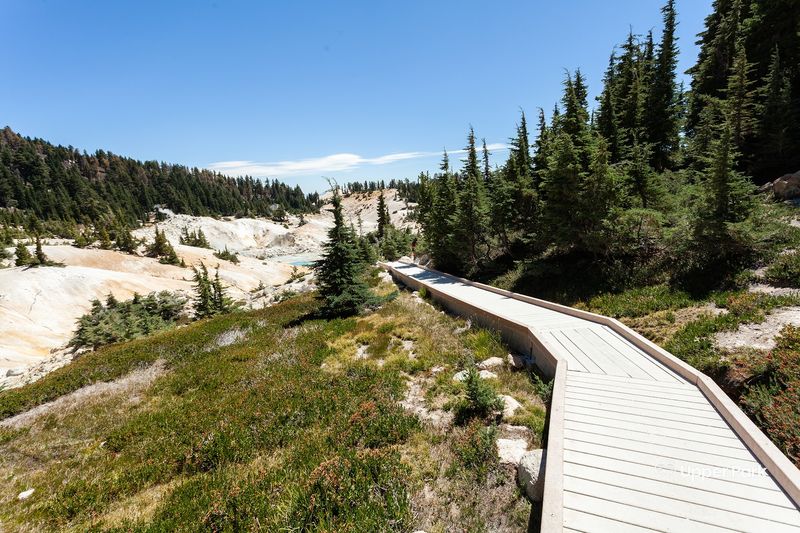
The boardwalk system at Bumpass Hell has undergone significant improvements in recent years as part of an ongoing National Park Service effort to enhance both visitor safety and environmental protection.
Older sections of the walkway were replaced with more durable materials designed to better withstand the corrosive effects of sulfur-rich steam and the weight of heavy visitor traffic over multiple seasons.
The updated boardwalk also features improved railing heights and more clearly marked viewing areas, making it easier for visitors to position themselves safely for photographs without crowding the edges.
The improvements reflect a broader push by the park to maintain access to its most popular geothermal features while minimizing the physical impact that foot traffic can have on the fragile surrounding terrain.
Interpretive signage was also refreshed as part of the project, providing clearer explanations of the hydrothermal features and their connection to the broader volcanic system beneath the park.
Visitors benefit from these updates even if they are unaware of the work that went into them, as the overall experience in the basin feels more organized and informative than it did in earlier decades.
Checking the NPS website before visiting could reveal any temporary closures related to ongoing maintenance or future improvement projects within the basin area.
9. What To Bring And What To Expect At The Trailhead
Restrooms are available at the Bumpass Hell trailhead, which sits along the main park road known as Highway 89 inside Lassen Volcanic National Park.
The trailhead parking area can fill quickly on summer weekends, so arriving before 9 a.m. gives a noticeably better chance of securing a spot without circling the lot.
Once on the trail, there are no facilities until returning to the trailhead, which means packing enough water and snacks for the full round-trip is essential.
At an elevation above 8,000 feet, even moderate exertion can cause dehydration more quickly than expected, and altitude sensitivity is worth keeping in mind for visitors coming from sea level.
Sun protection matters significantly at this elevation, where UV exposure is stronger than at lower altitudes. Sunscreen, a hat, and sunglasses are practical additions to any day pack for this hike.
Layering clothing is also advisable because temperatures near the summit sections of the trail could be noticeably cooler than at the trailhead, and afternoon thunderstorms are possible during summer months in the Sierra Nevada region.
A light rain jacket packed in a bag adds very little weight but provides real value if the weather shifts mid-hike. Planning for variability makes the experience smoother overall.
10. Why It Feels Like Another Planet
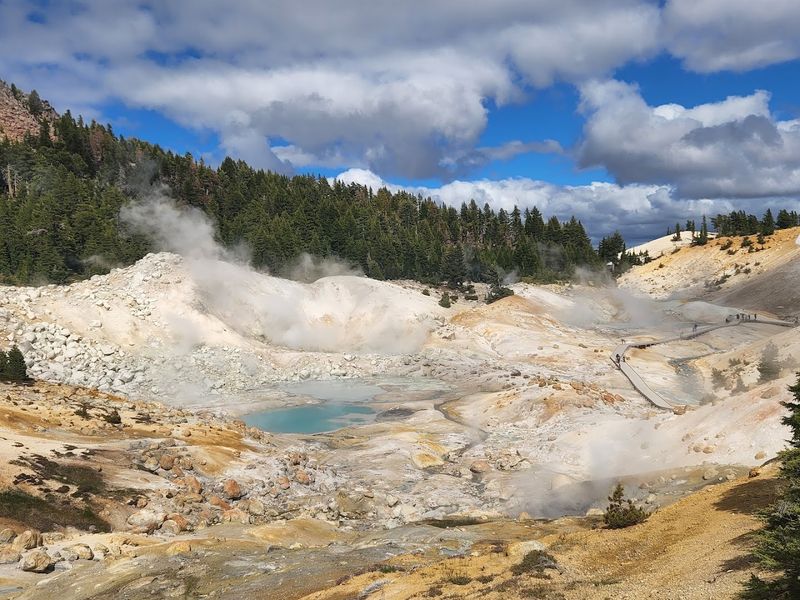
There is a specific kind of surreal quality to the Bumpass Hell basin in the weeks just after the trail opens for the season.
Residual snowfields cling to the slopes surrounding the basin while the ground below hisses and steams with geothermal energy that never takes a season off, creating a visual combination that feels genuinely disorienting in the best possible way.
The cooler air temperatures of early season amplify the steam plumes, making the fumaroles appear far more dramatic than they do during the warmer and drier weeks of late summer.
Colors in the basin also tend to appear more vivid during this period, with the mineral deposits around the vents standing out sharply against patches of white snow and pale volcanic rock.
Visitor numbers are typically lower in the weeks immediately after the trail opens compared to the peak of summer, which means the basin can feel quieter and more spacious during early season visits.
The sounds of the hydrothermal features, including the low gurgling of mud pots and the sharp hissing of steam vents, carry more clearly when the area is less crowded.
For anyone drawn to landscapes that feel genuinely alien and alive at the same time, catching the Bumpass Hell Trail in California during early season offers an experience that is difficult to replicate anywhere else.