This California Bay Cruise Is The Most Inspiring Way To Celebrate International Women’s Day
Some celebrations feel routine. This one feels unforgettable.
International Women’s Day deserves more than a dinner reservation or a social media post. It deserves open water, fresh air, and a perspective wide enough to match the stories being told. A sail across San Francisco Bay delivers exactly that.
The Schooner Freda B in Sausalito hosts an annual March 8 voyage that blends movement, memory, and meaning. The experience goes far beyond sightseeing.
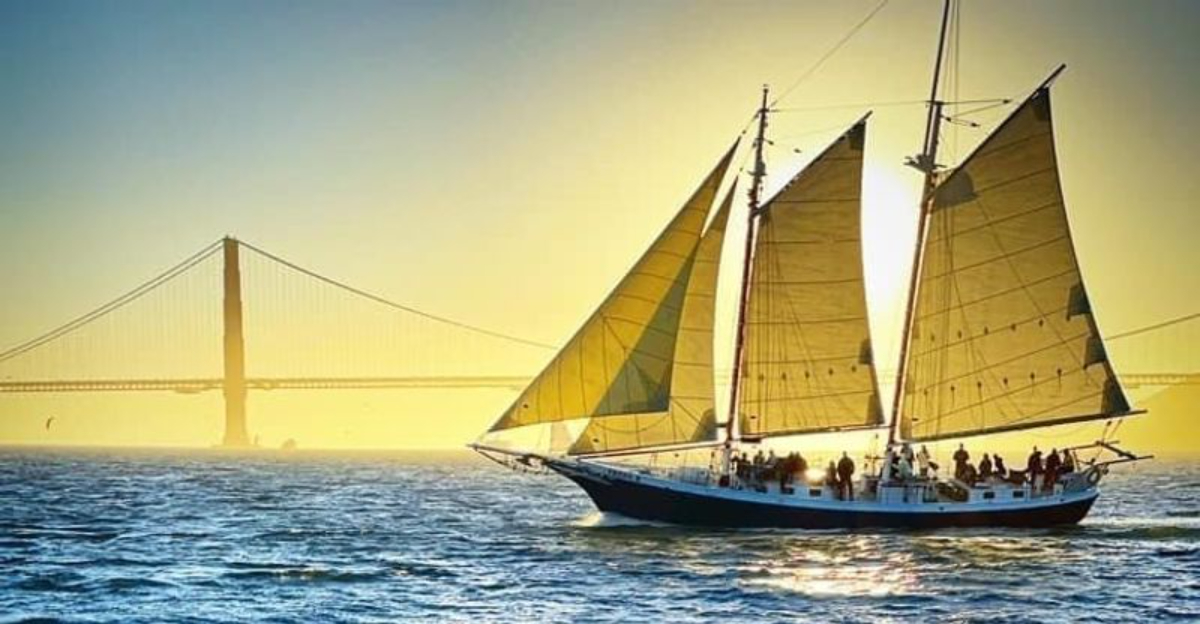
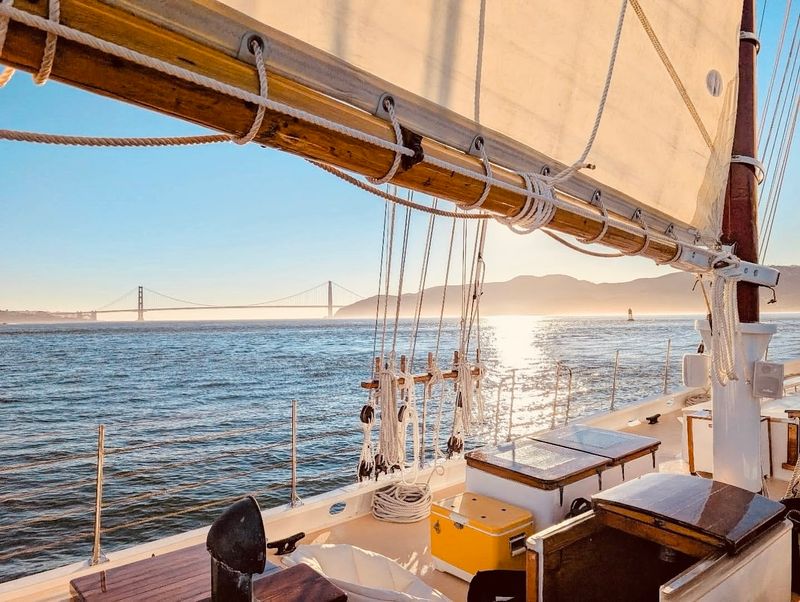
Wind fills the sails. The skyline stretches in every direction. The Golden Gate Bridge rises ahead in bold red contrast against the sky. Stories of remarkable California women unfold as the boat cuts through the water.
The setting changes everything. History feels more immediate when you are floating through it. Reflection comes naturally when the horizon stays open and the city slowly drifts behind you.
Passengers board at Sausalito Yacht Harbor and step into two hours that feel both celebratory and thoughtful. Some arrive with friends. Others come alone and leave connected to something larger than themselves.
International Women’s Day on the water feels expansive. It feels intentional. It feels like a celebration that actually matches the weight of the day.
1. The Schooner Freda B: A Vessel With Character
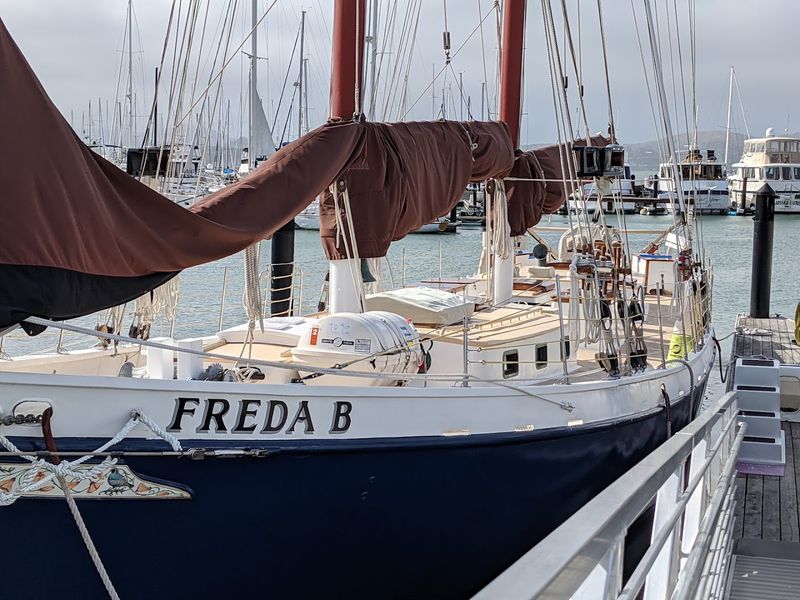
Not every boat on San Francisco Bay carries the kind of presence that the Schooner Freda B does.
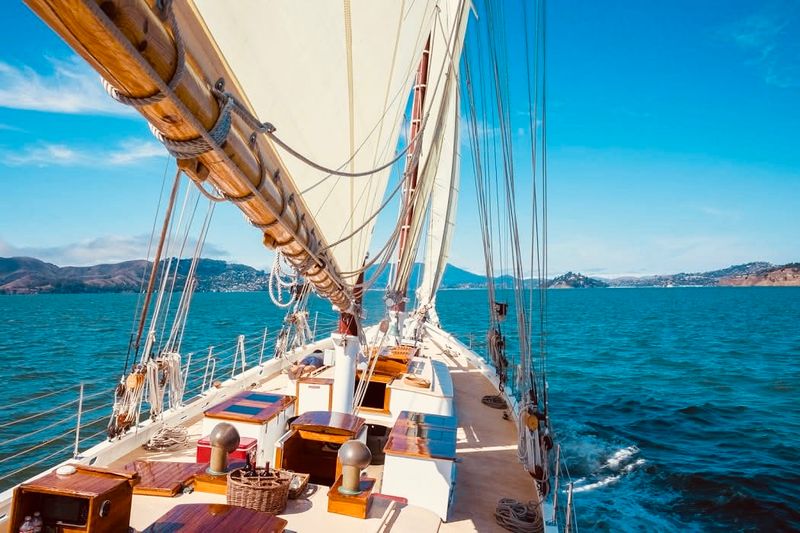
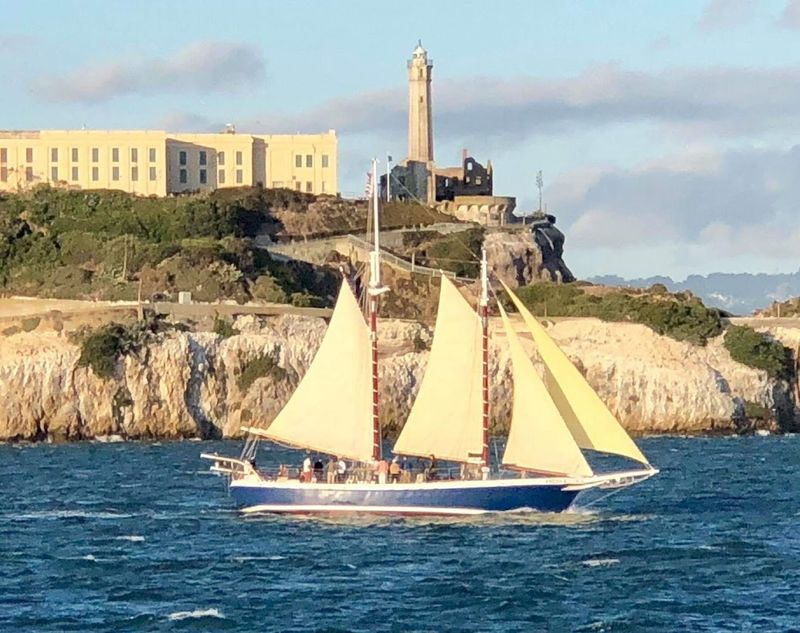
Built as an 80-foot gaff-rigged coastal schooner, she combines old-world craftsmanship with the kind of seaworthiness that earns respect on open water.
Her masts and traditional rigging give the deck a texture and warmth that modern fiberglass boats rarely match.
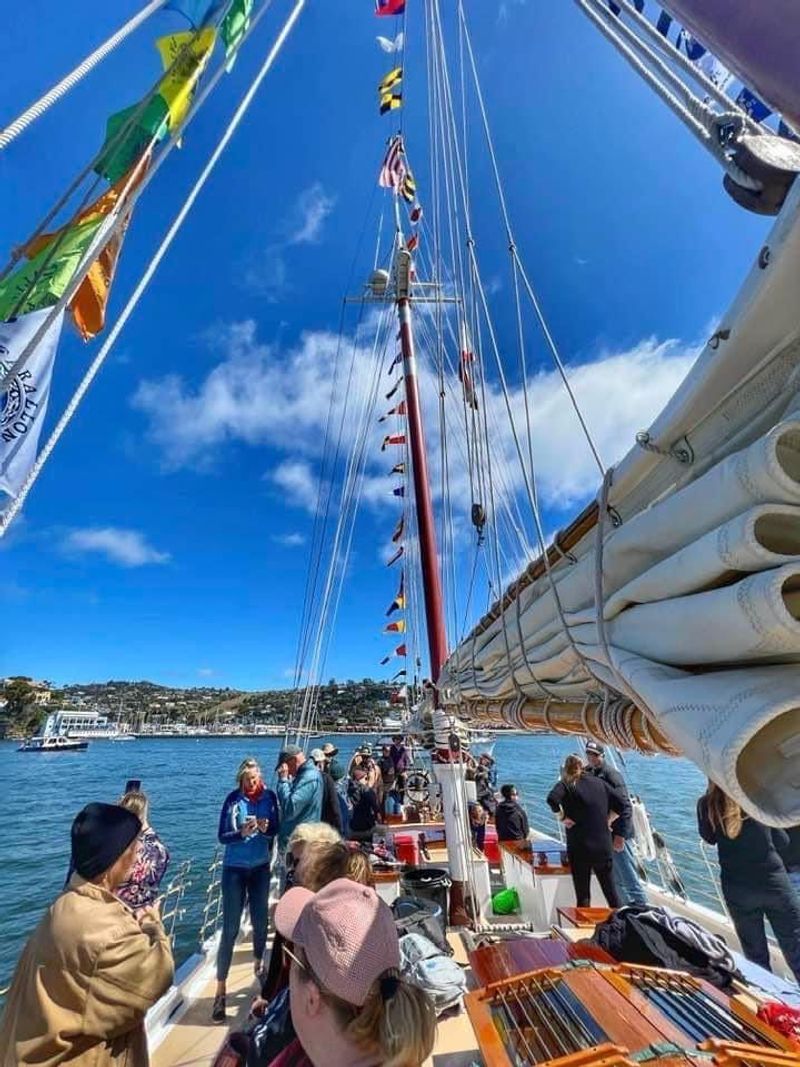
Passengers stepping aboard at Yacht Harbor, Slip 465, Sausalito, CA 94965 for the first time often pause to take in the scale of the vessel before finding a spot along the rail.
The deck offers generous space for moving around, so the experience never feels cramped or rushed.
A licensed captain and professional crew manage all navigation and sail handling, which means guests can focus entirely on the scenery and the stories being shared.
The schooner is docked at Sausalito Yacht Harbor, Slip 465, Sausalito, CA 94965, making her easy to find with basic directions.
For the International Women’s Day sail, boarding opens at 1:15 PM and departure follows at 1:30 PM sharp.
Arriving a few minutes early gives passengers a chance to settle in and get comfortable before the lines are cast off and the Bay opens up ahead.
2. International Women’s Day Sail: What The Event Actually Is
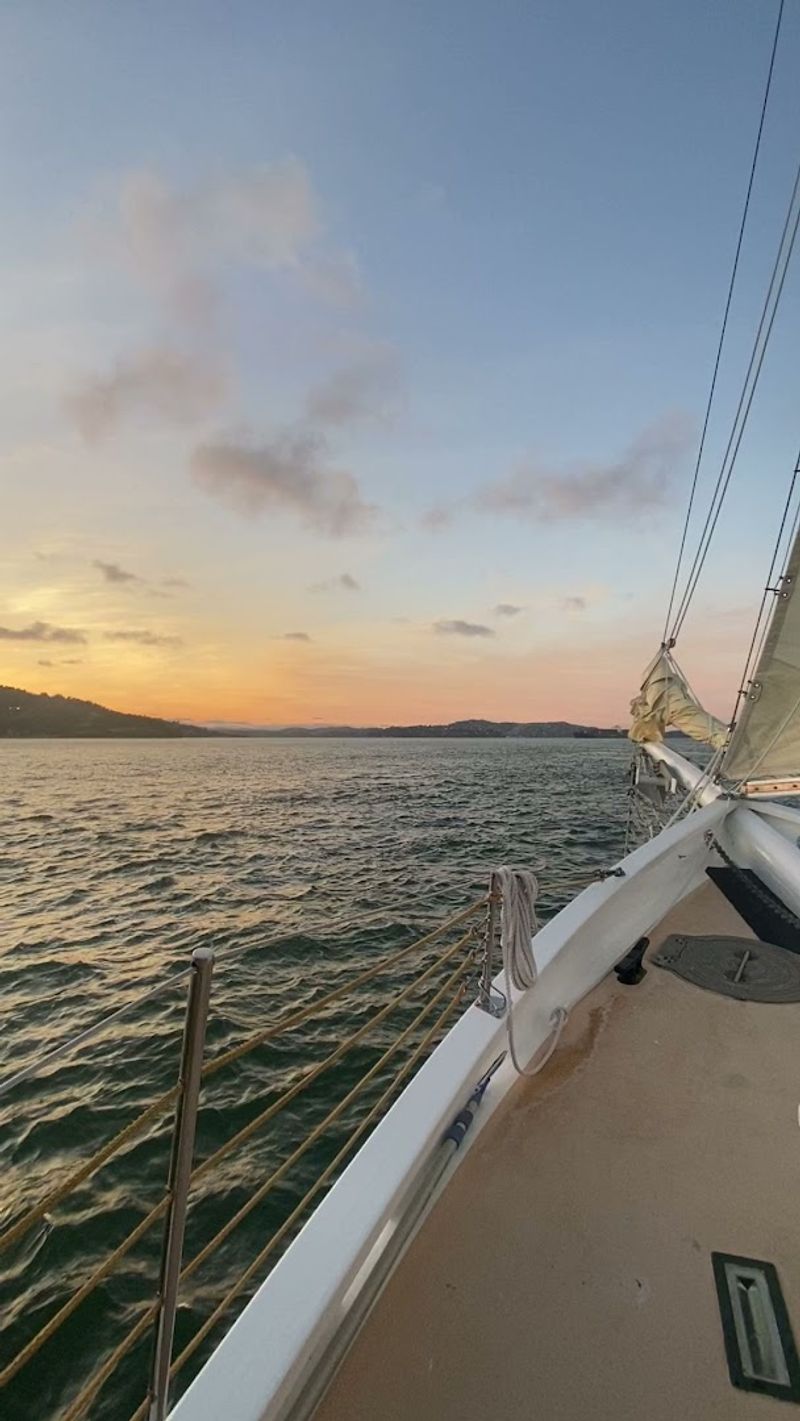
Every year on March 8th, the Schooner Freda B hosts a dedicated sail to mark International Women’s Day, and the event has built a quiet reputation as one of the most thoughtful ways to spend the occasion in the Bay Area.
The sail runs from 1:30 PM to 3:30 PM, covering roughly two hours of open water time.
That window is long enough to feel immersive but short enough to fit comfortably into a full day of celebration. The format is conversational and relaxed rather than lecture-style.
Passengers hear stories about notable women who left lasting marks on California history, woven naturally into the experience as the boat moves through the Bay.
The combination of movement, fresh air, and storytelling creates an atmosphere that feels genuinely different from a seated event in a conference room or restaurant.
Tickets are priced at $107.48 per person and are available through Eventbrite. The 2026 sail is scheduled for Sunday, March 8, 2026, and spaces are limited by the vessel’s capacity.
Purchasing tickets in advance is strongly recommended since the event tends to fill up as the date approaches. Checking the Eventbrite listing directly gives the most current availability and booking details.
3. Sally Stanford: The Mayor Who Rewrote Her Own Story
Sally Stanford’s life reads like something a novelist might dream up and then decide was too dramatic to publish.
Born Mabel Janice Busby in 1903, she eventually became one of San Francisco’s most colorful figures, running a well-known establishment on Russian Hill before reinventing herself entirely.
She moved to Sausalito, opened a restaurant called Valhalla, and eventually became the city’s mayor in 1976 after several unsuccessful attempts at the ballot box.
Her persistence alone makes her a compelling subject for an International Women’s Day tribute.
Stanford never fit neatly into any category that society tried to assign her, and she seemed to take a certain satisfaction in that fact. She was outspoken, practical, and fiercely loyal to Sausalito as a community.
Hearing her story while sailing past the waterfront she once called home adds a layer of context that a history book can’t quite replicate.
The Bay itself becomes a kind of backdrop for understanding what it meant to be a woman navigating power and public life in mid-20th century California.
Stanford’s arc from outsider to elected official remains one of the more quietly remarkable political stories the state has produced.
4. Janis Joplin: A Voice That Belonged To The Bay
Janis Joplin arrived in San Francisco in the mid-1960s and immediately found a city that matched her energy.
She became the lead vocalist for Big Brother and the Holding Company, a band that helped define the sound of the Haight-Ashbury era.
Her voice carried a rawness that audiences hadn’t quite heard from a woman on a rock stage before, and that quality made her impossible to ignore.
Joplin spent significant time in Marin County and the surrounding Bay Area, places that shaped her creative output during some of her most productive years.
The connection between her music and the California landscape she moved through is something the International Women’s Day sail draws attention to in a way that feels earned rather than forced.
She passed away in 1970 at just 27 years old, but the cultural weight of what she accomplished in a short time continues to resonate.
Hearing her story while the Bay stretches out on all sides gives the tribute a sense of scale that matches her legacy.
For passengers who grew up with her music or are discovering it for the first time, the moment carries genuine emotional texture.
5. Lotta Crabtree: Gold Rush Girl Who Became A Star
Lotta Crabtree was six years old when she first performed for Gold Rush miners in the California hills, and the crowds adored her immediately.
She danced, played the banjo, and sang with an energy that felt natural rather than rehearsed, and miners reportedly showered the stage with gold nuggets and coins after her performances.
That early enthusiasm launched a career that made her one of the most famous entertainers in 19th-century America.
By the time she retired, Crabtree had accumulated a fortune and become a household name across the country.
She never married and managed her own finances with a sharpness that was uncommon for women of her era.
A cast-iron fountain she donated to San Francisco still stands at the corner of Kearny and Geary Streets as a tangible reminder of her connection to the city.
Her story sits comfortably alongside the other women featured on the International Women’s Day sail because it illustrates how talent combined with business sense could open doors that society otherwise kept closed.
Crabtree navigated a world that rarely gave women full credit for their own success, and she built something lasting anyway. That kind of resilience translates clearly across generations.
6. Julia Morgan: The Architect Who Built On Her Own Terms
Julia Morgan became the first woman to earn an architecture degree from the Ecole des Beaux-Arts in Paris in 1902, and she returned to California determined to build a career that matched her training.
She established her practice in San Francisco and went on to design more than 700 buildings across the state over the course of her career.
Hearst Castle in San Simeon is probably the most famous structure associated with her name, but her work extended far beyond that single landmark.
Morgan designed buildings for the YWCA, private residences, churches, and educational institutions, often prioritizing function and craftsmanship in equal measure.
She was known for being meticulous about construction details and for maintaining respectful relationships with the craftspeople who brought her drawings to life.
Her approach to the profession was methodical rather than flashy, which suited the longevity of her output.
Hearing her story on the water adds a dimension that a museum exhibit might not capture as naturally.
The Bay Area skyline visible from the schooner’s deck includes structures that reflect the architectural tradition she helped shape.
Morgan’s legacy is embedded in the physical fabric of California in a way that rewards attention and curiosity from anyone willing to look closely.
7. Alma De Bretteville: The Woman Who Built A Museum
Alma de Bretteville Spreckels was a larger-than-life figure in San Francisco society during the early 20th century, known for her bold personality and her genuine passion for bringing European art to California.
Standing nearly six feet tall and speaking her mind with consistent directness, she was difficult to overlook in any room.
Her marriage to sugar magnate Adolph Spreckels gave her the financial resources to pursue cultural projects on a significant scale.
Her most enduring contribution is the California Palace of the Legion of Honor in San Francisco, a museum she founded and funded as a tribute to French soldiers who died in World War One.
The building itself is modeled after the Palais de la Legion d’Honneur in Paris, and it continues to operate as one of the city’s major art institutions today.
Passengers on the International Women’s Day sail can actually see the area near the museum from the water, which gives the tribute a satisfying visual anchor.
De Bretteville navigated the social expectations of her era with a mix of charm and stubbornness that allowed her to accomplish things most women of her time couldn’t approach.
Her story tends to surprise people who encounter it for the first time, which makes it a natural fit for an event designed to spark reflection.
8. The Golden Gate Bridge And Bay Landmarks Seen From tThe Water
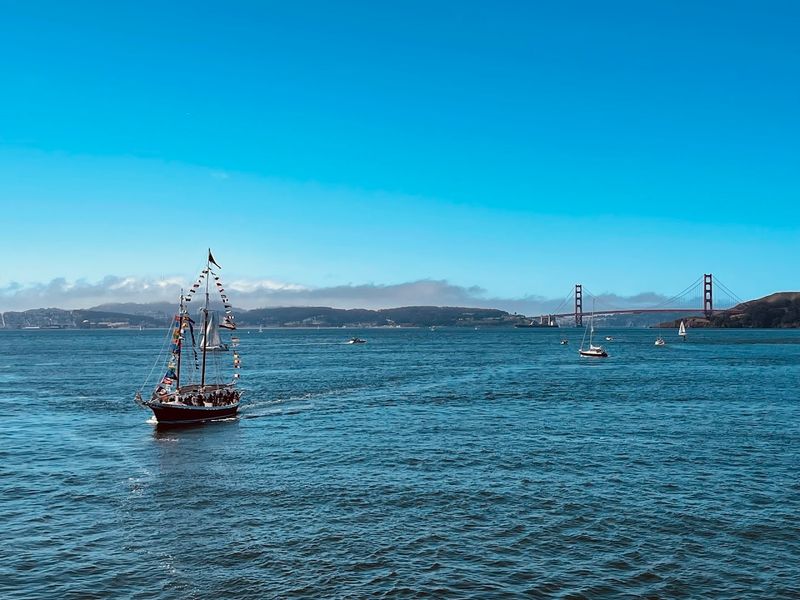
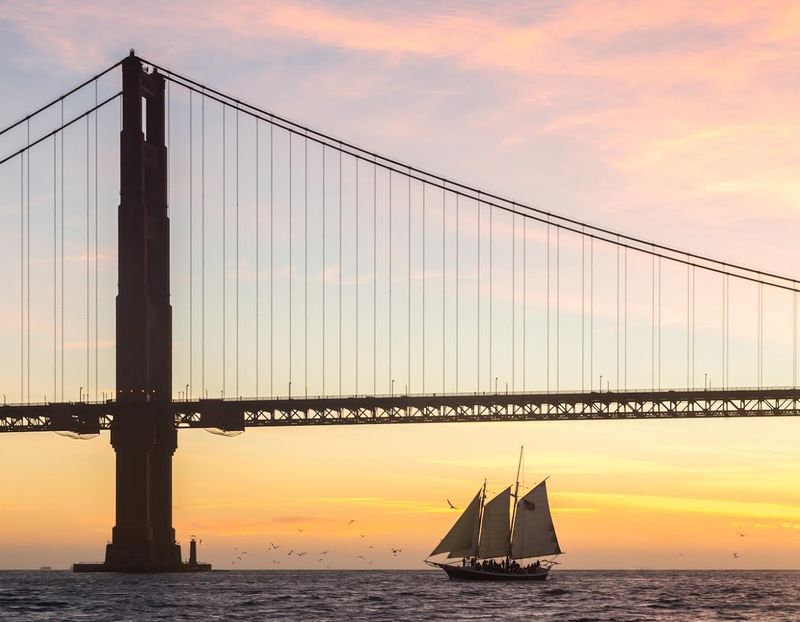
Seeing the Golden Gate Bridge from a moving boat produces a different kind of feeling than viewing it from a car window or a hilltop overlook.
The scale of the structure becomes more apparent when the water is right beneath the hull and the towers rise overhead without any surrounding buildings to dilute the effect.
The orange-red color of the bridge against a blue or foggy sky shifts depending on the time of day and the season.
The International Women’s Day sail routes passengers past several of the Bay’s most recognizable landmarks in a single outing.
Alcatraz sits in the middle of the Bay with a quiet intensity that photographs rarely convey accurately.
Angel Island, the Marin Headlands, the Palace of Fine Arts, Fort Mason, Fisherman’s Wharf, Coit Tower, and the Bay Bridge all become visible at various points during the two-hour sail.
Experiencing these landmarks from the water while hearing stories about the women who shaped the region creates an unexpected layering effect. The physical geography and the human history start to feel connected rather than separate.
Passengers who have lived in the Bay Area for years often report noticing familiar landmarks differently after hearing them discussed in this context. The perspective shift is subtle but real.
9. Sausalito Yacht Harbor: Getting There And Parking Tips
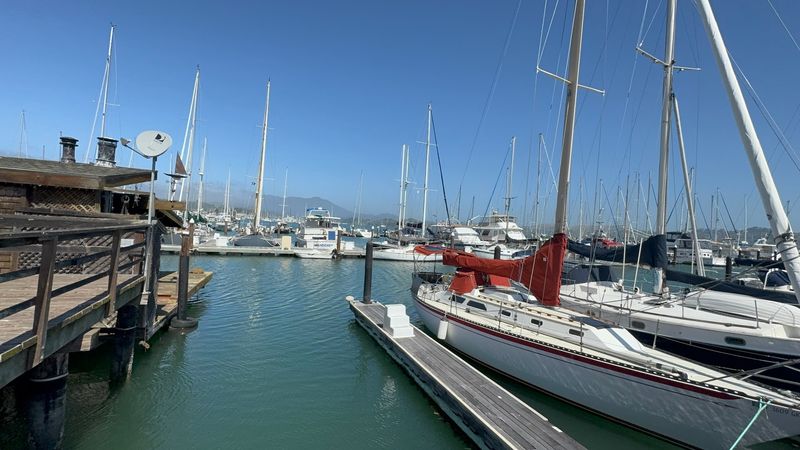
Sausalito Yacht Harbor sits just across the Golden Gate Bridge from San Francisco, making it reachable from most Bay Area locations within 30 to 45 minutes depending on traffic.
The harbor itself has a relaxed atmosphere that feels distinct from the busier piers on the San Francisco side of the Bay.
Arriving early allows time to walk the waterfront briefly before boarding begins at 1:15 PM. The schooner departs from Slip 465 at the harbor, located at Sausalito Yacht Harbor, Sausalito, CA 94965.
Parking is available in municipal lots surrounding the harbor, and Parking Lot 3 is noted as typically offering the most available spaces on event days.
Street parking in Sausalito can be limited on weekends, so planning to use a municipal lot from the start saves time and reduces stress before the sail.
Arriving by ferry from San Francisco is also an option worth considering, as the Sausalito Ferry Terminal is within walking distance of the harbor.
The ferry ride itself offers a preview of the Bay views passengers will encounter during the sail.
For those driving, giving an extra 15 to 20 minutes of buffer time on the day of the event is a reasonable precaution given how popular the waterfront area can get on Sundays in early March.
10. What To Wear And Bring For A Bay Sail In March
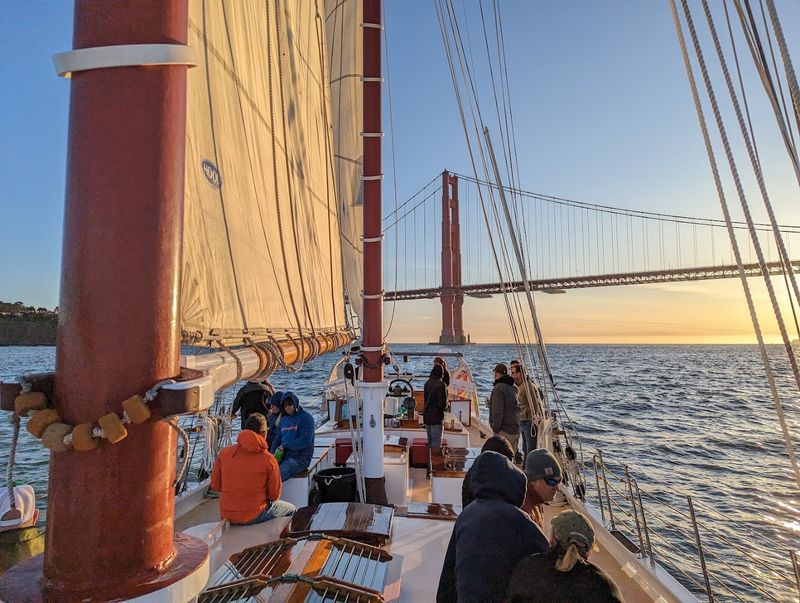
March weather on San Francisco Bay tends to be unpredictable in the most Bay Area way possible.
A morning that starts with sunshine can shift toward wind and chill by early afternoon, which is exactly when the sail departs.
Layering is the most practical approach, starting with a base layer and adding a wind-resistant outer shell that can be removed if the temperature climbs.
Closed-toe shoes with some grip are a smart choice for walking on a boat deck, especially if the surface is slightly damp from sea spray.
Sandals and smooth-soled shoes can become slippery in those conditions, so the practical footwear choice also happens to be the more comfortable one.
A light hat that won’t blow off easily in the wind adds another layer of comfort without taking up much space in a bag.
Sunscreen is worth applying even on overcast days since UV exposure on open water tends to be higher than on land.
Bringing a small bag filled with essentials makes the two-hour sail more comfortable for passengers who prefer not to arrive hungry.
The schooner’s deck offers enough space to move around and find a spot that suits each passenger’s preferred balance of sun and shade throughout the outing.
11. Why A Bay Sail Makes International Women’s Day Feel Different
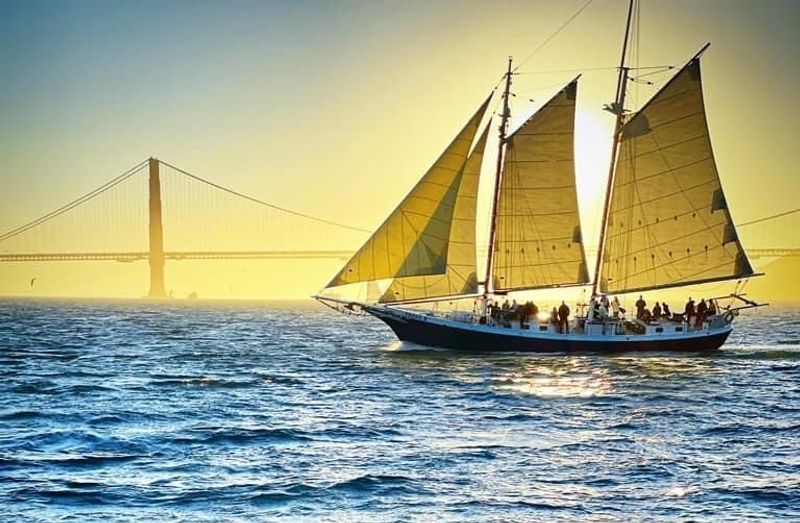
Most International Women’s Day events take place in fixed settings like auditoriums, restaurants, or community centers, which work well but tend to follow a familiar rhythm.
A sail across San Francisco Bay introduces a different kind of energy simply because the environment itself is always moving.
The changing views, the sound of wind in the rigging, and the feel of the deck underfoot create a sensory backdrop that keeps the experience grounded and present.
The stories shared during the sail connect passengers to women who navigated California’s history at moments when the stakes were high and the paths forward were rarely obvious.
Hearing those stories in a setting that feels genuinely alive rather than staged tends to make the content land with more weight.
The two hours pass at a pace that feels natural rather than rushed.
For anyone looking to mark the occasion in a way that goes beyond a social media post or a themed dinner, the Freda B sail offers something harder to replicate.
The combination of movement, history, community, and open water produces a kind of shared experience that passengers tend to carry with them.
Tickets at $107.48 per person reflect the specialized nature of the event and the professional crew and vessel involved. Booking early through Eventbrite remains the most reliable way to secure a spot.