This 1-Mile Hike In California Is So Surreal, You’ll Think You’re In Another World
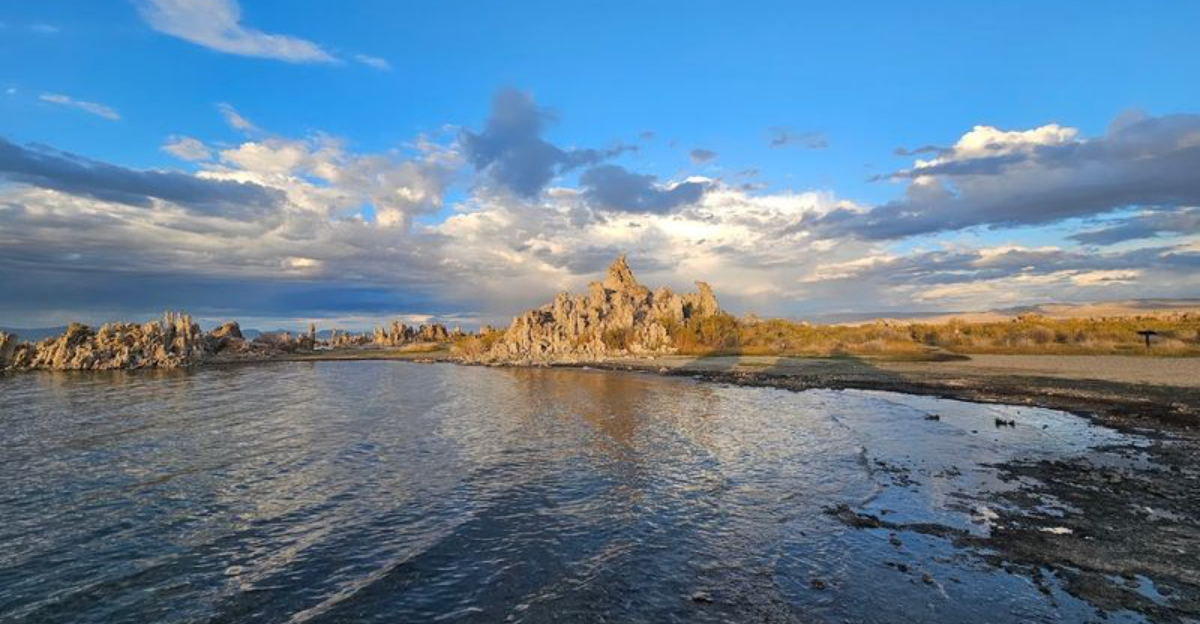
The landscape stops people in their tracks almost immediately. Pale stone towers rise from still water. The air feels quiet and ancient. Nothing about the view looks like the California most visitors expect.
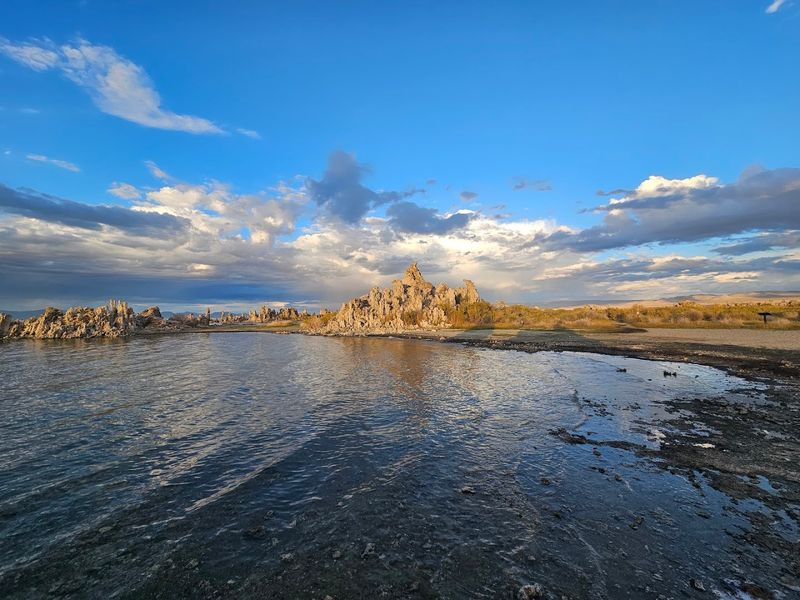
A short walk reveals a scene that feels almost unreal. Strange limestone formations stretch upward like sculptures shaped by time, while the lake reflects wide desert skies and distant mountains.
Every turn of the trail brings another view that feels both peaceful and otherworldly.
This unusual setting sits along the edge of Mono Lake, where the South Tufa Interpretive Trail offers an easy one-mile loop through one of the most surreal natural landscapes in California.
The path is flat, accessible, and short enough for almost anyone to enjoy, yet the scenery feels vast and unforgettable. Visitors often leave feeling like they just stepped out of a completely different world.
Unique Geological Formations
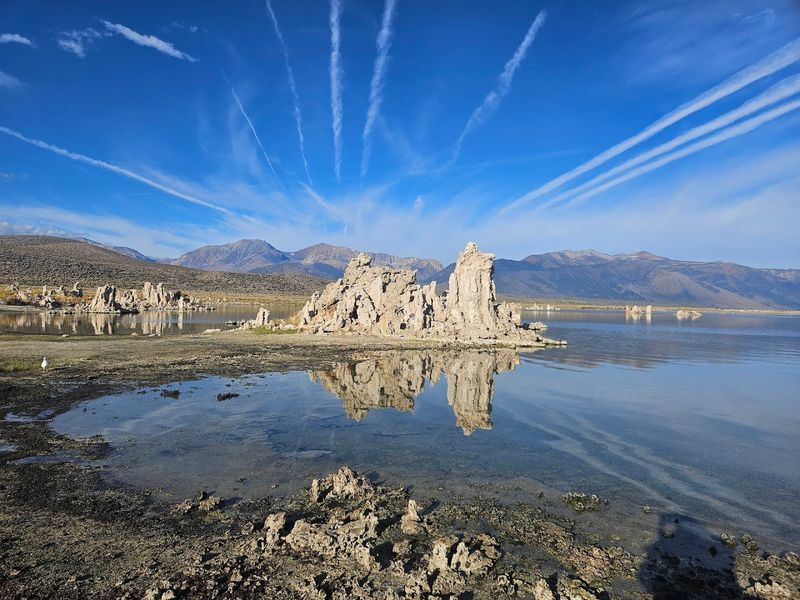
Standing at the edge of Mono Lake and looking out at the tufa towers for the first time is genuinely jaw-dropping.
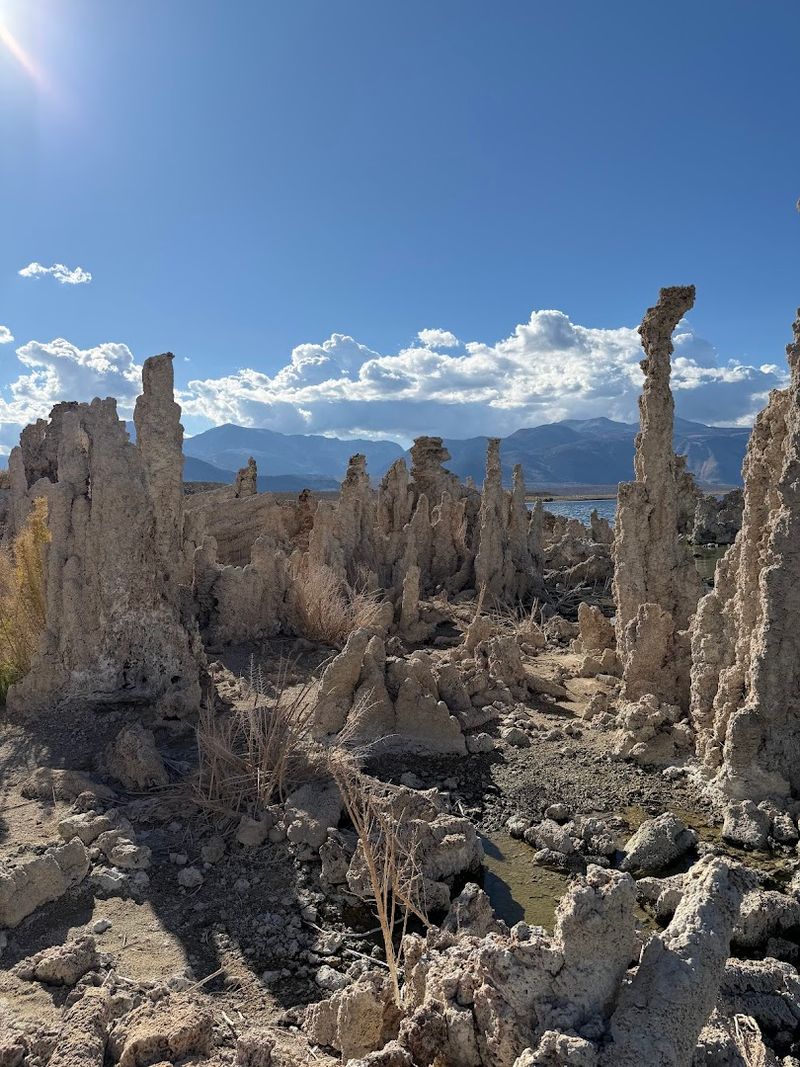
These pale, knobby limestone structures rise as high as 30 feet and look like something sculpted by an alien hand.
They form when underground freshwater springs push up through the lake bed and meet the highly alkaline, calcium-rich lake water, triggering a chemical reaction that slowly builds calcium carbonate over thousands of years.
What makes them especially striking is that most of the towers were hidden underwater for centuries and only became visible after water diversions lowered the lake level significantly starting in the 1940s.
The South Tufa area has one of the highest concentrations of these formations anywhere along the shoreline. Walking among them feels genuinely surreal, like moving through a frozen forest made of stone.
Visitors can get close enough to study the rough, porous texture of the tufa without touching or climbing on it.
The formations are fragile despite their size, and even a small amount of pressure can cause irreversible damage.
Arriving in the early morning, when soft light hits the towers and reflects off the still lake surface, tends to make the whole scene feel even more otherworldly.
Trail AccessibilitY
Not every trail in California is built with accessibility in mind, but the South Tufa Interpretive Trail makes a genuine effort to welcome a wide range of visitors.
The first quarter mile of the trail features a hard-packed native soil surface that is firm enough for wheelchairs and mobility aids under most conditions.
Beyond that point, the path becomes softer and more uneven, though some individuals with limited mobility may still find it manageable depending on conditions.
The trail is essentially flat throughout its one-mile loop, with minimal elevation change that would typically be described as negligible.
That makes it comfortable for young children, older adults, and anyone who prefers a relaxed pace without the strain of climbing.
Hikers do not need special gear, and most people complete the loop in under an hour at a leisurely pace.
Footwear with a closed toe and light grip is recommended because the sandy lakeshore sections can shift slightly underfoot.
The trail is well-marked and easy to follow without a map, though picking up a printed guide at the trailhead can add helpful context.
Visiting on a weekday tends to mean fewer crowds, which also makes the trail feel more spacious and easier to navigate comfortably.
Interpretive Signage
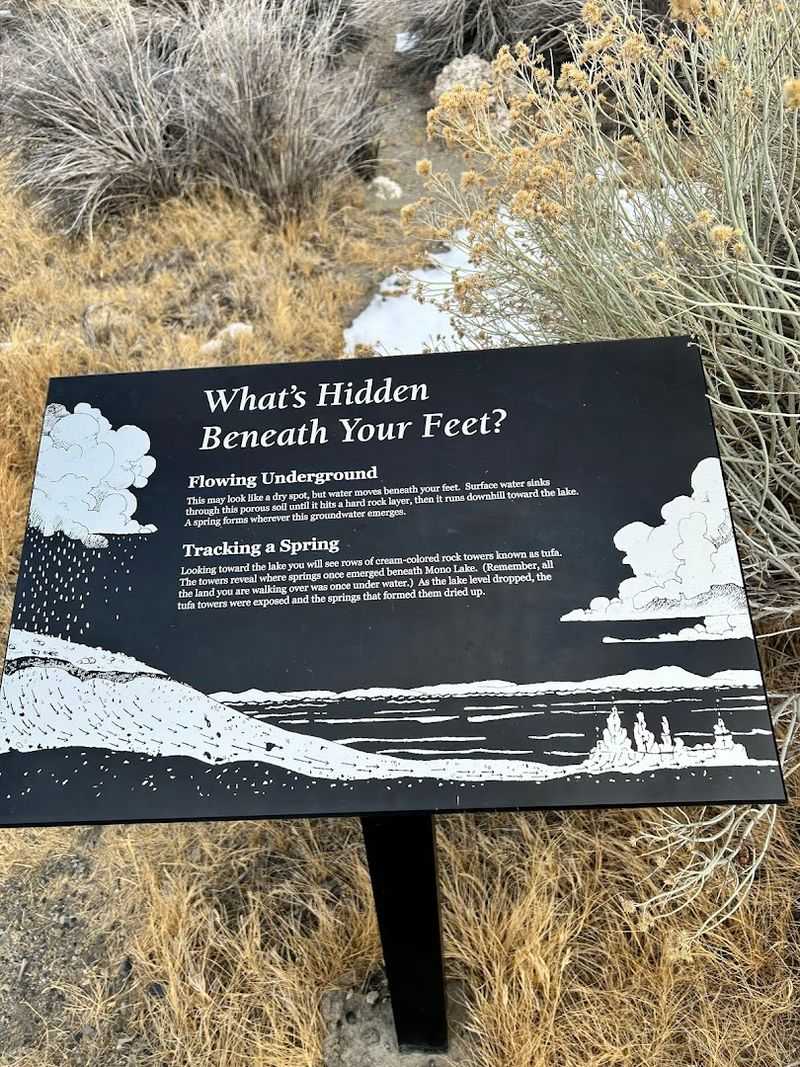
One of the quieter highlights of the South Tufa Interpretive Trail is how much information gets packed into a single walk without it ever feeling like a lecture.
Interpretive signs are placed at key points along the loop, offering clear, readable explanations of the geology, ecology, and human history connected to Mono Lake and its surrounding basin.
The signs are designed to be engaging rather than dense, making them genuinely enjoyable to stop and read.
Topics covered include how tufa towers form, why the lake is so salty and alkaline, what role the lake plays in the Pacific Flyway bird migration route, and how water diversions in the twentieth century dramatically changed the landscape.
Some signs also touch on the legal battles fought to protect Mono Lake, which resulted in significant conservation victories in the 1990s.
For families with kids, the signs make the walk feel interactive rather than passive, turning each stop into a short discovery moment.
Adults tend to find the ecological context surprisingly rich, especially if they had no prior knowledge of the area.
Reading every sign along the route adds only a few extra minutes to the overall hike but significantly deepens the experience of being there.
Wildlife Viewing
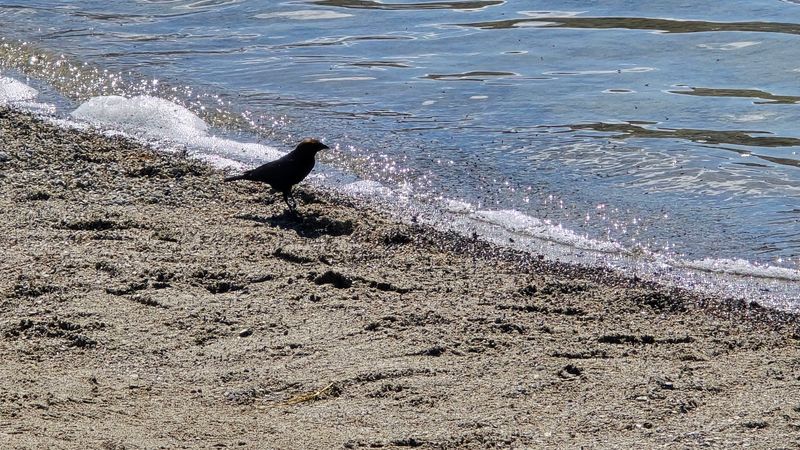
Mono Lake might look too harsh to support much life at first glance, but it is actually one of the most productive ecosystems in California.
The lake teems with brine shrimp and alkali flies, two species that thrive in its salty, alkaline water and form the base of a food chain that draws enormous numbers of migratory birds every year.
During peak migration periods, the sheer volume of birds around the lake can be genuinely staggering.
California gulls nest on islands in the lake by the tens of thousands, making Mono Lake one of the largest nesting colonies for the species in the western United States.
Eared Grebes and several species of Phalaropes stop here during migration to feed heavily on brine shrimp before continuing their long journeys.
The sight of thousands of birds feeding and resting on the lake surface is something most visitors do not expect and rarely forget.
Binoculars are worth bringing along, especially during late summer and fall when bird activity peaks.
The shoreline near the South Tufa area tends to bring birds close enough to observe without needing long-range lenses.
Watching the alkali flies move in dense clouds just above the waterline while birds dart through them adds a layer of wild, living energy to the already dramatic landscape.
Photography Opportunities
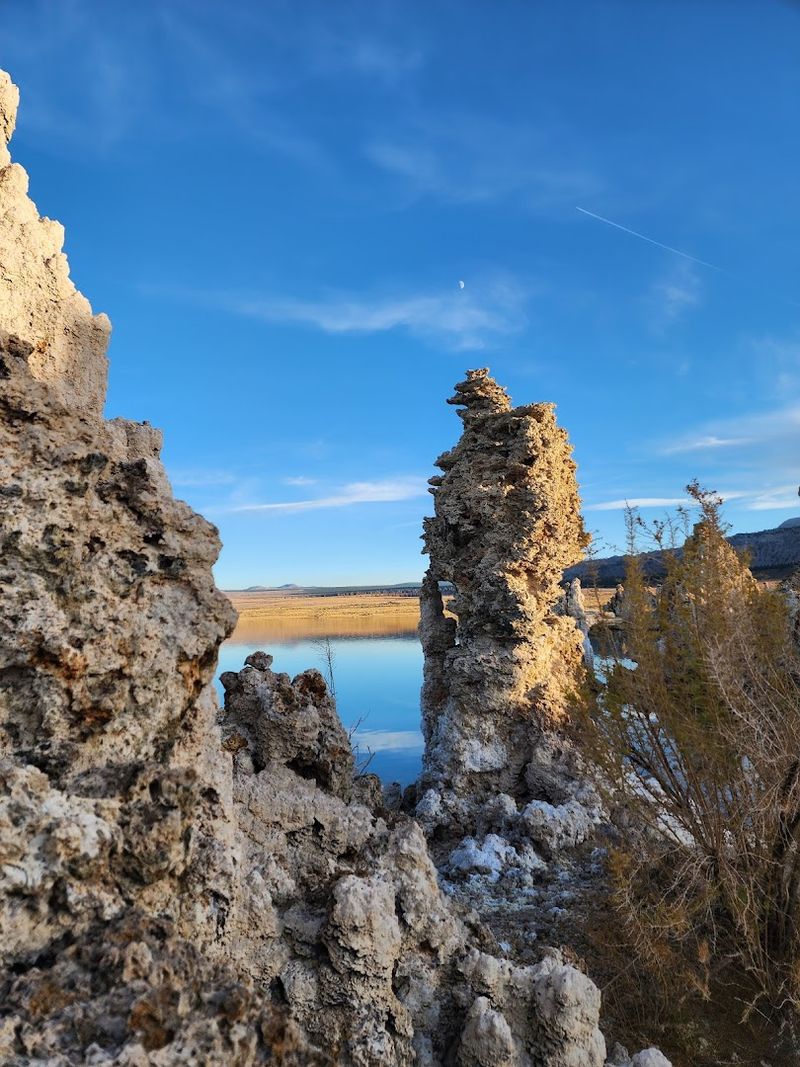
Photographers have been drawn to Mono Lake for decades, and the South Tufa area consistently ranks among the most photogenic locations in the entire state of California.
The combination of angular tufa towers, glassy alkaline water, and wide-open sky creates a composition that almost frames itself.
At sunrise, warm golden light hits the towers from a low angle and casts long shadows across the lake surface, producing the kind of contrast that makes images look almost unreal.
Sunset brings a different quality of light, with deep oranges and purples reflecting off the water in a way that amplifies the alien atmosphere of the place.
On calm mornings, the lake surface can act like a mirror, doubling the visual impact of the tufa formations and the sky above them.
Even cloudy days can produce dramatic, moody images that feel completely different from the bright, high-contrast shots taken in full sun.
Wide-angle lenses work especially well here because the landscape rewards breadth rather than compression.
Getting low to the ground near the waterline can also produce striking perspectives that emphasize the scale of the towers.
Visiting during the off-season, particularly in late fall or early spring, tends to mean fewer people in the frame and more space to set up shots without rushing.
Visitor Amenities
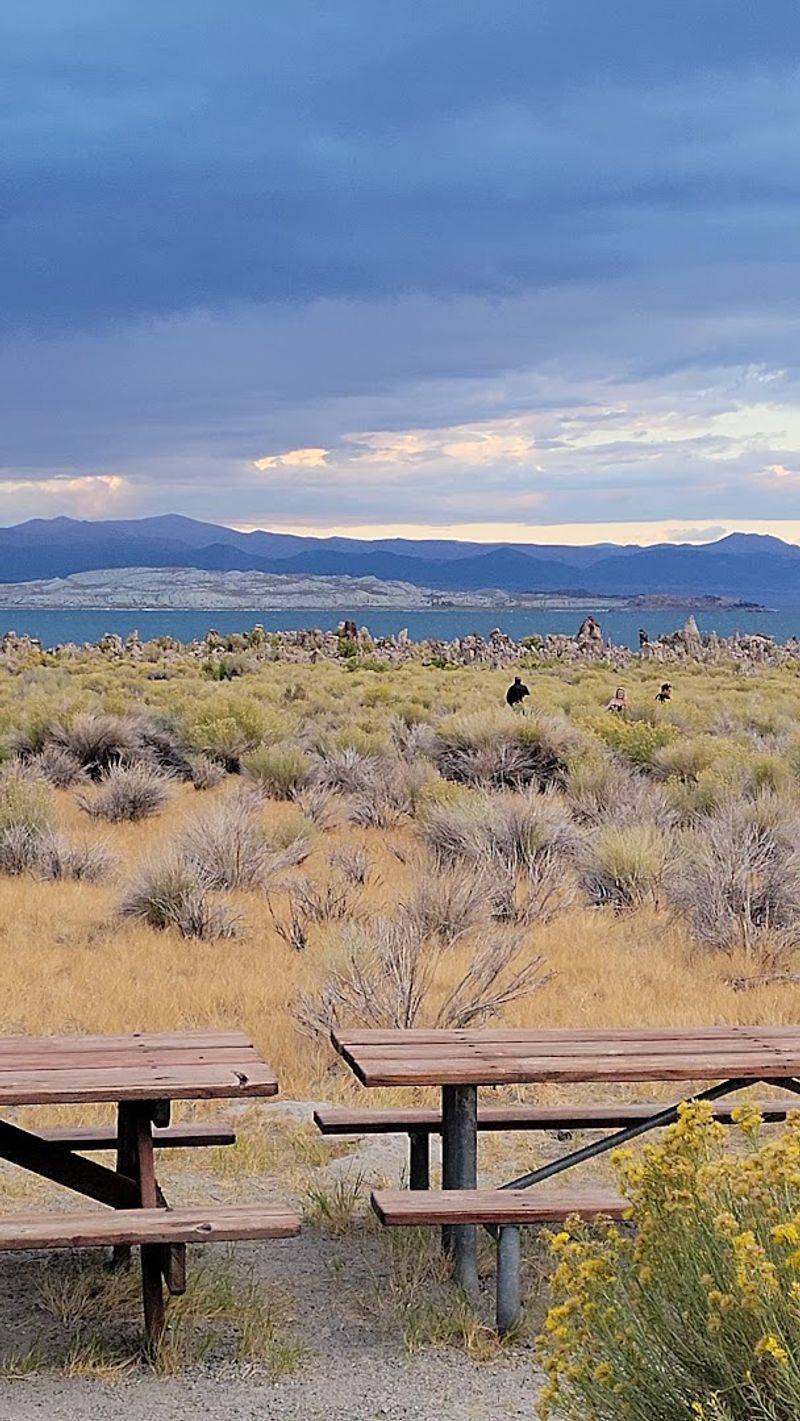
Practical comfort matters when planning a day trip, and the South Tufa area does a reasonable job of covering the basics.
The site includes a designated parking lot with accessible spaces, vault restrooms near the trailhead, and picnic tables where visitors can stop and eat before or after the hike.
For a remote high desert location, the level of infrastructure feels genuinely thoughtful rather than minimal.
The parking area can fill up quickly during summer weekends and holiday periods, so arriving early in the morning is generally the smartest approach.
Weekday visits tend to offer more available spaces and a noticeably quieter atmosphere overall.
The restrooms are maintained but are vault-style facilities rather than flush toilets, which is standard for this type of remote natural area.
Bringing food and water from outside the area is strongly recommended because there are no vendors, cafes, or convenience stores nearby.
The nearest full services are in the town of Lee Vining, which sits just 11 miles to the north along U.S.
Highway 395.
Having snacks, plenty of water, and sun protection already packed before arriving makes the visit significantly more comfortable, especially during the warmer months when temperatures at the lake can rise considerably by midday.
Entrance Fee
Accessing the South Tufa area requires a small entrance fee, which helps fund the ongoing maintenance and conservation work at the site.
The current fee is three dollars per person for adults, while children under the age of sixteen enter free of charge.
For a location this remarkable, the cost is genuinely low compared to many other California natural attractions.
Visitors who hold an Interagency Annual Pass, sometimes called the America the Beautiful Pass, can use it to enter without paying the per-person fee.
That pass covers access to hundreds of federal lands across the country and pays for itself quickly for anyone who visits national parks, forests, or recreation areas regularly throughout the year.
It can be purchased online or at various federal land offices before arriving.
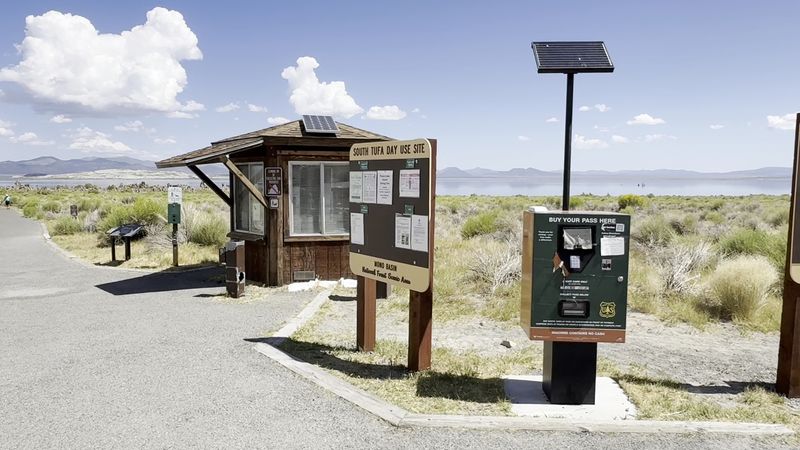
Fees are typically collected at a self-pay station near the parking area, so having exact cash or a pass ready before pulling in saves time.
The fee structure may be subject to change, so checking the Inyo National Forest website before visiting is a good habit.
Supporting the site through the entrance fee directly contributes to keeping the trails maintained, the signage updated, and the overall experience accessible for future visitors who make the trip out to this remote and remarkable place.
Guided Tours
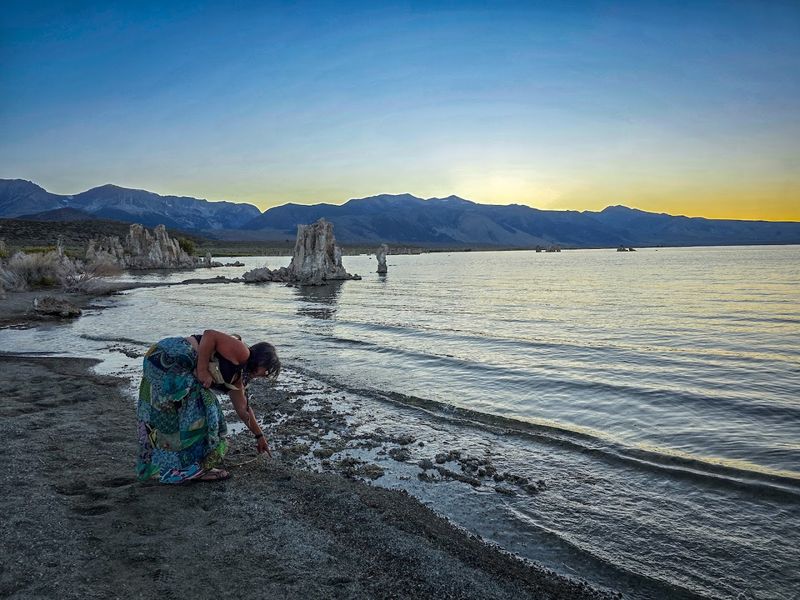
During the summer months, the South Tufa area offers something beyond a self-guided stroll: daily naturalist-led tours that bring the landscape to life in ways a sign or brochure simply cannot match.
Tours are offered at 10 AM and 6 PM, giving visitors two very different experiences depending on which they choose.
The morning tour tends to catch softer light and cooler temperatures, while the evening tour often coincides with dramatic sunset colors over the lake.
Naturalists leading these walks are typically knowledgeable about the local geology, ecology, and the long conservation history of Mono Lake.
They tend to answer questions in depth and point out details along the trail that most visitors would walk right past on their own.
The tours last roughly one hour and follow the same loop trail, though the guide may pause at different spots depending on what is happening with wildlife or light conditions that day.
These tours are generally free with paid admission, though availability can vary by season and staffing, so confirming details in advance through the Inyo National Forest website is a smart move.
Groups with children often find the guided format especially engaging because naturalists tend to tailor explanations to mixed-age audiences with ease and enthusiasm.
Trail Conditions
Some of the most memorable hikes in California are also some of the most demanding, but the South Tufa Interpretive Trail breaks that pattern entirely.
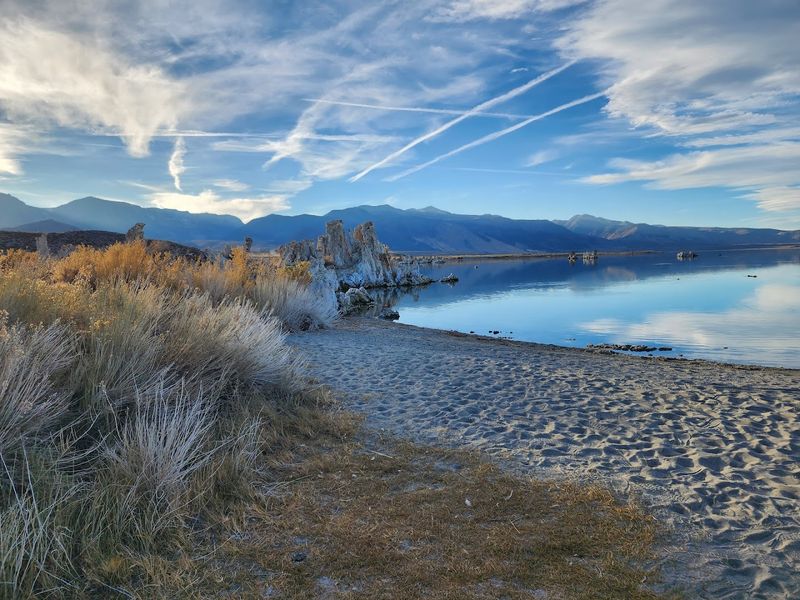
The one-mile loop is almost entirely flat, with elevation gain that barely registers, making it one of the most accessible and low-pressure hikes in the Eastern Sierra region.
Hikers of virtually any fitness level can complete it comfortably without special preparation.
The surface varies slightly along the route, moving between packed dirt, sandy shoreline sections, and a few rocky patches near the water’s edge.
None of these transitions require careful footwork, though wearing closed-toe shoes with light grip is still smarter than sandals.
The trail is well-marked throughout, reducing any chance of confusion even for first-time visitors unfamiliar with the area.
Completing the full loop typically takes between 45 minutes and one hour at a casual pace, though many visitors spend longer by stopping frequently to read signs, photograph the tufa, or watch birds along the shoreline.
The trail is open year-round, though winter visits may bring snow, ice, or muddy patches that slightly change the surface conditions.
Checking current trail conditions through the Inyo National Forest or AllTrails before heading out can help set accurate expectations for any season.
Prohibited Activities
The South Tufa area carries a firm set of rules that exist specifically to protect one of California’s most irreplaceable natural features.
Climbing on the tufa formations is strictly prohibited, and for good reason: the calcium carbonate structures that took thousands of years to build can crack, crumble, or permanently deform under even modest human weight.
Once damaged, they cannot repair themselves on any human timescale. Collecting natural material from the area is also not permitted.
The Mono Basin sits within a volcanically active region, and the surrounding landscape is rich with geological materials that might look like casual souvenirs but are protected under federal regulations.
Taking anything from the site, even a small rock, is considered a violation and can result in fines.
Staying on the marked trail is another expectation that helps protect both the fragile shoreline ecosystem and the nesting habitat used by birds throughout the year.
Venturing off-trail near the water’s edge can disturb alkali fly and brine shrimp populations that the entire bird food chain depends on.
Respecting these boundaries does not diminish the experience in any way; rather, it ensures that every future visitor gets to see the same extraordinary landscape in the same remarkable condition that exists today.