12 Secret Waterfalls In North Carolina Most Travelers Don’t Know About
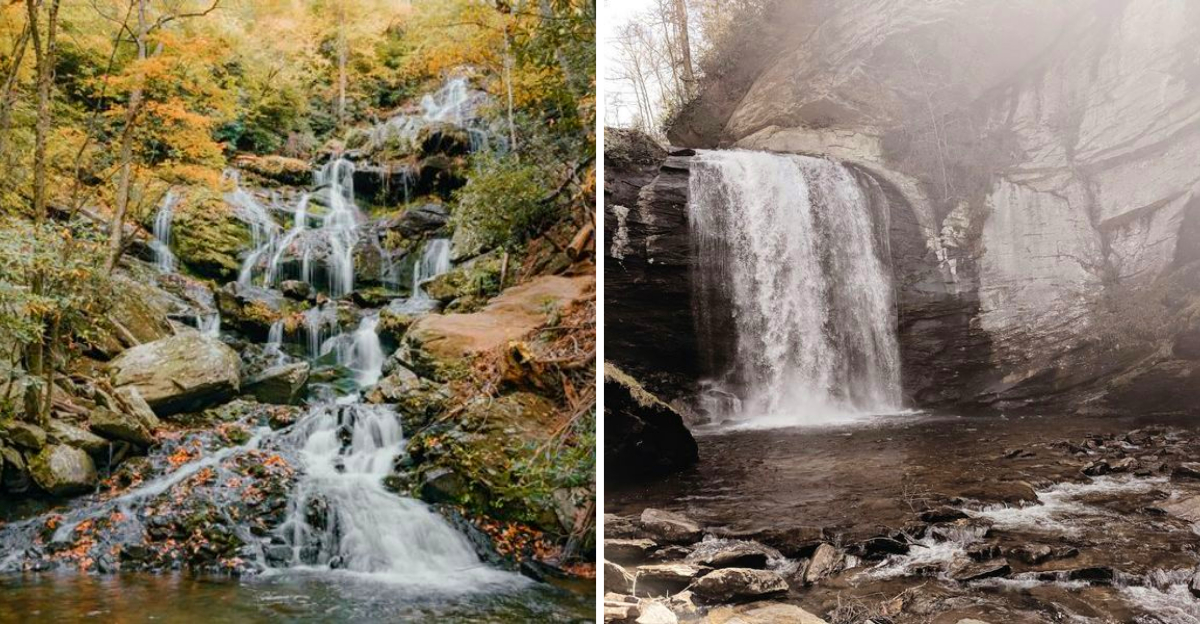
The mountains hold far more water than most travelers expect. The mountains hide an incredible number of waterfalls, many of them just beyond the roadside or tucked along quiet forest trails.
Travelers often pass through the region without realizing how close they are to some of the most beautiful cascades in the eastern United States.
Water flows through deep gorges, wooded valleys, and rocky creek beds shaped over centuries. Some waterfalls crash down steep cliffs, while others glide smoothly over stone into clear pools below.
Many of these falls sit only a short walk from the road, while others reward hikers willing to venture deeper into the forest. Each one reveals a different side of the rugged landscapes that define western North Carolina.
This guide highlights several waterfalls worth discovering. Some draw steady crowds, while others remain surprisingly quiet even during busy seasons.
Bring sturdy shoes, a camera, and a little curiosity. The mountains hold more waterfalls than most people expect, and the next unforgettable view may be waiting just around the bend in the trail.
1. Linville Falls
Have you ever stood somewhere so powerful that the sound of rushing water fills the entire canyon around you? You can experience that here!
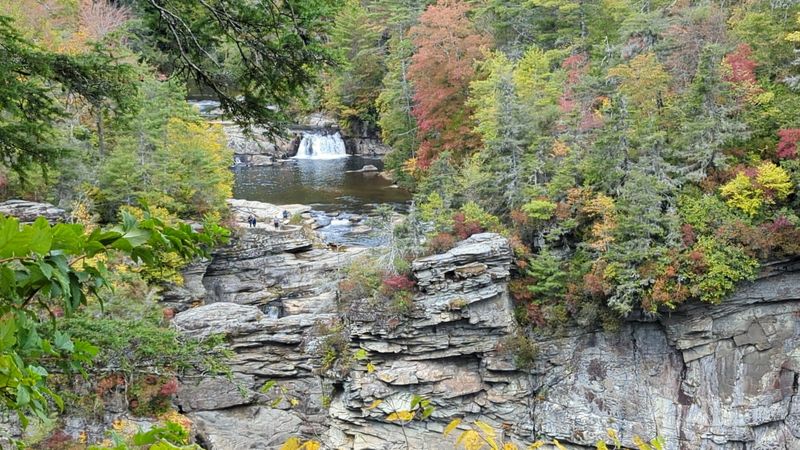
Linville Falls is located near the Linville Falls Visitor Center at 7510 Blue Ridge Pkwy Spur, Morganton, North Carolina, just off the Blue Ridge Parkway in western North Carolina.
The waterfall marks the beginning of the rugged Linville Gorge, often called the “Grand Canyon of the East.”
Water from the Linville River drops in several dramatic tiers before cutting through steep rock walls far below. The sound alone makes the place feel alive.
Several short trails lead to overlooks that reveal different angles of the falls. One viewpoint shows the upper cascade sliding through narrow rock. Another looks down toward the powerful plunge into the gorge.
Each stop offers a different perspective, which makes the hike feel like a slow reveal.
The area changes with the seasons. Summer brings thick green forest and cool shade along the trail. Autumn turns the surrounding mountains into a patchwork of red, gold, and orange.
Even in winter, the gorge feels striking and quiet.
Linville Falls draws hikers, photographers, and travelers who simply want to pause and take in the landscape. Spend a few minutes at the overlook and it becomes clear why this waterfall leaves such a strong impression.
2. Whitewater Falls (Upper Whitewater Falls)
Long before the waterfall comes into view, the deep rumble of rushing water rolls through the forest like distant thunder.
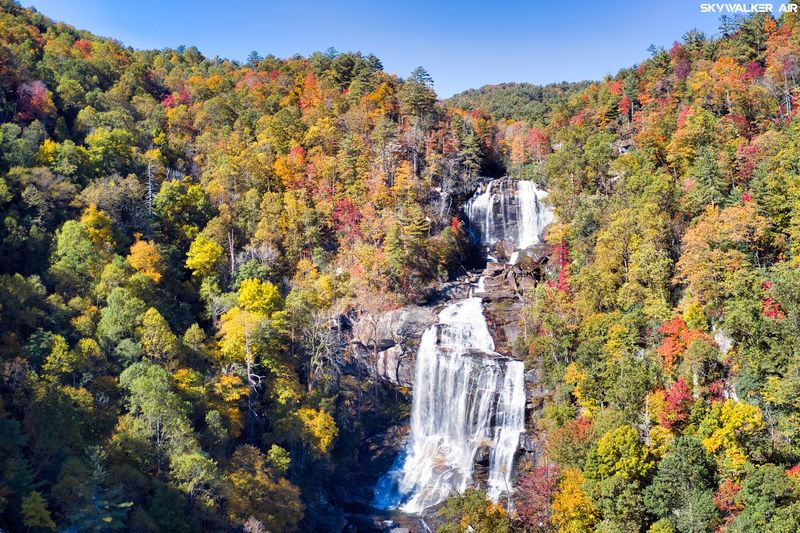
Upper Whitewater Falls sits off NC-281 near Sapphire, North Carolina, and drops an impressive 411 feet, making it the tallest waterfall east of the Rocky Mountains.
The sound reaches you first. A steady roar moves through the trees as you follow the paved trail toward the overlook. The walk is short and shaded, but the anticipation builds with every step.
Across the valley, the waterfall appears in full view. Water spills over a wide granite cliff and plunges hundreds of feet toward the river below.
The drop creates a constant mist that drifts through the air and keeps the surrounding forest cool and bright green through much of the year.
It’s the kind of sight that makes people pause for a moment before speaking. Photographers often arrive prepared. The scale of the falls makes it difficult to capture with a standard lens, so many bring wide-angle equipment to frame the entire cascade.
Early morning is especially memorable. Soft sunlight touches the rising spray while the roar of the water echoes through the gorge. Stand there long enough, and the sound becomes part of the landscape itself.
3. Dry Falls
Have you ever walked behind a waterfall without getting soaked? If not then Dry Falls should be your next destination.
Dry Falls sits along US-64 near Highlands, North Carolina, inside the Nantahala National Forest.
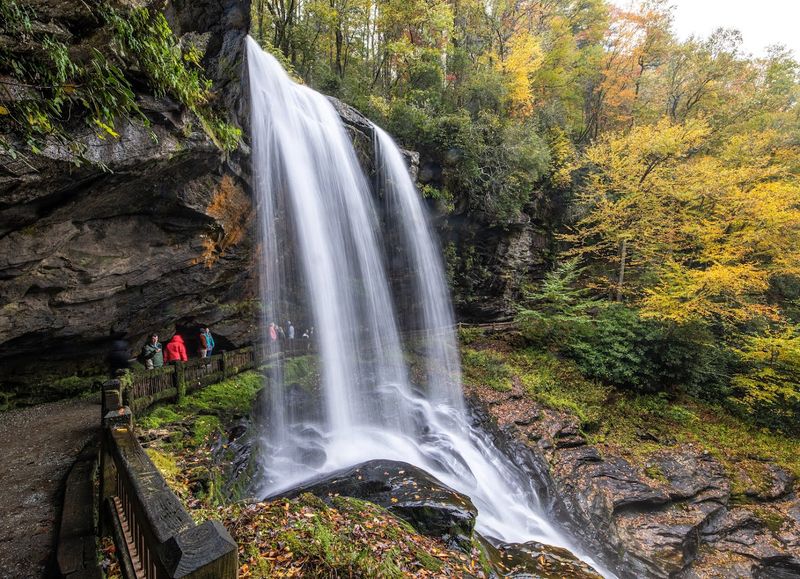
The name sounds strange at first. Yet the rock ledge behind the 65-foot cascade creates a natural walkway where visitors can stand just behind the curtain of water. The result feels both surprising and unforgettable.
A short paved path leads from the parking area down to the falls. The walk is quick and manageable, which makes the spot popular with families and casual hikers. As you get closer, the sound of the rushing water grows louder with each step.
Standing behind the waterfall is the highlight. Water crashes down only a few feet away while cool mist drifts through the air. On a hot summer day, the spray feels refreshing rather than overwhelming.
Children often react with pure excitement the moment they step behind the cascade. Adults tend to have the same reaction.
The waterfall sits within Cullasaja Gorge, one of the most scenic stretches of western North Carolina. The drive along US-64 winds through steep forested slopes and offers several overlooks along the way.
Dry Falls stands out because it invites visitors to experience a waterfall from an entirely different perspective, one step behind the water itself.
4. Looking Glass Falls
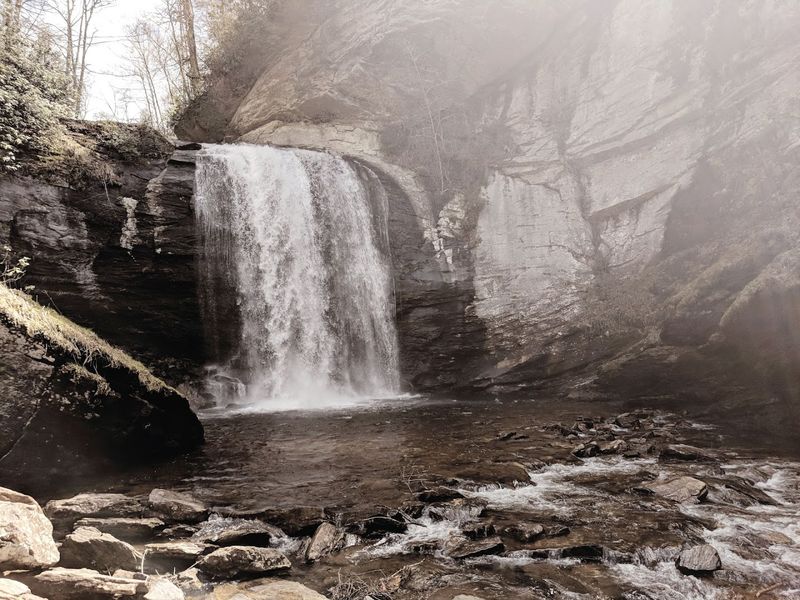
What if one of the most beautiful waterfalls in North Carolina required almost no hiking at all? Some waterfalls demand a long trek, but this one reveals itself almost immediately.
Looking Glass Falls sits along US-276 near Brevard, North Carolina 28712, inside Pisgah National Forest.
You can pull off the road, walk down a short set of stairs, and stand right at the base of the cascade within minutes. The accessibility surprises many first-time visitors.
A wide curtain of water drops about sixty feet into a clear pool below. The steady flow creates a cool mist that drifts through the surrounding forest. Hemlock and rhododendron trees frame the scene with dense greenery, especially vibrant after a good rainfall.
In summer, the pool at the base draws people who want to wade in and cool off. The water stays refreshing even on warm afternoons.
Photographers often linger longer than expected. Late-day sunlight filters through the trees and catches the mist rising from the falls. The result is a soft glow that adds depth to every photo.
Families, hikers, and road-trippers all stop here during visits to Pisgah National Forest. The easy access makes it a natural first stop, and the waterfall itself makes the visit memorable.
5. Mingo Falls
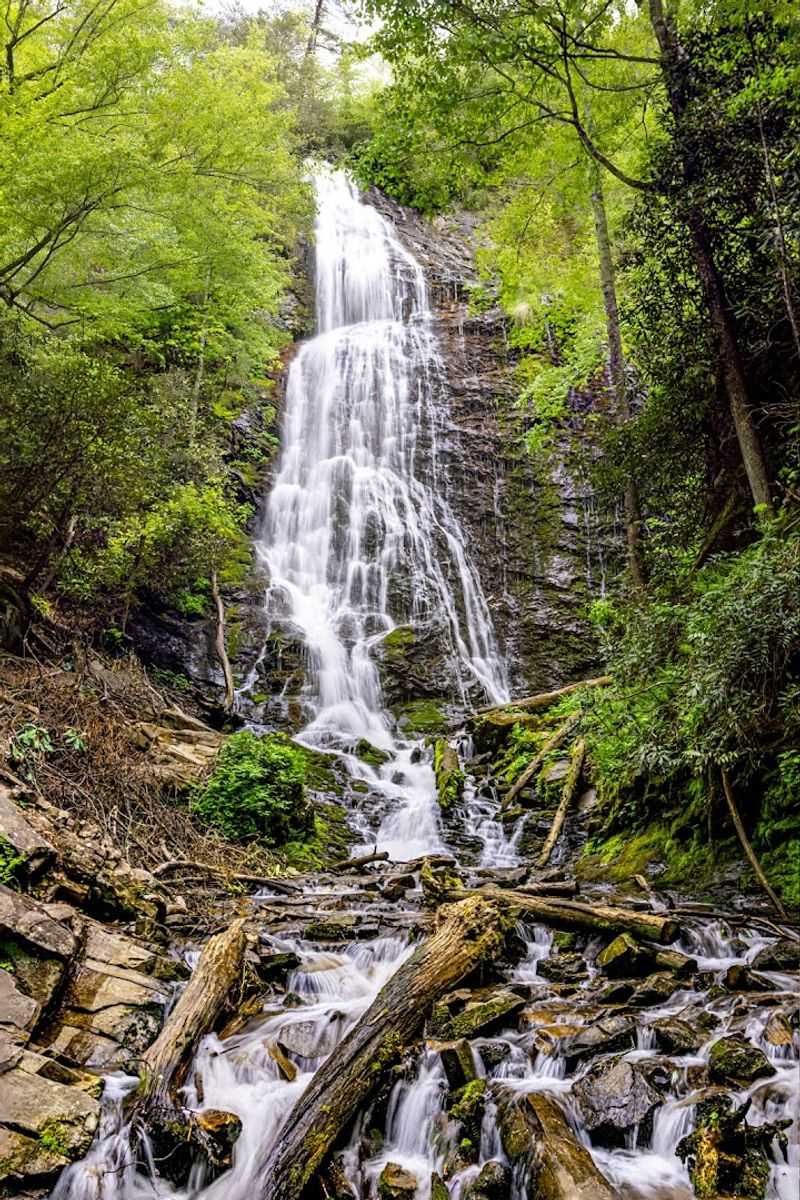
Some waterfalls reveal themselves slowly, but this one stops you the moment it appears. The roar of falling water echoes through the forest before the cascade comes into view.
Mingo Falls is located off Big Cove Road near Cherokee, North Carolina 28719, just outside the boundary of Great Smoky Mountains National Park.
At about 120 feet tall, it ranks among the tallest waterfalls in the Southern Appalachian region. The water plunges in a single dramatic drop down a steep rock face surrounded by dense mountain forest.
The hike to reach the falls is short but steep. A stairway climb of roughly 0.4 miles leads up the hillside, which naturally keeps the crowds smaller than many roadside waterfalls.
By the time you reach the wooden viewing platform, the sound of the water fills the entire area.
From the platform, the full height of the cascade becomes clear. Water crashes down through a narrow chute and spreads into mist before reaching the rocks below. The scale is difficult to capture in photographs.
Mingo Falls also carries deep cultural importance for the Eastern Band of Cherokee Indians, whose homeland surrounds the area.
Visiting the waterfall offers more than scenery. It connects visitors to the landscape and history that have shaped this region for generations.
6. Crabtree Falls
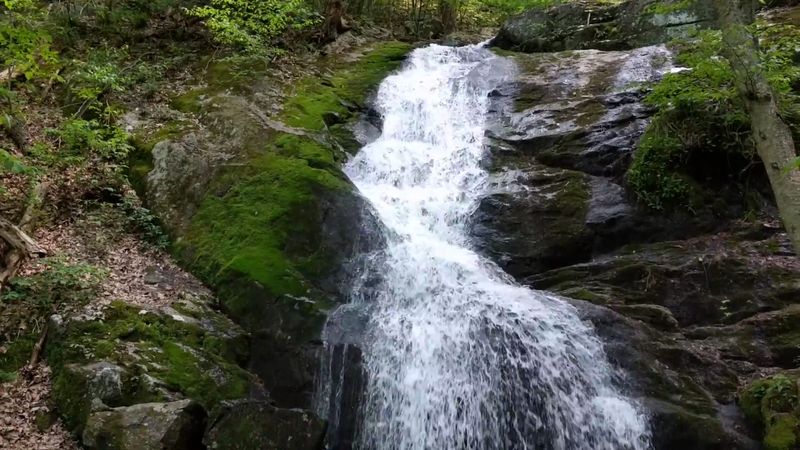
Some waterfalls feel hidden even after decades of visitors discovering them. The trail winds quietly through forest and rhododendron tunnels before the sound of falling water begins to echo through the trees.
Crabtree Falls sits just off the Blue Ridge Parkway near milepost 339.5 in Spruce Pine, North Carolina 28777.
The waterfall drops about seventy feet into a narrow, canyon-like setting surrounded by steep rock and thick forest. The scene feels tucked away from the outside world.
A 2.5-mile loop trail leads hikers through hardwood forest and shaded sections of path before revealing the falls. The walk feels steady and manageable, with enough twists and turns to keep the approach interesting.
Spring often brings the most dramatic conditions. Wildflowers spread across the forest floor while seasonal rain and snowmelt send stronger water flowing over the dark rock face. Moss clings to the stone, giving the entire area a cool, atmospheric look.
Near the base, a small footbridge offers a clear view of the cascade without getting too close to the spray. It’s a favorite spot for photographers who want to capture the full scene.
Just down the road, Crabtree Meadows Campground makes the area an easy overnight stop for Blue Ridge Parkway travelers. A quiet morning hike to the falls often becomes the highlight of the trip.
7. Elk River Falls
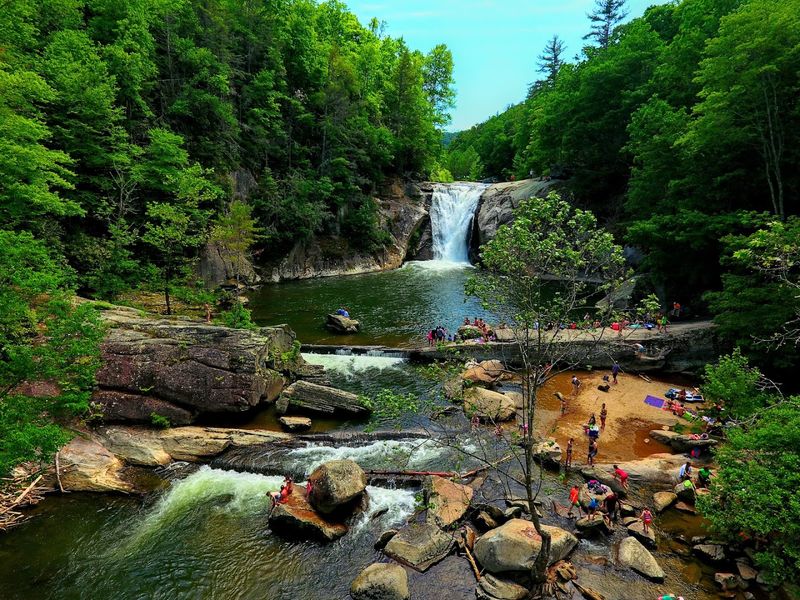
What if a waterfall came with its own natural swimming pool? The sound of rushing water and splashing swimmers gives this spot a lively, welcoming energy.
Elk River Falls is located near Elk Park, just off Elk River Road in the mountains of Avery County.
The waterfall drops about fifty feet over a broad rock ledge before crashing into a deep, clear pool below. The pool has become a favorite summer hangout for locals who return year after year.
Large boulders surround the water and create natural places to sit or stretch out in the sun. Between swims, visitors often relax on the warm rocks while the sound of the waterfall fills the valley.
A short trail leads from the parking area to the falls. The walk is roughly half a mile and stays fairly flat, which makes it manageable for families and casual hikers.
Summer weekends tend to bring a cheerful crowd. Friends gather along the rocks, and the pool fills with people escaping the heat. The atmosphere feels energetic but easygoing.
Visit during the week and the scene changes. The water still rushes over the ledge, but the area often feels quiet and peaceful.
The surrounding stretch of the Elk River flows through open countryside and forest, giving the entire area a calm, rural character that makes the visit even more memorable.
8. Soco Falls
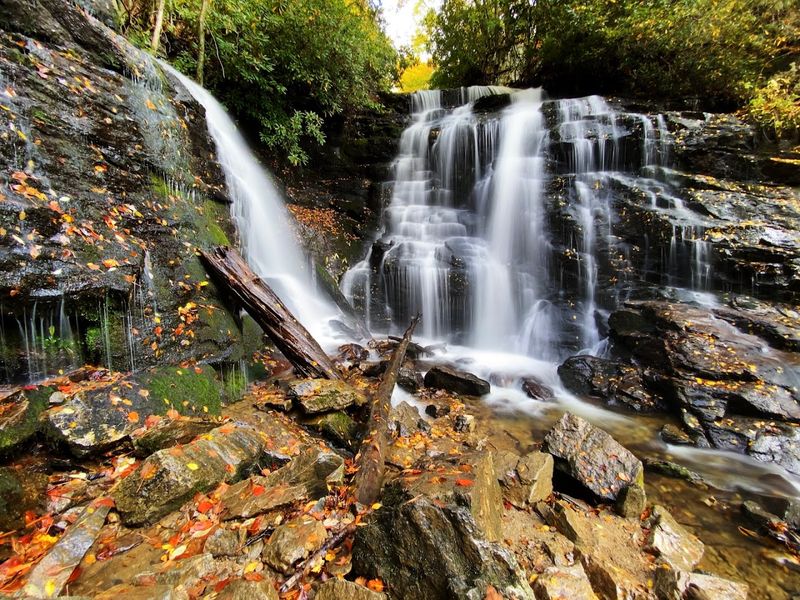
Some waterfalls roar the moment you arrive. Others reveal themselves more quietly. The waterfall stands out because it flows in two streams instead of one.
Side-by-side cascades spill over a mossy rock ledge and drop into the forest below. The movement feels balanced and almost rhythmic.
Soco Falls is located off US-19 near the Blue Ridge Parkway entrance close to Cherokee, North Carolina 28719.
A very short trail leads down to the base of the falls. The path is barely a quarter mile, though the slope can be steep in places. The quick walk makes the waterfall accessible to almost anyone willing to take a careful step down the trail.
Despite the easy access, the area often feels surprisingly calm. Many travelers drive past the small pull-off without realizing a waterfall sits just beyond the trees. Those who stop usually find a peaceful setting waiting for them.
The surrounding forest adds to the atmosphere. Moss covers the rocks, and thick greenery frames the twin cascades throughout the warmer months.
Autumn brings another layer of color. Red and gold leaves surround the falls, creating one of the most photogenic scenes in western North Carolina.
Photographers often set up tripods here to capture the smooth flow of water against the vibrant forest backdrop.
9. Moore Cove Falls
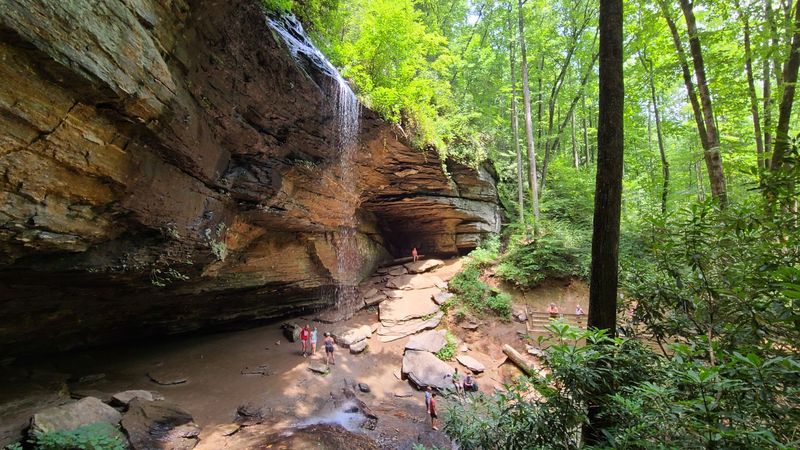
Have you ever stepped behind a waterfall and watched the world through a curtain of water? The experience feels surprisingly playful, almost like discovering a secret passage in the forest.
Moore Cove Falls is located near Brevard, North Carolina 28712, inside Pisgah National Forest along US-276.
The waterfall drops about fifty feet over a curved rock ledge. That ledge creates a natural overhang, allowing visitors to walk behind the flowing water without getting soaked.
Standing behind the cascade changes your perspective completely. Water pours down just a few feet away while cool mist drifts through the air. The space feels almost cave-like, with the forest visible through the moving sheet of water.
The trail to reach the falls follows Moore Creek through dense woodland. The round-trip hike covers about 1.4 miles and stays relatively gentle, making it accessible for most hikers.
Spring visits bring wildflowers along the trail, while autumn colors brighten the surrounding forest. Each season adds a different character to the walk.
Many visitors pair Moore Cove Falls with a stop at nearby Looking Glass Falls, creating an easy waterfall tour in Pisgah National Forest. A light jacket can help during the walk-behind section, where the mist keeps the air noticeably cooler even on warm days.
10. Catawba Falls
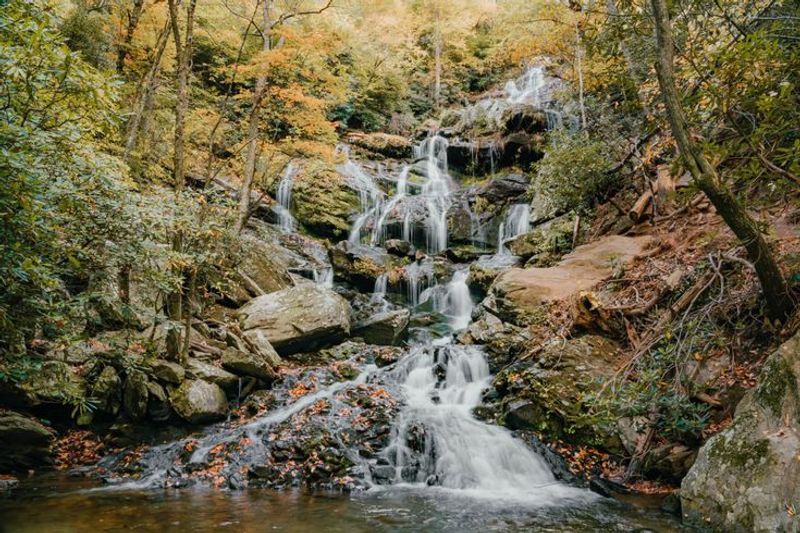
Some waterfalls build anticipation with every step of the trail. The steady sound of rushing water grows louder as the forest closes in around the path.
Catawba Falls is located within Pisgah National Forest along the Catawba River.
The hike to the waterfall covers about 2.6 miles round trip. The trail follows the river through a shaded gorge, creating a relaxed and scenic walk that never feels rushed.
Along the way, the path crosses the stream on stepping stones and small bridges. These crossings add a sense of adventure and keep hikers close to the flowing water.
The waterfall reveals itself in stages. The lower section cascades over layered rock before continuing down the mountainside. Altogether, the falls drop more than one hundred feet through multiple tiers.
Those who continue a bit farther can reach the upper section. There, the water plunges more dramatically into a clear pool surrounded by steep rock and forest.
Recent trail improvements have made the route easier to follow. Clear signage and maintained paths help visitors focus on the scenery instead of the route.
Spring and early summer bring the strongest water flow. Birds move through the trees, wildflowers line parts of the trail, and the quiet of the forest replaces the noise of everyday life.
11. Rainbow Falls (Gorges State Park)
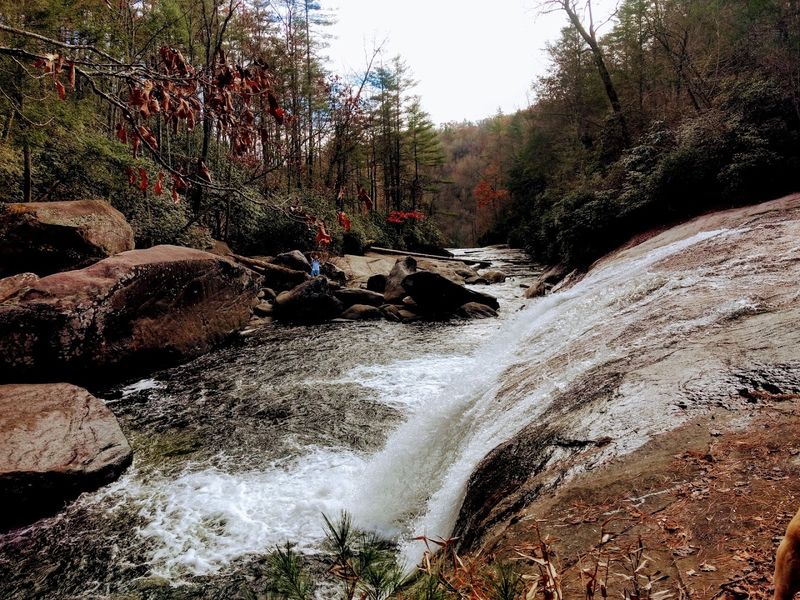
What could be more mesmerizing than a waterfall that creates its own rainbow? The roar of falling water fills the forest long before the view appears. Rainbow Falls is located inside Gorges State Park near Sapphire, North Carolina 28774.
The waterfall drops roughly 150 feet in a powerful plunge. As the water crashes into the rocks below, it throws a constant mist into the air. On sunny afternoons, that mist catches the light and forms bright arcs of color that hover near the base of the falls.
Reaching the overlook takes effort. The trail covers about four miles round trip and climbs steadily through dense forest. The path moves through one of the most biologically rich areas in the eastern United States.
Gorges State Park sits in a temperate rainforest zone that receives more than eighty inches of rain each year. That rainfall keeps the surrounding vegetation thick, vibrant, and deeply green.
The trail itself becomes part of the experience. Ferns, moss-covered rocks, and tall trees line the route as the sound of the waterfall grows louder.
Because of the frequent rain, the ground can become slick in places. Sturdy hiking boots and trekking poles help on the steeper sections.
The hike demands effort, but the moment the mist rises and sunlight reveals a rainbow, the reward feels completely worth it.
12. Tom’s Creek Falls
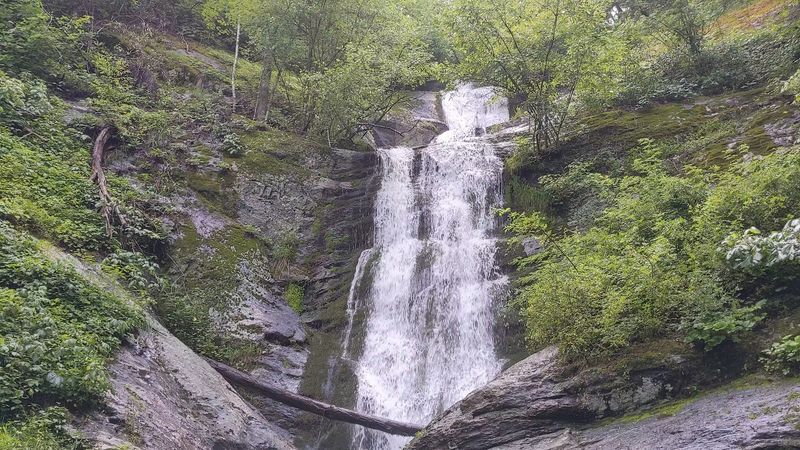
Not every waterfall needs fame to leave a lasting impression. Sometimes the quiet places offer the most peaceful moments. Tom’s Creek Falls is located near Marion, North Carolina 28752, inside Pisgah National Forest along Tom’s Creek Road.
The waterfall flows gently over a series of moss-covered boulders before slipping through a narrow corridor of forest. Instead of a thunderous crash, the water creates a steady, calming rhythm.
The trail to reach the falls is short and simple. The walk stays under a mile round trip and follows a mostly flat path through shaded woodland.
Because the hike is easy, it attracts a wide range of visitors. Families, casual hikers, and anyone looking for a relaxed outing often choose this trail.
The surrounding forest adds to the atmosphere. Spring brings clusters of wildflowers along the path, while autumn paints the trees in warm shades of amber and gold.
Crowds are rarely an issue here. Many days, the trail feels quiet enough to hear only the water and the wind moving through the trees.
Tom’s Creek Falls also pairs well with nearby Catawba Falls, which sits just a short drive away. Visiting both creates a relaxed day of exploring the forests and waterfalls around the Marion area.