The Strange Side Of North Carolina That The Travel Guides Never Mention
North Carolina has a public face that everyone knows. Mountains, beaches, legendary food.
It is easy to love and even easier to photograph. But spend enough time here and something shifts.
You start noticing the things that do not quite fit the brochure. The strange, the unexplained, the wonderfully weird.
That version of North Carolina does not show up on a highlights reel. It shows up when you take the wrong turn and end up somewhere you cannot quite explain but absolutely cannot forget.
1. Collettsville Cup House
Some houses say “welcome home” with a front porch. This one says it with a ton of cups.
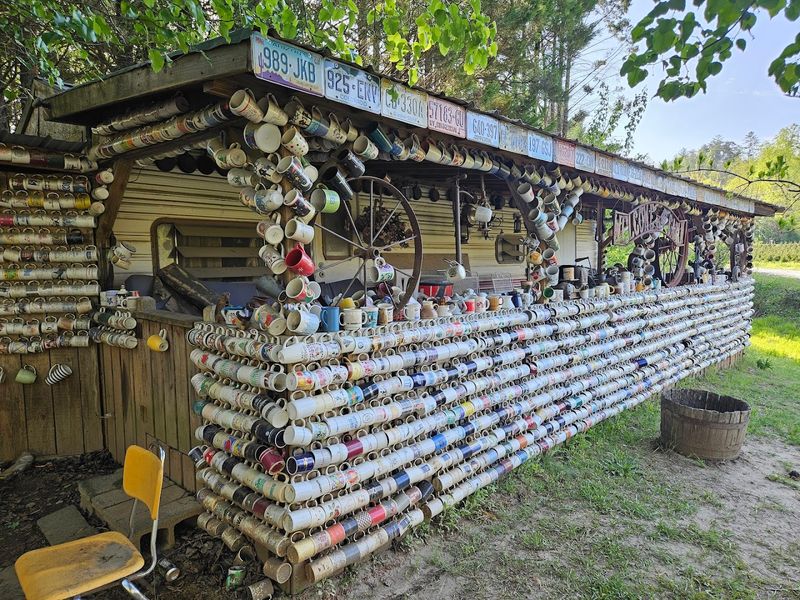
The Collettsville Cup House, at 2490 Old Johns River Rd, Collettsville, NC 28611 is exactly what it sounds like. The Cup House is a cabin covered in over 30,000 coffee mugs hung on nails.
I first heard about it from a local who casually mentioned it like it was the most normal thing in the world.
It is absolutely not normal, and that is precisely why it is wonderful. The structure has charmed road-trippers and curiosity seekers for years.
Getting there requires a bit of a back-road adventure, which honestly makes the whole experience better. When you see it, you realize that someone out there really committed to a theme.
If you are the type who loves finding things that make you say “wait, what?” out loud, this is your spot.
Bring a camera, bring a friend who appreciates the absurd, and maybe bring an actual cup of coffee to complete the moment. North Carolina rewards the curious.
2. Country Doctor Museum
Before urgent care clinics and online prescription apps, there was the country doctor. He was a person who carried their entire medical practice in a black bag and made house calls on horseback.
The Country Doctor Museum, located at 7089 Peele Rd, Bailey, NC 27807 is the only museum in the entire country dedicated to honoring that era.
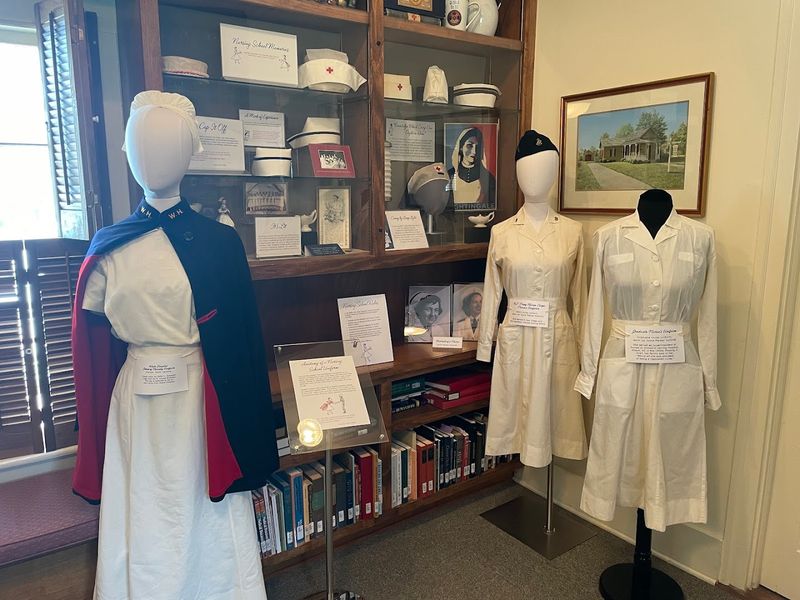
Walking through it feels like stepping into a sepia-toned photograph. Glass cases hold instruments that look more like props from a mystery novel than actual medical tools.
There are apothecary cabinets, antique stethoscopes, and equipment that will make you very grateful to live in the present day.
The museum sits in a historic building and draws visitors who are genuinely fascinated by the history of rural medicine. It is educational in the best possible way.
The kind where you keep leaning in closer because you cannot quite believe what you are reading.
Kids and adults alike tend to leave with a new appreciation for how far healthcare has come. It is not spooky, just wonderfully eye-opening.
Bailey is a small town, but this museum punches well above its weight in terms of sheer historical fascination. Absolutely worth the detour.
3. Judaculla Rock
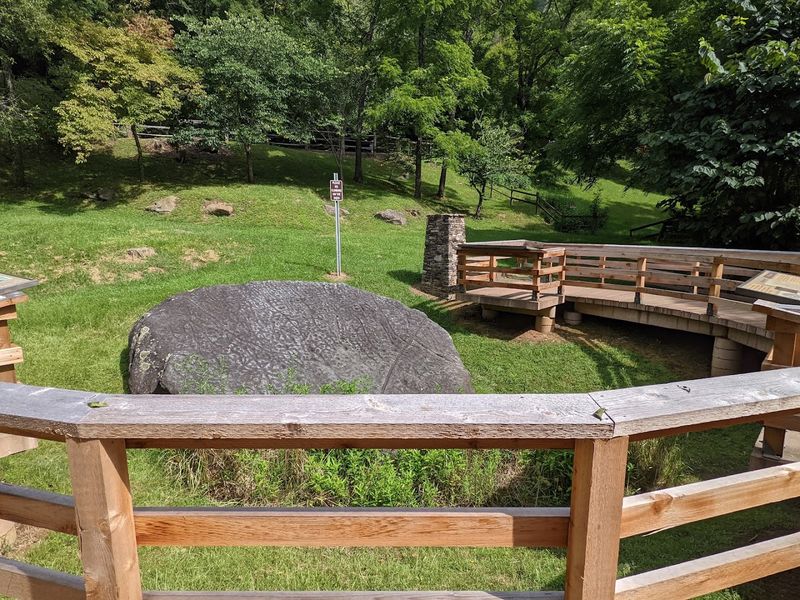
Imagine stumbling across a massive boulder covered in hundreds of mysterious carvings that nobody has fully decoded yet.
That is Judaculla Rock, placed at 552 Judaculla Rock Rd, Cullowhee, NC 28723, quietly baffling archaeologists and visitors for centuries.
The rock is a soapstone boulder etched with petroglyphs believed to be created by the Cherokee people thousands of years ago.
Some carvings look like animals, some like human figures, and others are completely abstract. Cherokee oral tradition connects the rock to Judaculla, a giant slant-eyed being who ruled over hunting grounds.
Standing in front of it feels genuinely humbling.
You are looking at a conversation carved in stone by people who lived here long before any road, any town, or any travel guide existed.
The carvings are worn but still visible. The site has been protected and improved with better viewing access in recent years.
Visiting is free, and the location is peaceful and surrounded by farmland. Bring bug spray in warmer months, wear comfortable shoes, and take your time.
Some visitors spend an hour just walking around the rock, trying to make sense of what they see. That mystery is exactly the point.
4. The Last Shell (Clamshell)
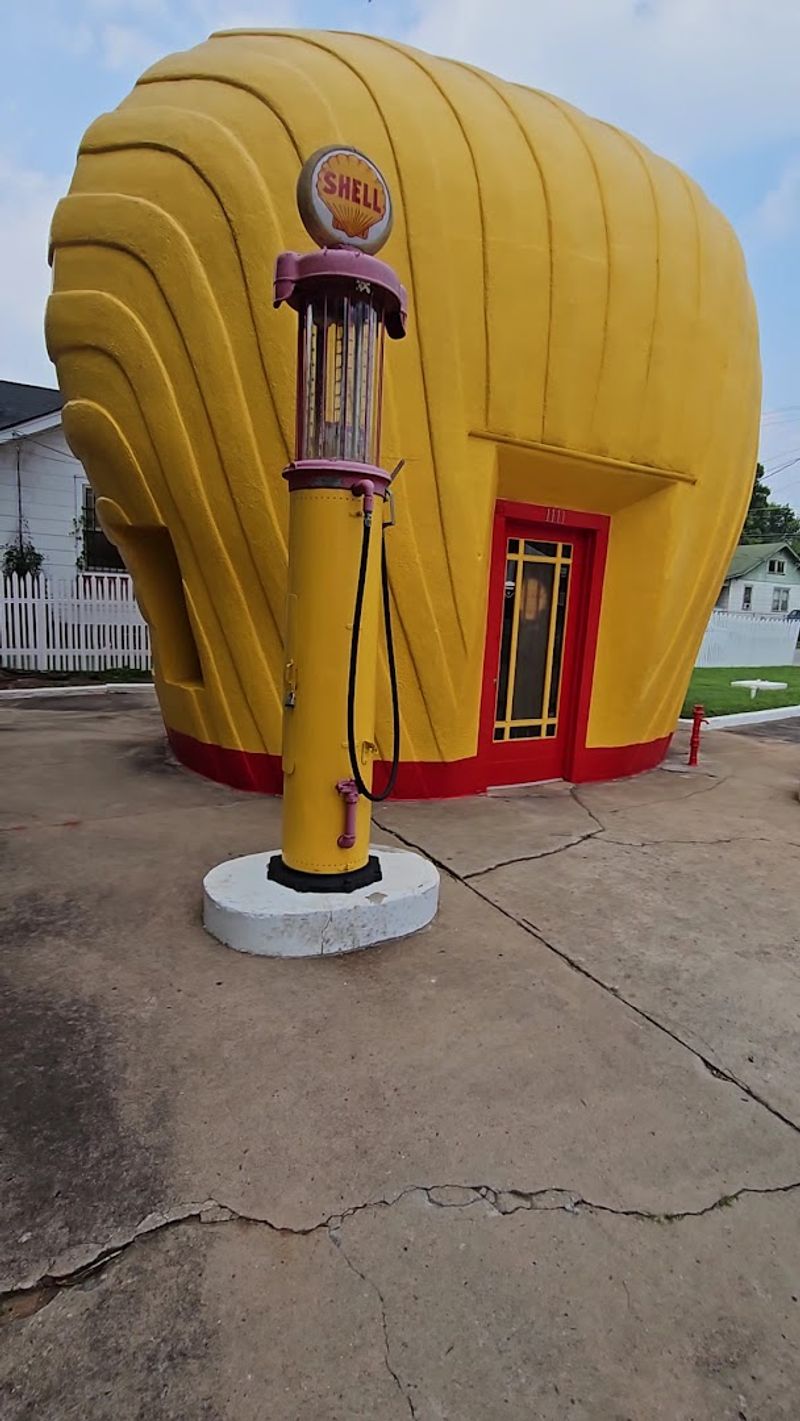
Back in the 1930s, a brilliant and slightly unhinged idea swept through the roadside architecture world. It was the idea to build gas stations shaped like giant clamshells.
Many were constructed across the country, and almost all of them are gone now. Almost.
Winston-Salem, at 1111 E Sprague St, Winston-Salem, North Carolina, 27107 is home to one of the last surviving shell-shaped stations in the United States. It is a genuine piece of American roadside history.
The structure was built by the Quality Oil Company, which used these eye-catching designs to stand out from the competition. It worked.
People still stop to photograph it nearly a century later.
I love this one because it represents a time when businesses were willing to get truly weird to grab your attention. No algorithm, no sponsored post, just a building shaped like a shellfish sitting on a street corner saying, “Hey. Look at me.”
This shell in North Carolina is a protected historic landmark, which means future generations will get to do a double-take driving past it too.
It is not a museum or a tourist attraction with a gift shop. It is just a beautiful, strange survivor doing its best on a Winston-Salem street.
That kind of stubborn existence deserves a visit and at least one good photo.
5. Mystery Hill (Gravity Hill)
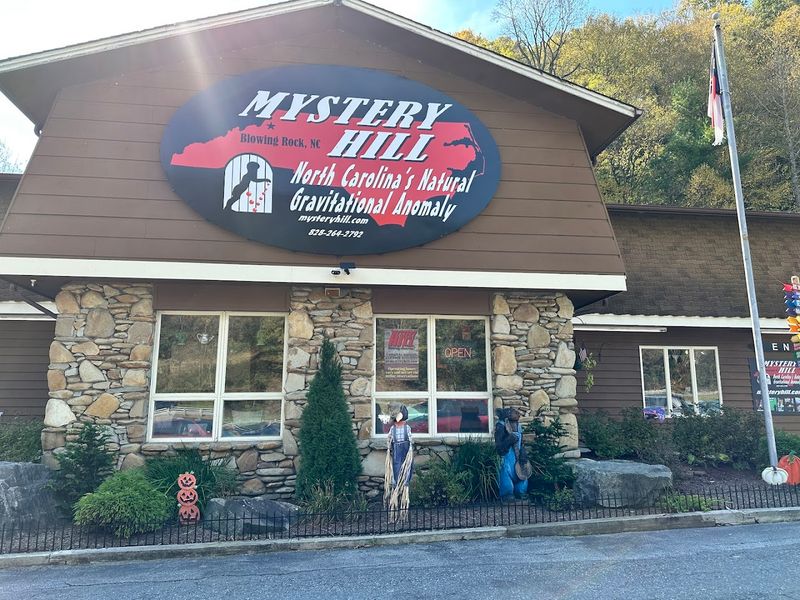
Water flows uphill. Balls roll the wrong direction. People stand at angles that should be physically impossible.
Mystery Hill, at 129 Mystery Hill Ln, Blowing Rock, NC 28605 has been messing with visitors’ heads since 1949, and it shows absolutely no signs of stopping.
The attraction is built around a “gravity anomaly”. That’s a brilliantly designed optical illusion that makes your brain completely second-guess everything it thinks it knows about physics.
The tilted structures and clever landscaping create an experience that feels genuinely disorienting, even once you understand how it works.
I went in fully prepared to be unimpressed. I left walking slightly sideways and questioning my spatial awareness.
The guides are enthusiastic and funny, and the whole experience has a gloriously retro roadside-attraction energy that feels rare these days.
Beyond the gravity house, the property includes a Native American artifact museum and a collection of oddities that add extra layers of interest for curious visitors.
It is family-friendly, affordable, and genuinely fun for all ages. Blowing Rock itself is a charming mountain town worth exploring before or after your visit.
But Mystery Hill is the kind of place that sticks in your memory long after the drive home.
6. Road To Nowhere
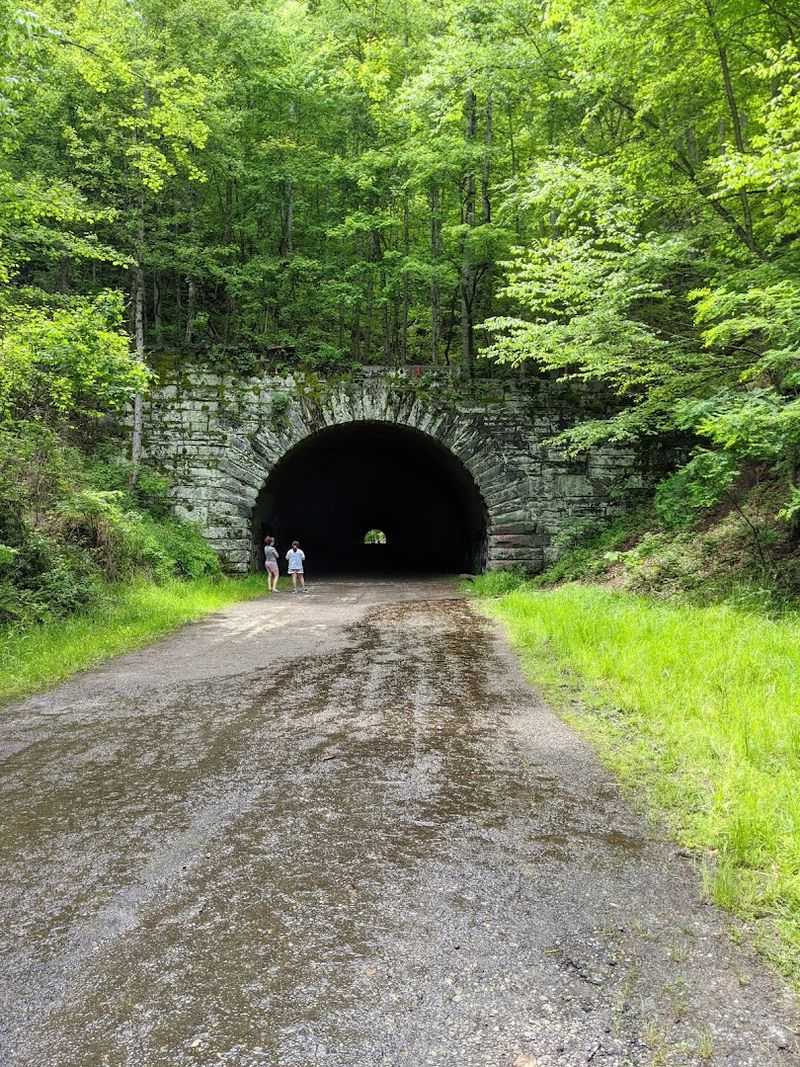
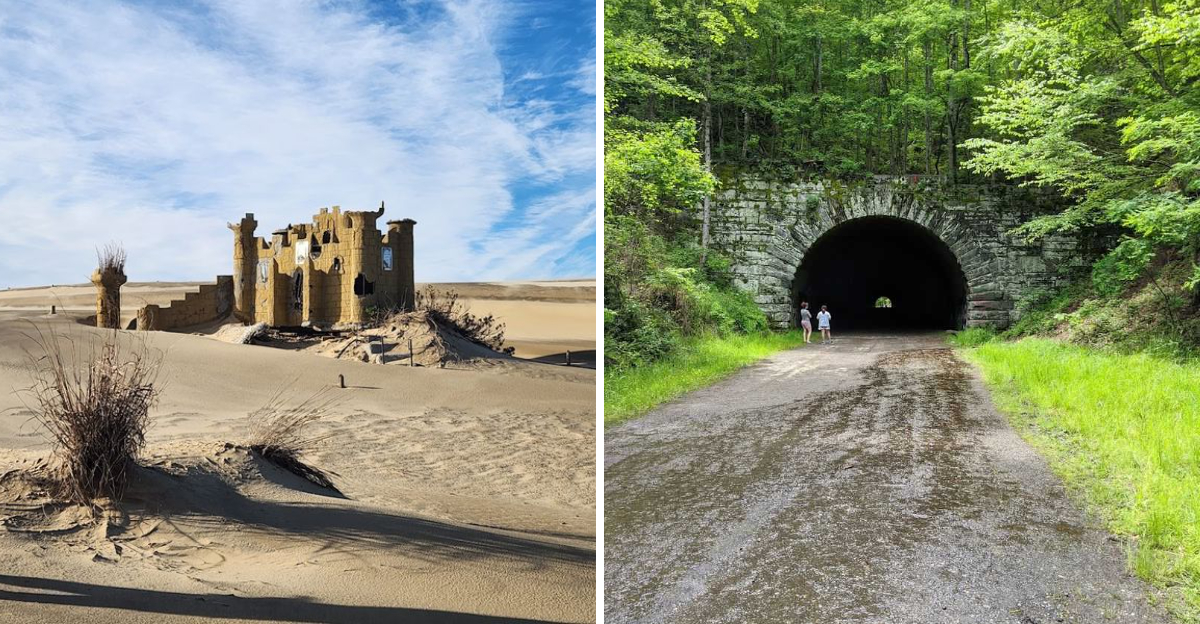
There is a road in Bryson City that starts with purpose, disappears into a mountain tunnel, and then just… stops. No destination. No explanation. Just a tunnel and the quiet sound of your own footsteps echoing back at you.
This place in North Carolina has a surprisingly layered history. It was originally planned as part of a lakeside highway through the Great Smoky Mountains National Park.
It was built to compensate communities whose land was flooded when Fontana Lake was created in the 1940s. Funding dried up, the project stalled, and what was left is one of the most hauntingly beautiful dead ends in America.
Locals have mixed feelings about it, which gives the place real emotional texture. The tunnel itself is dark, cool, and covered in graffiti from decades of visitors.
Hiking trails branch off from the road and lead into some spectacular backcountry territory.
Wildlife sightings are common, the views of the surrounding forest are stunning, and the whole area has an atmosphere that is equal parts melancholy and magical.
Pack a flashlight for the tunnel and sturdy shoes for the trails.
The Road to Nowhere, located at Lakeview Dr E, Bryson City, NC 28713, is proof that sometimes the most interesting journeys are the ones that never reached their original destination.
7. Sand Castle In Jockey’s Ridge State Park
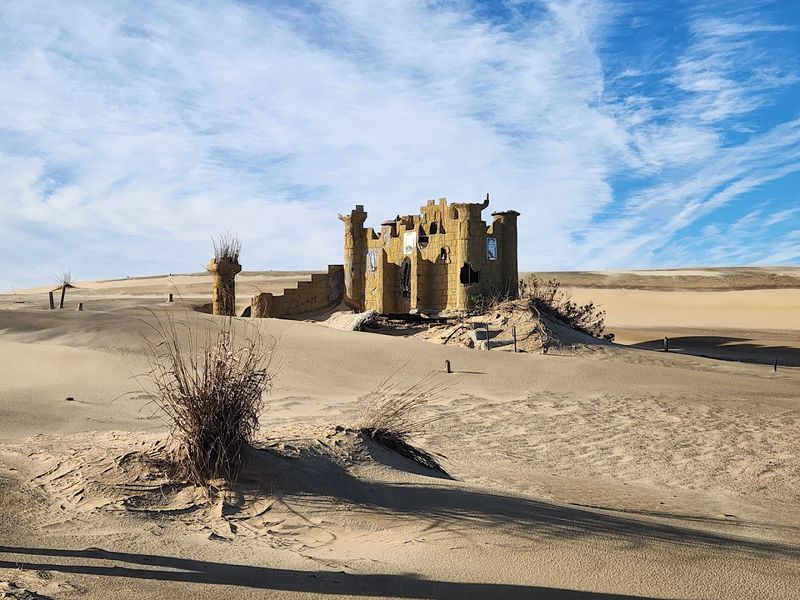
Most people picture the Outer Banks as a long stretch of beach, salt air, and maybe a lighthouse or two. What they do not picture is the East Coast’s largest living sand dune rising up like a small desert in the middle of it all.
Jockey’s Ridge State Park, located at 300 W Carolista Dr, Nags Head, NC 27959, is home to dunes that can reach around 100 feet high, shifting and reshaping constantly with the wind.
It is dramatic, otherworldly, and completely free to visit. Hang gliding lessons are offered right on the dunes, which is both thrilling and deeply surreal to watch.
The “sand castle” reference comes from the buried remains of a miniature golf course and other structures that have been swallowed by the shifting sands over the decades.
Every now and then, remnants poke back out, like the dunes are returning a message from the past.
Sunset from the top of the dunes is one of those experiences that makes you forget you were ever tired. The views stretch in every direction.
Ocean on one side, sound on the other.
Wear shoes you do not mind filling with sand, and go at golden hour if you can. The Outer Banks has plenty of beautiful spots, but this one genuinely feels like another world.
8. Shangri-La Stone Village
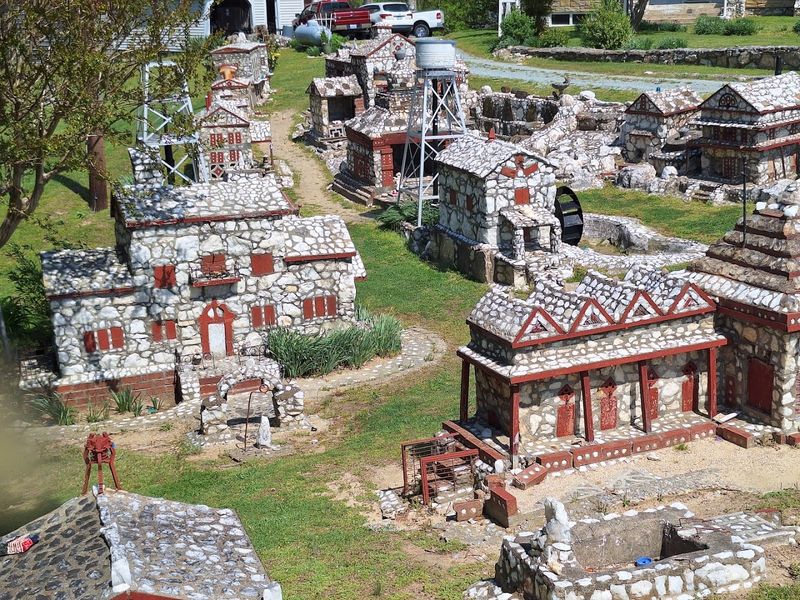
Henry Warren spent years building a miniature stone village in his yard in Prospect Hill. The result is one of the most quietly extraordinary folk art environments in the American South, located at 11535 NC-86, Prospect Hill, NC 27314.
He called it Shangri-La, and the name fits perfectly.
The village is made up of dozens of tiny castles, towers, bridges, and buildings. It’s all constructed by hand from stone, mortar, and sheer determination.
Warren started the project in his retirement and kept building until he simply could not anymore. Each structure has incredible detail and personality.
What makes Shangri-La genuinely moving is the story behind it. This was not a commissioned project or a tourist attraction by design.
It was one person’s vision, realized entirely on their own terms, in their own backyard, for no reason other than the joy of making something. That kind of pure creative commitment is rare and beautiful.
The site is maintained by Warren’s family and can be visited by the public.
Prospect Hill is a small, quiet town, so the contrast of stumbling upon this elaborate stone world makes the discovery feel even more magical.
Bring your patience for winding country roads and your appreciation for the kind of art that asks nothing in return except your attention.
9. Vollis Simpson Whirligig Park
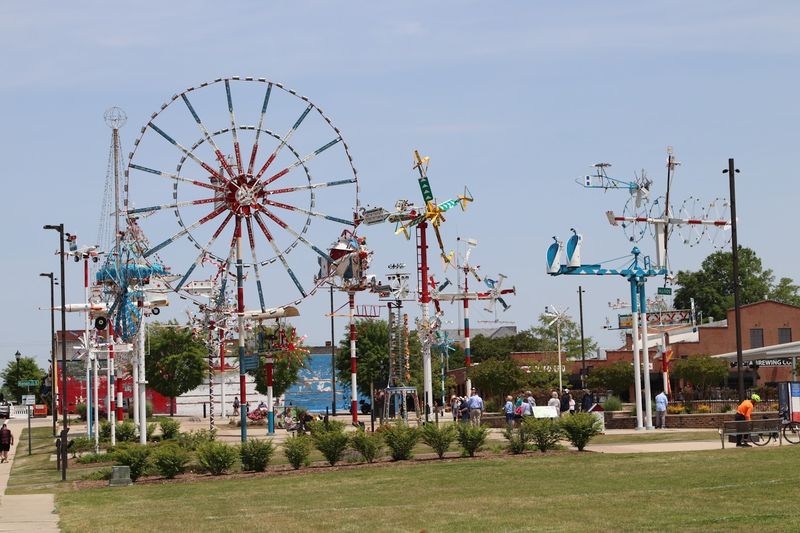
Picture a field full of massive spinning metal sculptures, each one powered entirely by the wind, each one built by a single self-taught artist using salvaged parts.
That is Vollis Simpson’s Whirligig Park, and it is one of the most joyful places I have ever visited in my life. It’s located at 301 Goldsboro St S, Wilson, NC 27893.
Vollis Simpson spent decades creating these enormous kinetic works of art on his farm in Wilson, North Carolina. It was restored and displayed in a dedicated downtown park.
The result is spectacular, colorful, loud with movement, and completely alive on a breezy day.
Each whirligig is unique, some stretching around 50 feet tall. They feature animals, airplanes, humans, and abstract forms, all spinning and glinting in the sunlight.
Standing among them feels like being inside a dream someone built with a welding torch and a brilliant imagination.
The park is free to visit and sits right in downtown Wilson, making it easy to pair with a meal at one of the local restaurants. Evening visits are magical when the sculptures are lit up.
Vollis Simpson never sought fame, but his work earned it anyway. This park makes sure that legacy keeps spinning for everyone who walks through the gate.
10. World’s Largest Chest Of Drawers
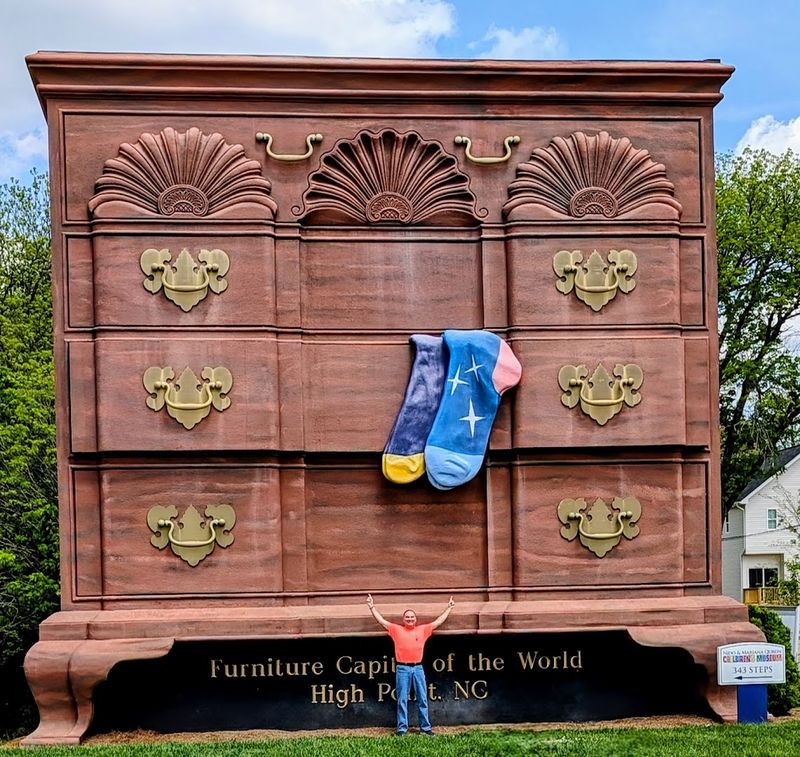
High Point calls itself the Furniture Capital of the World. To prove it, they built an office building shaped like an enormous chest of drawers at 508 N Hamilton St, High Point, NC 27262.
Not a replica. Not a model. An actual functioning building that looks like a piece of furniture you would find in a very, very large bedroom.
The structure stands around 38 feet tall and features a giant wooden drawer pull on the front. The detail that really gets people is the pair of oversized socks dangling from one of the drawers, as if someone left them half-pulled out in a hurry.
It is absurd and perfect and completely committed to the bit.
Originally built in the 1920s, the building has been renovated and updated over the years. The socks were added later as part of a renovation, and honestly, they make the whole thing.
High Point is a legitimate destination for furniture shopping, hosting the enormous High Point Market twice a year.
But even if furniture is not your thing, driving past this building is worth it for the pure visual comedy alone. Some cities have statues. High Point has a giant dresser with runaway socks. Respect.
11. World’s Largest Frying Pan
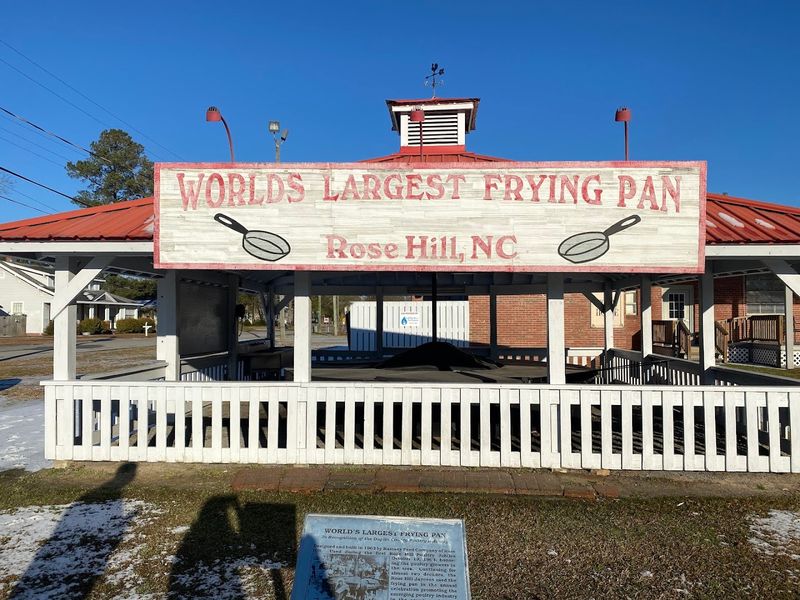
Rose Hill, North Carolina, does not mess around when it comes to chicken. The town is home to the World’s Largest Frying Pan, a cast iron beauty that measures 15 feet across, weighs 2 tons, and can reportedly fry 365 whole chickens at once.
That is one chicken per day of the year, which feels like a very specific flex.
The pan was built in 1963 for the Duplin County Poultry Jubilee, and of course they needed a record-setting frying pan to celebrate it.
The pan is displayed during the annual Duplin County Poultry Festival and has become a beloved local landmark that draws curious travelers off the highway.
There is something genuinely charming about a small town that leans so hard into its identity. Rose Hill is proud of its agricultural roots, and the frying pan is a delicious symbol of that pride.
You can snap a photo, admire the craftsmanship, and appreciate the sheer logistical confidence it takes to build something this large and this specific.
While you are in the area, the town has a sweet, unhurried small-town energy worth soaking up. The frying pan is free to see, takes about five minutes, and makes for one of the best road trip photos in the entire state.
Mission accomplished, Rose Hill.