10 Hidden Mountain Views In North Carolina That Will Take Your Breath Away
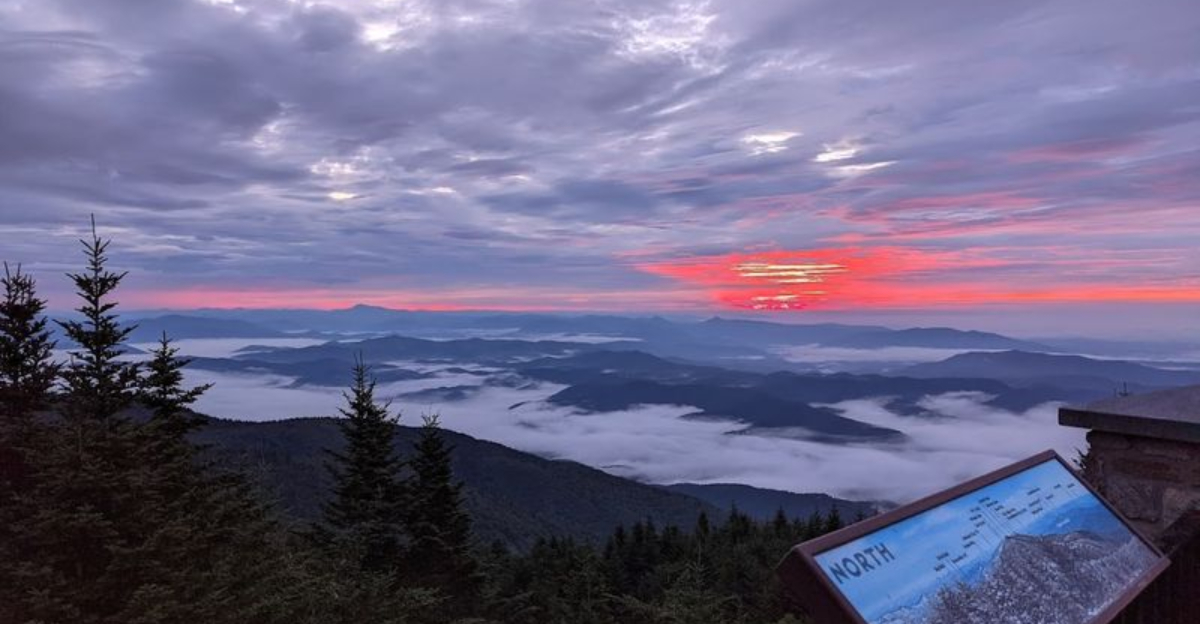
North Carolina is full of surprises, even for people who think they know the mountains. One morning, I pulled over on the Blue Ridge Parkway, stepping out into a thick fog.
Within minutes, the clouds parted, revealing ridge after ridge of blue-green peaks stretching endlessly. It felt like stepping into another world.
I even joked to myself that I might have accidentally walked onto a movie set, one where the script was just clouds and mountains. In North Carolina, views like this often feel almost unreal.
The mountains here are more than just tall trees and trails. From the highest point east of the Mississippi to rugged cliffs hanging over deep gorges, every view has a story.
Many of the best spots are tucked away, quietly waiting for anyone curious enough to explore. This list is about those hidden places, the summits that make you pause, breathe, and remember why you came to the mountains in the first place. And some of the most unforgettable ones are found right here in North Carolina.
And trust me, if you follow this list, you might even find yourself smiling at how unexpectedly magical North Carolina can be.
1. Waterrock Knob, Plott Balsams
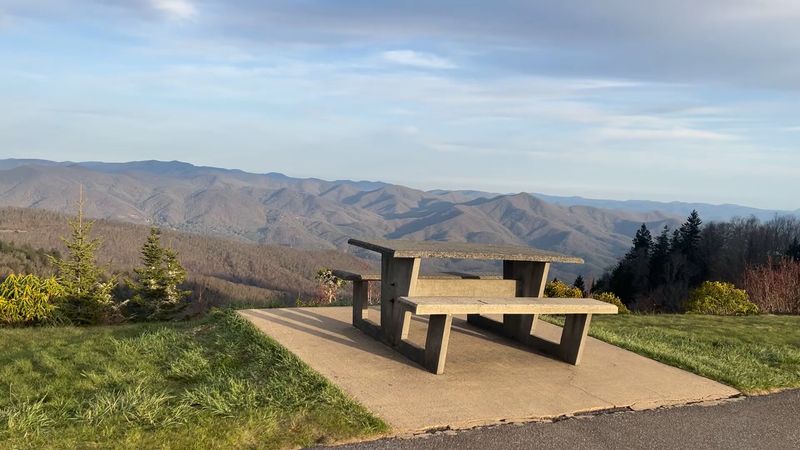
Waterrock Knob sits at 6,292 feet in the Plott Balsam range and is one of North Carolina’s most dramatic summits. Located at Milepost 451.2 on the Blue Ridge Parkway, it’s accessible yet feels remote.
I remember hiking the short 0.6-mile trail from the visitor center and thinking: “This can’t possibly be all uphill, it’s too pretty to be painful.”
The incline is steady but manageable, and with every step, new ridges come into view. You can see the Great Smoky Mountains, the Great Balsams, and even the Nantahala Mountains on a clear day.
Standing at the top, the panorama is breathtaking. Waves of blue ridges ripple toward the horizon, and the sky feels wider here.
I once tried counting all the ridges I could see, lost track around number twenty, and gave up with a grin.
Sunset transforms the peaks into gold and violet, painting a scene that no photo can fully capture. Winter brings quiet magic.
Snow dusts the trees, the air is crisp, and the silence feels sacred.
Beyond the summit, the area is rich with nature. Birds glide along thermals, and small mammals dart among the rocks and shrubs.
I spent hours just watching the light shift over the mountains.
Every visit feels different. Whether you’re a seasoned hiker or just stopping for a scenic stroll, Waterrock Knob offers a view that lingers long after you leave.
If you need an excuse to linger, I suggest bringing a thermos of coffee. You’ll want to sip while staring into forever.
2. Richland Balsam, Great Balsam Mountains, Blue Ridge Parkway
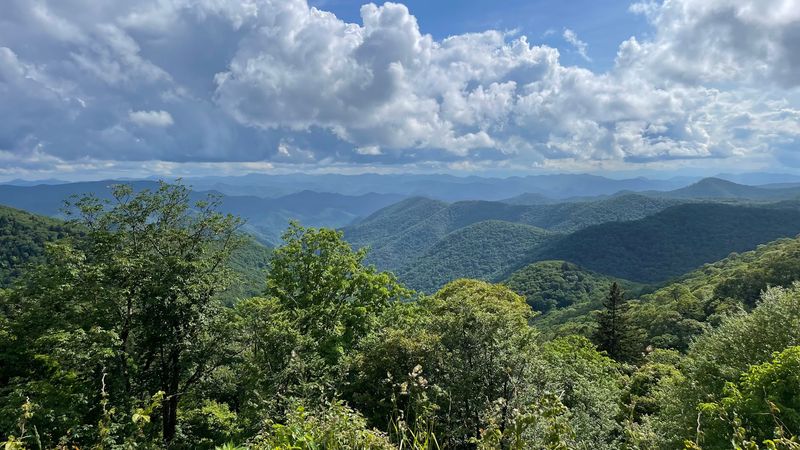
Richland Balsam is the highest point on the entire Blue Ridge Parkway at approximately 6,410 feet. It’s a summit that combines quiet beauty with awe-inspiring views.
I started at the Haywood-Jackson Overlook near Milepost 431 and immediately noticed how the scent of spruce needles made the climb feel almost like a spa treatment. Towering, ancient trees line the path, and a cool breeze greets you as you climb higher.
As you approach the summit, open clearings reveal endless ridges and peaks stretching in every direction. The views feel untouched, far from the crowds that gather at more famous spots.
Wildlife is abundant. Birds flit through the canopy, and small mammals occasionally cross the trail.
It’s easy to stop, breathe, and feel completely immersed in nature.
The summit itself is tranquil. I sat on a rock and watched layers of forested ridges fade into the distance.
The wind carries the scent of pine and the faint chill of high elevation.
It’s a place where time slows down. Photographers and hikers alike will find themselves returning to capture the changing light.
Every season offers something new, from vibrant fall colors to soft winter snows.
Richland Balsam is a reminder that sometimes the best views are the quiet ones.
Next time you visit, try humming a tune softly, you might just feel like the mountain is humming back.
3. Kuwohi (Clingmans Dome), Great Smoky Mountains National Park

Kuwohi, the Cherokee name for what most people call Clingmans Dome, is the highest point in Great Smoky Mountains National Park at 6,643 feet.
From the moment I drove up the winding road into the misty spruce-fir forest, I could feel the air change. It’s cooler here, fresher, and somehow cleaner than anywhere else I’ve been.
I even told my hiking buddy that breathing here should be patented.
The parking area marks the start of a half-mile paved trail that climbs steeply to a 54-foot observation tower. The trail itself is short but exhilarating.
Every turn in the path hints at the panorama waiting at the top. Once I reached the tower, the view was breathtaking.
On exceptionally clear days, you can see across seven states.
I remember turning in slow circles, trying to memorize every ridge, and thinking: “I can see my neighbor’s mountain from here.”
Even on hazy days, the layered silhouettes of the mountains create a scene so photogenic you want to linger for hours.
Kuwohi is also where the Appalachian Trail crosses its highest point along the entire 2,144-mile route from Georgia to Maine. Standing there, I could feel the weight of that history and accomplishment.
Every time I return, the clouds, sun, and sky play a slightly different scene, making it feel new each visit. And honestly, you might just forget to check your phone while staring at it.
4. Tennent Mountain, Pisgah National Forest
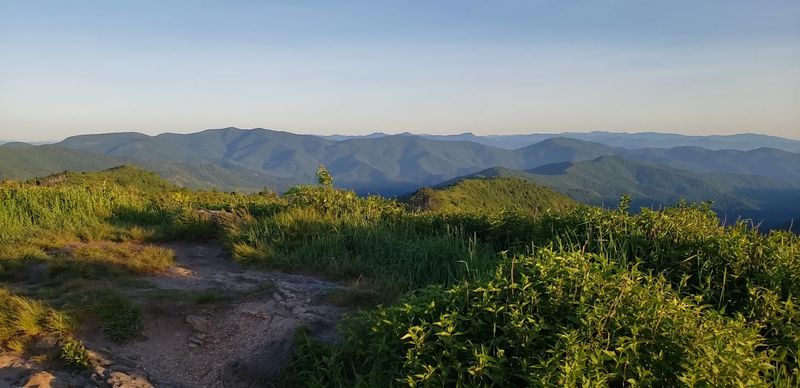
Tennent Mountain often flies under the radar, which is exactly why I love it. Rising to about 6,040 feet in the Great Balsam Mountains, it offers wide-open skies and spectacular, uncrowded views.
On my first visit, I joked that I had the entire summit to myself, until a curious squirrel decided otherwise.
Most hikers reach the summit via the Art Loeb Trail, which weaves through lush forest and gradually opens onto grassy balds. With each step upward, the vista expands, showing ridges stretching endlessly in every direction.
The summit itself is completely treeless, giving you a 360-degree view that makes you feel on top of the world. I paused, squinting into the sun, thinking “I could nap up here forever if someone brought a blanket.”
Tennent Mountain pairs beautifully with nearby Black Balsam Knob for a full day of high-elevation exploration. The grassy balds feel classic Appalachian, distinct from rocky cliffs or forested overlooks elsewhere.
Birds flit across the horizon and small mammals dart in the grass. There’s a quietness here that allows you to truly feel the mountain.
Next time, I might bring a snack just to watch the sun play over the ridges a little longer, it feels that good!
5. Black Balsam Knob, Pisgah National Forest

Standing on Black Balsam Knob is like stepping into another world. At roughly 6,214 feet, this open, grassy summit feels more like an alpine meadow than a typical Appalachian forest.
The Art Loeb Trail takes you across rolling balds and rocky stretches. With every step, the view widens.
The Great Balsams unfold in every direction, and the distant Craggy Mountains fade into the soft blue horizon. On foggy mornings, clouds drift below you like a slow-moving ocean.
I spent nearly an hour just watching the patterns of mist and sun shift across the ridges. It was so peaceful that I almost waved at the clouds as if they were old friends.
Sunrise here is magical. The light turns the grass warm amber and paints the mountains beyond in gold, pink, and purple tones.
Sunset is just as stunning, the ridgelines glowing while the sky deepens above.
Photographers and hikers alike flock here for that golden-hour effect, but there is space enough for everyone to enjoy it. I once tried to count all the shades of green and gave up at fifty.
The openness of the summit makes you feel free, untethered, and part of the vast landscape around you. What I love most is how the view changes with the seasons.
Spring brings wildflowers, summer gives endless greens, and fall drapes the ridges in fiery oranges and reds. Winter transforms Black Balsam Knob into a quiet, snow-covered expanse.
Every visit feels like a fresh postcard from the mountains.
6. Looking Glass Rock, Pisgah National Forest
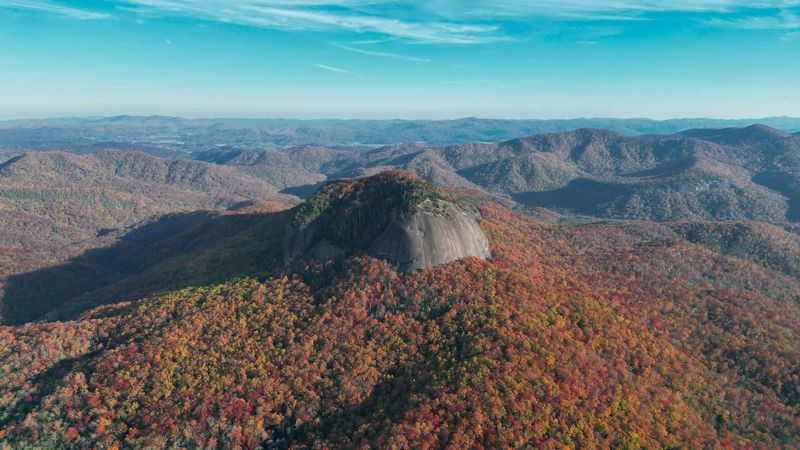
Looking Glass Rock is a monolith that dominates the Pisgah landscape. Rising dramatically from the forest floor near Brevard, it is a sight you cannot ignore.
The first time I saw it, I said that it looked like a giant stone mirror left by the mountains for hikers to admire themselves.
The hike to the summit is about 3.1 miles one-way, climbing 1,700 feet. It is a solid workout, but every drop of sweat is worth it.
The summit opens onto a broad, bare granite expanse, offering panoramic views of Blue Ridge ridges and distant forested horizons that seem to stretch forever. The rock itself is smooth and sun-warmed.
I sat there for a while, letting the wind brush across my face as I scanned the endless ridges. I felt like I could shout my thoughts to the horizon and they would echo back with mountains agreeing.
The sense of exposure and ruggedness gives this viewpoint a bold character. Rock climbers often scale the faces on the way up, adding energy and life to the scene.
On clear afternoons, the ridgelines dissolve into soft blue haze, giving the view a dreamy, almost watercolor effect. Morning fog brings a mysterious atmosphere.
I said that it would be the perfect spot for a mountain-themed yoga session if someone brought a mat.
Looking Glass Rock is one of those places in North Carolina where the effort of the hike is fully rewarded by an unforgettable summit view.
You leave feeling small, awed, and completely immersed in the Appalachian wilderness. And every time I leave, I catch myself looking back and thinking, I will return.
7. Table Rock, Linville Gorge Wilderness
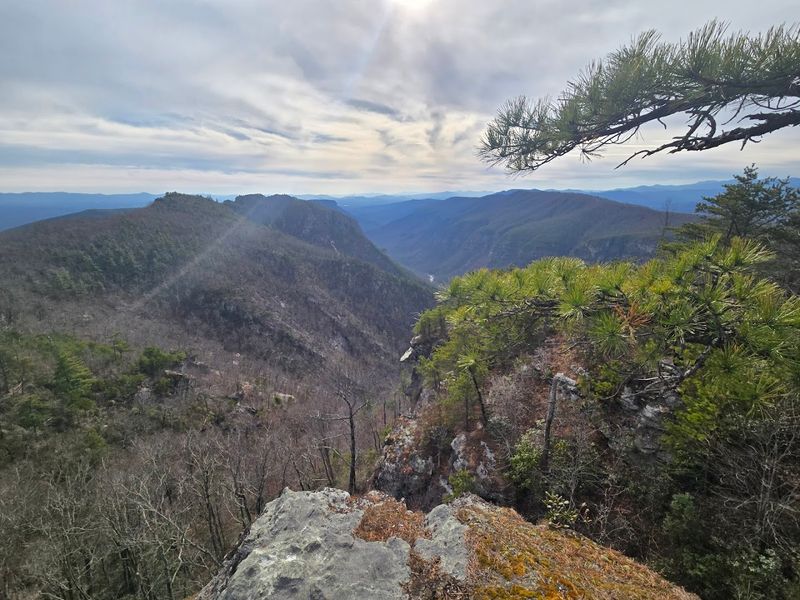
Table Rock is one of the most dramatic mountain viewpoints in the Southeast. Rising above the rim of Linville Gorge in Burke County, it feels like standing on the edge of the world.
The first time I saw the gorge drop away below me, I whispered: “No wonder they call this a natural wonder.”
The trail is a scramble at times, with rocky ledges that demand your attention, but the payoff is immediate and breathtaking. From the summit, the gorge drops away in a deep, forested chasm, while ridgelines stretch endlessly in every direction.
The dual nature of this summit, the rugged cliffs and the sweeping mountain vistas, makes it unlike any other viewpoint in North Carolina. Sunrise casts a warm glow across the gorge, while sunset paints the distant ridges in vibrant shades of pink and gold.
I told my friends that Table Rock might be the best place to practice dramatic mountain poses.
Photographers flock here, but even on a busy day, there is space to find your own private moment of awe. Families with older kids will enjoy the immediate sense of accomplishment, as the reward is visible the entire hike.
The shorter trail means you do not need a full day to experience this summit. I still remember catching my breath, smiling at the view, and thinking how lucky I was to be there.
8. Moore’s Knob, Hanging Rock State Park
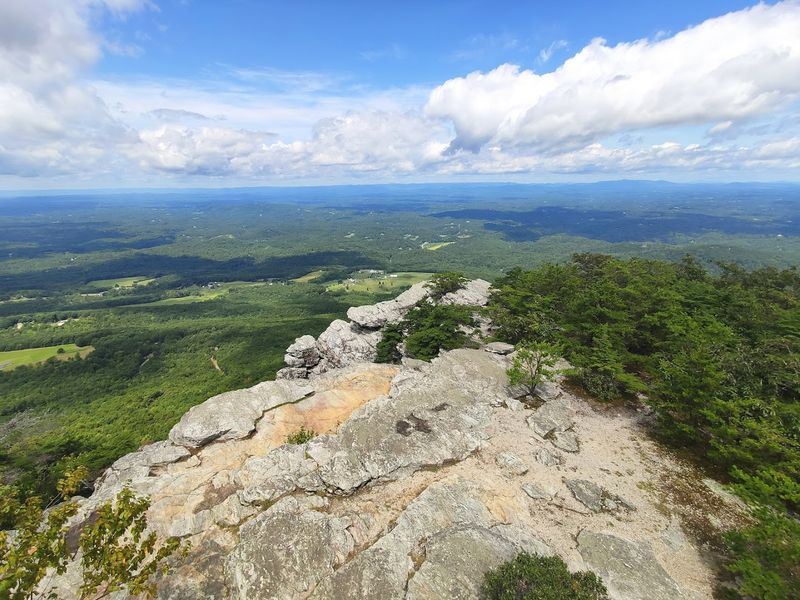
Moore’s Knob may surprise many first-time visitors. At 2,579 feet, and the crown jewel of Hanging Rock State Park in Stokes County.
From the lookout tower at the summit, the panorama stretches across rolling countryside, nearby Pilot Mountain, and even the distant skylines of Winston-Salem and Greensboro.
The contrast of urban and rural landscapes makes this summit feel unique compared to the high Appalachian peaks farther west. The climb to the top is moderate and well-maintained, making it accessible for most hikers.
I loved exploring the rock ledges and fire tower, stopping at multiple vantage points to watch the sun rise over the Sauratown ridges.
The view feels both expansive and calming. It is a perfect place to pause, take a deep breath, and maybe even try humming a tune to match the wind.
Hanging Rock State Park itself offers waterfalls, swimming areas, and miles of additional trails. Moore’s Knob proves that breathtaking mountain views do not always require extreme elevation.
It is one of those rare spots that leaves you grinning even before you reach the top.
9. Devil’s Courthouse, Blue Ridge Parkway
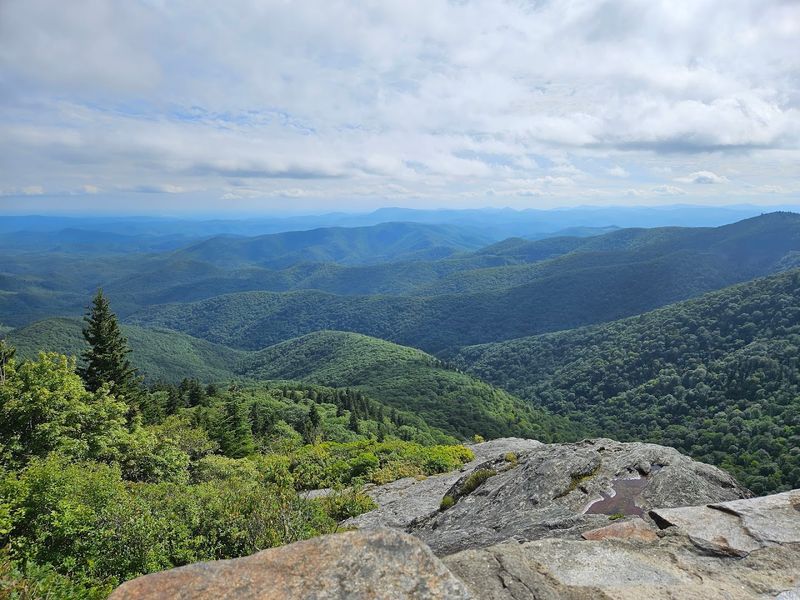
The name alone is enough to make you curious. Devil’s Courthouse sits near Milepost 422 on the Blue Ridge Parkway and offers one of the most dramatic cliff summits in Western North Carolina.
I made a joke that the devil must have taken a long coffee break to let these views be so nice.
The hike to the top is short but steep, gaining elevation quickly. The rocky outcrop at the summit opens onto a sweeping view of layered ridges, and the cliff edge feels bold and exposed.
I remember standing there and feeling my heart race as the wind swept across the summit. The Appalachian legend adds to the experience.
Locals say a powerful spirit once held court here. The scenery is wild and untouched, with ridges stretching far beyond what the eye can see.
I half-expected a ghostly judge to give me a verdict of awe.
In fall, the surrounding forest turns brilliant shades of red, orange, and gold, making the summit even more cinematic.
Despite its name and dramatic presence, Devil’s Courthouse is accessible enough for a quick high-reward hike. It is the kind of place where a simple deep breath feels like a reward in itself.
10. Mount Mitchell Summit, Mount Mitchell State Park
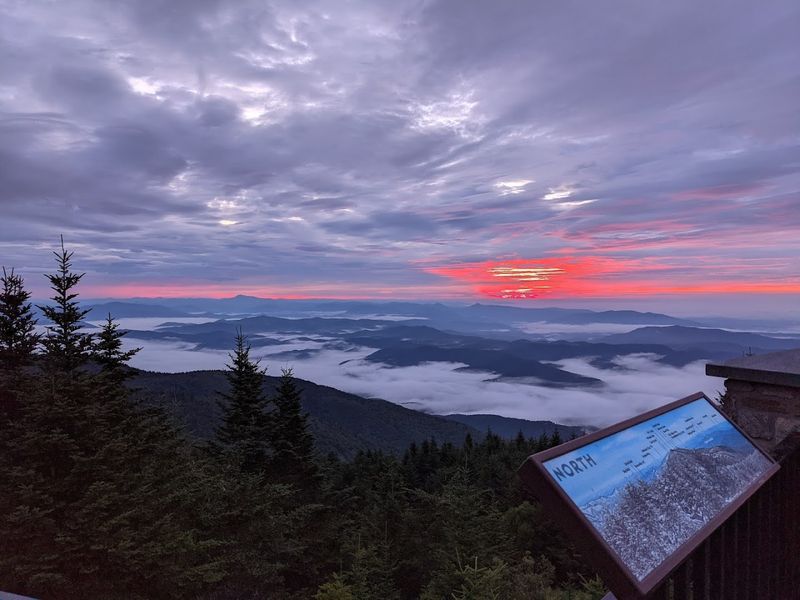
Mount Mitchell is the ultimate high point in North Carolina and the entire eastern United States. Rising to 6,684 feet in Mount Mitchell State Park, it is the tallest peak east of the Mississippi.
I finally climbed high enough to have a better view than my neighbor, and I felt quite victorious.
The short, paved path from the parking area leads to an observation deck with views that stretch across endless ridgelines, valleys, and distant mountain ranges. The summit feels like a bucket-list destination for anyone exploring the Blue Ridge.
I visited in summer, and the air at the top was noticeably cooler than in the valleys below. Winter transforms the landscape entirely, covering trees and trails in frost and snow.
The view remains staggering in every season. From the observation deck, you can see multiple ranges across several states on exceptionally clear days.
Every time I visit, I pause, close my eyes, and just let the mountains remind me how big the world really is.
The park itself offers additional trails, a museum, and a restaurant. Standing on Mount Mitchell, I felt the magnitude of the Appalachian Mountains and the history of the park.
Every step on the paved path leads to a view that is truly worth the trip.
Whether you are a casual visitor or a serious hiker, I promise Mount Mitchell will leave you grinning from top to bottom.