These Historic Homes In North Carolina Let You Step Inside The Past
What if the walls of a house could talk? In North Carolina, some of them practically do.
Across the state stand homes that have survived centuries and changing times. Some of these places are grand and jaw-dropping.
Others are small and quietly powerful. Each one offers a glimpse into how people once lived.
North Carolina holds more history than many visitors expect. You might expect a museum to feel cold and distant, but these historic homes feel different.
They feel real and full of stories. Walking through these rooms makes the past feel close and personal.
These homes are worth visiting if you enjoy learning about the past. Some of them are more unusual than you might expect.
1. Tryon Palace, New Bern
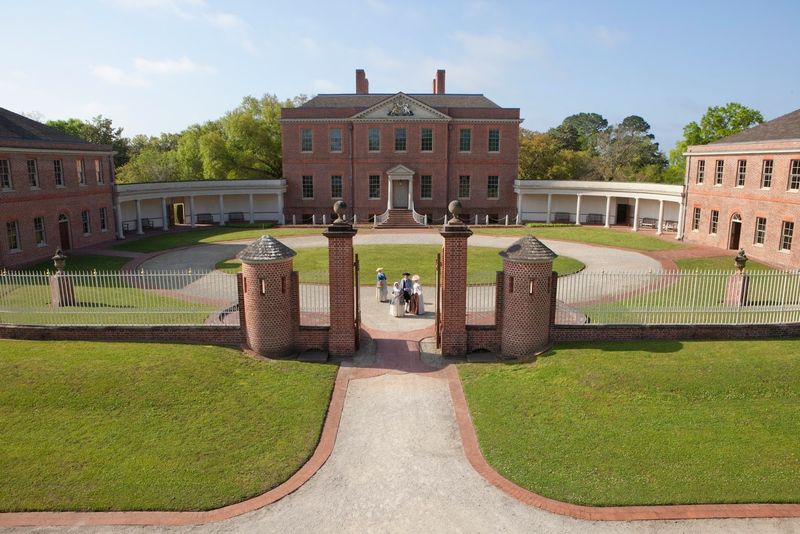
Before Raleigh became the capital, this was the seat of power in colonial North Carolina, and it reflected that power. Tryon Palace in New Bern was built between 1767 and 1770 as the official residence of Royal Governor William Tryon.
It was considered one of the finest buildings in colonial America at the time of its completion.
The palace served not only as the governor’s home but also as the center of political life in the colony. Important meetings, official events, and government decisions once took place within its walls.
Today, the reconstructed palace at 529 South Front Street in New Bern allows visitors to walk through spaces that once shaped the colony’s early history.
The original structure burned down in 1798, but what stands today is a meticulous reconstruction completed in 1959. Historians and architects used original drawings, letters, and inventories to rebuild it as accurately as possible.
Many of the interior rooms have been furnished to reflect how they might have appeared during the colonial period.
The surrounding gardens are also open to visitors. They follow 18th-century English garden design principles and are planted with flowers and herbs that would have been grown during the colonial era.
Costumed interpreters help bring the whole experience to life by demonstrating crafts and daily routines of the period.
Today it remains one of North Carolina’s most notable colonial sites.
2. Bellamy Mansion, Wilmington
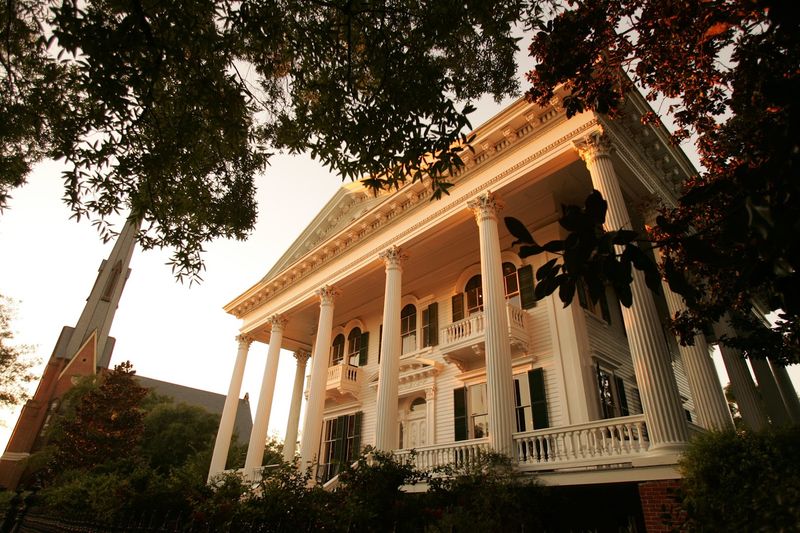
The history of this mansion spans many chapters. The Bellamy Mansion at 503 Market Street in Wilmington is one of the most striking examples of historic Southern architecture.
Built between 1859 and 1861 for Dr. John D. Bellamy, the home blends Greek Revival and Italianate styles.
The mansion has 22 rooms and features elaborate plasterwork, carved woodwork, and sweeping verandas. Large windows and high ceilings were designed to help keep the house comfortable during Wilmington’s hot coastal summers.
But the story of this place goes beyond the Bellamy family.
Many people once lived and worked on the property, and their experiences are thoughtfully presented through the site’s exhibits and interpretation. A preserved outbuilding still stands on the grounds, offering visitors a clearer picture of how daily life on the property was organized.
Over the years the mansion also served different roles within the city. The Bellamy family later returned to the home, and it remained connected to the family for generations before eventually becoming a museum.
Today the site operates as a museum that highlights the architecture of the house and the many stories connected to it.
3. Mordecai House, Raleigh
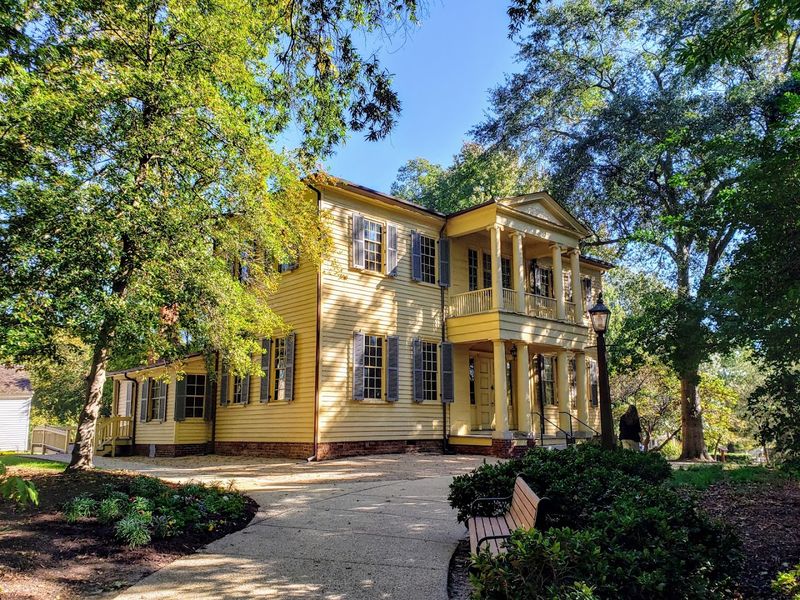
This historic property tells an important part of Raleigh’s story. The Mordecai Historic Park in Raleigh is exactly that kind of place.
At its center stands the Mordecai House, a Federal-style historic home that dates back to around 1785, making it one of the oldest structures still standing in Raleigh.
The house was built for Joel Lane’s son Henry Lane and later passed to the Mordecai family through marriage. The home remained in the same family for generations, which helped preserve many of its original details.
Visitors exploring the grounds at 1 Mimosa Street in Raleigh can still see original woodwork, fireplaces, and room layouts that reflect how the house was used in the late eighteenth and early nineteenth centuries.
On the grounds, you will also find the birthplace cottage of President Andrew Johnson, which was moved to the site for preservation. There is also a historic law office, a kitchen, and a garden.
Several smaller outbuildings help illustrate how daily work and household tasks were organized on the property.
Guided tours help explain how families lived here and how the property fit into the early development of Raleigh. Today the site helps visitors better understand everyday life in the city’s early years.
4. Duke Homestead, Durham
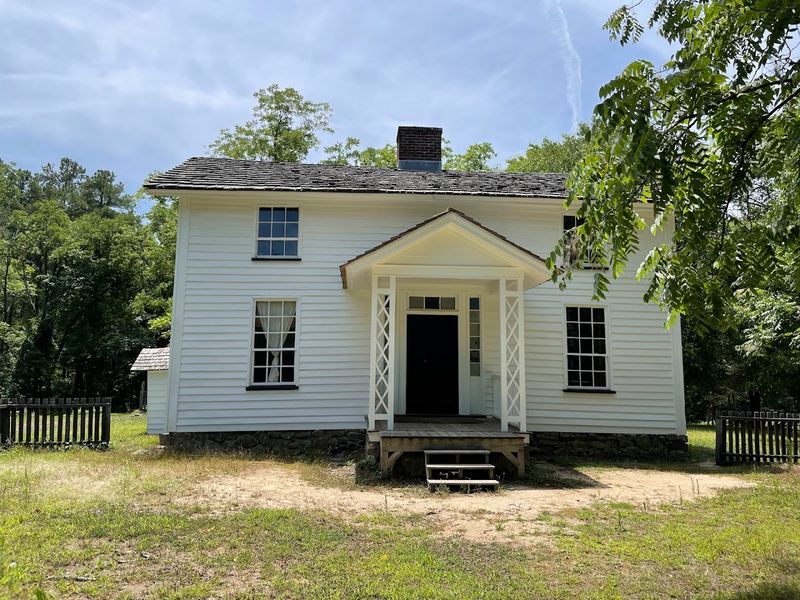
Before the Duke family became closely associated with universities and major businesses, they lived and worked on a modest farm outside Durham. The Duke Homestead State Historic Site preserves the early history of the Duke family.
Washington Duke, who later helped build one of America’s most influential business enterprises, began his journey here in this simple farmhouse. Today visitors can explore the property at 2828 Duke Homestead Road in Durham, where the story of the family’s early years began.
The original home dates to the 1850s and is refreshingly unassuming. There are no grand columns or sweeping staircases.
The small wooden structure reflects the practical lifestyle of rural families in North Carolina during that period. The site offers a glimpse into what everyday farm life looked like in the mid-1800s.
The property also includes a curing barn, a pack house, and a factory building that illustrate how the family gradually expanded their agricultural operation. These buildings help explain how a small rural enterprise slowly developed into a much larger commercial venture.
The on-site museum explains the agricultural economy that shaped much of North Carolina’s early development, along with the many people whose work supported it. The site tells an important story about farming, business growth, and community life in the state’s past.
5. Körner’s Folly, Kernersville
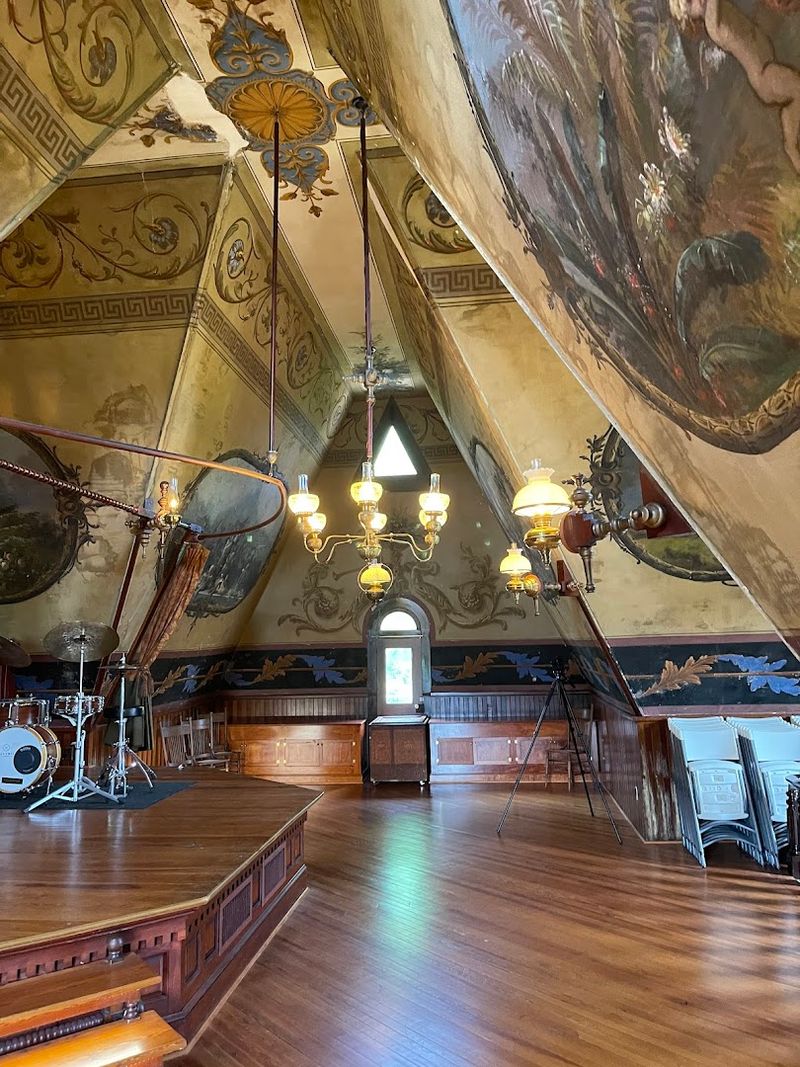
No two rooms in this house are the same height. That is not a mistake.
That is the whole point. Körner’s Folly, found along 413 South Main Street in Kernersville, is one of the most genuinely peculiar historic homes in North Carolina, and it stands out for its unusual design.
Built by interior decorator Jule Gilmer Körner between 1878 and 1880, the house was designed as a showroom, a studio, and a personal statement all rolled into one.
The building has 22 rooms spread across seven floor levels, with ceilings that range from five and a half feet to 25 feet tall. Every room is decorated differently, with hand-painted murals, carved woodwork, and custom-designed furniture.
The top floor was converted into a private theater for the family, complete with a stage and original painted scenery backdrops that still survive.
Körner called it a folly because he knew people would think he was eccentric for building it. He leaned into that reputation fully.
Today the house operates as a museum dedicated to Körner’s design work. No two rooms look exactly alike.
6. Biltmore Estate, Asheville
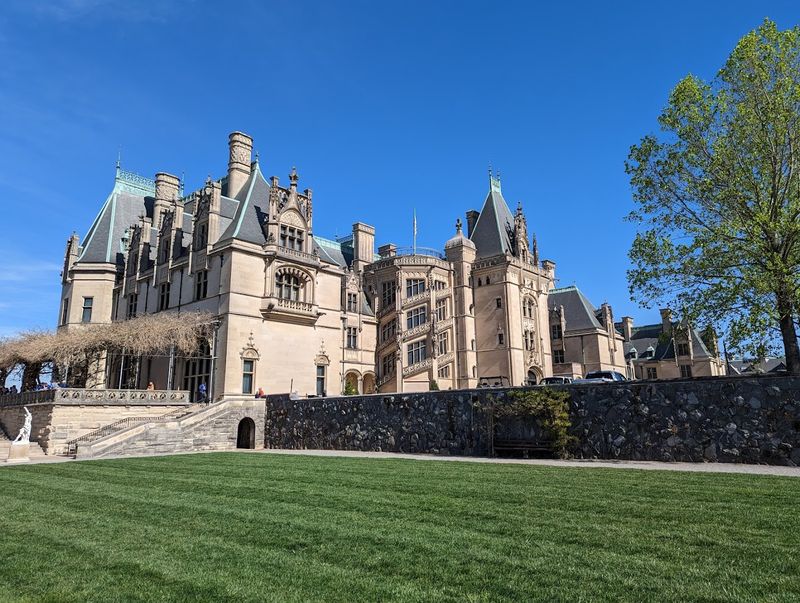
George Vanderbilt wanted to build something that America had never seen before, and in 1895 he did exactly that. The Biltmore Estate at 1 Lodge Street, Asheville, NC 28803 is the largest privately owned home in the United States.
The scale only makes sense once you step inside.
The house has 35 bedrooms, 43 bathrooms, and 65 fireplaces. It also includes a bowling alley, an indoor swimming pool, and a massive banquet hall used for large gatherings.
Long corridors, grand staircases, and detailed woodwork add to the sense of scale throughout the house. The design was inspired by the French Renaissance chateaux Vanderbilt admired during his travels in Europe.
The estate also has an interesting history. Vanderbilt hired Frederick Law Olmsted, the landscape architect behind New York’s Central Park, to design the surrounding grounds.
Olmsted created miles of landscaped gardens, forests, and scenic paths that still shape the estate today.
7. Cupola House, Edenton
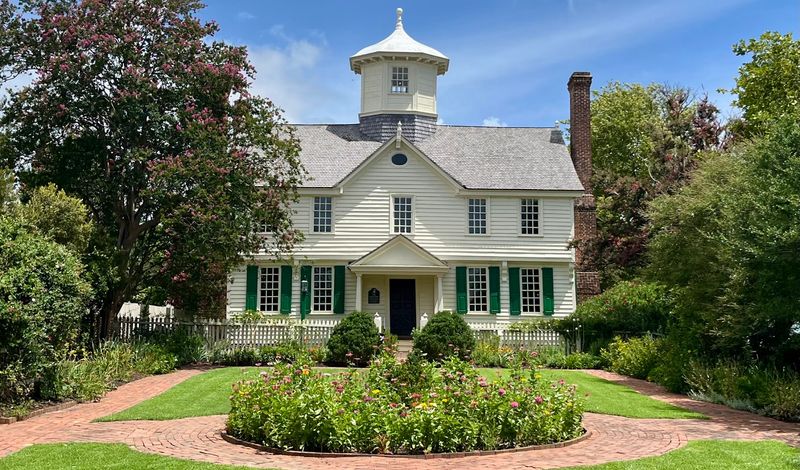
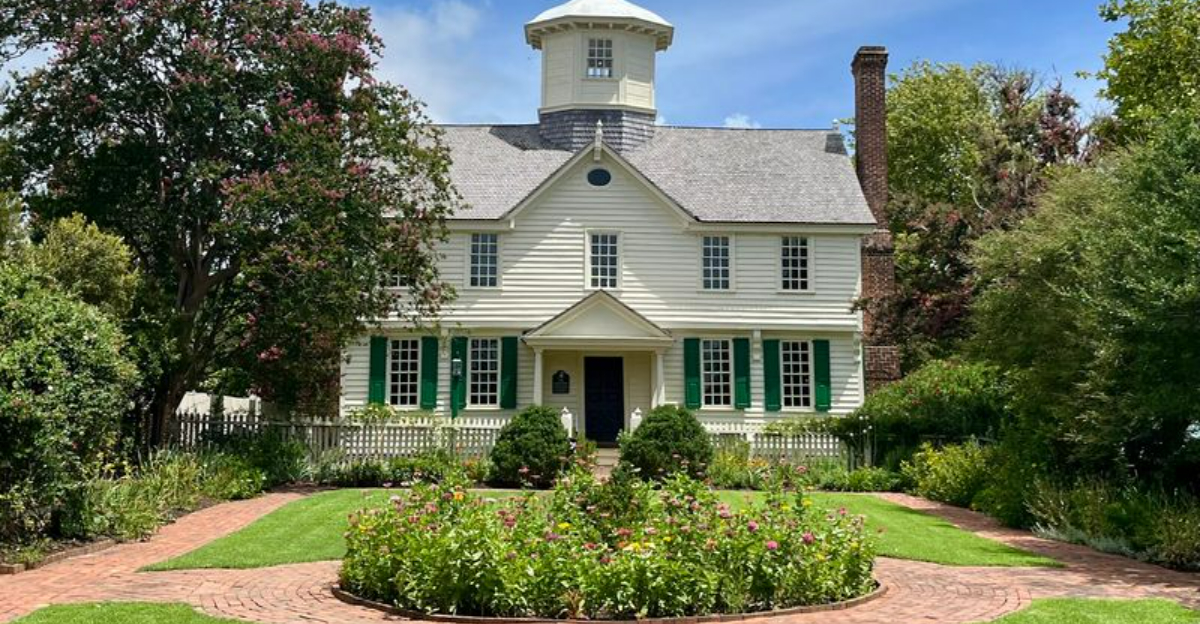
In Edenton, this house has stood for nearly 300 years. The Cupola House, located along 408 South Broad Street in Edenton, is one of the oldest surviving wooden structures in North Carolina, built around 1758 by Francis Corbin, the land agent for the Lords Proprietors.
Its most distinctive feature is the octagonal cupola perched on the roof, which gave the house its name and its skyline-defining silhouette.
The house is a rare example of colonial-era architecture in North Carolina. That makes it even more unusual, since most colonial builders were leaning toward Georgian styles by the mid-1700s.
The interior woodwork is extraordinarily detailed, with carved cornices and paneling that rival anything found in New England homes of the same period.
The house had a complicated history of ownership and renovation, and some of its original interior woodwork was actually sold and removed in the early 20th century. A portion of that woodwork ended up in the Brooklyn Museum in New York.
Restoration efforts over the decades have helped return the house to its earlier character.
8. Asheville Museum Of History, Asheville
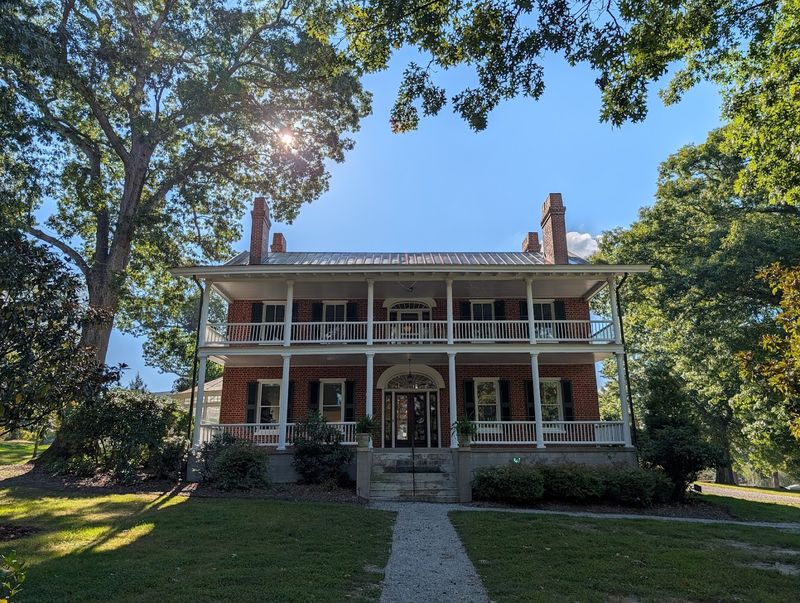
Asheville gets a lot of attention for the Biltmore, but this city has another historic home that represents another part of the city’s early history.
The Asheville Museum Of History , found along 283 Victoria Road in Asheville, is one of Asheville’s oldest historic homes and one of the region’s most important early landmarks.
Built around 1840 for James McConnell Smith, a wealthy merchant and land developer, the house reflects the prosperity of Asheville’s earliest elite class.
The architecture blends Federal and Greek Revival elements, which was a fashionable combination for upscale homes of that era.
The interior has been carefully restored and furnished with period-appropriate pieces that give each room a warm, lived-in quality.
The house changed hands several times over the decades and served various purposes, including a stint as a boarding house and later as part of a school campus.
Today it operates as a house museum run by the Western North Carolina Historical Association. For anyone who wants to understand Asheville before the tourists arrived, this is the right starting point.
9. Hezekiah Alexander House, Charlotte
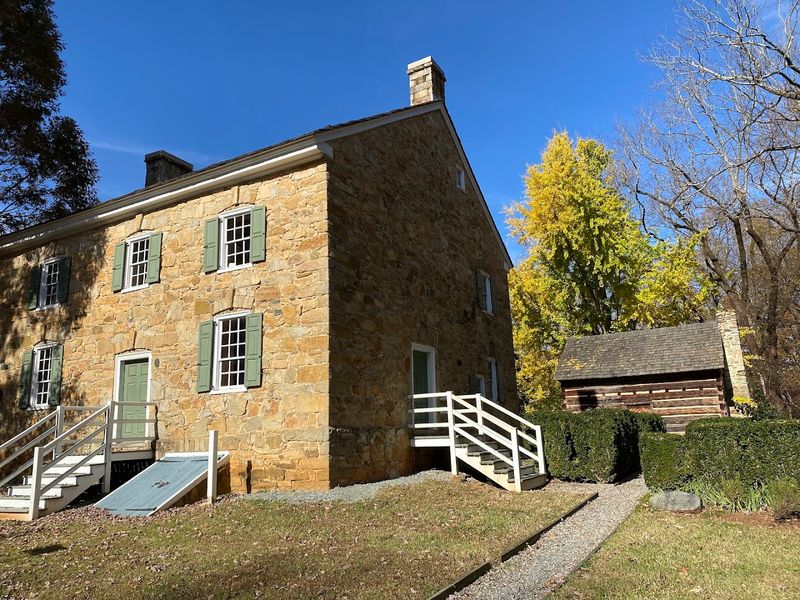
Charlotte is known for banking towers and rapid growth. But the oldest house still standing in Mecklenburg County tells a completely different story about this city.
The Hezekiah Alexander House, found along 3500 Shamrock Drive in Charlotte, was built in 1774 from locally quarried stone, and it has outlasted just about everything else from that era in this part of North Carolina.
The sturdy stone structure helped the house survive centuries of change as Charlotte grew around it.
Hezekiah Alexander was a blacksmith, farmer, and civic leader who signed the Mecklenburg Declaration of Independence in 1775. That document, whether you consider it historical fact or legend, represents one of the earliest American assertions of independence from British rule.
Today the site helps visitors understand how early settlers lived and worked in this region.
A reconstructed springhouse and kitchen outbuilding stand nearby, helping visitors picture what daily life actually looked like for an 18th-century family.
10. House In The Horseshoe, Sanford
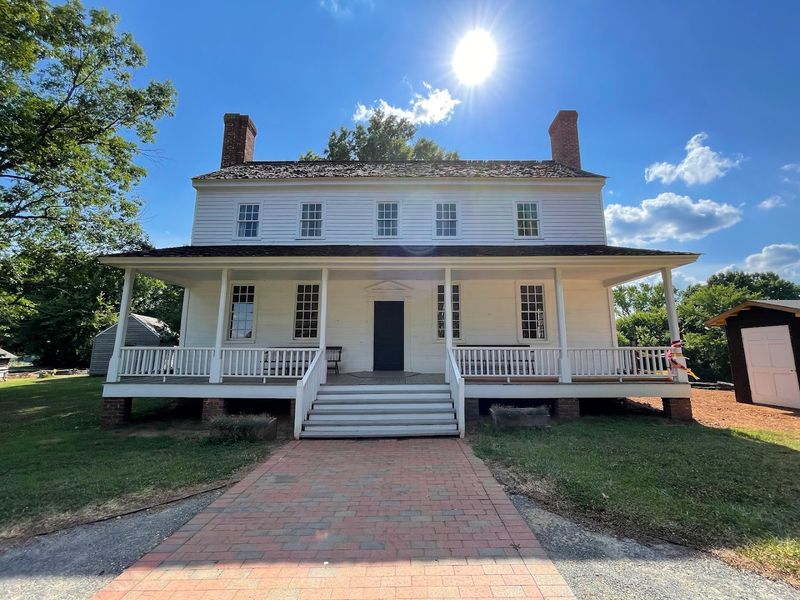
Most historic homes have plaques that mention dramatic moments from the past, but this one still shows physical traces of events that once unfolded here.
The House in the Horseshoe near Sanford, located along 288 Alston House Road, is a Colonial-era plantation home connected to an intense encounter that took place in 1781.
The house belonged to Philip Alston, a local militia colonel, and the evidence of that confrontation can still be seen today.
Built around 1772, the house sits in a curve of the Deep River, which is where it gets its name. Today the area is quiet and rural.
Visitors walking through the property can still notice small marks in the walls that remain from that historic moment.
The site is managed by the North Carolina State Historic Sites program and offers guided tours that explain both the architectural history of the house and the dramatic events connected to the property.
The story of Philip Alston himself is also worth knowing, since his later life took some unexpected turns. The site is currently temporarily closed while a new visitor center is under construction.