10 North Carolina Trails That Reward You With Incredible Views
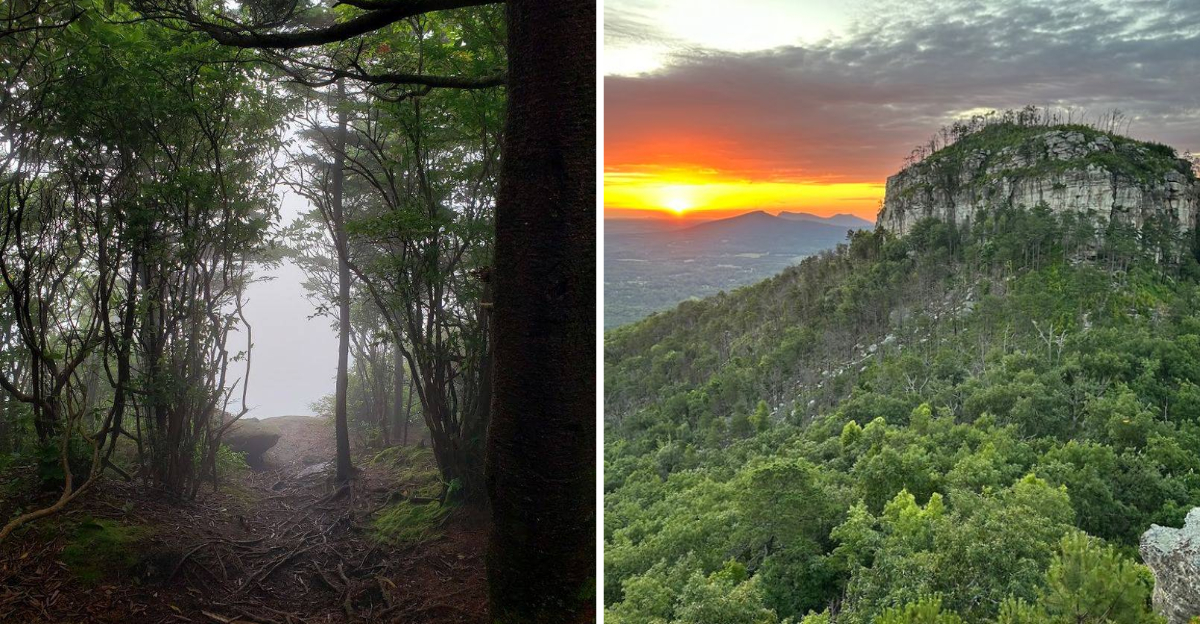
North Carolina doesn’t just offer great hikes. It delivers the kind of trails that stop you in your tracks and make you stare at the horizon a little longer than planned.
Across the state, paths wind through the Blue Ridge Mountains, climb rocky summits, and lead to overlooks that seem to stretch forever.
Some hikes reward you with wide mountain panoramas. Others guide you to waterfalls, quiet ridgelines, and peaceful forest paths.
What makes these trails special is how quickly the scenery changes. One moment you are walking beneath tall trees. Next, you are standing on an open overlook with miles of mountains rolling into the distance.
North Carolina offers options for every type of hiker. Some trails are short and manageable, while others challenge experienced adventurers with longer climbs and rugged terrain.
No matter the distance, the reward is always the view. Sweeping ridgelines, dramatic cliffs, and endless blue horizons appear again and again along the way.
Bring comfortable shoes, a little curiosity, and maybe a camera. A collection of ten North Carolina trails proves that breathtaking views often wait just a few miles down the trail.
1. Looking Glass Rock Trail
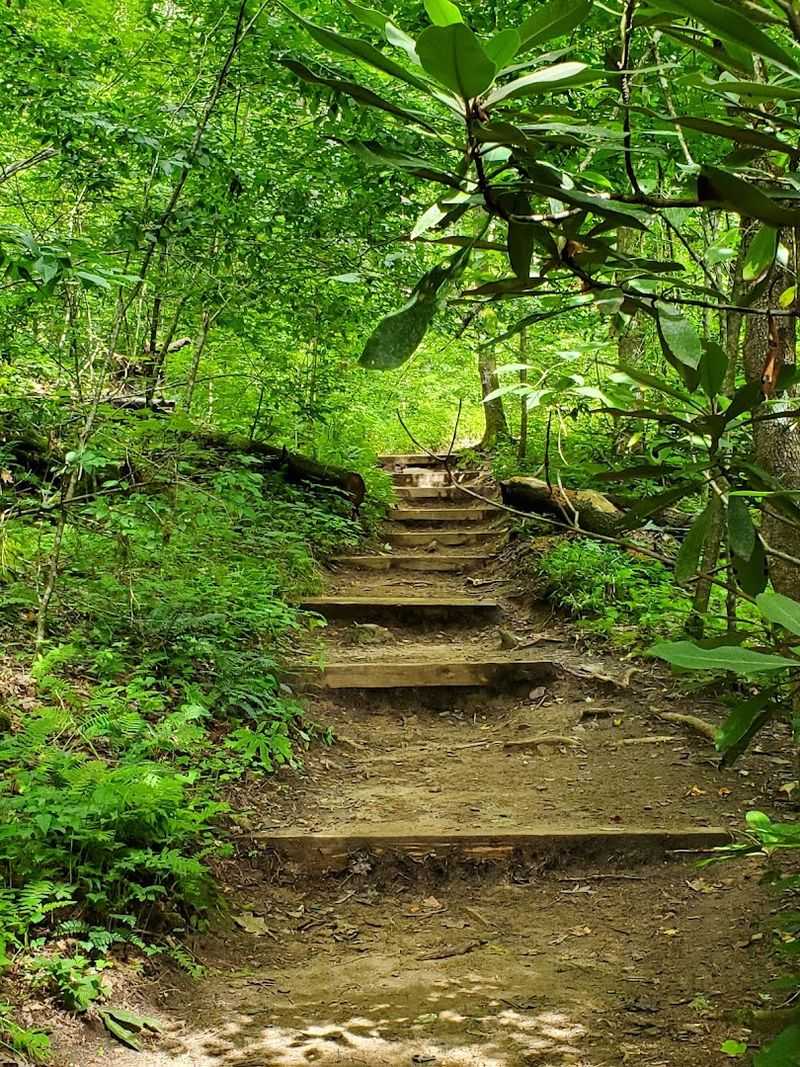
Some trails build excitement slowly. Others make their intentions clear from the first uphill step. This trail falls firmly into the second category, challenging hikers early and rewarding them with one of the most striking views in western North Carolina.
The trail sits in the heart of Pisgah National Forest near Brevard and stretches about 6.5 miles round trip. Along the way, the forest gradually opens until the massive granite dome of Looking Glass Rock begins to appear.
The rock face itself is enormous and smooth, catching sunlight in a way that almost makes it shimmer. That distinctive surface is what gave the mountain its name.
Climbers travel from across the Southeast to tackle the steep rock walls. Hikers who follow the trail to the top are rewarded with wide panoramic views that stretch across miles of forest.
On clear days, the ridges seem to roll endlessly toward the horizon. The sense of elevation makes the climb feel completely worthwhile.
Spring and fall are especially beautiful seasons for the hike. Wildflowers brighten the forest in spring, while autumn brings layers of color across the surrounding mountains.
The trail is considered moderate, with several steep sections near the summit. Good shoes and plenty of water make the climb far more comfortable.
Once you reach the top, it’s worth taking a few minutes to sit and enjoy the view. The scenery has a way of making the entire hike feel unforgettable.
2. Chimney Rock Outcroppings Trail
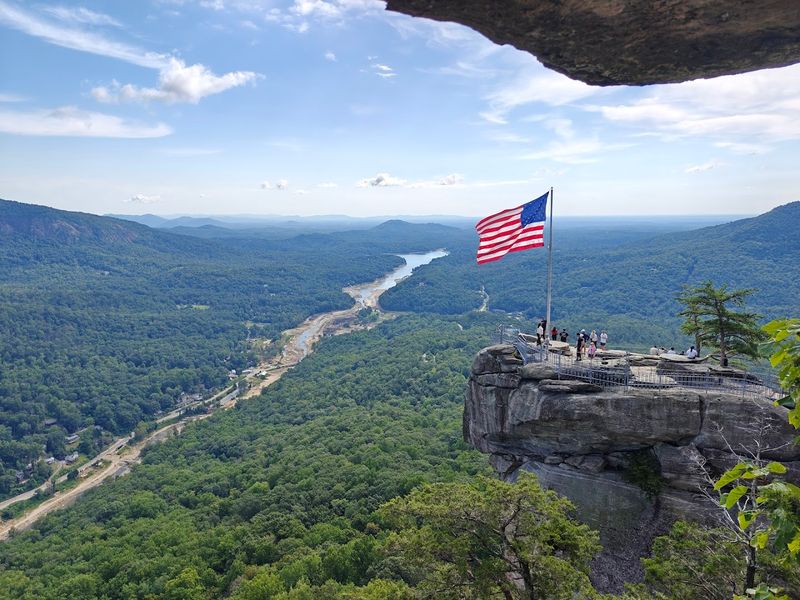
Few views deliver a bigger “wow” moment than standing high above a deep mountain gorge. The landscape suddenly opens wide, with cliffs, forest, and winding rivers stretching far into the distance.
The hike that leads to that view climbs through dramatic rock formations and exposed overlooks. Each section reveals another angle of the surrounding mountains.
This experience happens at Chimney Rock State Park, where the Outcroppings Trail leads visitors toward the famous granite spire known as Chimney Rock. The park sits in the village of Chimney Rock in western North Carolina.
The trail itself is fairly short, but the scenery feels anything but small. Massive boulders line the route, and several overlooks provide perfect spots to pause and take in the view.
From the higher viewpoints, Hickory Nut Gorge spreads out below in layers of green and blue. The Rocky Broad River winds through the valley, reflecting sunlight as it curves through the landscape.
Some visitors recognize the scenery from the film The Last of the Mohicans, which filmed scenes in this dramatic area.
For those who prefer a simpler route to the summit, the park also offers an elevator carved directly into the rock. That option allows many more visitors to experience the breathtaking views from the top
3. Black Balsam Knob Trail
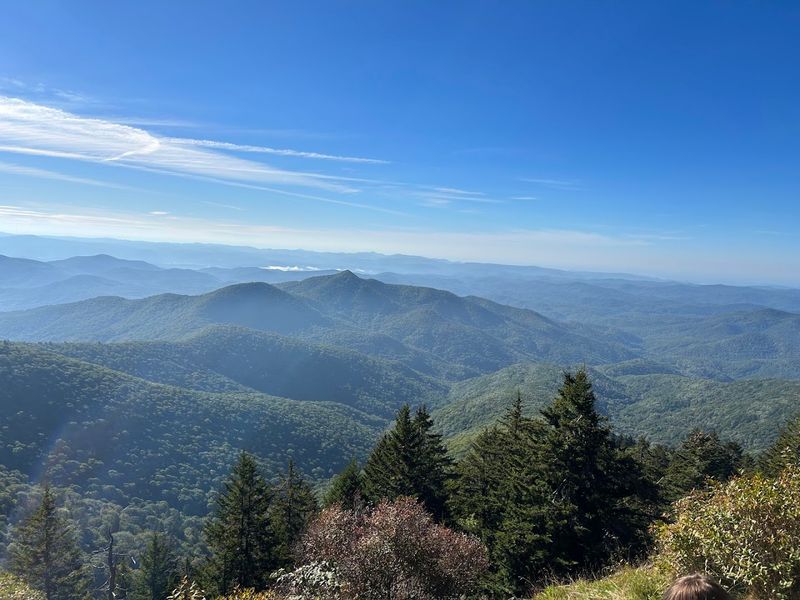
Some mountain summits feel endless, with nothing but open sky and rolling ridgelines in every direction. The landscape stretches so wide that it almost feels like standing above the entire mountain range.
The trail climbs quickly out of the forest before revealing wide grassy balds that roll across the ridgeline like a natural amphitheater.
This hike leads to Black Balsam Knob, one of the most scenic peaks along the Blue Ridge Parkway in Haywood County. The route begins near the Art Loeb Trailhead around milepost 420.2.
At 6,214 feet, the summit ranks among the higher peaks in the eastern United States. From the top, hikers are rewarded with sweeping 360-degree views across layers of blue mountain ridges.
On clear days, the horizon seems to stretch forever. The open terrain also makes this one of the best places in the region for watching sunsets or even stargazing after dark.
During summer, wildflowers brighten the grassy balds and attract hikers who enjoy both scenery and seasonal color.
Because the summit is fully exposed, winds can be strong even on warm days. A light windproof jacket can make the experience much more comfortable.
The hike is about 3.5 miles round trip, making it manageable for many hikers while still delivering the feeling of a true mountain adventure.
4. Craggy Pinnacle Trail
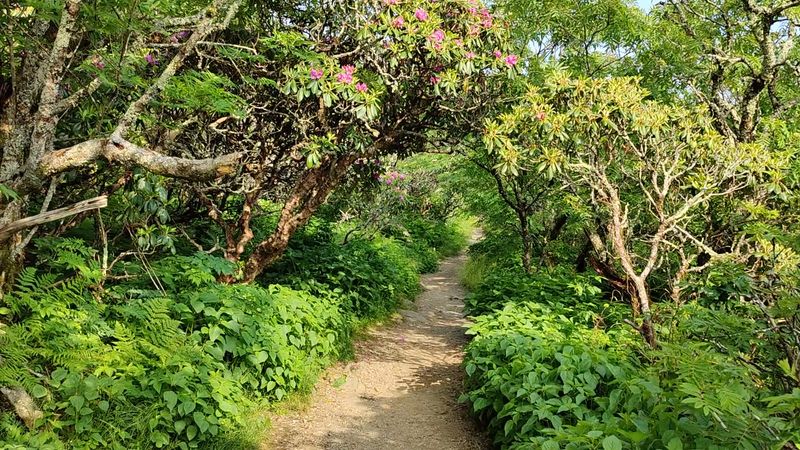
Some mountain trails feel magical long before you reach the summit. Twisting branches form natural tunnels, and the air grows cooler as the path climbs higher into the mountains.
In early summer, that magic becomes even more noticeable. The slopes burst into color when rhododendrons bloom across the mountaintop.
This short but unforgettable hike leads to Craggy Pinnacle in the Craggy Gardens area of the Blue Ridge Parkway. The trail begins near the Craggy Dome Overlook around milepost 364.1 in Buncombe County.
The round trip covers only about 1.4 miles, making it one of the most accessible scenic hikes in the region. Despite the short distance, the summit views feel surprisingly vast.
The path winds through thick tunnels of twisted rhododendron before reaching a rocky overlook at the top. From there, hikers can see sweeping views of the Black Mountains and the valleys stretching below.
The area becomes especially famous in mid-June, when rhododendrons bloom across the ridges in shades of purple and pink. Timing a visit during the bloom is a favorite experience for many North Carolina hikers.
Even outside the bloom season, the rocky summit and open views make the trail memorable.
At nearly 5,900 feet of elevation, the air feels noticeably cooler than in the valleys. Sunrise and sunset often bring the most dramatic colors to the mountain skyline.
5. Rough Ridge Trail
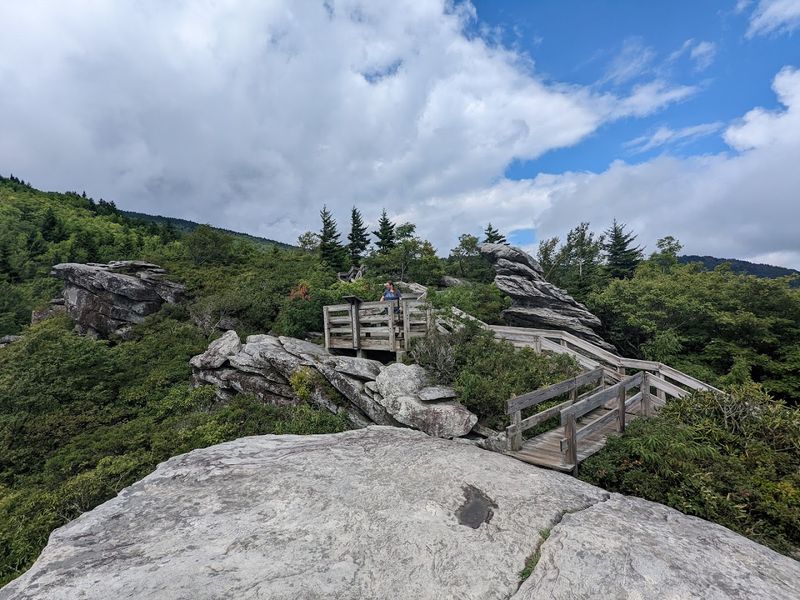
Some hikes make you work a little harder for the view, but the reward arrives quickly. A short climb over rocky terrain leads to one of the most impressive overlooks along the Blue Ridge Parkway.
The trail gains elevation fast, weaving through forest before emerging onto a broad stretch of exposed granite. From there, the scenery suddenly opens wide across the surrounding mountains.
This hike leads to Rough Ridge, a popular stop along the Blue Ridge Parkway near milepost 302.8 in Caldwell County. The trail is about 1.6 miles round trip, making it short but surprisingly dramatic.
At the summit, the rocky ridge offers clear views toward Grandfather Mountain and the surrounding Blue Ridge landscape. The open granite creates one of the most unobstructed viewpoints in the area.
The ridge also supports a unique plant community. Blueberry shrubs, mountain laurel, and other hardy plants grow directly from the rock.
In autumn, these plants turn brilliant shades of red and orange, creating spectacular fall color against the mountain backdrop.
Near the summit, hikers scramble lightly across rocks to reach the best viewpoints. Good footwear with solid grip helps on these sections.
Because the ridge is fully exposed, weather can change quickly. Early morning hikes often bring calmer conditions and quieter trails.
6. Andrews Bald (Forney Ridge Trail)
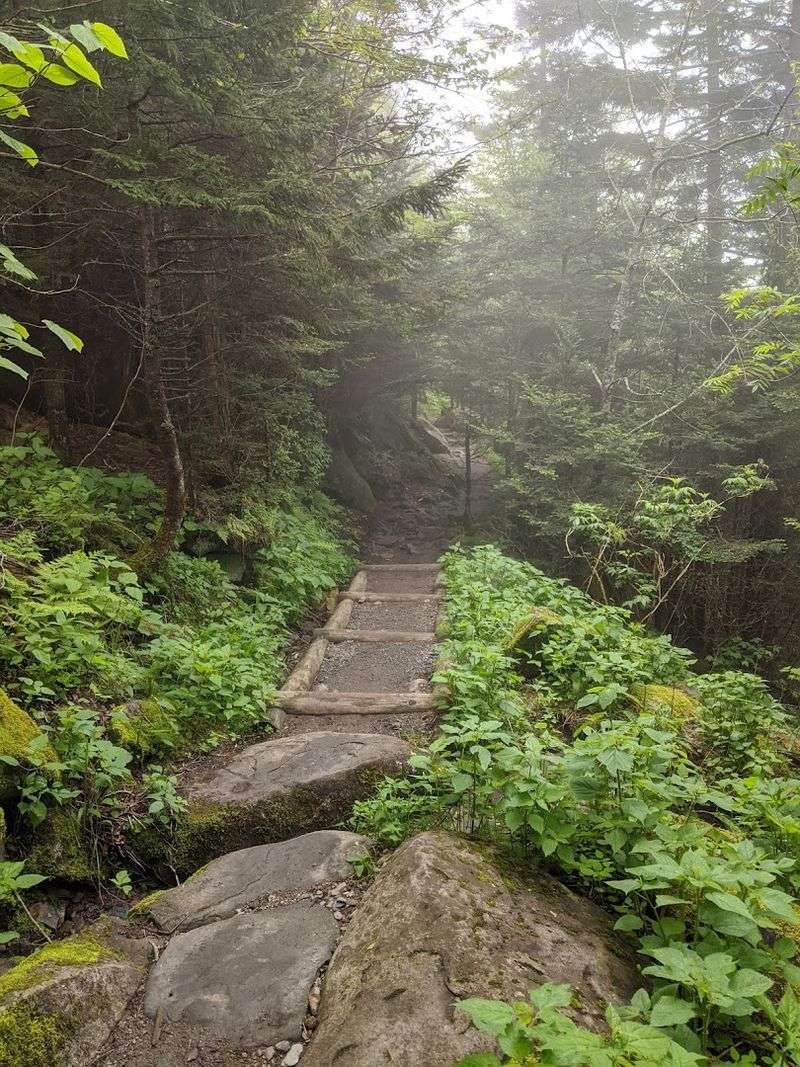
Some mountain views feel peaceful the moment you arrive. Wide grassy meadows stretch across the ridgeline, surrounded by layers of blue mountains that fade into the distance.
The trail leading there winds through dense forest before suddenly opening into a high mountain clearing.
This hike leads to Andrews Bald in Great Smoky Mountains National Park near the town of Cherokee. The route follows the Forney Ridge Trail beginning near the Clingmans Dome parking area.
The hike covers about 3.6 miles round trip and reaches one of the highest grassy balds in the park. The meadow sits around 5,800 feet above sea level, offering sweeping views across the Smoky Mountains.
Along the way, hikers move through a thick spruce-fir forest filled with mossy logs and filtered light. The tall trees give the trail a quiet, cathedral-like atmosphere.
In early summer, the bald bursts with color. Flame azalea and catawba rhododendron bloom across the meadow, making June a favorite time to visit.
Even on cloudy days, the open landscape creates a moody beauty that photographers love.
Compared with some of the Smokies’ busier trails, this one often feels calmer, especially during weekday mornings.
Wildlife sightings are common here. Deer and wild turkeys occasionally wander across the open meadow, adding another memorable moment to the hike.
7. Grandfather Trail (Grandfather Mountain State Park)
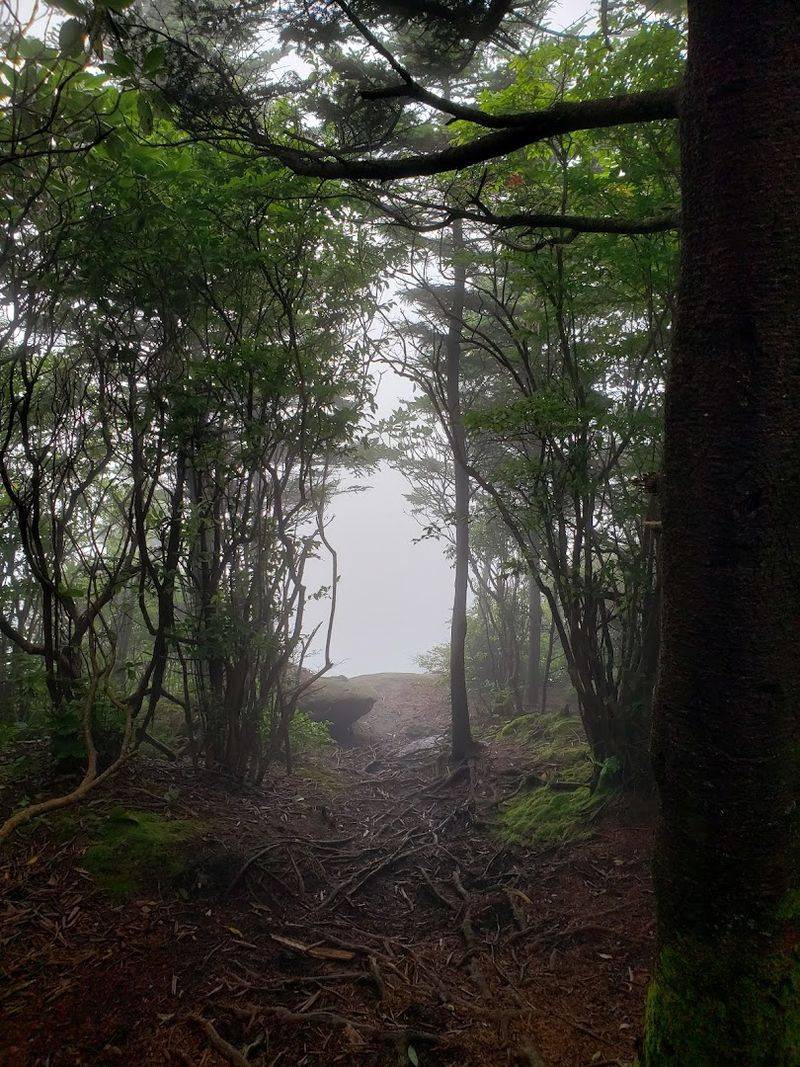
High ridgelines, swinging bridges, and ladders bolted into sheer rock turn this hike into a true mountain adventure. From the first steps, the route makes it clear this is far from an ordinary afternoon walk.
The path climbs along a rugged ridgeline where every turn reveals dramatic cliffs and wide mountain views. Sections of the trail cross famous swinging bridges and climb steep rock faces using metal ladders, adding a thrilling element to the journey.
Grandfather Trail is accessed from the Top Shop parking lot or the Black Rock Parking Area
This route is part of the Grandfather Trail in Grandfather Mountain State Park near Linville. The mountain itself rises to 5,946 feet, making it one of the highest peaks in the Blue Ridge Mountains.
As hikers move along the ridge, the landscape constantly changes. Some stretches feel open and breezy, while others guide you through narrow rock passages that require careful footing.
On clear days, the viewpoints stretch across miles of mountains and valleys. The elevation gives the scenery a dramatic sense of scale that feels especially rewarding after the climb.
Because of the exposed terrain and steep sections, the hike is best suited for people with some trail experience and a comfortable head for heights. The swinging bridges are sturdy, but they do sway slightly in the wind, adding to the excitement.
Plan to spend plenty of time on the mountain. Between the climbs and the views, it is the kind of hike where stopping often becomes part of the experience.
8. Hawksbill Mountain Trail (Linville Gorge)
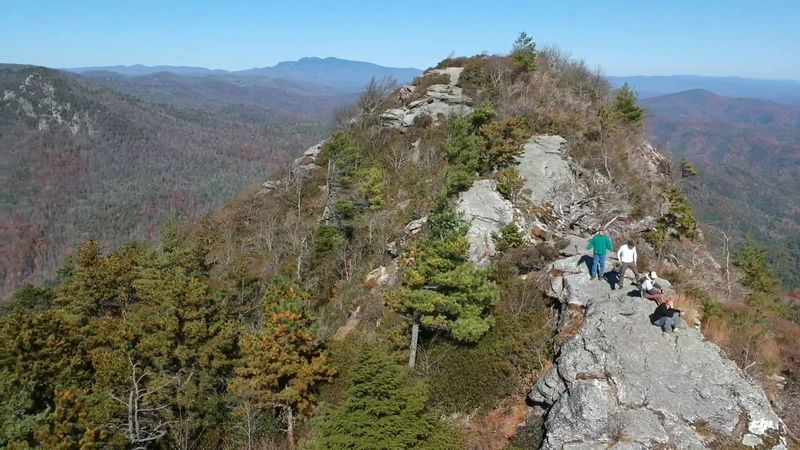
Some mountain viewpoints feel almost ancient, as if the landscape has been carved and shaped for thousands of years. Standing at the edge of this rocky summit, the rugged wilderness below looks vast and untamed.
The trail climbs steadily through forest before reaching dramatic cliffs that overlook one of North Carolina’s most striking landscapes.
This hike leads to Hawksbill Mountain, one of the most famous viewpoints above Linville Gorge. The hike begins at a trailhead off the gravel NC Forest Service 210.
The hike covers about 2.2 miles round trip and rises gradually through rocky woodland. As the elevation increases, the forest begins to thin before revealing the summit at about 4,020 feet.
From the top, the view stretches across Linville Gorge, often called the Grand Canyon of the East. Forested ridges and deep valleys spread across the horizon while the Linville River winds far below through the wilderness.
The scale of the gorge makes the overlook feel especially dramatic. Many hikers pause here longer than expected just to take in the view.
The trail can become slick after rain, so sturdy footwear helps with traction on the rocky sections.
Early morning visits are especially memorable. At sunrise, the first light spreads across the gorge, casting warm colors over the ridges and valleys.
Bird watchers also enjoy the area. Raptors often glide on rising air currents above the cliffs, adding another exciting element to the experience.
9. Pilot Mountain Jomeokee Trail
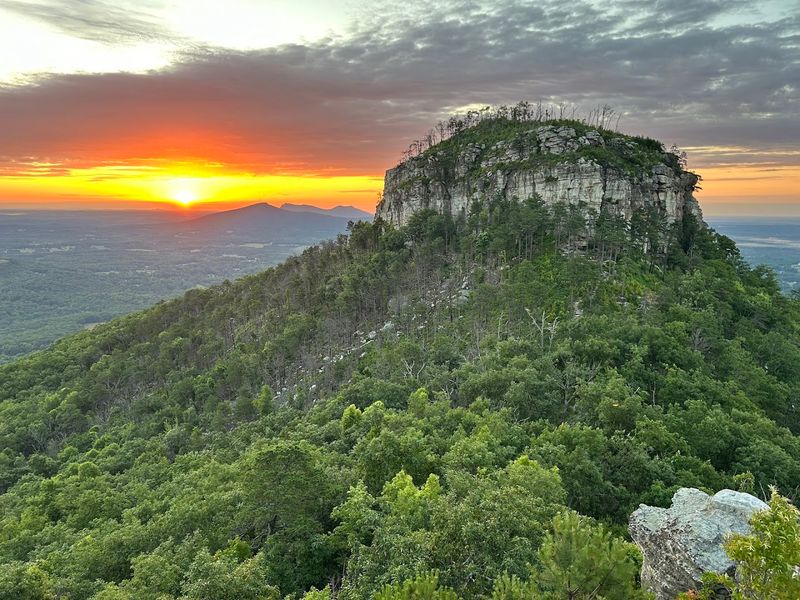
Some landmarks are so distinctive that you recognize them the moment they appear on the horizon. Rising sharply above the surrounding Piedmont landscape, this mountain looks almost sculpted into the sky.
The dramatic peak draws attention from miles away. Up close, the steep rock faces and rugged cliffs make the mountain feel even more impressive.
One of the best ways to experience it is along the Jomeokee Trail in Pilot Mountain State Park near the town of Pinnacle. The short loop circles the base of the Little Pinnacle, the rocky knob beside the main summit.
The hike is only about 0.8 miles, but it offers striking views of the towering quartzite cliffs that define the mountain’s shape. You can start the trail at Summit parking lot, Pilot Mountain State Park.
Several overlooks along the trail reveal sweeping views of the surrounding Piedmont landscape. On clear days, the distant Blue Ridge Mountains appear along the horizon.
The name Jomeokee comes from a Saura Native American word meaning “great guide” or “pilot.” For generations, the mountain served as a natural landmark for travelers moving across the region.
Today, the cliffs attract another group of visitors. Rock climbers frequently scale the steep quartzite walls while hikers watch from the trail below.
The park remains open year-round and makes an easy day trip from nearby cities like Winston-Salem or Greensboro.
In autumn, the surrounding forest turns brilliant shades of red, orange, and gold, making the views even more memorable.
10. Moore Cove Falls Trail
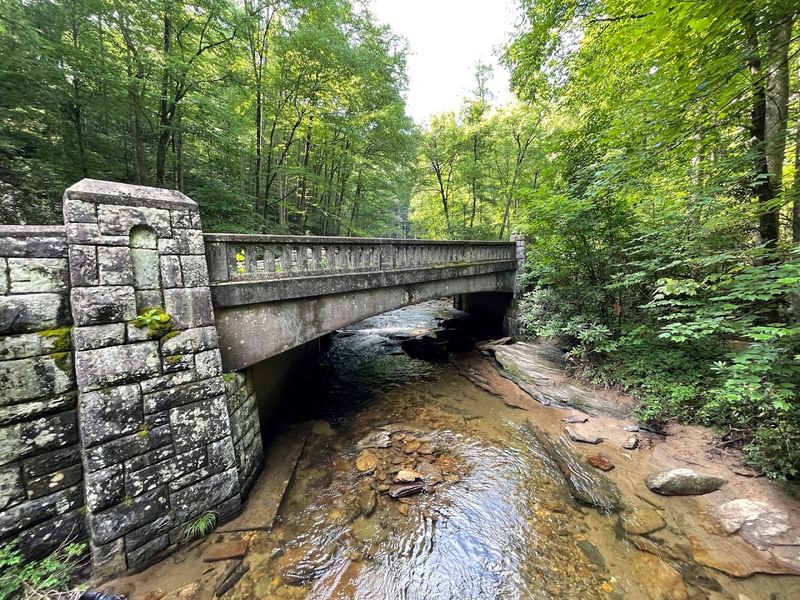
Not every great hike ends at a summit. Sometimes the real reward waits at the end of a forest path where the sound of rushing water grows louder with every step.
The trail follows a cool mountain stream through shaded woods, creating a calm and refreshing atmosphere almost immediately.
This peaceful walk leads to Moore Cove Falls in Pisgah National Forest near Brevard. Located in Pisgah National Forest, about 8 miles from the Blue Ridge Parkway (MP 411) and near Looking Glass Falls.
The path moves gently through a hardwood forest filled with ferns, mossy rocks, and the steady sound of flowing water. The gradual slope makes the hike comfortable for many visitors.
At the end of the trail, the waterfall comes into view. Moore Cove Falls drops about 50 feet over a curved rock overhang.
What makes the waterfall special is the space behind it. Visitors can walk behind the falling water and watch the cascade spill past like a curtain.
The moss-covered rock walls and cool mist create a peaceful setting that feels far removed from everyday noise.
Because the trail is short and fairly gentle, it is one of the more family-friendly hikes in the Pisgah area.
In spring, wildflowers and bright green ferns cover the forest floor. Even during busy seasons, the shaded trail often feels calm and tucked away in the woods.