12 Scenic Trails In North Carolina That Bring Spring To Life
Spring in North Carolina has a way of pulling people onto the trails early in the day.
The mountains slowly trade winter’s gray tones for fresh greens, and wildflowers begin to appear along forest paths and quiet roadsides.
The air feels crisp and clean in the morning, carrying hints of pine, damp earth, and new growth.
Within just a few steps, it becomes clear why this season draws hikers back year after year.
Some trails wind gently through shaded forests and peaceful meadows, inviting slow walks and quiet moments.
Others climb toward rocky ridges where wide mountain views make every step worth the effort.
For anyone looking to reconnect with nature and enjoy the changing season, spring is one of the most rewarding times to explore North Carolina’s trails.
1. Tanawha Trail
Some trails are beautiful the entire way through, and Tanawha is one of those rare hikes that keeps delivering views from start to finish. If you enjoy long scenic routes with constant mountain scenery, this trail is hard to beat.
The Tanawha Trail stretches roughly 13 to 14 miles, from Julian Price Park near Price Lake all the way to Beacon Heights.
Its name comes from a Cherokee word meaning fabulous hawk or eagle, which feels fitting once you begin to see the trail’s many overlooks.
In spring, the trail is at its most enchanting. The forest floor is covered in blooming wildflowers, rhododendrons start to show off near the ridgeline, and the air remains cool and invigorating even as you climb steadily along the path.
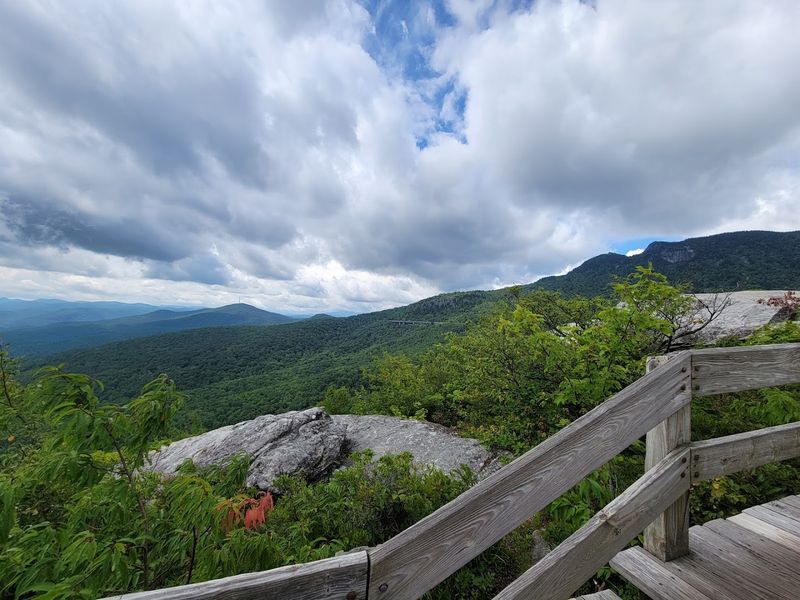
The sections near Linn Cove Viaduct are especially breathtaking. The winding concrete bridge hugs the contours of the mountain in a way that looks almost unreal against the lush green landscape.
Hikers often break the trail into manageable segments to fully appreciate the scenery without rushing. The portion from Rough Ridge to Beacon Heights is particularly rewarding, featuring dramatic open rock views with sweeping vistas of the surrounding Blue Ridge Mountains.
On clear spring mornings, the visibility stretches for miles. Grandfather Mountain and other peaks rise above the landscape in the distance.
Prepare by bringing plenty of water and wearing sturdy footwear suitable for rocky terrain. Leave enough time to linger at the viewpoints.
Every step on the Tanawha Trail offers natural beauty, historical context, and a sense of accomplishment that makes it ideal for an unforgettable spring adventure in North Carolina.
2. Moore Cove Falls Trail
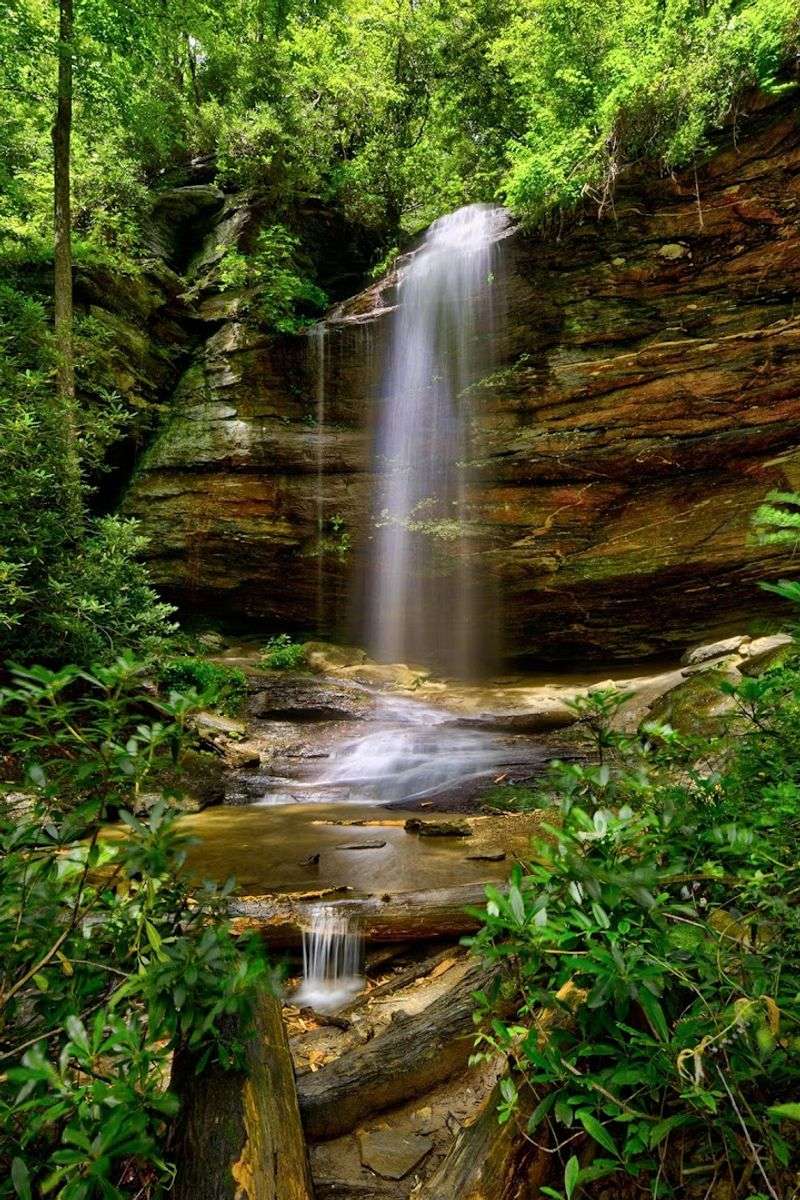
If you want a short hike that still feels magical, this trail delivers almost instantly. It is the kind of walk where the reward comes quickly but still feels memorable.
Moore Cove Falls Trail shows that short hikes can be just as rewarding as longer ones. Covering 0.7 miles one way, this easy path through Pisgah National Forest leads to a 50-foot waterfall glowing in the soft, filtered spring sunlight.
It is family-friendly, as the terrain is gentle and accessible for children or anyone looking for a leisurely outing.
Along the way, hikers pass a charming creek corridor lined with trillium, jack-in-the-pulpit, and other spring ephemeral flowers blooming in colorful clusters along the shaded banks.
By April and May, the forest floor transforms into a vibrant tapestry of natural beauty, almost like a painting brought to life. As you approach the falls, the sound of rushing water grows steadily, heightening the anticipation.
A viewing deck places you right in front of Moore Cove Falls, where water plunges dramatically over a mossy sandstone overhang. Spring snowmelt ensures the flow is strong and visually striking, perfect for photography and quiet contemplation.
One of the most memorable aspects is the small cave-like hollow behind the waterfall, which lets hikers walk behind the curtain of falling water.
Parking is conveniently located along Forest Road 477 near the trailhead. The entire hike can typically be completed in under an hour.
Despite its brevity, Moore Cove Falls Trail delivers the satisfaction and beauty of a longer adventure, making it a must-visit destination during springtime in North Carolina.
3. Looking Glass Rock Trailhead
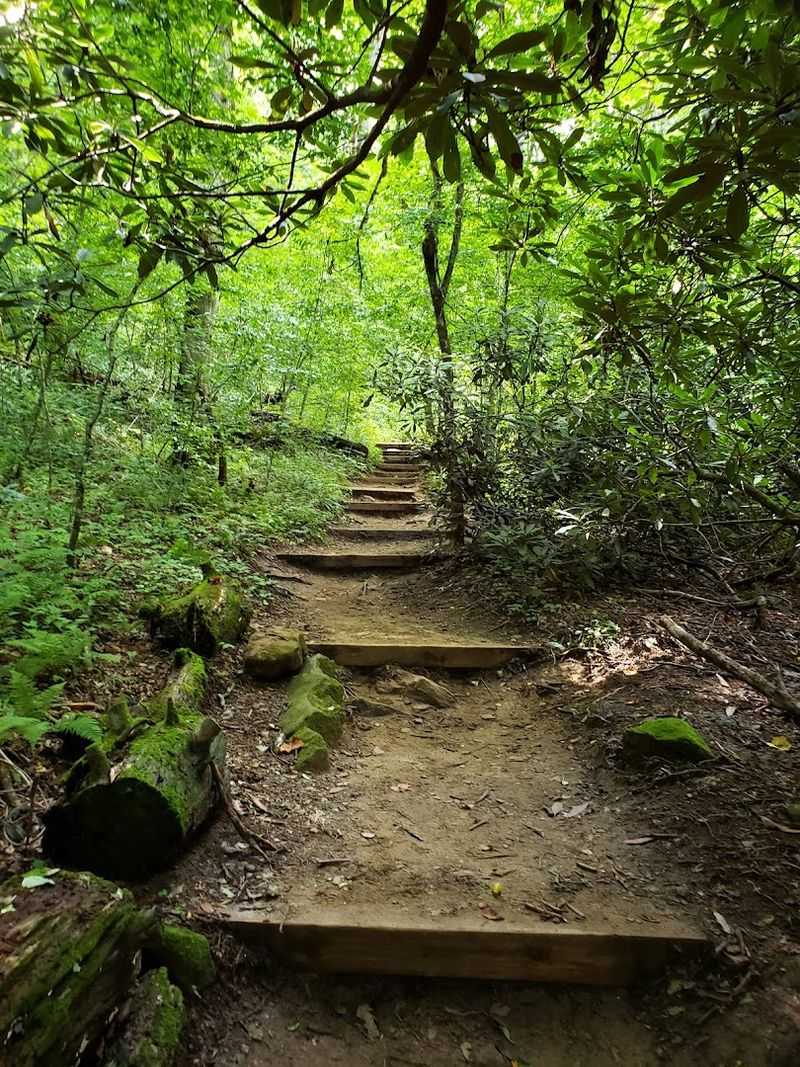
Some hikes are remembered long after you finish them, especially when the view at the top feels endless. Looking Glass Rock is one of those climbs that rewards every bit of effort.
Looking Glass Rock earned its name because sunlight reflects off its massive granite dome after a rain, making it shimmer like polished glass.
The trail to the summit is about 6.4 miles round trip and gains over 1,600 feet in elevation. It falls into the moderate to strenuous category, but the panoramic views are worth every step.
Spring brings a special charm to the hike. The lower sections pass through leafy hardwood forests, with wildflowers carpeting the ground in shades of purple and white.
As you climb higher, the canopy begins to open, teasing glimpses of distant ridges before the full panorama finally reveals itself at the summit.
Standing on the exposed granite, you can see for miles across Western North Carolina. The ridgelines appear softer and greener in spring, stretching endlessly in every direction.
Bring trekking poles for the steep and root-covered sections, especially after rain when the trail can get slippery. Start early on weekends in April and May, as this trail is popular among locals and tourists alike.
The trailhead is off Forest Road 475 near the Davidson River Campground area in Pisgah National Forest. The combination of forest beauty, challenging terrain, and unforgettable summit views makes Looking Glass Rock a springtime must-do.
4. Linville Falls, Trail And Waterfall
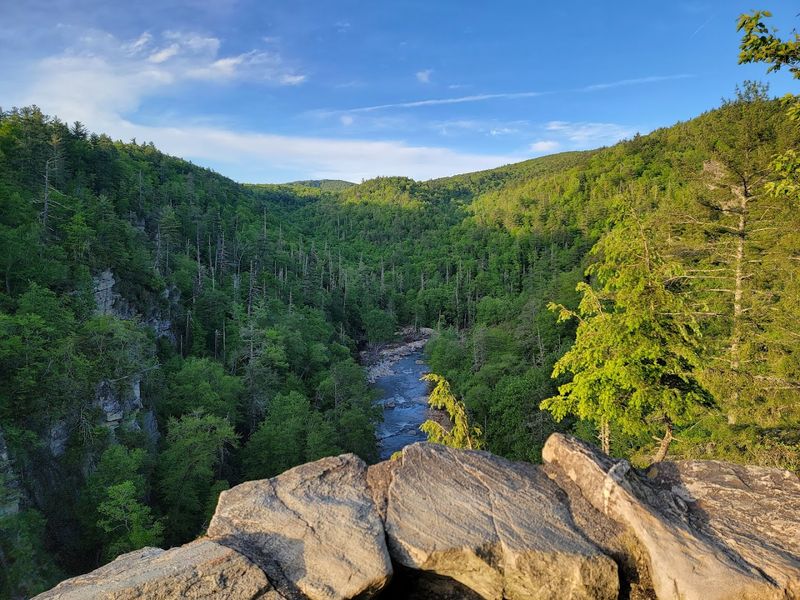
Few places in North Carolina combine waterfalls and mountain scenery quite like Linville Falls. It is one of those hikes where nearly every viewpoint feels photo-worthy.
Few trails pack as much scenic drama into a short distance as the Erwin’s View Trail at Linville Falls.
The trail is only 1.6 miles round trip from the Linville Falls Visitor Center, yet it delivers four distinct overlooks, each framing the falls and gorge from a unique angle.
Spring is the ideal season to hike it. Fresh foliage frames every viewpoint in bright, electric green.
The path begins near the visitor center and winds through a forest that feels ancient and cathedral-like. You first encounter the Upper Falls before continuing to Chimney View, which looks down into the gorge carved by the Linville River over thousands of years.
The gorge is one of the deepest in the eastern United States, giving a sense of scale that photographs cannot fully capture.
Erwin’s View is the final and most expansive overlook. From here, the main falls plunge into the gorge, with ridges stretching into the distance behind them.
Wildflowers dot the rocky outcrops in spring, and the sound of the falls carries clearly on the breeze. Arrive early, especially on weekends, as the visitor center parking lot fills quickly.
Linville Falls sits at milepost 316.4 on the Blue Ridge Parkway. Each stop along the Erwin’s View Trail offers a perfect mix of natural beauty and accessible adventure, ideal for a spring hike.
5. Rainbow Falls And Turtleback Falls Trail
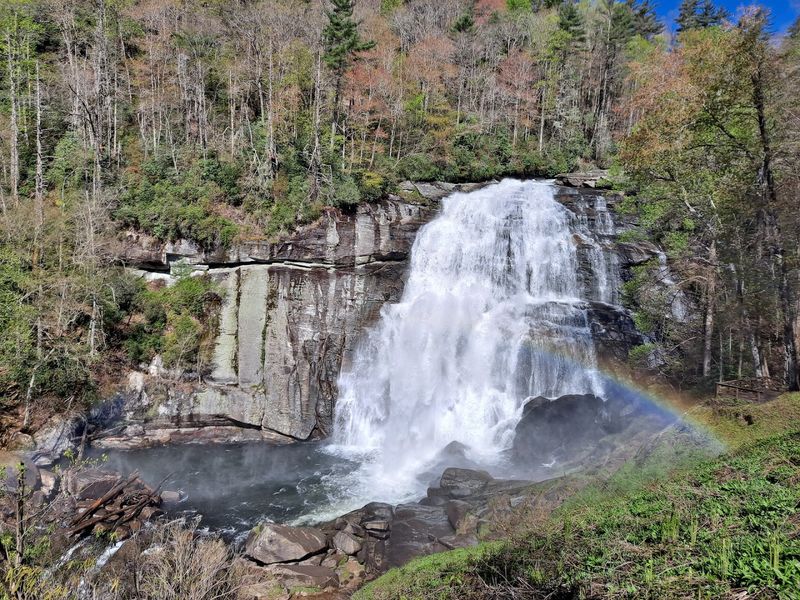
Waterfall hikes feel especially powerful in spring when rivers run stronger and the surrounding forest bursts back to life. This trail delivers two spectacular falls in a single outing.
Gorges State Park is located in one of the wettest corners of North Carolina, right near the South Carolina border.
This abundance of rainfall produces spectacular waterfalls, including Rainbow Falls and Turtleback Falls, waking spring an ideal season to visit.
Rainbow Falls plunges about 150 feet in a narrow, powerful cascade. On sunny mornings, the mist from the falls creates floating rainbows, offering a magical, almost storybook experience.
Turtleback Falls lies just downstream, forming a wide, sloping cascade that naturally functions as a water slide. Visitors love to watch or carefully step onto the smooth rock to feel the water flow.
The round-trip hike to see both falls runs roughly 3 to 4 miles. Certain areas can be steep and slippery, particularly near the misty rocks, so wear shoes with good grip.
Spring water levels are typically at their highest, enhancing the waterfalls’ power and visual drama. The sound of rushing water and lush green surroundings create a sensory experience that is hard to forget.
The park entrance is off Frozen Creek Road in Sapphire, and a day-use fee is required. Hiking this trail in spring combines easy access with unforgettable natural beauty, making it one of the state’s most rewarding short adventures.
6. Max Patch

Few places in the mountains create such an immediate sense of openness and space. Standing on this grassy summit feels completely different from hiking through dense forest.
Standing atop Max Patch feels like the world has opened up just for you. The open grassy bald sits around 4,629 feet in the Pisgah National Forest near Hot Springs.
From the summit, 360-degree views stretch across rolling Appalachian ridges in every direction. No trees block the horizon, just open sky and endless green.
Spring adds a layer of wildflowers to the meadows. The Appalachian Trail crosses the bald, so you might encounter thru-hikers on multi-week treks alongside day hikers.
The contrast between long-distance hikers and casual visitors creates an energizing mix. Everyone comes for the same breathtaking panorama but experiences it in their own way.
The loop trail around the bald is roughly 2 to 3 miles and is rated easy to moderate. Sunrise and sunset visits in spring are especially magical, turning surrounding mountains into shades of gold and lavender.
Max Patch Road off NC-209 leads to the trailhead parking area. Parking fills quickly on clear weekends, so arriving early or visiting on a weekday improves your chances of enjoying some quiet moments on the summit.
7. Catawba Falls Trailhead
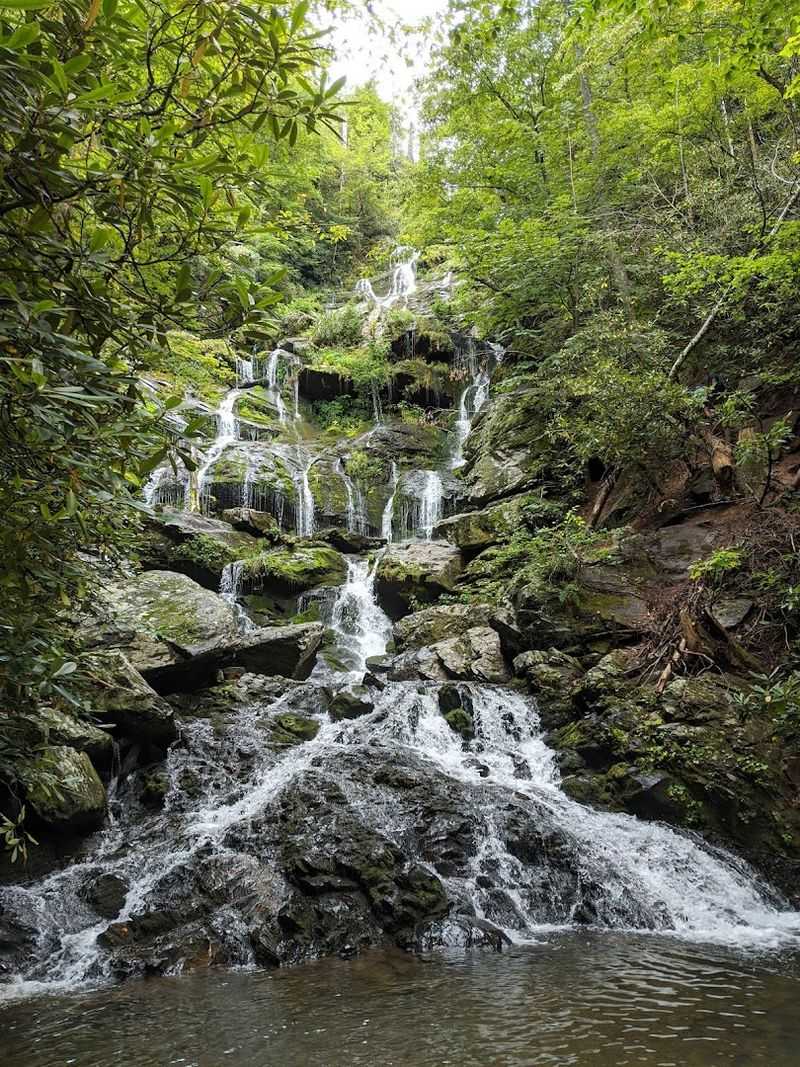
The sound of rushing water greets hikers long before the waterfall comes into view. That steady roar builds anticipation with every step along the trail.
Catawba Falls has long been a favorite hike in Western North Carolina. Recent upgrades, including boardwalks, stairs, and overlook platforms, make the trail safer and more enjoyable.
The round-trip distance is roughly 2.9 to 3.5 miles, depending on how far you explore. Spring is the perfect season because snowmelt and April rains make the waterfalls especially powerful.
The lower falls appear first, forming a wide curtain of water dropping over layered rock into a churning pool. The sound alone is enough to stop you in your tracks.
Continuing to the upper falls requires more effort and some scrambling. The upper cascade is taller and more dramatic, set in a tighter gorge that feels intimate and secluded.
The surrounding forest fills in quickly with spring greenery. Early April wildflowers bloom along the creek banks, adding vibrant colors to the trail.
The trailhead is accessed via Old US 70 near Old Fort, with parking available at a designated lot. Weekday mornings provide the most peaceful experience, allowing hikers to enjoy the falls without crowds.
Catawba Falls offers a combination of natural beauty, accessible challenge, and springtime bloom that makes it a true seasonal highlight.
8. Boone Fork Trail
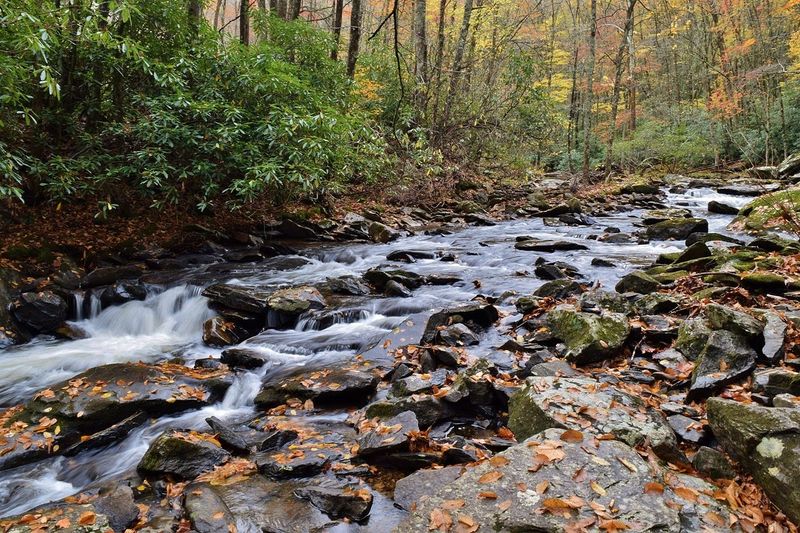
Some hikes feel less like a challenge and more like a peaceful escape into nature. This loop is perfect for slowing down and enjoying the rhythm of the forest.
Julian Price Park is ideal for slow, peaceful mornings with a thermos of coffee. The Boone Fork Loop is roughly 4 miles and weaves through forest, creeks, and open meadows.
In spring, the trail is bathed in soft, luminous light as new leaves catch the sun. The creek sections are playful, with stepping stones and small log bridges adding a sense of adventure.
The trail passes through rhododendron thickets that form a natural tunnel overhead. The sound of flowing water accompanies most of the hike, enhancing the serene atmosphere.
Photographers love Boone Fork Loop in spring for reflections in the creek and wildflower carpets along the banks. The trail is moderate, with a few rocky and rooted sections but nothing overly challenging.
Wildlife sightings are common, from songbirds in the canopy to deer grazing near meadow edges. The trailhead is near Price Lake, off the Blue Ridge Parkway at milepost 296.
Spring weekends bring a steady stream of visitors, but once you pass the first half mile, it rarely feels crowded. The combination of forest, water, and light makes Boone Fork Loop a quintessential springtime hike.
9. Oconaluftee River Trail Trailhead

Peaceful river walks have a charm that mountain climbs sometimes lack. This trail proves that beauty does not always require steep elevation.
Not every trail needs steep climbs to deliver beauty. The Oconaluftee River Trail proves that easy, flat paths can be just as rewarding.
The trail runs about 3 miles round trip along the Oconaluftee River near Cherokee, North Carolina. The wide, well-maintained path is open year-round and looks especially gorgeous in spring.
The river is the star of this hike. Clear, cold, and rushing over smooth stones, it creates a soothing soundtrack for the walk.
Hardwood trees line the banks and leaf out in brilliant green by late April. Morning light filtering through the canopy feels almost painterly.
Interpretive signs along the route share cultural and natural history. They add meaningful context to everything you see along the trail.
One of the biggest draws in spring is the elk herd. Spotting a large bull elk grazing near the river with mountains behind it is a memory that stays with you long after the hike.
The trail starts at the Oconaluftee Visitor Center on Newfound Gap Road, where parking is available. Families, older hikers, and casual walkers alike can enjoy this scenic and peaceful trail without any strenuous effort.
10. Forney Ridge Trail
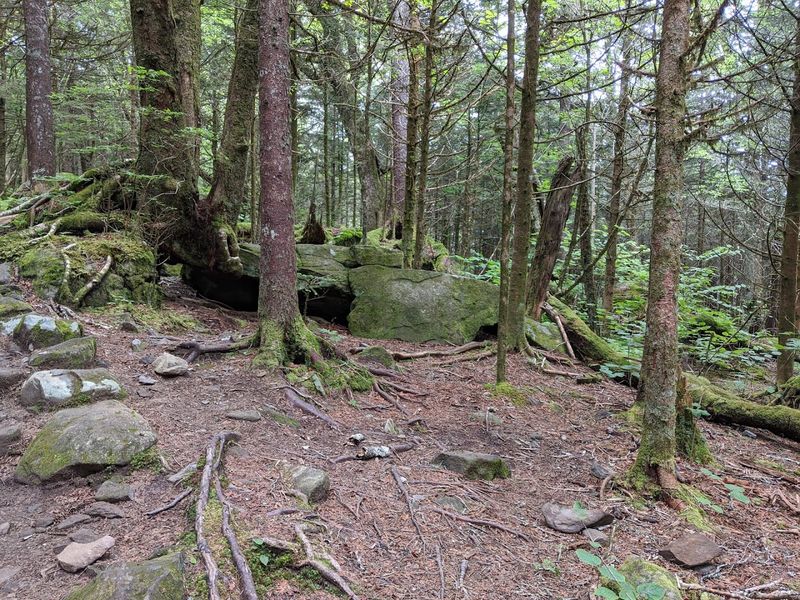
High-elevation trails in the Smokies often feel like stepping into a completely different world. Cooler air, dense forests, and sweeping views make this hike especially memorable in spring.
Andrews Bald is one of the most rewarding destinations in the entire Great Smoky Mountains National Park. The Forney Ridge Trail is the path that takes you there.
Starting from Clingmans Dome Road, the trail descends through dense spruce-fir forest. Mosses drape the trees and filtered blue-green light gives the forest an almost otherworldly feel.
The round trip is roughly 3.6 miles with moderate elevation change. Spring conditions make this route especially stunning.
The forest understory fills with fresh green growth. Flame azaleas bloom in bright orange and red clusters as you approach the bald.
The open grassy summit sits at around 5,860 feet. Sweeping views of the surrounding ridges reward every step of the trail.
Andrews Bald tends to feel quieter than nearby Clingmans Dome. You can spread out in the meadow and take in the landscape without feeling crowded, even in spring.
Check the National Park Service website before visiting. Clingmans Dome Road typically opens late spring, which affects access to the trailhead.
11. Moore’s Knob Trail
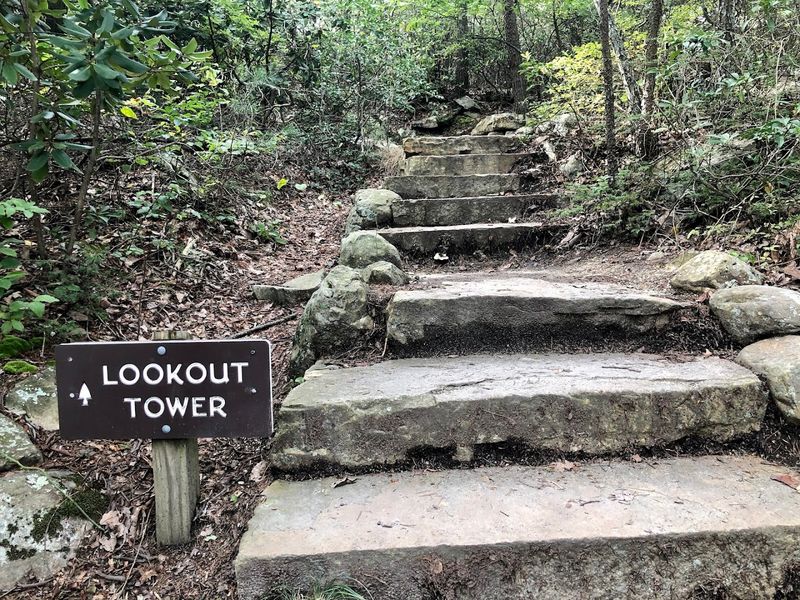
Some summits make the climb worthwhile long before you actually reach the top. This trail builds anticipation with every step upward through the forest.
Hanging Rock State Park is home to the Sauratown Mountains’ crown jewel, Moore’s Knob. The hike to the summit is about 4 miles round trip with significant elevation gain.
The effort is rewarded spectacularly at the top. Rocky ledges reveal panoramic views in every direction, making the climb worthwhile.
Spring makes this hike particularly appealing. Hardwood forests burst with new growth, and the understory blooms with colorful serviceberry and dogwood trees.
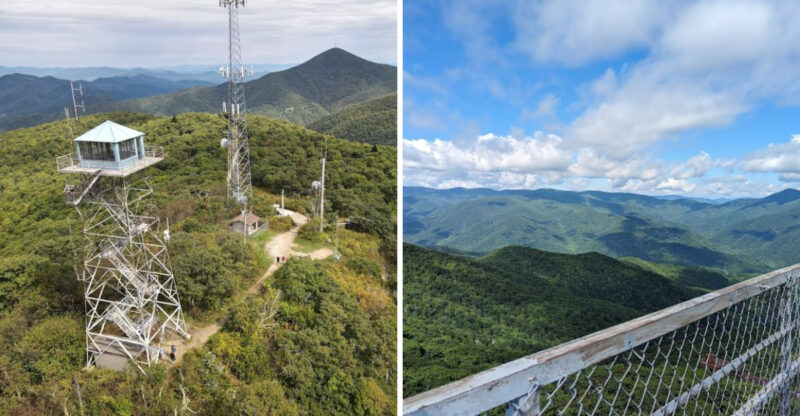
The summit features an old stone observation tower. It adds historic charm and a slightly rugged touch to the expansive views.
From Moore’s Knob, you can see rolling Piedmont landscapes to the south and the higher Blue Ridge Mountains to the west. On clear spring days, the scenery is genuinely breathtaking.
The park entrance is off Moore’s Spring Road near Danbury, North Carolina. Parking fills up quickly on spring weekends, so starting early is strongly recommended.
In addition to hiking, Hanging Rock State Park offers camping, swimming, and other trails. Spending more time here allows you to fully enjoy the park’s variety and beauty.
12. Fonta Flora County Park And Connector Trailhead
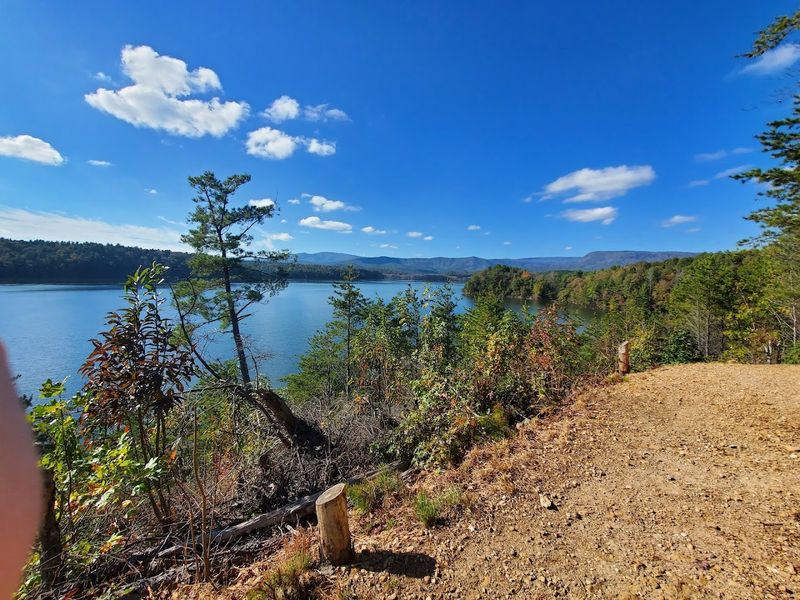
Not every great trail leads to a summit. Some offer a slower journey through lakeshores, forests, and wide open landscapes.
The Fonta Flora State Trail offers a long, multi-use experience across Western North Carolina. Unlike summit hikes, it stretches across rivers, lakes, and forests.
The trail connects Asheville to Morganton, rewarding hikers and cyclists with a variety of scenery. Spring along the Fonta Flora is particularly spectacular.
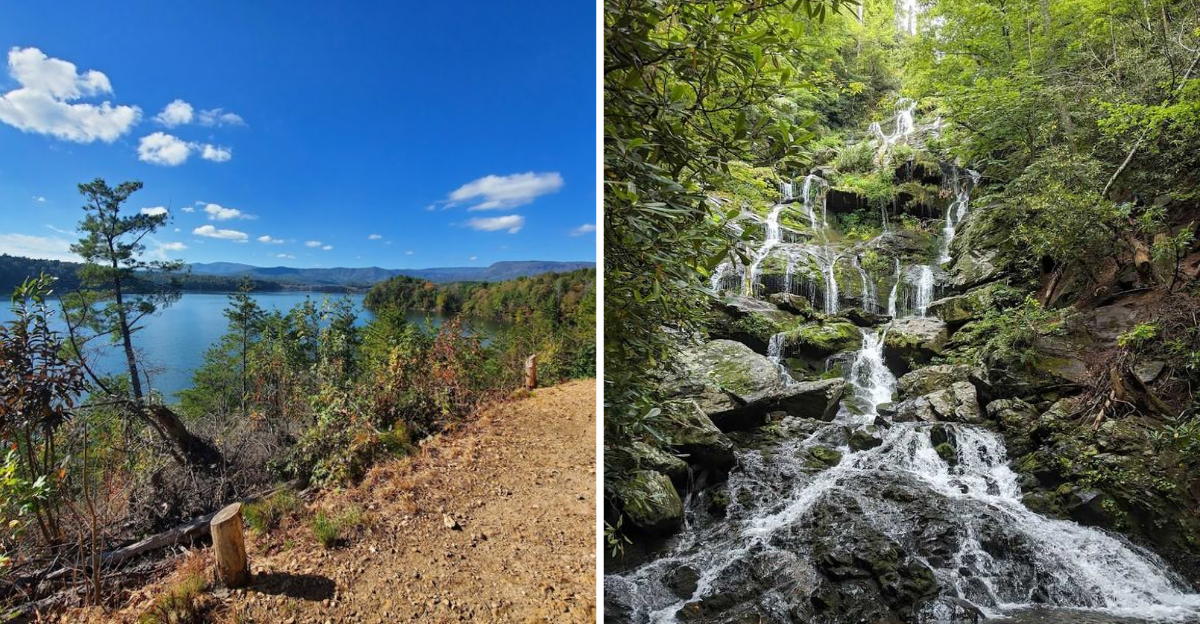
Lake James reflects surrounding mountains, and wildflowers bloom along the banks. Birdsong and the sound of flowing water create a naturally soothing soundtrack.
The trail links communities and natural areas, giving it purpose and a sense of place. Sections are well-maintained and open, allowing visitors to choose routes that fit their time and energy.
Whether you want a short afternoon walk or a longer multi-mile trek, there is a stretch that suits you. Spring conditions are ideal, with comfortable temperatures and vibrant scenery.
Before visiting, check the North Carolina State Parks website. Current trail segments, access points, and conditions change, so confirming details ensures a smooth experience.