Thousands Of Roses Bloom Each Spring At This Los Angeles, California Garden
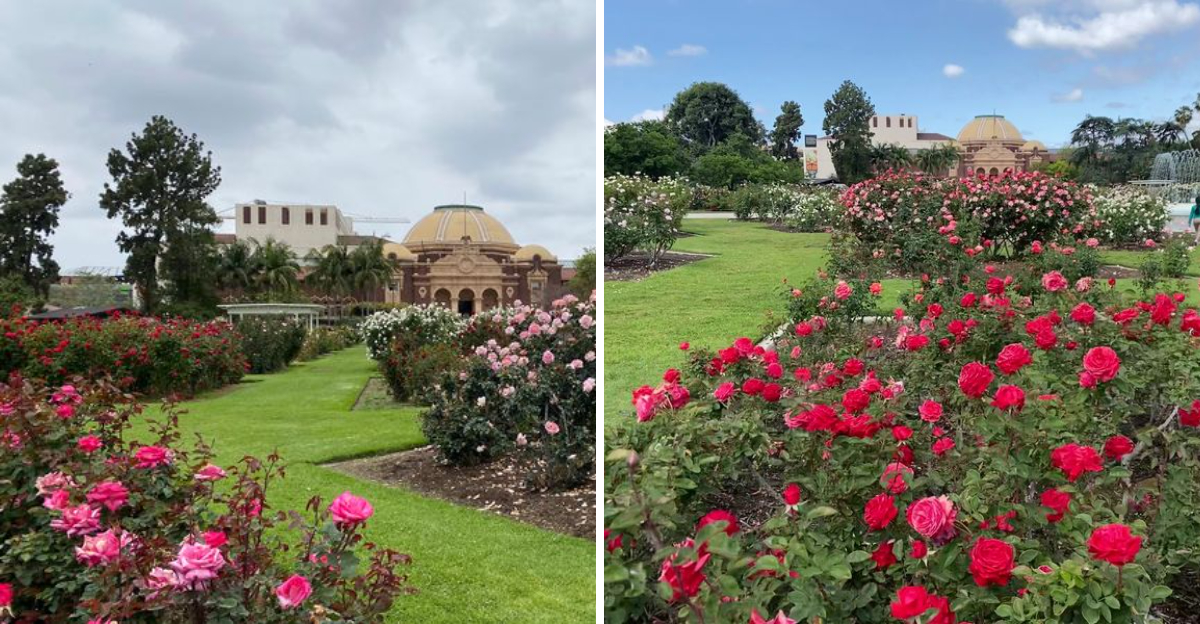
A quiet garden waits behind iron gates and winding paths. The scent of roses fills the air before the flowers even come into view.
Stone walkways curve through beds bursting with color. Visitors pause often. Cameras come out. Conversations soften as people drift slowly between the rows of blossoms.
Thousands of roses bloom here each spring. Petals in deep red, soft pink, bright yellow, and creamy white stretch across the landscape in carefully arranged patterns. The view feels almost unreal when the flowers reach their peak.
California has few public spaces that feel this peaceful and this beautiful at the same time.
Time slows down inside the garden. Couples stroll between flower beds. Photographers search for the perfect angle while others simply sit and enjoy the quiet.
1. Open Daily From 9 AM And Free To Enter
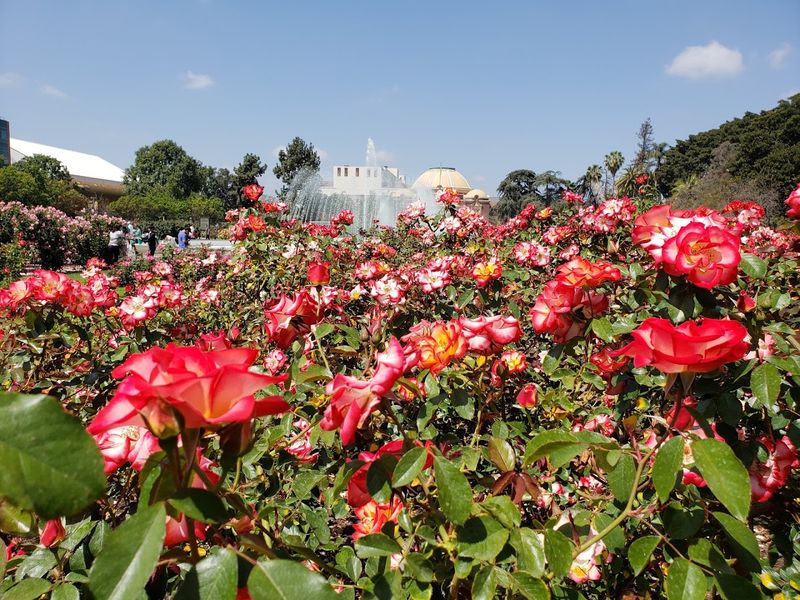
One of the most appealing things about the Exposition Park Rose Garden is that admission is completely free.
There is no ticket to buy, no membership required, and no reservation needed for a general visit, which makes it genuinely accessible to anyone who wants to spend time among roses in the middle of Los Angeles.
The garden opens at 9 AM daily and closes around sunset, with current operating hours listed as 9 AM to 7:30 PM.
Arriving earlier in the day tends to mean quieter paths and softer light, while late afternoon visits can offer a warmer glow across the flower beds as the sun moves lower.
Weekday mornings are generally calmer than weekend afternoons, which can get busier especially during peak bloom season in spring.
The garden is located at 701 State Dr, Los Angeles, CA 90037, and is easily reachable by the Metro E Line with a stop directly in front of the nearby museums.
Paid parking is available in the area for those driving, though visitors should expect a short walk from the parking area to the garden entrance.
2. Established In 1928 And Still Going Strong
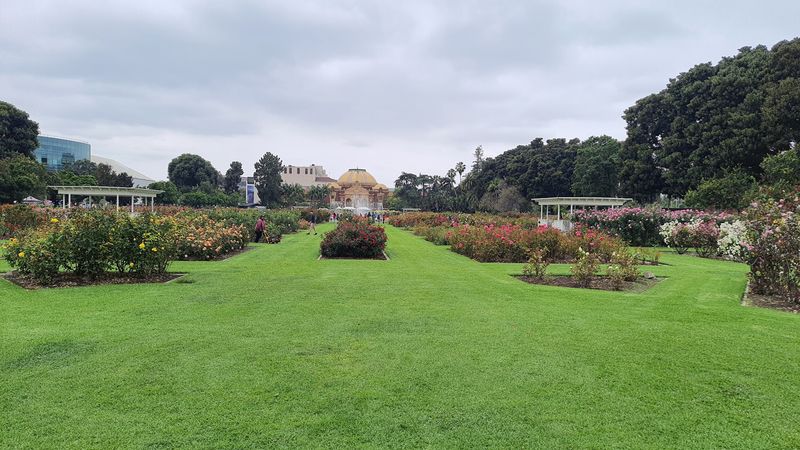
Nearly a century of history is rooted into the soil of the Exposition Park Rose Garden, and that kind of longevity says a lot about how much the city has valued this space.
Opened in 1928, the garden was designed from the start to showcase a wide variety of rose species in a formal, organized layout that visitors could enjoy for free.
The garden has survived decades of change in Los Angeles, from shifting neighborhoods to major city developments, and it continues to welcome the public today.
Its original purpose of being a place for community enjoyment has never really changed, which is part of what makes visiting feel so grounding.
Spending time in a place with nearly 100 years of foot traffic carries a certain quiet weight.
Generations of families have walked the same brick paths, sat in the same gazebos, and looked out at the same symmetrical beds.
That sense of shared history tends to settle over visitors without them even realizing it, turning a simple afternoon stroll into something that feels genuinely meaningful.
3. Seven Acres Of Carefully Arranged Beauty
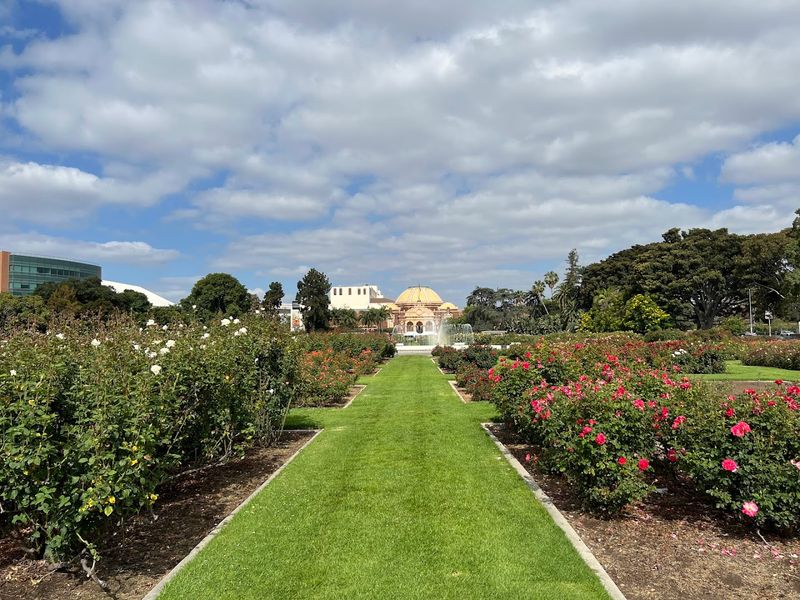
Seven acres might not sound enormous until a visitor actually walks through the Exposition Park Rose Garden and realizes how much ground there is to cover.
The garden features 166 concrete-lined flower beds arranged in a symmetrical pattern that gives the whole space a sense of calm order, almost like a living blueprint drawn by someone who truly loved roses.
The layout encourages slow walking rather than rushing through.
Paths wind between the beds in a way that reveals new angles and color combinations at every turn, so doubling back to look at something again feels completely natural rather than repetitive.
For anyone who enjoys photography, the structured design creates natural framing opportunities throughout the garden.
The consistent spacing between beds means there is almost always a clean sightline available, whether capturing a close-up of a single bloom or a wide shot of an entire quadrant.
Visitors who take their time tend to notice details that a quick pass would miss entirely, from the way morning light catches the petals to the subtle differences in leaf shape between varieties planted just a few rows apart.
4. Around 20,000 Rose Bushes And Over 145 Varieties
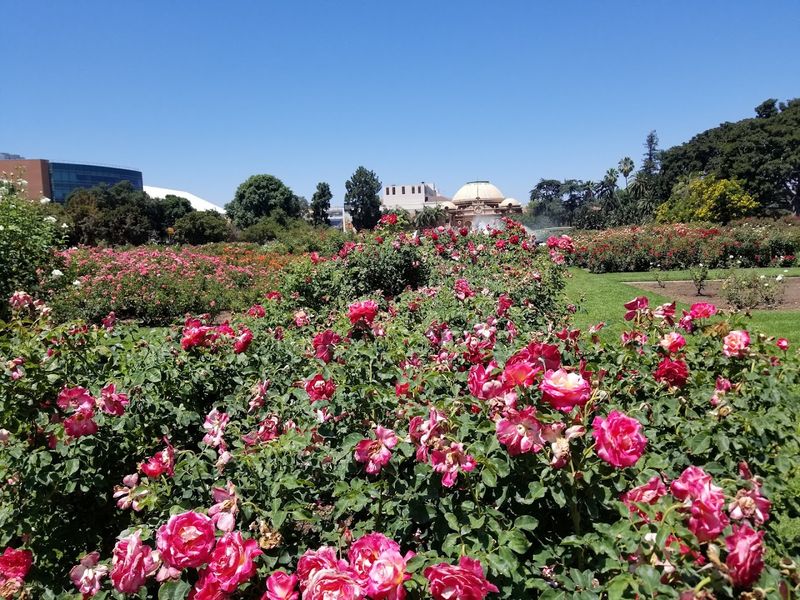
When the garden first opened, it held around 15,000 rose bushes covering more than 100 varieties.
Today the collection stands at approximately 20,000 bushes representing over 145 different varieties, which actually reflects an expansion in the range of types even as the total number has shifted over the decades.
Walking through the beds during peak bloom season means encountering roses in nearly every imaginable color, from deep crimson to pale cream, soft lavender to bright coral.
Each variety is labeled, which turns the walk into something almost educational without feeling like a classroom.
One thing visitors often mention is the surprise of discovering how different roses can look from one another when seen side by side.
Some grow tall and arching while others stay compact and dense. Some blooms are tightly packed with dozens of petals while others open wide and flat like a dish.
The sheer range of the collection at the Exposition Park Rose Garden makes it genuinely interesting for people who have never thought much about roses before, not just for dedicated gardeners or horticulture enthusiasts.
5. Four Quadrants, Gazebos, And A Central Fountain
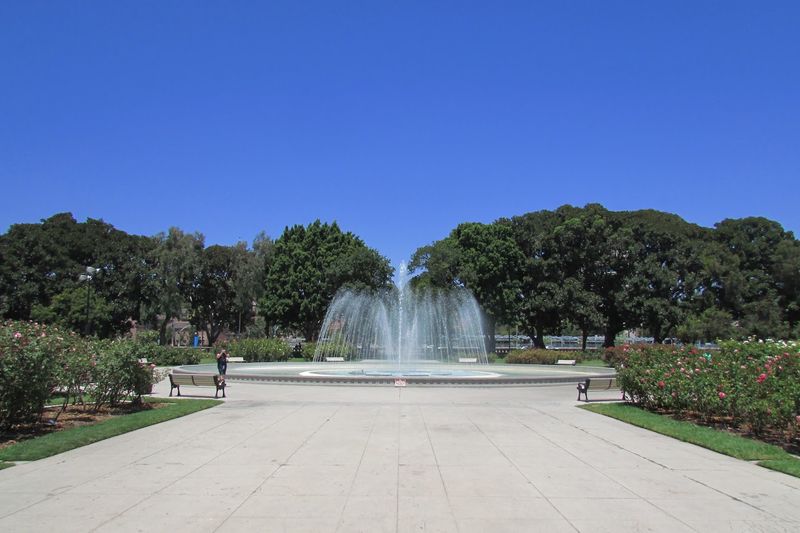
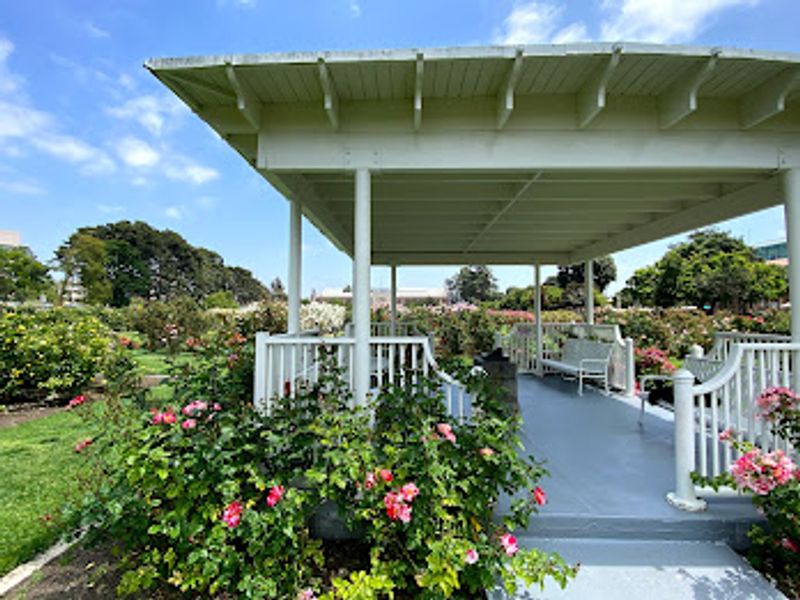
The garden is divided into four distinct quadrants, each one anchored by a wooden gazebo that offers shade and a place to sit down and take everything in.
A circular water fountain connects these quadrants at the center, creating a natural focal point that draws visitors inward as they move through the space.
The gazebos tend to be popular resting spots, especially on warmer afternoons when the sun sits directly overhead.
Visitors often bring books, snacks, or just a quiet moment, settling into the shaded seating while the surrounding roses carry on blooming at their own pace.
It is worth noting that the fountain is not always running, as some visitors have reported it being turned off or not fully operational during certain visits.
Conditions at any public garden can vary depending on maintenance schedules and seasonal factors, so the fountain experience may differ from one visit to the next.
The decorative brick wall that surrounds the garden adds another layer of visual structure, giving the whole layout a sense of enclosure that helps the space feel like a world slightly apart from the city just outside its walls.
6. Listed On The National Register Of Historic Places Since 1991

In 1991 the Exposition Park Rose Garden was added to the National Register of Historic Places, a recognition that officially acknowledged its cultural and historical importance to the country as a whole.
That kind of designation is not handed out casually, and earning it reflects the garden’s significance as both a landscape and a community space.
Being on the National Register does not change how visitors experience the garden on a day-to-day level, but it does add a layer of context that can make a visit feel more meaningful.
Knowing that the space has been formally recognized as worth preserving tends to shift how a person looks at even the smallest details.
The designation also helps secure ongoing attention to the garden’s preservation, which matters for a space that depends on consistent maintenance to stay at its best.
The Exposition Park Rose Garden sits within a neighborhood that includes the Natural History Museum of Los Angeles County and the California Science Center, making the entire surrounding area a recognized cultural destination.
Visiting the garden as part of a broader day at Exposition Park gives the historic designation even more context and weight.
7. Closed Every January Through Mid-March For Maintenance

Every year from January 1st through March 15th the garden closes to the public for routine maintenance.
That annual closure is what keeps the rose collection healthy enough to put on the kind of display that draws thousands of visitors each spring, so the downtime is genuinely necessary rather than just administrative.
Planning a visit around the closure is straightforward once a person knows about it.
Arriving in late March through early June tends to offer some of the best bloom conditions, when the roses are fresh from their winter rest and the Los Angeles weather is mild enough to make walking comfortable for extended periods.
Visitors who arrive without checking the schedule and find the gate closed do sometimes express disappointment online, which makes it worth confirming the dates before making a trip specifically for the garden.
The official website for the garden through LA Parks provides current operating information and any updates to seasonal hours.
Spring visits after the maintenance window closes tend to reward patience with dense, vibrant blooms across most of the 166 flower beds, making the wait from January to mid-March feel entirely worthwhile once a visitor finally steps through the entrance.
8. A Popular Spot For Weddings And Photography Sessions
Few backdrops in Los Angeles offer the combination of lush color, structured symmetry, and natural beauty that the Exposition Park Rose Garden provides.
The garden has become a go-to location for weddings, engagement photos, family portraits, and other photography sessions that benefit from an outdoor setting with consistent visual interest.
The wooden gazebos work especially well as ceremony sites, offering a defined focal point surrounded by rose beds on all sides.
Visitors who have attended or photographed weddings at the garden often note that even light foot traffic from other guests tends to be respectful during formal events, giving ceremonies a sense of privacy despite the public setting.
For photographers, the variety of rose colors and the changing light throughout the day create different moods at different hours.
Morning sessions tend to have softer, more diffused light while late afternoon brings warmer tones that complement the reds and pinks particularly well.
Anyone planning a photography session should check the garden’s seasonal schedule to make sure the visit falls outside the January through March maintenance closure, since the most photogenic conditions naturally align with the blooming season from spring through fall.
9. Surrounded By Major Cultural Attractions In Exposition Park
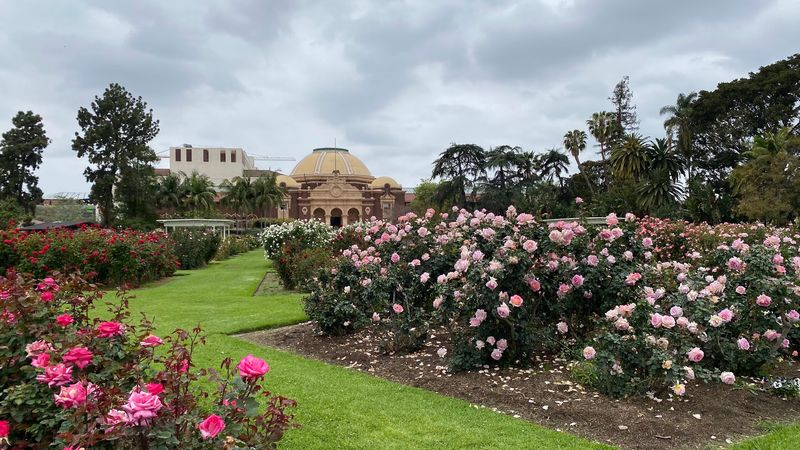
The Exposition Park Rose Garden does not sit in isolation.
It is part of a larger cultural complex that includes the Natural History Museum of Los Angeles County, the California Science Center, and the California African American Museum, all within easy walking distance of the garden entrance.
Combining a garden visit with a museum trip is one of the most natural ways to spend a full day at Exposition Park.
Several visitors mention stopping at the rose garden before or after a museum visit, using the open space as a place to decompress between indoor exhibits or to enjoy a picnic before heading home.
The proximity of so many cultural institutions in one location makes Exposition Park one of the more efficiently planned public spaces in Los Angeles.
A family with varied interests can split the day between science, history, art, and nature without needing to drive anywhere new.
The garden itself benefits from this context because it attracts visitors who might not have sought it out on its own, and many of those visitors end up staying longer than they expected once they step inside and see what the roses are doing.
10. What A Real Visit To The Garden Actually Feels Like
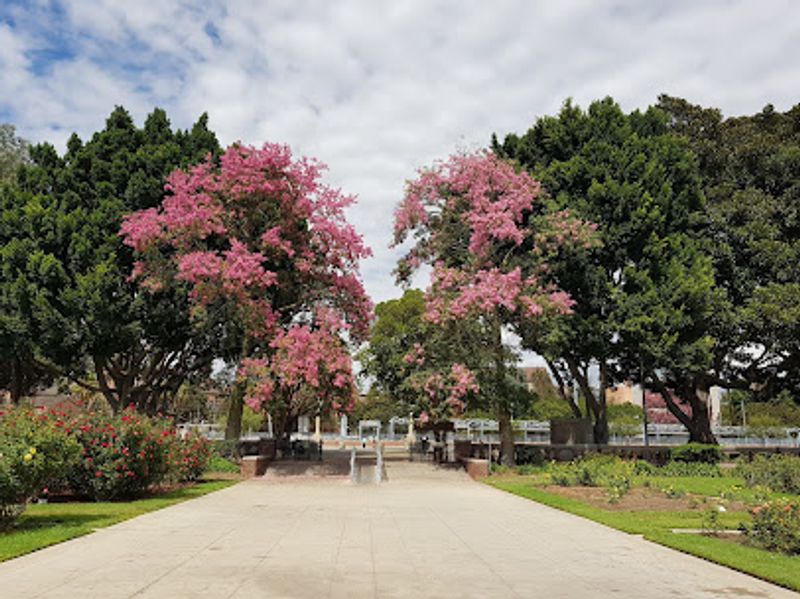
Reading about a garden and actually standing inside one are two very different experiences.
At the Exposition Park Rose Garden the scale of the space tends to surprise first-time visitors, since seven acres of organized rose beds feels much larger once a person is walking through it rather than looking at it on a map.
The sensory experience varies depending on the season and time of day.
During peak spring bloom the air can carry a faint floral quality around certain varieties, though some visitors note that many modern rose cultivars have been bred for appearance rather than fragrance, so scent levels across the garden tend to vary noticeably by bed.
Conditions at the garden are not always perfect, and honest visitor reviews reflect that reality.
Some visits have found the fountain inactive, certain beds in need of attention, or the grounds muddy after rain.
Public gardens in active urban environments require ongoing maintenance and do not always meet every expectation on every visit.
Going with reasonable expectations and a flexible attitude tends to produce the best experience, especially since the garden is free, genuinely large, and surrounded by enough natural beauty to make almost any visit worthwhile.