This North Carolina Tunnel Carved Into The Mountain Still Puzzles Visitors
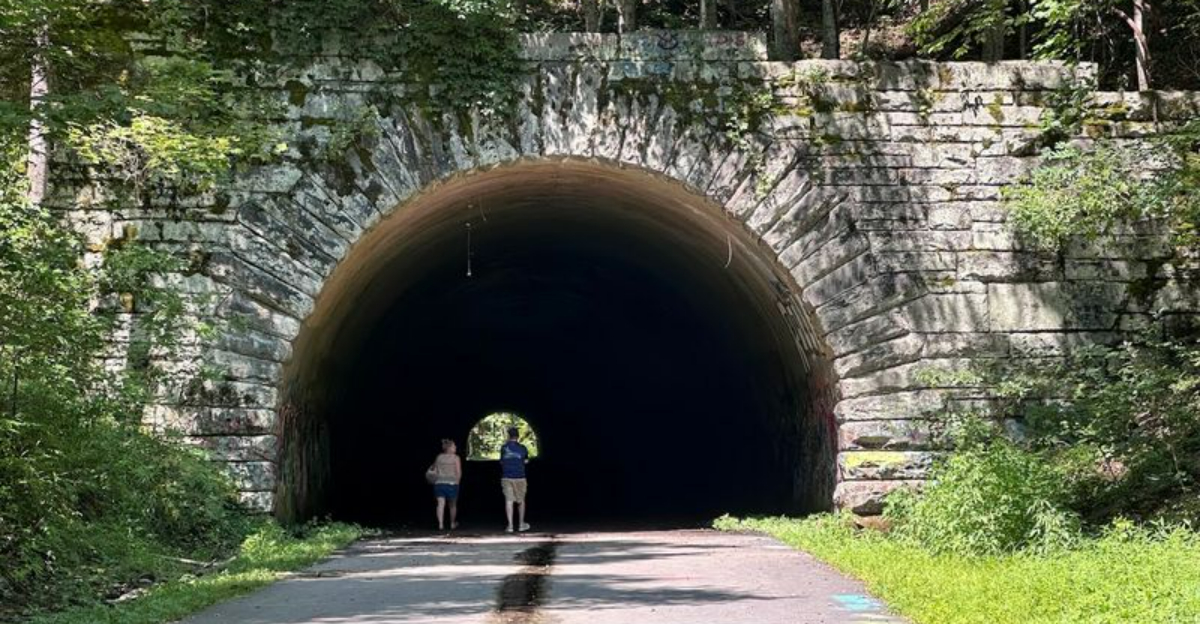
Somewhere in the mountains of North Carolina, there is a road that goes nowhere. Literally.
A tunnel bored straight through solid rock, leading to nothing but trees, trails, and silence on the other side. No town waiting for you.
No highway connecting to somewhere else. Just an opening in a mountain and a whole lot of questions.
The first time most people hear about this place, they assume it’s a joke. It isn’t.
North Carolina has no shortage of wild and unexpected corners, but this place feels different from anything else in the state. Walk through that cool, dark passage and you quickly understand why people keep talking about it.
The Tunnel That Leads Into The Mountain And Stops
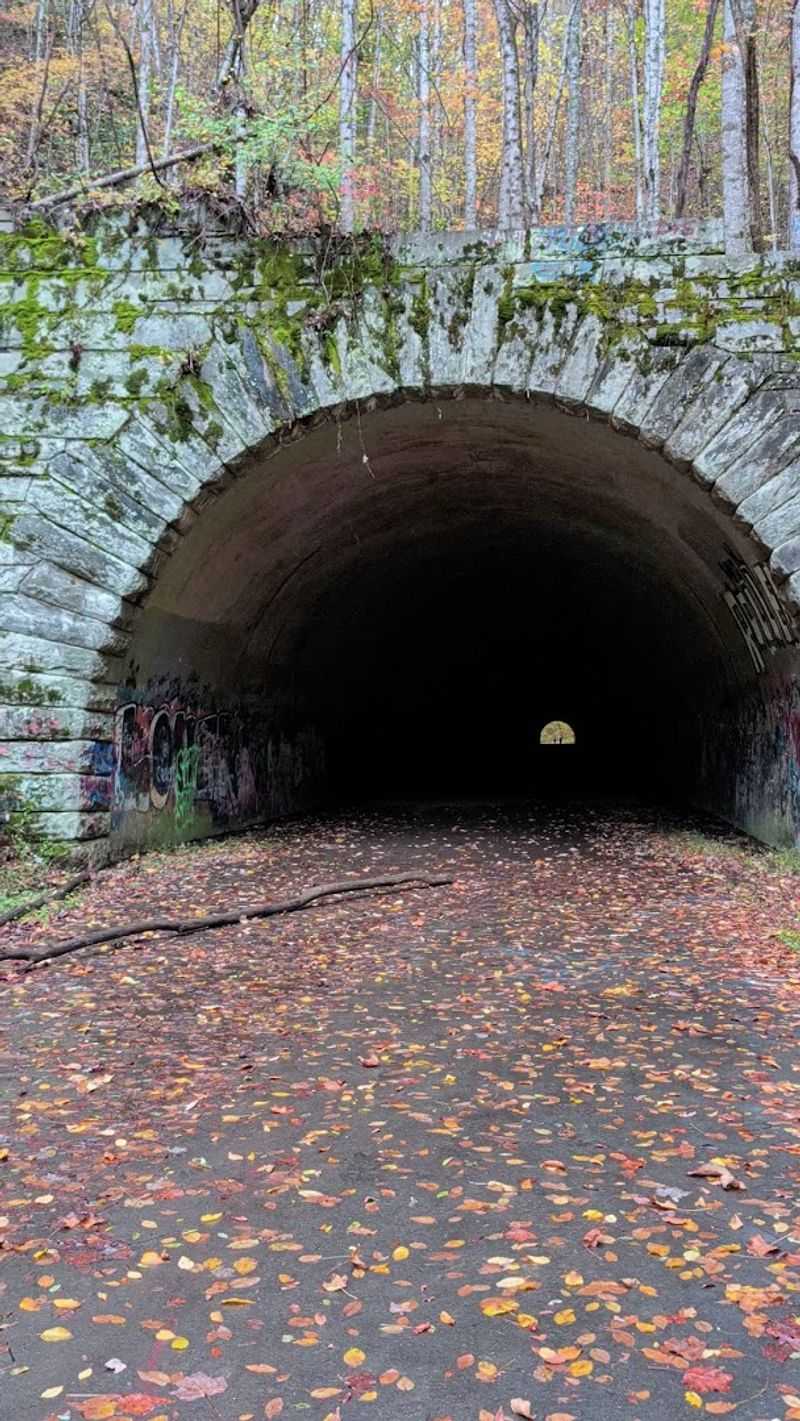
The entrance looks simple enough, wide, calm, almost inviting. Then you take a few steps inside and the darkness swallows everything.
Your eyes adjust slowly. The mountain air turns cool and still.
From behind you, daylight shrinks into a small bright circle, and ahead, nothing but black. It’s the kind of moment that makes you stop walking just to take it all in.
The tunnel sits at the end of Lakeview Drive East in Bryson City, North Carolina, and it is part of the Great Smoky Mountains National Park system.
You drive about six miles past the park entrance sign before the road dead-ends at a small parking lot, and then you walk the short path to the tunnel entrance on foot.
The stone walls are rough-cut and cool to the touch, and the air inside has a damp, earthy quality that feels completely different from the warm mountain air outside. A light breeze often moves through the passage, which can catch you off guard on a cold day.
A Road That Was Never Meant To End Here
The story of how this road came to be is rooted in a government promise that took decades to resolve.
When the federal government flooded the Fontana Lake area in the 1940s to power a dam, thousands of acres of land were submerged, including roads that local families used to reach their ancestral cemeteries.
To make it right, the government promised to build a new road along the north shore of Fontana Lake so that residents could still access those burial grounds. Construction began, the tunnel was carved, and then the project quietly stalled.
The road was never finished.
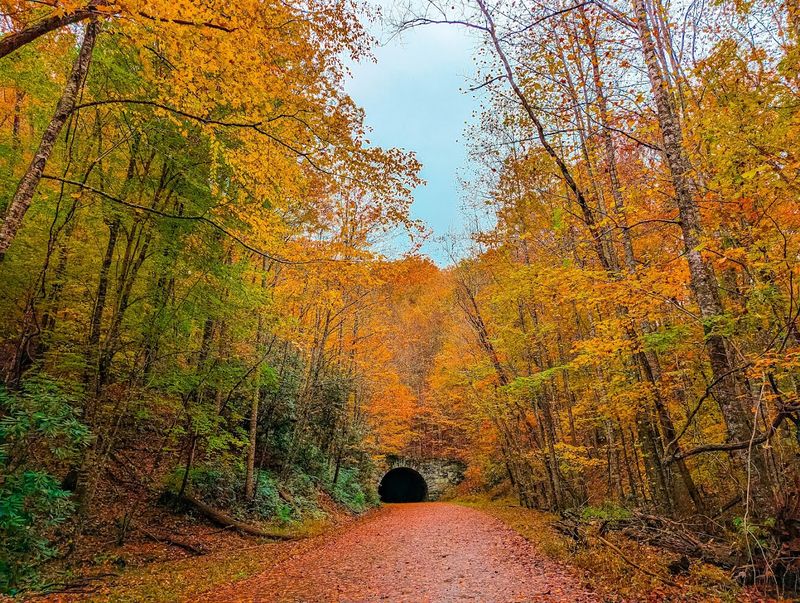
What remained was a six-mile stretch of pavement that simply stops at a mountain, with a tunnel punched through it that leads to nothing but wilderness.
The broken promise became a local legend, and the nickname “Road to Nowhere” stuck so firmly that even official signs now use it.
The Long Tunnel Hidden Deep In The Smoky Mountains
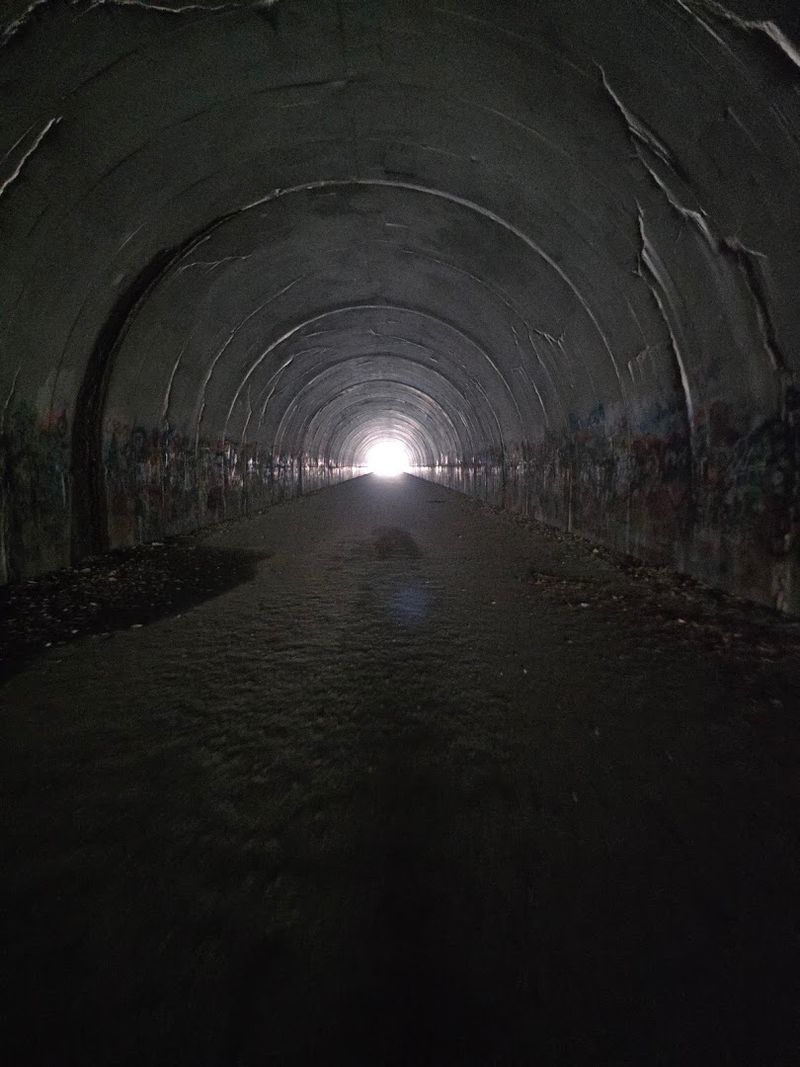
Few trails in the American South prepare you for something like this. Halfway through, both ends shrink to small distant circles of light.
For a moment, you are completely surrounded by darkness, no sound, no wind, just the cool damp air of the mountain pressing in from all sides. It’s disorienting in the best possible way.
The wind that funnels through the tunnel can be surprisingly strong, especially in cooler months, as air moves naturally from one end of the mountain to the other.
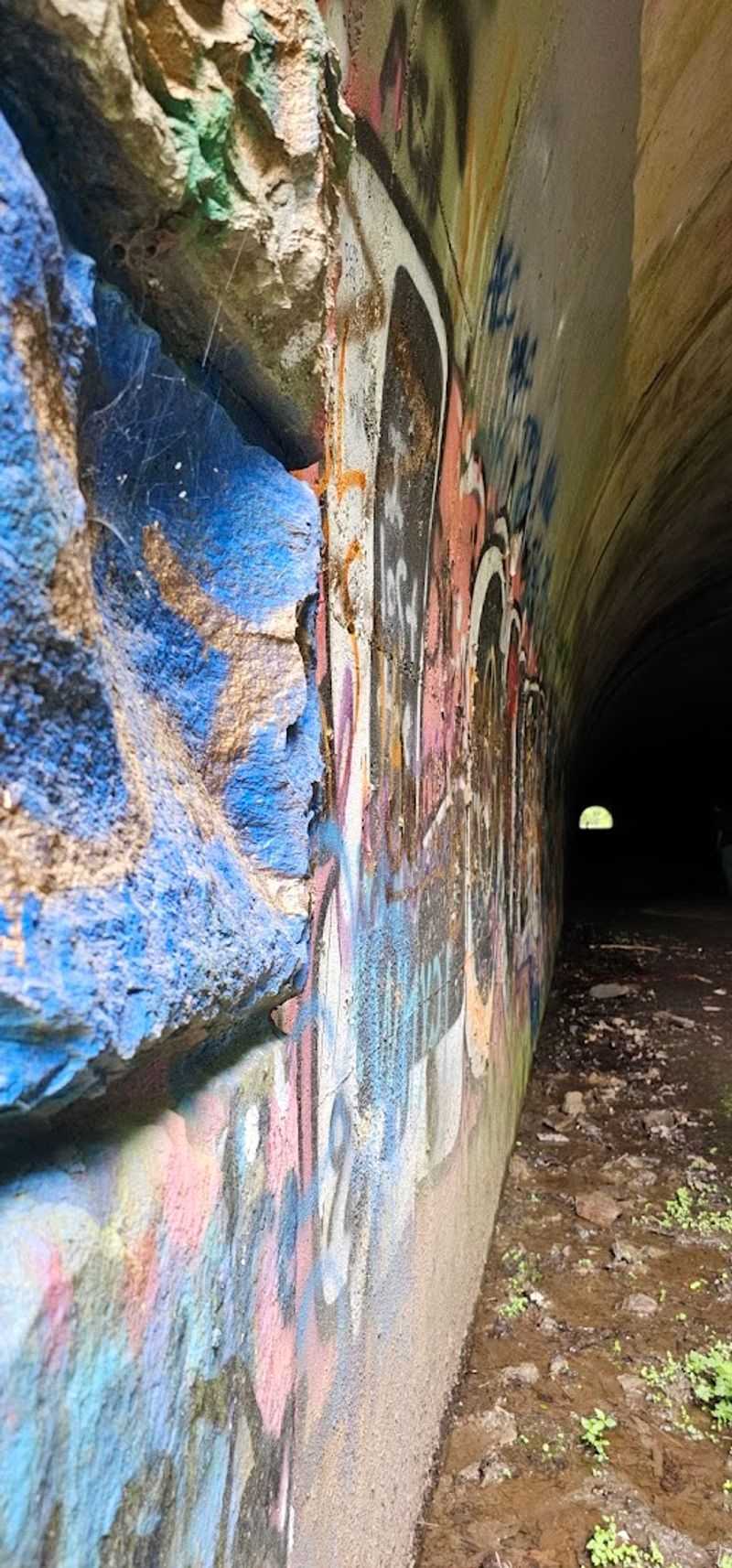
The tunnel walls show signs of decades of visitors, with graffiti covering much of the stone surface. Some people find it adds character, while others wish the rock had been left untouched.
Either way, the sheer length of the passage and the way sound echoes inside make the walk feel unlike most tunnels in the region.
The Strange Story Behind North Carolinas Road To Nowhere
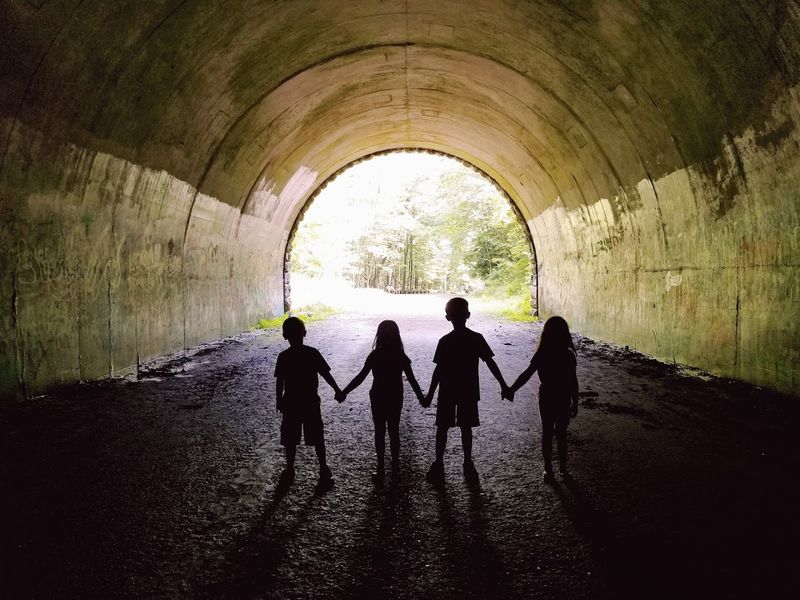
The full history of this place is genuinely moving once you know the details. In the early 1940s, the Tennessee Valley Authority built Fontana Dam to generate electricity for wartime industrial needs, including the facilities in Oak Ridge, Tennessee.
The rising waters of Fontana Lake swallowed entire communities in Swain County, North Carolina.
Families who had lived in those mountain hollows for generations suddenly found their homes, farms, and cemetery plots underwater.
The federal government signed an agreement with Swain County in 1943, promising a road that would let people reach the graves of their ancestors on the north shore. That road was partially built, the tunnel was completed, and then the project stopped.
For decades, Swain County fought for either the road or financial compensation. The dispute dragged on for more than sixty years before a settlement was finally reached in 2010, awarding the county around 52 million dollars.
The story bears a quiet resemblance to infrastructure disputes in other states, where communities have similarly battled over broken government commitments. The tunnel stands as a physical reminder of that long, unresolved chapter.
Walking Through The Tunnel That Leads To Nothing
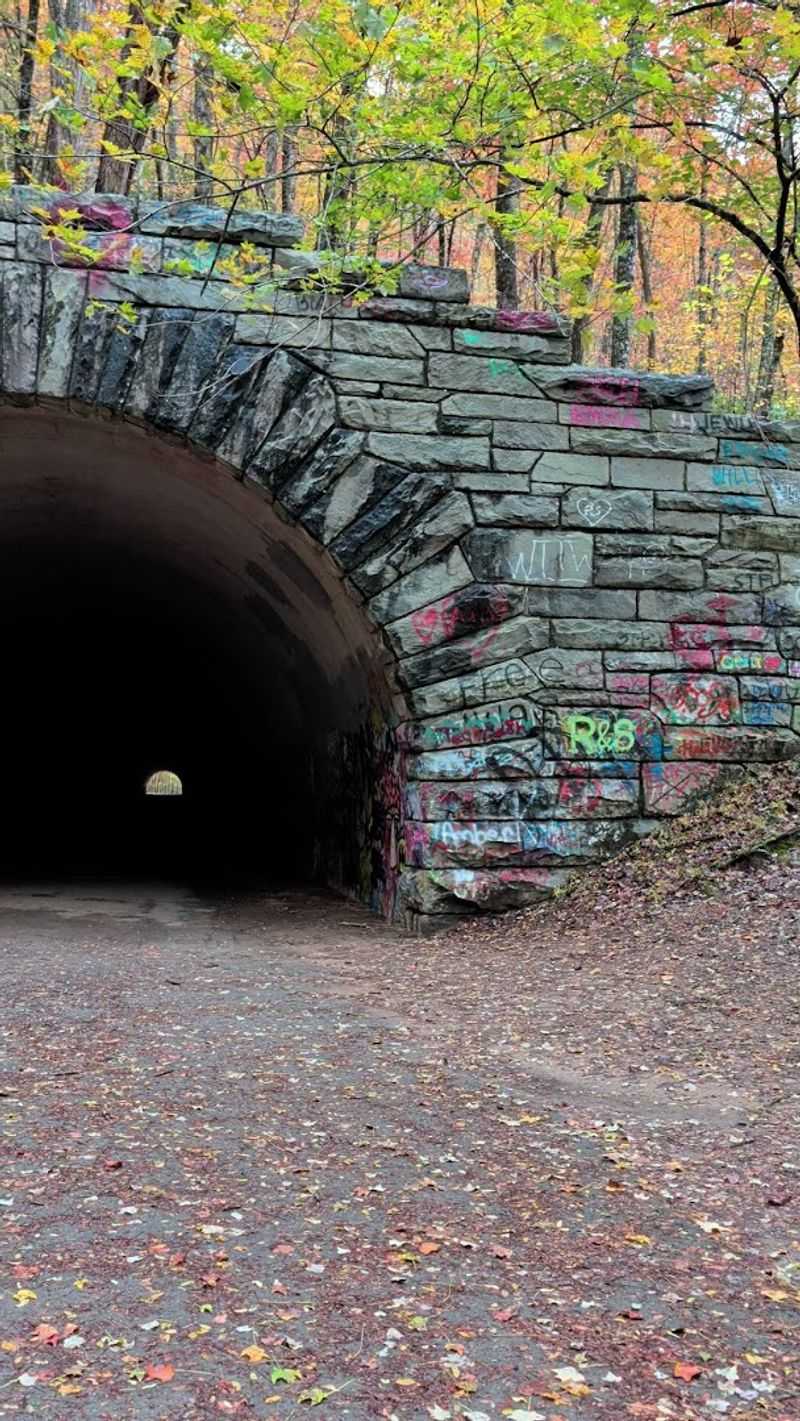
Bringing a flashlight is strongly recommended, and I say that from personal experience. The middle section of the tunnel is genuinely dark, and the ground is uneven in places.
A phone light can work in a pinch, but a proper handheld flashlight makes the walk much more comfortable.
The tunnel floor can be damp, and in colder months, ice patches can form near the entrance and exit. In winter, small patches of ice can sometimes form inside the tunnel, so watching your footing is important.
Once you exit the other side, the contrast is striking. You step from cold stone and darkness into open forest, and the quiet is almost startling.
There are trailheads just beyond the tunnel that lead toward Fontana Lake, though those hikes are described as strenuous by most visitors. The tunnel walk itself is accessible for most people.
From the parking lot to the far exit and back usually takes less than thirty minutes at an easy pace.
One Of The Most Curious Stops Near Bryson City
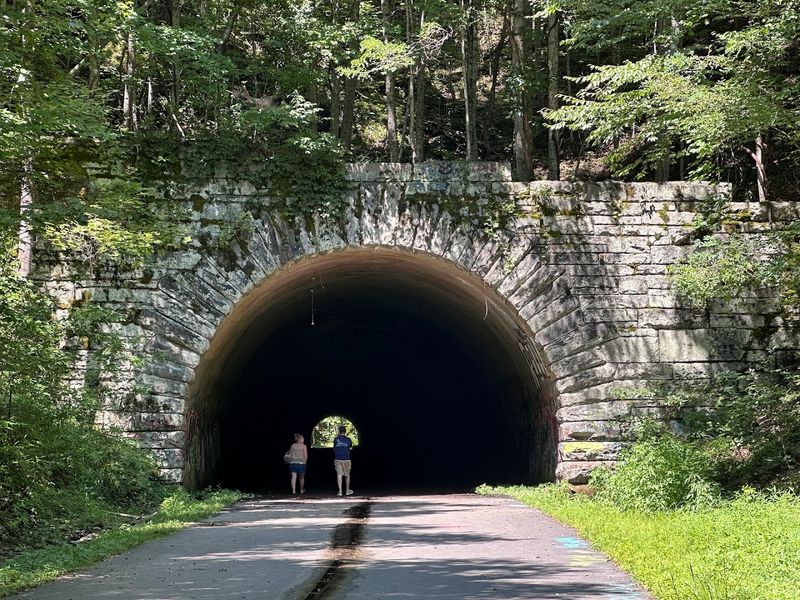
Bryson City is the kind of small town that earns its charm honestly. Sitting at the edge of the Great Smoky Mountains National Park in western North Carolina, it pulls in outdoor lovers year-round, hikers, rafters, train riders, and wanderers of all kinds.
There’s plenty to do here. But ask locals what stop people talk about most, and the answer keeps coming back to the same place.
Getting there is straightforward. You follow Everett Street out of Bryson City, which becomes Lakeview Drive East, and you drive for roughly eight to nine miles total before reaching the parking area.
Google Maps navigation has reportedly dropped some visitors off in the middle of the road rather than at the end, so keep driving past wherever the app tells you to stop.
A National Park pass or parking sticker is required for the lot, so plan accordingly. The spot is free to visit beyond that, which makes it one of the more budget-friendly curiosities in the entire park system.
The Mountain Tunnel Built For A Road That Never Came
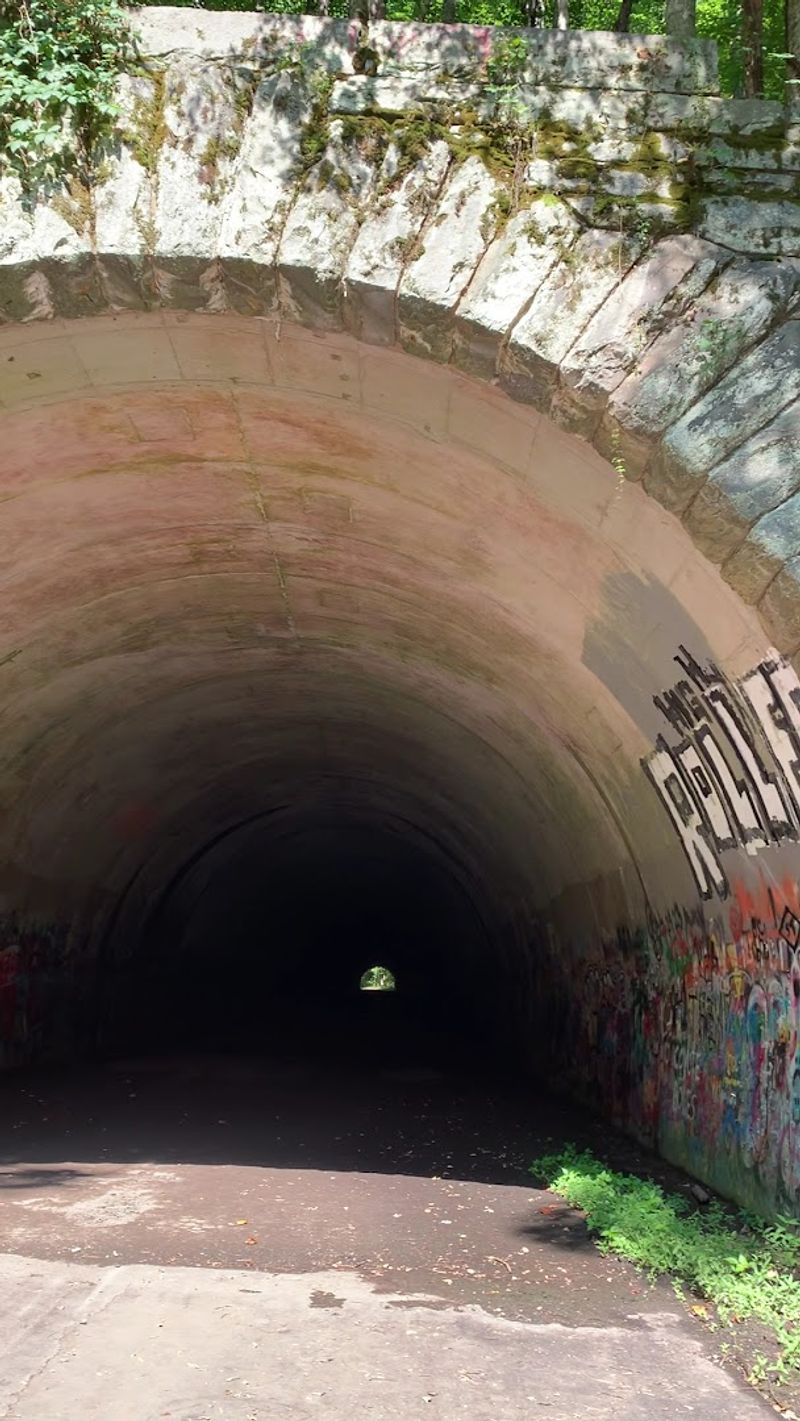
The engineering behind this tunnel is worth appreciating, even if the road it was meant to serve never materialized. Workers carved through solid mountain rock to create a passage wide enough for vehicles.
Today it feels spacious and easy to walk through, even for groups. The construction quality has held up well over the decades.
What makes the tunnel feel strange is precisely that it was built to vehicle standards, yet no cars have ever driven through it. It was designed as part of a larger highway project, and the infrastructure investment was real.
The tunnel simply became an orphan when funding dried up and political priorities shifted.
The walls bear the marks of both construction and time. Moisture seeps through the rock in places, and the graffiti left by visitors over the years adds an unplanned layer of history.
Some of the older inscriptions date back many decades. The tunnel has become a canvas as much as a corridor, which is not what its builders intended but is now an undeniable part of its character.
A Quiet Tunnel With An Unfinished Story
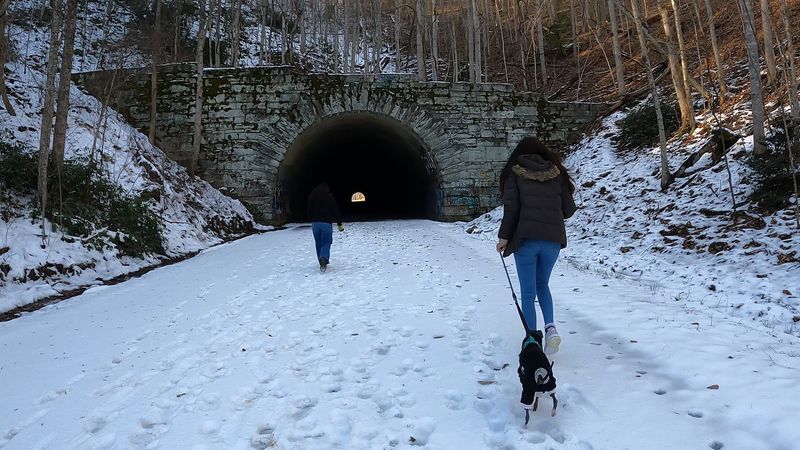
Step out the far end of the tunnel and the world changes completely. The hum of any distant traffic disappears, and you are left with birdsong, wind through the tree canopy, and the soft sound of your own footsteps on the dirt path ahead.
It is one of the quietest places I have stood in the entire southeastern United States.
Several trails branch out from the tunnel exit into the backcountry of Great Smoky Mountains National Park. These are not casual strolls.
Many of the trails are considered strenuous, with some routes running several miles through rugged terrain before reaching viewpoints over Fontana Lake. Bringing plenty of water and wearing proper footwear is not optional on these trails.
Wildlife is very much present in this area. Bears have been spotted along these trails by multiple visitors, and at least one group reported a close encounter with another animal near the trailhead.
Bear spray is a reasonable precaution if you plan to hike beyond the tunnel.
The Place Where A Promised Road Simply Ends
There is something quietly powerful about standing at the point where a promise stopped being kept. The Road to Nowhere Tunnel is not just a curiosity for hikers or history buffs.
It is a physical monument to a specific moment when government ambition and community need collided and neither fully won.
Swain County residents spent decades trying to hold the federal government to its 1943 agreement. The fight became a generational one, passed from parents to children who had never seen the flooded cemeteries but understood what they represented.
The final settlement in 2010 brought money but not the road itself, which means the tunnel still sits at the end of an unfinished highway.
Visiting this place with that context in mind changes the experience entirely. You are not just walking through a cool mountain tunnel on a vacation day trip.
You are walking through the physical result of a decades-long dispute that shaped an entire county.
A Tunnel That Feels Like Stepping Into A Secret
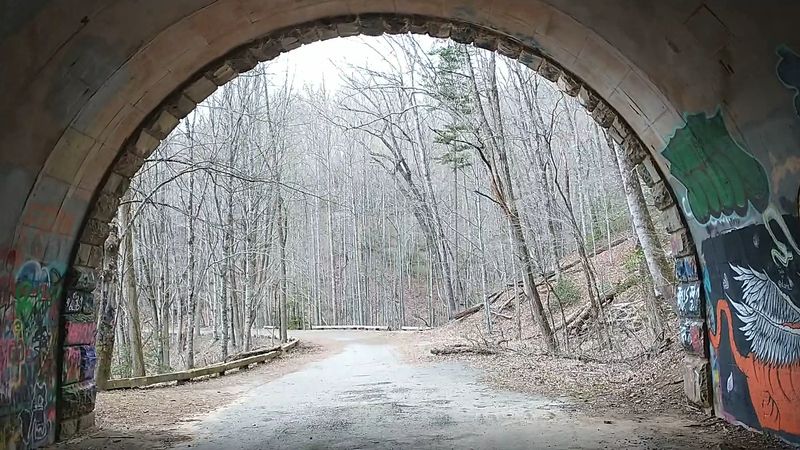
Something about walking into a dark tunnel in the middle of a mountain forest just gets to you. The reputation this place has for feeling slightly unnerving is completely earned.
Echoing footsteps, cool damp air, and total darkness in the middle section, it all adds up to an atmosphere that lingers long after you walk back out into the light.
Whether that is the acoustics of the stone passage playing tricks or something else entirely is a question each visitor has to answer for themselves. The tunnel has collected a fair amount of local folklore over the years.
What I can say with confidence is that the experience is completely safe and well worth the slight unease. The tunnel is wide, structurally sound, and well-traveled by families, couples, and solo hikers alike.
Pets are welcome through the tunnel, though many of the trails beyond it do not allow dogs. The whole experience has a secretive quality that makes it memorable long after you leave.