11 Eerie Abandoned Places In Georgia That Feel Like Time Capsules
Georgia’s landscape holds far more than charming small towns and famous Southern dishes. Hidden across forests, rural backroads, and quiet corners of old cities are abandoned places that tell powerful stories about the past. Weathered hospitals, empty mansions, forgotten bridges, and crumbling community buildings stand as silent reminders of the people who once filled them with life.
Over time, nature has slowly begun reclaiming many of these sites, with vines creeping across brick walls and trees growing through broken foundations. The result is a haunting beauty that draws history enthusiasts, photographers, and curious explorers alike. Each location offers a glimpse into a different chapter of Georgia’s past, from vanished towns to institutions that once served entire communities.
For those who enjoy uncovering hidden stories and atmospheric places, these abandoned sites reveal a mysterious side of the state that few travelers ever see.
1. Dungeness Ruins, Cumberland Island
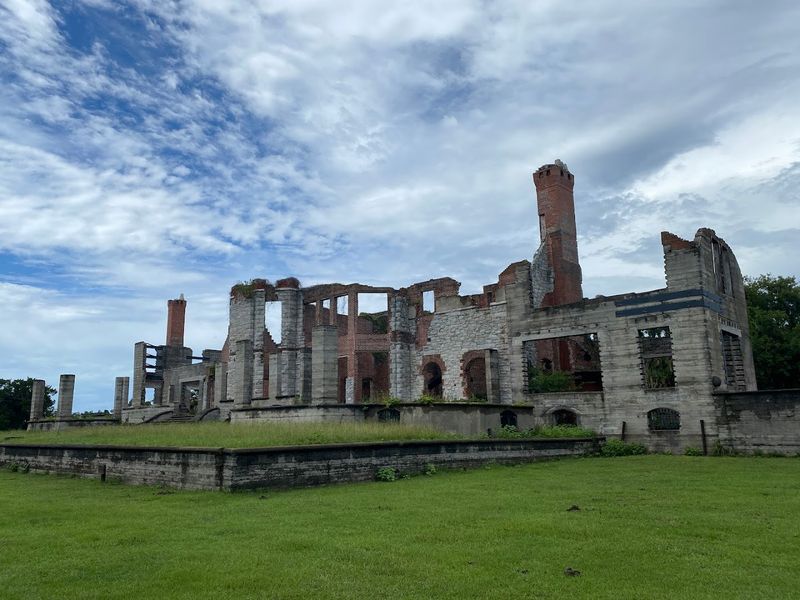
Wild horses roam freely around what was once one of Georgia’s grandest estates, making Dungeness Ruins one of the most hauntingly beautiful spots in the entire state. Located on Cumberland Island, accessible only by ferry from St. Marys, Georgia, these skeletal stone walls are all that remain after a devastating fire tore through the mansion in 1959. The original structure was built by Thomas Carnegie in the 1880s, replacing an even older estate on the same land.
Walking among the crumbling archways feels like stepping into a dream that never quite ended. Ivy creeps up what used to be grand walls, and the salty ocean breeze drifts through open windows that no longer hold glass. The grounds are part of Cumberland Island National Seashore, so visitors can explore freely during daylight hours.
Getting there requires planning since the ferry runs on a limited schedule, so booking tickets in advance is strongly recommended. Early morning visits tend to be quieter and more atmospheric.
2. Central State Hospital, Milledgeville
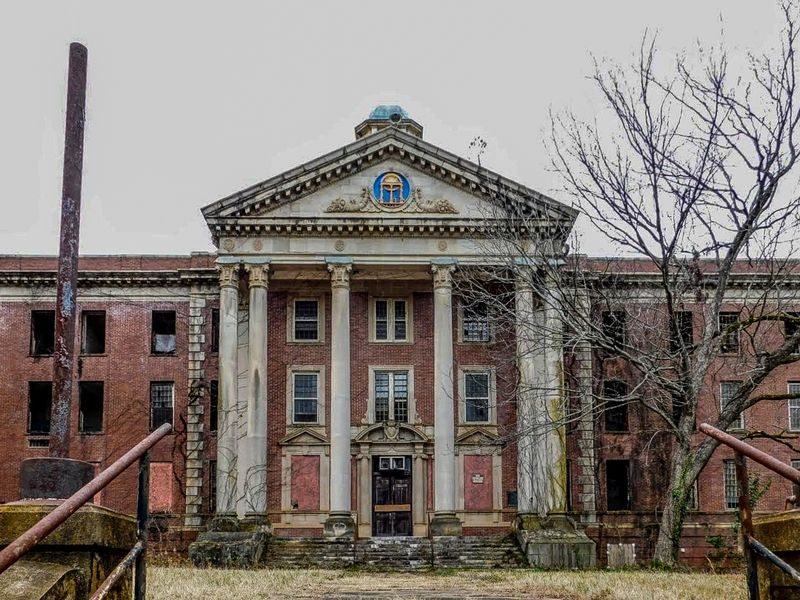
At its peak, this facility held over 12,000 patients, making it the largest psychiatric institution in the entire world. Central State Hospital in Milledgeville, Georgia operated for over a century before most of its buildings were shuttered, leaving behind a sprawling campus of deteriorating structures that stretch across hundreds of acres. The sheer scale of the place is staggering when you walk the grounds.
Faded murals still decorate some interior walls, and rusted medical equipment sits exactly where workers left it decades ago. The cemetery on the property holds thousands of unmarked graves, adding a deeply sobering layer to the experience. Some buildings have been repurposed, but the majority remain frozen in a state of slow decay.
The city of Milledgeville has been working on preservation and redevelopment efforts, so access to certain areas may vary depending on current projects. Checking with local tourism offices before visiting is a smart move to avoid restricted zones.
3. Spook Bridge, Brooks-Lowndes County Line
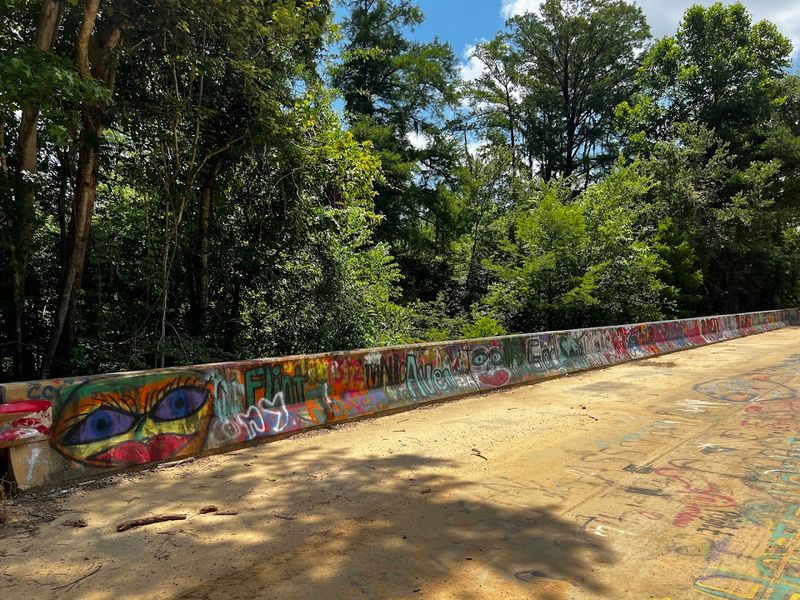
Few places in Georgia carry a name that does as much heavy lifting as Spook Bridge. Spanning the Withlacoochee River along the county line between Brooks and Lowndes counties, this open-spandrel arch bridge was constructed around 1920 and served travelers faithfully until a flood in the late 1940s washed out the road approaches, leaving it stranded and forgotten. Locals have been whispering ghost stories about it ever since.
The bridge itself is a genuinely impressive piece of early 20th-century engineering, and its mossy, overgrown appearance adds to the atmosphere considerably. Urban legends claim strange lights appear near the water at night, and some visitors report an unsettling feeling of being watched while standing on the old span.
Reaching Spook Bridge requires navigating rural South Georgia backroads, so bringing a good map or downloaded offline GPS directions is a practical necessity. Visiting during daylight hours is advisable since the surrounding area has no lighting whatsoever after dark.
4. Harville House, Statesboro
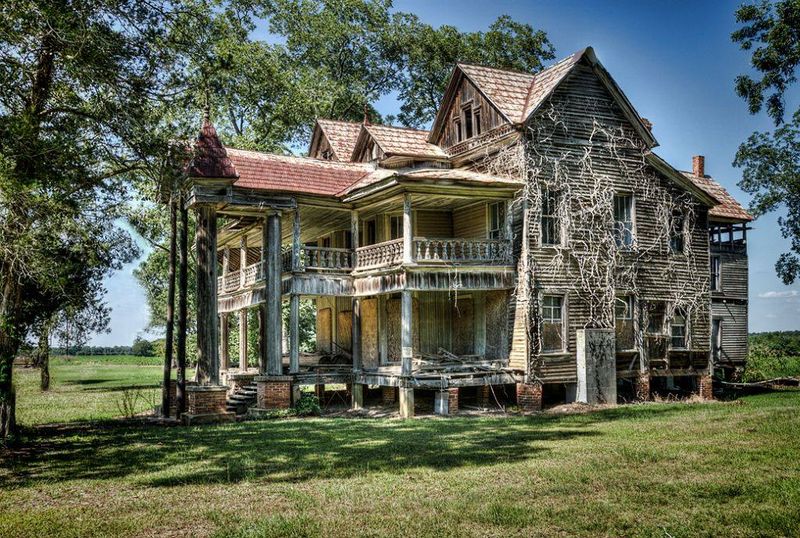
Built in 1894, the Harville House in Statesboro is the kind of place that makes you slow your car down just to stare. This 14-room mansion was constructed by a family deeply tied to Georgia’s agricultural heritage, and its weathered facade still carries traces of the grandeur it once held. Over the years, it has earned a reputation as one of the most haunted private residences in Bulloch County.
Visitors and passersby have reported seeing unexplained blue lights flickering from the windows late at night. Some locals claim to have felt sudden bursts of warm air while standing near the property, despite cool outdoor temperatures. Whether or not those stories hold any truth, the visual atmosphere alone is enough to make even the most skeptical visitor pause.
The house remains a private property, so respectful observation from the road is the appropriate approach. Trespassing is not permitted, and honoring that boundary ensures the site remains accessible as a roadside curiosity for future visitors.
5. Barnsley Gardens Resort Ruins, Adairsville
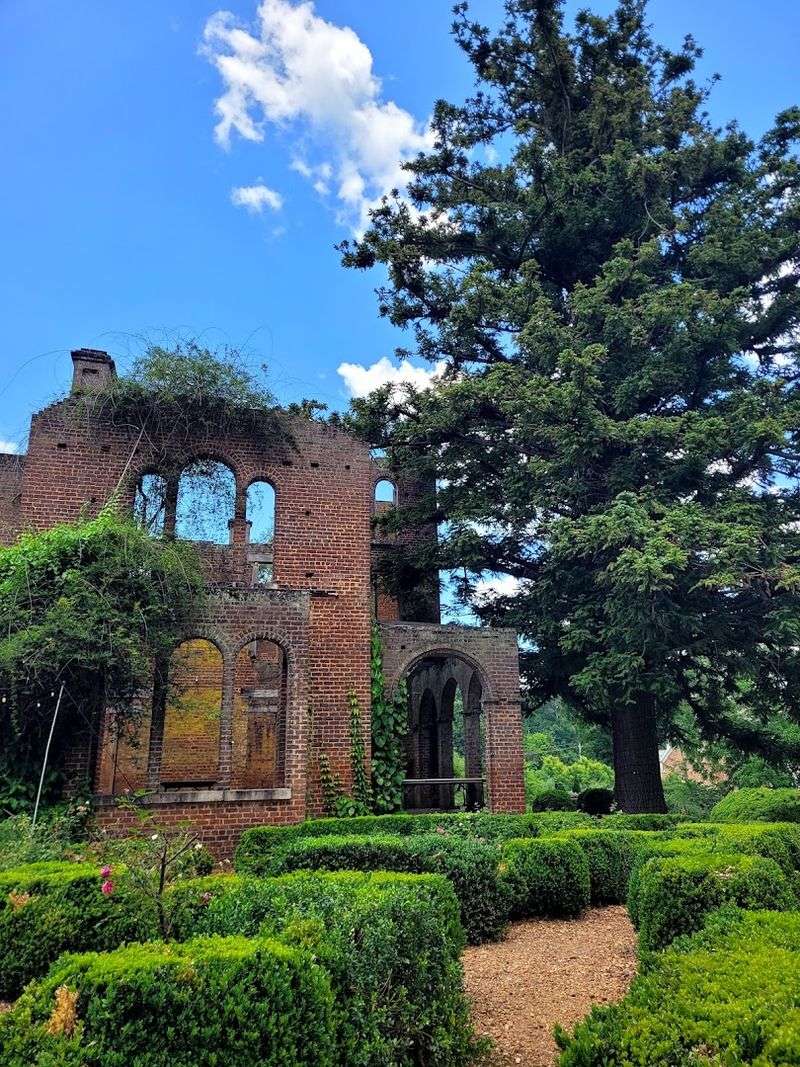
Godfrey Barnsley poured his fortune into building a magnificent Italianate manor in the rolling hills of northwest Georgia during the 1840s, but tragedy seemed to follow the estate at every turn. Located at what is now Barnsley Resort, 597 Barnsley Gardens Road, Adairsville, GA 30103, the original manor house was never fully completed during Barnsley’s lifetime and was later damaged during the Civil War before being struck by a tornado in 1906. The roofless ruins still stand on the resort grounds today.
What makes this spot particularly fascinating is the contrast between the crumbling original structure and the beautifully maintained gardens and resort that now surround it. Guests staying at the resort can wander right up to the ruins at any time, touching the same bricks that Civil War soldiers once passed by. A small museum on the property adds historical context to what visitors are seeing.
Day visitors are welcome to explore the grounds for a fee, and the combination of luxury amenities and genuine historical ruins makes Barnsley a uniquely layered destination in Georgia.
6. Resaca Confederate Cemetery, Resaca
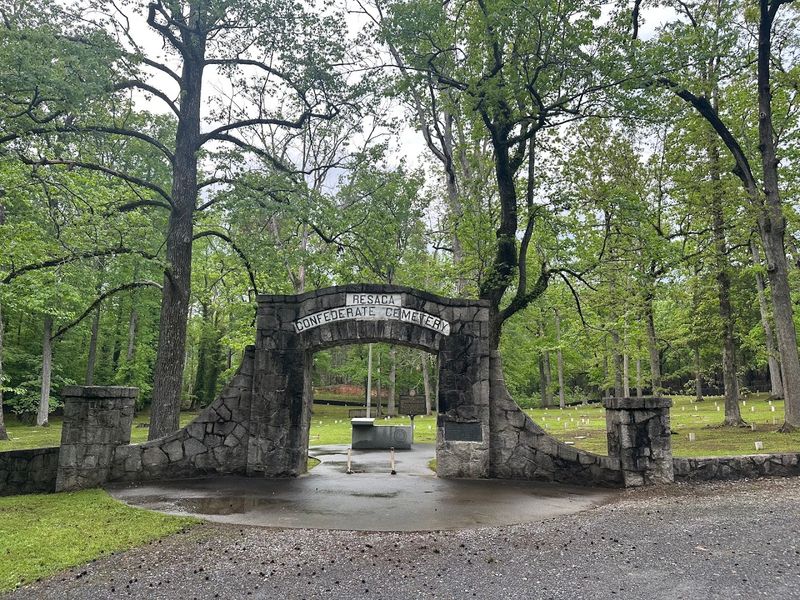
Standing among the headstones at Resaca Confederate Cemetery, it is easy to feel the full weight of what happened here in May 1864. Located at 1 Cemetery Road, Resaca, GA 30735, this cemetery holds the remains of hundreds of Confederate soldiers who fell during the Battle of Resaca, one of the opening engagements of Sherman’s Atlanta Campaign. The site is considered the first Confederate cemetery established in Georgia after the Civil War.
Many of the graves are marked simply with rough stones or deteriorating wooden markers, giving the cemetery an air of quiet melancholy rather than formal grandeur. The surrounding landscape has changed relatively little over the decades, and the stillness of the place feels almost amplified compared to the chaos that once consumed these fields.
The cemetery is open to the public and maintained, though its remote and understated character gives it the feeling of a forgotten place despite its historical significance. Visiting on a weekday morning tends to offer the most reflective experience with minimal crowds and maximum quiet.
7. Old Savannah City Hall Vault Area, Savannah
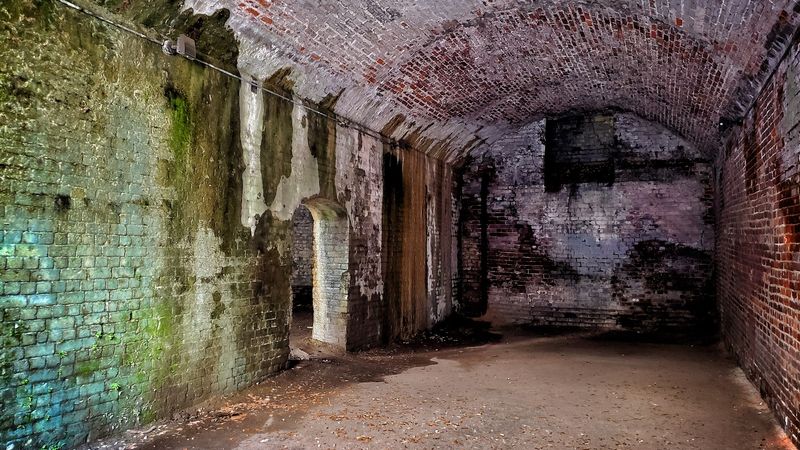
Beneath the polished streets of one of America’s most photogenic cities lies a layer of history that most tourists never see. Savannah’s historic downtown sits atop a network of old tunnels, vaulted cellars, and buried colonial-era structures that date back to the city’s earliest decades. Various tours and preservation projects have brought portions of this underground world to public attention, revealing spaces that feel genuinely frozen in another century.
Some of these underground areas were used for storage, others as passages, and a few carry stories of far darker purposes that historians continue to debate. The brick arches and worn stone floors give these spaces a texture that photographs struggle to capture accurately. Savannah’s famous squares and tree-lined streets sit directly above, creating an almost surreal contrast between the manicured surface and the raw, aging spaces below.
Several local tour operators offer guided access to portions of Savannah’s underground history, and booking in advance is recommended since group sizes are typically limited for safety and preservation reasons.
8. Fort Pulaski National Monument Ruins, Cockspur Island
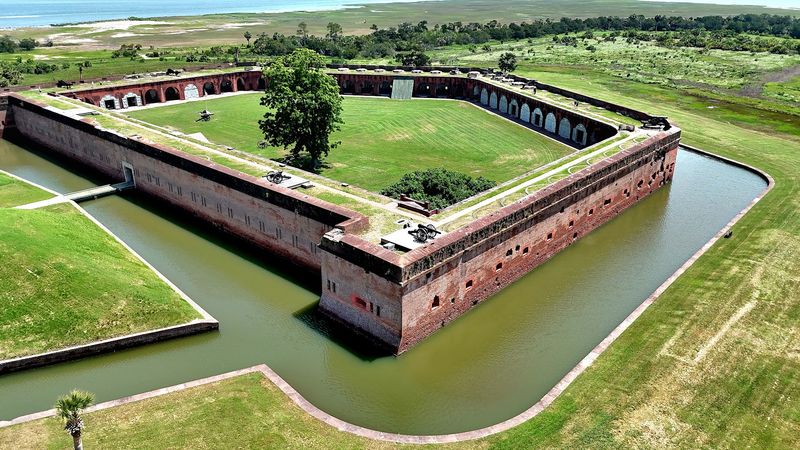
Fort Pulaski changed the history of military engineering forever when Union rifled cannons breached its seven-foot-thick brick walls in just 30 hours during April 1862, proving that masonry forts were effectively obsolete. Located at 101 Fort Pulaski Road, Savannah, GA 31410, this National Monument sits on Cockspur Island in the Savannah River and remains one of the most remarkably preserved examples of 19th-century military construction anywhere in the country.
The breach in the southeastern wall has never been fully repaired, left deliberately as a permanent historical lesson in the power of technological change. Walking through the casemates and climbing the earthworks gives visitors a visceral sense of what life inside a fort under bombardment might have felt like. The surrounding marshlands add an additional layer of atmospheric isolation to the experience.
The monument is managed by the National Park Service and is open to visitors year-round, though summer heat and humidity in coastal Georgia can be intense. Morning visits are significantly more comfortable, especially from June through September.
9. Andersonville National Historic Site, Andersonville
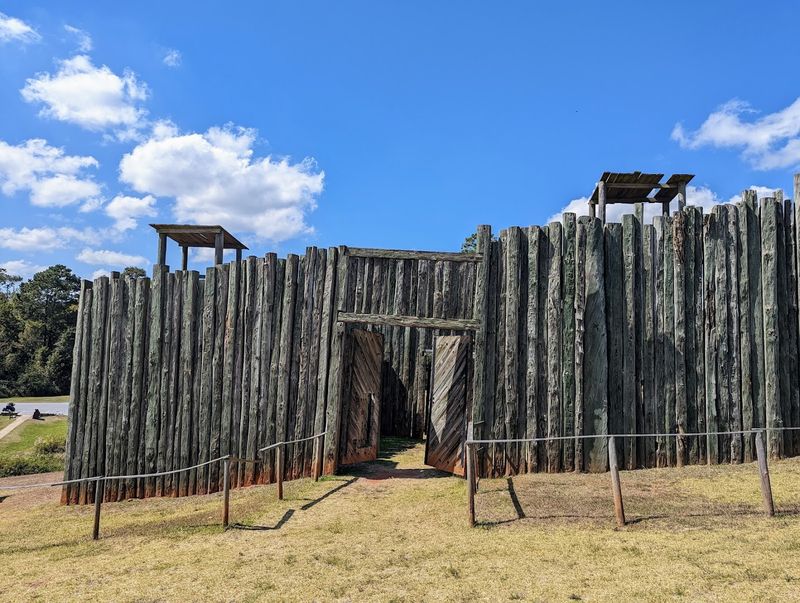
No other abandoned place in Georgia carries the same weight of human suffering as the grounds of Camp Sumter, better known as Andersonville Prison. Located at 760 POW Road, Andersonville, GA 31711, this Civil War prisoner-of-war camp held Union soldiers in conditions so brutal that nearly 13,000 men died here between 1864 and 1865. The site is now a National Historic Site managed by the National Park Service, and the open field where the stockade once stood is marked by row after row of grave markers.
Walking the grounds produces a stillness that is hard to describe and impossible to shake quickly. The reconstructed sections of the original wooden stockade walls give visitors a concrete sense of how confined and exposed the prisoners were. The National Prisoner of War Museum on the property expands the story beyond the Civil War to honor all American POWs across every conflict.
The site is open year-round and admission is free. Visiting on a quiet weekday allows for a more reflective experience than busier weekend dates.
10. Rock Eagle Effigy Mound, Eatonton
Somebody built a massive eagle out of quartz rocks roughly 1,000 to 3,000 years ago in what is now Putnam County, Georgia, and nobody is entirely sure why. Rock Eagle Effigy Mound, located within Rock Eagle 4-H Center at 350 Rock Eagle Road, Eatonton, GA 31024, stretches over 100 feet from wingtip to wingtip and stands about 10 feet tall at its highest point. The construction required an enormous amount of labor and intention, making it one of the most mysterious prehistoric sites in the entire southeastern United States.
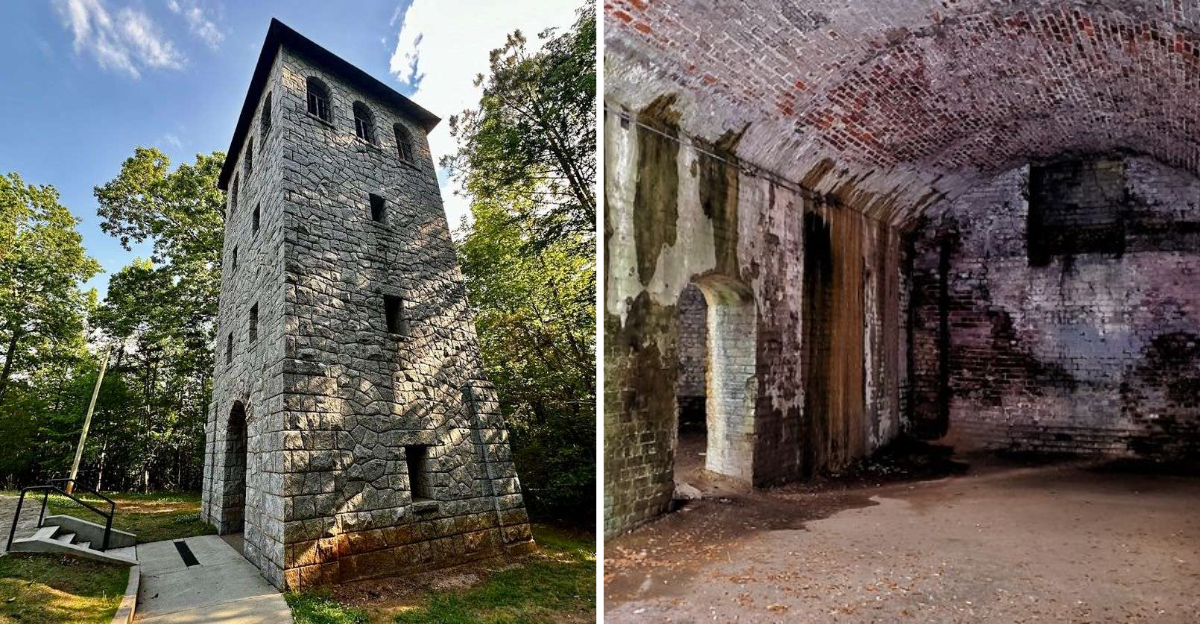
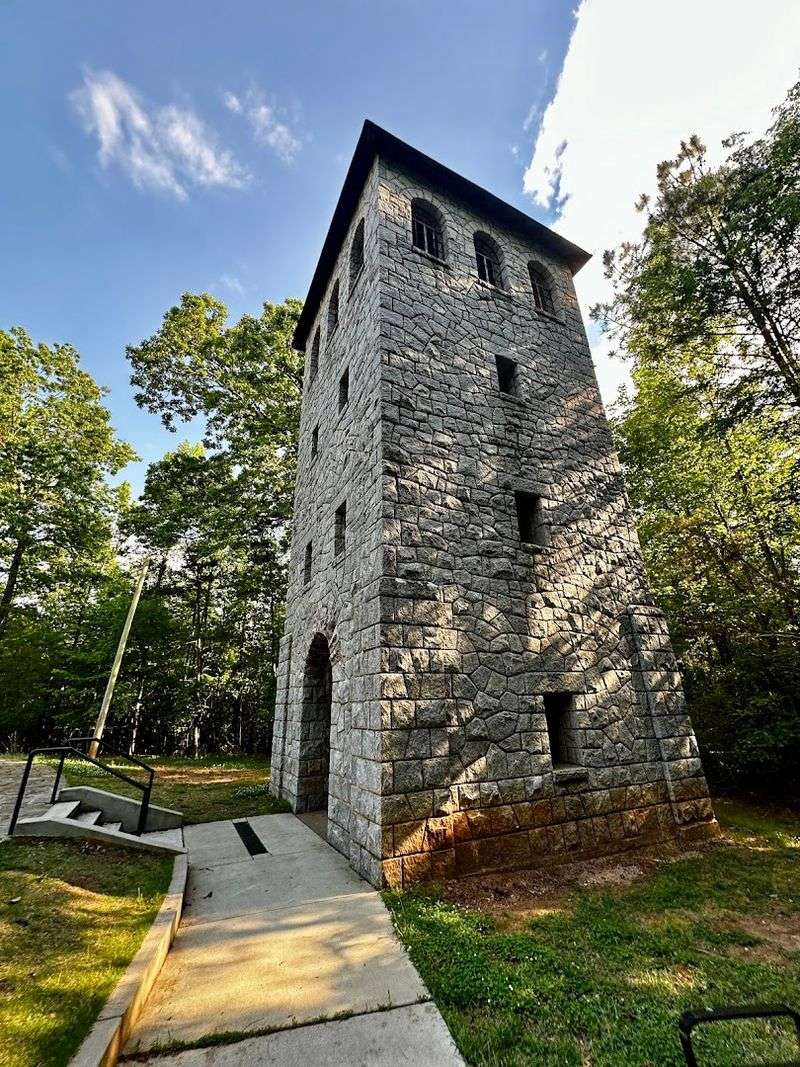
A stone observation tower built nearby allows visitors to look down on the full shape of the eagle from above, which is the only way to truly appreciate the scale and precision of the design. The surrounding forest adds to the ancient atmosphere, muffling modern sounds and making the site feel genuinely removed from the present.
The mound is accessible to the public during daylight hours. Visiting in the early morning when the light is low and the site is quiet tends to produce the most striking and atmospheric experience.
11. Kennesaw Mountain Battlefield Earthworks, Marietta
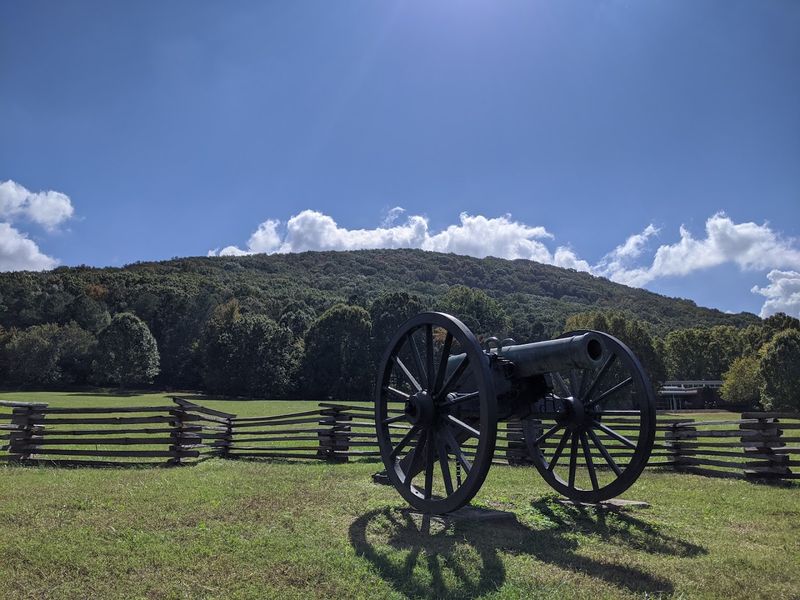
More than 160 years after the guns fell silent, the earthworks on Kennesaw Mountain still scar the hillside in ways that feel immediate and raw. Kennesaw Mountain National Battlefield Park, located at 900 Kennesaw Mountain Drive, Kennesaw, GA 30152, preserves miles of original Confederate trenches, cannon positions, and rifle pits dug frantically in the summer of 1864 as Sherman’s forces pressed toward Atlanta. Running your hand along the earthen walls, it is genuinely difficult to process that real soldiers shaped this dirt under fire.
The park covers over 2,900 acres, and the more remote trail sections take visitors well away from the parking areas into stretches of forest where the battlefield feels almost untouched. Interpretive markers help connect the landscape to specific moments in the fighting, but the earthworks themselves are the real storytellers here.
Trails range from easy to moderately strenuous, and the summit of Kennesaw Mountain offers sweeping views of the Atlanta skyline on clear days. Weekday morning visits are significantly less crowded than weekend afternoons.