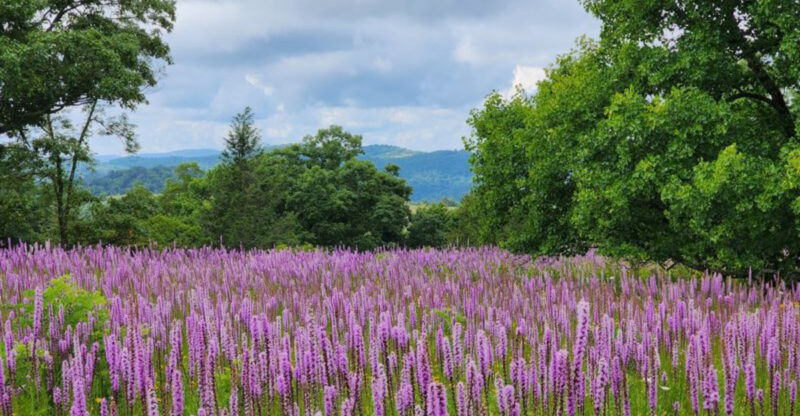
This Quiet North Carolina Destination Is A Haven For Native Plant Lovers
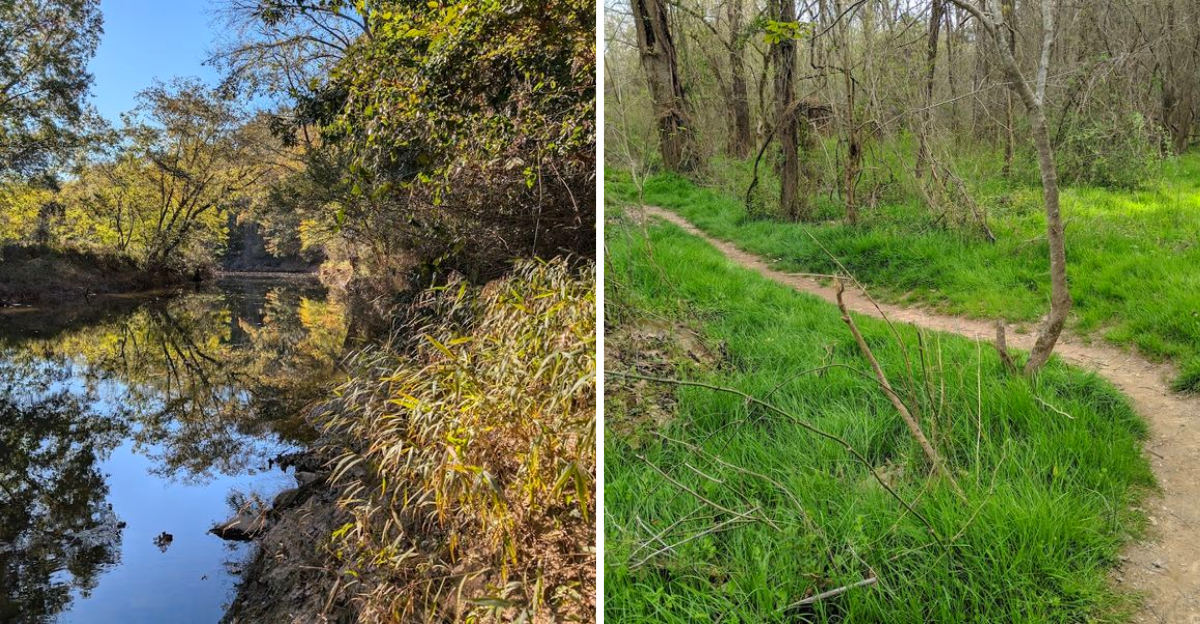
Did you ever wish to remove yourself from all the concrete and asphalt? Then come and escape here to North Carolina to feel the grass and smell the flowers, or just enjoy the peace and tranquility.
Along a quiet bend of the Eno River in Durham, this protected stretch stands out for its unusual geology and calm, unspoiled feel.
The most notable feature here is a rare native wildflower with very strict habitat needs. It grows almost nowhere outside this bend of the river. When it blooms, clusters of bright yellow petals cover the hillsides.
The preserve is not about big overlooks or long hikes. Quiet trails, river views, and small natural details define the experience.
In the Triangle, it’s easy to overlook places that don’t ask for attention. But once you realize what quietly blooms along this stretch of river, it starts to feel less like a stop and more like something you weren’t really supposed to find.
A Nature Preserve Unlike Any Other In The Triangle
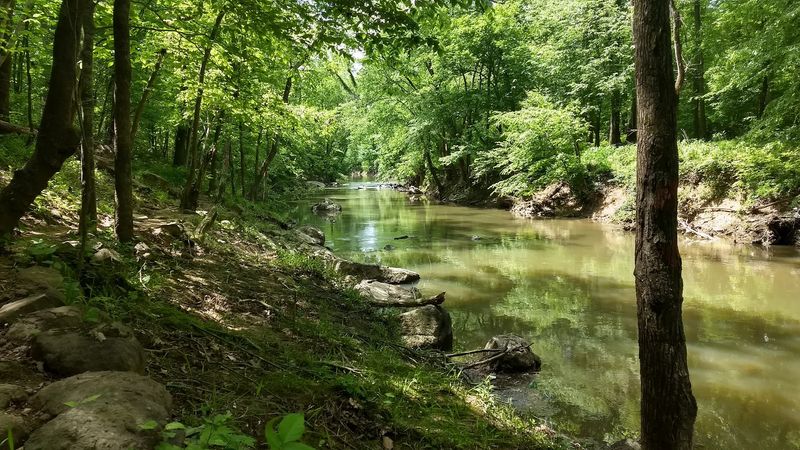
Some nature spots reveal their magic slowly, and Penny’s Bend is one of them. Tucked along the Eno River in Durham, this small preserve surprises visitors with how much ecological diversity fits into such a compact area.
The landscape follows a sweeping curve in the river, and that bend shapes the entire environment. Unique soil and rock conditions create a microhabitat where rare plants thrive.
Several species found here are difficult to spot elsewhere in North Carolina, which makes the preserve especially interesting for botanists and nature enthusiasts.
The trailhead appears quietly along Old Oxford Rd, Durham, NC 27712. The parking area is small and easy to overlook, which adds to the sense that you have stumbled onto a local secret rather than a heavily advertised destination.
Once on the trail, the preserve feels peaceful and tucked away from the city. The river winds through forest and open areas, creating a landscape that changes subtly with the seasons.
Visitors consistently rate Penny’s Bend highly, with reviews averaging about 4.5 out of 5 stars. The preserve remains open every day of the week and does not charge admission.
For people living in the Triangle, it offers an easy escape into nature. For first-time visitors, the experience often brings that pleasant realization that remarkable places sometimes hide in the quietest corners.
The Remarkable Geology Behind The Rare Plant Life
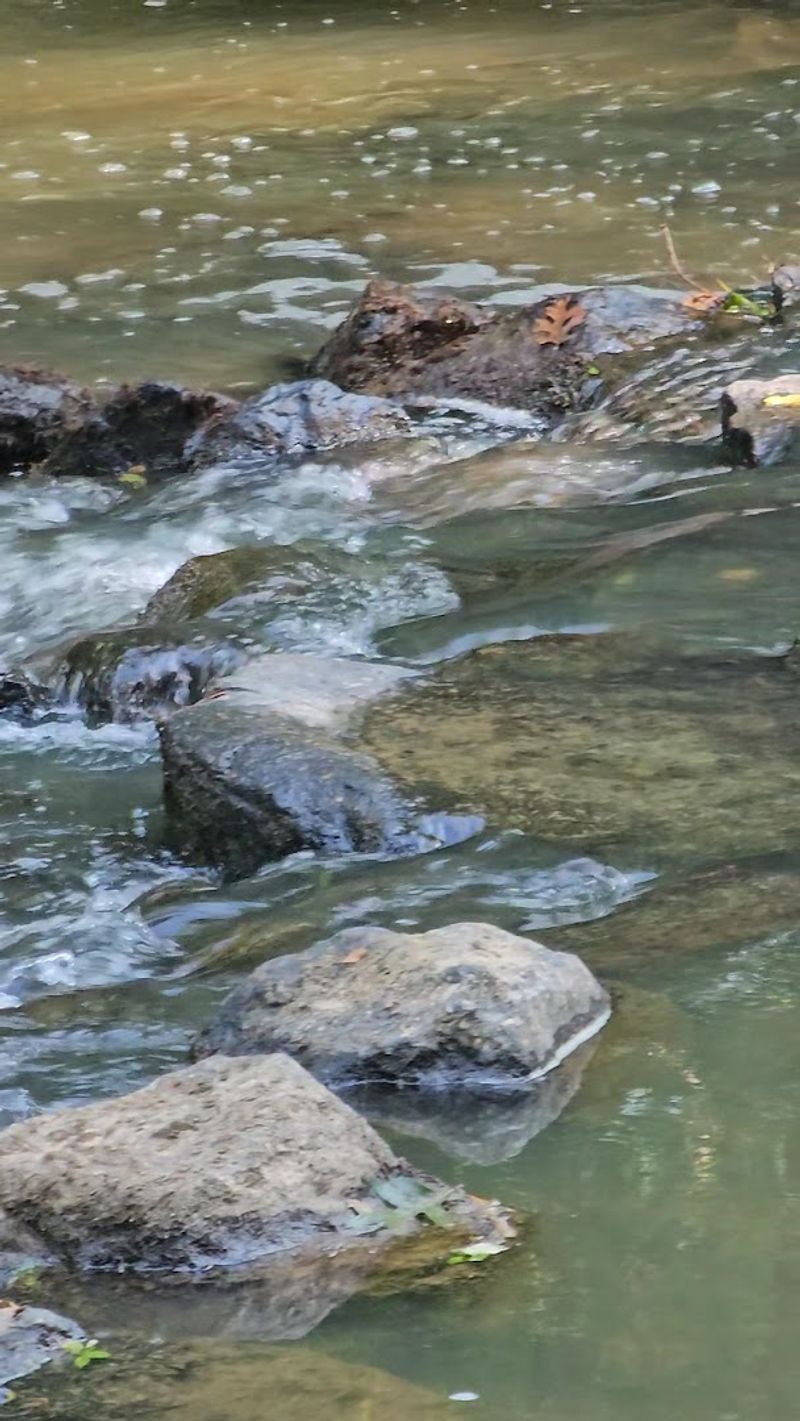
Most visitors focus on the scenery at Penny’s Bend, but the real story begins beneath their feet. The preserve sits on a layer of diabase, a dark volcanic rock that shapes the soil in unusual ways.
As diabase breaks down over time, it forms soil with a chemical makeup that many plants struggle to tolerate. Only certain species can adapt to those conditions, which creates a very specialized plant community within the preserve.
Because of that geology, Penny’s Bend has become one of the most botanically important sites in the region. Several uncommon wildflowers grow here, thriving in soil that would be hostile to most other plants.
The best-known example is the North Carolina coneflower, scientifically called Rudbeckia nitida var. nitida. This striking plant appears in only a few places worldwide, and Penny’s Bend remains one of its most significant habitats.
That connection between rock and wildflower highlights how closely geology and ecology are linked. A layer of ancient stone beneath the forest floor quietly determines which plants can grow above it.
Once you know that story, walking through the preserve feels different. The landscape becomes more than a pleasant riverbend, revealing itself as a rare intersection of geology, biology, and time.
The North Carolina Coneflower
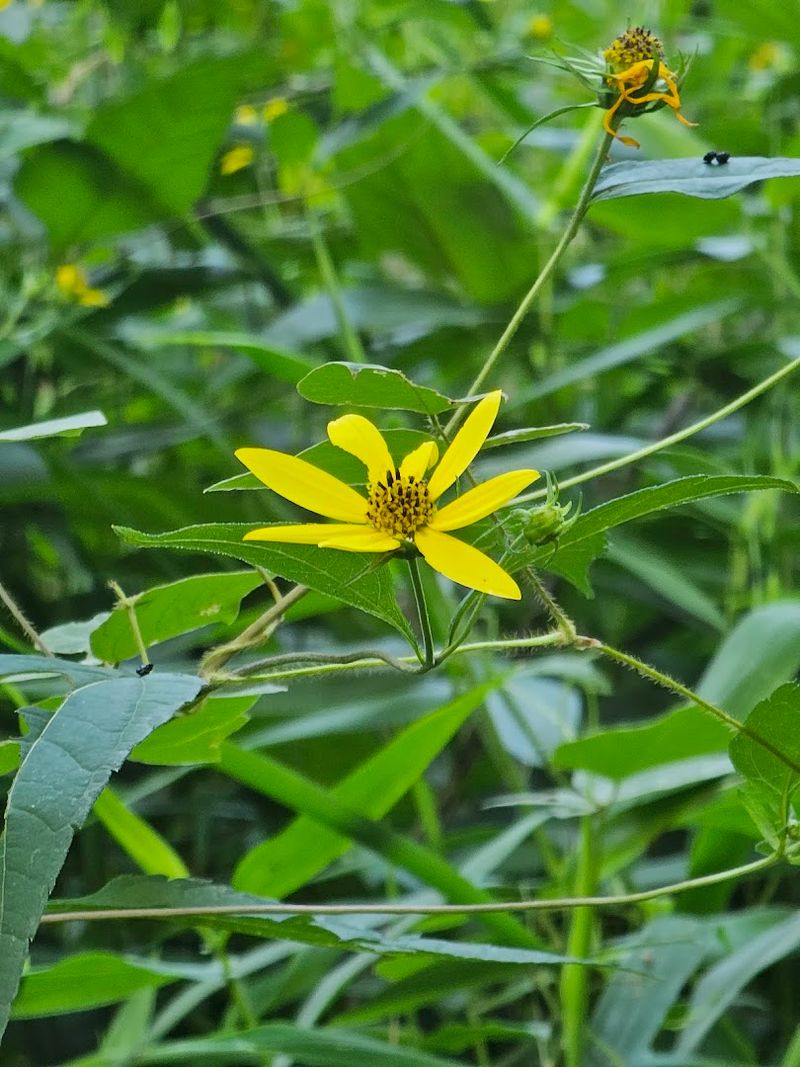
Some wildflowers look ordinary at first glance, yet carry remarkable stories behind their petals. The North Carolina coneflower is one of those plants.
This bright yellow flower stands tall with drooping petals and a sturdy stem that catches the light in open fields.
At Penny’s Bend, it grows in patches where sunlight reaches the ground, adding bursts of color to the landscape during the late summer months.
What makes the plant truly special is its rarity. The North Carolina coneflower is considered a globally rare species, with natural populations found in only a few locations.
Penny’s Bend holds one of the most important of those populations, giving the preserve real conservation significance.
Visitors hoping to see the flowers should plan their trip for late summer, usually around August. During that time, the blooms appear in open areas where the forest thins and the soil conditions suit the plant best.
Encountering a species this rare along a public trail feels surprisingly personal. Instead of seeing it behind glass or in a botanical garden, visitors find it growing quietly in its natural habitat.
That simple moment of spotting the bright yellow blooms often becomes one of the highlights of a walk through Penny’s Bend.
Walking The Trails Along The Eno River
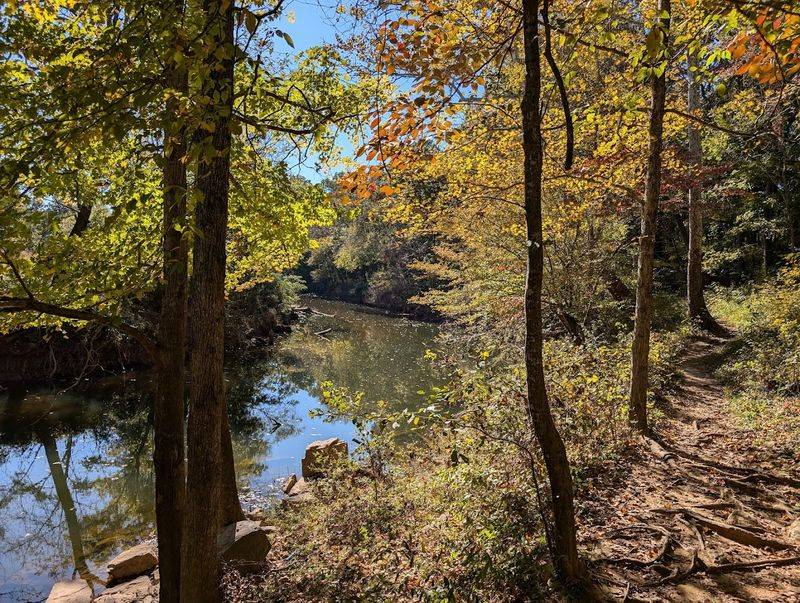
A walk at Penny’s Bend does not require a full day to enjoy. The trail network covers roughly two to three miles, depending on the route you follow, making it perfect for a relaxed morning outing or a quiet midday break.
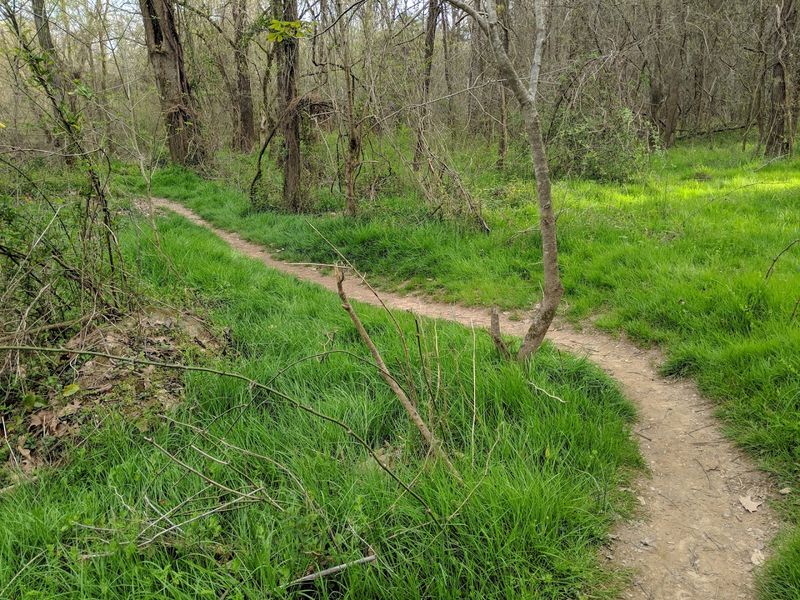
Most of the path winds beside the Eno River through shaded woodland. The trail feels natural rather than heavily maintained, with exposed roots, uneven ground, and occasional muddy patches after rain.
Good footwear makes the walk much more comfortable, especially during wetter seasons.
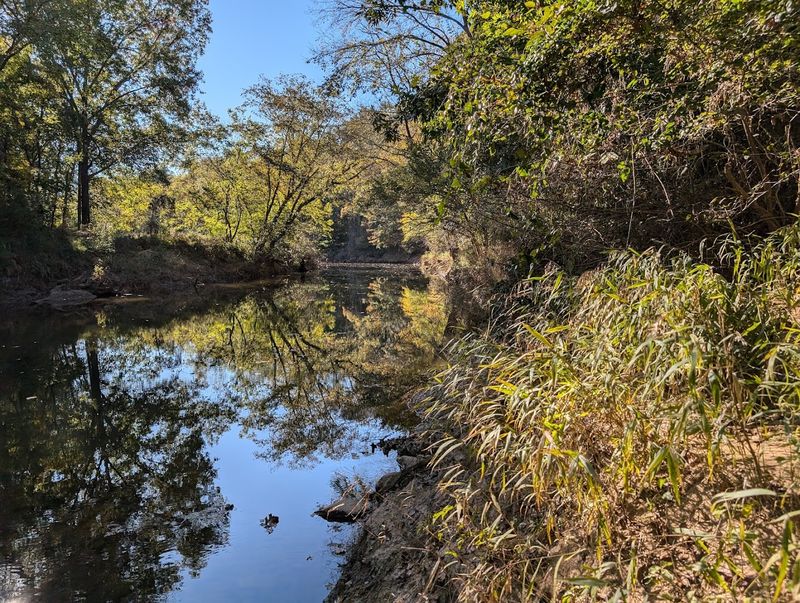
The river becomes noticeably wider at this bend, and the trees along the bank are spaced farther apart than in many other sections of the Eno. That opening in the canopy allows clear views of the water as it curves through the preserve.
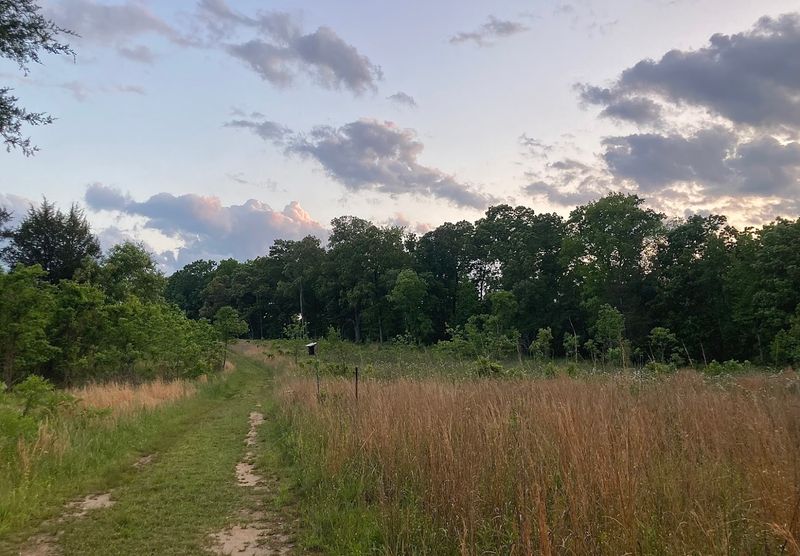
Several reviewers mention enjoying the stretch that crosses the open field. After moving through shaded forest, stepping into a sunny meadow creates a refreshing shift in scenery. From there, the wide bend of the river forms a gentle backdrop.
The combination of woodland, meadow, and river views keeps the walk interesting without feeling demanding. It is the kind of short trail that rewards a slow pace and a willingness to pause along the way.
The Open Fields That Set Penny’s Bend Apart
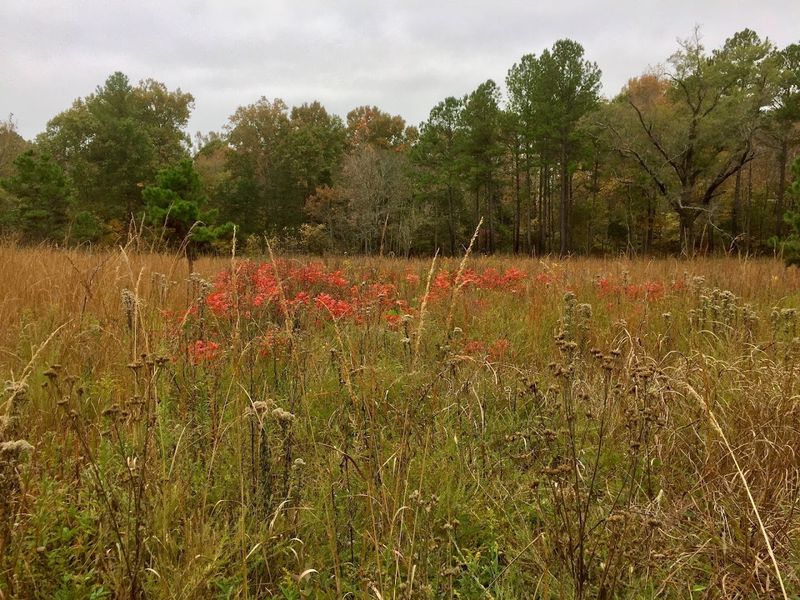
Durham has plenty of wooded parks and shady river trails. What it rarely offers is open landscape, and that is where Penny’s Bend stands apart.
Parts of the preserve include wide grassland fields that break up the surrounding forest. These open spaces are not simply scenic features.
They play an important role in the preserve’s ecology, allowing sunlight to reach the ground where rare plant species can thrive.
The mix of meadow and riverside woodland creates a richer habitat than either landscape alone. Wildflowers grow in the sunlit fields, while shaded forest edges provide shelter for birds and small wildlife.
That diversity supports a broader range of plants and animals throughout the preserve.
On clear days, the meadow sections feel surprisingly expansive. Wildflowers dot the grass, the Eno River curves quietly nearby, and the open sky gives the area a sense of space that is unusual for Durham.
Local visitors often highlight these fields as one of the preserve’s most distinctive features. True grassland habitats have become increasingly rare across the region, which makes the open areas at Penny’s Bend especially meaningful.
They are not just pleasant scenery. They represent a type of landscape that once appeared far more frequently across North Carolina.
Fishing The Eno At Penny’s Bend
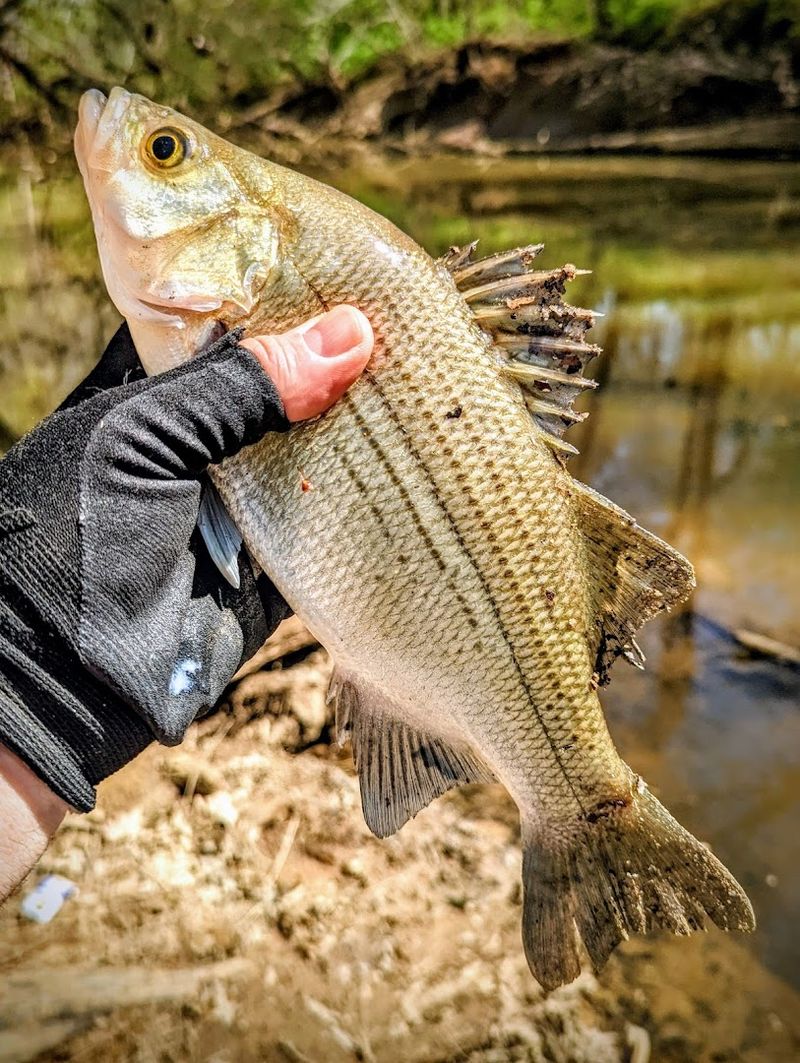
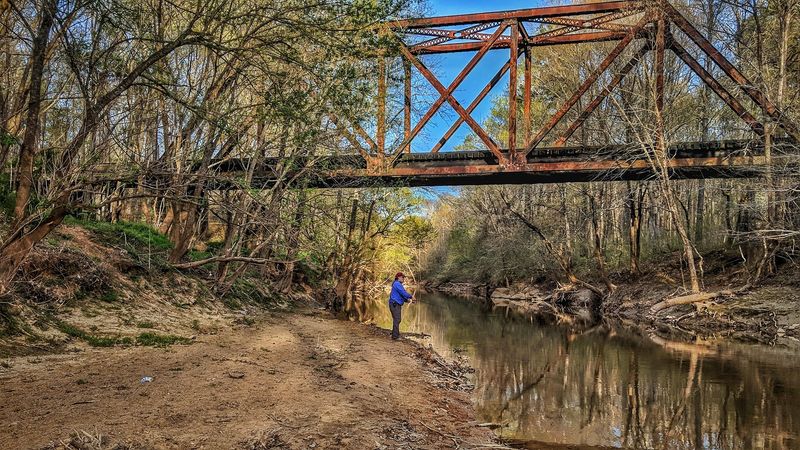
Wildflowers may draw the most attention at Penny’s Bend, but anglers have quietly appreciated this stretch of the Eno River for years. The calm water and easy public access make it an appealing place to cast a line.
The wide bend in the river plays an important role. On the inside curve, the current slows down, creating calmer water where fish often gather. That slower flow tends to attract species such as sunfish, yellow perch, and catfish.
Several visitors mention having good luck fishing here. One reviewer reported catching all three of those species during a single trip, which is a solid result for a preserve so close to the city.
The riverside trail also offers a comfortable place to spend time. Because the river curves southward at the bend, much of the bank remains shaded through the day. That shade makes it easier to settle in for a longer afternoon by the water.
Access points along the bank can be steep, and wading is not practical in many spots. Still, patient anglers often find places where casting from shore works well.
For those willing to bring a rod along with their hiking shoes, Penny’s Bend offers another reason to linger. The quiet water and steady shade make it one of Durham’s more overlooked fishing spots.
Practical Tips For Visitors
A little preparation goes a long way at Penny’s Bend. The preserve rewards visitors who plan ahead, especially on busy days.
Parking is the first thing to keep in mind. The small lot along Old Oxford Road fills quickly on weekend mornings. Arriving early or choosing a weekday visit usually makes finding a space much easier.
The trail itself feels natural and somewhat rugged. Roots cross the path in several places, and the ground can turn slick after rain. Supportive shoes with good traction help maintain steady footing along the river sections.
Some hikers also recommend bringing a walking stick. It can be helpful on uneven stretches, particularly where the trail slopes toward the water.
Ticks are another detail visitors mention often. The grassy field sections create good habitat for them, so using insect repellent and checking clothing after the walk is a sensible precaution.
Despite those small challenges, the route is easy to follow. The loop trail is clearly marked and usually takes less than an hour to complete at a relaxed pace.
Since there are no trash cans in the preserve, carrying out any waste is important. A small bag in your pack helps keep the area clean and ensures the trails remain pleasant for future visitors.
The Best Seasons For Plant Enthusiasts
Choosing the right time to visit Penny’s Bend can make the walk feel even more rewarding. The preserve changes noticeably with the seasons, and each period brings something different to notice along the trail.
Spring is often the first highlight of the year. As the forest canopy begins to fill in, early wildflowers appear along the path. Plant enthusiasts often visit during this time to spot species that only bloom for a short window.
Late summer offers another standout moment. Around August, the North Carolina coneflower reaches its peak bloom.
The open meadow sections turn warm and golden as tall grasses and bright yellow flowers fill the fields. Photographers and botanists often find this period especially rewarding.
The preserve remains interesting even outside peak bloom seasons. Autumn softens the landscape with muted colors, while winter opens wider views of the river once the leaves fall from the trees.
Because the trail is relatively short, many locals return several times throughout the year to see how the landscape changes.
A quiet morning walk in late summer, with birds moving through the meadow, often leaves visitors with the feeling that they discovered something quietly special.
Wildlife And Birdwatching Opportunities
Penny’s Bend attracts more than wildflowers and hikers. The preserve’s mix of meadow, forest, and river habitat supports a surprising range of wildlife.
Birdwatchers often find the area especially rewarding. The Eno River draws waterfowl and wading birds to its slower sections, while the wooded edges shelter songbirds that move through the canopy along the trail.
The open grassland areas add another layer of habitat. These sunny fields attract grassland bird species that have become harder to find in the more developed parts of the Triangle region.
Together, those environments create a layered ecosystem within a relatively small preserve. Moving from riverbank to woodland and then into open meadow can reveal completely different bird activity within just a short walk.
Visitor reviews occasionally mention an unusual sight as well. A few hikers have reported spotting abandoned domestic chickens wandering the fields, an odd reminder that the preserve sits close to both wild and suburban landscapes.
Early morning tends to offer the best wildlife viewing. The trails remain quiet, the air is cooler, and birds are often most active just after sunrise.
Despite being only a short drive from Durham, Penny’s Bend can feel surprisingly removed from the surrounding city. That sense of quiet isolation is part of what makes the preserve appealing to both wildlife and visitors.
A Connection To The Broader Eno River Greenway
Penny’s Bend may feel tucked away, but it connects to a much larger trail network across the region. Hikers who want to explore beyond the preserve can link into routes that stretch through Durham and Orange County.
One important connection is the Mountains-to-Sea Trail, often called the MTS Trail. This long-distance route crosses North Carolina from the Great Smoky Mountains to the Outer Banks.
At Penny’s Bend, the trail intersects near the preserve’s northwest corner.
Several visitors highlight this junction as a worthwhile detour. From that point, hikers can extend their walk into longer stretches of varied terrain. The landscape shifts from open meadow and riverbank to deeper woodland paths.
Comparing Penny’s Bend with nearby Eno River State Park is also helpful. The state park features more groomed trails that are smoother and easier to follow. Penny’s Bend, by contrast, keeps a wilder character.
The paths here feel natural and lightly managed. Roots cross the trail, branches reach overhead, and the ground changes with the seasons. That roughness encourages hikers to slow down and pay attention to each step.
Within the regional trail system, Penny’s Bend fills a valuable role. It offers a slightly untamed experience that complements the more polished parks nearby, giving visitors another way to experience the Eno River landscape.