This Steam Train Ride Through California’s Sierra National Forest Is One Of The Most Breathtaking In The U.S. And It’s Back This March
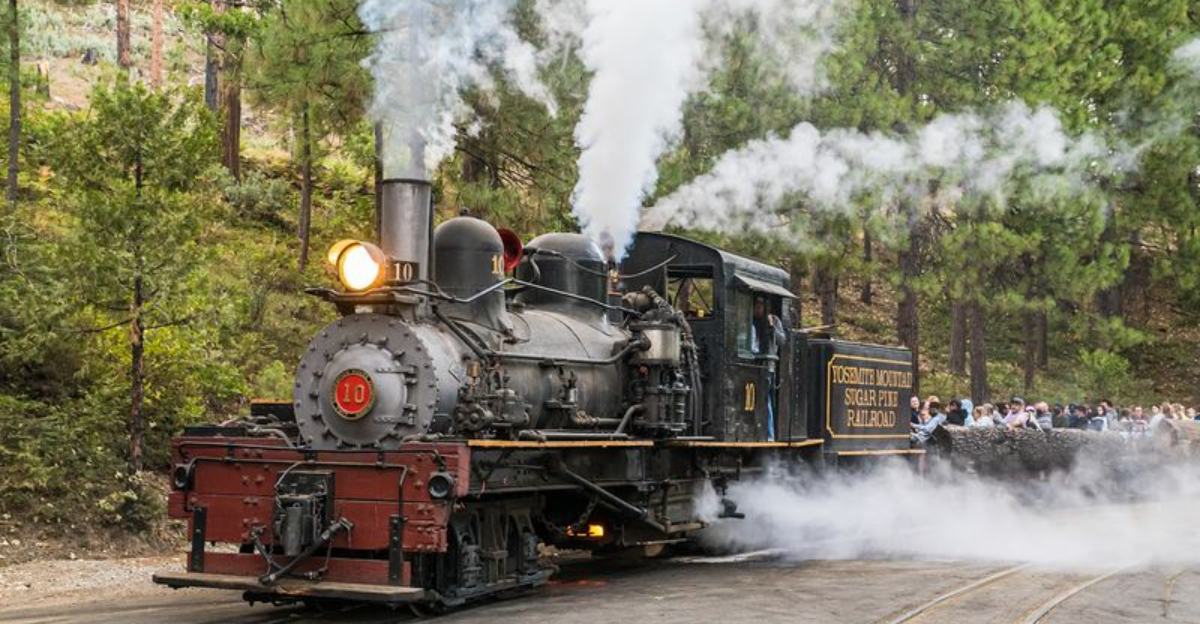
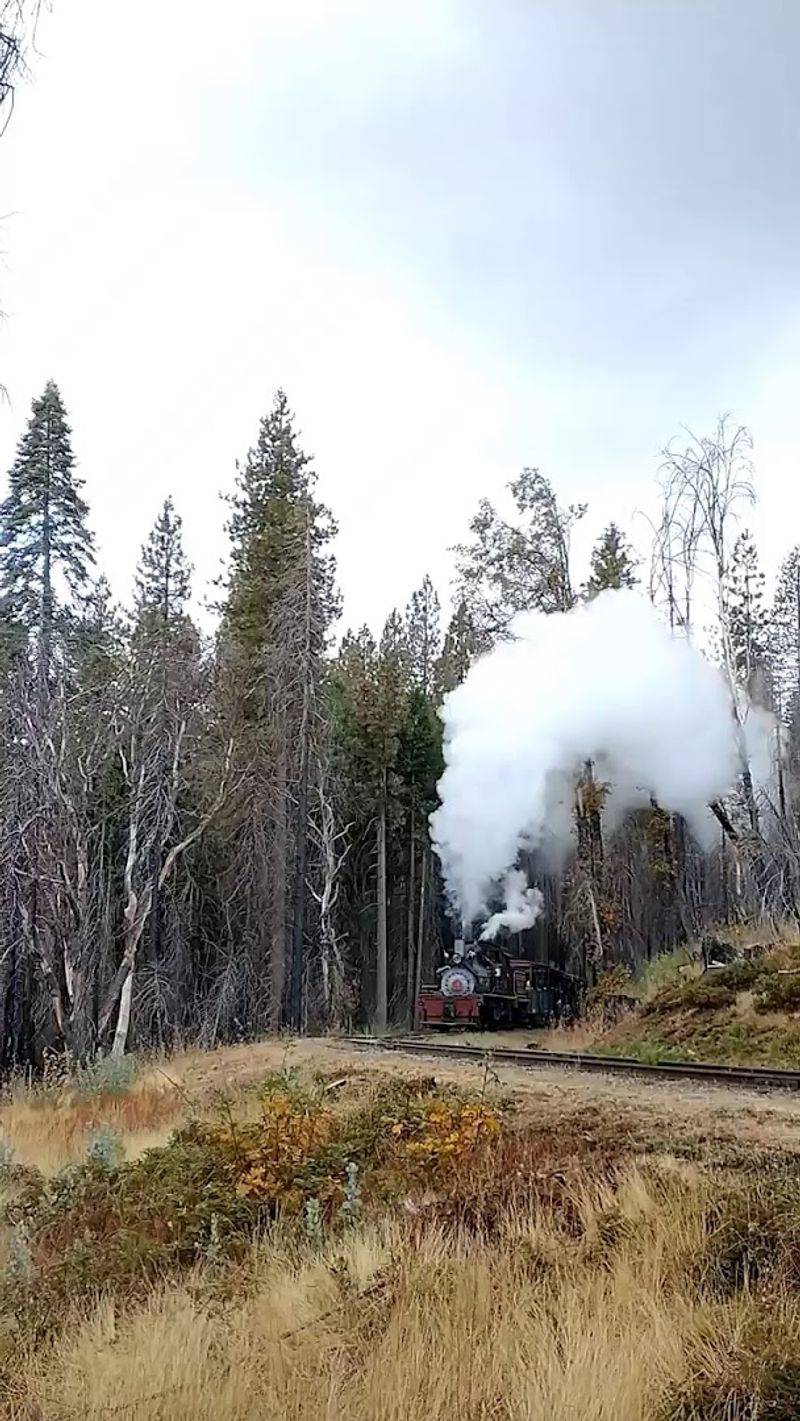
A train whistle cuts through the forest, echoing between towering trees in a way that feels almost cinematic.
You don’t just hear it, you feel it, especially as the engine slowly comes into view, steam rising and wheels moving with a steady, deliberate rhythm.
The setting does a lot of the work.
Tall pines stretch overhead, the air carries that cool mountain edge, and everything around you feels a little quieter, a little slower, like the modern world stepped back for a moment.
Out here in California, you actually forget your phone exists and just take it all in.
Riding through a forest on a historic steam train has a way of pulling you into a different pace, where the journey matters as much as the destination and every turn reveals another stretch of untouched landscape.
Just outside Yosemite’s southern entrance, this seasonal ride returns at the end of March, bringing with it a piece of the past that still feels alive.
1. The Railroad Is Located Four Miles From Yosemite’s South Entrance
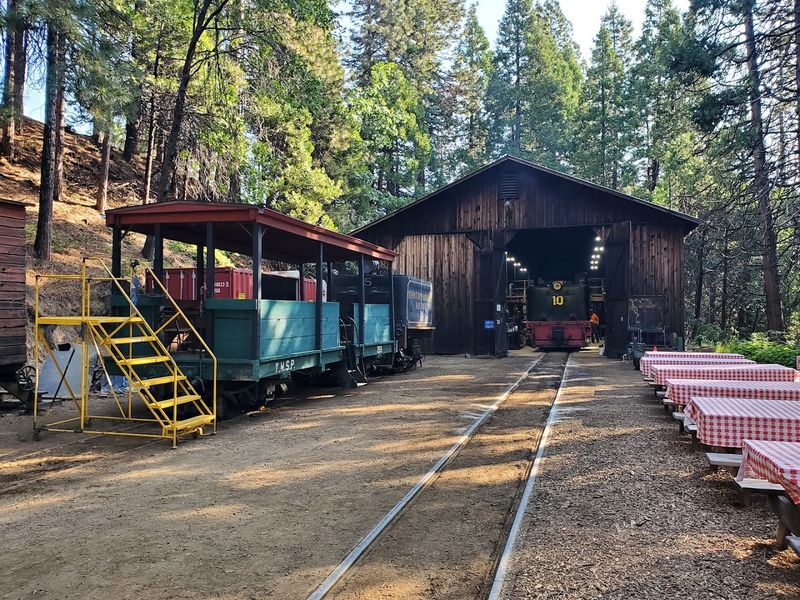
Positioning matters when planning a trip to Yosemite, and the Mountain Sugar Pine Railroad CA sits in a genuinely convenient location for visitors approaching the park from the south.
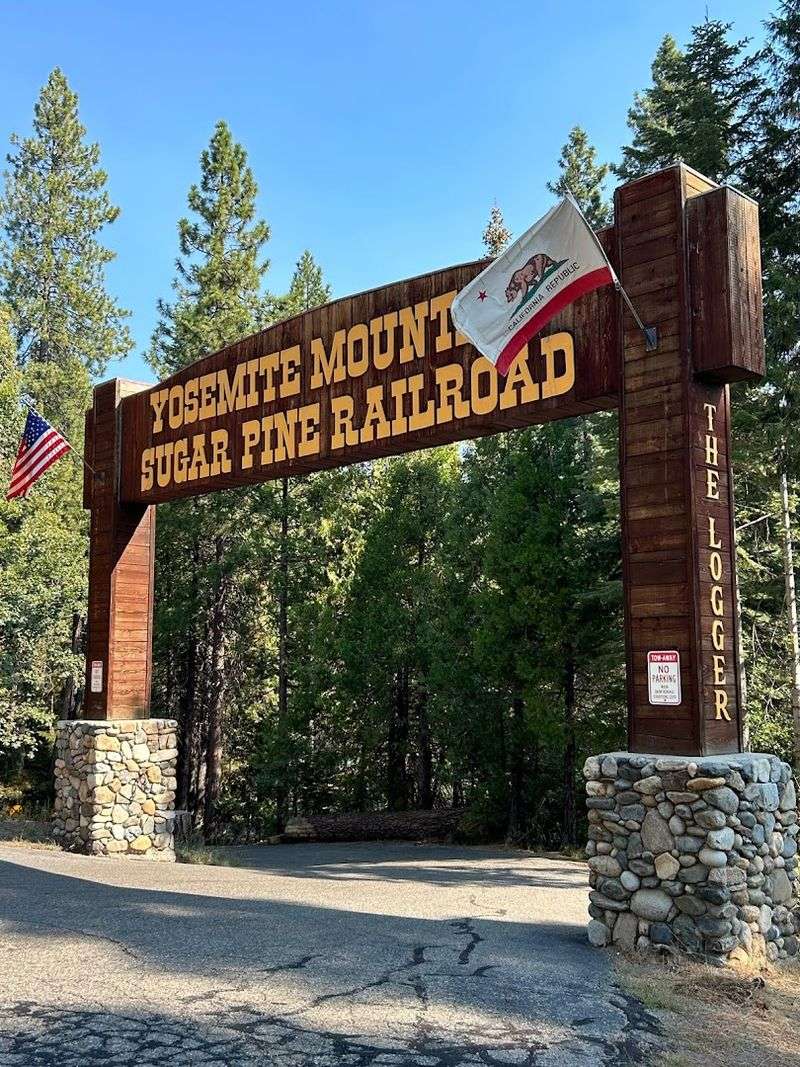
The railroad is located at 56001 CA-41 in Fish Camp, California, placing it just 4 miles from the South Entrance of Yosemite National Park along Highway 41.
For travelers arriving from Fresno or the Central Valley, the railroad appears almost exactly at the point where the highway begins to feel like mountain driving, making it a natural first or last stop on a Yosemite itinerary.
Stopping here before entering the park gives visitors a chance to settle into the pace of the Sierra Nevada before reaching the more crowded areas of Yosemite Valley.
Stopping on the way out can serve as a relaxed decompression after a busy stretch of hiking and sightseeing.
The altitude at Fish Camp sits around 5,000 feet, which means temperatures are noticeably cooler than in the Central Valley and mountain weather conditions should be factored into any visit.
Parking at the railroad is free, which is a practical advantage for visitors who are already managing park fees and lodging costs.
The proximity to Yosemite makes the railroad one of the most logistically easy add-ons available for anyone already planning a trip to the national park.
2. A Railroad Born From Logging History
Back in the early 20th century, the forests of the central Sierra Nevada were alive with the sound of steam engines hauling massive sugar pine logs down the mountain.
The Yosemite Mountain Sugar Pine Railroad follows a portion of the original Madera Sugar Pine Lumber Company’s 140-mile logging railroad network, which once stretched across the Sierra Nevada range.
That original network was one of the most extensive logging rail systems in California’s history, and walking the grounds today still carries the weight of that industrial past.
The current railroad was established in 1961 by Rudy Stauffer, who recognized that the old logging grade offered something worth preserving.
Rather than letting the route fade into the forest floor, Stauffer rebuilt it as a passenger experience and opened it to the public.
Today, the 4-mile round-trip ride follows that same historic grade, passing through terrain that has changed very little since the logging era ended.
For anyone curious about how California’s forests were shaped by human industry, the railroad offers context that no museum display could fully replicate.
3. Two Authentic Shay Steam Locomotives Power The Ride
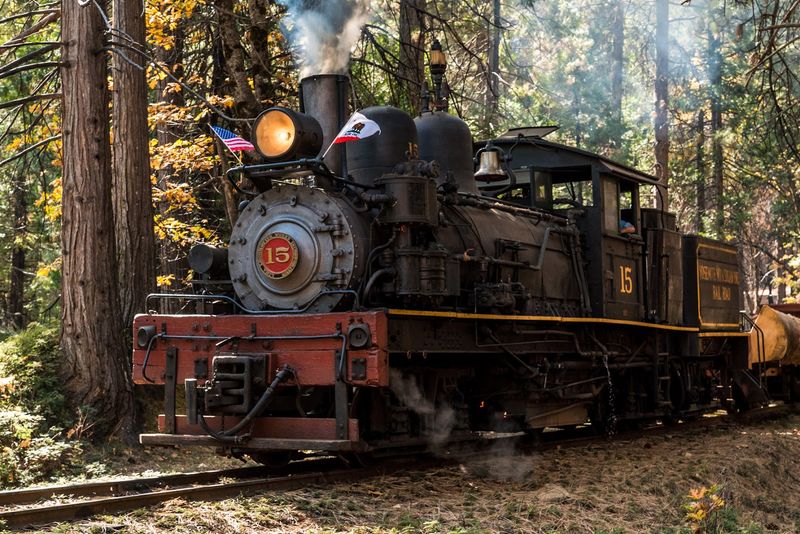
Not every historic railroad can say it runs on locomotives that are nearly a century old, but the Mountain Sugar Pine Railroad CA has two of them.
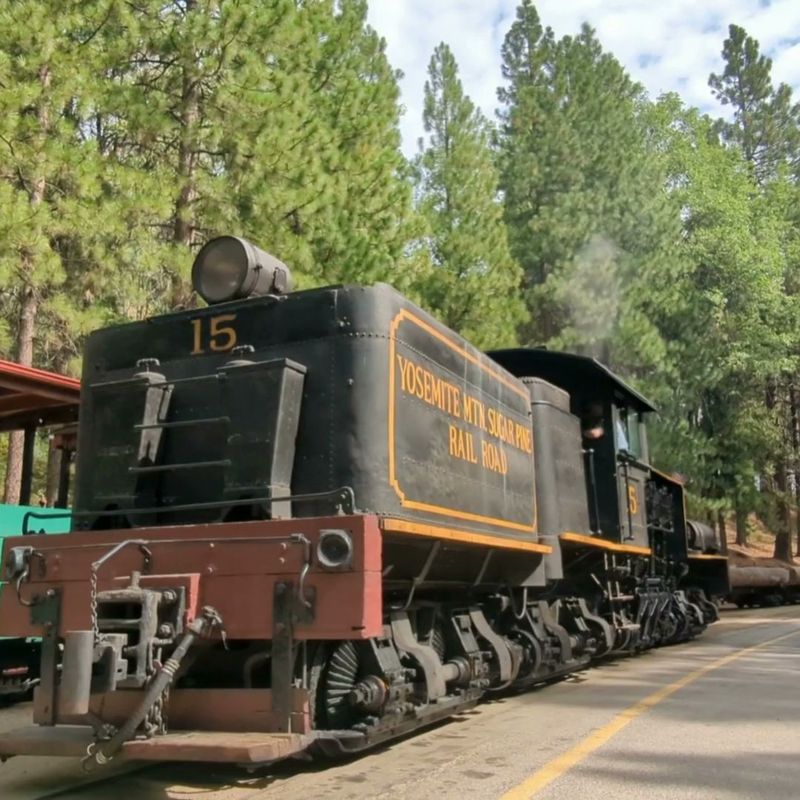
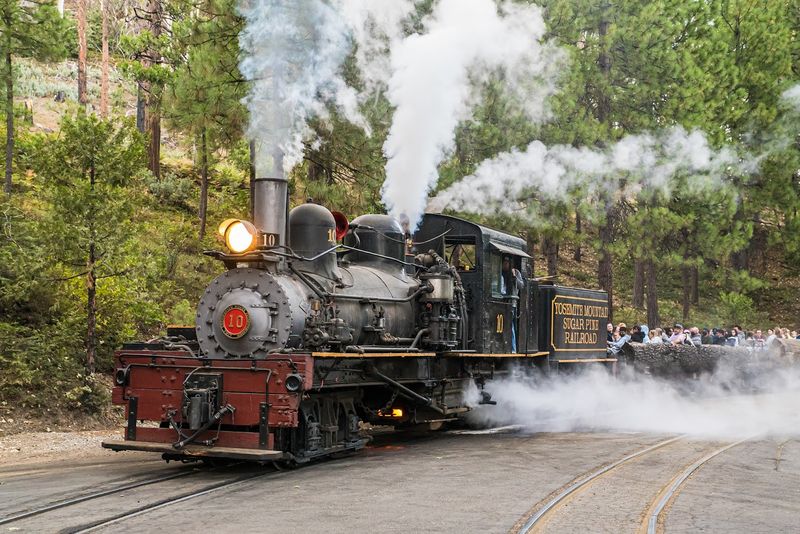
Shay No. 10 was built in 1928 and Shay No. 15 was built in 1913, and both have been meticulously restored for passenger service.
Shay locomotives were specifically designed for steep, winding mountain terrain, which made them the engine of choice for logging operations across the American West.
Their distinctive side-mounted pistons and geared drive system allowed them to handle grades and curves that would stop a conventional locomotive cold.
Watching one of these machines come to life is a mechanical spectacle in itself, with steam rising, gears turning, and the smell of hot metal mixing with pine air.
In February 2026, the railroad also welcomed Shay No. 12, a 60-ton three-truck steam engine built in 1926, adding a third historic locomotive to the collection.
Each locomotive has its own character and history, and knowledgeable staff tend to share details about whichever engine is running that day.
For train enthusiasts, the chance to ride behind a working Shay is genuinely rare in the modern era.
4. The Route Covers Four Miles Of Sierra National Forest
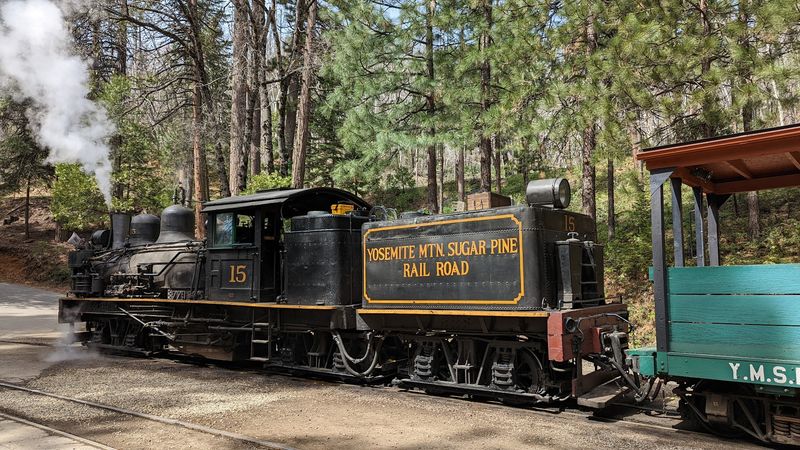
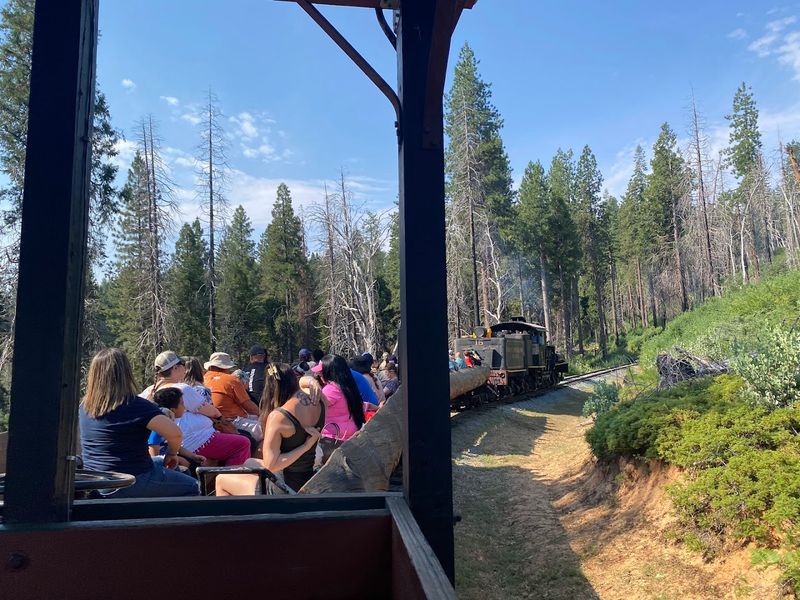
The train ride covers a 4-mile round trip along a narrow-gauge track that winds through the Sierra National Forest at an elevation of around 5,000 feet.
Open-air cars give passengers unobstructed sightlines into the forest, where sugar pines and ponderosa pines rise high above the tracks on both sides.
The pacing of the ride is deliberately unhurried, which gives riders time to absorb the texture of the landscape rather than just passing through it.
Light filters differently through the forest at various times of day, and the morning rides tend to offer a softer, cooler atmosphere compared to the warmer afternoon departures.
The sound of the wheels on the narrow track blends with bird calls and the occasional rush of wind through the treetops, creating an experience that feels genuinely removed from everyday life.
A stop at Lewis Creek Canyon gives passengers a chance to step off, stretch, and take in the surroundings before boarding again for the return journey.
The creek itself adds a layer of natural sound to the stop that makes the pause feel more like a forest interlude than a simple turnaround.
The full ride lasts approximately one hour.
5. Narrated History Brings The Logging Era To Life
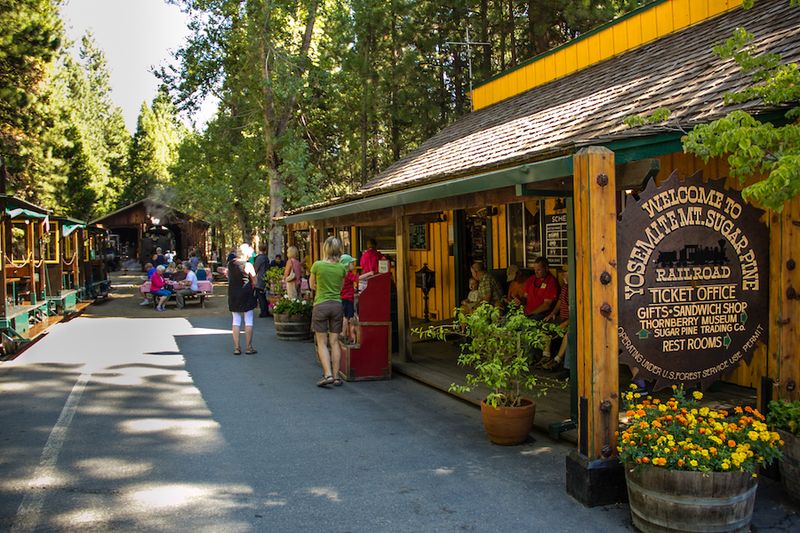
Riding in silence through a beautiful forest would be enjoyable on its own, but the narrated commentary on the Mountain Sugar Pine Railroad CA adds a layer of meaning to every mile.
Guides share stories about how the logging industry operated in the Sierra Nevada, describing the engineering challenges of moving enormous sugar pine logs down steep mountain grades.
The narration tends to cover the lives of the workers who built and maintained the logging railroads, the scale of the timber industry at its peak, and the environmental changes that followed widespread logging in the region.
None of it is delivered in a dry, textbook style.
The guides have a way of making the past feel immediate, connecting the landscape passengers are riding through with the events that shaped it.
Staff members at the railroad are known for being genuinely enthusiastic about the history, and that energy tends to be contagious.
Children who might not normally engage with historical topics often find themselves asking questions by the end of the ride.
The combination of moving through the actual landscape while hearing its story creates a kind of learning that sticks with people long after the train returns to the station.
6. The Thornberry Museum Tells The Story On The Ground
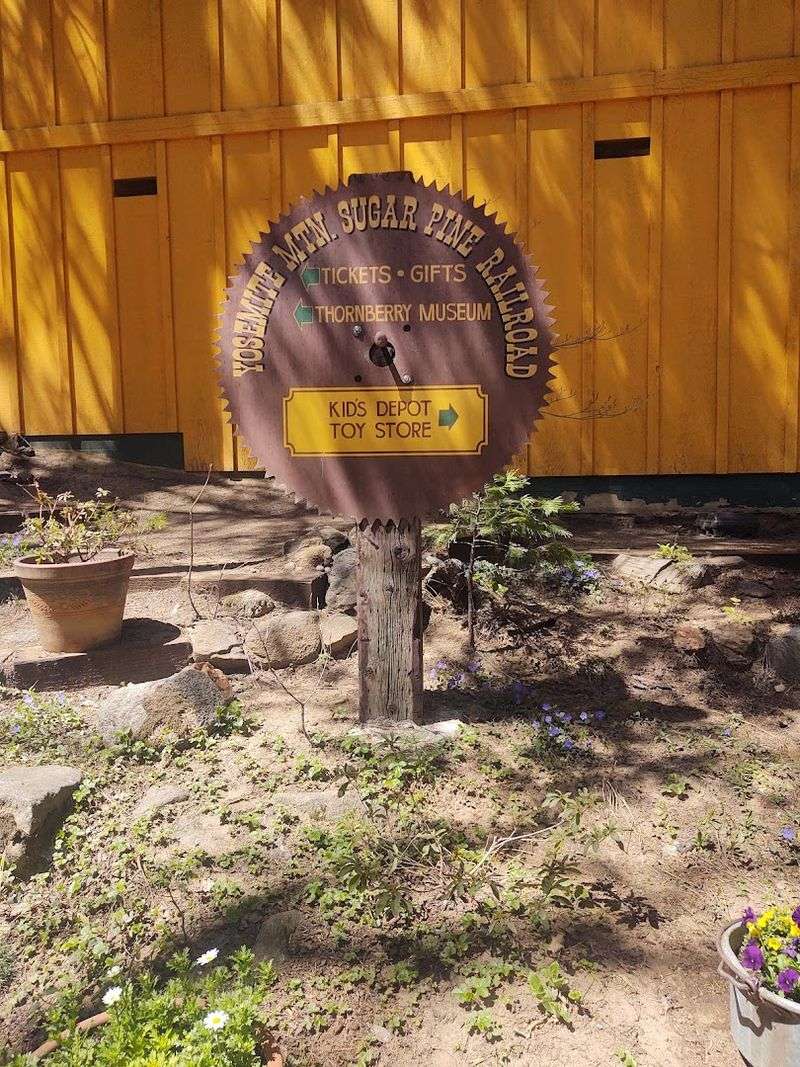
Before or after boarding the train, visitors can explore the Thornberry Museum, which is housed in a relocated 19th-century log cabin on the railroad’s grounds.
The museum focuses on the logging history of the Sierra Nevada region and displays tools, photographs, and artifacts that connect directly to the era the train ride describes.
Standing inside a genuine 19th-century log structure while looking at the equipment used to harvest the same kind of trees visible just outside the window creates an unusually direct sense of historical continuity.
The exhibits are scaled and presented in a way that works for both adults and younger visitors, with enough visual detail to hold attention without requiring long reading commitments.
The museum is included as part of the overall visit experience rather than a separate ticketed attraction, which means it tends to serve as a natural extension of the train ride rather than an afterthought.
Visitors who arrive early before their scheduled departure often find the museum a useful way to build context before the narrated ride begins.
For history-minded travelers, the combination of the museum and the train creates a more complete picture of what life in the Sierra Nevada logging camps actually looked like.
7. Gold Panning Adds A Hands-On California History Experience
Gold panning at the Mountain Sugar Pine Railroad CA gives visitors a tactile connection to another chapter of California history that runs parallel to the logging era.
The activity is set up on the grounds and staffed by guides who explain traditional panning techniques along with the broader context of the California Gold Rush.
Randall, one of the gold panning guides, has earned a reputation for making the activity genuinely fun and informative rather than just a prop for photos.
The setup uses real sluice equipment, and visitors actually sort through material looking for flakes, which keeps the experience from feeling purely theatrical.
Children tend to be especially absorbed by the process, and the hands-on format means even younger kids can participate without frustration.
Gold panning is available as part of the general visit and can be added to school group packages as well.
The activity pairs naturally with the train ride because both experiences draw from the same mid-to-late 19th century period in California history, when the Sierra Nevada was simultaneously being mined and logged at an extraordinary scale.
Having both experiences available in one location gives visitors a more layered sense of what drew people to this region more than 150 years ago.
8. The Moonlight Special Dinner Train Is an Evening Worth Planning For
The Moonlight Special is the railroad’s signature evening event, and it operates on a different scale from the standard daytime train ride.
Passengers board for a scenic ride through the forest before arriving at the Lewis Creek Amphitheater, where a barbecue dinner is served alongside live music entertainment.
The menu has included steaks, beans, and coleslaw, and the food tends to draw genuinely positive reactions from visitors who arrive expecting basic event catering.
The live band plays throughout the evening, from dinner through the campfire portion of the night, creating an atmosphere that feels more like a mountain celebration than a tourist attraction.
Sitting outside under the trees with a plate of food and music carrying through the pines is a combination that works on multiple levels.
The Moonlight Special runs seasonally and sells out with some regularity, so advance booking is strongly recommended.
The event draws a wide mix of guests including families, couples, and group bookings, and the open-air setting means the temperature can drop noticeably after sundown.
Bringing a jacket or a blanket is practical advice that the railroad itself tends to pass along.
The experience tends to be remembered as one of the more distinctive evenings available near Yosemite National Park.
9. Families With Dogs Are Welcome On Board
Traveling with a dog often means leaving certain attractions off the itinerary, but the Mountain Sugar Pine Railroad CA takes a different approach.
Friendly dogs are welcome on the train as long as they are kept on a leash throughout the ride.
The open-air car design means dogs are not confined in an enclosed space, which tends to make the experience more comfortable for animals that are sensitive to confinement.
The sounds of the forest, the movement of the train, and the fresh mountain air create an environment that many dogs find stimulating in a calm rather than stressful way.
That said, some dogs do find the noise of the steam engine startling at first, so owners should be prepared to offer reassurance during the initial departure.
Staff members are generally accommodating toward visiting dogs, and the picnic area near the station provides an easy spot for dogs to stretch and settle before or after the ride.
The dog-friendly policy reflects a broader philosophy at the railroad toward making the experience accessible and welcoming for as many visitors as possible.
For families who travel with pets and find themselves near the southern entrance of Yosemite, the railroad stands out as one of the few nearby attractions that genuinely accommodates four-legged companions.
10. Wheelchair Accessibility Makes The Ride Available To Everyone
Accessibility at outdoor and heritage attractions is not always a given, but the Mountain Sugar Pine Railroad CA has made wheelchair access a standard part of the experience rather than an accommodation offered on request.
All train rides are wheelchair accessible, which means visitors who use wheelchairs or have limited mobility can participate in the same experience as everyone else in their group.
The accessible design extends to the boarding process and the train cars themselves, reducing the logistical friction that can make heritage attractions feel exclusionary for some visitors.
For families traveling with elderly relatives or individuals with mobility considerations, knowing that accessibility is built into the standard operation rather than treated as an exception tends to simplify planning considerably.
The picnic area, gift shop, and other on-site facilities are also designed with accessibility in mind.
The overall grounds at the railroad are relatively flat near the station area, which helps visitors who may find uneven terrain challenging.
The combination of accessible infrastructure and the natural setting of the Sierra National Forest makes the railroad one of the more genuinely inclusive outdoor experiences available in the region.
Planning a trip is made easier by the railroad’s FAQ page, which addresses accessibility questions directly.
11. School Groups Can Book Educational Packages
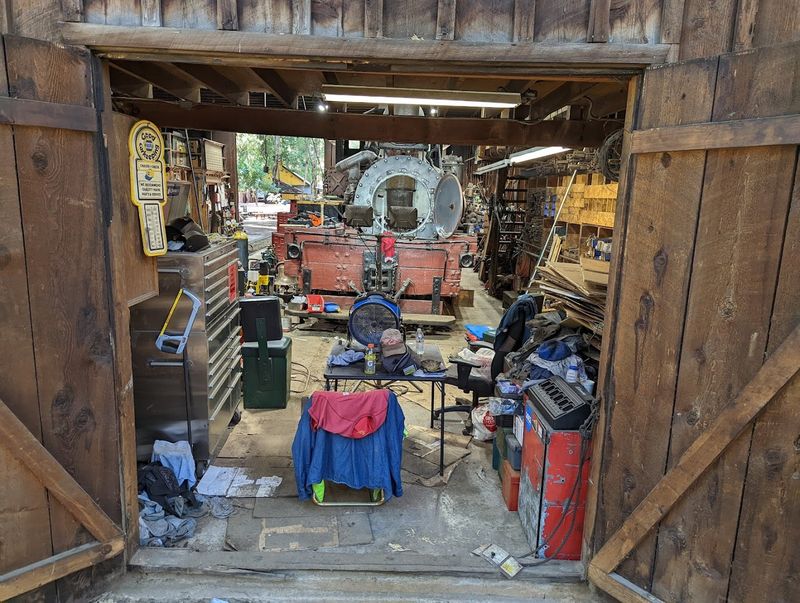
The railroad offers dedicated educational packages for school groups that combine the train ride with the gold panning experience at a discounted rate when booked in advance.
The programs are designed to align with California history curriculum topics, covering the logging industry, the Gold Rush era, and the broader development of the Sierra Nevada region during the 19th century.
Field trips to the Mountain Sugar Pine Railroad CA tend to work well for students in the upper elementary and middle school range, where the hands-on format complements classroom learning about California history.
The combination of riding a working steam locomotive, hearing narrated history, and physically panning for gold creates multiple entry points for students with different learning styles.
Teachers who have brought groups to the railroad often note that students retain details from the experience more readily than from textbook reading alone.
Reservations for school groups should be made well in advance, particularly for spring dates when demand tends to be highest.
The railroad’s location near Fish Camp places it within reasonable driving distance for schools in the Central Valley and surrounding regions.
The on-site museum adds another layer of educational content that can be incorporated into the visit, and the picnic area provides a practical space for groups to eat lunch before or after the ride.
12. The 2026 Season Opens March 28 After The Winter Break
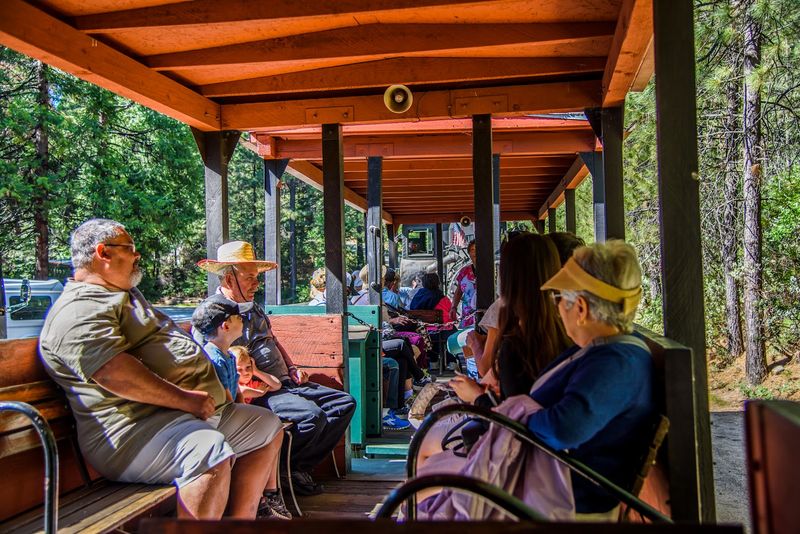
After closing for the winter off-season, the Mountain Sugar Pine Railroad CA is set to reopen on March 28, marking the start of a new operating year in the Sierra National Forest.
The railroad typically runs from mid-March through Thanksgiving weekend, with schedules that shift across the season to accommodate different demand levels and daylight hours.
Opening weekend in late March tends to arrive when the forest is still carrying some of winter’s quiet, with cooler temperatures and fewer crowds than the peak summer months.
Early-season visitors often describe the experience as especially peaceful, with the steam engine’s warmth feeling particularly welcome against the crisp mountain air.
The landscape in late March can include residual snow on the ground or in the treetops depending on the year, which adds a different visual character to the ride compared to summer visits.
Tickets can be purchased online in advance, and the railroad’s website is the most reliable source for current schedules, pricing, and event listings as the season progresses.
Summer and fall dates tend to fill up faster, so booking ahead is a practical habit regardless of when the visit is planned.
The March reopening is a genuine seasonal milestone for the region, drawing visitors who have been waiting out the winter months for the chance to ride again.