14 Scenic Hikes In California Everyone Should Walk At Least Once
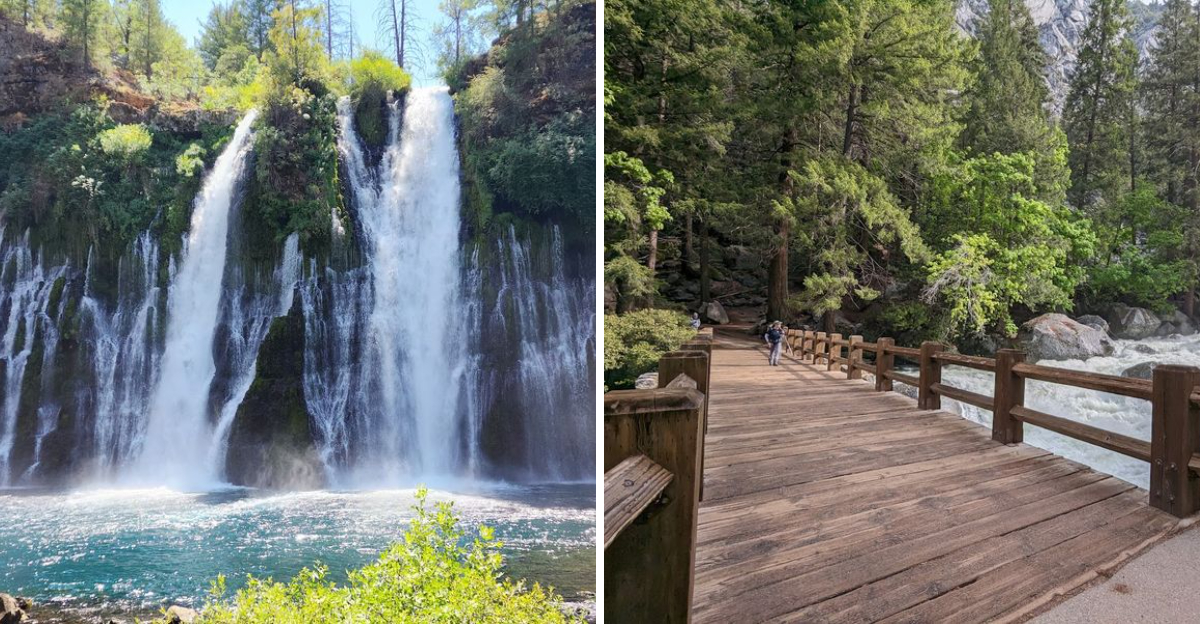
Few places on Earth pack as much natural variety into one state as California does.
From misty redwood forests to sun-baked desert canyons and rugged coastal bluffs, the hiking options here are nothing short of extraordinary.
Whether someone has an afternoon to spare or a full weekend to explore, there is a trail in California that fits the moment perfectly.
The landscapes shift so dramatically from region to region that each hike feels like stepping into a completely different world.
Some trails reward hikers with roaring waterfalls, others with sweeping ocean views or ancient groves of towering trees.
Planning a hike in California does not require expert-level skills, but it does help to know which trails are worth the effort.
The hikes listed here represent some of the most memorable, accessible, and genuinely breathtaking routes the state has to offer, each one worth adding to any outdoor bucket list.
1. Moro Rock Trail, Sequoia National Park
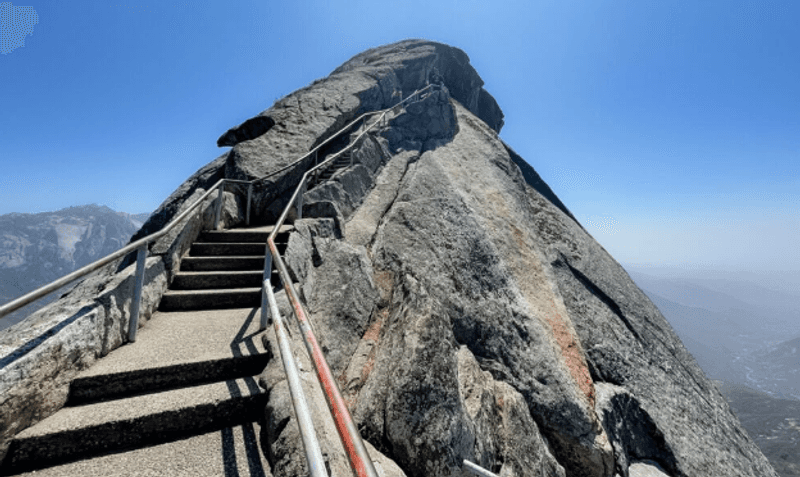
Standing on top of Moro Rock feels like the whole Sierra Nevada just opened up beneath your feet, except first-person language aside, the view from that granite dome is genuinely hard to put into words.
The trail itself is short at just under one mile round-trip, but it climbs steeply up a series of stone staircases and carved pathways that wind around the rock face.
Every turn offers a slightly different angle of the surrounding peaks and valleys.
Located in Sequoia National Park, Moro Rock sits at an elevation of around 6,725 feet and provides one of the clearest panoramic views in the entire park.
On days with good visibility, the Great Western Divide stretches across the horizon in a way that feels almost cinematic.
The carved stone railings along the path add both safety and a sense of history since the steps were built by the Civilian Conservation Corps in the 1930s.
The trail is popular with families because of its short length, but the steep sections and high altitude mean hikers should take their time and stay hydrated.
Afternoons can bring afternoon thunderstorms in summer, so starting the hike in the morning tends to be the safer and more comfortable choice overall.
2. Tokopah Falls Trail, Sequoia National Park
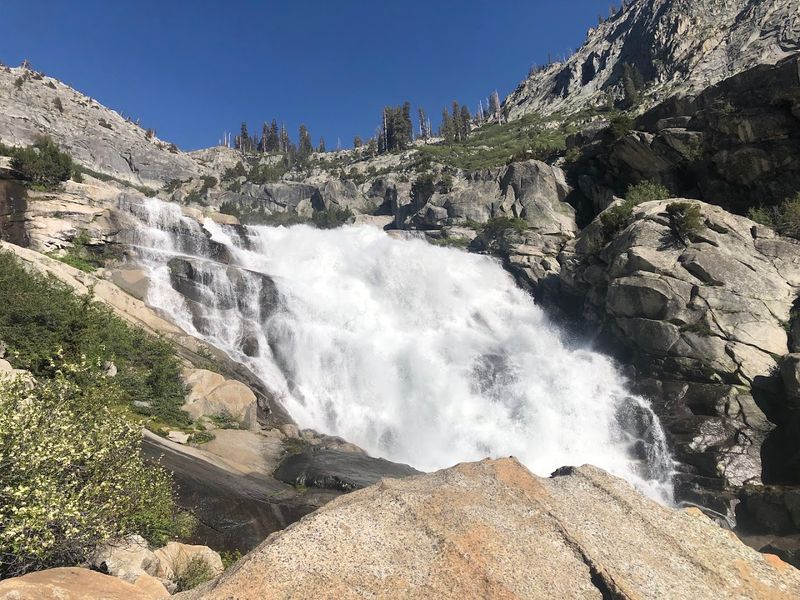
Tucked into a granite canyon in Sequoia National Park, the Tokopah Falls Trail delivers one of the most satisfying waterfall payoffs in all of California for the relatively modest effort it requires.
The trail runs about 3.4 miles round-trip and follows the Marble Fork of the Kaweah River through a valley flanked by massive canyon walls.
The terrain is mostly flat with a gentle incline, making it a solid choice for hikers of varying fitness levels.
Tokopah Falls itself drops roughly 1,200 feet down a sheer granite face, which makes it one of the tallest waterfalls in the Sierra Nevada.
The best time to visit is late spring or early summer when snowmelt pushes the waterfall to its most dramatic flow.
During that period the roar of the water is audible well before the falls come into view, building anticipation as the trail curves around the final bend.
Wildlife sightings along this route are fairly common, with marmots often spotted sunning themselves on the boulders near the canyon walls.
The trailhead is located near the Lodgepole Campground area in Sequoia National Park, and the parking area fills up on weekends during peak season.
A weekday visit tends to offer a quieter and more relaxed experience overall.
3. Palm Canyon Trail, Palm Springs
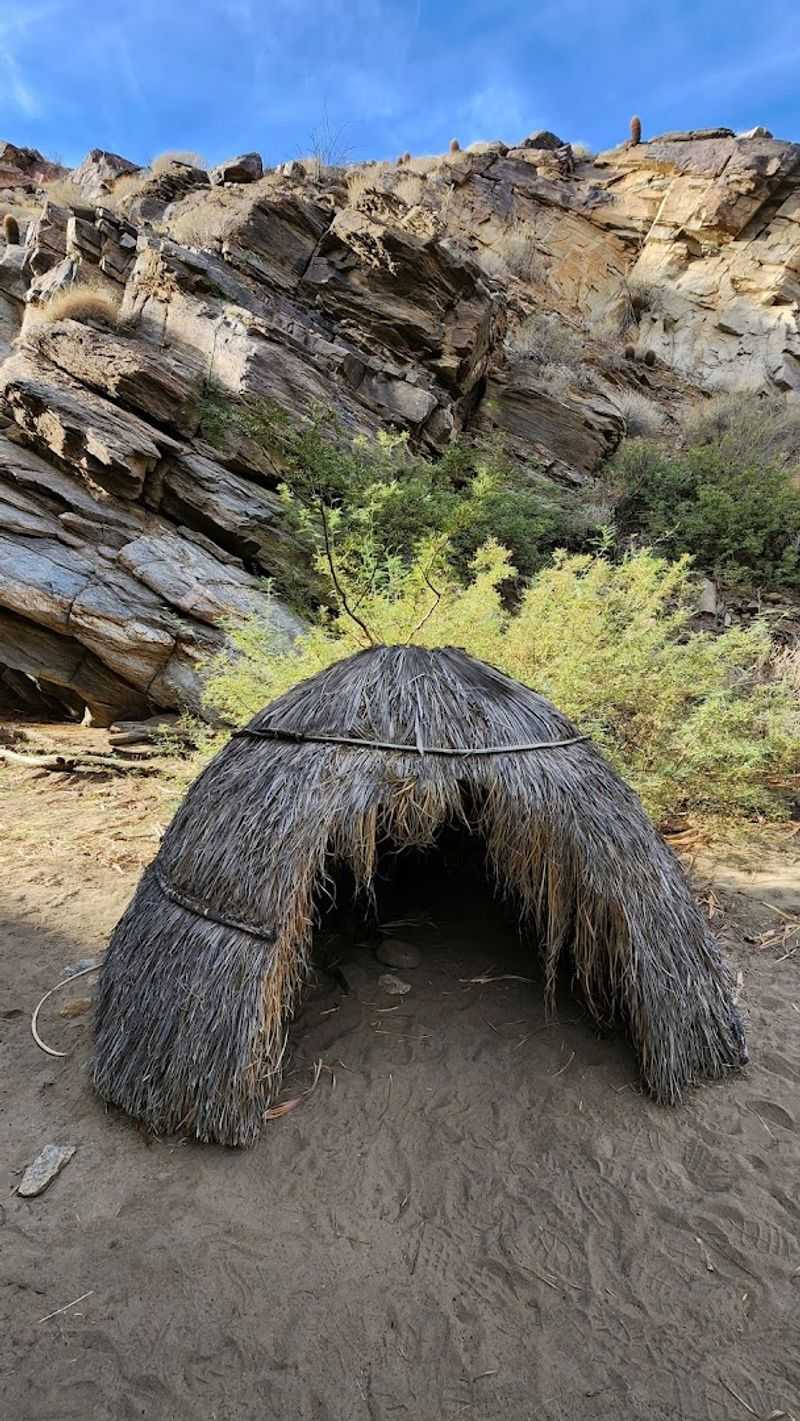
The contrast hits almost immediately on the Palm Canyon Trail, where a dry desert landscape suddenly gives way to one of the largest natural groves of California fan palms in the world.
Located within the Indian Canyons area near Palm Springs, this trail runs about 2 to 15 miles depending on how far hikers choose to go, with the lower canyon section being the most visited and most visually striking portion of the route.
The palm grove sits inside a deep canyon carved by a stream that still flows year-round in sections, which is what allows this dense concentration of palms to thrive in an otherwise arid environment.
The canyon walls rise steeply on either side and take on rich shades of red and tan in afternoon light.
The sound of wind moving through the palm fronds overhead creates a surprisingly peaceful atmosphere even when the trail has other visitors on it.
The Indian Canyons are located on the Agua Caliente Band of Cahuilla Indians reservation, and an entrance fee is required to access the trails.
The area is typically open from fall through spring, with reduced hours or closures during the hottest summer months.
Comfortable walking shoes and sun protection are both important since shade is limited outside the palm grove itself.
4. Torrey Pines Beach Trail Loop, Torrey Pines State Natural Reserve
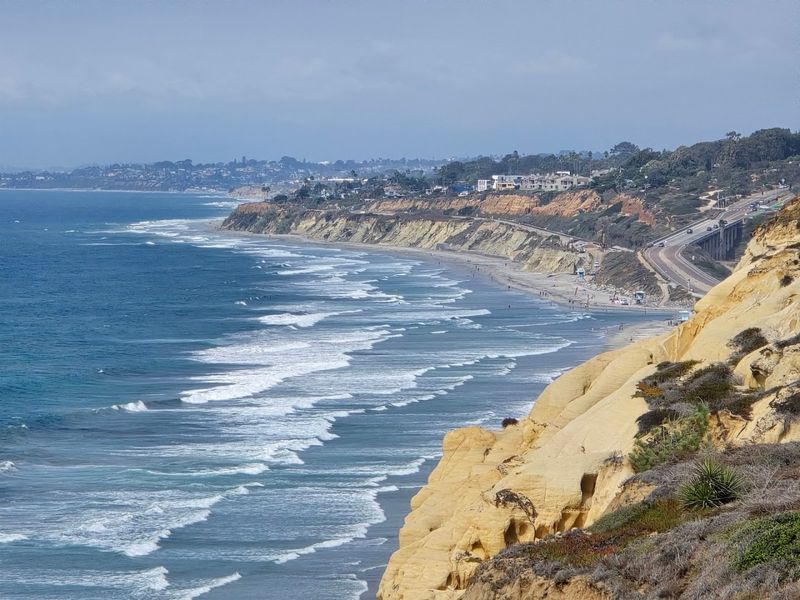
Few hikes in Southern California blend ocean views, rare wildlife, and dramatic cliffside scenery the way the Torrey Pines Beach Trail does.
The reserve protects one of the rarest pine trees in North America, the Torrey pine, which grows twisted and windswept along the sandstone bluffs overlooking the Pacific Ocean near San Diego.
The trail system in the reserve connects the upper mesa with the beach below through a series of linked paths.
The Beach Trail specifically descends from the mesa down to the shoreline, giving hikers a chance to experience both the elevated cliff views and the sandy beach in a single outing.
The total distance varies depending on which connecting trails are used but generally falls between 1.5 and 3 miles for a comfortable loop.
The sandstone formations along the cliffs are geologically fascinating and take on a warm amber color in the late afternoon sun.
Torrey Pines State Natural Reserve is located in La Jolla, just north of San Diego, and charges a parking fee that varies by season.
The reserve can get busy on weekends, particularly during summer and spring, so arriving before 9 a.m. helps avoid the heaviest crowds.
Dogs are not permitted on the trails within the reserve, which is worth knowing before planning the trip.
5. Runyon Canyon Loop, Los Angeles
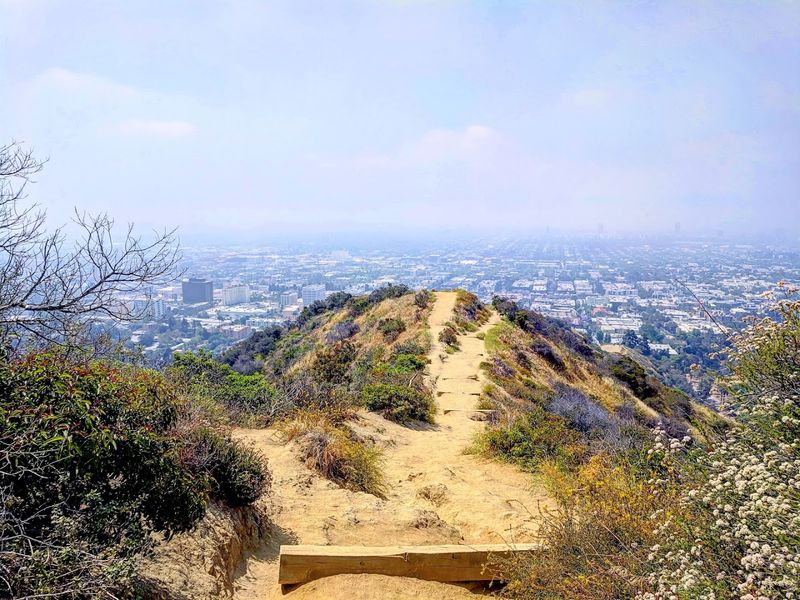
Right in the middle of one of the busiest cities in the country, Runyon Canyon manages to feel like a genuine escape from the urban energy below.
The park sits in the Hollywood Hills and offers a network of trails that loop around a canyon with sweeping views of the Los Angeles basin, the Hollywood Sign, and on clear days even the Pacific Ocean.
The most common loop runs about 3.3 miles and combines both paved and unpaved sections.
The climb on the main loop is noticeable but not extreme, with the steepest section coming near the upper ridge where the views open up dramatically.
Benches are placed at several points along the upper trail, which makes it easy to stop and take in the skyline without feeling rushed.
The park is open daily from sunrise to sunset and does not charge an entrance fee, which adds to its popularity with local residents.
Runyon Canyon is one of the few parks in Los Angeles that allows dogs off-leash in designated areas, making it a lively and social atmosphere on most mornings and evenings.
Weekend crowds can be substantial, so weekday mornings tend to offer a more relaxed pace.
Parking on the surrounding streets fills up quickly, and the main entrance is located on Fuller Avenue in the Hollywood Hills neighborhood.
6. Mount Tamalpais East Peak Trail, Mount Tamalpais State Park
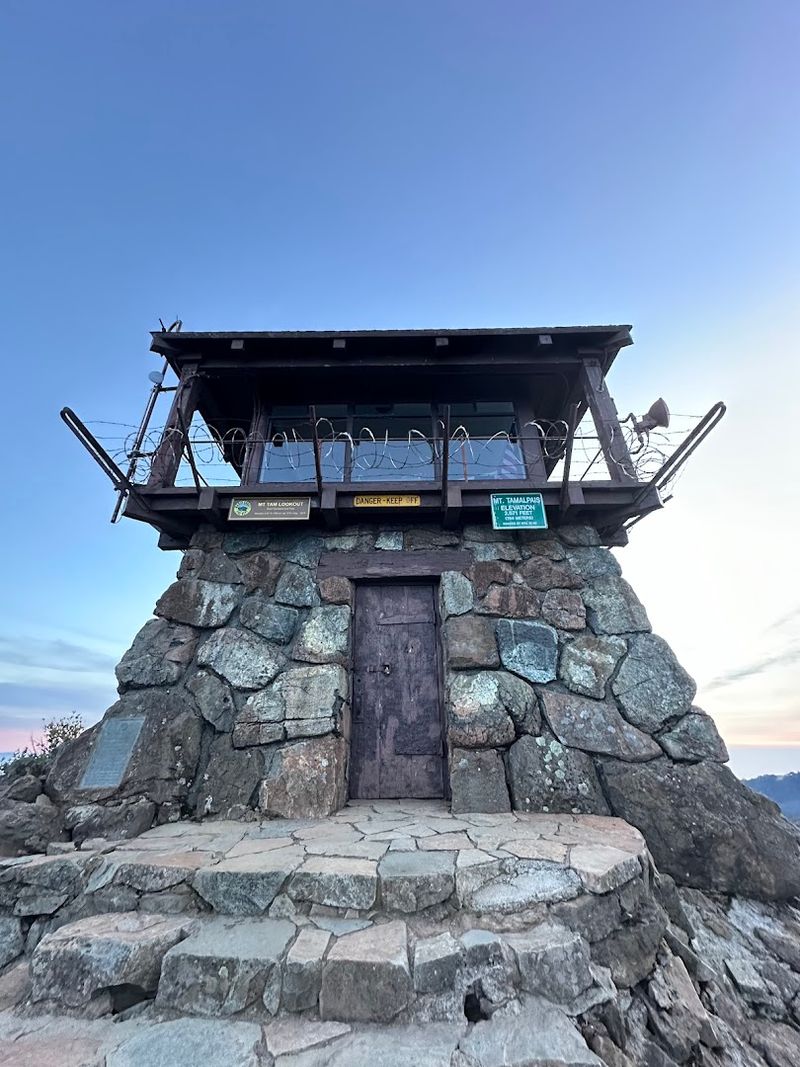
The East Peak of Mount Tamalpais has been drawing visitors from the San Francisco Bay Area for well over a century, and the views from the summit explain exactly why.
On a clear day the panorama from the top stretches across the bay to San Francisco, east to the Diablo Range, and west all the way to the open Pacific.
The East Peak Trail itself is relatively short at under a mile round-trip from the upper parking area, though longer approach routes from lower trailheads are available for those wanting a bigger workout.
Mount Tamalpais State Park sits in Marin County just north of San Francisco and covers a landscape that shifts from coastal chaparral to dense redwood forest depending on which slope a trail follows.
The East Peak sits at 2,571 feet and has a historic fire lookout tower at the summit that adds a charming structural element to the already remarkable setting.
The lookout is sometimes open to visitors on weekends when volunteers staff it.
The drive up to the East Peak parking area is narrow and winding, which means large vehicles and RVs should approach with caution.
Fog can roll in quickly from the coast and dramatically change the visibility at the summit, so checking local weather before heading out is genuinely useful.
Spring and fall tend to offer the clearest skies and most comfortable temperatures for the hike.
7. Bumpass Hell Trail, Lassen Volcanic National Park
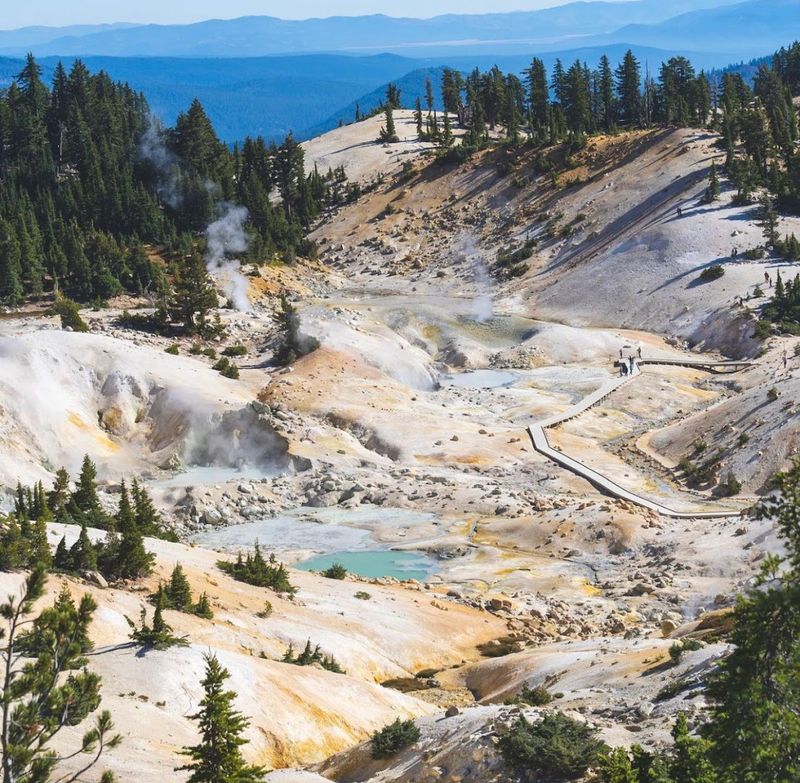
Named after a prospector who burned his leg after breaking through the fragile crust above a boiling pool, Bumpass Hell is one of the most geologically dramatic hikes in all of California.
The trail leads to the largest hydrothermal area in Lassen Volcanic National Park, where boiling mud pots, steaming fumaroles, and vividly colored hot springs create a landscape that looks more like another planet than a California state park.
The round-trip distance is about 3 miles with a manageable elevation change.
The hydrothermal basin sits at around 8,000 feet elevation, and the trail passes through subalpine meadows and open volcanic terrain before descending into the steaming basin below.
A wooden boardwalk winds through the most active thermal features, keeping visitors safely above the fragile and dangerously hot ground.
The colors in the basin range from deep blue in the cooler pools to vivid yellow and orange where sulfur deposits coat the rocks.
Access to this trail is typically only possible from late June through October, as the road and trailhead remain buried under snow for much of the year.
Lassen Volcanic National Park is located in Northern California near the town of Mineral, and an entrance fee is required.
Comfortable layers are a smart choice since temperatures at elevation can drop quickly even on sunny summer days.
8. Burney Falls Loop, McArthur-Burney Falls Memorial State Park
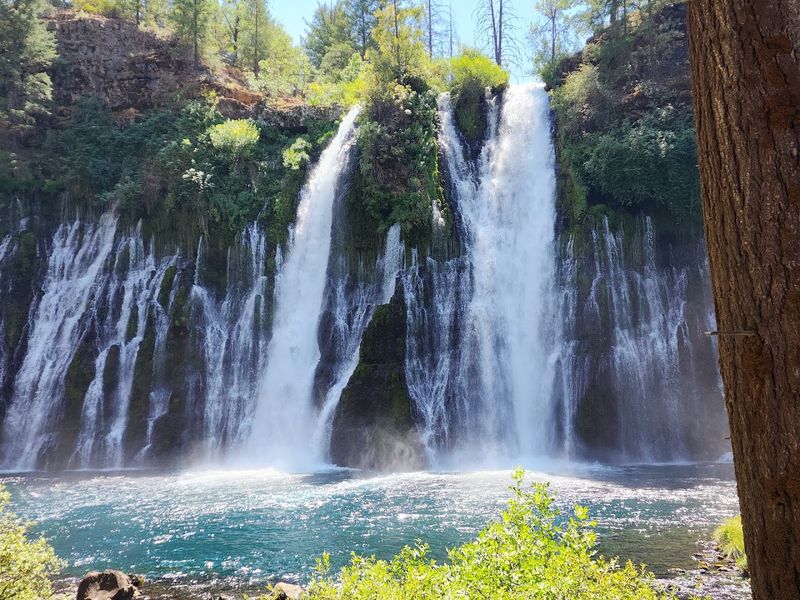
Theodore Roosevelt reportedly called Burney Falls the eighth wonder of the world, and while that claim is hard to verify, the waterfall genuinely earns its reputation.
At 129 feet tall and roughly 100 feet wide, the falls pour from a basalt cliff in a broad curtain of white water that feeds a brilliantly blue-green pool below.
What makes the falls especially unusual is that much of the water seeps directly from the mossy cliff face rather than flowing over the top, giving the cascade a layered and almost otherworldly texture.
The Burney Falls Loop Trail runs about 1.2 miles and circles the pool at the base of the falls before climbing back up to the rim.
The path is well-maintained and includes some rocky sections near the water’s edge that require a bit of careful footing.
McArthur-Burney Falls Memorial State Park is located in Shasta County in Northern California, roughly 100 miles east of Redding, and charges a day-use fee for entry.
The falls flow year-round thanks to the underground springs that feed them, which means a visit in any season can be worthwhile.
Summer draws the largest crowds, and the pool area at the base of the falls tends to be particularly busy on warm weekends.
Early morning visits on weekdays offer the best chance of experiencing the falls in a quieter and more reflective setting.
9. Fern Canyon Loop, Prairie Creek Redwoods State Park
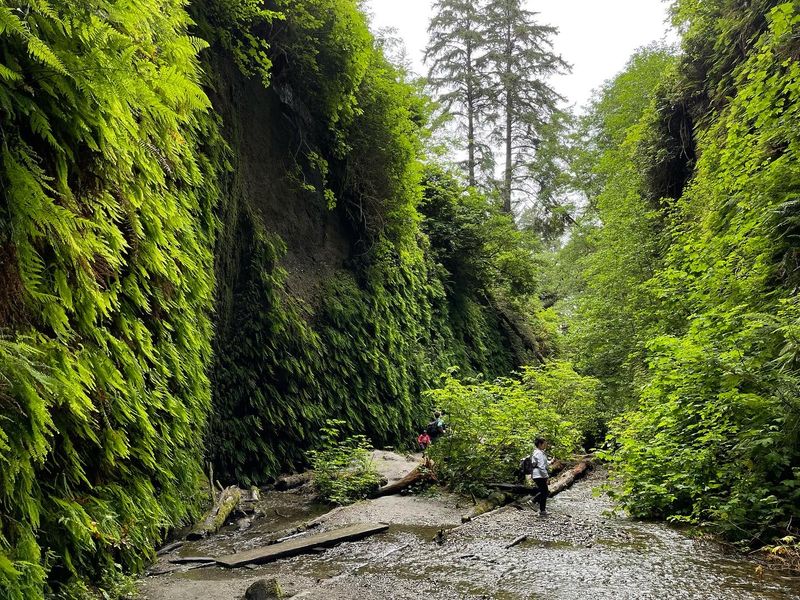
Walking through Fern Canyon feels like stepping onto the set of a prehistoric film, which makes sense given that parts of a Jurassic Park sequel were actually filmed here.
The canyon walls rise about 50 feet on either side and are blanketed from top to bottom in a thick carpet of five-finger ferns, sword ferns, and lady ferns that create an intensely green and humid microclimate.
A shallow stream runs along the canyon floor, requiring hikers to hop between small wooden planks or simply wade through the water in warm months.
The Fern Canyon Loop in Prairie Creek Redwoods State Park runs about 1 mile and connects with surrounding redwood trails for those wanting to extend the outing into the old-growth forest nearby.
The trailhead is accessed via Gold Bluffs Beach Road, which is unpaved and can be rough, making it unsuitable for vehicles over a certain length or clearance.
A fee is required to enter the Gold Bluffs Beach area where the trailhead is located.
Prairie Creek Redwoods State Park sits along the Northern California coast in Humboldt County, and the park’s remote location means crowds are lighter here than at more accessible parks further south.
Waterproof footwear is strongly recommended since the stream crossings inside the canyon are unavoidable during most of the year.
The ferns are lushest during spring and early summer when rainfall keeps the canyon walls fully saturated.
10. Eaton Canyon Falls Trail, Pasadena
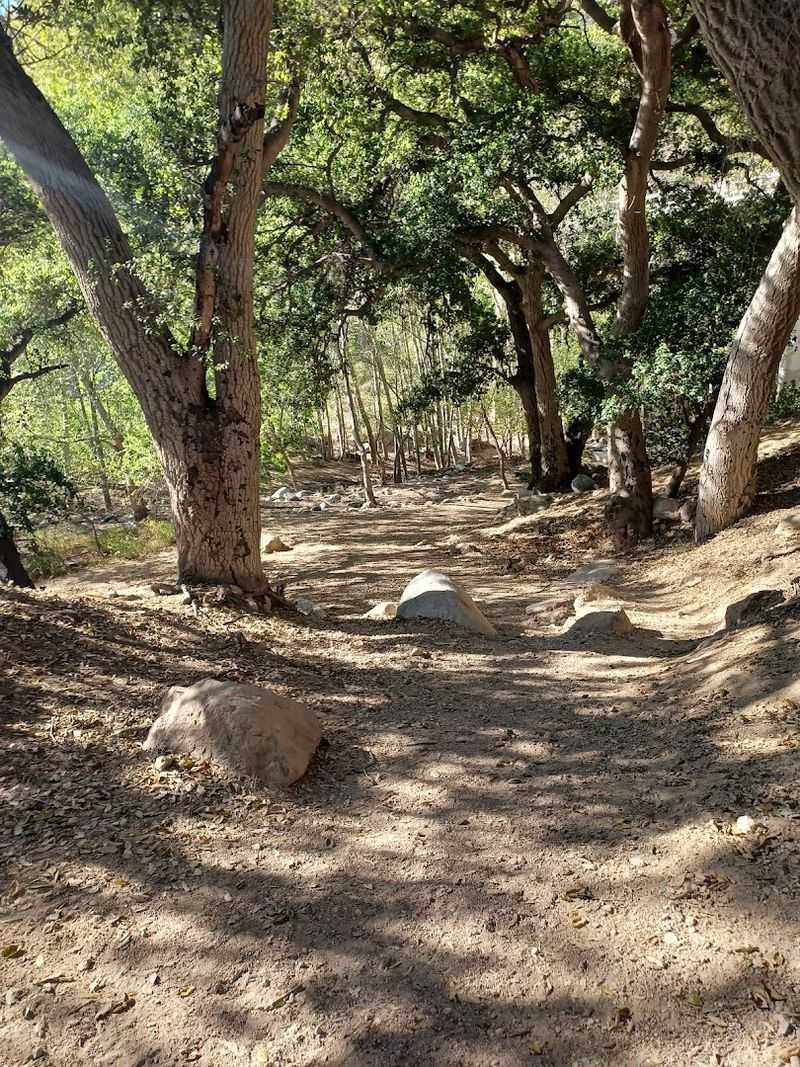
Just a short drive from downtown Pasadena, Eaton Canyon offers an accessible waterfall hike that packs a surprising amount of natural drama into a relatively short distance.
The trail to the falls runs about 3.4 miles round-trip and passes through a mix of chaparral scrub and riparian vegetation as it follows Eaton Creek toward the canyon.
The terrain involves multiple stream crossings over rocks, which adds a playful and slightly adventurous quality to what is otherwise a moderate hike.
The destination is a 40-foot waterfall that drops into a narrow grotto at the upper end of the canyon, and the enclosed rocky walls around it create a cool and shaded environment even on warm days.
The falls flow most reliably from late winter through spring when rainfall keeps the creek running strong.
By late summer the flow can slow to a trickle, which is worth considering when planning the trip. Eaton Canyon Natural Area is managed by Los Angeles County and is open daily.
The trailhead and nature center are located at 1750 N. Altadena Drive in Pasadena, and parking is available on-site at no charge.
The trail is one of the most popular in the San Gabriel Valley, and weekend mornings can get crowded quickly, so arriving before 8 a.m. tends to make a noticeable difference in the overall experience.
11. Vernal Fall Footbridge Trail, Yosemite National Park
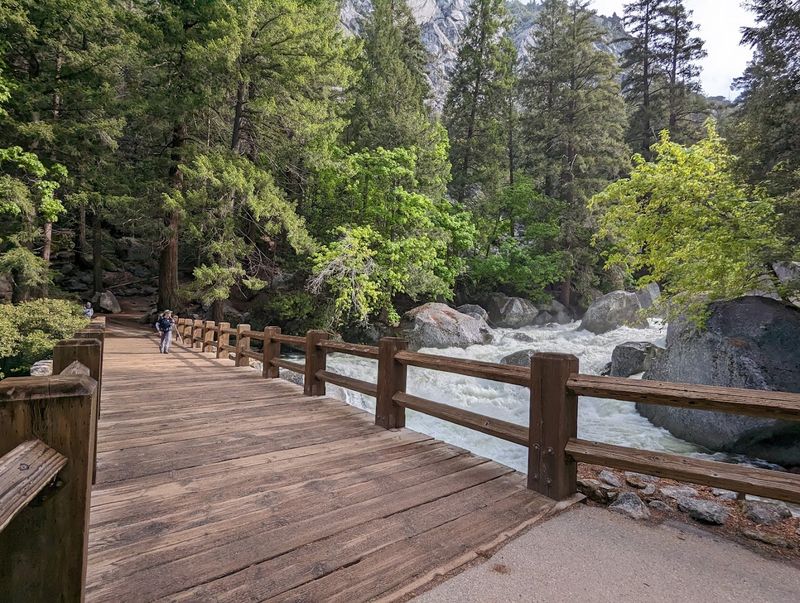
Not every great hike needs to be a full-day ordeal, and the Vernal Fall Footbridge Trail in Yosemite National Park proves that point beautifully.
The round-trip distance clocks in at roughly 1.6 miles, making it one of the more accessible options in a park that can otherwise feel overwhelming for first-timers.
The trail begins at Happy Isles and follows the Merced River uphill through a forest that gradually opens up to views of the canyon walls.
What makes this particular route stand out is how reliably it stays open compared to the full Mist Trail, which can close during high water or icy conditions.
By the time hikers reach the footbridge, Vernal Fall comes into full view ahead, tumbling dramatically down the granite face.
The sound of the water grows louder with every step, and the mist in the air on warmer days adds a cooling effect that feels refreshing rather than overwhelming.
Mornings tend to offer better lighting and fewer crowds on the trail.
Sturdy shoes with good grip are recommended since the path includes uneven rocky sections near the bridge.
Parking at the Yosemite Valley trailheads fills quickly, so arriving early or using the valley shuttle system makes the experience much smoother.
12. Potato Chip Rock Via Mt. Woodson Trail, Poway
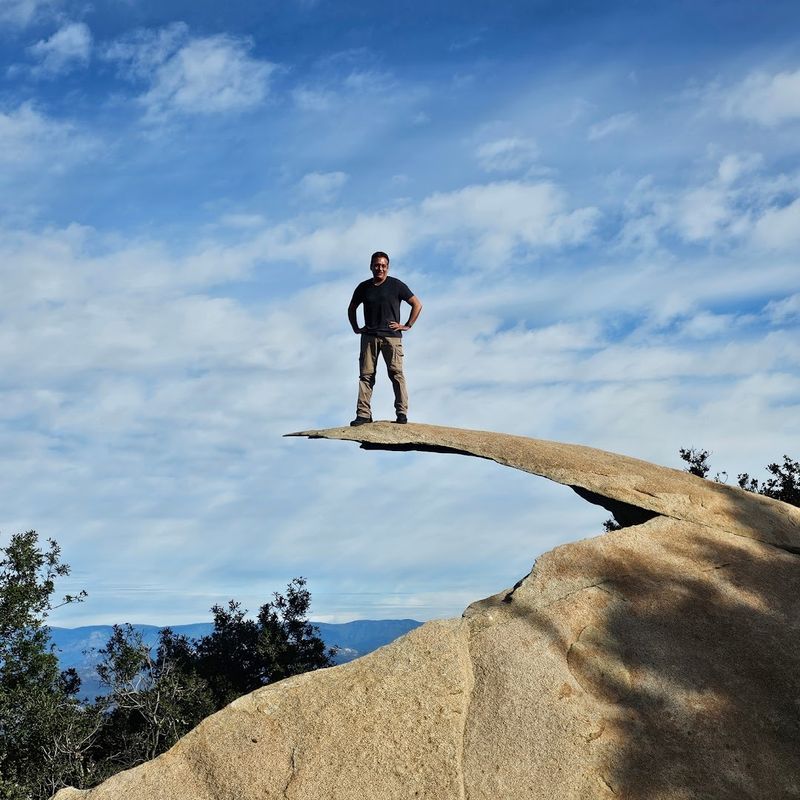
There are not many hike destinations in California that double as a social media landmark, but Potato Chip Rock has earned that status for genuinely good reason.
The rock itself is a remarkably thin slab of granite that juts out horizontally from the mountainside, and standing on its edge with the valley dropping away below creates a photograph that looks almost too dramatic to be real.
Getting there, however, requires earning the view through a strenuous climb.
The Mt. Woodson Trail from Lake Poway runs about 8 miles round-trip with around 1,500 feet of elevation gain, making it one of the more physically demanding hikes in San Diego County.
The path winds through chaparral and over large granite boulders before reaching the summit area and then continuing to the iconic rock formation.
The granite landscape gives the upper section of the trail a rugged and open feel that contrasts nicely with the shaded lower portions near the lake.
Lake Poway Recreation Area charges a parking fee on weekends and holidays, and the trail can become extremely crowded on weekend mornings when hikers line up to take photos on the rock.
A weekday visit significantly reduces wait times and makes the overall experience more enjoyable.
Bringing plenty of water is essential since there is no shade on much of the upper trail and temperatures in San Diego County can climb quickly.
13. Castle Rock Trail, Big Bear Lake
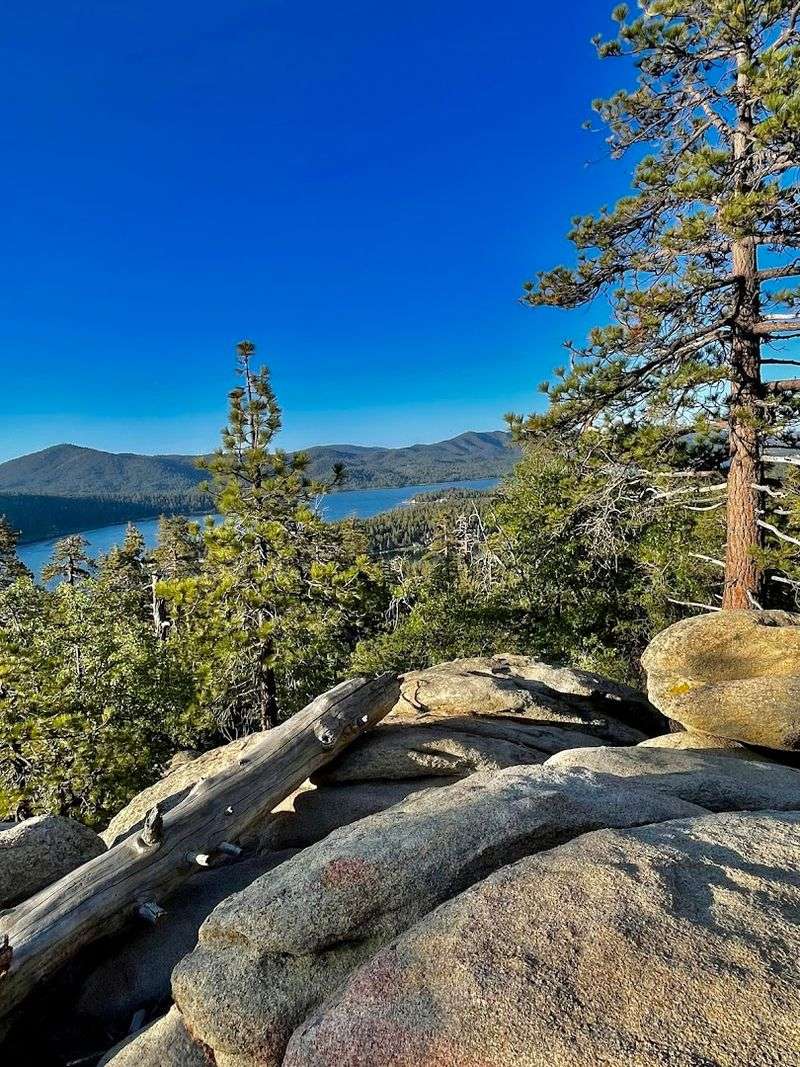
Big Bear Lake is best known as a ski destination, but the Castle Rock Trail offers a compelling reason to visit when the snow melts and the pines turn green again.
The trail leads to a cluster of large granite boulders that offer an elevated perch above the surrounding pine forest with views stretching across Big Bear Valley and down to the shimmering surface of the lake.
The round-trip distance is about 2.4 miles with a moderate elevation gain that most hikers complete comfortably in under two hours.
The boulders at the top are climbable for those comfortable with a bit of scrambling, and the highest points offer the best sightlines across the valley.
The granite surface can be slippery when wet or covered in early morning frost, so footwear with solid traction makes a meaningful difference.
The trail passes through a mixed forest of pine, cedar, and oak that provides decent shade during the warmer months.
The Castle Rock Trailhead is located along State Highway 18 on the north shore of Big Bear Lake, with a small parking area near the trailhead.
Big Bear Lake sits at about 6,750 feet elevation in the San Bernardino Mountains, which means temperatures here run cooler than in the lowlands even during summer.
Fall visits are particularly rewarding as the oak trees add patches of golden and amber color to the otherwise evergreen forest landscape.
14. Point Lobos Loop Trail, Carmel-By-The-Sea
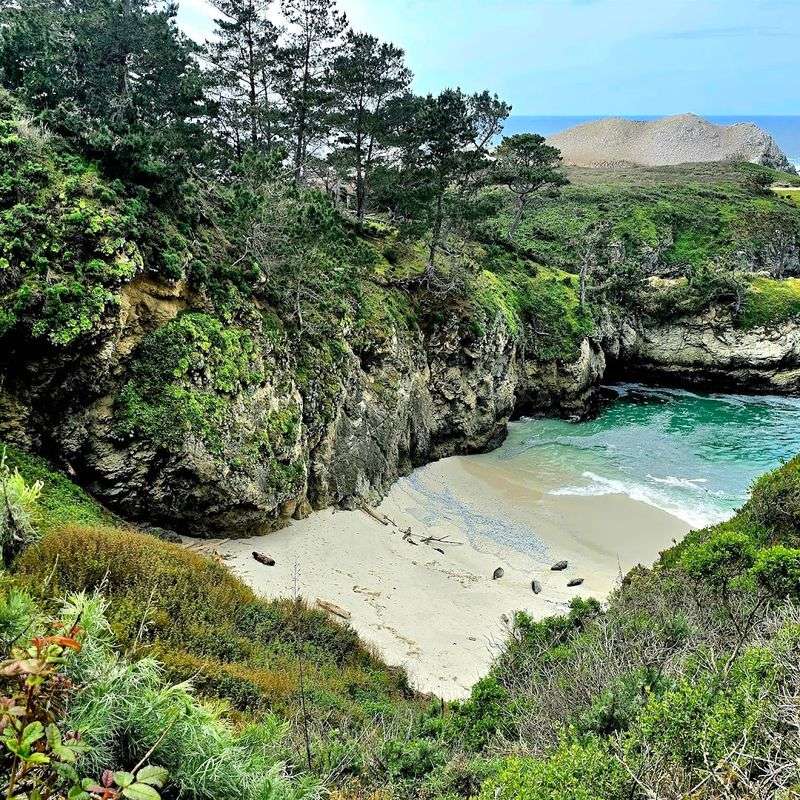
Point Lobos State Natural Reserve has been called the greatest meeting of land and sea on the California coast, and the loop trail that circles the reserve’s headlands makes a strong case for that description.
The full loop covers roughly 6 miles and passes through a landscape of twisted Monterey cypress trees, granite coves with turquoise water, kelp beds visible just offshore, and rocky promontories where harbor seals and sea lions haul out in the sun.
The variety packed into a single loop is genuinely remarkable.
The reserve is located just south of Carmel-by-the-Sea along Highway 1 and charges a day-use fee that covers parking inside the reserve.
Parking spaces are limited and the reserve enforces a strict capacity limit, which means arriving early or checking the reserve’s reservation system before visiting is strongly recommended.
The roads and trails inside the reserve are well-maintained and clearly signed, making navigation straightforward even for first-time visitors.
Wildlife viewing along the loop trail tends to be exceptional throughout the year, with harbor seals present at certain coves almost daily and gray whales visible offshore during their migration season from December through May.
The light in the late afternoon turns the cypress trees and granite rocks into particularly warm and textured tones.
Bringing binoculars adds a lot to the experience given how active the marine life in the coves tends to be.