The Most Breathtaking Places In North Carolina That Belong On Every Travel List
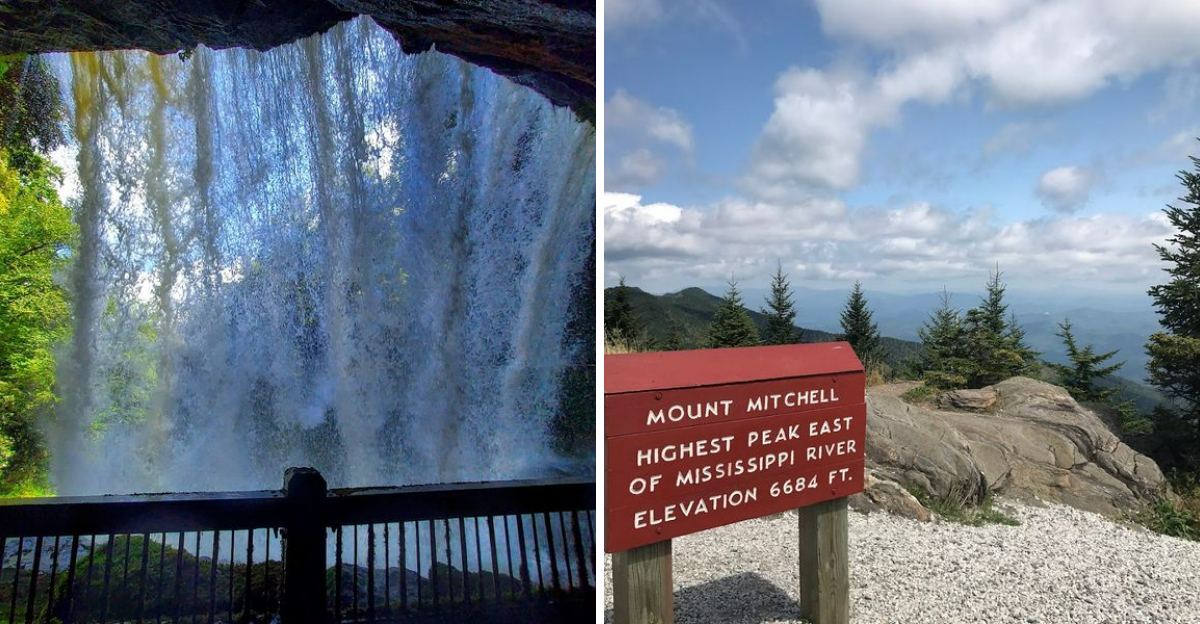
North Carolina does not ease you in gently. First come the mountains, then the ocean, then something in between you did not expect.
Ancient peaks. Wild barrier islands.
Waterfalls you hear before you see. This state carries more landscape variety than most people realize.
That is exactly what makes it irresistible for anyone who values their free time. I have explored a fair share of it firsthand.
Stood on open ridgelines with nothing but wind and distance ahead. Watched a lighthouse hold its ground against waves that clearly had other plans.
Every single time, North Carolina found a new way to stop me cold. No expert gear required.
No seasoned traveler credentials needed. Just show up, and let the state do the rest.
1. Blue Ridge Parkway
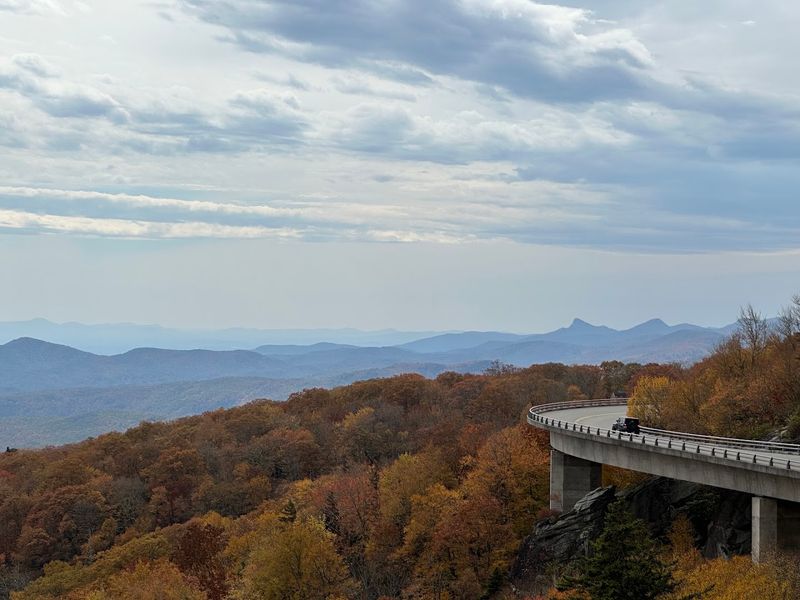
Few roads in America make you want to pull over every five minutes, but this one does. Stretching 469 miles through the Appalachian Highlands, the Blue Ridge Parkway earns its nickname “America’s Favorite Drive” without any argument from me.
The road connects Shenandoah National Park in Virginia to Great Smoky Mountains National Park. The views along the way are genuinely hard to describe.
Fall is the most popular season here, and for good reason. The ridgelines turn every shade of orange, red, and gold you can imagine.
Even in summer, the elevation keeps temperatures cool, which makes a drive or a bike ride feel refreshing rather than exhausting.
There are dozens of overlooks, short trails, and picnic spots scattered along the route. Milepost 431 near Asheville is a personal favorite for the wide, open views it offers at sunset.
The parkway has no traffic lights and no commercial vehicles, so the pace feels unhurried and calm. If you only have one day here, spend it here.
2. Outer Banks And Cape Hatteras National Seashore
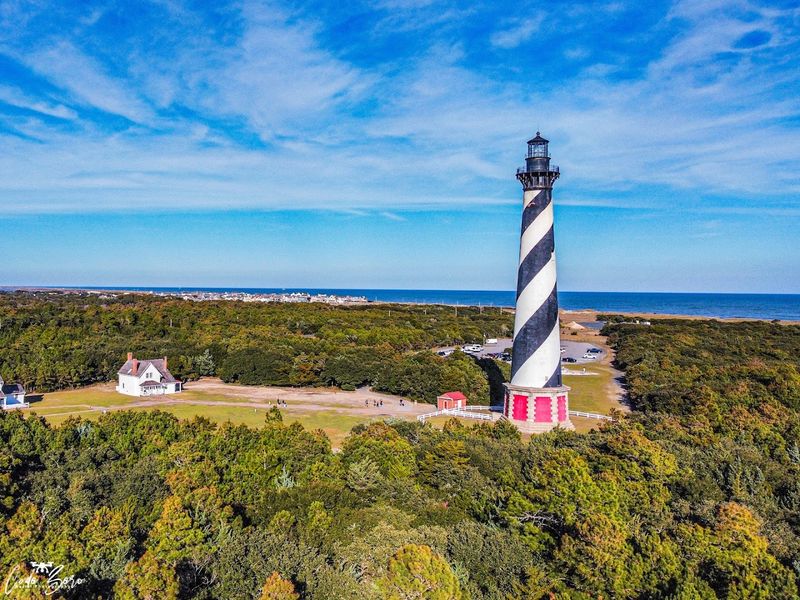
There are 198 feet of lighthouse between you and the open Atlantic. It doesn’t feel like enough.
This stretch of coastline is unlike any beach destination I have visited. The Outer Banks is a long chain of barrier islands.
Cape Hatteras National Seashore protects a large portion of it from development.
The lighthouse itself is the tallest brick lighthouse in the United States, rising 198 feet above the shore. You can climb it during warmer months, and the view from the top rewards every step of the 257-stair climb.
Below, the shoreline curves in both directions with almost no buildings in sight.
Beyond the lighthouse, the area is known for wild horses, excellent surf, and some of the best fishing on the East Coast. Shorebirds move through in large numbers during migration season.
The towns of Nags Head, Kitty Hawk, and Manteo each have their own personality. Pack light, bring sunscreen, and plan to stay longer than you originally intended, because that is what always happens here.
3. Grandfather Mountain
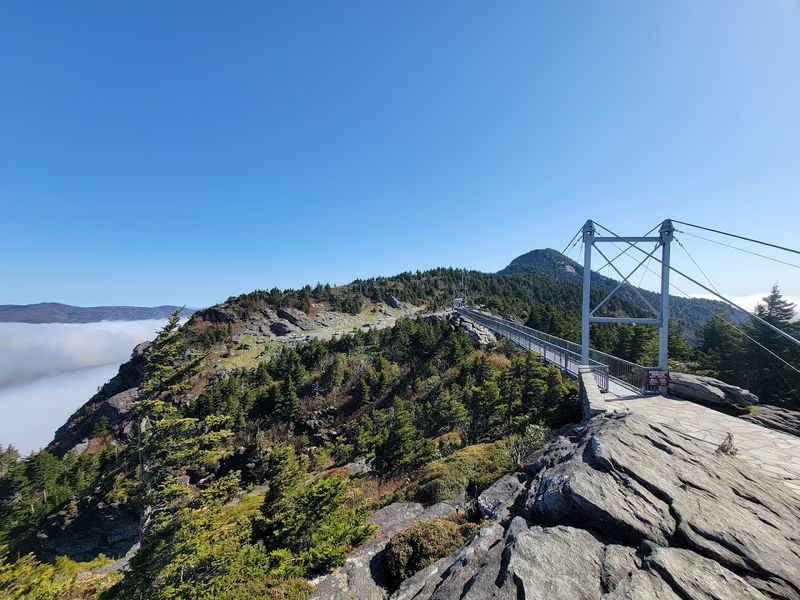
There is a bridge at Grandfather Mountain that hangs 5,280 feet above sea level. Crossing it for the first time is one of those experiences that stays with you.
The Mile High Swinging Bridge connects two rocky outcroppings near the summit, and on a clear day, the views stretch across multiple states. On a windy day, the bridge earns every letter of its name.
Grandfather Mountain, near Linville, is one of the most biologically diverse places in the entire eastern United States. It has been designated a UNESCO Biosphere Reserve, which tells you something about the range of plants and animals living here.
Rare species of plants grow in the high-elevation spruce-fir forests that cover the upper slopes.
The nature museum on site is worth an hour of your time, especially if you are visiting with kids. Black bears, river otters, and deer live in habitats designed to resemble their natural environments.
Hiking trails range from easy walks to challenging scrambles across exposed rock faces. The summit views during early morning, before the crowds arrive, feel almost private.
Come prepared for changing weather at this elevation.
4. Linville Gorge Wilderness
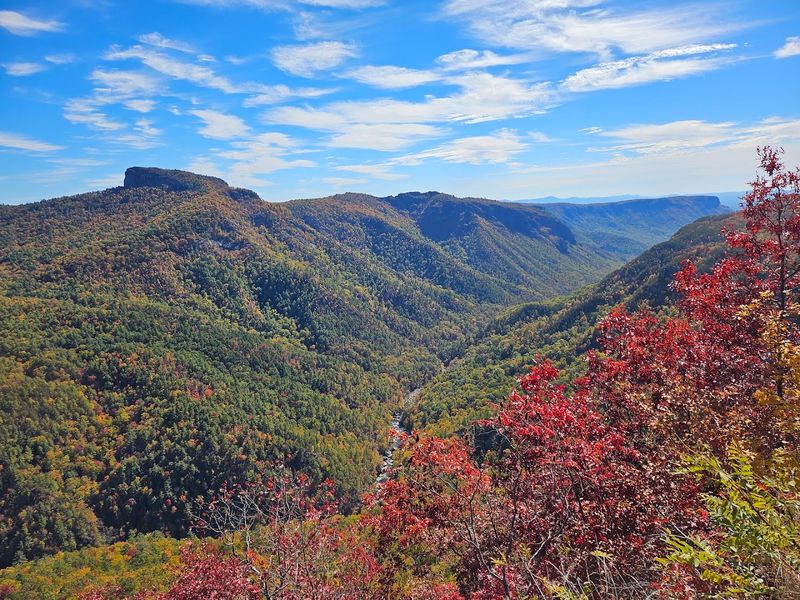
The trail signs here don’t lie to you. “Difficult” means difficult. Linville Gorge Wilderness sits in Burke County near Linville Falls.
It drops sharply from the surrounding plateau, creating one of the most dramatic landscapes in the state. The walls are steep, the forest is dense, and the Linville River moves through the bottom like it has been there forever, because it has.
This is not a place for casual strolling. The trails here are rugged, poorly marked in sections, and physically demanding.
That is exactly what makes it so rewarding. Reaching a viewpoint like Wiseman’s View or Table Rock after a real climb feels earned in a way that smooth, paved paths never quite match.
Camping is permitted in the gorge with a free permit on weekends, and spending a night here is an experience that resets something in your brain. The silence is real.
No road noise, no ambient light, just forest sounds and stars overhead. Linville Gorge is one of those places where nature feels genuinely untouched, and that quality is increasingly rare.
5. Great Smoky Mountains National Park
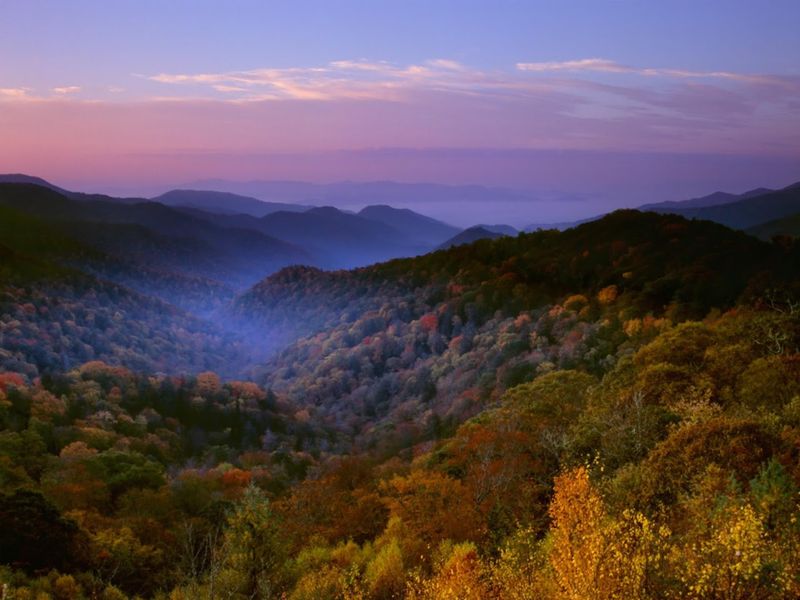
Most visited national park in America. You wouldn’t guess it standing alone on the trail.
Great Smoky Mountains National Park straddles the border between North Carolina and Tennessee. The side anchored by Cherokee and the Oconaluftee Visitor Center offers some of the most peaceful entry points.
Yet somehow, stepping just a mile or two off the main roads, you can find complete solitude on trails like the Alum Cave Trail or the hike up to Andrews Bald. Wildflower season in late spring is genuinely spectacular, with trilliums and wild azaleas covering entire hillsides.
Wildlife sightings are common here. Black bears, elk, white-tailed deer, and wild turkeys appear regularly near roadsides and meadows.
The Cataloochee Valley on this side of the park is one of the best places in the eastern United States to see elk at dusk. Bring a camera, because moments like that tend to disappear faster than you expect.
Early mornings and late evenings give you the best chance of catching them. No admission fee is required, which makes this one of the most accessible great outdoor destinations anywhere in the country.
6. Biltmore Estate, Asheville
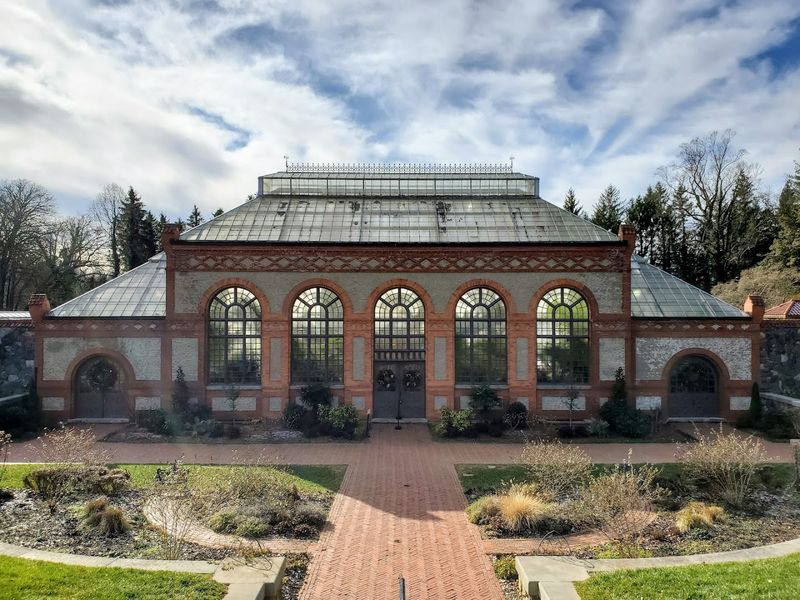
Nobody needs 250 rooms. George Vanderbilt built them anyway.
The scale of it is absurd in the best way. Built by George Vanderbilt in the 1890s, Biltmore is America’s largest privately owned home, with 178,926 square feet of floor space and 250 rooms.
It sits on 8,000 acres in the mountains of Asheville, and it has been welcoming visitors since 1930.
The house itself is stunning, filled with original artwork, furniture, and personal objects from the Vanderbilt family. The library alone, with its 10,000-volume collection and painted ceiling, is worth the price of admission.
Guided tours and self-guided audio options let you move at your own pace through the main floors.
Outside, the grounds are just as impressive. Frederick Law Olmsted, the landscape architect behind Central Park, designed the gardens and natural areas surrounding the estate.
The walled English garden, the conservatory, and the long meadow views toward the mountains create a setting that feels more like the French countryside than this part of the state. The on-site winery produces award-winning wines and offers tastings throughout the year.
Reserve your tickets in advance, especially during peak seasons.
7. Mount Mitchell
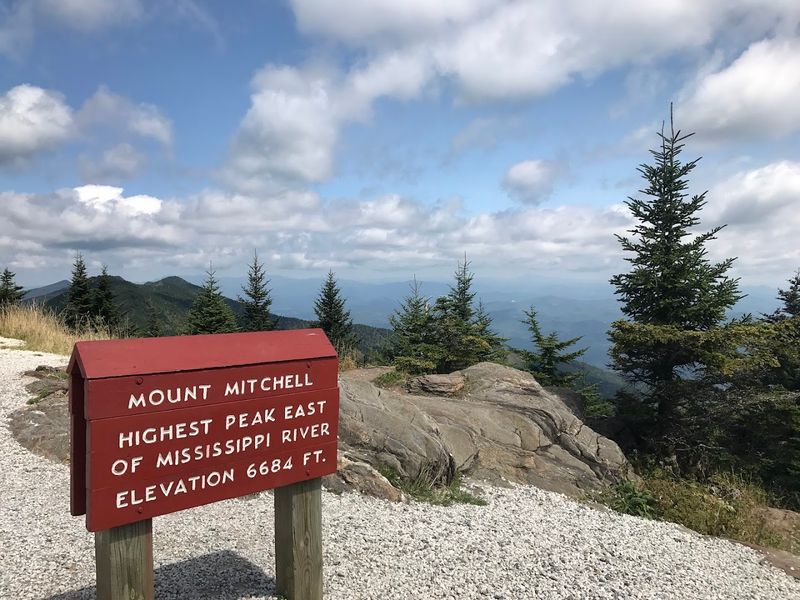
The highest point east of the Mississippi looks like Canada and smells like pine resin. It sits in Yancey County along the Black Mountain range, within Mount Mitchell State Park, which was established in 1915 as North Carolina’s first state park.
You can drive most of the way to the summit, which makes it accessible even for people who are not serious hikers. The final stretch to the observation tower is a short walk from the parking area.
Standing up there, it is hard to believe you are still in North Carolina. On a clear day, the views extend for miles in every direction across layer after layer of mountain ridges.
Temperatures can drop quickly, so bring an extra layer regardless of the season. The park also has a restaurant and camping facilities.
Sunrise from the summit, when the clouds below you catch the first light, is something I recommend to anyone willing to set an early alarm.
8. Chimney Rock State Park
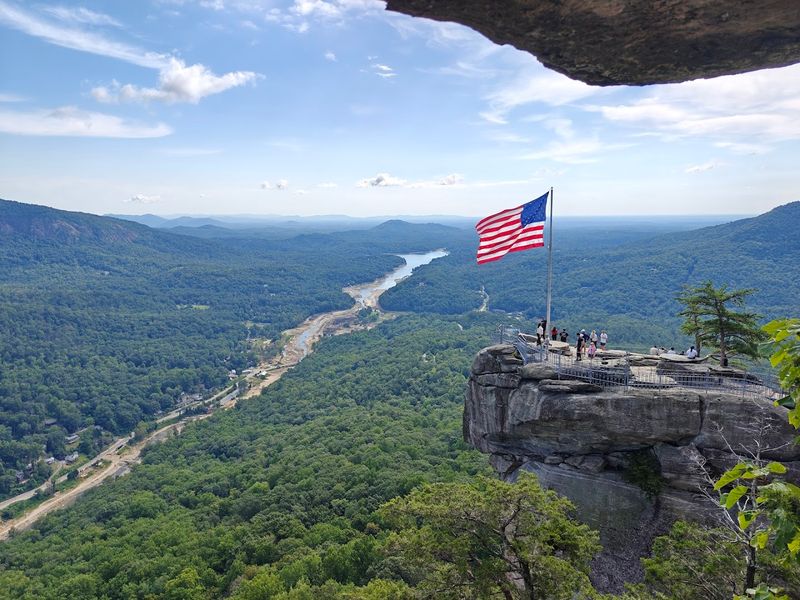
A single column of granite rising 315 feet straight out of the earth is not something you forget quickly. Chimney Rock State Park, located in Rutherford County along the Rocky Broad River, centers entirely around this remarkable natural formation.
The rock and the gorge it overlooks have appeared in films, travel magazines, and countless photographs, yet nothing fully prepares you for seeing it in person.
Reaching the top of Chimney Rock requires either a hike up the trail or a ride in the elevator carved directly into the mountain. Both options are worth it.
From the summit platform, the view down Hickory Nut Gorge stretches for miles, and Lake Lure shimmers in the distance below. The park also features Hickory Nut Falls, a 404-foot waterfall that drops dramatically through the forest.
Trail options range from easy walks to more challenging climbs across exposed rock ledges. The Skyline Trail offers the most expansive views and takes about two to three hours round trip.
Wildflowers appear along the lower trails in spring, and fall foliage turns the gorge into a wall of color. The small town of Chimney Rock just outside the park entrance has a handful of good restaurants and shops worth visiting after your hike.
9. Dry Falls, Highlands
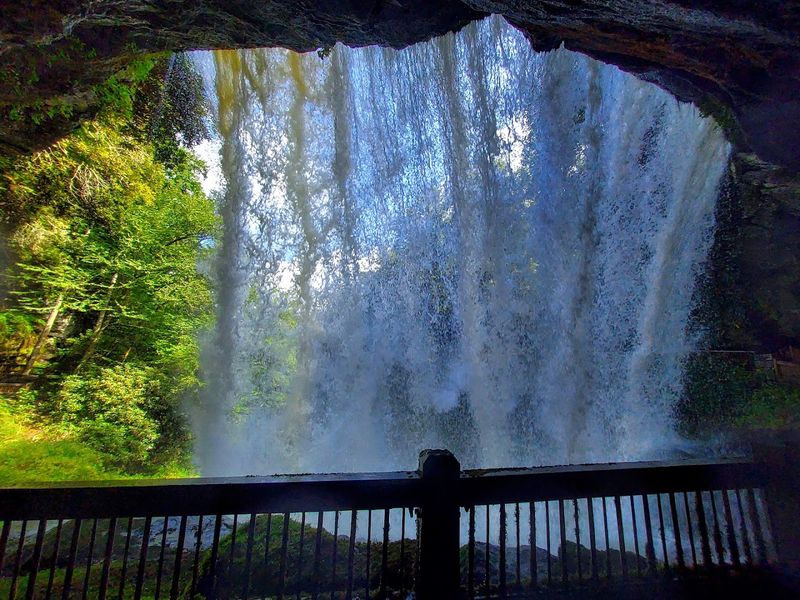
You can walk behind this waterfall. Most people don’t believe that until they’re already wet.
Dry Falls, located near the town of Highlands in Macon County, invites you to walk directly behind the falling water. A paved path leads under the 75-foot cascade.
You can stand behind a curtain of water while it roars just inches away, often staying completely dry. The name refers to the fact that you can pass beneath it without getting soaked.
The setting is gorgeous regardless of the season. In summer, the surrounding hardwood forest is deep green and cool.
In autumn, the leaves surrounding the falls turn bright yellow and orange, creating a frame around the water that feels almost painted. Winter ice formations on the rock face add a completely different kind of beauty.
Dry Falls sits along US-64 between Highlands and Cashiers, making it easy to reach without a long hike. There is a small parking area and a short walk down to the falls.
Combine this stop with nearby Bridal Veil Falls, another roadside waterfall just a few miles away, for a full afternoon of waterfall exploring. The Highlands area in general is one of the most scenic corners of this area, with an elevation that keeps summer temperatures naturally cool.
10. Shackleford Banks
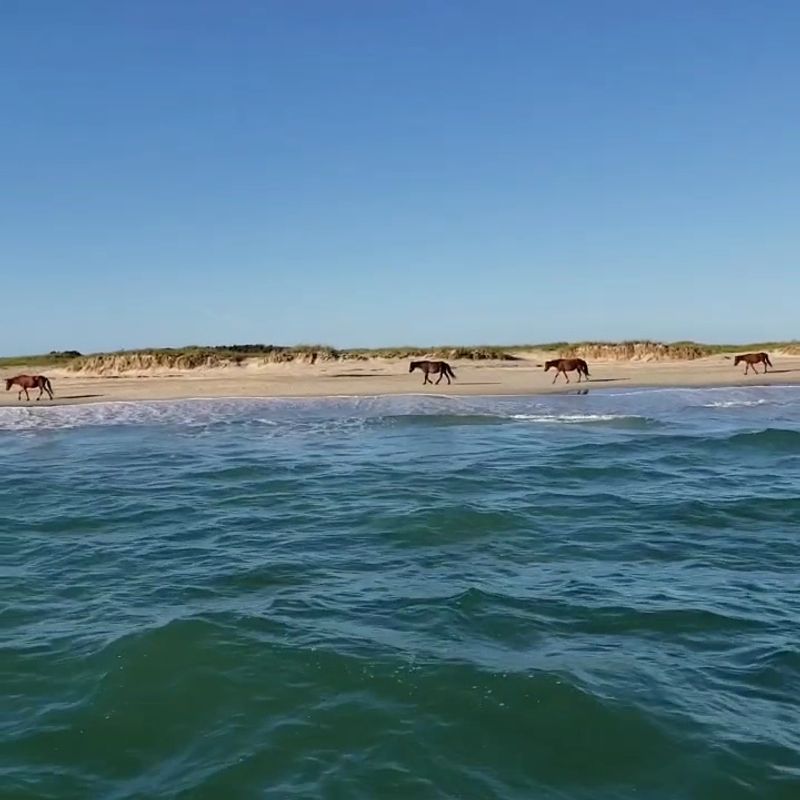
Wild horses still roam an uninhabited barrier island off the coast. Reaching it requires a ferry ride from Beaufort or Harkers Island.
Shackleford Banks is part of Cape Lookout National Seashore, and it has no roads, no buildings, and no permanent human residents. Just nine miles of beach, maritime shrub forest, and roughly 120 wild horses descended from Colonial-era Spanish mustangs.
Seeing the horses in their natural habitat is an experience that feels genuinely rare. They graze near the shoreline, wander through the dunes, and occasionally stand at the water’s edge watching the boats pass.
Visitors are asked to keep a distance of at least 50 feet, which the horses often close on their own terms.
The island is also excellent for shelling. The ocean-facing shore collects a variety of shells, and long walks along the waterline almost always turn up something interesting.
Swimming is allowed, but there are no lifeguards, so caution is advised. Camping on the island is permitted with a permit, and sleeping under the stars with the sound of the Atlantic on both sides of the island is an experience that connects you to a much older version of the coast.
Book your ferry in advance during summer months.