South Carolina Has Food Traditions That Confuse Outsiders And Define Locals
South Carolina’s food culture can make confident people suddenly very quiet at the dinner table. It hands you a cup of mustard-yellow barbecue sauce, watches your face, and waits.
If you grew up somewhere else, that first encounter with Carolina Gold is either a revelation or a confusion, and either reaction is completely valid. The food traditions here run deep enough that locals do not always think to explain them.
To them, boiling peanuts in a roadside pot or ordering she-crab soup on a cold evening is simply what you do. It is not a quirk.
It is a way of life that happens to be delicious. South Carolina has been cooking by its own rules for centuries.
The result is a food culture so specific and so confident that outsiders often need a brief orientation before they can fully appreciate what is on the plate. Consider this yours.
Ten traditions, zero apologies, and at least one thing that will make you question everything you thought you knew about Southern food.
1. Mustard-Based BBQ Sauce
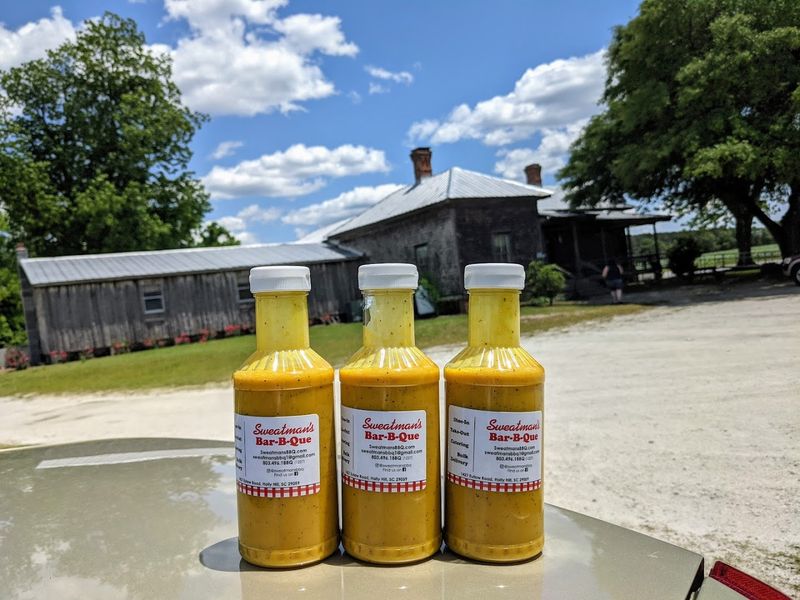
Most people show up to a South Carolina BBQ expecting red sauce, and the look on their face when they get yellow is priceless.
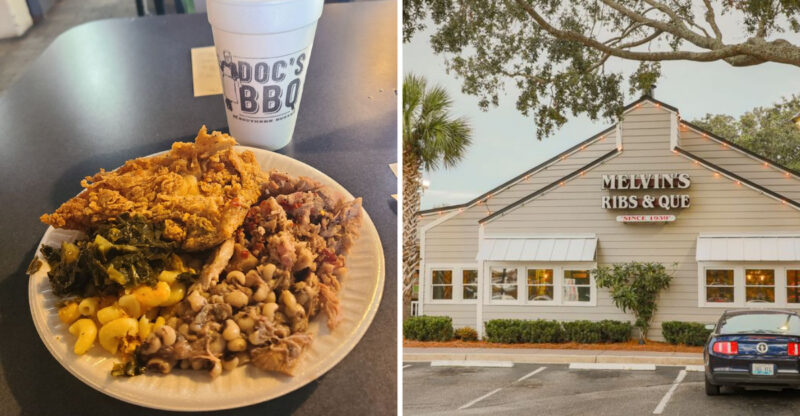
The mustard-based sauce is the signature of the Midlands region, and locals will argue passionately that it is the only sauce worth talking about.
German settlers brought mustard traditions to South Carolina in the 1700s, and the flavor stuck around. The sauce is tangy, slightly sweet, and sharp in a way that cuts right through rich pulled pork.
It does not taste like a hot dog condiment. It tastes like something that took years to perfect.
Outsiders usually take one cautious bite, pause, and then go back for more. That moment of confusion followed by conversion is practically a South Carolina rite of passage.
Once you try it on slow-smoked pork, the red stuff starts to feel a little boring. There is no going back after your first real taste of Carolina Gold mustard sauce at a proper pit BBQ joint.
2. Boiled Peanuts
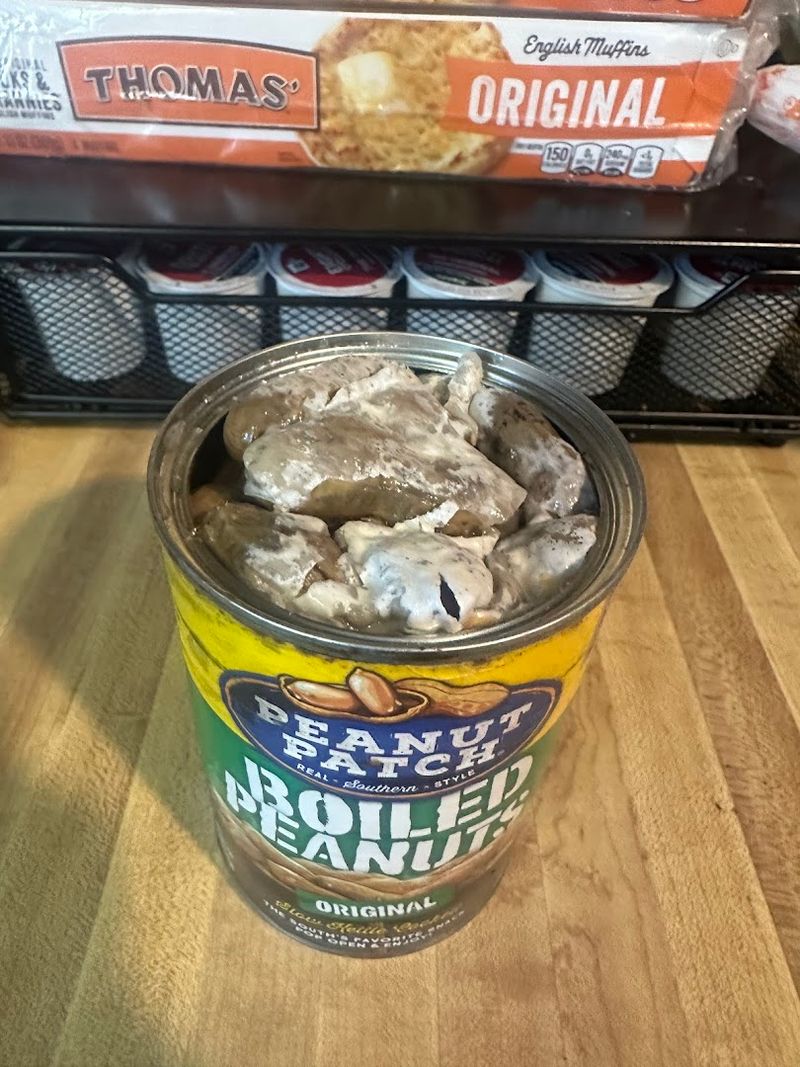
The first time I saw a hand-painted sign that said “Boiled P-Nuts” on the side of a two-lane highway, I genuinely thought it was a joke. It was not.
Boiled peanuts are the official state snack of South Carolina, and they are exactly what they sound like.
Raw peanuts get slow-cooked in salted water for hours, sometimes days, until they turn soft, salty, and almost creamy inside the shell. The texture is nothing like roasted peanuts.
Outsiders often find them too mushy. Locals find them deeply satisfying in a way that is hard to explain without a bag in your hand.
Roadside boiled peanut stands pop up across the state like wildflowers in spring. Some vendors spice them with Cajun seasoning, garlic, or jalapenos, but the classic salted version is the one that earns loyalty.
They are best eaten warm, standing outside, cracking shells with your fingers while the brine drips down your wrist.
Messy, cheap, and completely addictive. South Carolinians grow up eating these, and they never really stop wanting them.
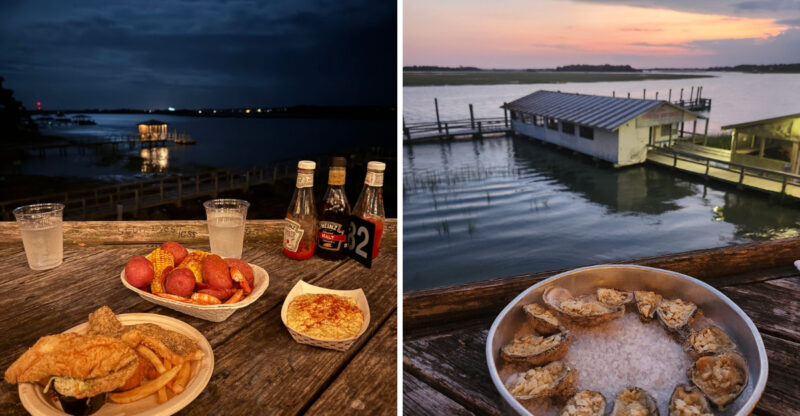
3. Frogmore Stew / Lowcountry Boil
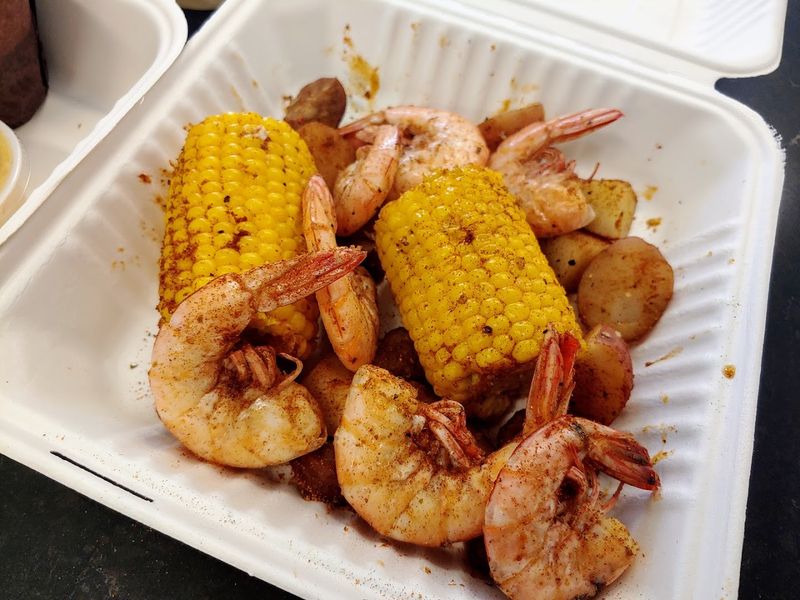
Nothing about the name Frogmore Stew sounds appetizing if you have never heard it before. There are no frogs involved.
It is named after a small community on St. Helena Island, and once you understand what it actually is, you will wonder why anyone ever calls it anything else.
The dish is a one-pot boil of fresh shrimp, smoked sausage, corn, and potatoes, all seasoned heavily with Old Bay or a similar spice blend.
It gets dumped straight onto a newspaper-covered table and eaten with your hands. No plates required.
The communal messiness is half the point.
Lowcountry Boil is the more widely used name, and it shows up at family reunions, church gatherings, and backyard cookouts from May through October.
The key is fresh shrimp. Frozen shrimp will make locals wince.
Getting the timing right matters too because overcooked shrimp turns rubbery fast.
When it is done right, every bite has a little of everything: sweet corn, smoky sausage, tender potato, and perfectly cooked shrimp. It is the kind of meal that makes you forget about napkins entirely.
4. She-Crab Soup
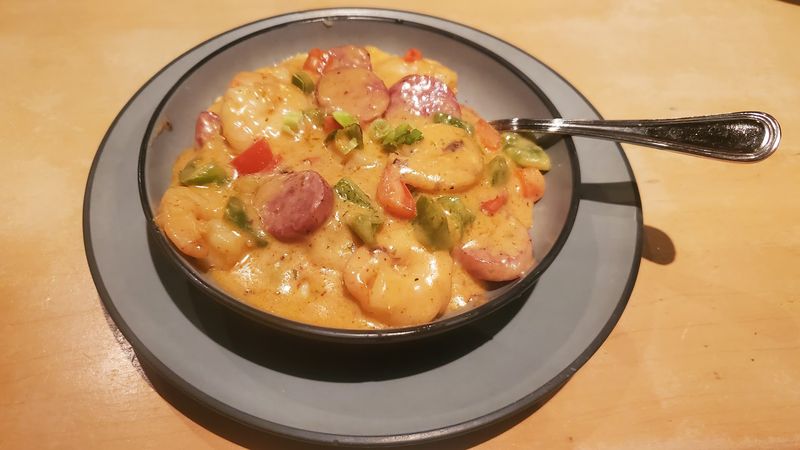
She-crab soup sounds like a name someone made up to be fancy, but it has a very specific meaning.
The “she” refers to female blue crabs, whose roe, or eggs, traditionally gave the soup its distinctive orange color and rich, briny depth of flavor.
The soup itself is creamy and thick, built on a base of crab meat, cream, and butter, with a warmth that settles into you slowly.
Charleston restaurants have been serving versions of it for well over a century. It is considered one of the most distinctly South Carolinian dishes in existence.
Finding crab roe is harder today due to conservation regulations, so many restaurants substitute with hard-boiled egg yolk or simply skip it.
Purists will tell you it is not the same without the roe, and they are probably right. The soup is rich enough to feel indulgent as a starter but filling enough to make a meal on its own.
A good bowl of she-crab soup tastes like the coast itself, salty, creamy, and just a little wild. First-timers are usually surprised by how much they love it.
5. Hoppin’ John On New Year’s Day
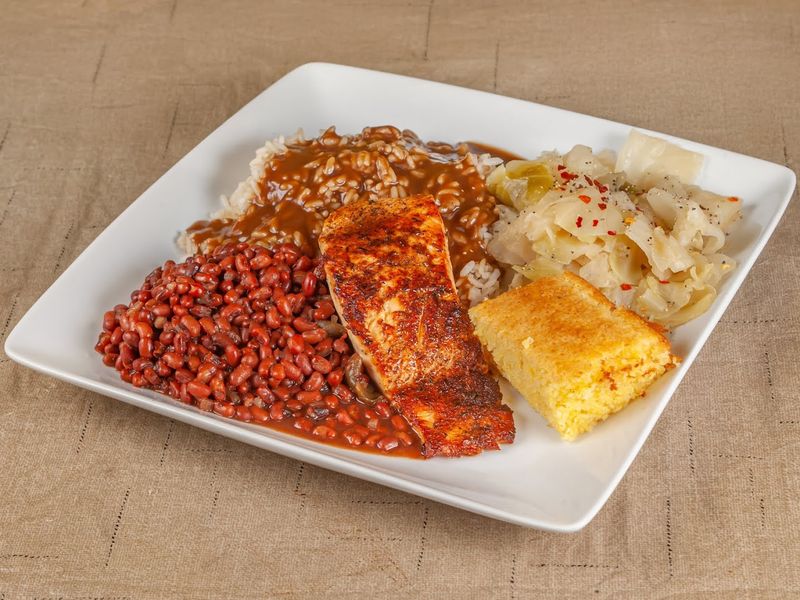
Every January 1st, South Carolina kitchens smell like black-eyed peas and rice, and that is not an accident. Hoppin’ John is a New Year’s Day tradition with roots deep in the Gullah Geechee culture of the Lowcountry, and skipping it is considered bad luck by a significant portion of the population.
The dish combines black-eyed peas with rice, often cooked with smoked pork for flavor, and served alongside collard greens and cornbread.
Black-eyed peas represent luck, the greens represent money, and the cornbread represents gold. The whole meal is basically an edible wish for a good year ahead.
The name Hoppin’ John has inspired plenty of theories over the years. Some say it comes from a tradition of children hopping around the table before eating.
Others trace it to a French Creole term. Nobody fully agrees, and that mystery is part of the charm.
What everyone does agree on is that you eat it on New Year’s Day. No exceptions.
Outsiders find the superstition charming. Locals find skipping it genuinely unsettling.
The tradition has held for generations and shows no sign of fading.
6. Oyster Roasts
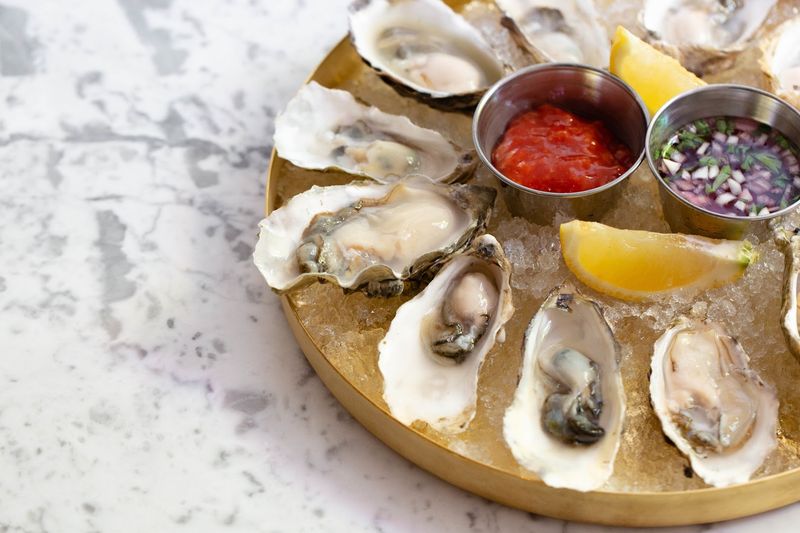
An oyster roast is not just a meal in South Carolina. It is a social event with its own rules, its own rhythm, and its own particular kind of chaos.
Clusters of wild-caught oysters get piled onto a metal sheet over an open fire, covered with a wet burlap sack, and steamed until they crack open just enough to invite a shucking knife.
You stand around the table with a glove on one hand and a cold drink in the other, prying shells open and eating oysters straight off the half shell.
There is no ceremony. You eat them hot, sometimes with a dash of hot sauce or a squeeze of lemon, and you eat a lot of them.
Speed matters at a good oyster roast.
The season runs from fall through early spring, following the old rule about eating oysters in months that end in the letter R.
South Carolina oysters are briny and full-flavored because they grow in cold, clean estuaries. Roasts happen at private homes, public parks, and fundraiser events all across the coast.
If you are ever invited to one, say yes immediately. It is one of those experiences that explains South Carolina better than any words can.
7. Chicken Bog
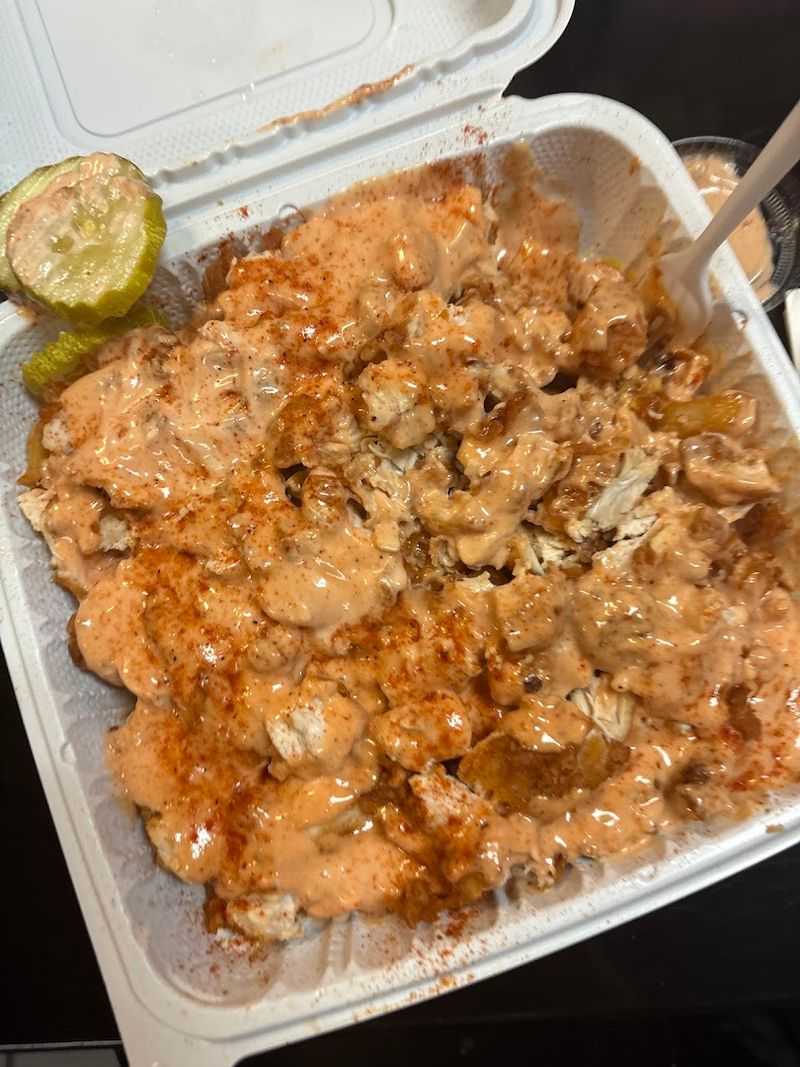
The name Chicken Bog does not exactly make you want to rush to the table, but once you try it, you stop caring about the name entirely.
It is one of the most comforting, underrated dishes in South Carolina, and it barely exists outside the state’s borders.
Chicken Bog is essentially a thick, one-pot rice dish cooked with whole chicken pieces and smoked sausage until everything becomes soft and almost sticky together.
The rice absorbs all the cooking liquid, the chicken fat, and the sausage flavor, creating something that is deeply savory and hard to stop eating.
It is a staple of the Pee Dee region in the northeastern part of the state, and the town of Loris even holds an annual Chicken Bog Festival celebrating it.
Church fundraisers and family reunions often feature massive pots of it cooked outdoors over open flame. The dish is humble by design.
It was built to feed a crowd cheaply and fill people up completely.
Outsiders sometimes mistake it for a failed risotto or an overdone chicken and rice casserole. They are wrong on both counts.
Chicken Bog is exactly what it is supposed to be.
8. Blenheim Ginger Ale
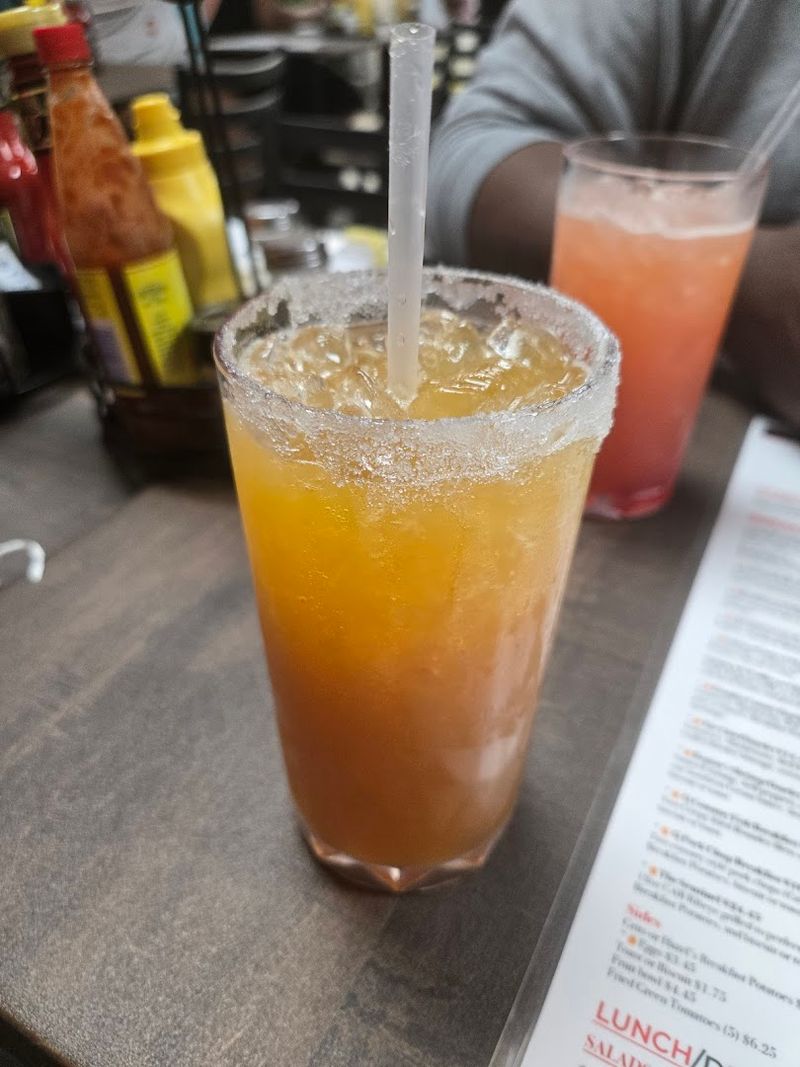
Most ginger ales are gentle, fizzy, and barely spicy. Blenheim Ginger Ale is not most ginger ales.
Made in Hamer, South Carolina since 1903, this stuff has a heat level that catches first-timers completely off guard. The spiciest version, labeled with a pink cap, genuinely burns on the way down.
The drink started as a medicinal tonic, meant to soothe stomach problems. It was made using the mineral water from a local spring combined with a serious amount of ginger.
The formula has barely changed in over a hundred years, which is exactly how loyal South Carolinians want it.
There are three heat levels: the mild gold cap, the medium red cap, and the infamous hot pink cap that has made grown adults cough on their first sip.
Locals often use it as a test for visitors, handing them the pink cap with a straight face and watching what happens.
It is also genuinely delicious once you adjust to the heat, with a real, sharp ginger flavor that mass-produced sodas cannot replicate
Finding it outside the Carolinas used to be nearly impossible, though online availability has grown. Nothing beats finding a cold bottle at a local gas station.
9. Pimento Cheese
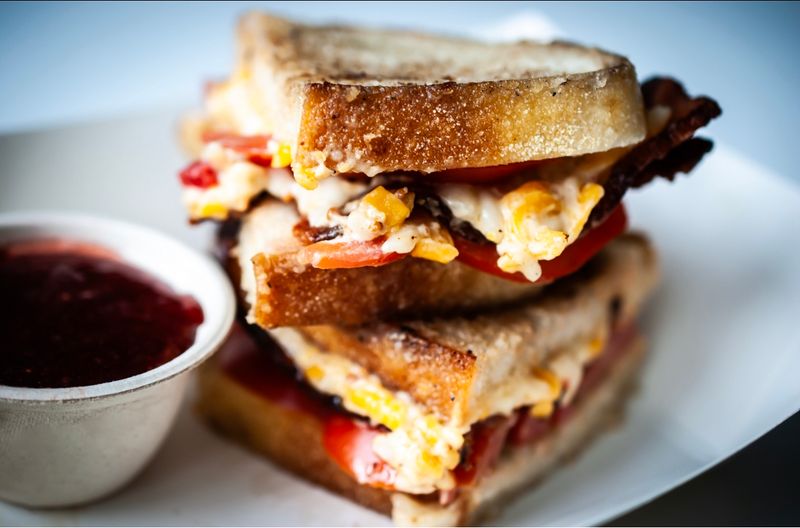
Pimento cheese is called the “caviar of the South,” and while that comparison might sound like a stretch, it makes perfect sense once you understand how seriously South Carolinians take it. This is not a dip.
This is not a snack. This is a staple that shows up at every gathering from baby showers to tailgates.
At its core, pimento cheese is a spread made from shredded cheddar, mayonnaise, and diced pimento peppers. That sounds simple, and it is.
But every family has their own version, their own ratio, their own secret ingredient, and their own strong opinions about whose is best. Duke’s mayo is non-negotiable for most.
Outsiders sometimes try it and find it underwhelming until they have the right version.
A really good pimento cheese has texture, tang, a little sweetness from the peppers, and enough salt to make you reach for another cracker immediately.
Serve it on white bread, stuff it in a celery stalk, melt it on a burger, or eat it straight from the container at midnight. All options are valid.
South Carolinians have been doing all of these things their whole lives without apology.
10. Carolina Gold Rice
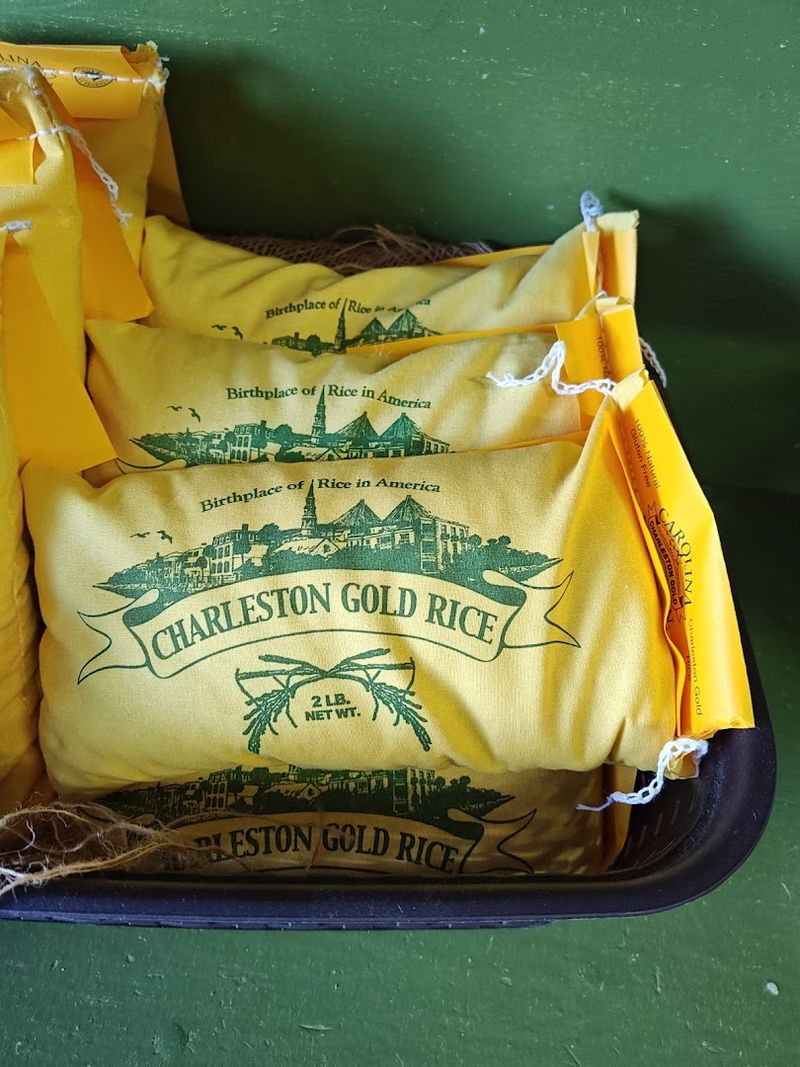
Before Carolina Gold rice nearly vanished from history, it was the crop that built South Carolina’s colonial economy and fed a culture.
Grown in the Lowcountry’s tidal floodplains, this heirloom variety has a golden color, a slightly nutty flavor, and a texture that is stickier and more complex than standard long-grain white rice.
The Gullah Geechee people, descendants of Africans who were brought to the Carolinas specifically for their rice-farming knowledge, developed the techniques that made Carolina Gold thrive.
Their agricultural expertise shaped the entire region’s food culture. The rice was nearly lost by the 20th century, but dedicated farmers and food historians brought it back from the edge.
Today, Carolina Gold rice is experiencing a genuine revival. Chefs across the state have embraced it as a link to the Lowcountry’s culinary past.
It cooks differently than grocery store rice and rewards a little patience. The flavor is subtle but distinct, and it pairs beautifully with dishes like Hoppin’ John, shrimp and grits, or simply butter and salt.
Eating it feels like tasting something that almost disappeared forever. That alone makes every bowl feel worth savoring slowly.