California’s Museum Revives Its Egyptian Book Of The Dead Exhibition Reopening This March With Rare Manuscripts And Spells
History feels closer here. Not distant. Not abstract. Real enough to hold your attention from the first step inside.
Some exhibitions take time to build interest, but this one pulls you in immediately with stories that feel both ancient and strangely familiar.
There is something compelling about stepping into a space where every detail carries meaning. Symbols, texts, and artwork come together to tell a story that has lasted for thousands of years.
The experience feels immersive without being overwhelming, which makes it easy to stay engaged from start to finish.
You would not expect to find something this layered and thought-provoking in a setting like this, which adds to the appeal. People across California are already making plans around it. And once you see it, it tends to stay with you.
The Getty Villa brings back The Egyptian Book of the Dead in a way that feels both accessible and memorable. Read on to discover what makes this exhibition worth experiencing.
Getty Villa Revives Its Egyptian Book Of The Dead Exhibition
Ancient Egyptian funerary art is making a powerful return to one of California’s most beloved museums.
The Getty Villa in Pacific Palisades is officially reviving its acclaimed exhibition titled The Egyptian Book of the Dead, and the cultural anticipation surrounding this reopening has been building steadily.
Located at 17985 Pacific Coast Hwy, Pacific Palisades, CA 90272, the museum is well known for housing some of the most carefully preserved antiquities on the West Coast.
The exhibition originally ran to strong reception, and the decision to bring it back reflects just how much visitors connected with the material.
Ancient Egyptian manuscripts, protective spells, and illustrated scenes from the afterlife will once again be on view for the public to explore.
The exhibition runs from March 4 through November 30, 2026, giving visitors several months to plan a meaningful visit.
Entry to the exhibition is free, though timed reservations are required in advance. The museum opens at 10 AM most days of the week and remains closed on Tuesdays.
Visitors can expect a thoughtfully curated space that balances scholarly depth with genuine accessibility for curious minds of all backgrounds.
When The Exhibition Reopens In California
Mark March 4, 2026 on the calendar because that is the official reopening date for The Egyptian Book of the Dead exhibition at the Getty Villa.
The exhibition will remain on view through November 30, 2026, offering an unusually generous window of time for visitors across California and beyond to make the trip.
That kind of extended run is relatively rare for exhibitions featuring such delicate and ancient materials. Planning ahead is genuinely worthwhile here.
The museum requires timed-entry reservations even though admission is free, so arriving without a booking could mean being turned away at the door.
Reservations can be made through the Getty Villa website, and slots tend to fill up during weekends and school holiday periods.
Weekday visits tend to feel more relaxed and less crowded, making them a solid choice for those who prefer a quieter pace when exploring.
The museum opens at 10 AM Wednesday through Monday, giving visitors a full day to move through the galleries and gardens at a comfortable speed.
Parking is available on site but does carry a fee of around $25, so factoring that into the budget ahead of time helps avoid surprises on arrival day.
Why This Exhibition Is Returning After Its Initial Run
Strong public response is one of the clearest signals a museum receives that an exhibition deserves a second life.
The Egyptian Book of the Dead exhibition at the Getty Villa earned exactly that kind of reaction during its initial run, drawing visitors who were captivated by the rarity and visual richness of the materials on display.
The decision to revive it was grounded in both cultural demand and the Getty’s ongoing commitment to making ancient history accessible. There is also a practical dimension to the return.
Manuscripts of this age and fragility cannot be on permanent display due to conservation concerns, so limited-run exhibitions are the primary way the public gets to experience them.
Bringing the show back allows a new generation of visitors to engage with materials that most people will never encounter anywhere else.
The Getty Museum has a well-established reputation for presenting complex historical subjects with clarity and depth.
Presenting the exhibition in both English and Spanish further broadens its reach, ensuring that more communities across California can connect with the material meaningfully.
The revival is a genuine cultural event rather than a routine scheduling decision, and the level of care put into the presentation reflects that clearly.
What The Egyptian Book Of The Dead Actually Is
Despite the dramatic name, the Egyptian Book of the Dead is not a single unified book in the way most people think.
It is actually a collection of individual ritual spells and illustrated instructions that ancient Egyptians believed would help the soul navigate the dangers of the afterlife.
Different scrolls contained different spells, and the selection was often customized based on what a person or their family could afford.
The texts were used roughly between 1550 BCE and 50 BCE, though the manuscripts featured in the Getty Villa exhibition date from approximately 1450 BCE to 100 BCE.
That span of nearly 1,400 years shows just how enduring these beliefs were within Egyptian culture.
Spells addressed a wide range of concerns including protection from dangerous creatures, guidance through judgment halls, and instructions for speaking with the gods.
Many of the scrolls feature vivid painted scenes alongside the hieroglyphic text, making them extraordinary examples of both literary and visual art.
One of the most recognized scenes is the Weighing of the Heart, where a soul’s heart is measured against a feather to determine worthiness for the afterlife.
Understanding this context makes the actual manuscripts far more powerful to stand in front of in person.
Rare Manuscripts And Artifacts On Display
Some of the manuscripts featured in this exhibition have never been displayed publicly before, which makes the 2026 reopening especially significant for anyone with an interest in ancient history.
The J. Paul Getty Museum holds a collection of ancient Egyptian funerary texts that spans a remarkable range of formats and time periods, and this exhibition draws from the heart of that collection.
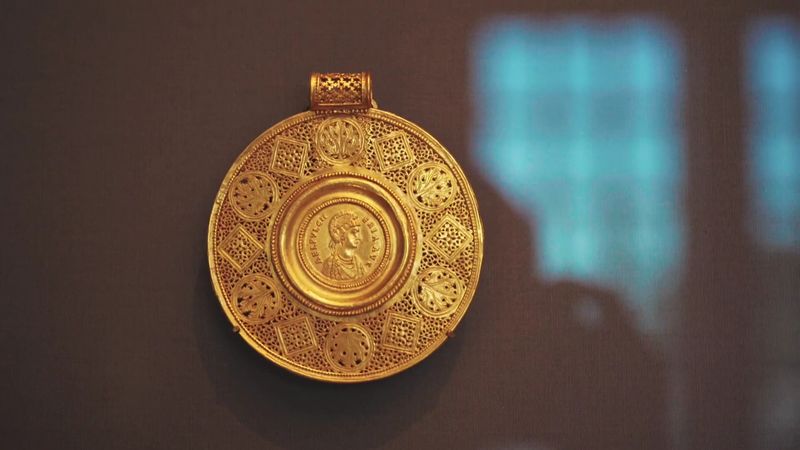
Visitors can expect to see papyrus scrolls inscribed with protective spells alongside linen mummy wrappings that also carry hieroglyphic texts.
The use of linen as a writing surface might seem unusual, but it was a practical and meaningful choice in ancient Egypt where the wrappings of the deceased were considered sacred objects worthy of divine inscription.
Both materials offer a very different visual and textural experience when viewed up close.
The historical span of the objects on display is equally striking, covering roughly 1,350 years of Egyptian funerary practice.
Seeing how the style of illustration and the selection of spells evolved across that period gives the exhibition a sense of depth that goes well beyond a simple showcase of old objects.
Each manuscript tells a layered story about the person it was created for and the world they believed awaited them.
Why These Ancient Texts Are So Fragile And Rare
Papyrus is an inherently delicate material, and the fact that any of these manuscripts have survived for over three thousand years is genuinely remarkable.
Made from the pith of the papyrus plant, the scrolls are vulnerable to humidity, light, temperature changes, and even the slightest physical stress.
Museums that display them must maintain extremely controlled environmental conditions to prevent further deterioration.
At the Getty Villa, the manuscripts are presented under carefully managed lighting that minimizes ultraviolet exposure while still allowing visitors to appreciate the detail of the painted scenes and hieroglyphic inscriptions.
The temperature and humidity within the display areas are also regulated to slow the natural aging process of the materials.
These conservation measures are not just precautionary but are essential to ensuring the objects survive for future generations.
Linen mummy wrappings face similar preservation challenges, as organic fibers tend to become brittle and prone to tearing over time.
The rarity of well-preserved examples makes each piece in the exhibition genuinely one of a kind.
Many comparable manuscripts around the world have been lost to decay, theft, or the disruption of ancient burial sites, which is part of why collections like the one at the Getty carry such significant cultural and historical weight.
How The Exhibition Brings Ancient Egyptian Beliefs To Life
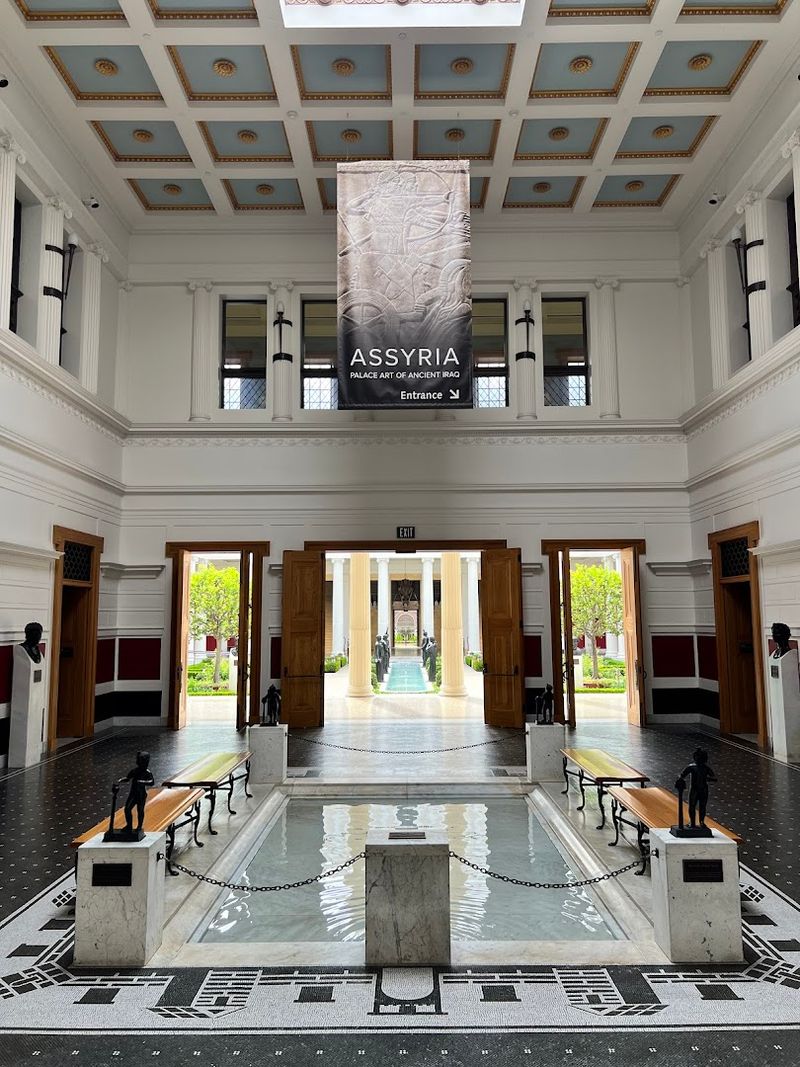
Standing in front of a three-thousand-year-old scroll that was specifically created to help a person reach the afterlife is a genuinely different kind of museum experience.
The Getty Villa has designed the exhibition to give visitors real context for what they are looking at, moving beyond simple labels to explain the beliefs and rituals that shaped each object.
That contextual layer transforms the manuscripts from artifacts into windows into an entire worldview.
Ancient Egyptians had a richly developed understanding of the cosmos, the gods, and the nature of existence after death.
The exhibition explores how these ideas were woven into everyday funerary practice, showing that the Book of the Dead was not reserved for royalty but was used by a broad range of people across Egyptian society.
Spells were sometimes written on small amulets or tucked into coffins rather than full scrolls, depending on circumstances.
The illustrated vignettes that accompany the spells are particularly striking because they function almost like a visual guide to the afterlife journey.
Scenes of gods weighing souls, of the deceased making declarations of innocence, and of protective deities escorting the dead give the exhibition a narrative quality that keeps visitors engaged as they move through the gallery at their own pace.
Special Tours Talks And Events Visitors Can Attend
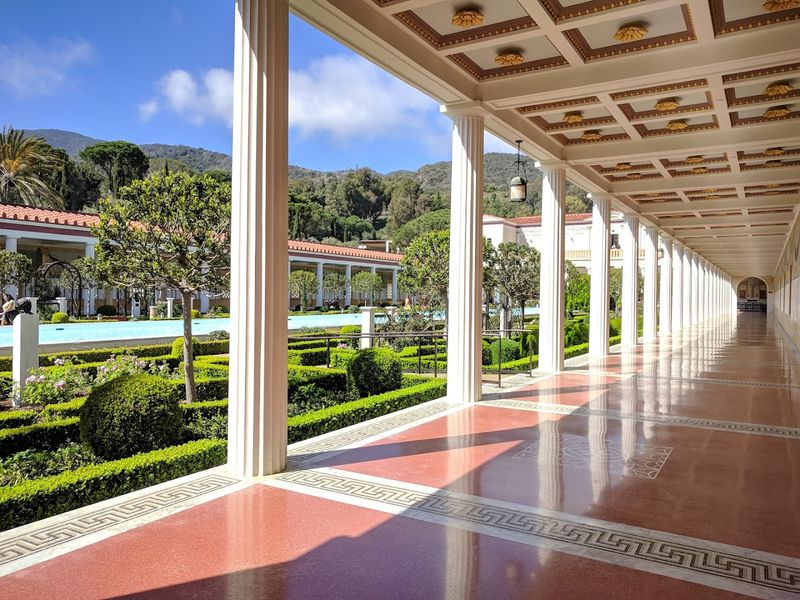
The Getty Villa is not just offering the exhibition on its own but has built a program of related talks, tours, and events designed to deepen the experience for interested visitors.
Exhibition tours are available to help visitors understand the historical and cultural context of the manuscripts on display, and these guided experiences can make a significant difference in how much someone takes away from the visit.
Docent-led tours at the Getty Villa are well regarded for their depth and accessibility, and the tours connected to this specific exhibition are designed to address the nuances of ancient Egyptian funerary belief in a way that is engaging for general audiences.
Checking the Getty Villa events calendar before visiting is a practical step because availability and scheduling can vary throughout the run of the exhibition.
Special talks may also be offered periodically, featuring scholars or curators who can speak to specific aspects of the collection or the conservation process.
These kinds of programming additions are part of what makes a visit to the Getty Villa feel like more than a passive walk through a gallery.
Visitors who take advantage of the available programming tend to leave with a much richer understanding of what they have seen and why it matters.
What To Know Before Visiting The Getty Villa
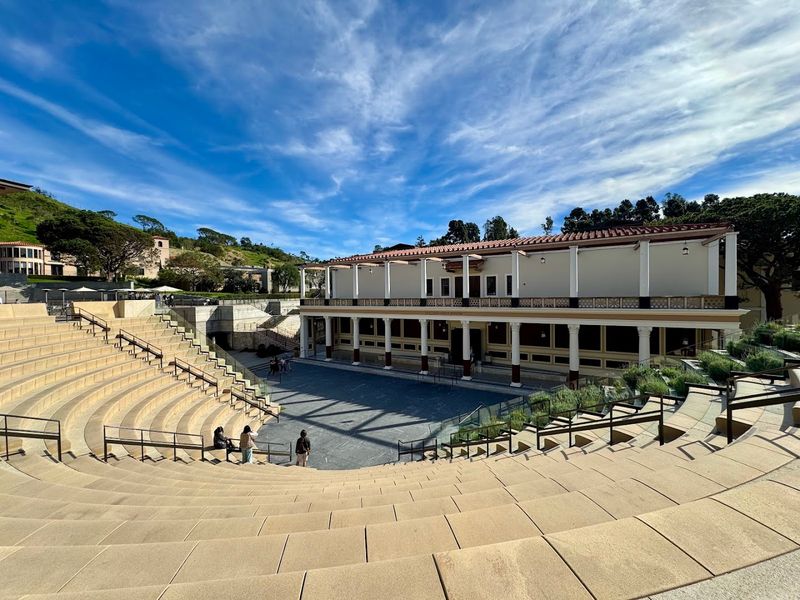
A few practical details can make the difference between a smooth visit and a frustrating one at the Getty Villa.
Admission to the museum and the exhibition is free, but a timed-entry reservation is required and must be made in advance through the Getty Villa website.
Walking up without a reservation is not guaranteed to work, especially on weekends or during peak periods in the spring and summer months.
Parking is available on site at a cost of around $25, and the parking structure is generally described as spacious and easy to navigate.
The museum is located along Pacific Coast Highway, and traffic on that stretch of road can be unpredictable depending on the time of day and season, so building in extra travel time is a sensible approach.
Public transportation options to the site are limited, making a car the most practical choice for most visitors.
The museum is open Wednesday through Monday from 10 AM to 5 PM and remains closed on Tuesdays.
Restrooms are available in multiple locations throughout the property, and there is an on-site cafe with seating that offers a comfortable place to rest between galleries.
Elevators, ramps, and stairs are all available, making the space reasonably accessible for visitors with different mobility needs.
Why This Exhibition Is One Of California’s Most Unique Cultural Experiences
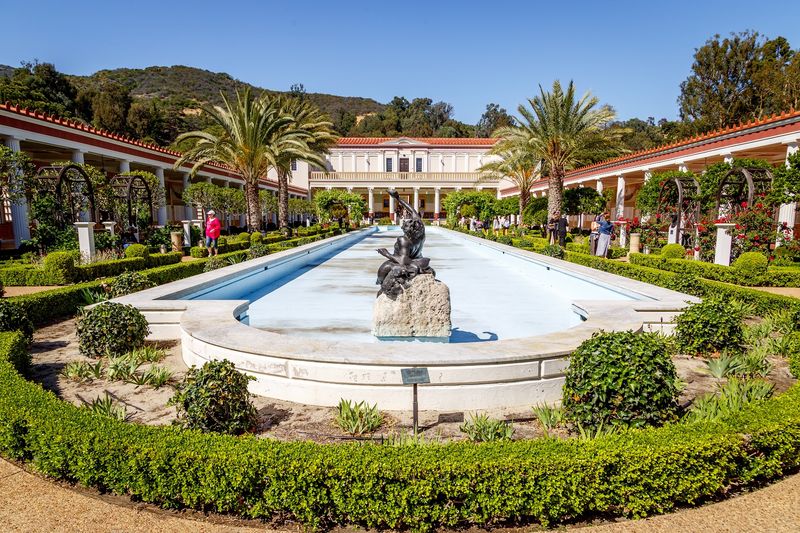
Very few places in California combine the setting of the Pacific coast with the depth of an ancient civilization’s spiritual beliefs, but the Getty Villa manages both at once.
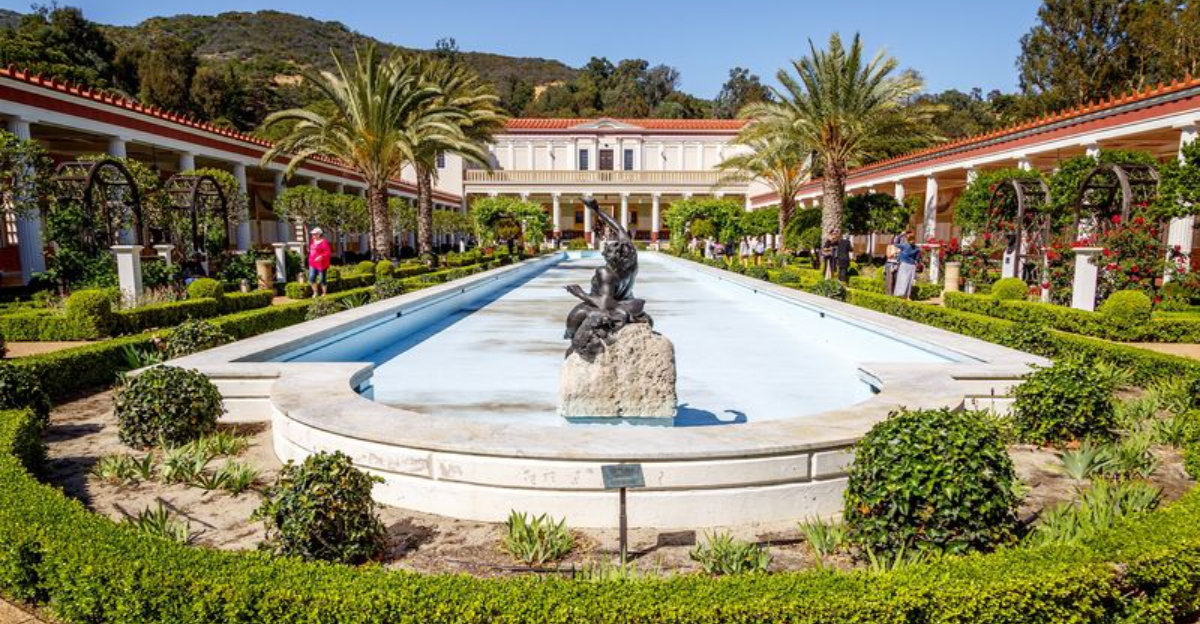
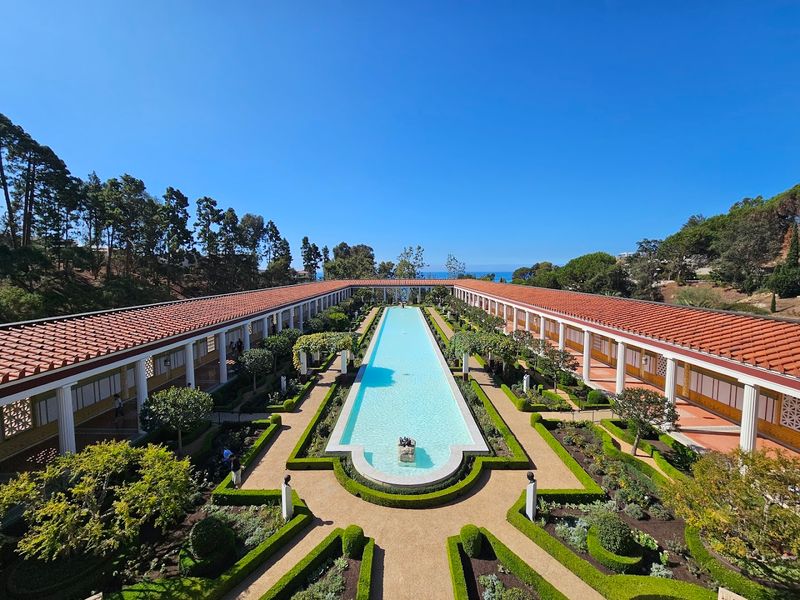
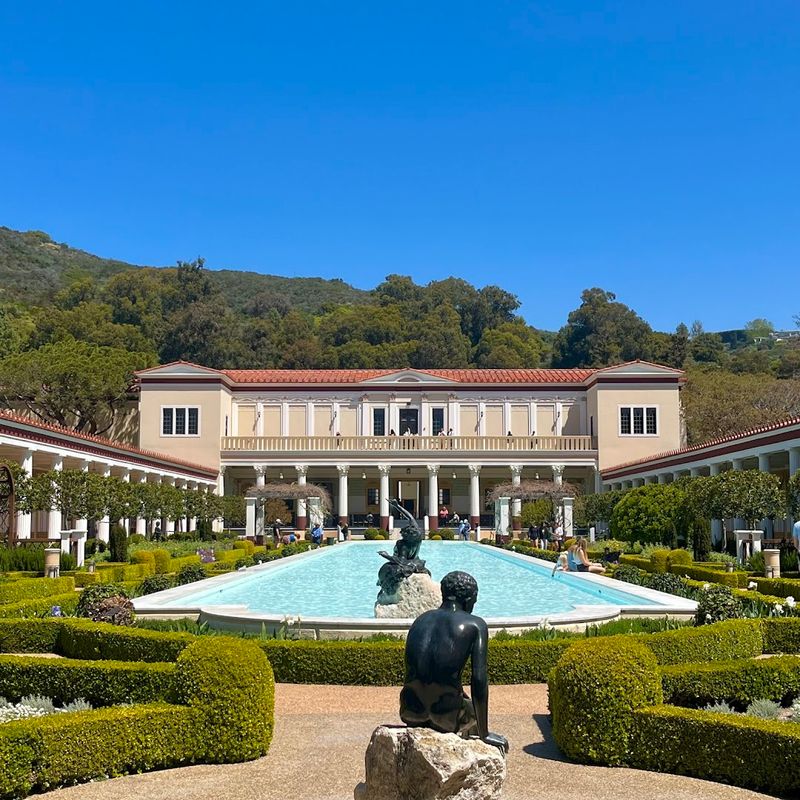
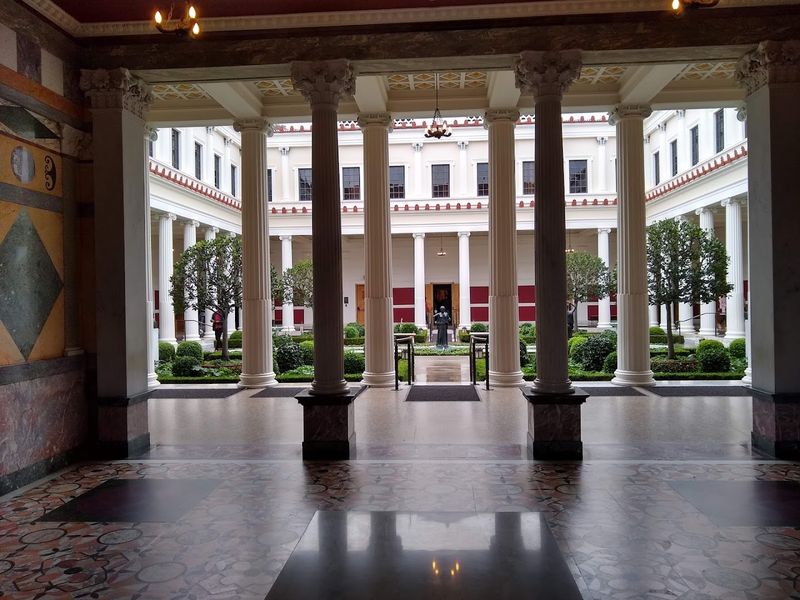
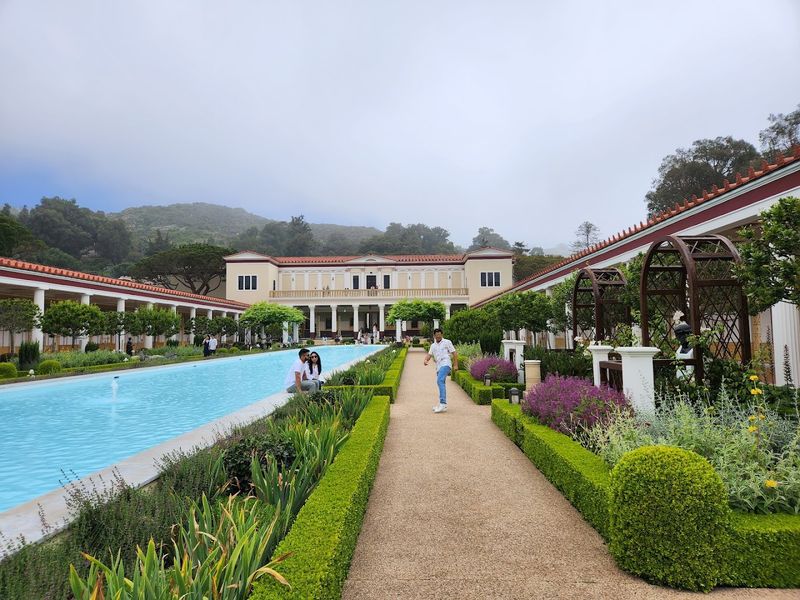
The museum itself is modeled after a first-century Roman villa, and the experience of walking through its gardens and courtyards before stepping into a gallery filled with three-thousand-year-old Egyptian manuscripts is genuinely unlike anything else available in the state.
The exhibition adds a rare layer of cultural breadth to a museum already celebrated for its Greek and Roman collections.
Ancient Egypt and the Mediterranean world were deeply interconnected, and seeing Egyptian funerary texts displayed within a Roman-inspired architectural setting creates an unexpected but fitting dialogue between two ancient cultures.
That kind of cross-cultural resonance is difficult to manufacture and even harder to find in a single afternoon outing.
For families, students, history enthusiasts, or anyone simply looking for a meaningful way to spend a day near Los Angeles, the combination of free admission, stunning grounds, ocean views, and world-class ancient manuscripts is hard to match.
The exhibition runs through November 30, 2026, which leaves plenty of time to plan a visit that feels unhurried and genuinely rewarding rather than rushed through in a single hour.