This Quiet Georgia Island Has Wild Horses And Miles Of Untouched Coastline
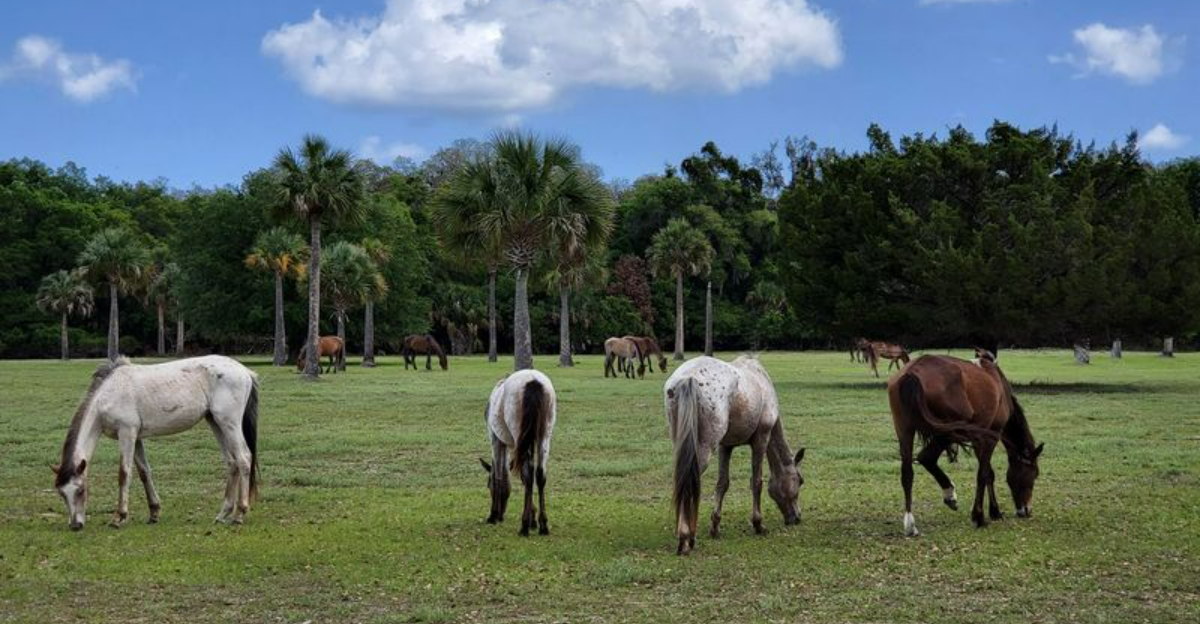
Some places don’t just surprise you, they completely reset your expectations of what travel in a state can feel like. When I first heard about a quiet barrier island off the Georgia coast, I figured it would be just another scenic stop.
I was wrong. What I found felt unreal in the best way, with wild horses roaming freely through sunlit ruins, untouched beaches that seem to go on forever, and a rare kind of silence you almost forget exists.
It is the kind of place that makes you pause and think, how is this still hidden in a state like Georgia? And once you see it, you cannot help but wonder why more people are not talking about it.
The Wild Horses That Roam Freely
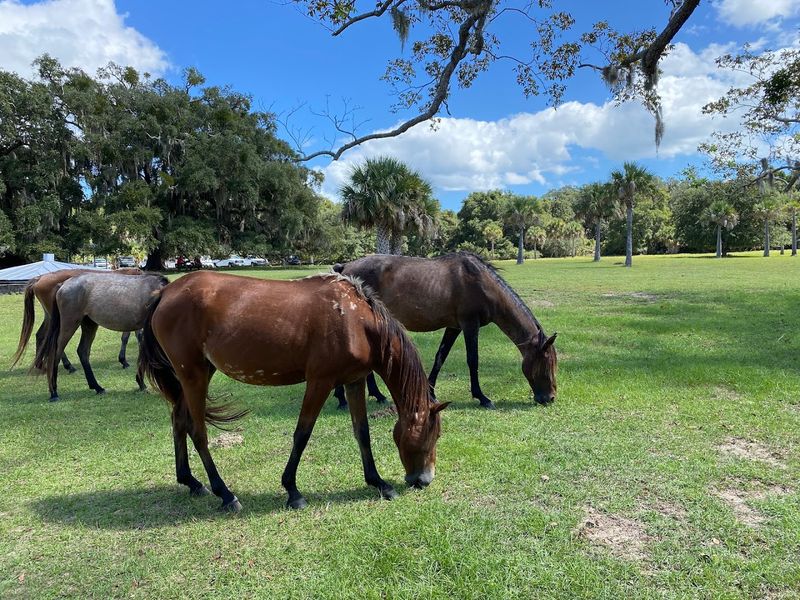
Nobody warns you about the moment it actually happens. One second you are walking past old ruins.
The next, a horse strolls by like it owns the place. You stop.
You stare. It does not even look at you.
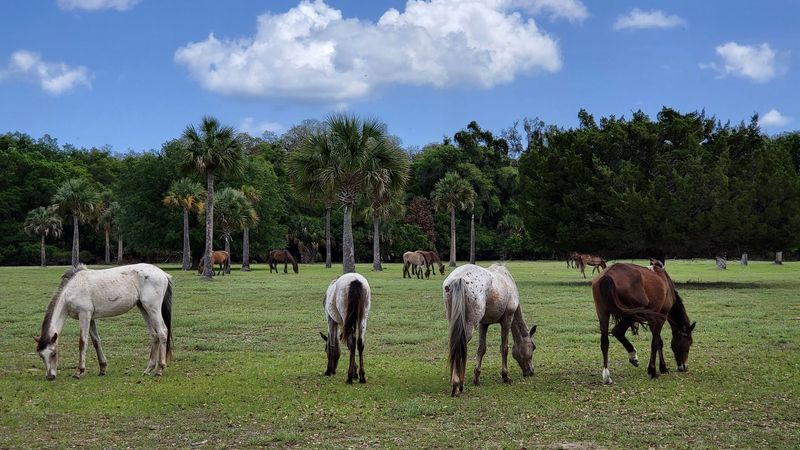
Cumberland Island is home to a well-known population of feral horses, believed to descend from horses brought to the island in the late 1800s and early 1900s. Over generations, they adapted fully to island life and now roam wherever they please.
Watching them graze near the Dungeness Ruins feels almost surreal. These are not tame animals.
They are wild, confident, and completely unbothered by tourists with cameras. The National Park Service asks visitors to stay at least 50 feet away and never feed them, which is a rule worth respecting.
Spotting one near the beach is a completely different experience from seeing horses at a farm or a show. There is something quietly powerful about an animal living entirely on its own terms.
Plan to walk the trails slowly, keep your eyes open, and bring patience. The horses show up when they want to, not when you want them to.
The Dungeness Ruins And Carnegie History
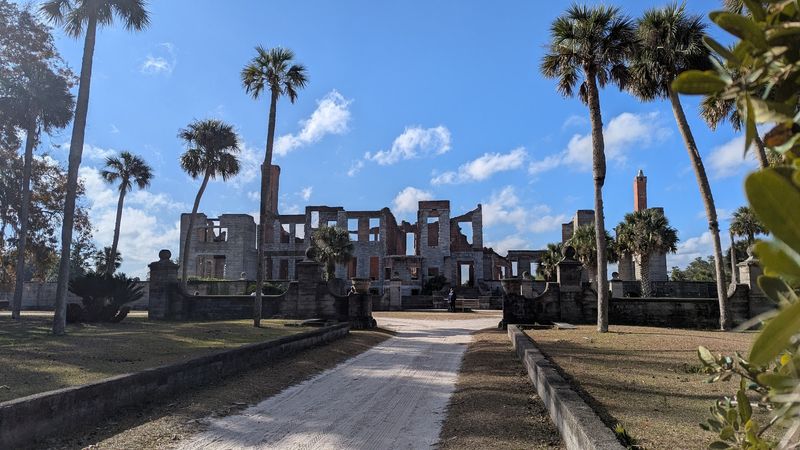
It does not feel real at first. You walk up to a massive stone mansion with no roof, and trees are growing straight through its windows.
For a second, it looks like a movie set, but this is what is actually left behind.
The Dungeness estate was built in 1884 by Thomas Carnegie and his wife Lucy. After fire destroyed it in 1959, the shell of the building was left standing, and honestly, it might be more beautiful this way.
Lucy Carnegie later built Plum Orchard mansion in 1898, located further north along Plum Orchard Dr on the island, for her son George and his wife Margaret.
A lot of the original furniture is still inside Plum Orchard, which makes the guided tour feel like stepping back into a frozen moment in time.
The Carnegie family shaped this island in ways that are still visible today. Their estates, their landscaping choices, and even the horses they brought over all left a permanent mark.
Walking through the ruins, you get a real sense of how grand and ambitious this place once was. It is history you can actually stand inside, and that makes it stick with you long after you leave the island.
How To Get There From St. Marys
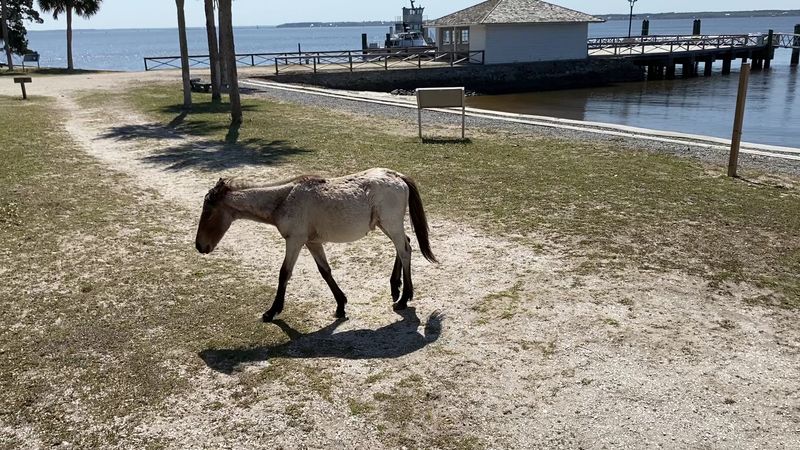
There is no easy way to get here. No bridge, no quick drive, no shortcuts.
That is exactly why it still feels untouched.
To reach island, visitors board a ferry from St. Marys, Georgia, and the ride takes about 45 minutes each way. The ferry typically runs two departures per day, with return times depending on the season.
Round trip ferry tickets cost around $44, plus a $15 per person park entry fee. Booking ahead is strongly recommended, especially in spring and summer when spots fill quickly.
Daily visitor numbers are capped at around 300 people, which keeps the island quiet but also makes planning essential.
The ferry ride itself is calm and easy, with coastal views that slowly give way to a dense wall of trees as you approach the island. Arrive at the dock at least 60 minutes early.
The 9 a.m. departure gives you the most time to explore and catch ranger-led tours. Miss it, and you miss the entire experience.
The 17 Miles Of Undeveloped Beach
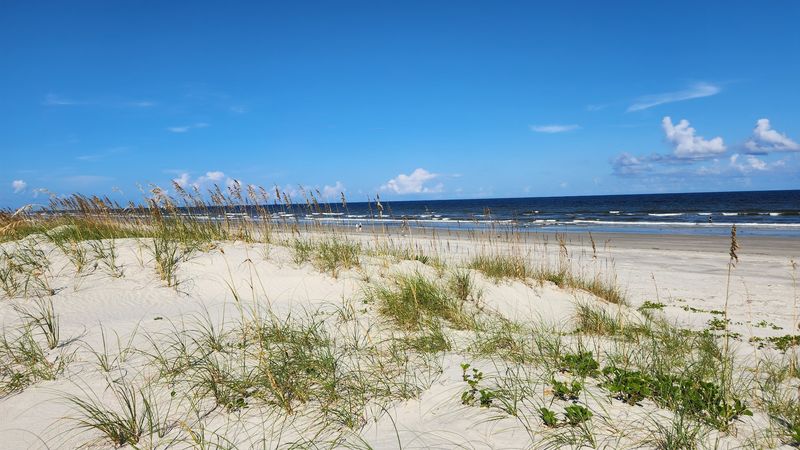
Miles of beach with almost no one on them sounds like something from a fantasy. On island, it is just a Tuesday.
The island stretches 17.5 miles long and features roughly 17 miles of undeveloped Atlantic coastline. No hotels, no beach bars, no umbrella rentals.
Just sand, waves, and sky.
One reviewer described walking the beach and seeing almost no one along the coastline for miles. That kind of solitude is genuinely rare on the East Coast.
The sand is beautiful, though visitors should note that the water can appear brown due to natural tannins from the inland marshes, so it is popular for long walks, though swimming conditions can vary for most people.
The Southend Loop Walk, about 4.3 miles total, takes you through forest, past ruins, along a marsh boardwalk, and eventually onto about 1.5 miles of beach. It is a great way to experience several ecosystems in a single hike.
Wear sturdy shoes because the sand is soft and can be tiring underfoot, especially on a warm Georgia afternoon when the ground heats up fast.
Wildlife Beyond The Horses
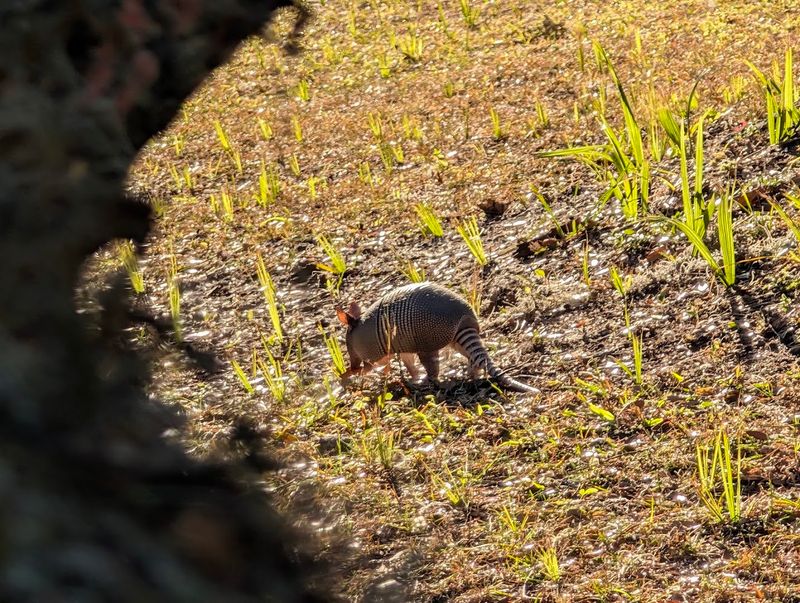
The horses might steal the spotlight at first. But they are only part of what is happening here.
Cumberland Island feels alive in every direction.
White-tailed deer step out onto the trails without warning. Armadillos move slowly through the brush.
Raccoons wander around like they have nothing to worry about, while wild turkeys hang near the ruins as if they are in charge. The island is also home to more than 300 bird species, making it a serious spot for birdwatching.
Along the shoreline, visitors have even spotted manatees and sea turtles, the kind of moment that makes you stop and just watch.
The key is simple. Slow down.
Most people rush through, but those who pause near the marsh boardwalk or sit quietly at the forest edge see much more. Dogs are not allowed on the ferry and are restricted on the island, with limited access if arriving by private boat.
That small rule changes everything.
Camping Under The Stars On The Island
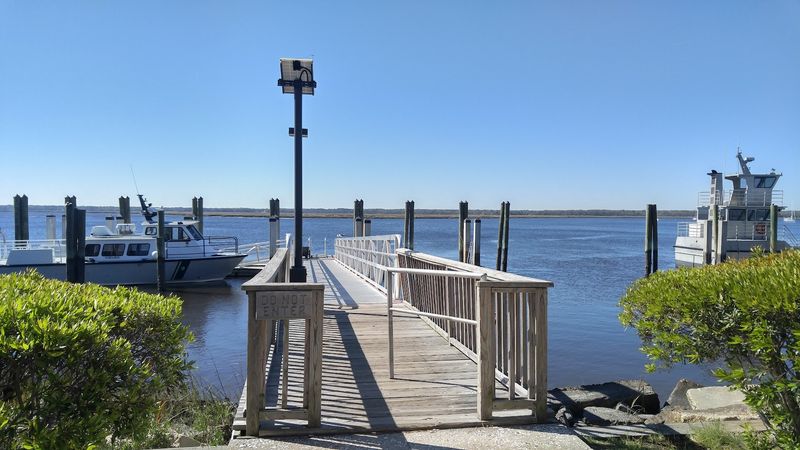
Staying overnight changes everything. When the last ferry pulls away, the island goes quiet in a way that feels almost unreal.
For a few hours, it feels like the place belongs only to the people who chose to stay.
Spending a night on this place is a completely different experience from a day trip. Reviewers who stayed two or three nights often describe it as one of the most peaceful experiences they have had, especially in quieter months like February and March.
There are no commercial facilities here, which means no restaurants, no camp stores, and no vending machines. You bring everything with you, from food and water to gear and bug spray, and you will want plenty of it.
Sea Camp is the easiest site to access near the ferry dock, while campsites further north become more remote and far less developed.
One camper who stayed in early December was told by a ranger they would be the only person on the island that night. Think about that for a second.
Camping permits need to be booked well in advance, especially for spring and fall. Bringing a bicycle also helps a lot, since distances are long and exploring the northern end on foot can take most of the day.
A Different Side Of Island History
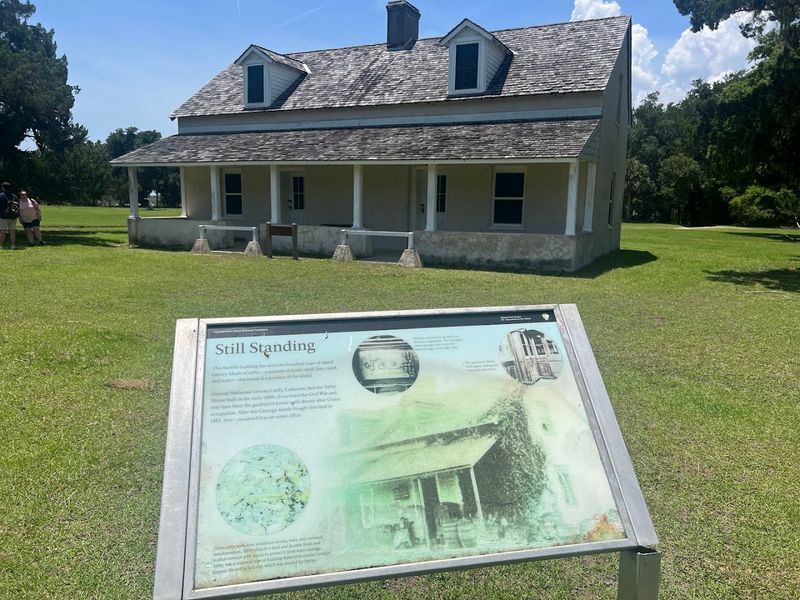
Not many national seashores still have a church like this standing on their grounds. It feels unexpected.
The First African Baptist Church was established in the late 1800s, and while the building itself is small and simple, its history carries real weight.
The church gained wider attention in 1996 when John F. Kennedy Jr. and Carolyn Bessette chose it for their wedding.
It was not about luxury. It was about privacy and isolation.
That choice says a lot about this place.
The structure is modest, but the setting changes everything. Surrounded by towering live oaks and soft strands of Spanish moss, it feels quiet in a way that stays with you.
Guided van tours include a stop here. Getting there on your own takes more effort, especially on foot or by bike, but it is worth it.
Pairing a visit here with Plum Orchard nearby gives you a clearer picture of how different life on the island once looked. Two buildings.
Two completely different stories. Together, they reveal an important part of the island’s history.
What To Pack And How To Prepare
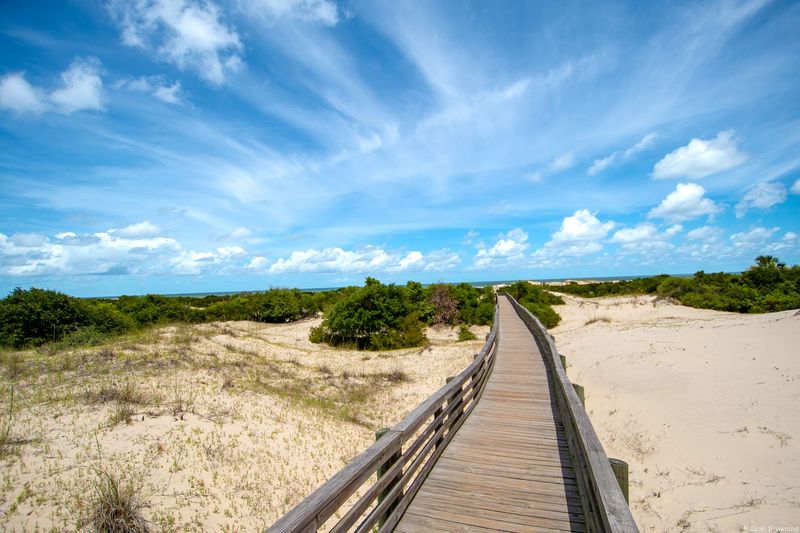
Coming to island unprepared can ruin what should be an incredible experience, especially since there are no food vendors, no concession stands, and no easy way to grab what you forgot. There is nothing to fall back on.
The ferry sells basic snacks and drinks, and there are water cooler stations near the ruins, but no cups are provided. Bring your own bottle.
Pack more food than you think you need.
The heat and humidity hit hard, and the mosquitoes can be relentless, especially along shaded trails during spring and fall. Bug spray is essential.
Sunscreen too. Comfortable, closed-toe shoes matter more than most people expect because the sandy trails wear you down quickly and the ground gets extremely hot in summer.
If you plan to reach the beach through the dunes, the boardwalk route is far easier and saves your energy compared to walking directly through deep sand. Take the easier path.
Bring a National Park passport book if you collect stamps, since several are available at the Sea Camp Dock Ranger Station.
Accessibility is also considered, with beach wheelchairs available at Sea Camp Dock and all-terrain powered wheelchairs offered through All Terrain Georgia with a short online training completed in advance.
Best Time To Visit And Final Tips
February and March are the sweet spot for visiting island. The weather is mild, the bugs are manageable, and the crowds are thin.
Spring and fall bring more visitors and significantly more mosquitoes. Summer is hot, humid, and intense, though the beach is stunning if you can handle the heat.
December and January offer near-total solitude, which is its own kind of reward.
Book your ferry tickets and camping permits as early as possible. The 300-person daily cap fills up quickly during peak months.
Arriving at the St. Marys dock at least 60 minutes before departure is smart since late arrivals risk losing their spot.
Cumberland Island National Seashore, located along Plum Orchard Dr, St Marys, GA 31558. The island rewards curiosity, patience, and a willingness to slow down.
It is not a theme park experience. It is something rarer: a place that feels genuinely untouched, where wild horses still set the pace and the beach has more birds than people.