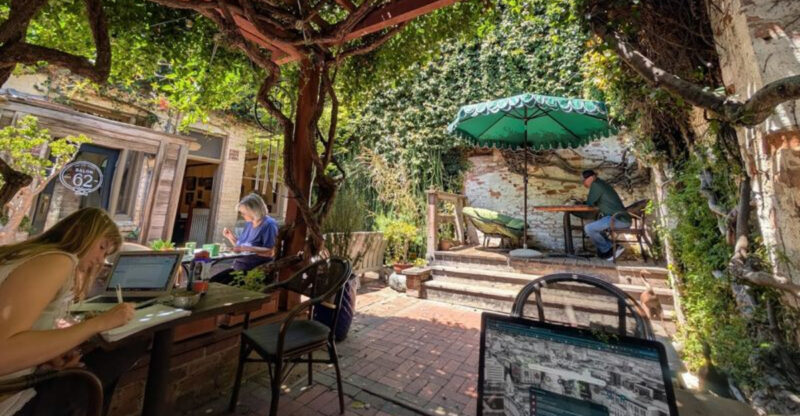
This California Museum Houses The West Coast’s Largest Collection Of Egyptian Artifacts
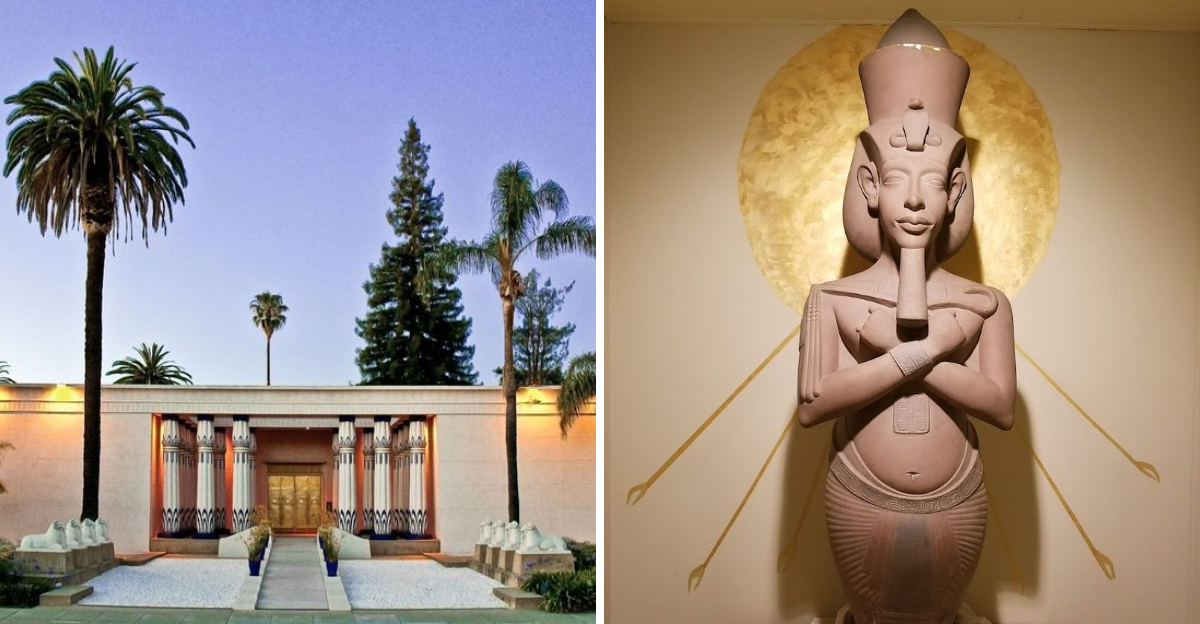
The entrance already feels different from a typical museum visit.
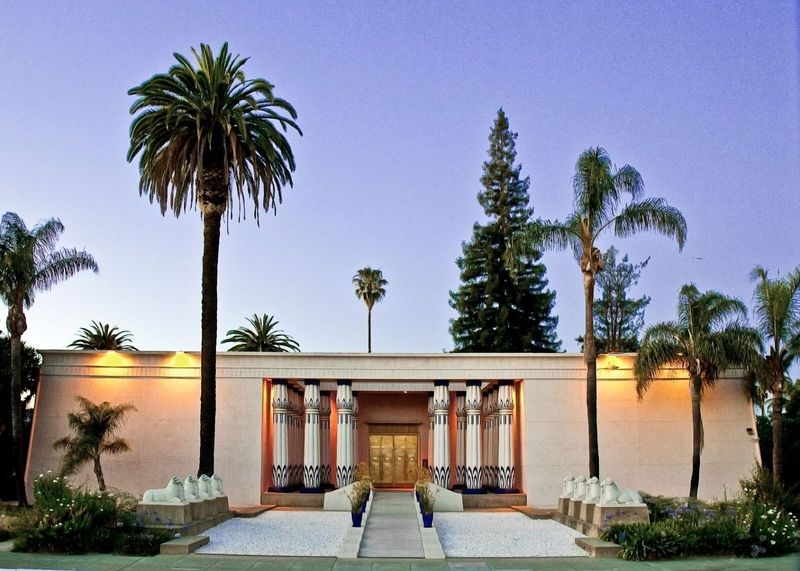
The architecture stands out first, with shapes and details that hint at something much older than the surrounding streets.
Walking further in, the atmosphere shifts in a noticeable way. The space feels quieter, more focused, almost like it is asking you to slow down and pay attention.
Ancient history does not always feel this close. Artifacts are not just behind glass.
They carry weight, texture, and a sense of time that is hard to ignore once you start looking closely. Every room adds another layer to the experience.
There is a reason places like this stand out in California. The scale alone changes expectations.
A visit here does not feel rushed. It builds gradually, drawing you deeper with each exhibit.
Over 4,000 Authentic Ancient Egyptian Artifacts
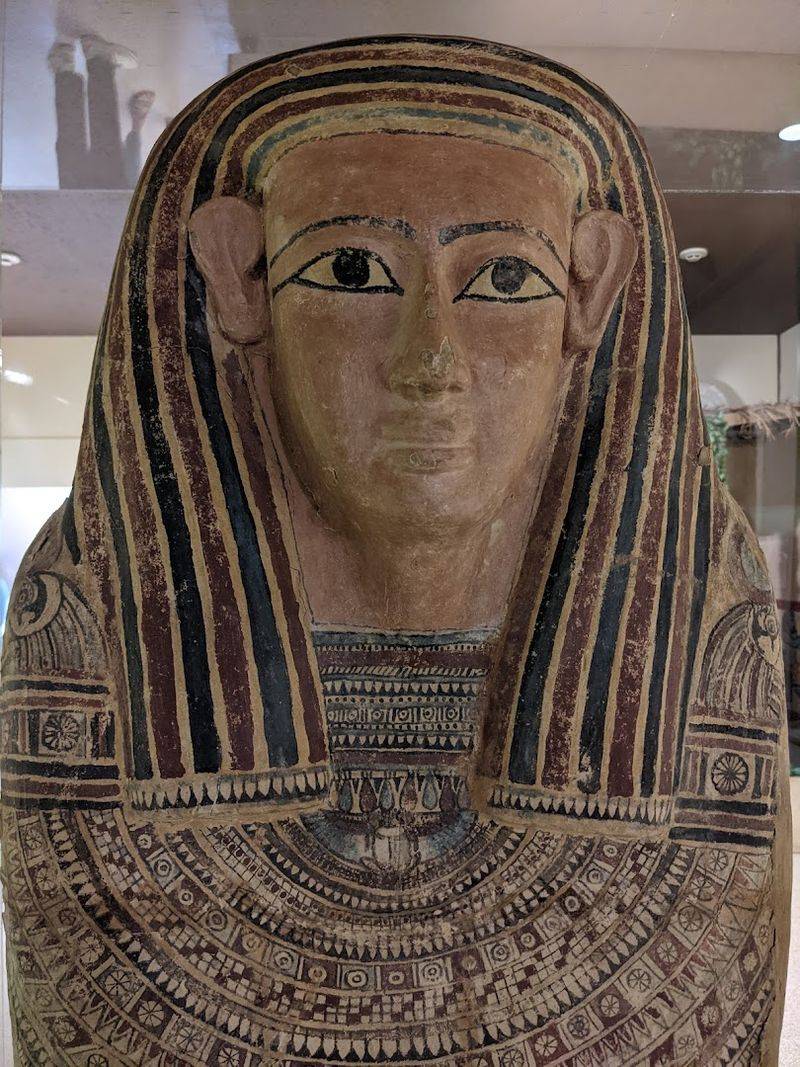
Few museums west of the Mississippi can claim a collection of this scale and authenticity.
The Rosicrucian Egyptian Museum in San Jose holds more than 4,000 genuine ancient Egyptian artifacts gathered over nearly a century of dedicated collecting.
The sheer variety on display tends to catch visitors off guard in the best possible way.
Walking through the galleries, visitors encounter everything from intricately carved statues and ornate sarcophagi to small everyday objects like bronze tools and beaded jewelry.
Each piece carries its own story, and the museum does a solid job of providing context through clear and readable labels.
Nothing feels thrown together or rushed in the presentation.
What makes the collection especially valuable is that many pieces are authentic originals rather than reproductions.
Holding that kind of historical weight in a single building in California is genuinely remarkable.
The museum is located at 1660 Park Ave, San Jose, CA 95191, and is open Friday through Sunday for public visits.
For anyone with even a passing curiosity about ancient civilizations, spending time among these artifacts tends to leave a lasting impression that no textbook can quite replicate.
Founded In 1928 By The Ancient Mystical Order Rosae Crucis
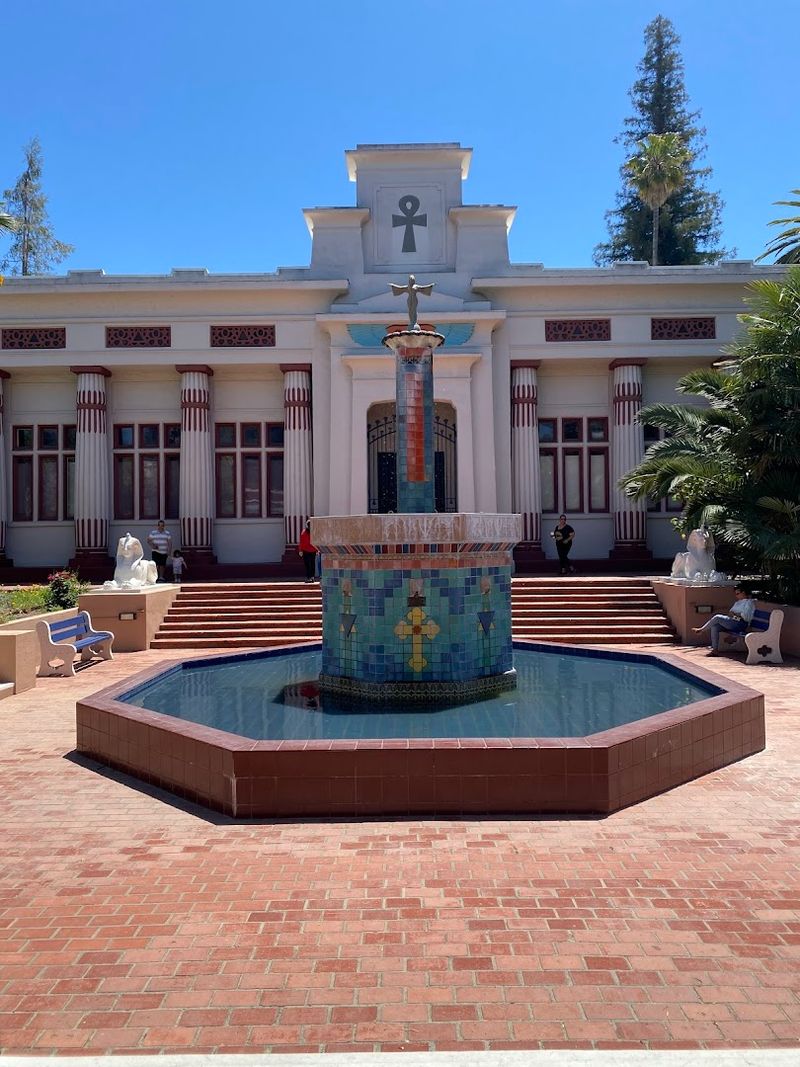
Long before most people had easy access to Egyptian history, one organization decided to bring it directly to the public.
The Ancient Mystical Order Rosae Crucis, widely known as AMORC, established the Rosicrucian Egyptian Museum in 1928 with a mission rooted in education and a deep appreciation for ancient wisdom.
The seeds of the collection were planted even earlier when AMORC’s founder acquired a small Sekhmet statue back in 1915.
That single statue became the starting point for what would eventually grow into a world-class collection spanning thousands of years of Egyptian history.
AMORC’s philosophical connection to ancient Egypt made the organization a natural steward of these kinds of artifacts.
The founding story adds a layer of meaning to every visit because the museum exists not just as a storage space for old objects but as a living expression of a long-standing belief in the value of ancient knowledge.
Understanding that origin helps visitors appreciate why the collection feels so curated and intentional.
There is genuine passion behind how everything is organized and displayed.
Visiting feels less like walking through a warehouse of old things and more like stepping into a space where history is genuinely respected and honored.
Egyptian Revival Architecture Inspired By The Temple Of Amon At Karnak
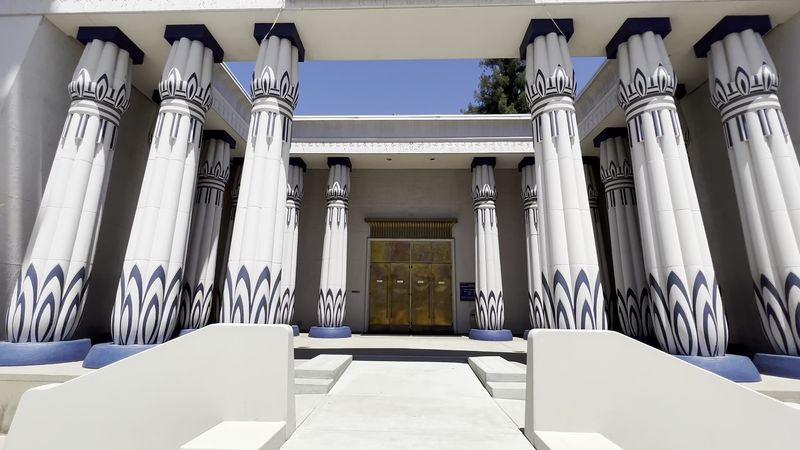
Even before stepping inside, visitors notice something unusual about the building itself.
The main museum structure was constructed in 1966 and draws its design directly from the Temple of Amon at Karnak in Egypt.
Massive columns, hieroglyphic-inspired detailing, and a commanding facade give the building a presence that feels genuinely transportive rather than simply decorative.
Egyptian Revival architecture was a popular style in the early twentieth century but rarely executed at this level of commitment and scale.
The building does not just borrow aesthetic touches from ancient Egypt but attempts to honor the proportions and symbolic language of the original temple design.
Walking up to the entrance already sets a tone of reverence and curiosity that carries through the entire visit.
The architecture itself has become one of the more photographed landmarks in the San Jose area.
Visitors often spend time outside just taking in the exterior before heading in to see the collection.
The combination of authentic artifacts inside and architecturally intentional design outside creates a cohesive experience that feels rare among American museums.
It is the kind of building that makes visitors want to slow down and pay attention before they have even read a single exhibit label.
A Planetarium That Explores Ancient Egyptian Astronomy
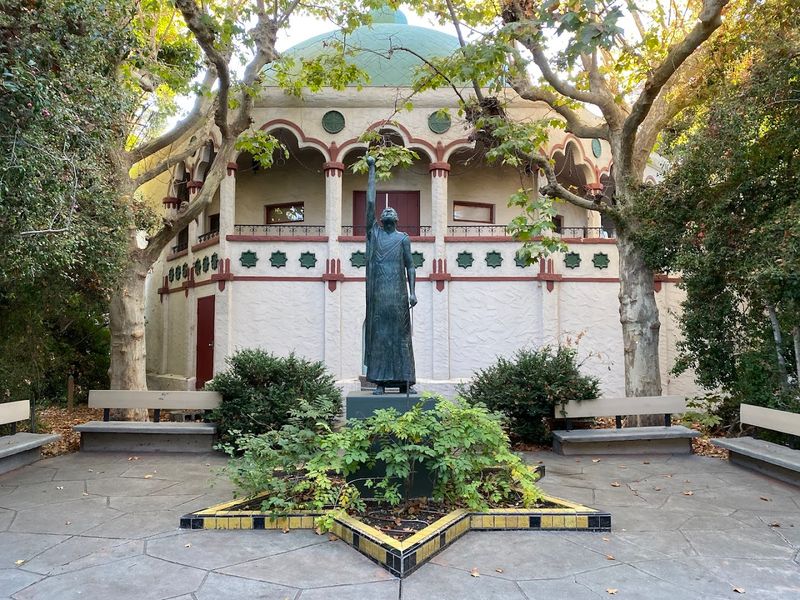
Ancient Egyptians were skilled astronomers who used the night sky to guide everything from agriculture to religious ceremony.
Adjacent to the museum building sits a planetarium that connects that ancient knowledge to the stars visible today.
Shows offered there explore how Egyptian civilization understood celestial patterns and wove them into daily life and spiritual practice.
It is worth noting that the planetarium has been undergoing renovations and may not be fully operational during all visit windows.
Checking the museum website before planning a trip is a smart move to confirm current availability.
When it is running, the planetarium adds a dimension to the visit that goes beyond what static displays can offer.
The combination of artifact galleries and an astronomical show creates a surprisingly full educational experience within a single campus.
Astronomy and Egyptology do not often share the same space, which makes this feature stand out.
For younger visitors especially, seeing how ancient people mapped the stars can spark a curiosity about science and history that lasts well beyond the museum visit itself.
The planetarium rounds out the Rosicrucian experience in a way that feels thoughtful and genuinely unique among museums of this size.
A Full-Scale Replica Of An Ancient Egyptian Rock-Cut Tomb
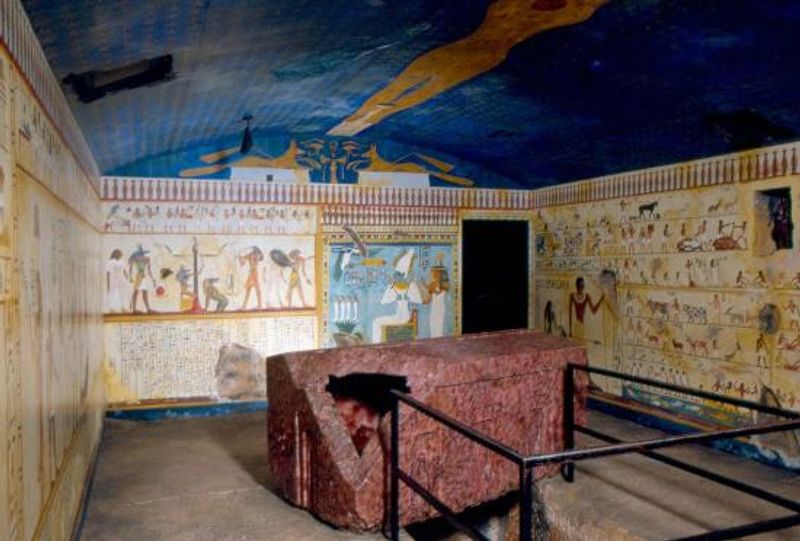
Few museum experiences in California compare to walking through a full-scale replica of an ancient Egyptian rock-cut tomb.
The replica at the Rosicrucian Egyptian Museum is one of the most talked-about features on the campus and for good reason.
Stepping inside feels genuinely immersive in a way that photographs simply cannot capture.
Tomb tours are guided and operate on a timed schedule with limited group sizes.
Visitors are encouraged to pick up their tomb tour tickets at the front desk when they first check in to avoid missing a time slot.
The tour itself walks guests through burial chambers decorated with hieroglyphs and symbolic imagery that reflect ancient Egyptian beliefs about death and the afterlife.
The experience tends to leave a strong impression on visitors of all ages.
There is something visceral about moving through a space designed to replicate how ancient Egyptians prepared for eternity.
The low ceilings and carved walls create an atmosphere that no exhibit case or video screen can fully replicate.
For many visitors, the tomb replica alone makes the trip worthwhile.
It is the kind of hands-on encounter with history that tends to stay with people long after the rest of the day has faded from memory.
Over 100,000 Visitors Annually Including 26,000 School Children
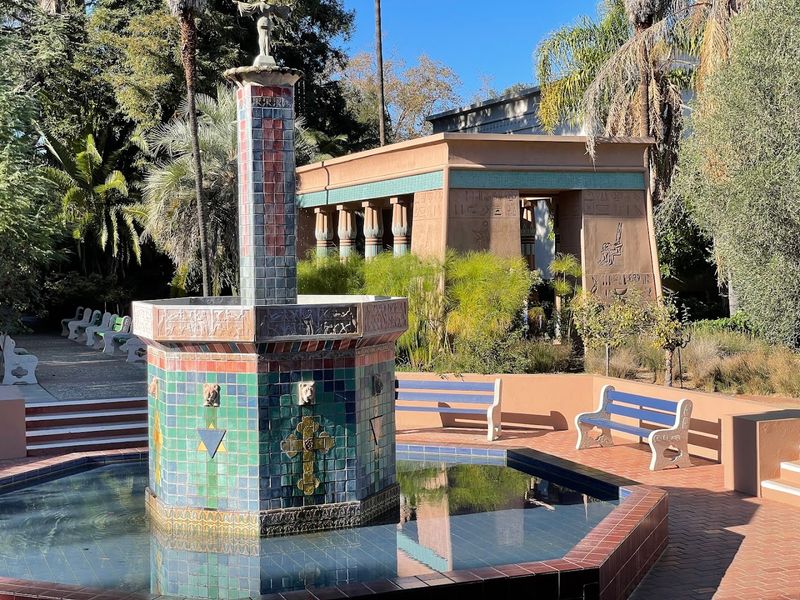
Numbers do not always tell the full story but in this case they reveal something meaningful about a museum’s reach.
The Rosicrucian Egyptian Museum welcomes more than 100,000 visitors each year and roughly 26,000 of those visitors are school-aged children on organized educational trips.
That kind of consistent engagement with young learners reflects the museum’s strong commitment to public education.
School programs are designed to align with history and social studies curricula, giving teachers a resource that brings textbook content to life in a tangible way.
For many students, a visit to the museum marks their first real encounter with ancient Egyptian artifacts outside of a screen or printed page.
That kind of firsthand experience with history can shift how a student thinks about learning in general.
Weekday visits tend to attract more school groups, which means the museum can feel livelier and more energetic on those days.
Visitors who prefer a quieter pace might find weekend mornings or later afternoon hours more relaxed.
Regardless of when a visit happens, the museum’s educational energy is palpable throughout the galleries.
There is a sense that the staff genuinely cares about helping every visitor walk away knowing something new about one of history’s most extraordinary civilizations.
A Research Library With Texts Dating Back To The Renaissance Era
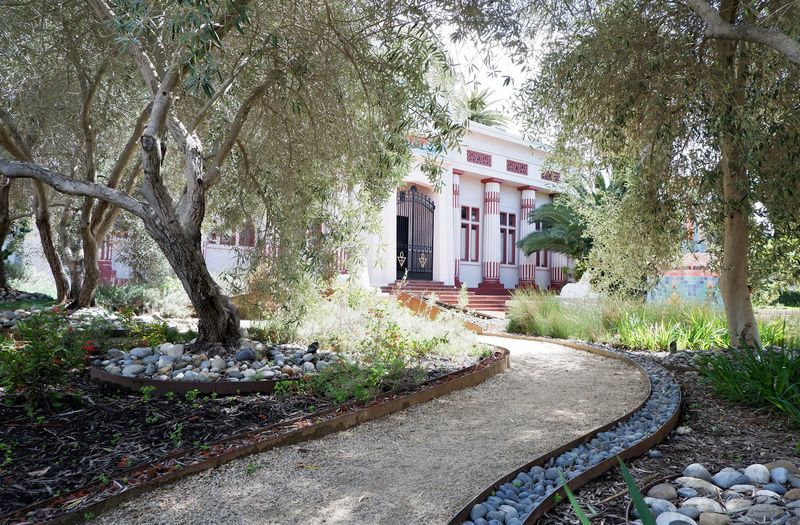
Beyond the artifact galleries, the Rosicrucian Egyptian Museum maintains a research library that holds texts reaching as far back as the Renaissance period.
That kind of archival depth is unusual for a museum of this size and speaks to the organization’s long-standing scholarly ambitions.
The library supports both academic researchers and curious members of the public who want to explore Egyptian history at a deeper level.
Having access to primary source materials and rare historical documents alongside a physical artifact collection creates a resource that serves a wide range of educational needs.
Scholars studying the history of alchemy, ancient religion, or early scientific thought can find materials here that are difficult to locate elsewhere on the West Coast.
That combination of physical artifacts and written historical records makes the museum a genuinely layered institution.
For casual visitors, knowing that a serious research library exists within the same campus adds a sense of credibility and depth to the overall experience.
The museum is not simply presenting objects for entertainment but is actively engaged in preserving and studying the historical record.
That commitment to scholarship gives the entire visit a more grounded and trustworthy feel, which is something that serious history enthusiasts tend to notice and appreciate during their time there.
The Rosicrucian Alchemy Exhibit Introduced In 2015
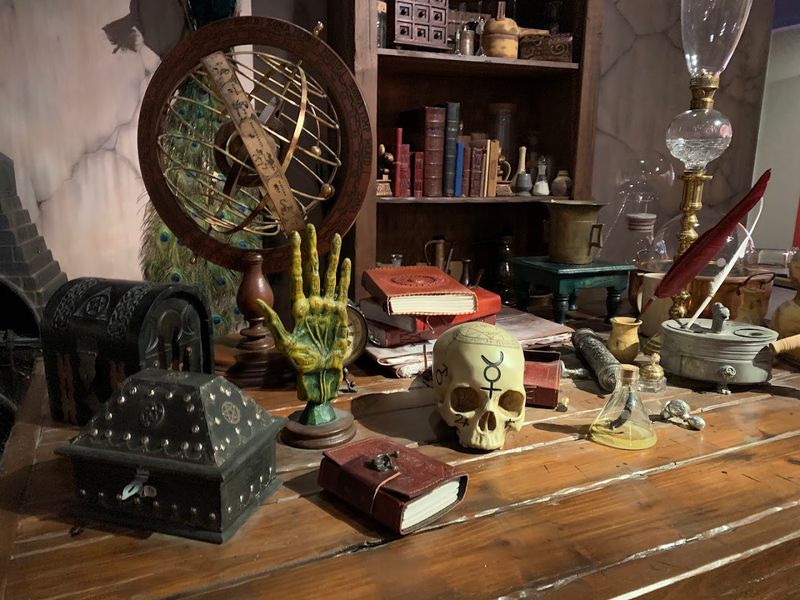
Alchemy tends to get dismissed as medieval pseudoscience but the Rosicrucian Alchemy Exhibit reframes it in a far more interesting light.
Introduced in 2015, the exhibit traces the roots of alchemical thinking back to ancient Egyptian chemistry and follows how those ideas evolved through later European traditions.
It draws a direct line between ancient practical knowledge and what eventually became modern chemistry.
The exhibit includes an AI animatronic figure named Thoth that has become something of a talking point among visitors.
Reactions to the animatronic tend to vary from delighted to unsettled, which seems to add to its memorability.
The display cases surrounding the figure contain alchemical instruments, symbolic diagrams, and explanatory text that help contextualize the broader history being presented.
What makes the alchemy exhibit stand out within the museum is how it bridges two worlds that rarely get discussed together in the same space.
Ancient Egyptian thought and Renaissance-era European science are not typically presented as part of the same intellectual tradition, but the exhibit makes a compelling case for their connection.
For visitors who enjoy history of science or philosophy, this section of the museum offers something genuinely thought-provoking that goes well beyond the standard ancient Egypt narrative most people arrive expecting.
A Peace Garden Dedicated In 2004 For Reflection And Meditation
Not every part of a museum visit has to happen indoors.
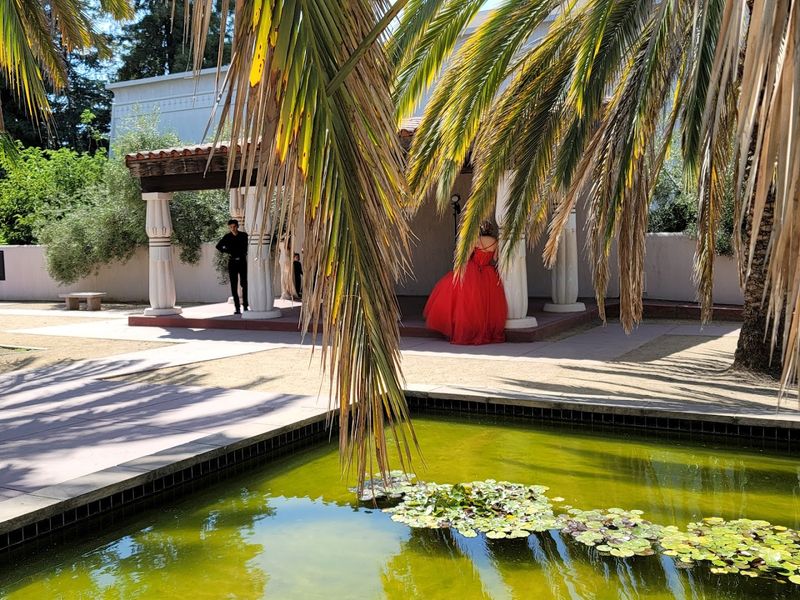
The Rosicrucian Egyptian Museum campus includes a Peace Garden that was formally dedicated in 2004 and has become a favorite feature for visitors who want a quieter moment during their trip.
The garden offers a calm contrast to the artifact-filled galleries inside and provides a space where visitors can sit, walk, and simply breathe for a few minutes.
A labyrinth path winds through part of the garden, offering a meditative walking experience that connects loosely to the museum’s broader themes of ancient wisdom and inner reflection.
The landscaping is well-maintained and the overall atmosphere tends to feel serene even on busier visit days.
Spending time outside before or after exploring the galleries can make the entire museum experience feel more balanced and less rushed.
Parking is available around the back of the campus and the garden area can be enjoyed without a paid museum ticket, making it accessible to anyone passing through the neighborhood.
Families with younger children often appreciate having an outdoor space to decompress between exhibit halls.
The Peace Garden adds a dimension to the Rosicrucian campus that reminds visitors this is not just a place for learning but also a space designed for genuine human rest and contemplation.
The Mummy Of Usermontu From The 26th Dynasty
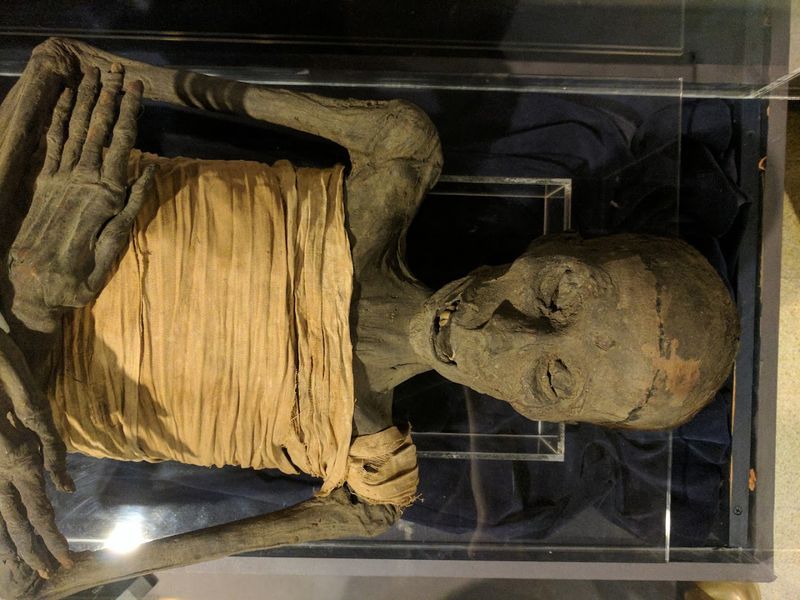
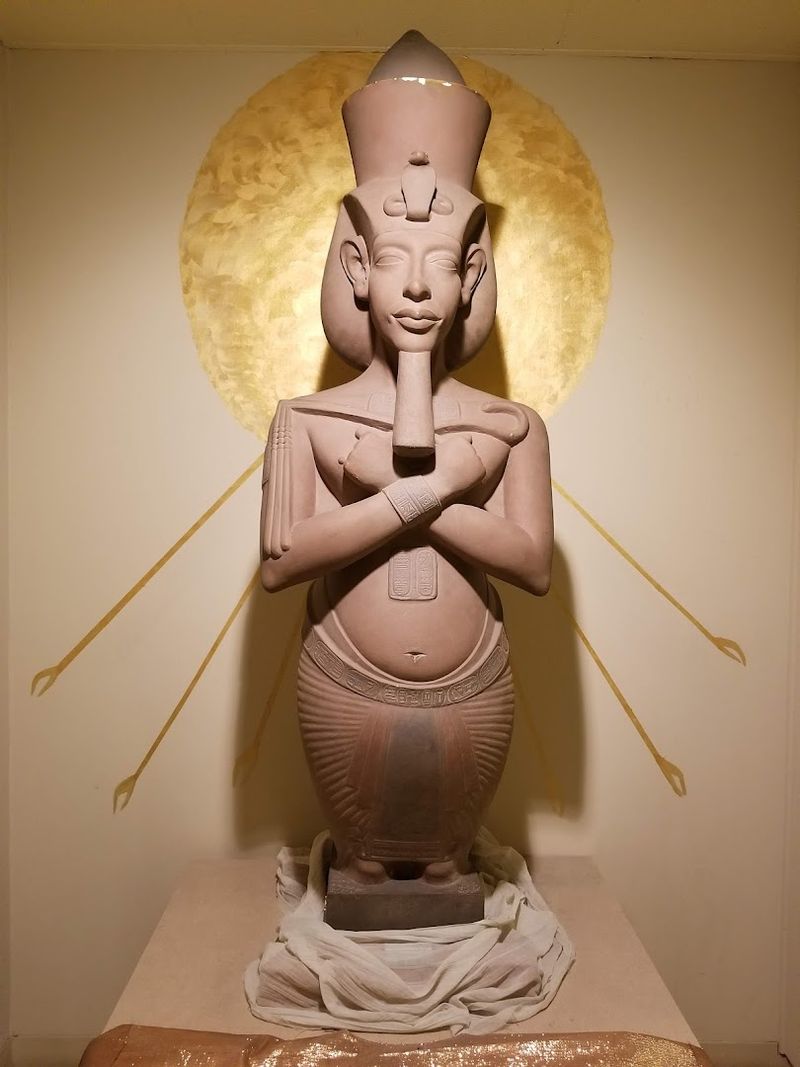
Among the most striking exhibits in the entire museum is the Mummy of Usermontu, a nobleman from ancient Egypt’s 26th Dynasty.
His preserved remains offer a direct and sobering connection to a civilization that existed more than two thousand years ago.
Standing in front of a real mummy is a different experience from reading about mummification in a book, and the museum presents Usermontu with appropriate care and context.
The 26th Dynasty, also known as the Saite Period, was a time of cultural revival in ancient Egypt when older traditions were deliberately restored and honored.
Usermontu’s mummification reflects the sophisticated funerary practices of that era, including the careful preservation of the body for use in the afterlife.
The exhibit labels explain these practices in accessible language that works well for both adult visitors and older students.
Real human remains in a museum setting always carry a certain weight, and the Rosicrucian Egyptian Museum handles that responsibility thoughtfully.
The display is educational rather than sensational and treats the subject with the dignity it deserves.
For visitors who have read about mummification but never encountered it in person, seeing Usermontu up close tends to be one of the more memorable moments of the entire museum experience.
Guided Tours, Workshops, And Lectures For Public Education
Walking through a museum at your own pace has its appeal but a guided tour adds a layer of context that self-directed exploration can miss.
The Rosicrucian Egyptian Museum offers guided tours that walk visitors through the highlights of the collection with commentary designed to deepen understanding rather than simply point out what is on display.
The tours are free with museum admission and operate on a scheduled basis throughout the day.
Beyond tours, the museum hosts workshops and lectures that cover a range of topics connected to ancient Egyptian history, culture, and the museum’s broader philosophical roots.
These programs vary by season and availability, so checking the museum’s website ahead of a visit is a practical step for anyone hoping to attend a specific event.
The programming reflects the museum’s ongoing commitment to being an active educational institution rather than a static display space.
For families visiting with children, the guided tomb tour in particular tends to be a highlight that combines storytelling, atmosphere, and historical content in a way that holds attention across different age groups.
The staff leading these tours tend to be knowledgeable and approachable, which makes the experience feel conversational rather than like a formal lecture.
That accessibility is part of what gives the museum its warm and welcoming character.
Achieved Net-Zero Carbon Status In 2018
Preserving ancient artifacts is not just about careful handling and climate-controlled display cases.
The Rosicrucian Egyptian Museum made a significant environmental commitment in 2018 when it achieved net-zero carbon status through the implementation of energy-efficient systems across the campus.
That achievement places the museum in a relatively small group of cultural institutions that have taken sustainability seriously enough to reach that benchmark.
The practical benefit of going net-zero extends beyond environmental responsibility.
Stable and efficient energy systems also help maintain the consistent temperature and humidity conditions that ancient artifacts require for long-term preservation.
In that sense, the sustainability effort serves both the planet and the collection itself, making it a genuinely practical decision as much as an ethical one.
For visitors who care about how institutions manage their environmental impact, knowing that the Rosicrucian Egyptian Museum has taken measurable steps in this direction adds another reason to feel good about supporting it with a ticket purchase.
Admission pricing tends to be modest compared to larger institutions, which combined with the museum’s sustainability record and educational mission makes it feel like a worthwhile use of both time and money.
The museum demonstrates that small and mid-sized cultural spaces can lead by example on environmental responsibility without sacrificing the quality of the visitor experience.