This California Bakery Is Known For Croissants That Rival Classic French Patisseries
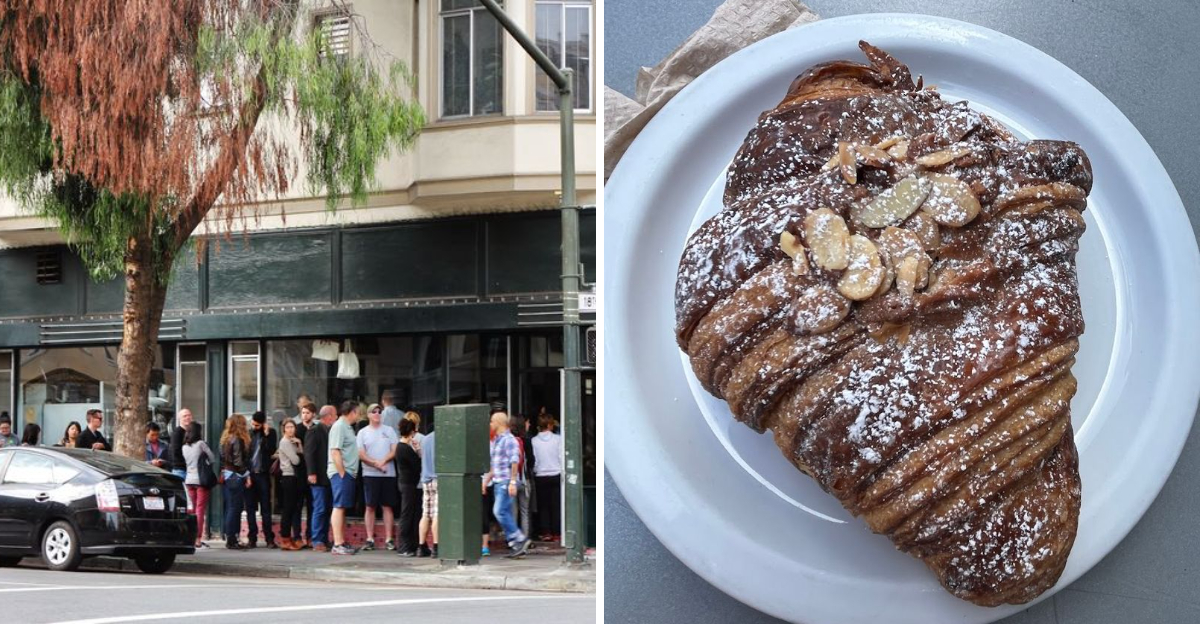
You tell yourself it’s just a quick stop for something small. Coffee. Maybe a pastry. That’s it. Then the smell hits before you even reach the door, warm butter and fresh bread pulling you in faster than expected.
The line moves slowly, but no one seems to mind, because what’s coming out of the oven makes waiting feel like part of the experience rather than a delay.
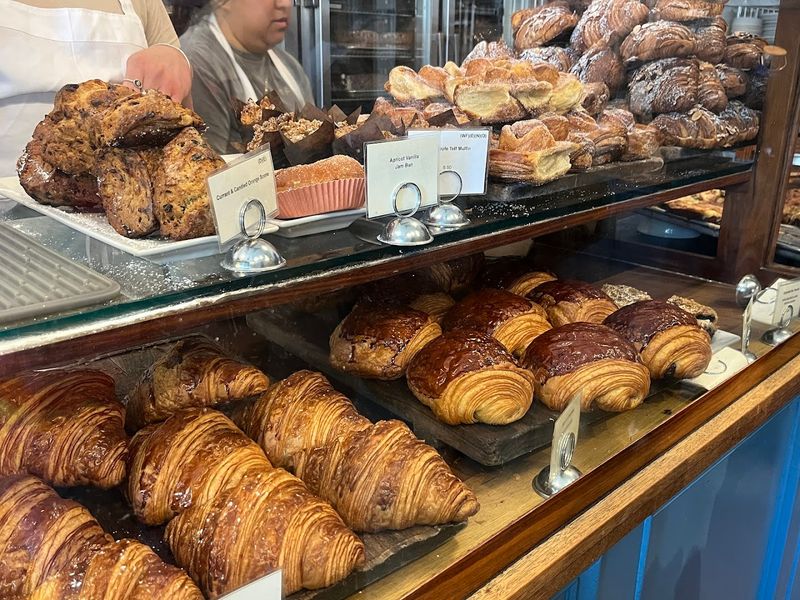
Trays slide onto the counter, croissants layered and golden, still carrying that just-baked heat that makes choosing harder than it should be.
You start simple. Then you look again. Something else gets added. Maybe one more. It happens without thinking because everything feels worth trying at least once.
Some bakeries in California make you rethink what a pastry is supposed to taste like.
That’s where it lands. The texture. The balance. The kind of care that shows up in every detail without needing to be explained. By the time you step back outside, it’s already clear this won’t be a one-time stop.
Founded By Two Culinary-Trained Bakers
Back in 2002, two people opened a small bakery in San Francisco’s Mission District that would eventually become one of the most recognized names in American artisan baking.
Both founders brought deep knowledge of French baking traditions to the project, having studied and worked in France before returning to California.
That combination of formal training and hands-on European experience shaped everything about how the bakery approaches its craft.
The decision to settle in the Mission District gave the bakery a neighborhood feel that has stayed consistent over the years.
Rather than chasing trends, the focus from the beginning was on doing a small number of things exceptionally well.
Croissants, morning buns, and country loaves became the foundation of a menu built on patience and precision.
Tartine Bakery, located at 600 Guerrero St in San Francisco, CA 94110, opened with a clear vision that has remained largely unchanged.
The training behind the recipes shows in the texture and flavor of every item on the counter.
For anyone curious about what happens when serious culinary education meets a genuine love of baking, this spot offers a clear and delicious answer.
Croissants With A Distinctly French Character
A properly made croissant takes days to produce, not hours.
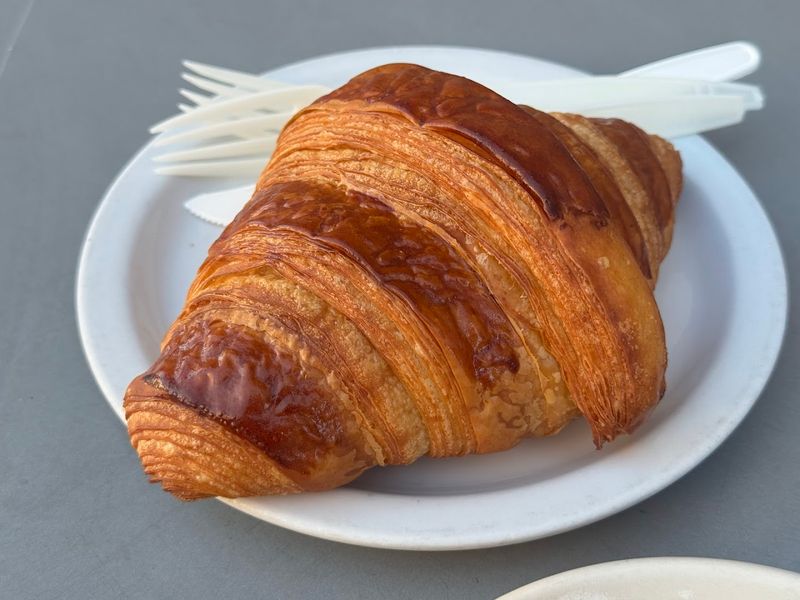
The dough requires multiple folds with cold butter layered in between, a process called lamination that creates the thin, shatteringly crisp exterior that a great croissant is known for.
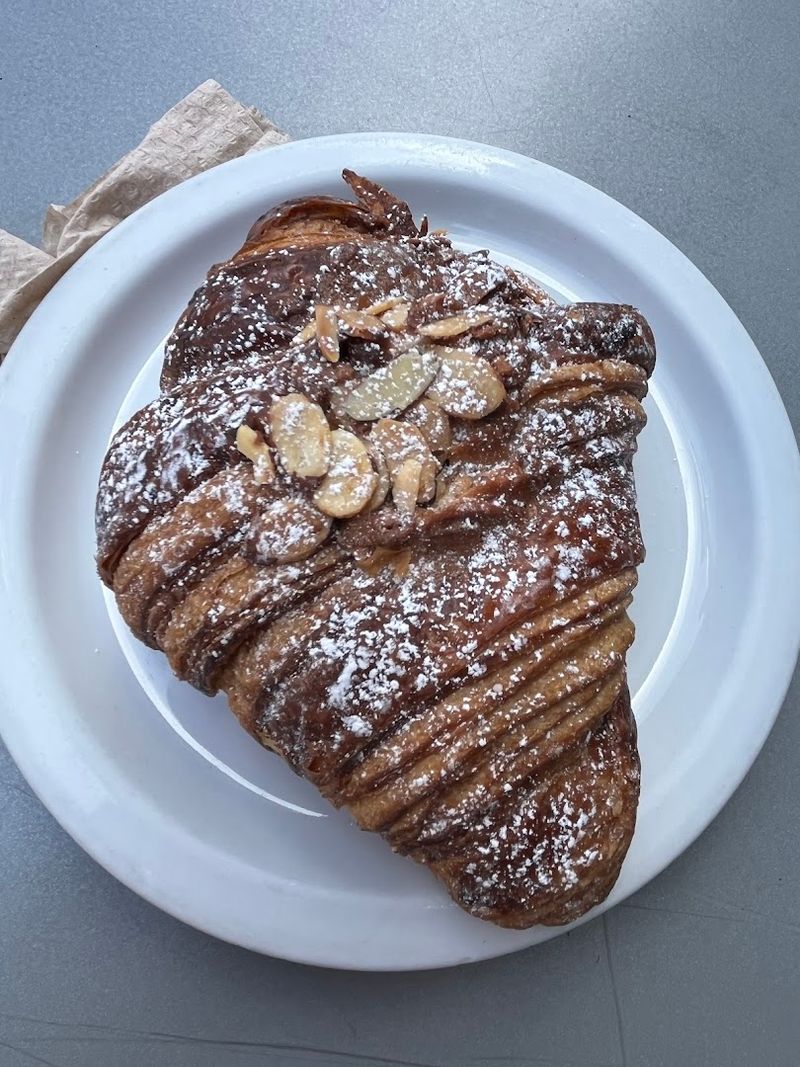
At Tartine, that process is taken seriously, and the result is a pastry with a texture that holds up to comparison with what you’d find in a quality Parisian patisserie.
The outside of the croissant bakes to a deep golden color with a slight crunch that gives way to a soft, airy interior.
The butter flavor comes through without being heavy, which is a balance that takes real skill to achieve consistently.
Many bakeries in San Francisco offer croissants, but few manage the combination of color, texture, and flavor that Tartine produces on a daily basis.
Visitors who arrive early in the morning tend to get the freshest selection, as the baked goods move quickly once the doors open at 7:30 AM.
The croissants are baked on-site, so the quality reflects the work happening in the kitchen each morning.
For pastry enthusiasts, trying one here is a straightforward way to understand what sets French-style laminated dough apart from the average bakery version.
The Morning Bun Stands Out On Its Own
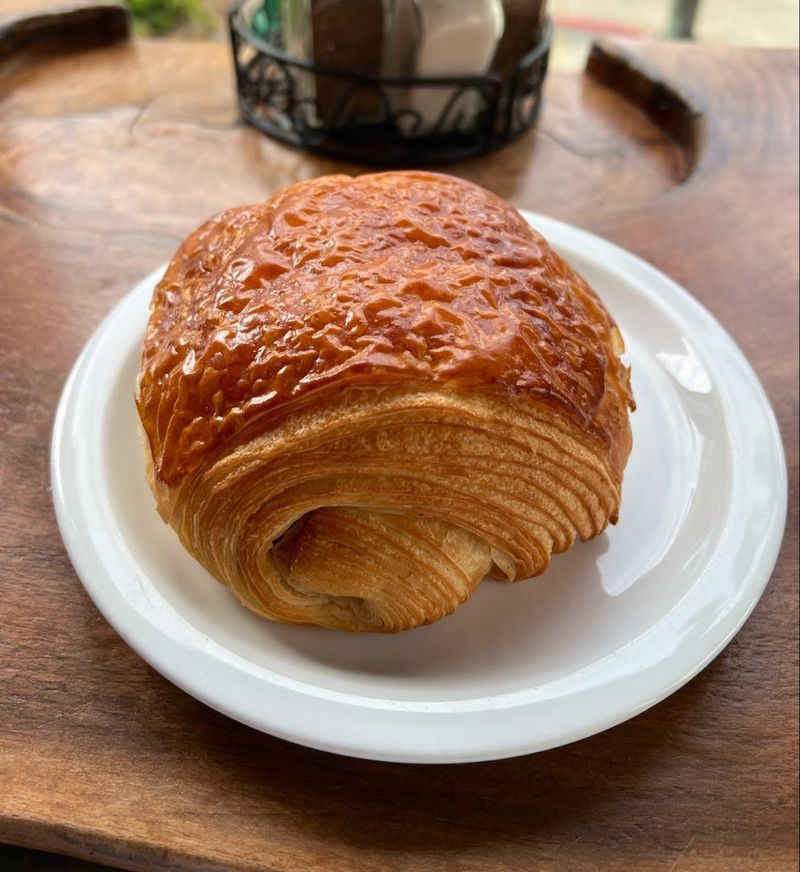
Not everything at Tartine is a croissant, and the morning bun is proof that the menu has more than one standout item.
Made from the same laminated croissant dough, the morning bun is rolled in orange zest and cinnamon sugar before baking, giving it a caramelized exterior with a fragrant, citrus-forward sweetness that feels different from most pastries you’d find elsewhere.
The texture is somewhere between flaky and chewy, with layers that pull apart gently and hold onto that cinnamon-orange coating in a way that makes each bite feel considered.
Multiple visitors have called it one of the most memorable things they’ve eaten in San Francisco, and the consistency of that response says something meaningful about the quality.
The morning bun tends to sell out earlier than some other items, so arriving before mid-morning gives the best chance of finding one available.
The bakery is open daily from 7:30 AM to 6:00 PM, but the pastry selection naturally thins out as the day goes on.
Pairing a morning bun with a coffee from the counter makes for a breakfast that feels both simple and genuinely special, the kind of combination that earns a place in a regular morning routine.
A Menu Built Around More Than Pastries
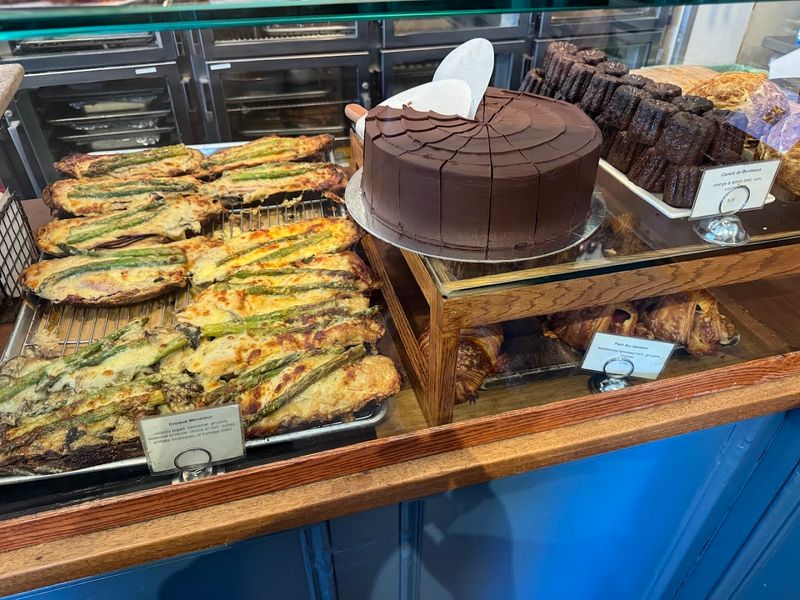
Pastries get most of the attention, but the full menu at Tartine covers considerably more ground.
Hot-pressed sandwiches are a reliable part of the daytime offering, with options like the Jambon Royale and Gruyere standing out as savory counterparts to the sweeter items on display.
The bread used in the sandwiches is made in-house, which gives even a straightforward sandwich a quality that’s hard to replicate with store-bought loaves.
Tarts, cakes, and seasonal items round out the selection, giving visitors who aren’t in the mood for a croissant plenty of other reasons to linger at the counter.
The almond tart has been noted for its layered flavors and restrained sweetness, and the onion and cheese pastry offers something more savory for those who prefer that direction.
Coffee is also available, with lattes and cappuccinos served alongside the food.
The range of options means the bakery works well for different kinds of visits, whether someone is grabbing a quick pastry on the way to work or sitting down to a fuller breakfast.
The menu doesn’t try to be everything, but what it does offer tends to be made with care.
That focused approach keeps the quality high across the board rather than spreading attention too thin.
Organic And Locally Sourced Ingredients Drive The Flavor
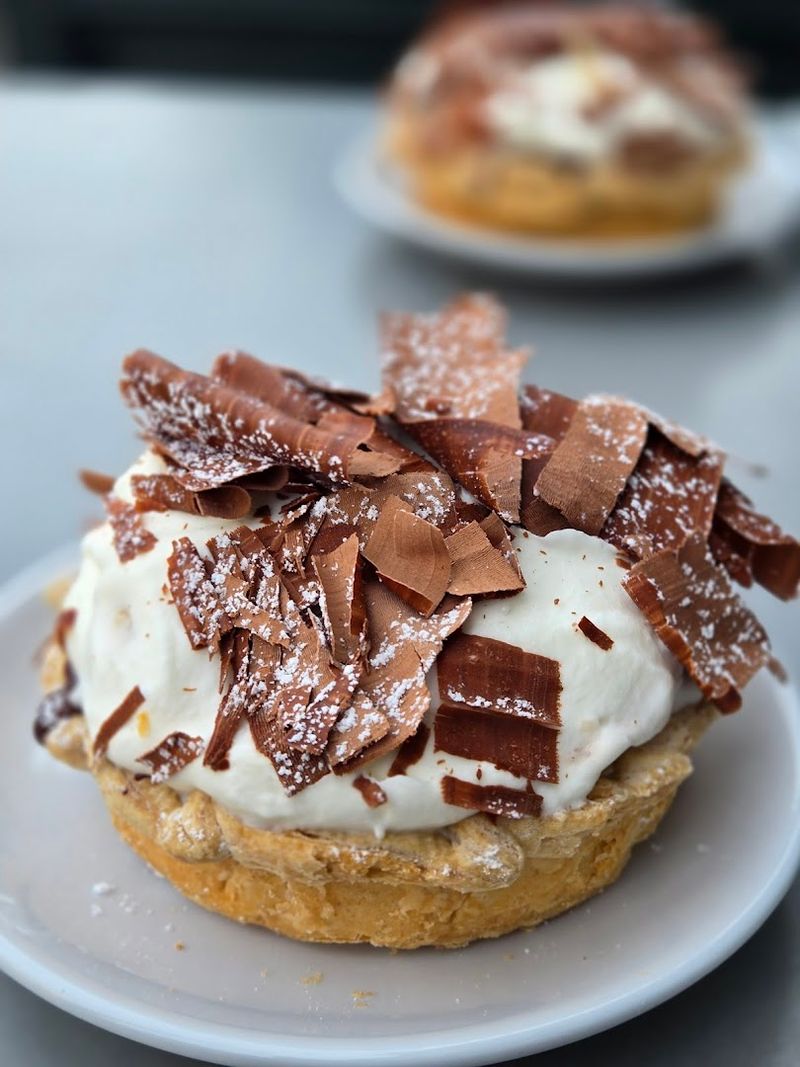
The flavor difference in a well-made croissant or country loaf often comes down to what goes into it before it ever touches the oven.
Tartine has maintained a consistent commitment to using organic and locally sourced ingredients, and that choice reflects in the taste and texture of the finished products.
Butter with a higher fat content, flour milled from quality grain, and fresh seasonal components all contribute to results that stand apart from mass-produced baked goods.
Sourcing locally also means the bakery stays connected to the agricultural community around the Bay Area, which tends to support both quality and freshness.
When ingredients don’t have to travel far or sit in storage for extended periods, they arrive at the kitchen in better condition.
That freshness is difficult to fake and easy to taste when you bite into something made with it.
For customers who care about where their food comes from, knowing that the bakery takes sourcing seriously adds an extra layer of satisfaction to the experience.
The connection between ingredient quality and final flavor isn’t always obvious until you compare a pastry made with care against one made with shortcuts.
At Tartine, the sourcing philosophy is one of the quieter reasons why the baked goods consistently deliver on their reputation.
A James Beard Award Recognized The Bakery’s Excellence
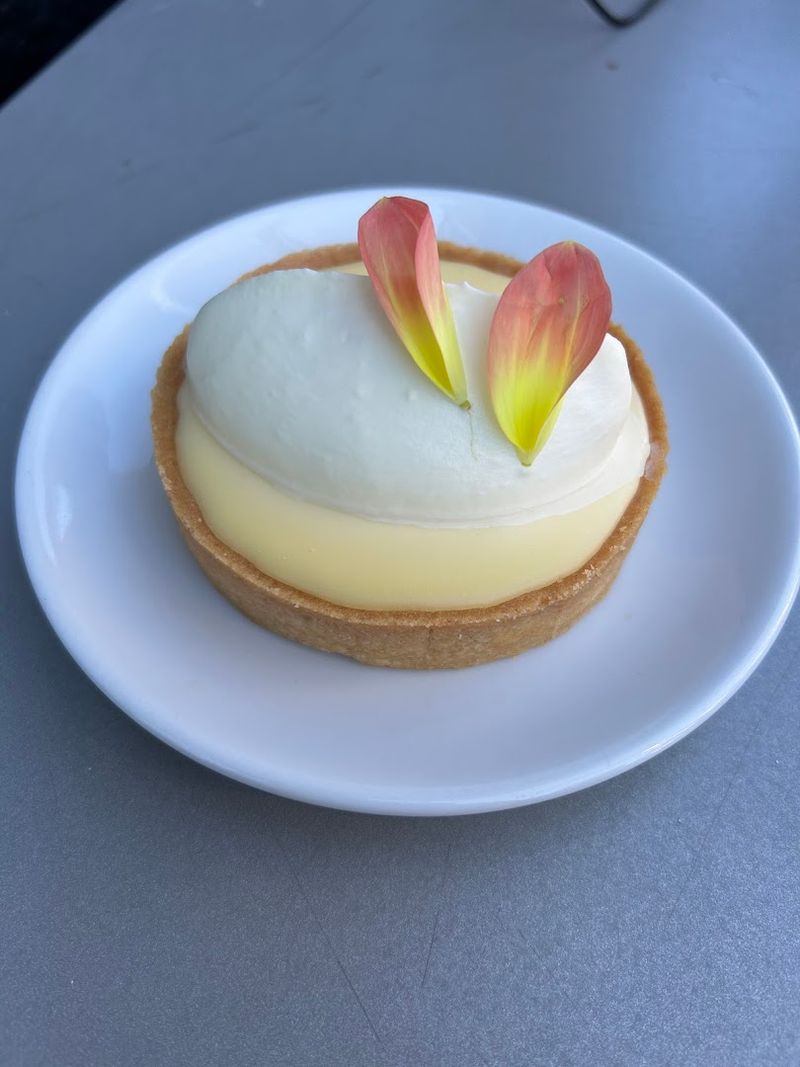
In 2008, the James Beard Foundation recognized the founders of Tartine with the Outstanding Pastry Chef award, one of the most respected honors in the American culinary world.
The James Beard Awards are widely considered the benchmark for culinary achievement in the United States, and receiving recognition at that level placed Tartine among the top tier of pastry programs in the country.
What makes that recognition meaningful beyond the prestige is what it signals about consistency.
Awards of that caliber don’t go to places that occasionally produce something impressive.
They reflect a sustained standard of quality that holds up over time and across a wide variety of products.
For Tartine, the 2008 award came just six years after opening, which speaks to how quickly the bakery established itself as something genuinely exceptional.
For visitors who might wonder whether the bakery’s reputation is earned or simply the result of clever marketing, the James Beard recognition offers an objective data point.
The culinary community noticed what was happening at 600 Guerrero Street and formally acknowledged it.
That kind of third-party validation tends to carry more weight than any amount of word-of-mouth buzz, and it gives first-time visitors a reasonable foundation for high expectations before they ever step through the door.
The Original Location Has A Neighborhood Bakery Feel
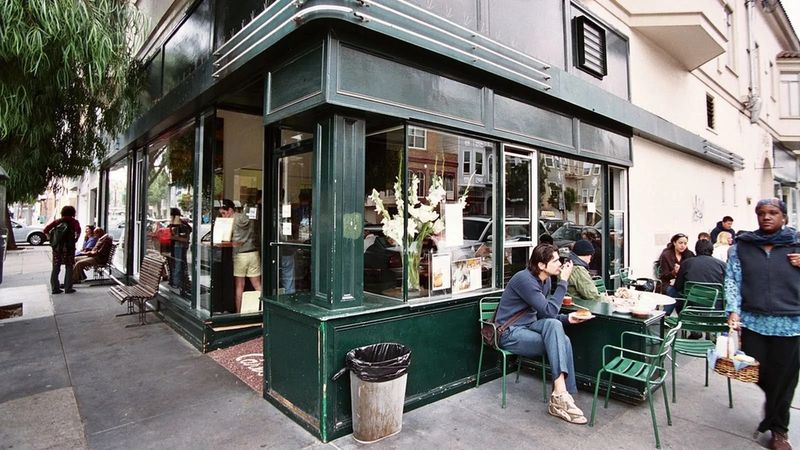
Walking up to Tartine on a typical morning, the first thing most people notice is the line.
It tends to extend past the door and sometimes down the sidewalk, which is a reliable indicator of demand but also a small test of patience.
The line moves at a reasonable pace, and the wait rarely feels as long as it looks from the outside, especially once the smell of fresh baking starts working on the senses.
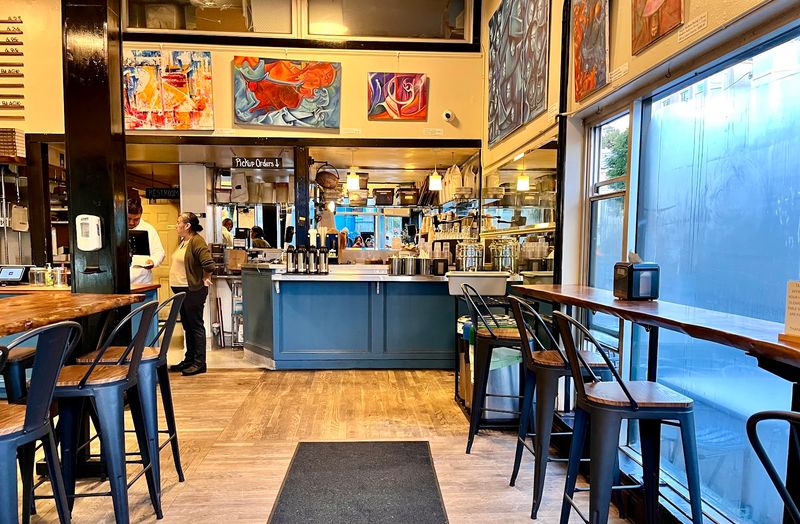
Inside, the space is compact and warm, with limited seating that fills up quickly.
The counter displays the day’s offerings in a way that makes choosing difficult, not because the selection is overwhelming but because everything looks genuinely good.
The atmosphere is lively without being chaotic, and the energy feels like a neighborhood spot that happens to attract visitors from much farther away.
Tartine Bakery sits at 600 Guerrero St in San Francisco’s Mission District, close to Dolores Park, which makes it a natural stop for anyone spending time in that part of the city.
The surrounding neighborhood has its own character that adds to the overall experience of visiting.
Grabbing something from the counter and finding a spot nearby to eat it is a common approach for those who don’t manage to snag an indoor seat.
Tartine Manufactory Expanded The Concept
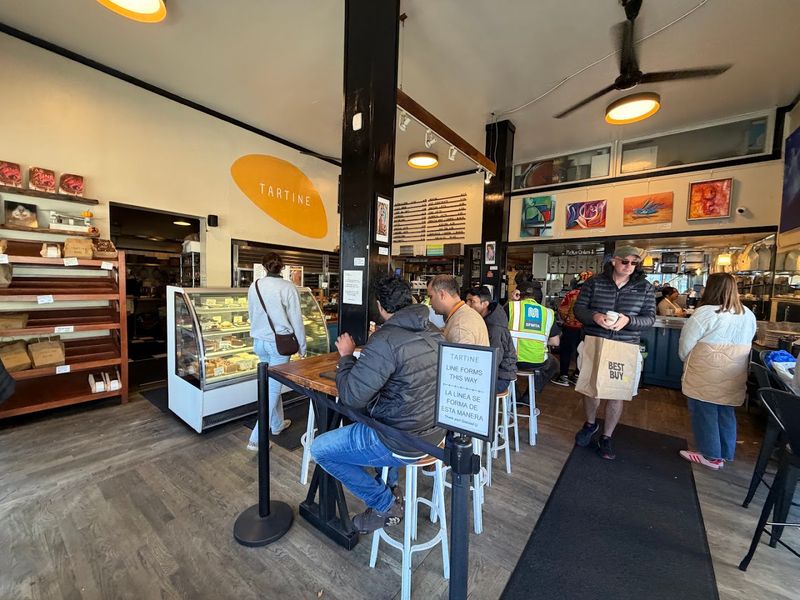
The success of the original bakery eventually led to a second and considerably larger location called Tartine Manufactory.
Located at 595 Alabama Street in San Francisco, the Manufactory operates as both a bakery and a broader dining space, offering a more extensive menu that goes beyond the pastry case.
The expanded setting allows for a different kind of visit, one that can include a fuller meal rather than just a quick pastry stop.
The Manufactory also functions as a production space where bread and other baked goods are made at a larger scale.
Seeing that process up close gives visitors a better sense of the work involved in producing the volumes that both locations require.
The industrial aesthetic of the space feels intentional, reflecting the working bakery at its core rather than trying to look like something it isn’t.
For those who visit the original Guerrero Street location and find it too crowded or the selection already running low, the Manufactory offers an alternative with a broader range of options.
The two locations share the same sourcing philosophy and approach to quality, so the standard remains consistent across both.
Visiting both spots during a single San Francisco trip gives a more complete picture of what the Tartine operation has grown into over more than two decades.
The Sourdough Country Loaf Has Its Own Following
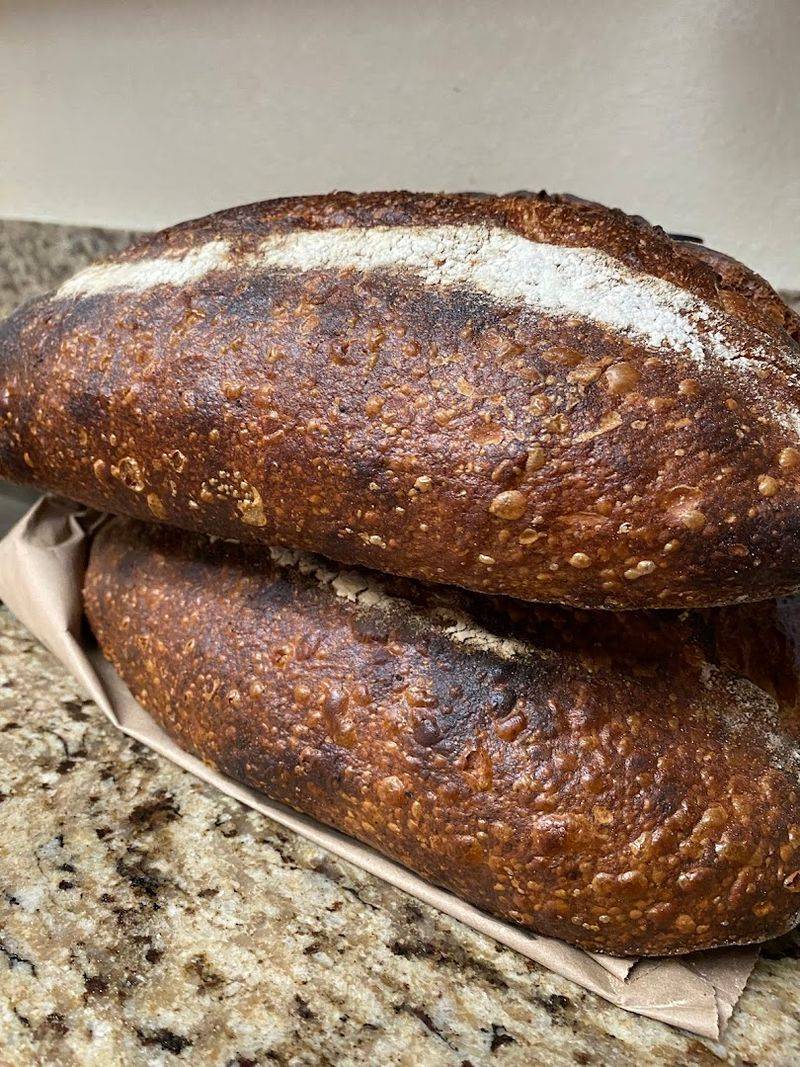
Bread at Tartine is taken as seriously as the pastries, and the sourdough country loaf has developed a following that extends well beyond the bakery’s walk-in customers.
The loaf uses a long fermentation process that develops a complex, slightly tangy flavor without tipping into sourness that overwhelms the wheat.
The crust bakes to a deep, crackling exterior while the interior stays open and moist in a way that holds up well even a day after purchase.
The buttermilk version of the country loaf is frequently noted as the one to seek out, but it tends to sell out early in the day.
Arriving before mid-morning gives the best chance of finding it available, though any version of the bread makes for a worthwhile purchase.
Taking a loaf home or to a nearby park is a common choice for visitors who want to extend the experience beyond the bakery itself.
The country loaf has also inspired a significant number of home bakers who have worked through the published Tartine bread recipe on their own.
Tasting the original after attempting the recipe at home gives a useful point of comparison that most home bakers find both humbling and motivating.
The loaf represents a style of bread that rewards patience and attention in ways that few other baked goods can match.
Operating Hours Favor Early Risers
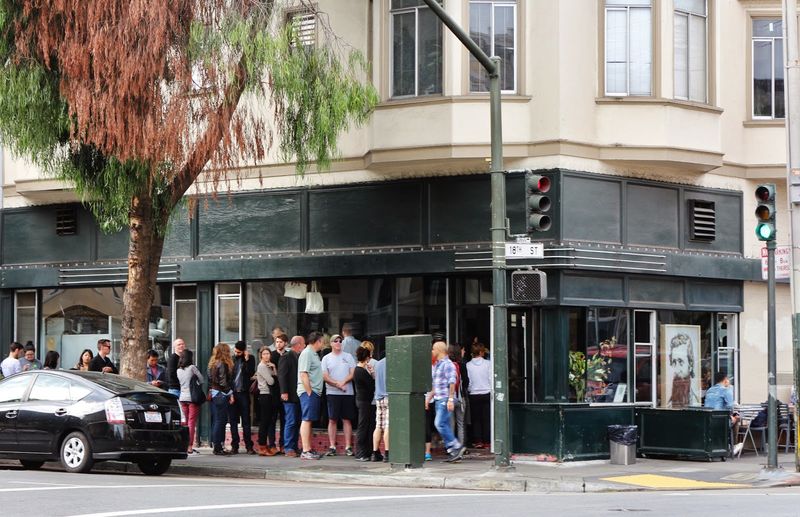
Tartine Bakery opens daily at 7:30 AM and closes at 6:00 PM, seven days a week.
That schedule gives both early visitors and afternoon drop-ins a window to stop by, but the experience shifts noticeably depending on when you arrive.
Morning visits tend to offer the widest selection, the freshest pastries, and the energy of a bakery just hitting its stride for the day.
By mid-morning on weekends, the line outside can stretch to a considerable length, which reflects how popular the spot has become with both locals and tourists.
Weekday mornings tend to be somewhat more manageable, though the bakery draws a steady crowd throughout the week.
Coming in the early afternoon is possible but means accepting that certain items, particularly the morning bun and the buttermilk loaf, may already be gone.
The consistent daily hours make planning a visit straightforward, which is helpful for travelers building an itinerary around specific neighborhoods.
The Mission District has plenty of other things to do nearby, so building a morning around a stop at Tartine and then exploring the surrounding area works naturally.
Knowing the hours in advance also removes the frustration of showing up outside the operating window, which happens more often than one might expect at popular spots like this one.
Online Ordering Extends Access Beyond The Bakery
Not everyone visiting San Francisco has time to wait in line, and Tartine has addressed that reality by offering online ordering through its website at tartinebakery.com.
The option allows customers to browse the available items and place orders without having to show up and hope the selection hasn’t run out.
For locals who want to pick up specific items without the uncertainty of walk-in availability, it adds a practical layer of convenience.
Online ordering also makes the bakery more accessible to people who might find the in-person crowd difficult to navigate, whether because of time constraints or personal preference.
The website reflects the same straightforward approach as the bakery itself, without unnecessary complexity or confusing navigation.
Placing an order in advance and arriving to collect it removes most of the friction that can come with visiting a high-demand spot.
For travelers who want to bring something back from a San Francisco trip, ordering ahead ensures that specific items are set aside rather than leaving it to chance.
The bakery’s reputation has spread well beyond the Bay Area, and having a digital ordering option means that reputation can translate into a reliable experience for people who plan ahead.
It’s a small but meaningful addition to how the bakery serves its customers beyond the physical space.
Tartine’s Influence On San Francisco’s Food Culture
Few single establishments can claim to have shifted the expectations of an entire city’s food scene, but Tartine comes close to that distinction in San Francisco.
When the bakery opened in 2002, the standard for artisan pastries and naturally leavened bread in the city was considerably lower than it is today.
The consistent quality coming out of the Guerrero Street kitchen set a benchmark that other bakeries in the Bay Area have worked to meet in the years since.
The ripple effect shows up in how many cafes and bakeries across San Francisco now emphasize organic sourcing, long fermentation, and laminated dough techniques that were far less common before Tartine demonstrated what was possible at a neighborhood scale.
That kind of influence is difficult to measure directly but easy to observe when moving through the city’s food landscape.
For visitors, understanding that context adds something to the experience of eating a croissant or a slice of country loaf at Tartine.
The bakery isn’t just a place to eat well.
It represents a particular moment in San Francisco’s culinary development when craft baking moved from a niche interest to a genuine cultural touchstone.
Stopping in connects you to that history in a small but tangible way, one buttery, flaky bite at a time.