10 Unforgettable Northern California Hikes Ranked From Chill To Extreme
Northern California does not ease you in gently.
It throws redwoods, volcanoes, granite cliffs, and fog-draped coastlines at you all at once, and somehow expects you to choose just one trail for the day.
I have been hiking this part of the state long enough to know that the hardest part is not the elevation gain. It is deciding where to start.
This list covers hikes that range from genuinely relaxed to genuinely humbling, and I have ranked them so you can figure out exactly where your energy level and your ambition happen to meet.
The easy ones will remind you why people move to California in the first place.
The hard ones will remind you that nature does not particularly care about your fitness tracker or your weekend plans.
What they all have in common is that you will not forget them.
Some trails leave you with sore legs, some leave you with better photos than you deserve, and a few will leave you completely speechless. All of them are worth it.
1. Fern Canyon Loop
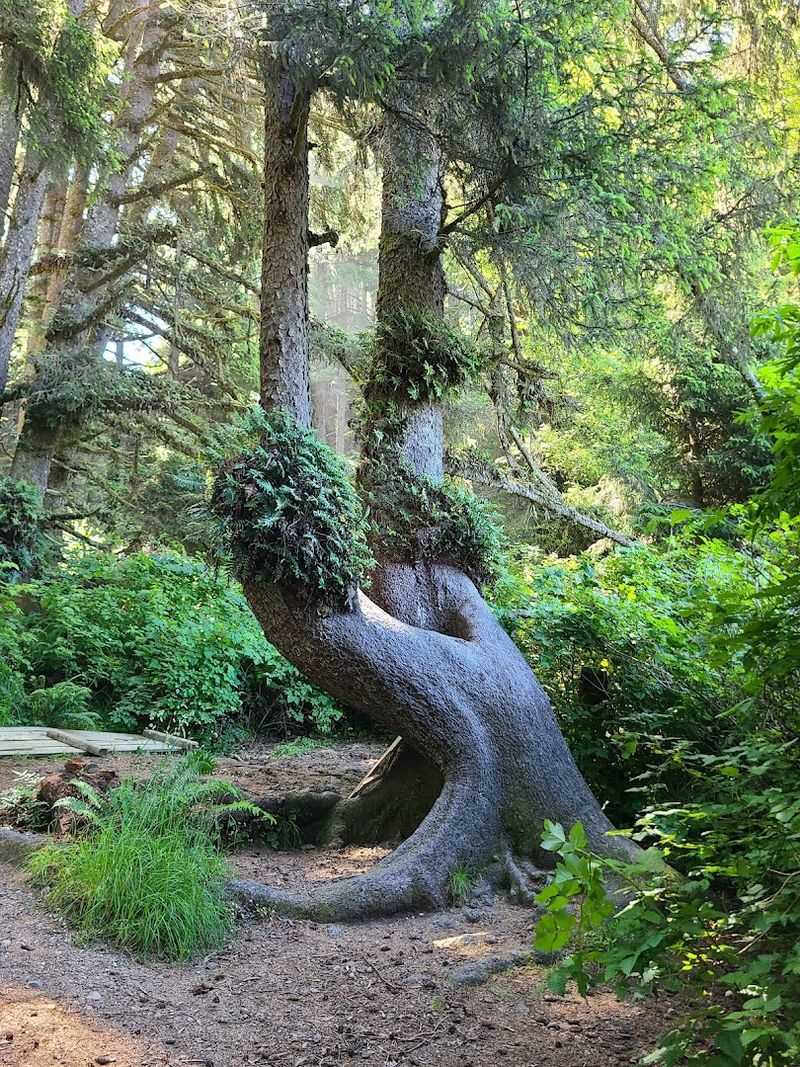
Step into Fern Canyon and you will immediately feel like you walked onto a movie set.
Spielberg actually filmed a scene from The Lost World: Jurassic Park here, and honestly, the place earns every bit of that prehistoric energy.
The walls rise about 50 feet on both sides, completely blanketed in five-finger ferns, sword ferns, and mosses that glow an almost unreal shade of green.
The loop itself is short, roughly one mile, making it one of the most accessible jaw-dropping hikes in the state. You will hop across a small stream several times, so waterproof boots are your best friend here.
I wore regular trail runners once and spent the afternoon with soggy socks. Learn from my mistake.
Prairie Creek Redwoods State Park, where this trail lives, sits near Orick, California. The surrounding old-growth redwood forest adds another layer of wow to the whole experience.
Go in spring when the ferns are brightest and the stream is flowing strong. This is the rare hike where the photos actually do not do it justice.
Your eyes need to see this one in person to fully believe it.
2. Bumpass Hell Trail
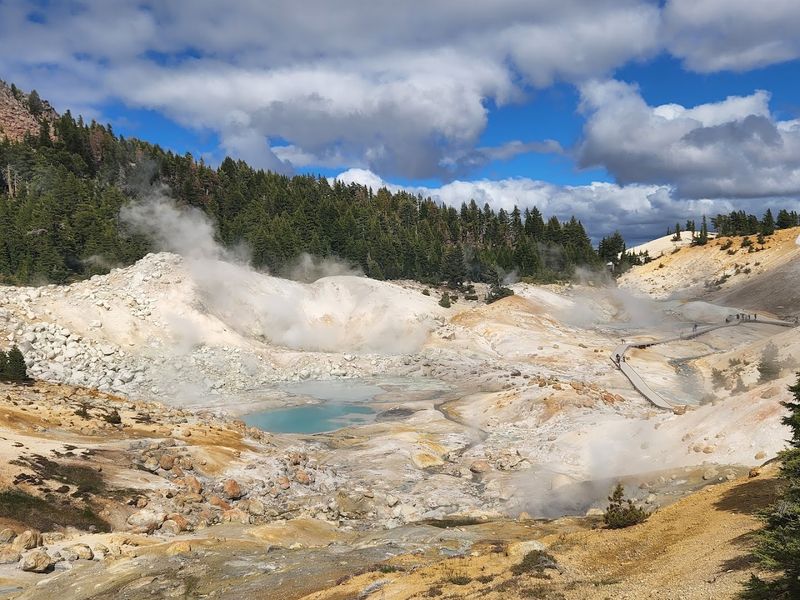
Named after a man who fell through the crust and scalded his leg, Bumpass Hell is the kind of trail that comes with a built-in cautionary tale.
Kendall Bumpass discovered this hydrothermal basin in the 1860s and learned the hard way that the ground is not always as solid as it looks.
Lucky for us, the boardwalk trail keeps visitors safe while delivering one of the most surreal landscapes in the country.
The hike is about 3 miles round trip with a modest elevation gain of around 300 feet, landing it firmly in the easy-to-moderate category.
You will smell sulfur before you see anything, which is your nose’s way of saying something extraordinary is ahead.
Boiling mud pots, steaming fumaroles, and vivid blue-green pools spread out across the basin like a scene from another planet.
Lassen Volcanic National Park is the star here, and Bumpass Hell is its headliner. The best time to visit is July through September when the road to the trailhead is clear of snow.
Bring sunscreen because the open volcanic terrain offers zero shade. Pack a lunch, sit on a rock, and watch the earth literally bubble.
It never gets old.
3. Cosumnes River Walk
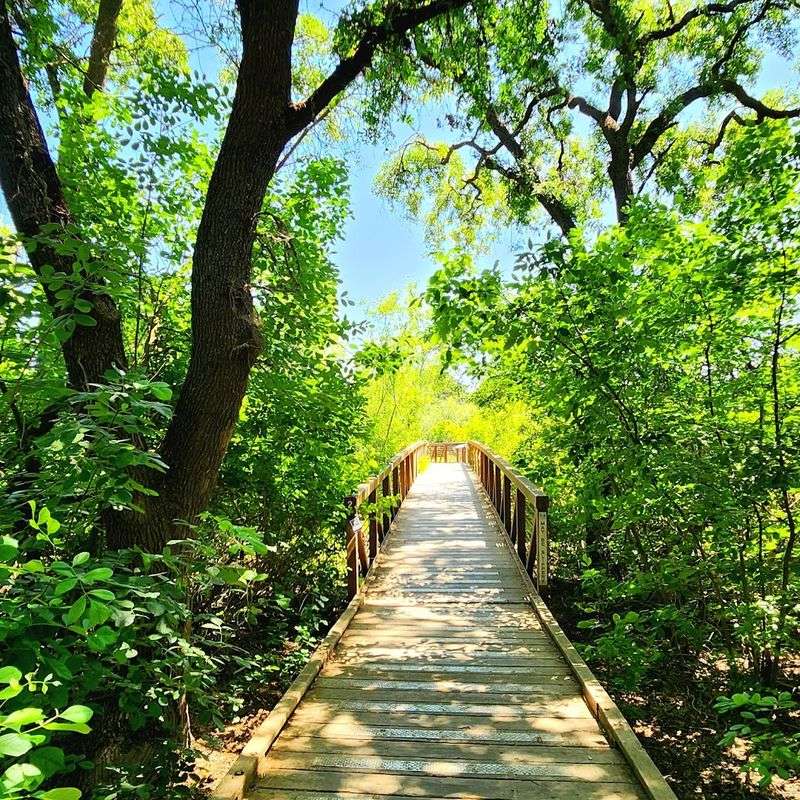
Not every great hike needs to make your lungs burn. The Cosumnes River Walk is proof that flat, quiet, and beautiful can be just as rewarding as any summit.
Located at the Cosumnes River Preserve south of Sacramento, this trail moves through one of the last remaining natural floodplain forests in California’s Central Valley.
The walk covers about 2 miles round trip and stays almost completely flat, making it perfect for families, beginners, or anyone who just wants to breathe fresh air without training for it.
Fall is the magic season here. The valley oaks and cottonwoods turn gold and rust, and the whole place looks like a painting someone forgot to frame.
Sandhill cranes migrate through in massive numbers during late fall, which is something you genuinely cannot unsee.
I stumbled onto this trail by accident while driving through the valley, and it ended up being one of my favorite discoveries in years.
The preserve is managed by The Nature Conservancy and the Bureau of Land Management. There are no fees to walk the main trail.
Bring binoculars if you have them because the birdwatching alone is worth the trip. Sometimes the best hikes are the ones nobody is talking about.
4. Tomales Point Trail
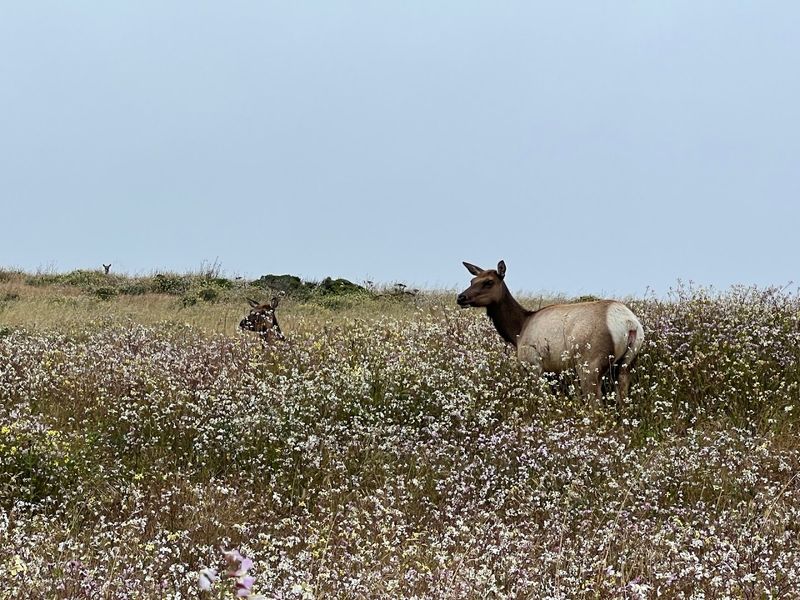
Few hikes in California put you this close to wild animals without any fences involved.
Tomales Point Trail runs along a narrow peninsula at Point Reyes National Seashore, and the resident tule elk herd treats the whole area like their personal backyard.
You will likely see them within the first mile, sometimes just a few feet off the trail.
The trail stretches about 9.4 miles round trip with rolling elevation changes that keep things interesting without wrecking your knees.
The views are relentless. Tomales Bay sits on one side, the open Pacific on the other, and on clear days you can see all the way to the Marin Headlands.
Wind is almost always present, so bring a layer even in summer.
Point Reyes National Seashore sits about 40 miles north of San Francisco, making this one of the most accessible wild hikes in the Bay Area.
The trailhead starts at the Pierce Point Ranch parking area. Spring brings wildflowers that carpet the hillsides in purple and gold.
Fall brings crisp air and elk rut season, which means you might hear bugling males echoing across the headlands. Either way, this trail delivers something memorable every single time you walk it.
5. Upper Yosemite Falls Trail
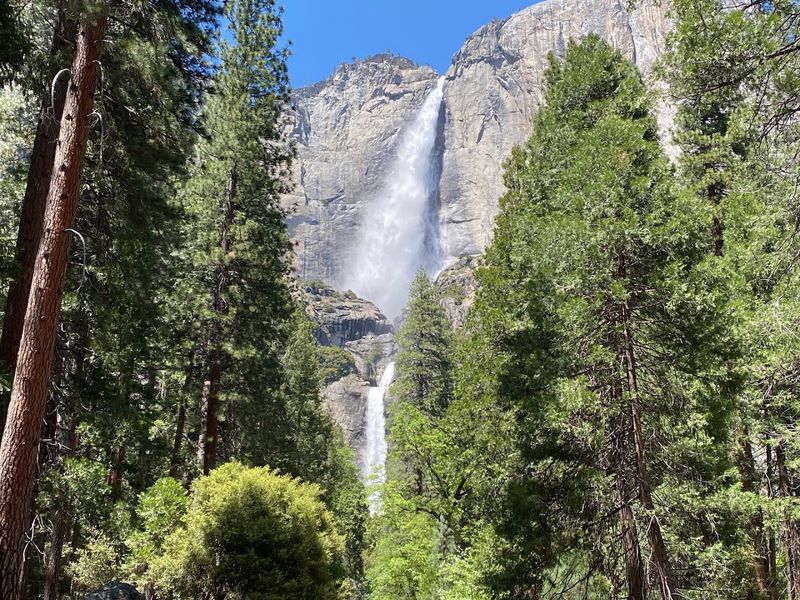
Upper Yosemite Falls Trail is where casual hikers figure out they might need to train more.
The round trip clocks in at 7.2 miles with a brutal 2,700-foot elevation gain, most of it happening in relentless granite switchbacks. Your legs will have opinions about this.
Loud, strongly worded opinions.
But the payoff is genuinely hard to argue with. At the top, you are standing at the edge of one of the tallest waterfalls in North America, watching water freefall nearly 1,430 feet into the valley below.
Spring is the prime season when snowmelt turns the falls into a roaring curtain of white. By late summer, the flow slows to a trickle or disappears entirely, so timing matters.
The trailhead sits near Yosemite Village in Yosemite National Park. Start early, ideally before 7 a.m., to beat the crowds and the afternoon heat.
Trekking poles are not just helpful here, they are practically essential on the descent when your knees start sending distress signals.
Bring more water than you think you need because the trail is exposed and dry in places. Every step of discomfort on the way up is completely forgotten the moment you see that view.
6. Clouds Rest
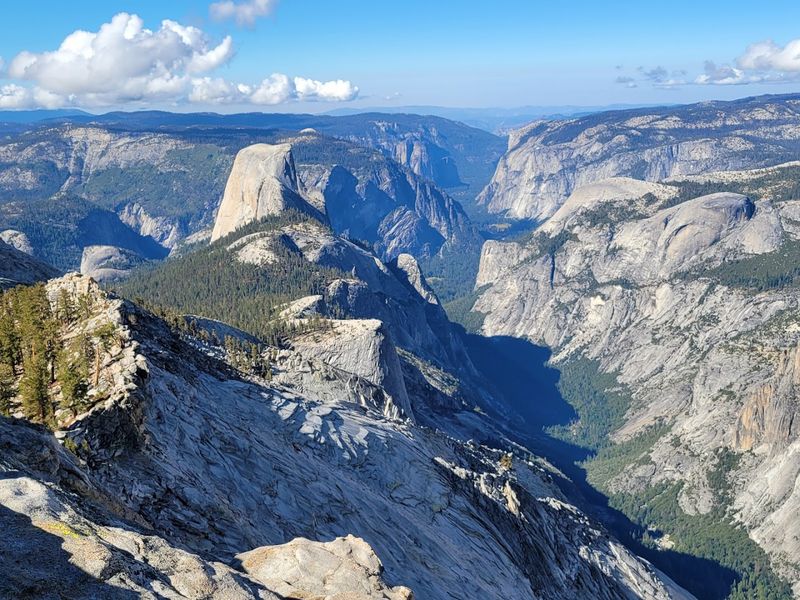
Clouds Rest is the hike that Half Dome wishers do when they cannot snag a permit, and then they come back the following year specifically for Clouds Rest because it is actually better.
Bold claim, but hear me out. The summit sits at 9,931 feet and offers a full 360-degree panoramic view that includes Half Dome, Yosemite Valley, the High Sierra, and on clear days, the distant Central Valley.
The trail runs about 14 miles round trip from the Sunrise Lakes Trailhead near Tenaya Lake, with around 2,300 feet of elevation gain.
The final stretch narrows along an exposed granite ridge that requires confident footing. Heights are not something to ignore here.
But the ridge walk itself is one of the most thrilling stretches of trail in the entire park.
Tenaya Lake sits along Tioga Road in Yosemite, which closes in winter, so this hike is best tackled between late June and early October.
Afternoon thunderstorms are common in summer, so aim to summit before noon. I once watched a storm roll in from the summit and had to hustle down fast.
Pack layers, snacks, and a healthy respect for the mountain. Clouds Rest rewards the prepared hiker with a view that rewrites what you thought California looked like.
7. Mount Tallac Trail
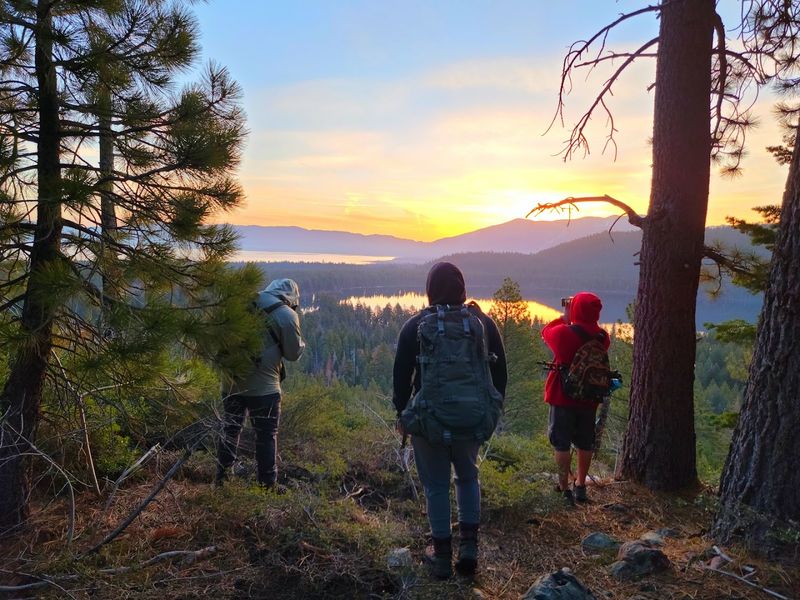
Mount Tallac looms over the south shore of Lake Tahoe like it knows exactly how good-looking it is.
At 9,735 feet, the summit delivers one of the most spectacular views of Lake Tahoe you will ever experience, with the Desolation Wilderness spreading out behind you like a reward for every hard step you took to get there.
The trail covers about 9.4 miles round trip with a punishing 3,300-foot elevation gain. It starts gently enough near Fallen Leaf Lake, then turns serious fast.
The upper section crosses loose talus and steep snowfields that can linger well into July. Traction devices and trekking poles are worth bringing until midsummer.
The trailhead is located off Highway 89 near South Lake Tahoe, California. Parking fills early on weekends, so arriving before 7 a.m. is a smart move.
The cross carved into the snowfield near the summit is visible from town all spring, and standing next to it in person feels oddly satisfying.
Bring a windbreaker because the summit is fully exposed and the wind does not take requests. The descent back toward Fallen Leaf Lake has a way of making your quads feel like overcooked pasta.
Worth every step.
8. Burney Falls Loop
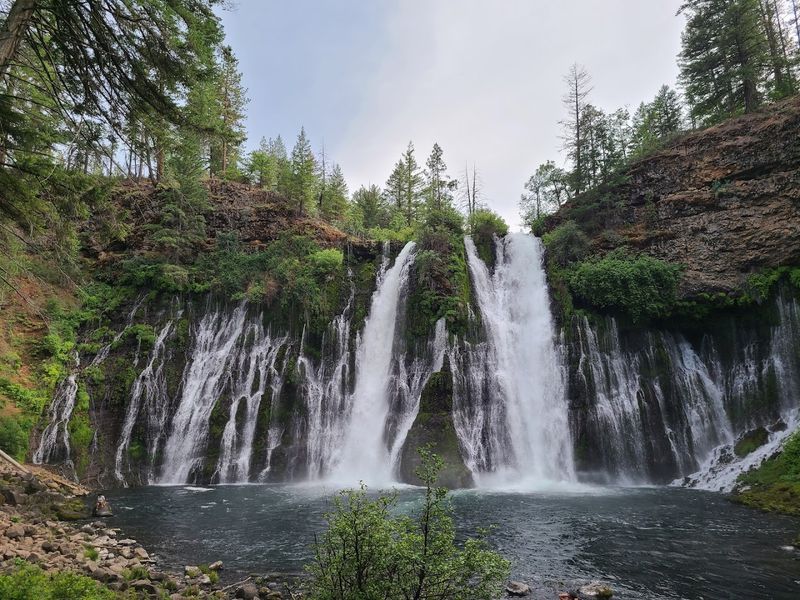
Theodore Roosevelt reportedly called Burney Falls the eighth wonder of the world, and while that might sound like promotional material, standing in front of this waterfall makes you want to give the man credit.
The falls drop 129 feet and flow year-round thanks to underground springs that feed directly through the basalt cliff face. It looks like the rock itself is sweating water, which is exactly as cool as it sounds.
The loop trail is about 1.3 miles and stays mostly easy with some gentle elevation change near the base of the falls.
The trail connects to the Pacific Crest Trail if you want to extend the adventure, but most visitors are perfectly satisfied with the loop.
The pool at the base is strikingly blue-green and surrounded by ferns and moss-covered rocks.
McArthur-Burney Falls Memorial State Park sits in Shasta County, roughly 50 miles northeast of Redding off Highway 89. There is a day-use fee to enter, and the park fills up fast on summer weekends.
Go on a weekday morning for the quietest, most magical experience. The sound of the falls alone is worth the drive.
Pack a picnic, stay longer than you planned, and let the mist cool your face. This is Northern California at its most generous.
9. Half Dome Via Cables
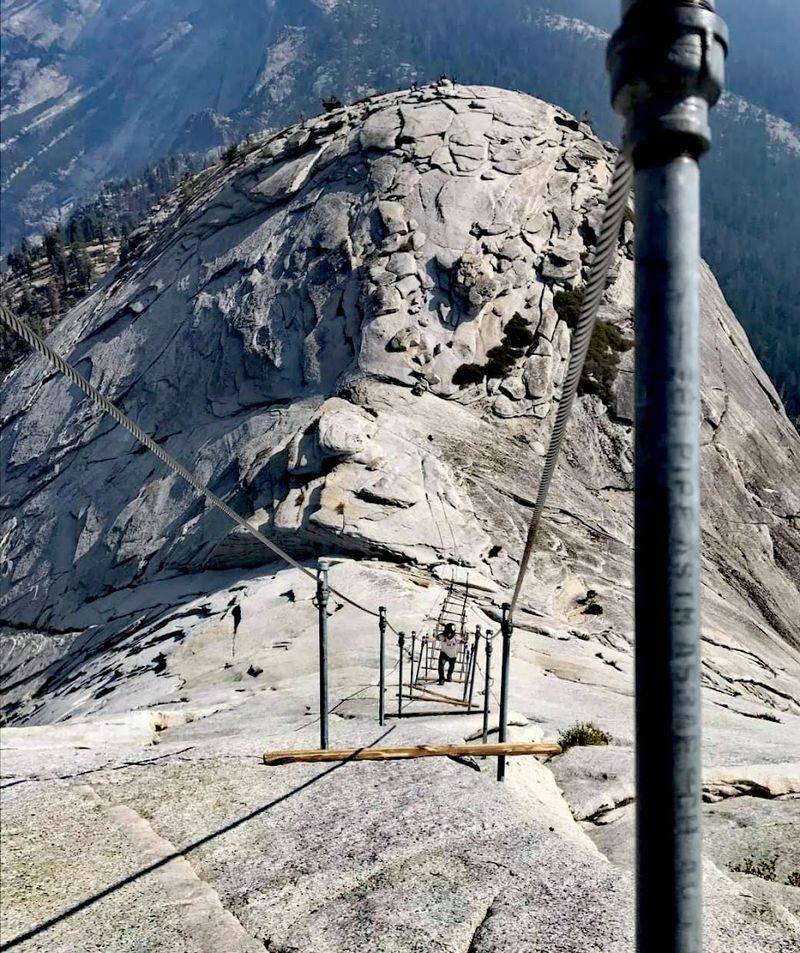
Half Dome is the hike that people talk about for years. The cables route up the back of the dome is not technically climbing, but it is about as close as most hikers will ever get to vertical.
You grip steel cables anchored into the granite and haul yourself up a 45-degree slope with a 400-foot drop on either side. Totally casual stuff.
The full round trip from Yosemite Valley covers about 16 miles with roughly 4,800 feet of elevation gain. Most people start before dawn to manage the distance and avoid afternoon lightning.
Permits are required for the cables section and are distributed by lottery through the National Park Service, so plan months ahead. Gloves are mandatory because the cables will shred your hands without them.
Yosemite National Park manages access carefully, and for good reason. The trail passes Nevada Fall and Vernal Fall on the way up, which means you get two world-class waterfalls as warm-up acts.
I remember hitting the base of the cables and staring up thinking there was absolutely no way. Then I started climbing and could not stop.
The summit view of Yosemite Valley from 8,842 feet is one of those moments that recalibrates your sense of what is possible. Bring snacks, grit, and good footwear.
10. Mount Shasta Via Avalanche Gulch
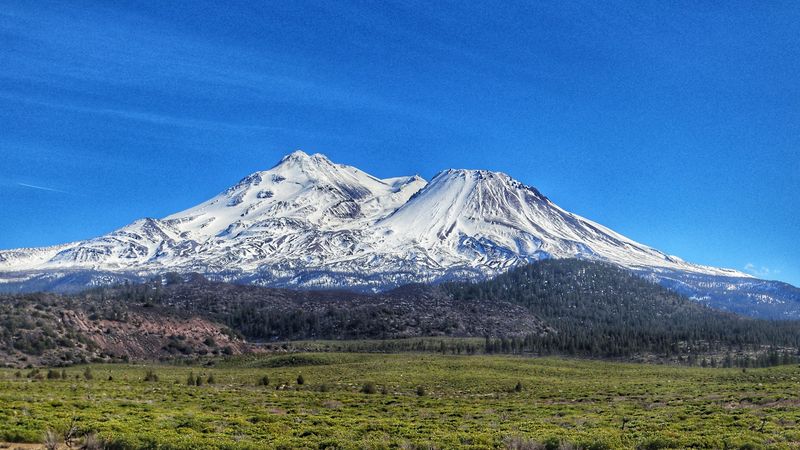
Mount Shasta does not mess around. At 14,179 feet, it is the second-highest peak in the Cascade Range and one of the most demanding non-technical climbs in the American West.
Avalanche Gulch is the standard route, but standard here means crampons, an ice axe, and a genuine understanding of how to use them.
This is not a hike. It is a mountaineering objective dressed in hiking clothes.
The round trip covers about 12 miles with an elevation gain of roughly 7,200 feet from the Bunny Flat Trailhead.
Most climbers split it into two days, camping at Helen Lake around 10,400 feet before pushing for the summit in the pre-dawn hours.
Weather on Shasta changes fast and without much warning, so checking the forecast obsessively before and during the climb is standard practice.
The trailhead at Bunny Flat sits off Highway 89 near Mount Shasta City, California. Wilderness permits and summit passes are required and available through the Mount Shasta Ranger District.
Self-arrest skills are not optional here. A guided climb is a smart choice for first-timers who want to reach that summit without improvising on steep ice.
Standing on the crater rim with all of Northern California spread below you is the kind of moment that makes every difficult step feel completely worth it.