10 Unspoken Rules In Ohio Amish Towns That Visitors Keep Ignoring
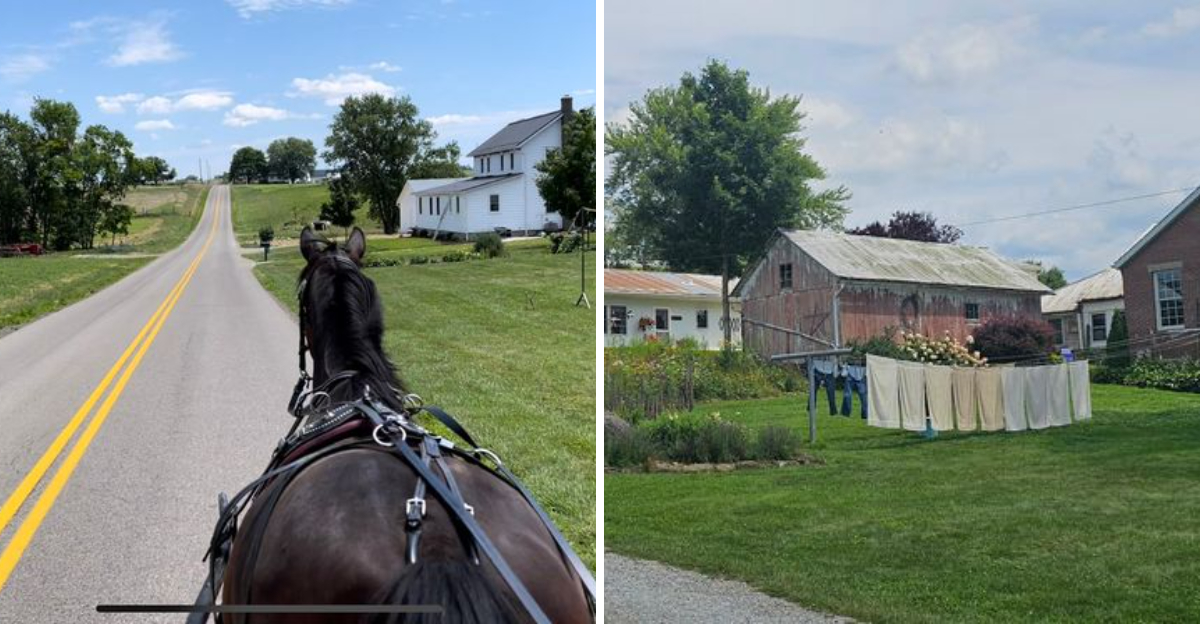
I had no idea I was breaking rules the first time I drove through Ohio Amish country. Everything looked so quietly beautiful that I assumed peaceful meant permissive, and I was wrong about that in more ways than I care to admit.
I slowed down to photograph a horse and buggy without thinking twice, pulled into a driveway to turn around without checking whose it was, and pointed at things like a tourist who had never been told that pointing is rude.
Nobody said anything, because that is not how things work out here, but the looks were enough. Ohio is home to the largest Amish population in the world, and these communities operate by a set of values that most visitors have simply never been introduced to.
Some of the rules are posted. Most of them are not.
Whether this is your first visit or your fifth, there are things happening around you that deserve more respect than a camera roll and a quick turnaround in someone’s driveway.
1. Aiming Your Camera At Faces
Nobody likes a camera shoved in their face, and the Amish feel this more deeply than most. For many Amish communities, photographs of people go against their religious beliefs.
They believe that posing for images encourages pride, which conflicts with their value of humility.
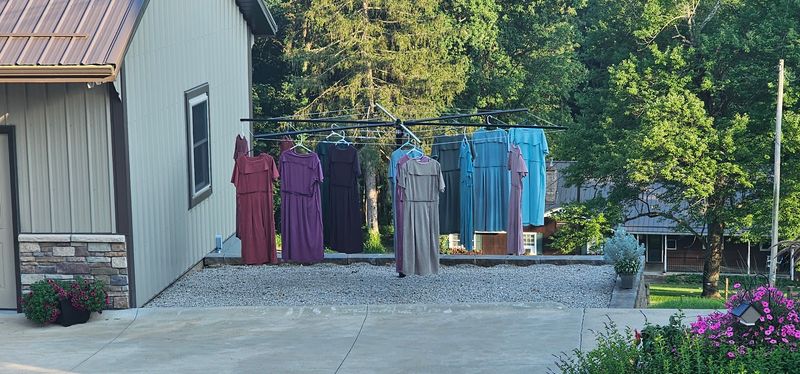
I once watched a tourist aim a long camera lens directly at an Amish woman hanging laundry. She turned away immediately.
The photographer seemed confused, like they had just missed a great shot.
What they actually missed was basic respect.
Photographing Amish barns, fields, or buggies from a distance is generally more acceptable. But pointing a lens at someone’s face without permission crosses a clear line.
Even if you do not hear anyone say anything, the discomfort is real and felt.
Think about how you would feel if a stranger photographed you in your own yard without asking. The Amish are not a tourist attraction.
They are people living their daily lives.
Treating them with the same dignity you would want for yourself costs nothing. Put the camera down, be present, and enjoy the experience without turning someone else’s life into your vacation album.
2. Stopping At Homes Uninvited
Spotting a beautiful Amish farmhouse from the road can feel like stumbling onto something magical. The white paint, the garden rows, the smell of fresh bread drifting out from somewhere inside.
It is easy to understand why visitors want to get closer.
Pulling into a private driveway uninvited is not a warm cultural exchange. It is trespassing.
Amish homes are not open-door museums.
The families inside are doing laundry, teaching children, preparing meals, and living private lives they did not agree to share with passing strangers.
I made this mistake once, thinking a roadside stand meant the whole property was open. A polite but firm older man came to the edge of the porch and waited.
I got the message quickly and backed out feeling embarrassed.
If you want to interact with Amish families, visit their roadside stands, farm stores, or markets. Those are the spaces where they have chosen to welcome outside visitors.
Respect that boundary.
A genuine connection built on mutual respect will always feel better than barging into someone’s personal space hoping for an authentic moment. The best experiences come from being invited, not invading.
3. Blinding Buggies With High Beams
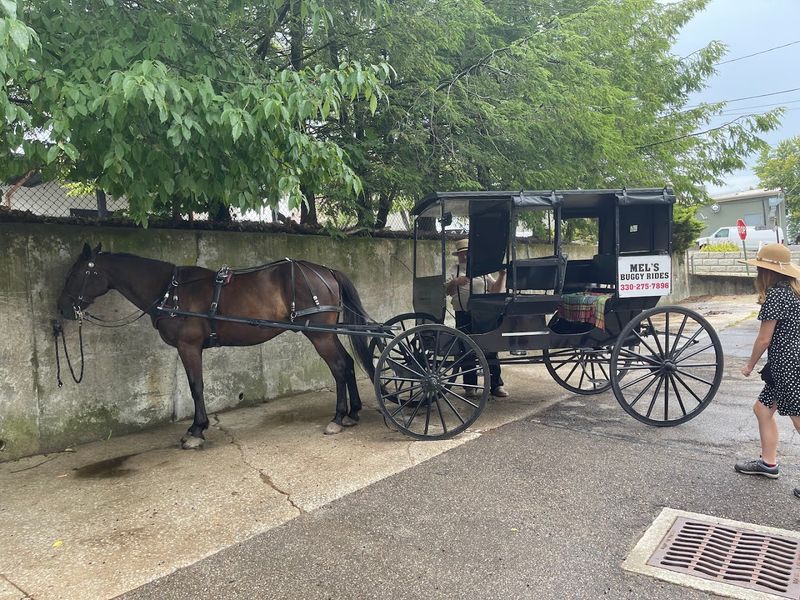
Horse-drawn buggies move at roughly five to eight miles per hour on roads where cars travel fifty. That alone makes sharing the road a serious responsibility for drivers.
Adding blinding high beams to the mix turns a manageable situation into a genuinely dangerous one.
Horses spook. That is not an opinion, it is a fact.
A frightened horse pulling a buggy full of people can veer off the road in seconds.
Bright headlights aimed directly at a horse’s eyes can trigger exactly that kind of reaction.
When you come up behind a buggy at night, dim your lights immediately. Slow down and give them plenty of room before passing.
Do not honk. Do not rev your engine.
Do not try to rush past before an oncoming car clears. Patience is not optional here.
Holmes County, Ohio, which sits along Route 62 and the surrounding back roads, sees significant buggy traffic throughout the day and into the evening.
Locals know the rhythm. Visitors often do not.
Before you drive through any Amish area, remind yourself that the roads belong to everyone. A few extra minutes of patience is a fair trade for everyone getting home safely.
4. Ignoring Quiet Sundays
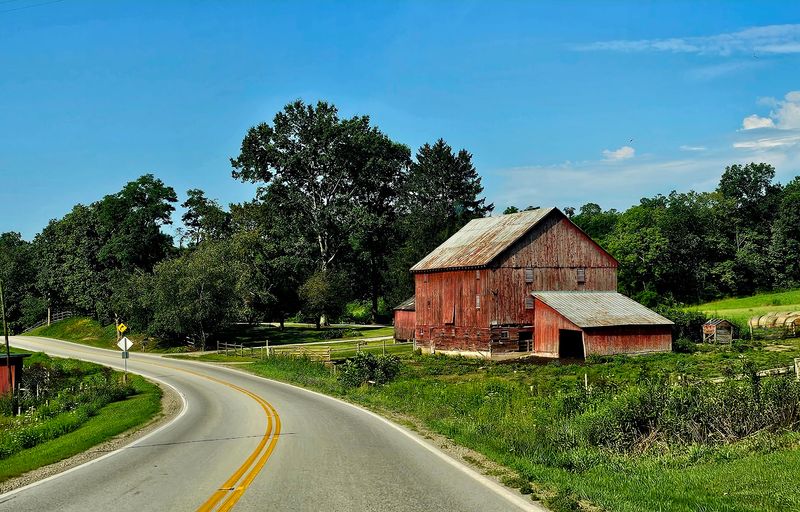
Sunday in Amish country is not like Sunday anywhere else. Businesses are closed.
Roads are quieter. The pace shifts entirely.
For Amish communities, Sunday is set aside for worship, rest, and family. It is not a flexible suggestion.
Visitors who show up expecting farm stores to be open or roadside stands to be stocked are usually disappointed. Some get frustrated, as if the community owes them a sale regardless of the day.
That frustration says more about the visitor than the community.
I once drove through Sugarcreek on a Sunday afternoon expecting a busy market scene. Everything was still.
A few buggies moved slowly down side streets. It was actually one of the most peaceful moments I have had on any trip.
Plan your visit for weekdays or Saturday mornings if shopping is your goal. If you do find yourself there on a Sunday, treat it as a chance to slow down.
Drive carefully, speak quietly if you stop anywhere, and avoid anything that creates noise or disruption. The Amish do not need to adjust their sacred day for tourists.
Visitors who understand that tend to walk away with a much deeper appreciation for what makes these communities genuinely worth visiting.
5. Treating Church Districts Like Attractions
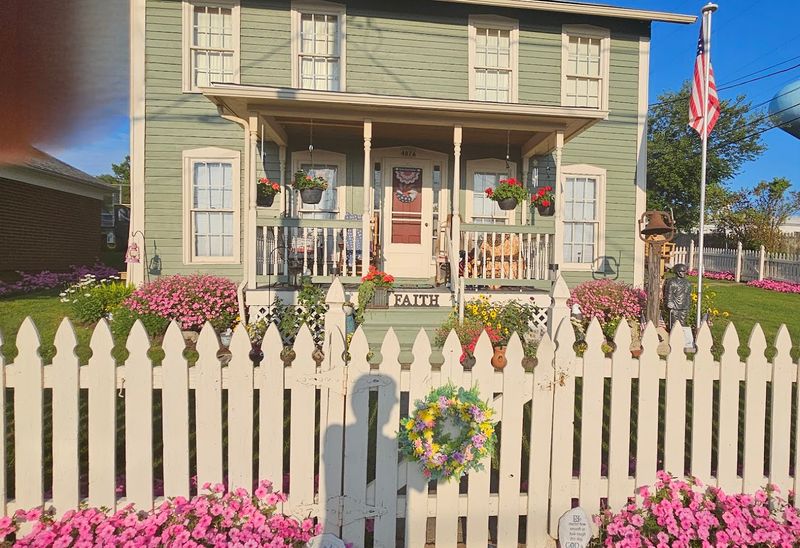
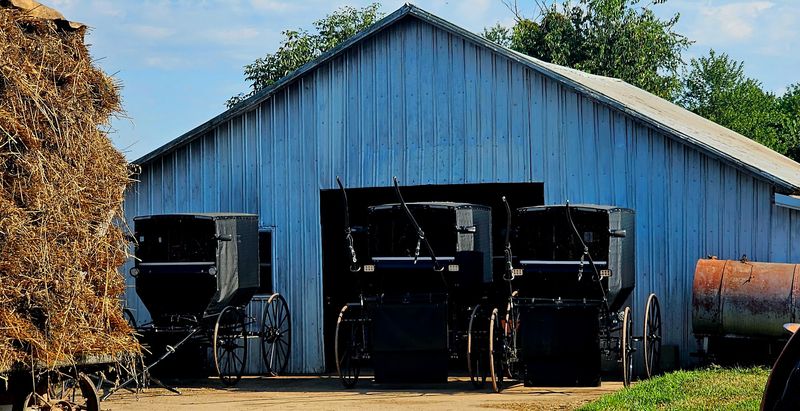
Amish church services do not happen in dedicated church buildings the way most people expect. Many communities rotate services through members’ homes and barns.
When buggies start gathering at a farmhouse on a Sunday morning, some visitors treat it like a scheduled event open to spectators.
It is not. Church services are private, deeply personal gatherings.
Slowing down to watch, parking nearby to observe, or photographing the congregation as they arrive is an intrusion.
The fact that it happens outdoors or along a public road does not make it a public event.
There is something almost jarring about watching someone treat another person’s worship like a roadside show. The Amish faith is not a performance.
It is the foundation of everything they do, from how they dress to how they raise their children to how they treat their neighbors.
If you happen to drive past a gathering, keep moving. Do not stop. Do not photograph. Do not linger.
Showing basic respect for religious practice is not complicated.
The Amish extend a great deal of patience to curious visitors. Returning even a fraction of that respect by leaving their worship undisturbed is the very least any visitor can do.
6. Crossing Private Lanes For The Perfect Barn Shot
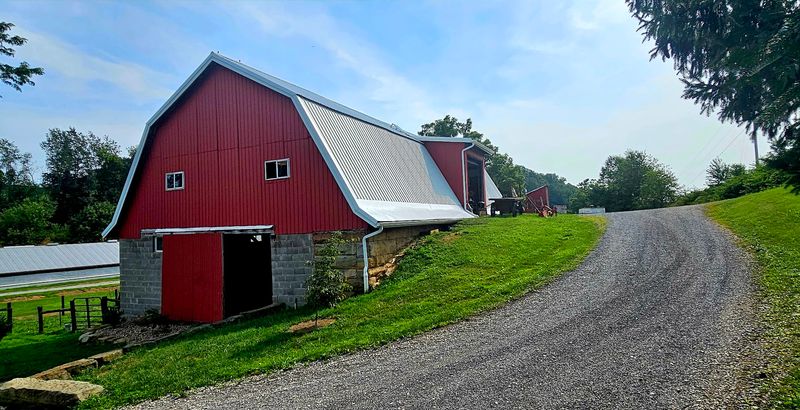
Red barns against green fields with a gray sky rolling in from the west. Ohio Amish country is genuinely photogenic, and I fully understand the urge to get closer.
But the lane leading back to that barn is private property, not a photography trail.
Gravel lanes that cut through Amish farms belong to the families who live and work there. Walking or driving down them without permission to get a better angle is trespassing, plain and simple.
The fact that the barn looks amazing from fifty feet in does not change the legal or ethical reality.
A good telephoto lens does everything you need from the public road. Many of the best rural photography shots are taken without ever setting foot on private land.
Composition, light, and patience matter far more than proximity.
Beyond the legal issue, there is a practical one. Amish farms are active working spaces.
Equipment moves, animals roam, and unexpected visitors create real safety problems.
Showing up unannounced in the middle of someone’s workday is disruptive at best and dangerous at worst. Admire the view from where you are welcome to stand.
The shot you get from the road, taken with respect, will always mean more than one taken by crossing a line you should not have crossed.
7. Misreading Reflectors And Flashing Lights Rules
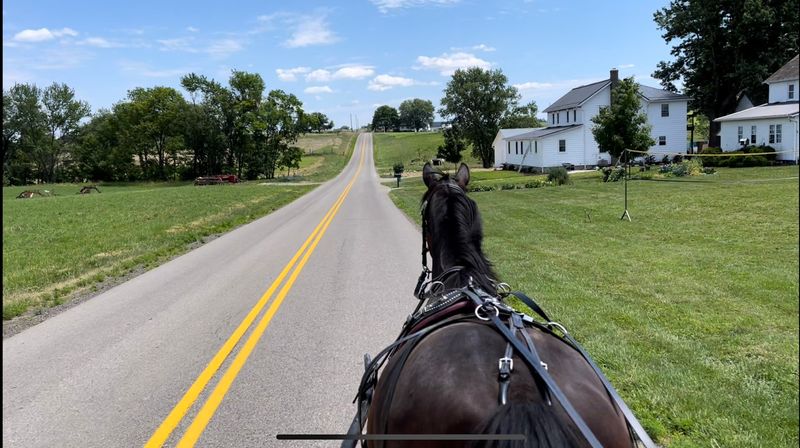
That orange triangle on the back of a buggy is not a decoration. It is a slow-moving vehicle warning sign, required by Ohio law, and it signals something drivers need to take seriously.
Some visitors see it and still pass too fast, too close, or at the wrong moment.
Interestingly, some more conservative Amish districts have had religious objections to using the bright orange triangle, viewing it as too worldly. Ohio courts have addressed this tension over the years.
The result in most areas is that reflective tape and lanterns are used alongside or in place of the triangle in certain communities.
What this means for drivers is that buggy visibility can vary. You cannot always assume the same setup on every buggy you encounter.
Slowing down and staying alert matters more than memorizing a single rule.
Dusk and early morning are the highest-risk windows for buggy encounters on rural roads. The light is tricky, buggies blend into backgrounds, and tired drivers are less focused.
Treat every rural road in Amish country the way you would treat a school zone. Reduce your speed, increase your following distance, and keep your eyes moving.
It takes about thirty extra seconds.
Those thirty seconds can absolutely make a difference to someone’s whole family riding home in that buggy.
8. Treating Farm Shops Like Tourist Displays
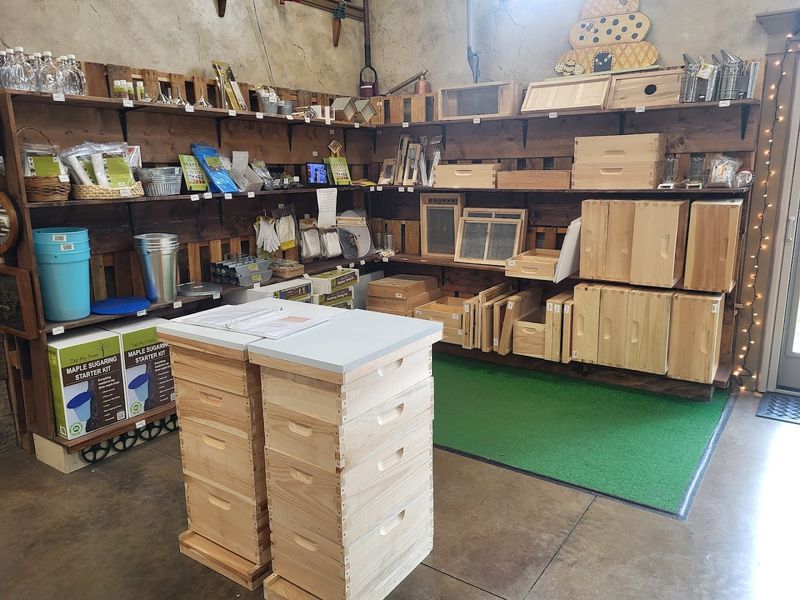
Walking into an Amish farm shop for the first time feels genuinely special. The handmade furniture, the folded quilts, the jars of preserves lined up in neat rows.
It is easy to forget that you are standing in someone’s actual place of business, not a curated experience designed for your entertainment.
Some visitors pick up items without asking, handle fragile goods carelessly, or spend twenty minutes browsing without any intention of buying and then complain loudly about prices.
That behavior would be rude in any store. In a small family-run shop where the owner is also the maker, it lands differently.
Prices at Amish shops reflect real labor. A hand-stitched quilt that took weeks to complete is not overpriced at three hundred dollars.
Furniture built without power tools and finished by hand represents genuine skill and time. Respecting the work means respecting the price.
Ask before touching anything that looks fragile or one-of-a-kind. If a child is present, do not engage them without the parent’s acknowledgment.
Keep your voice at a conversational level.
These shops run on trust and repeat business from people who understand the value of what they are buying. Be one of those people.
You will leave with something worth keeping and a story worth telling.
9. Parking Like You Own The Lane
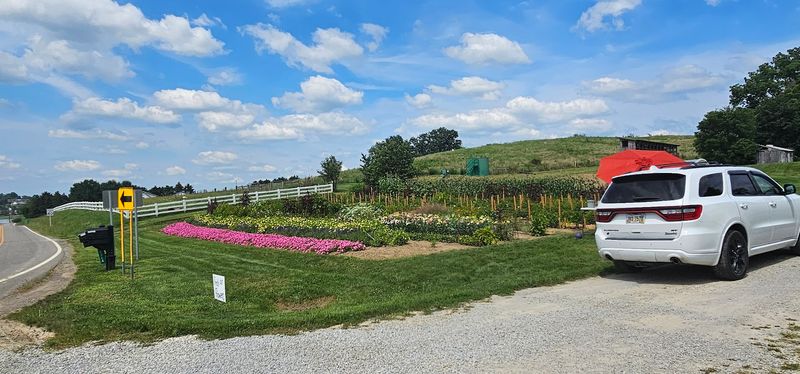
Country roads near Amish communities are not wide. They were not built for the volume of tourist traffic that now flows through areas like Millersburg, Berlin, and Charm, Ohio.
Pulling off to take a photo or check your phone and blocking half the lane is a problem that ripples quickly.
Buggies cannot swerve the way cars can. A horse pulling a loaded buggy needs a predictable, clear path.
When a car is parked awkwardly in a lane or on a narrow shoulder, it forces the buggy driver into oncoming traffic or off the road entirely. That is not a minor inconvenience, it is a real hazard.
Locals also use these roads daily. Farm trucks, delivery vehicles, and school vans all need to pass.
Blocking a lane because you spotted something interesting is the kind of move that makes everyone behind you quietly furious.
If you need to stop, find a proper pull-off, a parking area near a shop, or a wide gravel shoulder well clear of the road. Most Amish towns have designated parking near their markets and stores. Use those.
Plan your stops instead of improvising them in the middle of a working road. Being a considerate driver here is not just polite.
It is genuinely necessary for everyone’s safety.
10. Chasing Night Sounds With Drones
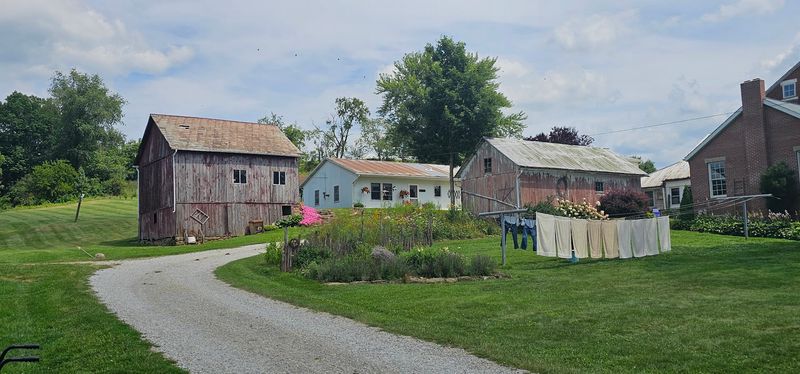
Drones and Amish farms are a combination that goes wrong fast. Flying a drone over private Amish property is not only intrusive, it is potentially illegal depending on altitude and land boundaries.
But beyond the legal side, it is the animals that take the real hit.
Horses, cattle, and even farm dogs react badly to drone noise. The high-pitched buzz at night is disorienting and frightening for animals that are used to quiet. A spooked horse can injure itself.
Livestock that breaks through fencing because of an overhead disturbance creates hours of work and real financial loss for a family.
Some visitors seem to think that because it is dark and they are not physically on the property, flying overhead is acceptable. It is not.
The sky above someone’s land is still their space when you are close enough to disturb their animals and their sleep.
Ohio has seen enough complaints from Amish communities about drone activity that local awareness campaigns have gone up in several counties.
The message is clear. If you want aerial shots of the countryside, use stock photography or hire a licensed professional who knows the regulations.
Do not fly your drone over sleeping farms at night chasing sounds you heard from the road. Leave the night to the people and animals who live in it.