10 Unique Colorado Experiences That Make The Trip Unforgettable
Colorado is the state that makes you feel like a bad traveler every time you visit, because no matter how prepared you think you are, it finds a new way to completely outmaneuver your expectations.
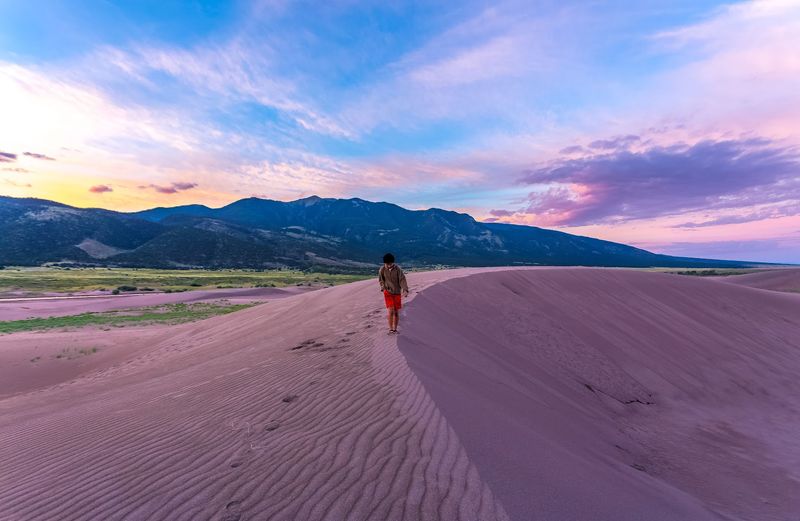
You plan for mountains. You get ancient sand dunes the size of skyscrapers with a snowcapped range behind them.
You plan for skiing.
You end up soaking in a natural hot spring at midnight while it snows directly onto your face. You plan for scenery.
You find a ghost town so intact it feels like the residents just stepped out for a moment and never came back.
I have driven this state more times than I can count, and it still manages to pull something unexpected out of a back pocket I did not know existed.
These experiences are the ones I cannot stop talking about, not because they made it onto a list somewhere, but because they genuinely changed what I thought a trip could be.
1. Strawberry Park Hot Springs, Steamboat Springs
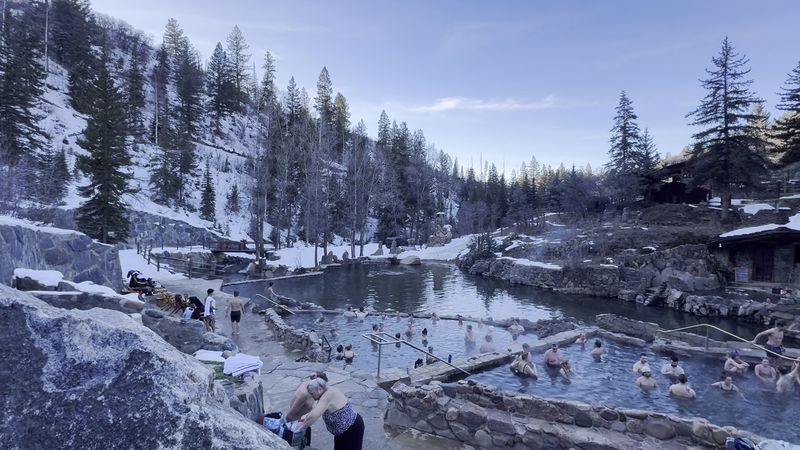
There is something almost absurdly satisfying about sitting in naturally heated water while snow piles up around you.
Strawberry Park Hot Springs, located at 44200 County Road 36 in Steamboat Springs, is that exact kind of place. The pools are carved into the hillside and fed by geothermal springs that stay between 104 and 106 degrees Fahrenheit.
The setting feels genuinely wild. Rocky edges, rushing creek sounds, and towering pines surround you on every side.
This is not a resort spa with piped-in music and lounge chairs. It is a real outdoor experience where the steam curls up into cold mountain air and the stars look impossibly bright overhead.
Going on a weekday morning gives you the best chance of a quieter visit. The road to get there is unpaved and can get slick in winter, so a four-wheel-drive vehicle is a smart choice.
Reservations are required and fill up fast, especially on weekends. Bring cash, wear your swimsuit under your clothes for easy changing, and plan to stay longer than you think you will.
Nobody leaves in a hurry.
2. Stargazing At Great Sand Dunes National Park
Most people visit the Great Sand Dunes during the day and walk away impressed. I made the mistake of leaving before sunset once.
Never again.
The park sits in one of the least light-polluted regions in the entire United States, which means the night sky there is the kind that makes your jaw drop.
The dunes themselves reach up to 750 feet tall, the tallest in North America. Standing at their base after dark feels like being on another planet.
The Milky Way stretches directly overhead, and on a clear night you can see satellites moving slowly across the sky without any effort.
Medano Creek, which flows seasonally along the dune base in spring and early summer, adds an eerie, beautiful soundtrack to the whole experience.
Bring a red-light headlamp rather than a white one to preserve your night vision. The park is located about 30 miles northeast of Alamosa on Highway 150, Colorado and stargazing is best during new moon phases.
Check the park website for ranger-led night programs, which run seasonally and are completely worth booking in advance.
3. Top Of The Rockies Scenic Byway
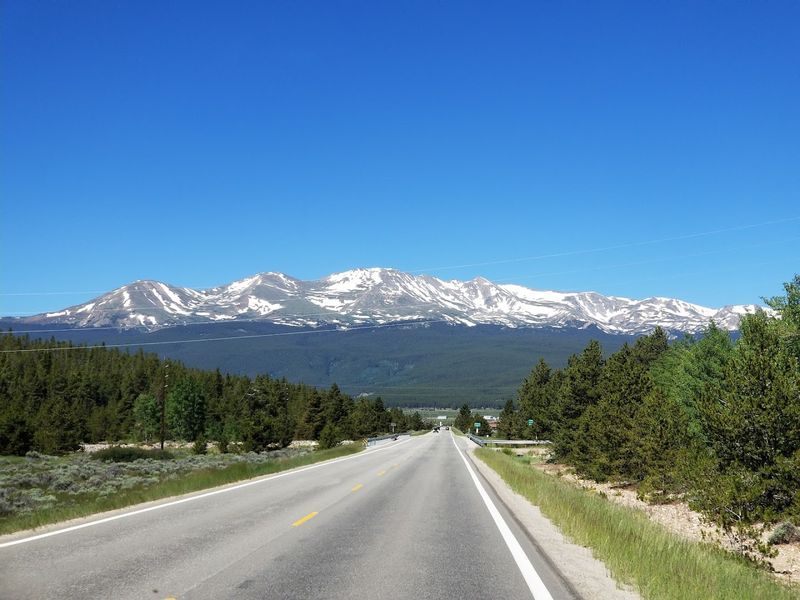
Leadville already wins on altitude alone.
At over 10,000 feet, it is the highest incorporated city in the United States, and the Top of the Rockies Scenic Byway starts right there and climbs even higher before winding its way toward Minturn.
The drive covers about 75 miles and crosses three mountain passes, Tennessee Pass and Shrine Pass, both of which offer views that feel completely unreasonable in the best way.
Fall is the standout season for this drive. Aspen trees turn gold and orange in late September, and the contrast against dark green pines and gray granite peaks is something you will not stop photographing.
Pull over at Camp Hale, where the 10th Mountain Division trained during World War II. The open valley there is haunting and beautiful at the same time.
The road through Minturn drops you into a tiny mountain town with a main street that feels frozen in a different era. Stop and stretch your legs there before heading back.
The full route is paved and accessible by regular passenger vehicles in summer and fall. In winter, check road conditions before heading out since mountain weather changes without warning.
4. The Ghost Town Of St. Elmo
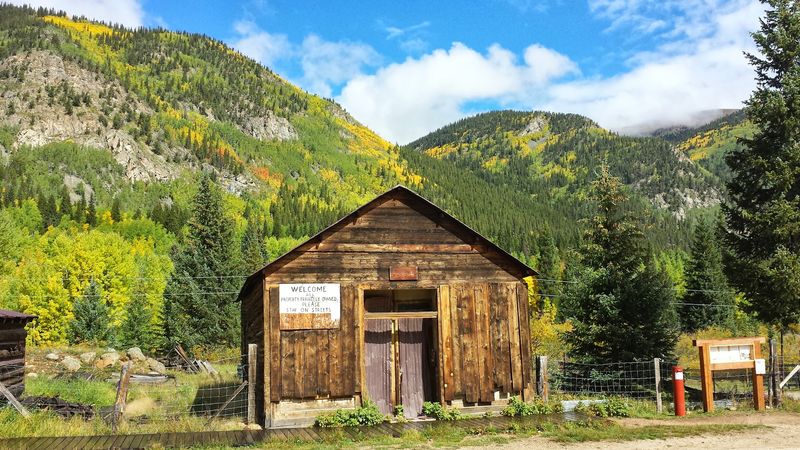
St. Elmo is one of the best-preserved ghost towns in Colorado, and standing on its main street feels like someone pressed pause on 1922 and never came back to press play.
The town boomed during the silver and gold rush era of the 1880s, with a population that reached around 2,000 people at its peak. Today, the buildings still stand, windows intact, storefronts weathered but upright.
Located about 20 miles southwest of Buena Vista off County Road 162, the town is accessible by most vehicles in summer on a well-maintained dirt road.
You can walk through the structures, peek through windows, and read historical markers that explain what each building once was.
The general store is still partially stocked with old merchandise that nobody ever came back to collect.
The surrounding scenery adds another layer to the visit.
Chalk Creek runs alongside the town, and the Collegiate Peaks rise in the distance. Friendly ground squirrels have taken over the place and will approach you with zero hesitation.
Bring a camera and wear good walking shoes since the ground is uneven. Visit in the morning before the afternoon crowds arrive for the most atmospheric experience.
5. Bishop Castle, Beulah
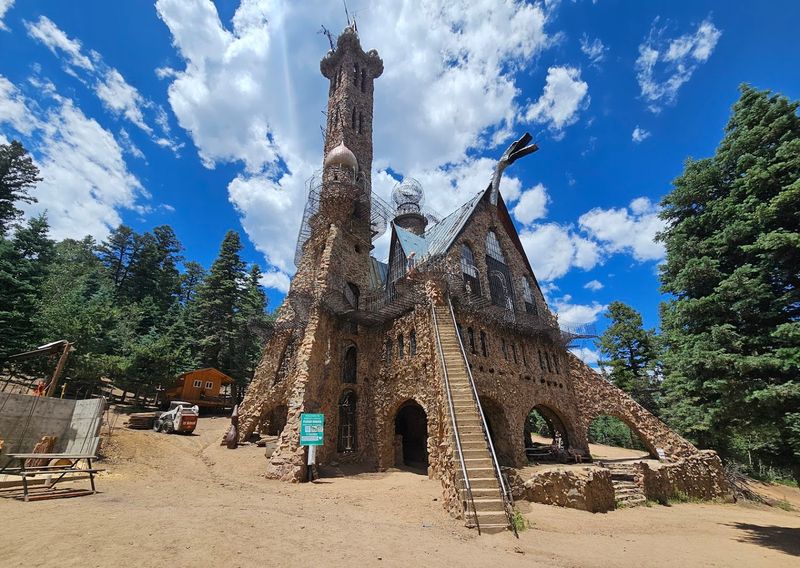
Jim Bishop started building his castle in 1969 when he was a teenager, using stones he collected from the surrounding land.
Bishop Castle near Beulah, Colorado, is the result of one man’s completely unsponsored, self-funded, deeply personal construction project, and it is one of the most genuinely strange and impressive things I have ever seen in person.
The structure rises several stories into the air, with iron spires, a fire-breathing dragon sculpture mounted to the exterior, and a grand ballroom that is open to the sky.
There are no guardrails on some of the upper levels, and the whole thing is open to the public for free. Jim Bishop himself is often on site, and he is not shy about sharing his opinions on just about everything.
The castle is located at 12705 Colorado Highway 165, about 25 miles southeast of Pueblo. It is open year-round during daylight hours.
Wear sturdy shoes since the interior floors and stairs are handmade stone. Bring small bills if you want to leave a donation, which helps Jim keep building.
This is one of those places that sounds impossible until you are standing inside it.
6. Hanging Lake Trail, Glenwood Springs
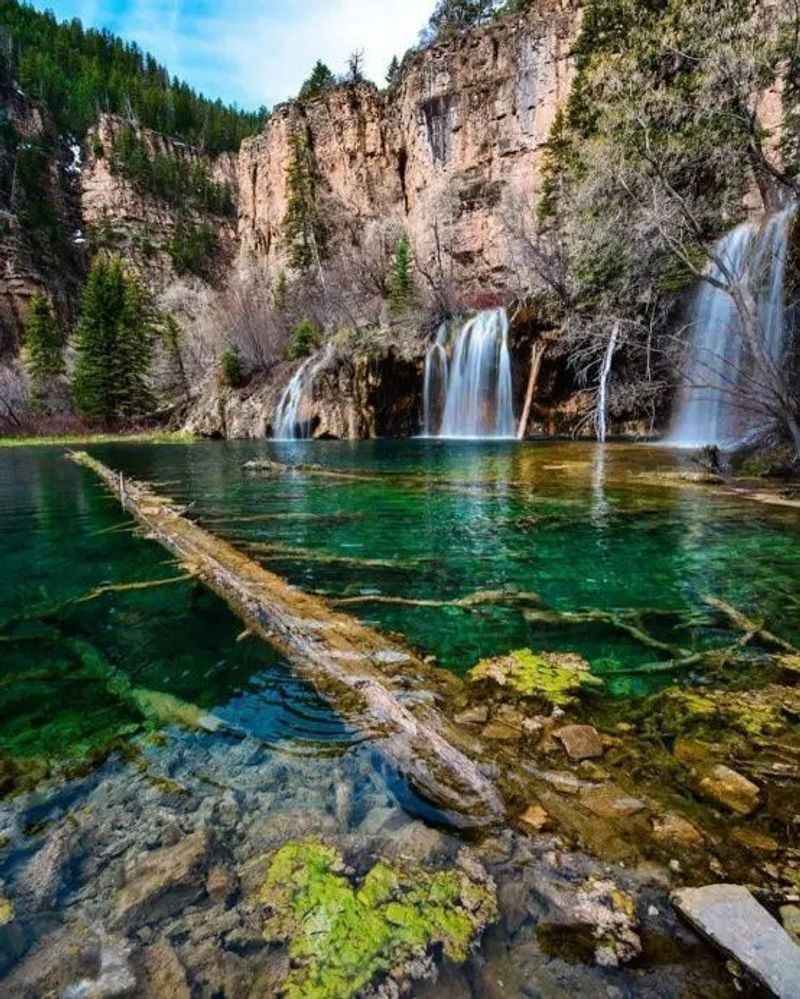
Hanging Lake earned its name because it looks like it should not exist.
The lake sits on a rocky shelf partway up a canyon wall, fed by waterfalls that spill over moss-covered limestone edges and into water so turquoise it looks digitally enhanced. It is not.
That color comes from dissolved calcium carbonate in the water, and it is completely real.
The hike to reach it covers about 2.76 miles round trip but gains 1,200 feet in elevation, most of it in a short distance. It is steep, rocky, and absolutely worth every step.
The trailhead is located in Glenwood Canyon, accessible off Interstate 70 near Glenwood Springs.
A permit system is in place to protect the fragile ecosystem, so book your spot through the Recreation.gov website well in advance, especially for summer weekends.
Once you arrive, stay on the boardwalk and do not touch the water. The ecosystem is sensitive and regulations exist to keep it intact for future visitors.
Sunrise permits tend to offer cooler temperatures and softer light for photography. The canyon walls on the way up are dramatic on their own, with the Colorado River running below.
Plan at least three hours for the full experience including travel time from town.
7. Florissant Fossil Beds National Monument
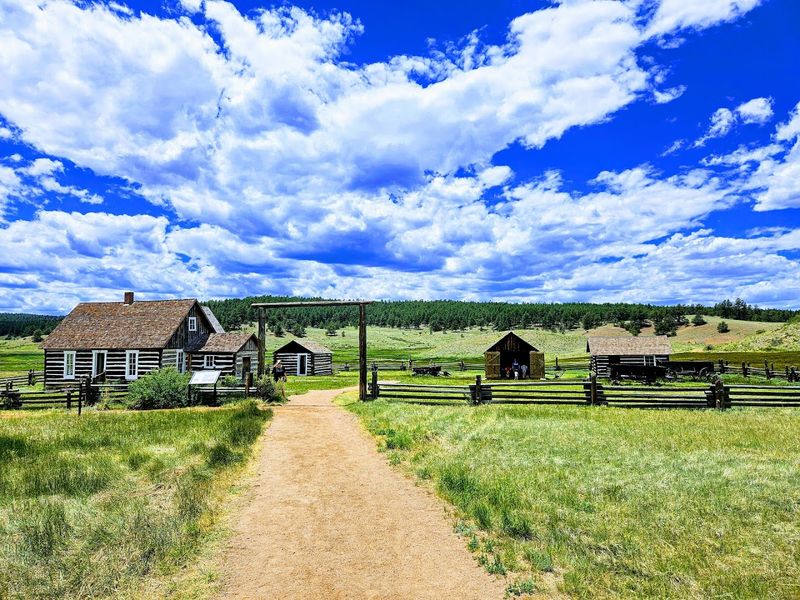
Thirty-four million years ago, a volcanic eruption buried an entire ancient lake ecosystem under ash and debris near what is now Florissant, Colorado.
What came out of that catastrophe was one of the most detailed fossil records on Earth.
The Florissant Fossil Beds National Monument, located about 35 miles west of Colorado Springs, preserves thousands of insect, plant, and fish fossils along with some of the largest petrified redwood stumps ever found.
Walking the trails here feels genuinely different from most national parks. There are no dramatic cliffs or rushing rivers.
Instead, you get open meadows, quiet forests, and massive ancient tree stumps sitting right alongside the path like they have been waiting for you to notice them.
One stump measures 14 feet in circumference and still looks impossibly solid after all those millennia.
The visitor center has excellent exhibits explaining how the fossils formed and what the landscape looked like millions of years ago.
Rangers lead guided walks during summer months that make the science feel accessible and exciting for all ages. Entrance fees are standard national park rates.
The elevation sits around 8,400 feet, so bring layers even in summer. Mornings tend to be clearest and least crowded, which is when the light hits those stumps perfectly.
8. Durango And Silverton Narrow Gauge Railroad
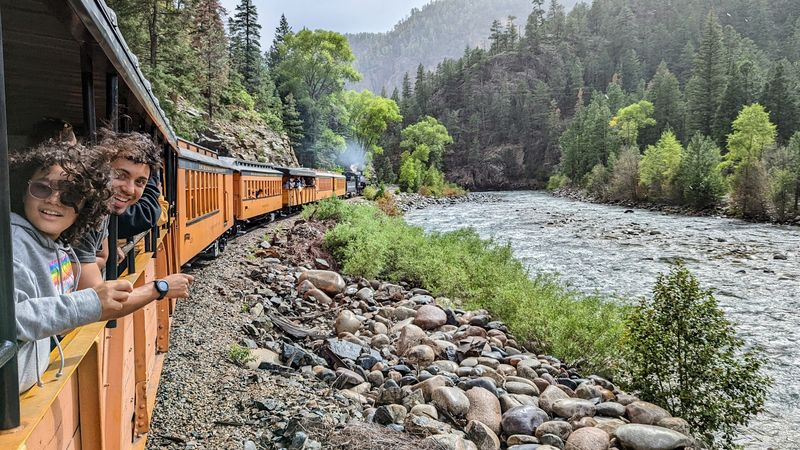
Coal smoke, steam, and the sound of a whistle echoing off canyon walls.
The Durango and Silverton Narrow Gauge Railroad has been running continuously since 1881, and riding it feels like stepping into a moving piece of American history.
The 45-mile route from Durango to Silverton follows the Animas River through a canyon that road vehicles simply cannot access.
The scenery is extraordinary for the entire three-and-a-half-hour journey. Sheer cliff walls, dense forests, rushing whitewater, and the occasional glimpse of elk along the riverbanks all compete for your attention.
Fall is peak season when the aspens turn and the golden hillsides reflect in the river below. The train is pulled by authentic coal-fired steam locomotives that have been maintained and operated continuously for over 140 years.
You can book a round trip or take the train one way and arrange a shuttle back. Silverton itself is a small historic mining town worth exploring for an hour or two before the return trip.
Tickets sell out months in advance for summer and fall departures, so planning early is essential. The depot is located at 479 Main Avenue in Durango.
Dress in layers and sit on the left side heading north for the best canyon views.
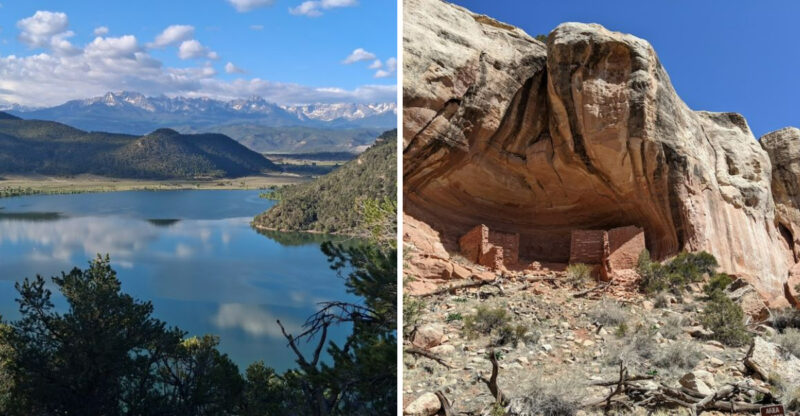
9. Blue Mesa Reservoir, Gunnison
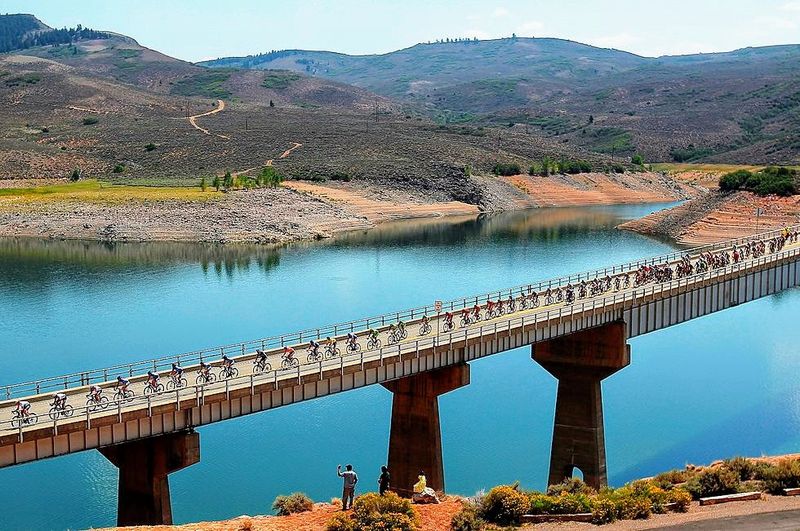
Colorado is not the first place people think of when someone says swimming, but Blue Mesa Reservoir might change that assumption permanently.
At nearly 20 miles long, it is the largest body of water in Colorado and part of the Curecanti National Recreation Area near Gunnison.
The water is a striking shade of deep blue that photographs beautifully and feels refreshingly cold even on the hottest summer days.
Kayaking and paddleboarding are popular here, and rentals are available near Elk Creek Marina. Fishing is also a major draw since the reservoir is known for its kokanee salmon and lake trout populations.
The surrounding landscape of rolling sage hills and carved canyon walls gives the whole place a desert-meets-mountain atmosphere that feels unique even within Colorado.
Elk Creek Campground sits right on the water and books up fast in summer. Day visitors can use the boat ramps and picnic areas without a reservation.
The elevation is around 7,500 feet, which keeps temperatures comfortable even in July and August. Afternoon winds can pick up quickly on the open water, so morning paddling is generally calmer and safer.
Highway 50 runs along the southern edge of the reservoir and offers scenic pullouts for those who want views without getting wet.
10. Mesa Verde Candlelight Tour
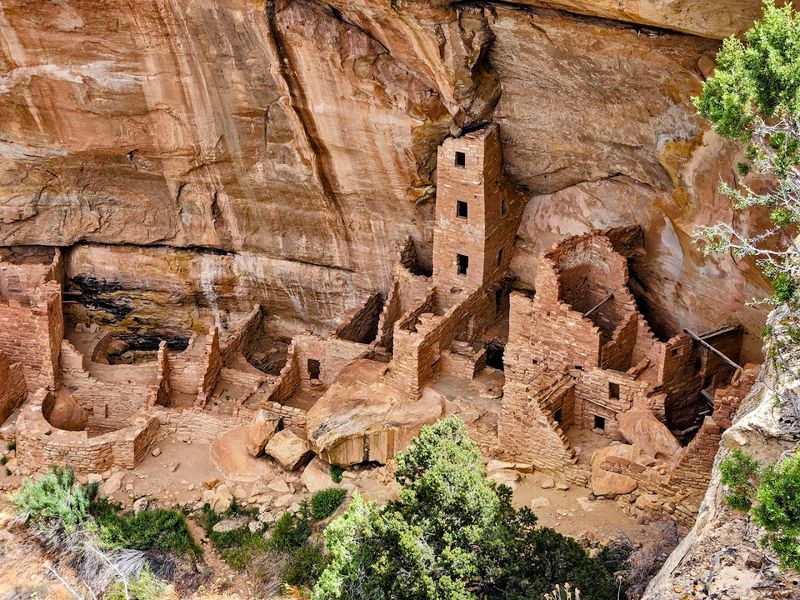
Cliff Palace at Mesa Verde is striking during the day. At night, by candlelight, it becomes something else entirely.
The ranger-led candlelight tours offered seasonally at Mesa Verde National Park bring small groups into the cliff dwellings after dark, when the crowds are gone and the silence settles in like it belongs there.
The flickering light catches the ancient stonework in a way that daytime photos simply cannot replicate.
Mesa Verde, located in southwest Colorado near Cortez, preserves over 5,000 archaeological sites built by the Ancestral Pueblo people between roughly 600 and 1300 CE.
Cliff Palace alone contains 150 rooms and 23 kivas, making it the largest cliff dwelling in North America. The engineering and community planning visible in the structures remain astonishing even to professional archaeologists.
Candlelight tour tickets are released on Recreation.gov and sell out extremely fast, often within minutes of becoming available.
Check the park website for seasonal tour dates and set a reminder for when they open. Comfortable, closed-toe shoes are required since the tours involve climbing ladders and uneven stone paths.
The tours run in the evenings and last about two hours. Bring a light jacket since the canyon temperatures drop after sunset even in summer.
This one is worth every effort to book.