11 New Jersey Places That Do Not Get The Credit They Deserve
Most people think they already know New Jersey. They have driven through it, smelled it near the refineries, made the joke.
But the state has been quietly holding out on you. Hidden behind that highway reputation is a place that rewards the curious.
Marshlands so alive they hum, forgotten villages frozen in time, and architecture that would stop you cold in any country. New Jersey does not beg for attention, and that is exactly why it keeps getting underestimated.
The places locals quietly love and tourists almost always miss? They are nothing like what you expected.
Come ready to be wrong about it.
1. BAPS Swaminarayan Akshardham
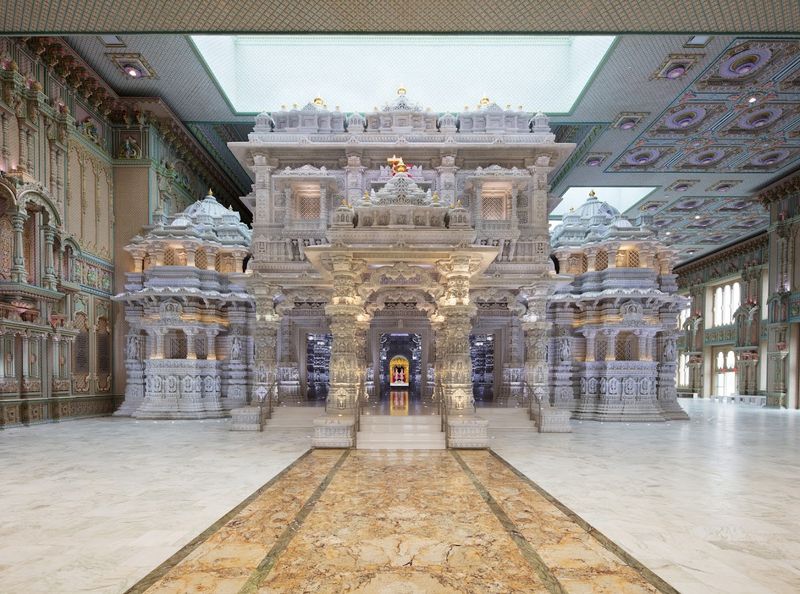
Nothing prepares you for the first time you see it. Rising out of quiet central New Jersey farmland, the BAPS Swaminarayan Akshardham temple in Windsor looks like it was lifted from the heart of India and placed here on purpose.
The structure is carved from Turkish limestone and Italian marble. Over ten thousand hand-carved figures cover every surface, chiseled by artisans from India who spent years on the details alone.
Standing in front of it, the craftsmanship is genuinely hard to believe.
The temple opened in 2023 and quickly became one of the largest Hindu temples in the Western Hemisphere.
Find it at 112 N Main St, Windsor, NJ 08561, where the grounds include reflecting pools, manicured gardens, and a cultural visitor center that explains the traditions behind the architecture.
You do not need to practice Hinduism to appreciate this place. Architects, historians, and curious travelers all find something worth stopping for.
Dress modestly. Plan to spend at least two to three hours.
The scale rewards slow attention, and every carved panel tells a story worth reading. This is the kind of place that makes you feel small in the best possible way.
2. Grounds For Sculpture
Art museums can feel like homework. Grounds For Sculpture never does.
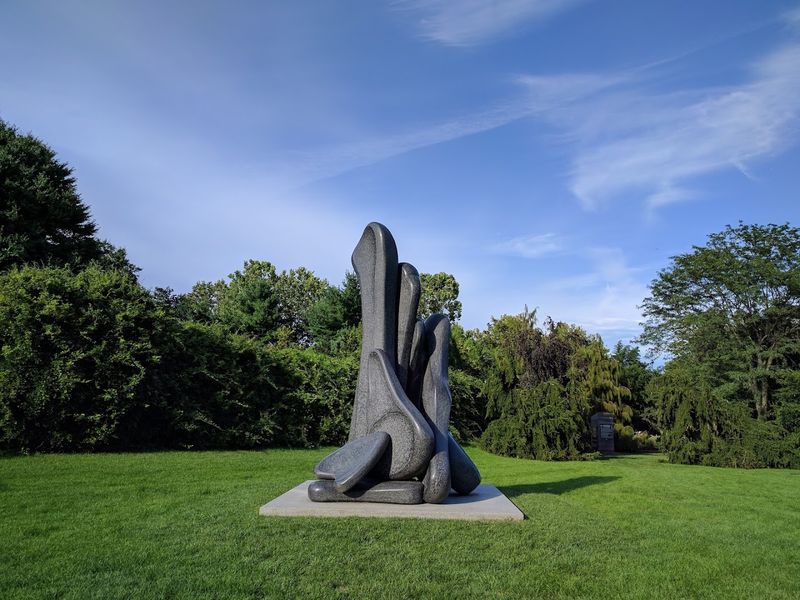
This 42-acre park in Hamilton Township turns a walk outside into something genuinely strange and wonderful.
Sculptures appear around every corner. Some are towering, some subtle, some so realistic you do a double take.
The park was founded in 1992 by artist Seward Johnson, and the collection now includes work from over 270 artists. Pieces range from abstract steel forms to hyper-realistic bronze figures posed mid-conversation on park benches.
The landscaping is part of the experience too. Wetlands, meadows, and wooded paths weave between the installations so the natural setting and the art genuinely respond to each other.
Seasons change the mood completely. A sculpture that feels playful in summer looks almost eerie surrounded by bare winter trees.
Located at 80 Sculptors Way, Hamilton Township, NJ 08619, the park is open year-round with rotating exhibitions that keep regular visitors coming back. There is also an on-site restaurant for when you need a break.
Children love it here because the art is physical and interactive in ways most galleries are not. Adults love it because it rewards patience and curiosity in equal measure.
Plan a full afternoon and wear comfortable shoes.
3. Batsto Village
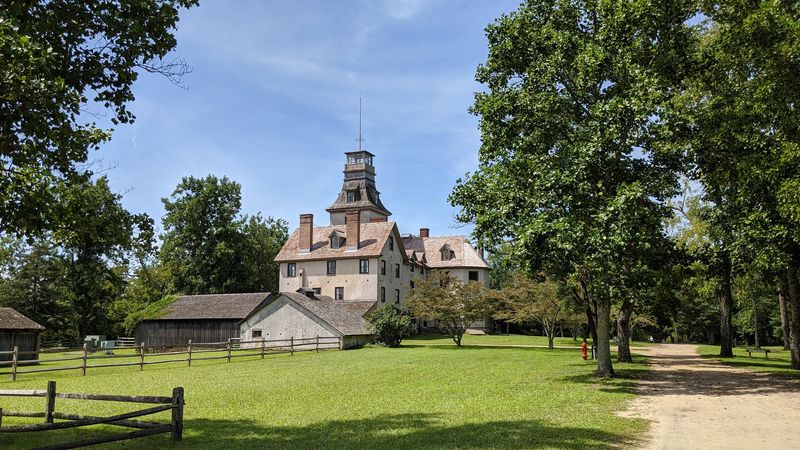
Somewhere in the middle of the Pine Barrens, time stopped. Batsto Village sits along the Batsto River in Wharton State Forest, and it genuinely feels like a town that simply forgot to update itself after the 1800s.
The village was an active iron and glass production center from the mid-1700s through the late 1800s. At its peak, it supplied iron goods during the American Revolution.
Walking through it today, you pass the ironmaster’s mansion, workers’ cottages, a sawmill, a gristmill, and a general store, all preserved and open for exploration.
The surrounding Pine Barrens add something to the atmosphere that no museum exhibit can replicate. The air smells like cedar and river water.
The trails are quiet. The whole place carries a stillness that is rare in New Jersey and even rarer anywhere close to a major highway.
Batsto Village is located at 31 Batsto Rd, Hammonton, NJ 08037, and admission to the village grounds is free, though tours of the mansion cost a small fee. Rangers are on-site and genuinely enthusiastic about the history.
If you bring kids, the open fields and nature trails around the property give them room to roam while you take in the details. Few places in this state offer this much history for this little effort.
4. Edwin B. Forsythe National Wildlife Refuge
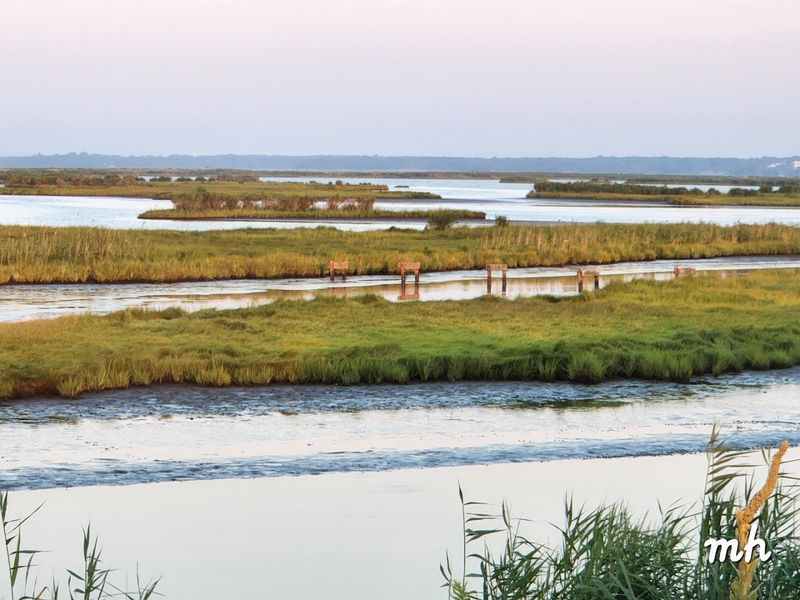
Most people drive past the signs for this place without a second thought. That is their loss.
Edwin B. Forsythe National Wildlife Refuge covers over 47,000 acres of coastal habitat along the Atlantic flyway, one of the most significant bird migration routes in North America.
The eight-mile Wildlife Drive loops through salt marshes, tidal bays, and freshwater impoundments where hundreds of species stop to rest and feed during migration. Snow geese arrive in staggering numbers each autumn, sometimes blanketing entire fields in white.
Ospreys, herons, egrets, and bald eagles show up regularly enough to reward even casual birdwatchers.
The scenery alone is worth the trip. You do not need binoculars or a field guide, though both help.
Atlantic City’s skyline appears in the distance across the marsh, a striking contrast between wild landscape and city.
The refuge entrance is at 800 Great Creek Rd, Galloway, NJ 08205. The Wildlife Drive costs a small per-vehicle fee.
Hiking trails are available for those who want to get closer on foot. Go early.
The light is better, the wildlife more active, and the whole place feels like it belongs entirely to you.
5. Island Beach State Park
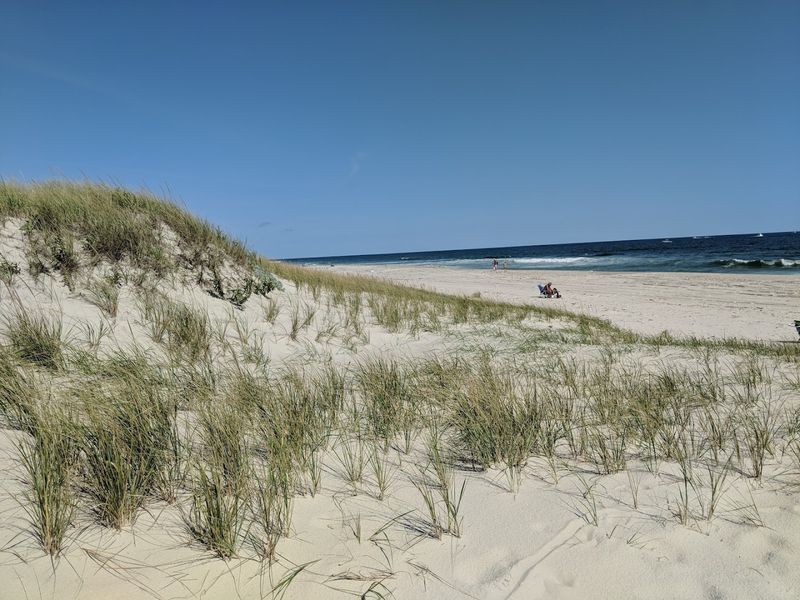
Ten miles of undeveloped Atlantic coastline sounds impossible. Island Beach State Park makes it real.
While most of the Jersey Shore has been built up for over a century, this narrow barrier island stayed wild. The difference is immediate the moment you park and walk toward the water.
The dunes are tall and covered in native grasses. The beach stretches in both directions without a boardwalk, a hot dog stand, or a beachside bar in sight.
Ospreys nest here. Piping plovers breed in the protected zones.
On a quiet weekday in September, you can walk for an hour without passing another person.
The park offers some of the best surf fishing on the Jersey Shore. The northern end has a designated swimming area with lifeguards during summer months.
Kayaking and snorkeling are popular in the calmer bayside waters. The ecosystem includes maritime forest, which feels surprising given how close everything is to the heavily developed Seaside Heights area just to the north.
Located at 2401 Central Ave, Seaside Park, NJ 08752, the park fills up fast on summer weekends. Arrive early.
For anyone who thinks the Jersey Shore is all boardwalks and crowds, this place is a direct and very convincing counterargument.
6. Ocean Grove Beach
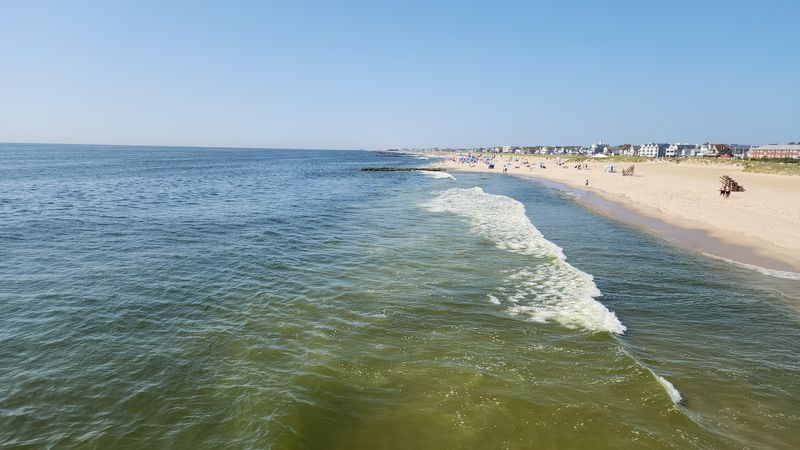
Not every beach town on the Jersey Shore is loud. Ocean Grove operates at a completely different frequency.
The beach here is calm, genuinely beautiful, and backed by a Victorian neighborhood so well-preserved it looks like a stage set from the 1880s.
Ocean Grove was founded in 1869 as a Methodist camp meeting site, and that origin still shapes the character of the town. The streets are narrow, the homes are ornate, and the pace is slow in a way that feels intentional rather than sleepy.
The beach itself sits at Ocean Ave N, Ocean Grove, NJ 07756, and it draws families and couples looking for something quieter than the Asbury Park scene right next door.
The water is clean, the sand is wide, and the lack of a massive commercial boardwalk means the beach retains a quality that is increasingly rare on the Shore. Parking can be tricky in summer, but the town is walkable once you are in.
What makes Ocean Grove worth the visit is the combination of beach access and architectural history in one compact space. The Great Auditorium, a massive wooden structure built in 1894, still hosts concerts and events throughout the summer.
Wandering the residential streets after a swim and spotting gingerbread trim on every porch is its own kind of entertainment. This is a beach town that rewards slow exploration.
7. Asbury Park Convention Hall
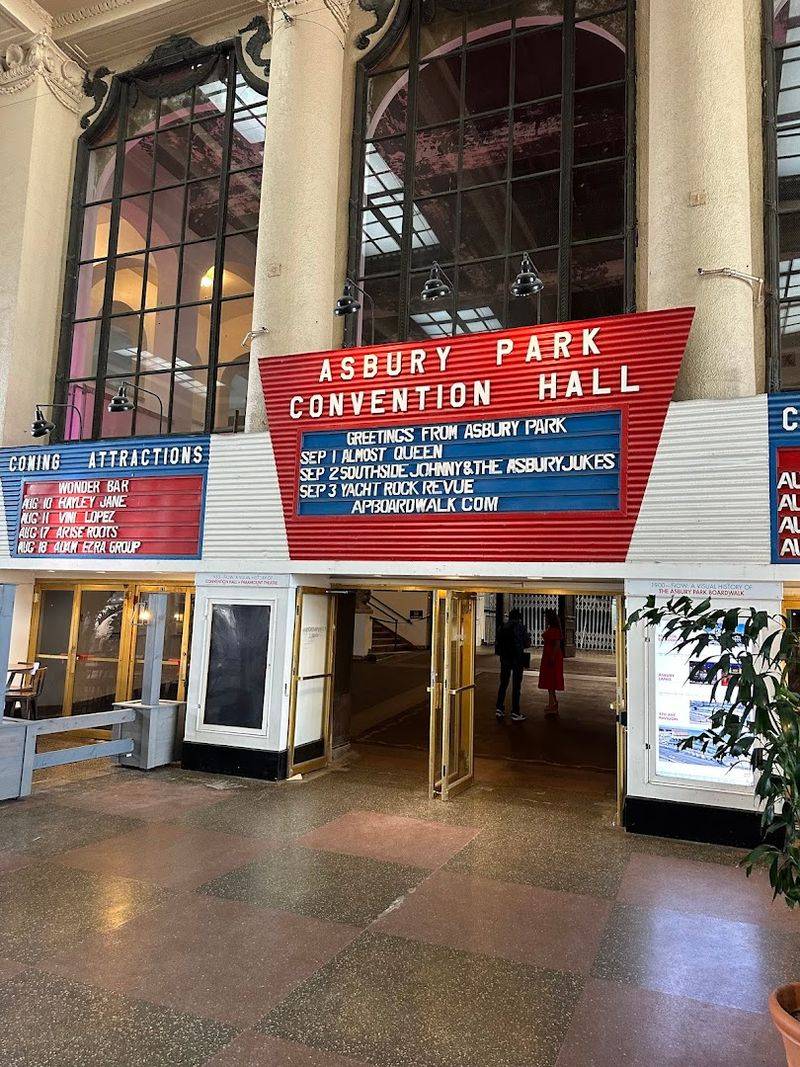
Few buildings in New Jersey carry as much history in their walls as this one. Asbury Park Convention Hall opened in 1930 and has since hosted everyone from big band orchestras to Bruce Springsteen during the early years of his career.
The building sits directly on the boardwalk at 1300 Ocean Ave N, Asbury Park, NJ 07712, facing the Atlantic with the kind of confident architecture that does not apologize for taking up space.
The structure is Romanesque Revival in style, with arched windows, terracotta detailing, and a central hall that can hold thousands. It connects to the Paramount Theatre, which has been restored and still hosts concerts and events year-round.
The whole complex is a reminder that Asbury Park was once one of the most glamorous resort destinations on the East Coast.
The city went through decades of economic difficulty after its mid-century peak, but the Convention Hall survived and now anchors a revitalized boardwalk. Art installations, food vendors, and live music fill the surrounding space during warmer months.
Visiting on a weekday morning before the crowds arrive gives you the best chance to appreciate the architecture without distraction. The interior, when open for events, is genuinely impressive.
Even if you only walk past on the boardwalk, the building commands attention. Asbury Park deserves more credit as a cultural destination, and this hall is the best argument for that case.
8. Antiques Center At The People’s Store
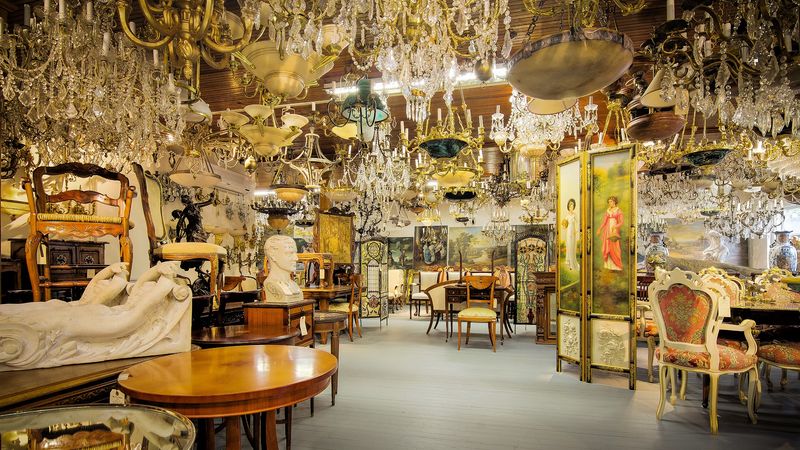
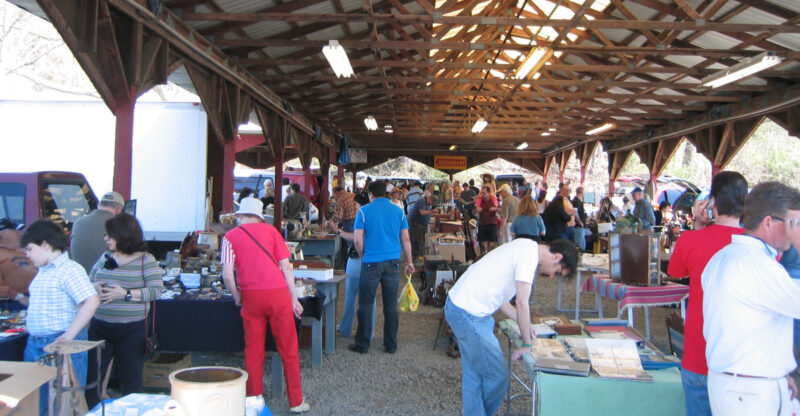
Lambertville is already one of the most charming small towns in the state, but the People’s Store is the reason serious antique hunters make the drive. The building is a converted 19th-century general store with creaking floors, exposed brick, and enough square footage to get genuinely lost in.
Over forty dealers operate within the space, each with their own booth and specialty. Victorian jewelry sits next to mid-century modern furniture next to hand-painted folk art from the 1800s.
The inventory turns over constantly, so repeat visits almost always surface something new. There is no curated aesthetic here.
Just decades of accumulated American material culture packed into a building that feels older than most of what it sells.
Located at 28 N Union St, Lambertville, NJ 08530, the store sits within easy walking distance of the Delaware River and the independent restaurants and galleries lining the main streets.
A visit pairs well with a walk across the bridge into New Hope, Pennsylvania, which has its own antique shops and art scene.
Prices are fair compared to similar markets in New York or Philadelphia, and dealers are generally happy to negotiate. Even if you have no intention of buying anything, browsing is its own kind of entertainment.
The sheer variety of objects tells a story about American life that no history textbook quite captures.
9. Delaware Water Gap National Recreation Area
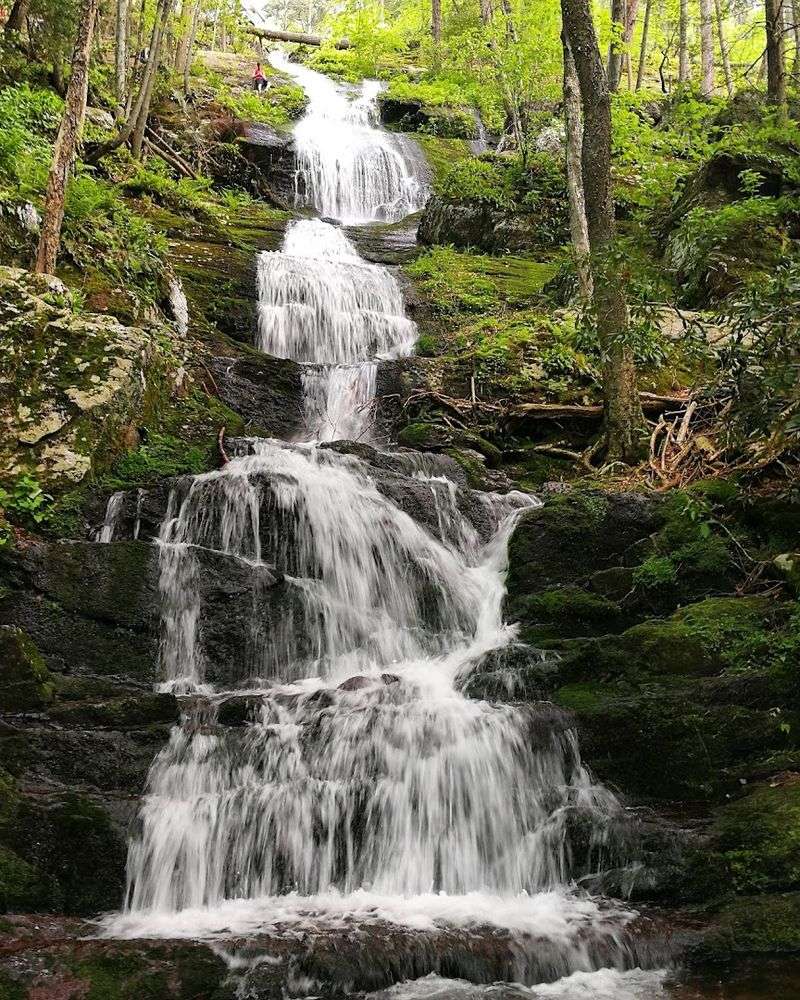
The Delaware Water Gap is one of those places that consistently surprises people who have lived nearby their whole lives without ever going.
The recreation area stretches 70,000 acres along both sides of the Delaware River, straddling the border between two states, and the scenery is legitimately dramatic by any standard.
The river cuts through the Kittatinny Ridge at the Water Gap, creating a natural corridor flanked by steep forested ridgelines. Hiking trails range from easy riverside walks to the challenging climb up Mount Tammany.
The views from the top rank among the best in the entire mid-Atlantic region. The Appalachian Trail passes directly through the recreation area.
Swimming, canoeing, kayaking, and tubing are all popular on the river during summer. Waterfalls including Dingmans Falls and Silverthread Falls are accessible by short trails and worth every step.
The area is managed by the National Park Service, so entry is free and facilities are well-maintained.
Fall foliage transforms the ridgelines into something almost unreasonably beautiful. The crowds, while present, never approach the density of national parks out west.
Go before summer weekends and you will have it largely to yourself.
10. Glasstown Arts District
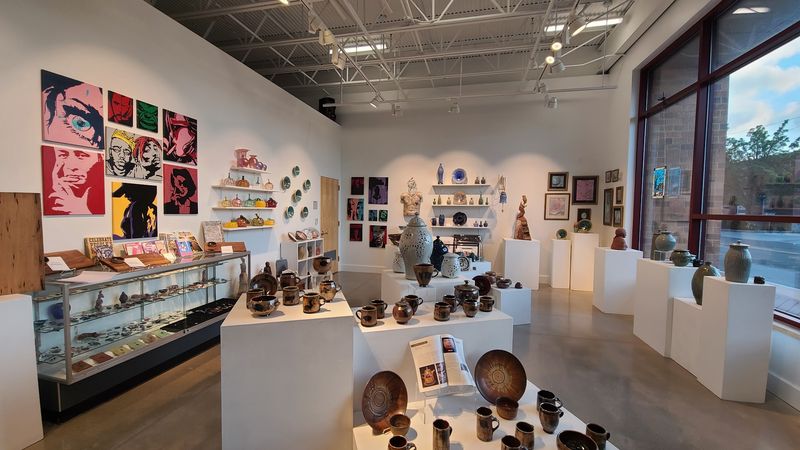
Millville does not come up in conversations about arts destinations, and that is a genuine oversight.
The Glasstown Arts District in the center of the city has quietly developed into one of the most authentic creative communities in the state, built around the town’s long history as a glassmaking hub.
Millville was once home to Wheaton Glass, one of the largest glass manufacturers in the country, and that industrial heritage is woven into the identity of the district. Galleries, studios, and working artists occupy historic downtown buildings along High Street.
The Museum of American Glass at WheatonArts, located nearby, holds one of the largest collections of American glass art anywhere.
The surrounding blocks include restaurants, coffee shops, and independent retail that give the area genuine life rather than the polished emptiness of some arts districts. First Friday events bring out artists and the public in numbers that feel organic rather than manufactured.
What makes Glasstown worth the trip is its specificity. This is not a generic arts district.
It grew from a real industrial and cultural identity, and that rootedness shows in the work and in the people making it. South Jersey rarely gets credit for cultural depth.
Millville is a strong argument that it should.
11. Ocean Grove Historic District
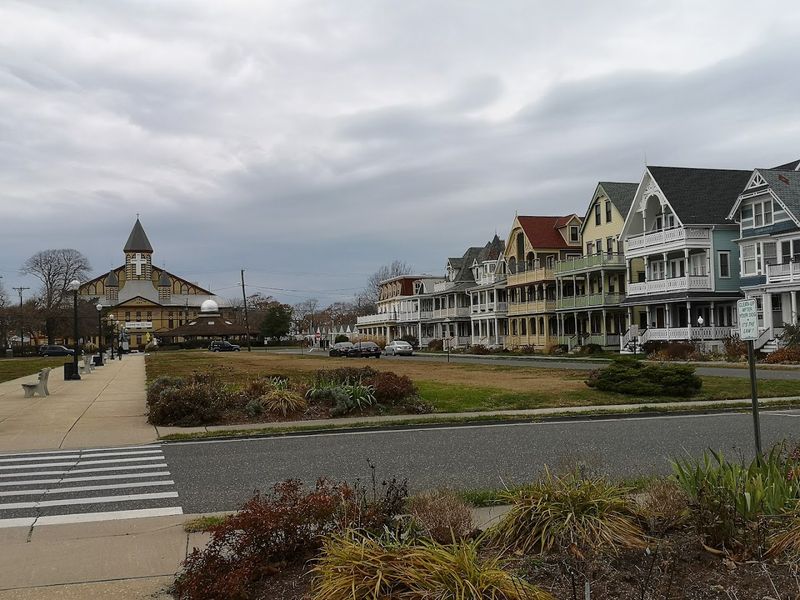
Walking through the residential streets of Ocean Grove feels like flipping through a very well-preserved architectural catalog of the Victorian era.
The historic district, listed on the National Register of Historic Places, contains one of the largest collections of Victorian architecture in the United States. That is not a small claim, and the streets absolutely back it up.
The neighborhood was developed primarily between the 1870s and 1890s as a Methodist camp meeting community. The original layout, including tent platforms and meeting grounds, still influences the street plan today.
Hundreds of cottages display ornate woodwork, wraparound porches, and decorative trim that define the period. Many are privately owned and maintained with obvious care.
The Great Auditorium at the center of the district is a wooden structure built in 1894 that seats over 6,000 people. It still hosts concerts, speakers, and community events throughout the year.
Several bed-and-breakfasts offer overnight stays that put you directly inside the historic neighborhood rather than just passing through.
Main Ave, Ocean Grove, NJ 07756 runs through the heart of the district and is the best starting point for a self-guided walk. Beach access, Victorian architecture, and a genuinely unhurried atmosphere make this one of the most distinctive destinations in the state.
The fact that more people do not know about it is almost hard to explain.