13 Oregon Scenic Drives That Show Off The Best Of The State
I once pulled over on the side of an Oregon highway and just sat there, speechless. No map had warned me about the view.
Nobody told me a two-lane road through the high desert would end at a ridge overlooking a canyon that looked stolen from another planet. That’s the state for you.
It doesn’t ease you in. It hits hard.
Old-growth forest one moment, volcanic moonscape the next, a coastline that looks like it belongs in Iceland the moment after that. Oregon has 29 designated scenic byways, and every single one feels like a secret someone almost kept to themselves.
The drives ahead are the best of them, the ones where the state stops pretending to be subtle and just shows you everything it’s got.
1. Historic Columbia River Highway
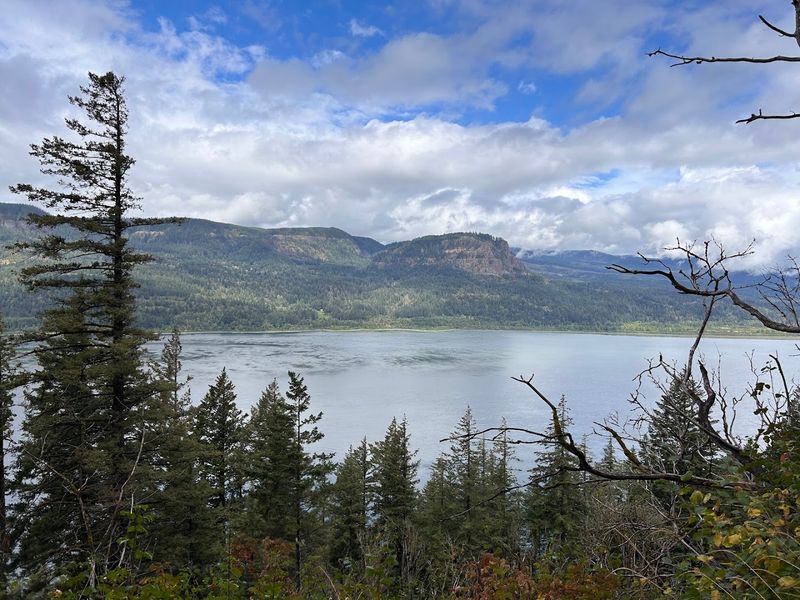
Built in 1916, this road was engineered to be a work of art, and it still is. The Historic Columbia River Highway stretches from Troutdale to The Dalles, hugging the cliffs above the Columbia River Gorge with the kind of confidence only a century-old highway can pull off.
Multnomah Falls is the obvious showstopper, dropping 620 feet in two dramatic tiers. But stop at Crown Point and Vista House too.
The views from those spots hit differently, especially on a clear morning when the gorge is still wrapped in mist.
Stone bridges, hand-carved tunnels, and elegant viaducts make this feel less like a commute and more like a museum you drive through. The engineering alone is worth the trip.
Fall is peak season here, when the maple and oak trees along the gorge light up in orange and red. Plan for a full day, bring good walking shoes, and expect to stop constantly because you simply will not be able to help yourself.
Some sections of the historic highway may have limited access or require permits during peak seasons, so it is worth checking conditions before you go.
2. Cascade Lakes Scenic Byway
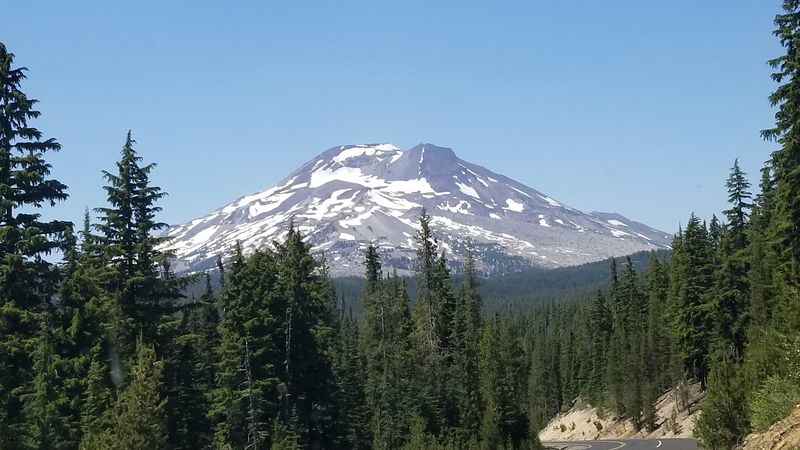
Starting just west of Bend, the Cascade Lakes Scenic Byway loops through the Deschutes National Forest past more than a dozen alpine lakes, each one bluer and calmer than the last.
Sparks Lake, Elk Lake, Hosmer Lake, and Cultus Lake are the main players, and every single one earns its spot on the itinerary.
The volcanic backdrop here is what sets this drive apart. The Three Sisters and Bachelor Butte loom over the landscape like ancient sentinels, their jagged silhouettes reflecting in the water on still mornings.
It is the kind of scenery that makes you pull over and just sit with it for a while.
Fall transforms the whole corridor into something almost unreal, with golden larches and amber brush framing the dark green pines. Summer brings paddlers, fly fishers, and hikers out in force, but the road never feels overwhelmed.
The byway runs about 66 miles total and is best driven in late summer or early fall. Camping options are plentiful, and spending a night or two out here makes the whole experience feel like a proper wilderness adventure rather than just a drive.
3. McKenzie Pass-Santiam Pass Scenic Byway
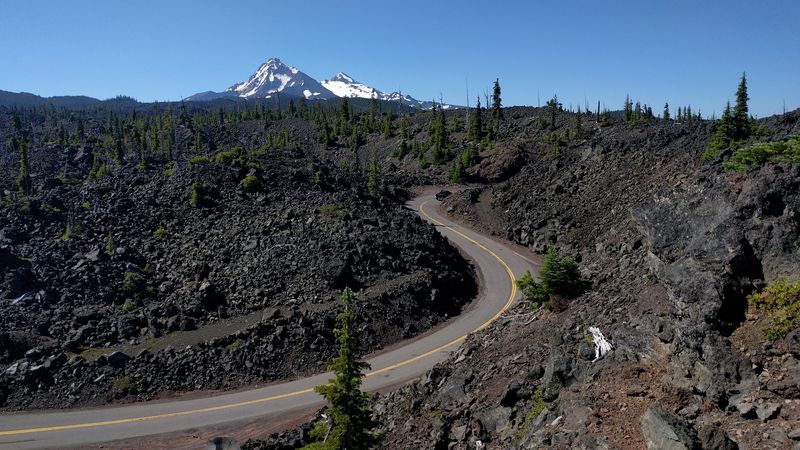
Crossing two Cascade mountain passes in one drive sounds ambitious, but OR-242 and OR-20 between Sisters and Eugene make it feel completely natural. The scenery shifts constantly, from old-growth Douglas fir forest to open wildflower meadows to something that looks genuinely alien.
That alien stretch is the lava field at McKenzie Pass. The Dee Wright Observatory sits right in the middle of it, a small stone tower built by the Civilian Conservation Corps in the 1930s.
Climb to the top and you can identify more than a dozen volcanic peaks through the observation windows. It is one of the most unusual viewpoints in the entire Pacific Northwest.
OR-242 is a narrow, winding road not suitable for RVs or trailers, which actually works in your favor since it keeps the crowds manageable. It is typically open only from late June through October due to snow.
The contrast between the dark, craggy lava and the soft meadows on either side of the pass is striking in a way that photographs struggle to capture. Drive it slowly, stop at the observatory, and take the short trail out into the lava field.
The scale of it only becomes clear on foot.
4. Hells Canyon Scenic Byway
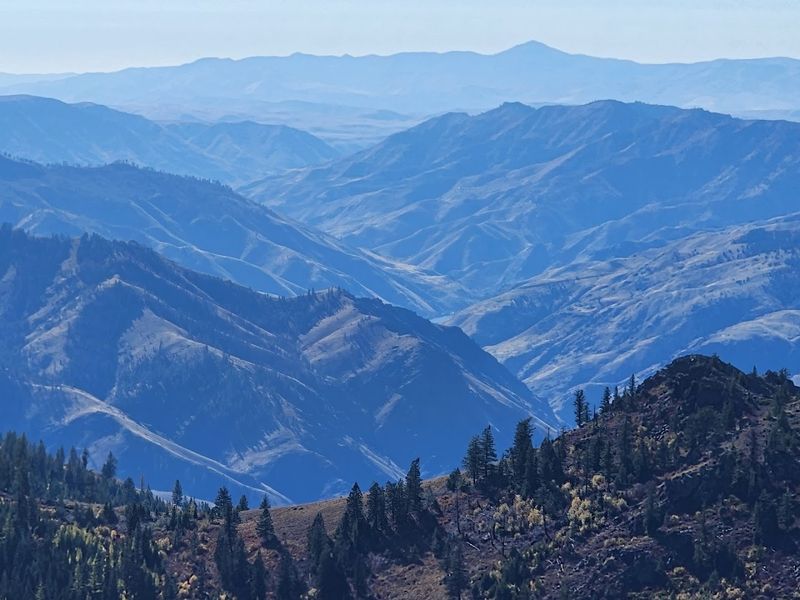
Most people think of the Grand Canyon when someone mentions the deepest gorge in North America. They are wrong.
Hells Canyon is deeper, and this drive proves it.
The 208-mile Hells Canyon Scenic Byway winds from Baker City up to Joseph. It cuts through some of the most remote and geologically dramatic terrain in the state.
The Snake River churns nearly 8,000 feet below the highest canyon walls. The views from the rim lookouts will make your knees feel a little uncertain.
The landscape shifts as you go. High desert scrubland gives way to ponderosa pine forest, then opens into alpine meadows near the Wallowa Mountains.
This is the state’s only All-American Road, a federal designation reserved for routes so unique they become a destination on their own.
Joseph, at the northern end, is a small but surprisingly vibrant town built around bronze foundries and art galleries. Hat Point Overlook near Imnaha offers what many consider the single best canyon view anywhere on this route.
Get there early, bring water, and plan for a full day minimum.
5. Wallowa Lake Highway
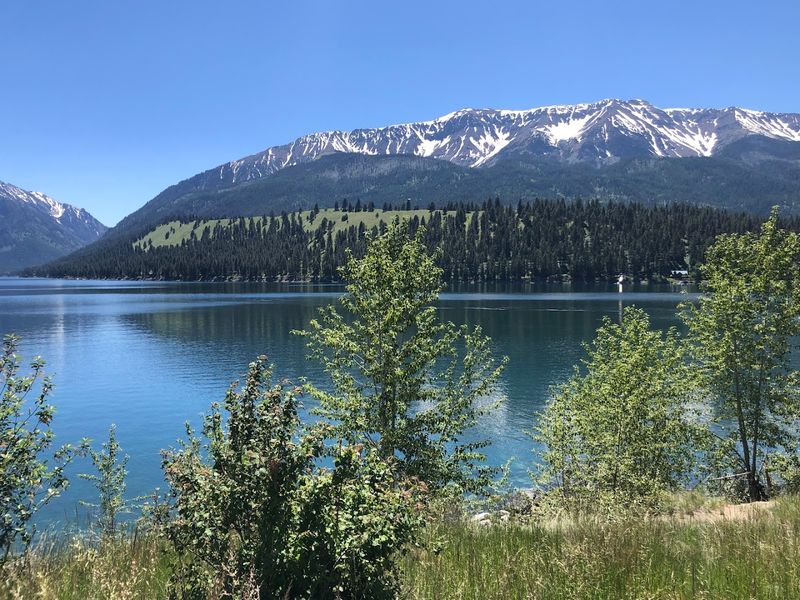
People call this the Alps of the state, and after driving OR-82 from La Grande to Wallowa Lake, it is hard to argue. The highway follows the Wallowa River through a wide, lush valley framed by the Eagle Cap Wilderness.
The mountains that rise above it are genuinely breathtaking.
Wallowa Lake sits at the end of the valley like a reward. The terminal moraine that formed it during the last ice age is visible as a gentle ridge at the lake’s southern end.
On calm mornings, the water reflects the peaks above with near-perfect clarity.
The small town of Joseph sits just north of the lake and is worth time on its own. Foundries here produce large-scale bronze sculptures.
The main street has galleries and a creative energy that feels organic rather than manufactured.
A gondola at the south end carries passengers up to the ridge for views across the entire valley. The drive back along OR-82 in the late afternoon, with the sun hitting the peaks, is the kind of thing that makes you understand why people never leave.
6. Newberry National Volcanic Monument Loop
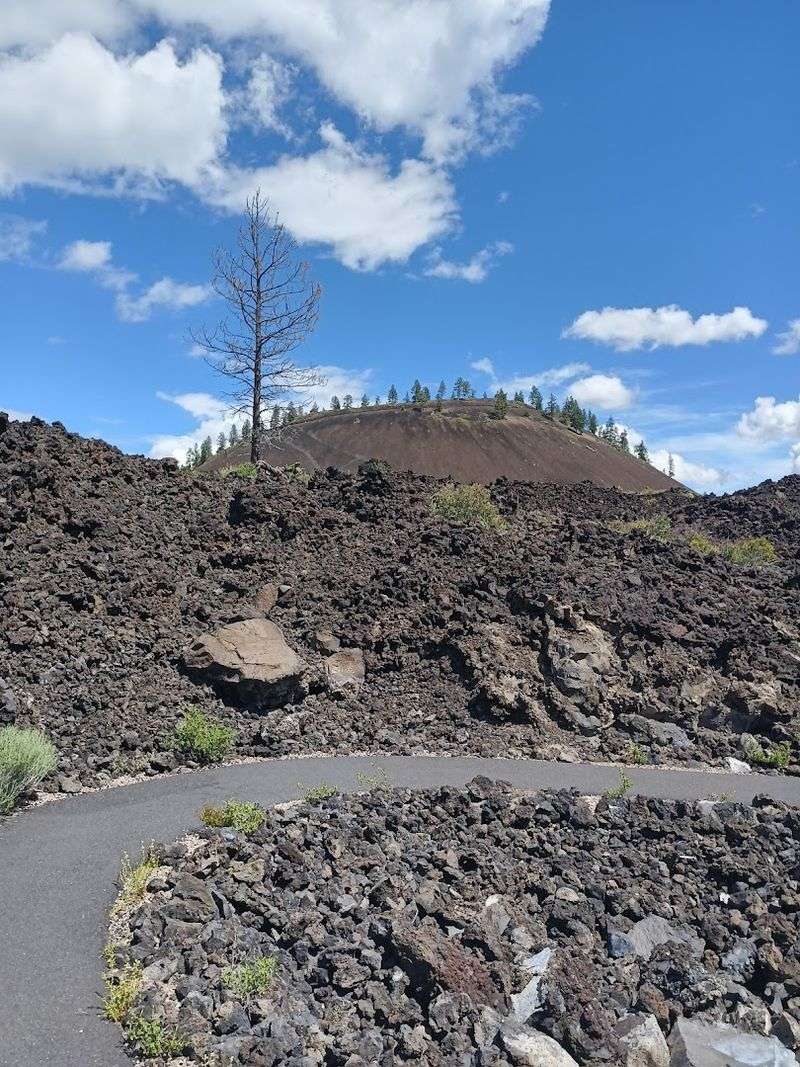
Just 23 miles south of Bend sits one of the most geologically packed drives in the entire country.
The Newberry National Volcanic Monument covers about 55,000 acres of volcanic features, and the loop road through it reads like a textbook on how volcanoes reshape the earth, except the textbook is alive and enormous.
Paulina Lake and East Lake fill the caldera at the top of Newberry Volcano, and both are strikingly beautiful in completely different ways. Paulina has a dramatic waterfall on its outlet stream.
East Lake sits quietly against the eastern caldera wall with obsidian cliffs above it. The Big Obsidian Flow, formed only about 1,300 years ago, is one of the youngest lava flows in Oregon and looks like a frozen black ocean.
A short trail winds through the obsidian flow and the scale of it, combined with the glassy, razor-sharp texture underfoot, makes it feel like another planet. Pumice fields, cinder cones, and steam vents round out the geological variety.
The monument is open year-round at lower elevations, though the caldera road closes in winter. This is a half-day drive at minimum, and geology enthusiasts could easily spend a full day here without covering everything.
7. Crater Lake Rim Drive
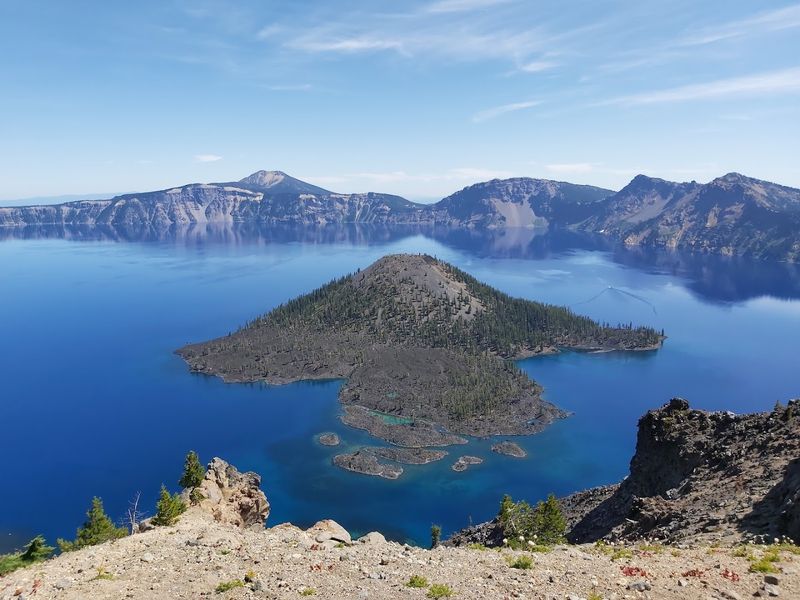
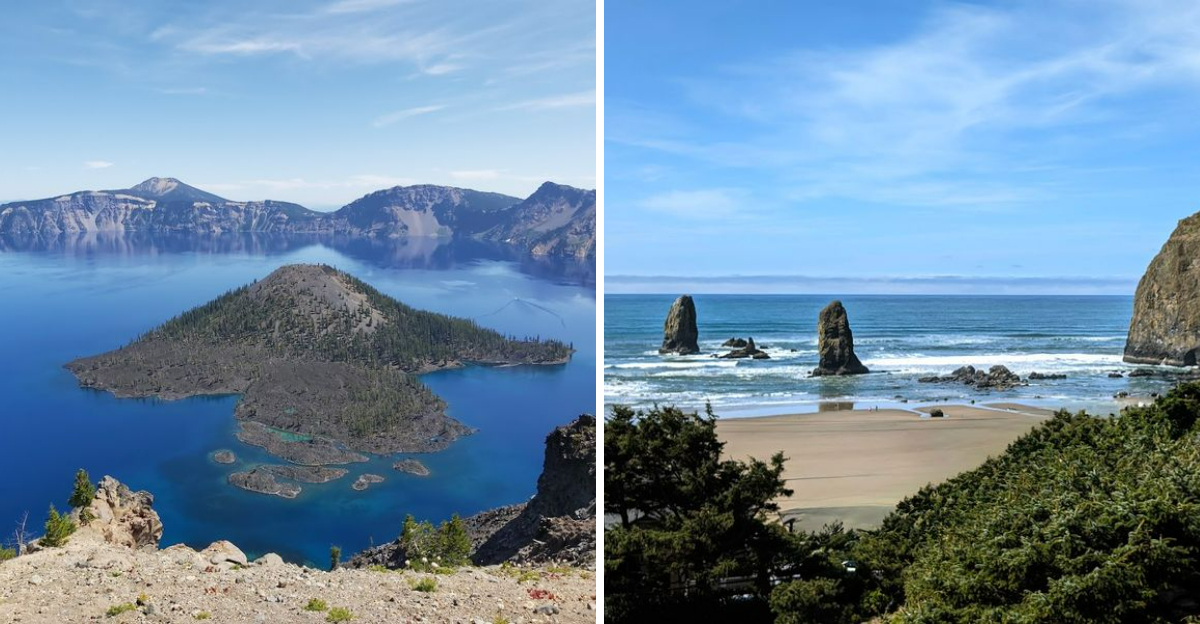
Nothing prepares you for the color of Crater Lake. You round a bend on the 33-mile Rim Drive, and suddenly there it is, a blue so saturated and deep it looks digitally enhanced.
It is not. That is just what 1,943 feet of the clearest water in North America looks like.
Crater Lake formed roughly 7,700 years ago when Mount Mazama collapsed after a massive eruption. The caldera filled with rain and snowmelt over centuries, and now it sits there being extraordinary while the rest of the world goes about its business.
Every pullout along the Rim Drive offers a completely different angle on the lake, and the temptation to stop at all of them is real and justified. Wizard Island rises from the center of the lake like a bonus volcano, which is exactly what it is.
The drive opens in phases from late spring into summer, with full access often not available until mid-summer, depending on snowfall. Sunrise and sunset light on the rim walls are genuinely spectacular, so if you can arrange an overnight stay at Crater Lake Lodge, do it.
Waking up above that blue is not something you forget quickly.
8. Steens Mountain Loop Road
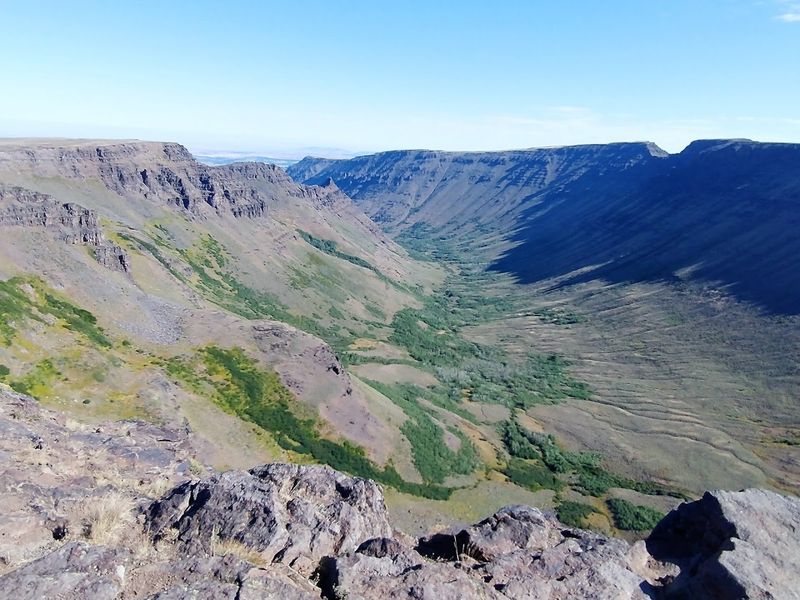
Getting to Steens Mountain requires commitment. The loop road out of Frenchglen climbs nearly a mile above the Alvord Desert to the summit ridge of Steens Mountain, and the word remote does not quite cover what this drive feels like.
It feels like the edge of the known world.
Glacially carved U-shaped gorges cut through the eastern face of the mountain with a drama that stops you cold. Kiger Gorge and Little Blitzen Gorge are among the most striking examples of glacial erosion visible from a road anywhere in the American West.
Wild mustangs roam the slopes freely, and spotting a herd against that landscape is an experience that sits with you.
The summit area sits at over 9,700 feet and offers views across the Great Basin that stretch for what feels like forever. On clear days, you can see into Nevada.
The Alvord Desert below is a dry lake bed so flat and pale it looks like a landing strip for something extraterrestrial. The road is unpaved in sections, can be rough, and is best suited for high-clearance vehicles.
It is typically open from late spring through fall, depending heavily on weather conditions. Frenchglen itself is a blink-and-miss-it town, but the historic Frenchglen Hotel makes a perfect base for the drive.
9. Pacific Coast Scenic Byway
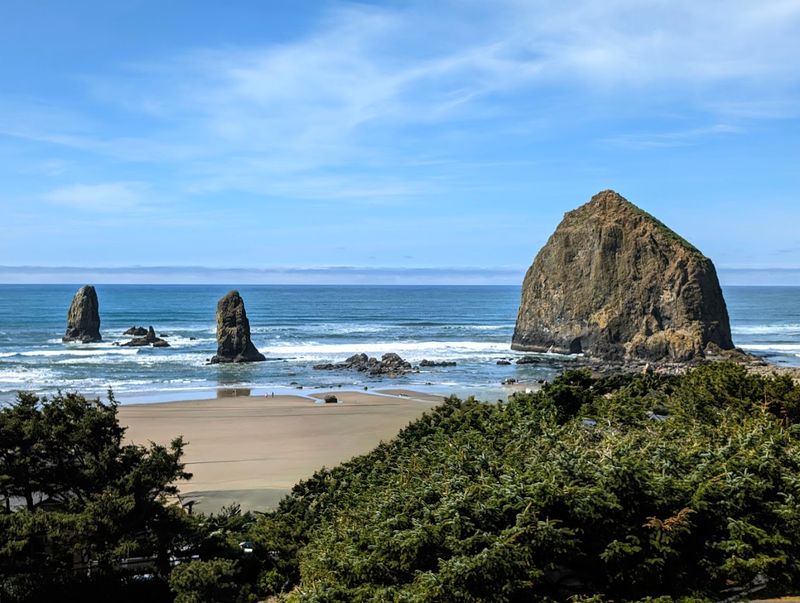
Few drives on earth compete with this one. US-101 runs 363 miles from Astoria in the north down to Brookings near the California border.
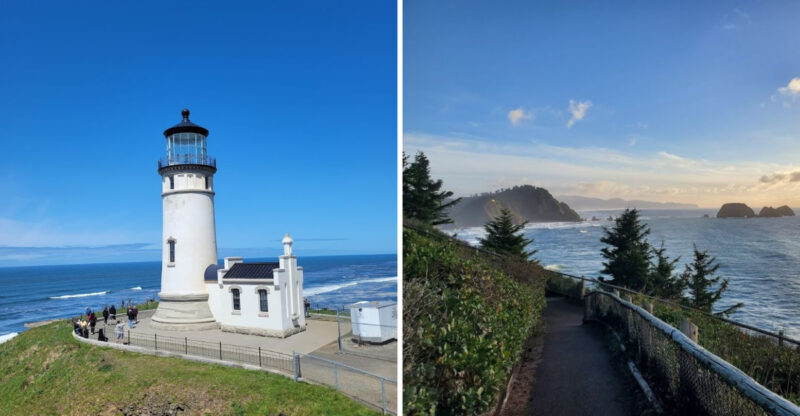
Sea stacks punch out of the surf. Tidal pools shimmer at low tide. Lighthouses stand on headlands like they own the place.
Cannon Beach and its famous Haystack Rock are iconic for a reason. But the Samuel H.
Boardman State Scenic Corridor in the south is where things get genuinely jaw-dropping. Cliffs, arches, and coves that look borrowed from a fantasy novel.
The Oregon Dunes National Recreation Area near Florence throws a curveball into the mix. Forty miles of massive sand dunes sitting right next to the ocean.
Completely unexpected and completely worth the detour.
Small fishing towns like Newport and Gold Beach break up the drive with fresh seafood and working harbors. The character here feels authentic rather than touristy.
This is a multi-day drive, not a day trip. Treat it that way.
10. Rogue-Umpqua Scenic Byway
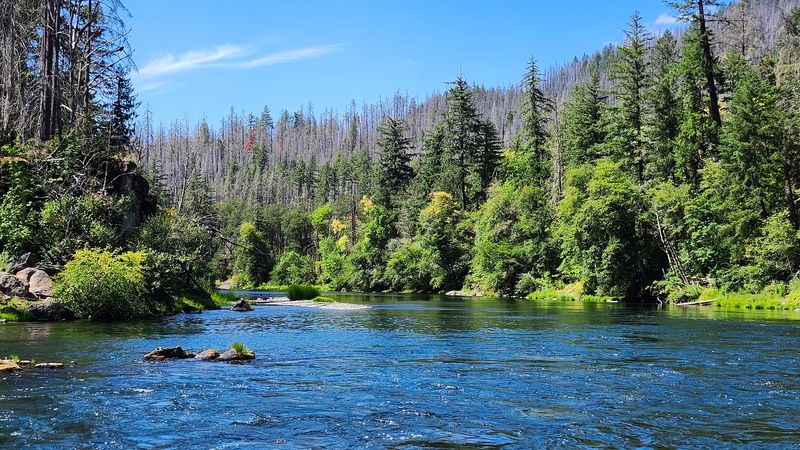
Water defines this drive in every possible way. The Rogue-Umpqua Scenic Byway follows the wild Rogue and North Umpqua rivers for 172 miles through the western Cascades.
It connects Medford to Roseburg through lush, dramatic river canyon scenery that earns every mile.
Toketee Falls is the signature stop. The falls drop in two tiers through a hexagonal basalt canyon into a pool so green it seems lit from below.
Watson Falls, nearby, drops 272 feet through old-growth forest. Both are short hikes from the road.
Ancient Douglas fir forests line the river corridors. The smell of the forest on a warm afternoon is something that sticks with you.
The North Umpqua River is one of the premier fly fishing rivers in the Pacific Northwest. Watching anglers work the emerald pools from roadside pullouts is quietly mesmerizing.
Hot springs along the route give you a compelling reason to slow down. The byway also connects to Crater Lake National Park, making it a natural part of a larger southern loop.
Pack snacks, fill your tank in Medford, and plan for a full day at minimum.
11. Blue Mountain Scenic Byway
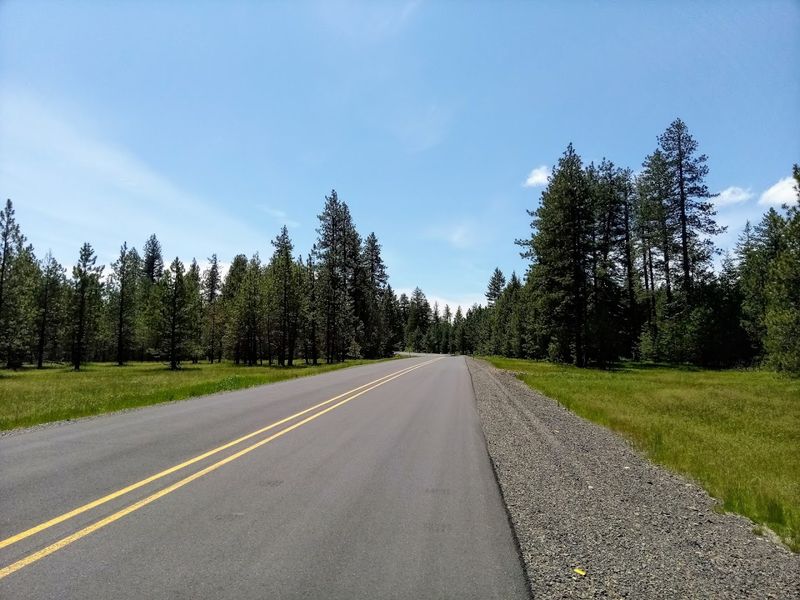
Northeastern part of the state does not get nearly enough credit. The Blue Mountain Scenic Byway is a big reason why it should.
This 130-mile route from Pendleton to John Day crosses the Blue Mountains through ponderosa pine forests, open rangeland, and rolling golden wheat fields that look like something from a painting.
The John Day Fossil Beds are the undeniable highlight. They rank among the most scientifically significant paleontological sites in the world.
The Painted Hills Unit, with its layered bands of red, gold, and black clay, is among the most photographed landscapes in the state. The colors shift with the light and moisture in the soil.
No two visits look exactly the same.
Gold rush-era ghost towns dot the route and add a layer of human history to the deep geological past. Spray and Monument are small communities along the way that feel genuinely unchanged by time.
The drive also passes through the Umatilla National Forest, where ponderosa pines stand tall and widely spaced, feeling open rather than claustrophobic.
Spring and fall are the best seasons here. The Painted Hills are especially vivid after rain, when the clay soaks up color and glows.
12. Tillamook Forest Scenic Drive
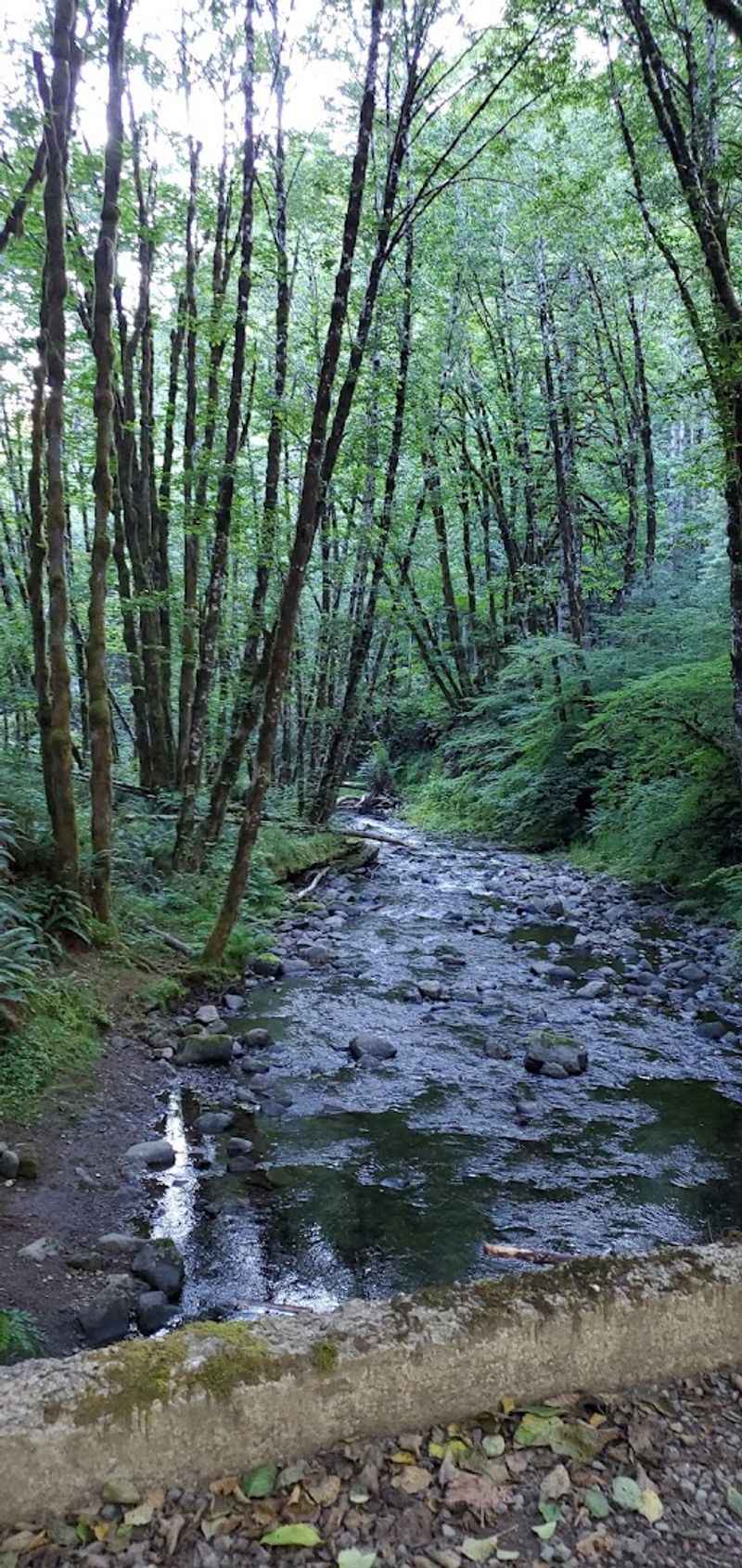
Portland to Tillamook is only about 70 miles, but OR-6 through the Tillamook State Forest makes those miles feel like a proper journey.
The Wilson River runs alongside much of the route, clear and cold and full of steelhead, and the forest that presses in on both sides is the kind of deep, saturated green that makes you understand why people fall in love with the Pacific Northwest.
Old-growth groves appear along the roadside with trees wide enough to make you feel genuinely small. Swimming holes in the Wilson River are a summer ritual for Portland locals, and a few of the pullouts along the highway offer easy access to the water.
The contrast between the dense interior forest and the sudden openness of Tillamook Bay at the end of the drive is jarring in the best possible way.
Tillamook itself is home to the Tillamook Creamery, which has been producing dairy products since 1909 and is worth a stop for the cheese and ice cream alone. The coastal headlands around Tillamook Bay add a maritime dimension to a drive that started deep in the forest.
OR-6 is an easy drive without extreme elevation changes, making it accessible year-round. It is a perfect half-day route when you want scenery without a major expedition.
13. Outback Scenic Byway
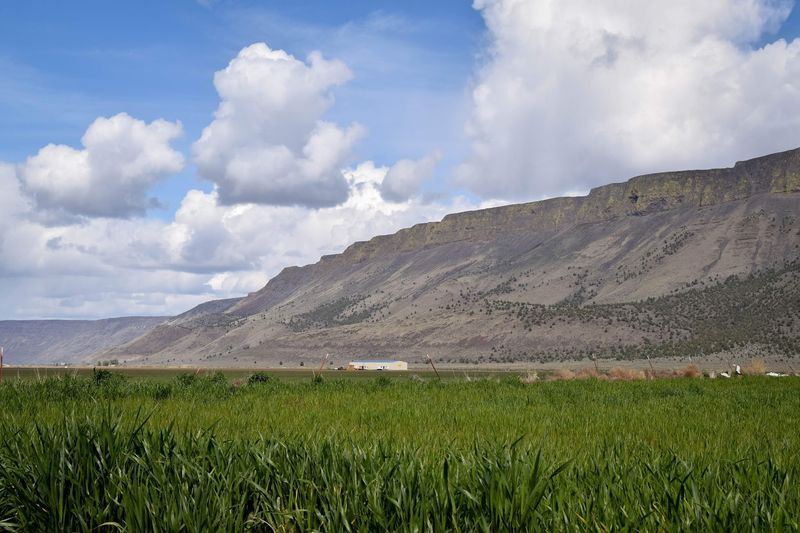
The state has a genuine outback, and most people have no idea it exists. The Outback Scenic Byway runs roughly 172 miles from Lakeview north toward Bend.
High desert landscape of rimrock, juniper flats, dry lake beds, and skies so large they make you feel appropriately small.
Summer Lake Hot Springs is one of the most unexpected stops on the route. A geothermal pool in the middle of the high desert.
Views across a wide playa and distant fault-block mountains. It is the kind of place that makes you recalibrate what this state is supposed to look like.
Hart Mountain National Antelope Refuge is another extraordinary stop. Home to pronghorn antelope, bighorn sheep, and a remote hot spring that requires a short hike to reach.
The byway skirts the edge of the Great Basin. Migratory birds gather in massive numbers at places like Summer Lake Wildlife Area. Lakeview, at the southern end, calls itself the hang gliding capital of the west.
Reliable thermal winds off the nearby ridges make it earned.
Fill your tank before leaving any town on this route. Services are sparse and the distances between them are real.