9 Montana Hikes That Match Every Skill Level And Still Feel Epic
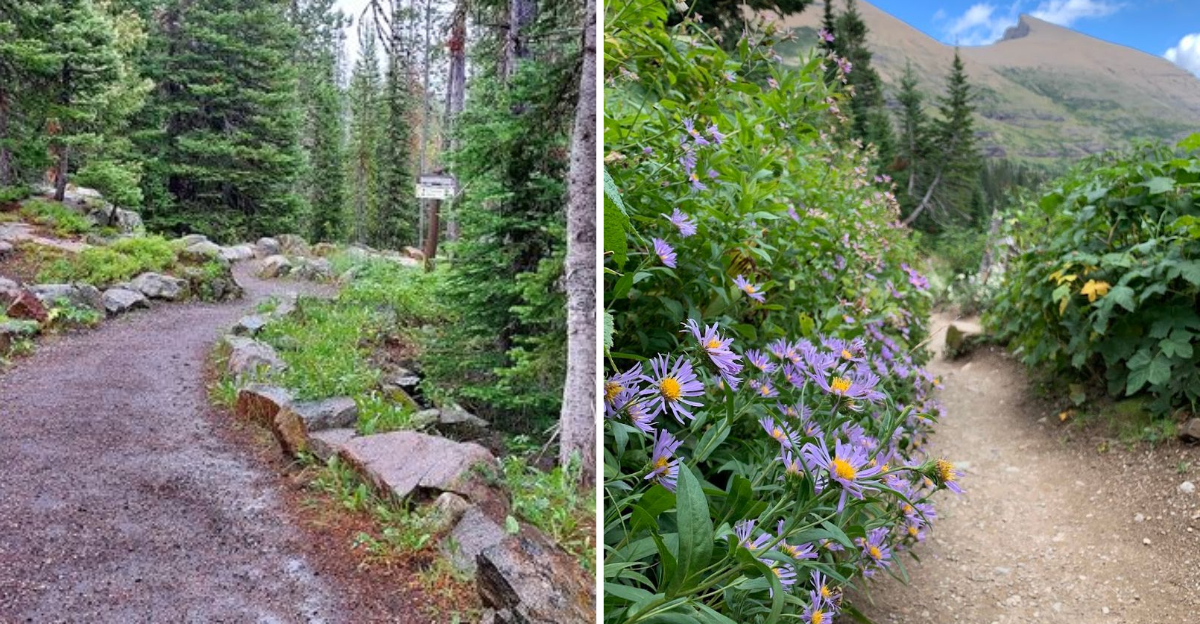
One thing about Montana is that it has a way of making every hike special. Do you wonder why?
Wide-open landscapes, towering peaks, and quiet trails make you want to slow down and stay a little longer than planned.
No matter your experience level, you can find a trail that is just right without missing out on incredible views.
Some hikes lead deep into rugged wilderness, while others offer an easy path to beautiful scenery.
These hikes show that in Montana, every step can feel like an adventure worth taking.
1. Clarks Fork Trailhead
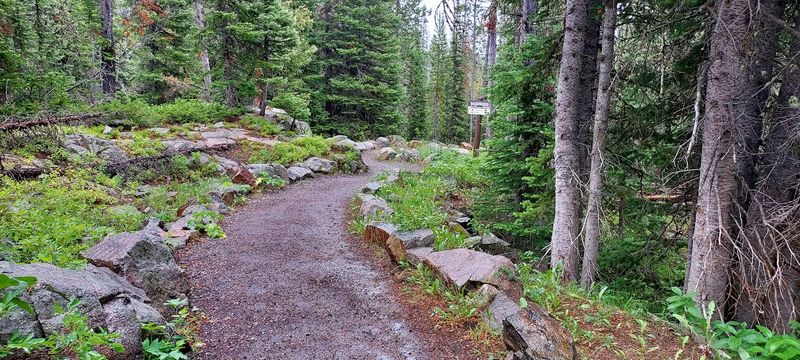
If you crave deep wilderness without the tourist swarms, this remote backcountry trek is your ultimate sanctuary.
Not every great adventure starts with a crowd. The Beaten Path in Montana proves that quieter trails still deliver jaw-dropping scenery.
One common starting point is from the Clarks Fork Trailhead in the Beartooth Wilderness. Trail stretches around 27 miles. It crosses through some of the most remote and breathtaking terrain in the state.
Granite peaks tower above a string of glittering alpine lakes. The trail winds through open meadows where wildflowers bloom in shades of purple and gold during summer.
Most hikers tackle this as a multi-day backpacking trip. Bringing a solid tent, a water filter, and enough food for two nights is essential.
The elevation gain is gradual in most sections. This makes it manageable for intermediate hikers who are comfortable with long days on the trail.
Wildlife sightings here are common. Mountain goats, marmots, and even the occasional moose often pop up along the route. The sweet spot for this hike is late July through early September. Snow lingers at higher elevations well into the summer months.
The solitude you find out here is rare and genuinely rewarding. It makes you want to slow down and stay longer after every new bend.
2. Blodgett Canyon Trail
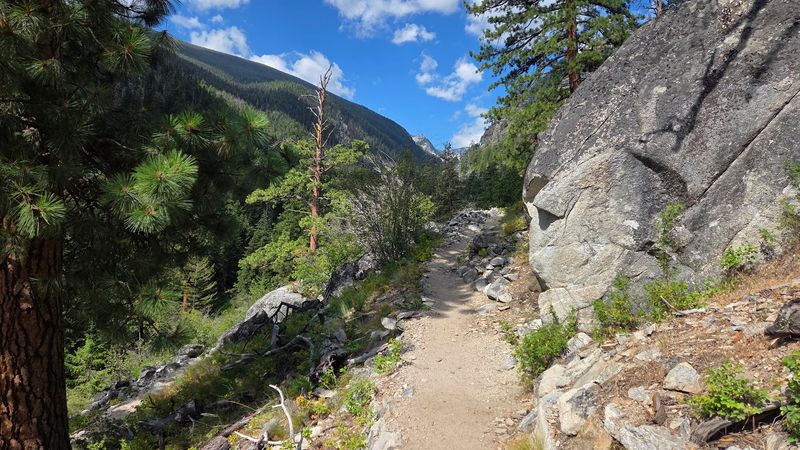
You simply won’t believe the scale of these granite walls until you’re standing right beneath their massive shadows.
Blodgett Canyon, tucked into the Bitterroot Valley west of Hamilton, is a trail that impresses before the first mile marker. The canyon walls tower thousands of feet on either side.
They create a dramatic corridor of sheer granite that feels ancient. The scale is almost theatrical for anyone walking between the stone giants.
The path follows a clear, cold stream for much of its length. This starting point from the Blodgett Canyon Trailhead offers a constant soundtrack of rushing current.
The full trail runs about 14 miles round trip to the upper lakes. However, shorter out-and-back options make it accessible for hikers of nearly any fitness level.
Families with older kids often turn around after two or three miles. At that point, the views are already stunning and the terrain stays relatively flat.
Rock climbers also love this area. It is not unusual to spot them working their way up the vertical walls above the path.
Spring and early summer bring a surge of wildflowers along the floor. These blooms add bright color to the already striking and rugged landscape.
The Selway-Bitterroot Wilderness surrounds the upper sections of the route. That sense of true backcountry wildness creeps in the further you push into the canyon.
3. Danny On Trail
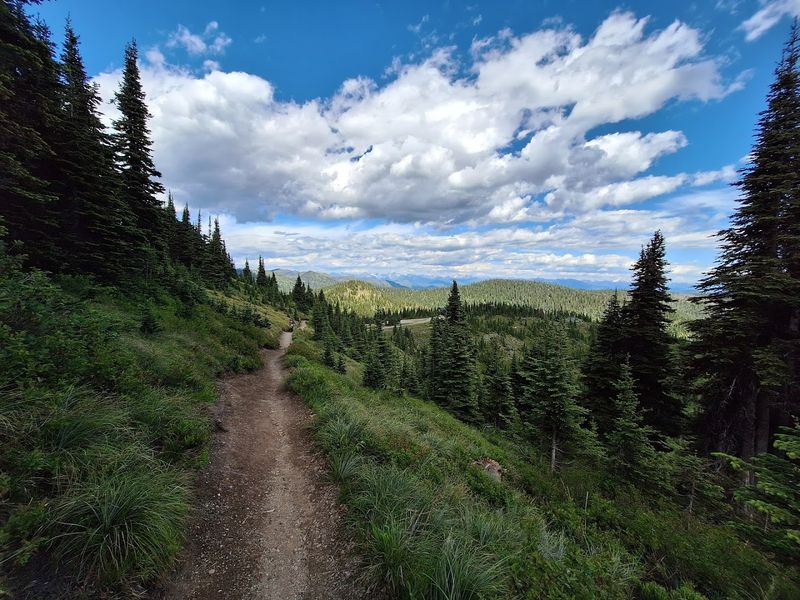
If you’re into sweeping lake views and wild huckleberries, this mountain loop offers the best effort-to-reward ratio in the region.
Few trails in Montana blend accessibility with truly spectacular rewards. The Danny On Trail at Whitefish Mountain Resort on Big Mountain achieves this perfectly.
This roughly 3.5-mile loop climbs through old-growth forest. It breaks out onto open ridgelines with sweeping views of Whitefish Lake and the Flathead Valley.
The resort base houses the trailhead, making it easy to access. You won’t need any complicated driving or navigation on rough forest roads.
Elevation gain is steady but moderate, clocking in around 1,000 feet. This puts it squarely in the beginner-to-intermediate range for most casual hikers.
Summer wildflowers carpet the upper meadows. The air carries that sharp, clean scent of pine found only at high northern Rockies elevations. Huckleberries ripen along the trail in late July and August.
Local hikers know to keep an eye out for bears who share the same enthusiasm. The trail is well-marked and maintained. Navigation stays straightforward even for those who are completely new to mountain hiking.
The forest gradually opens up, revealing the panorama piece by piece. It feels as if the mountain is saving the best for last.
4. Avalanche Lake Trail
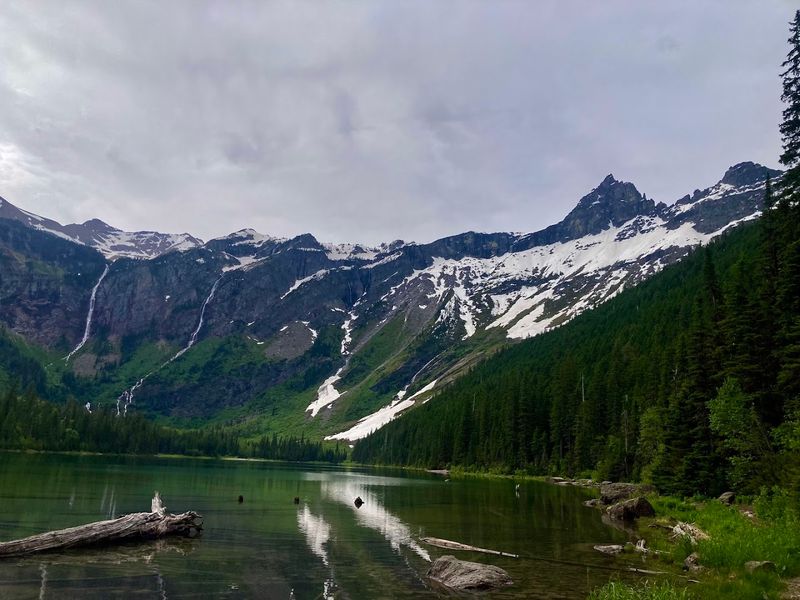
If you’re looking for a fairy-tale forest that opens up into a dramatic glacial amphitheater, this trail is an absolute must-see.
Avalanche Lake stands as one of the most rewarding destinations in the western section of Glacier National Park. The trail begins with a boardwalk through the Trail of the Cedars, a lush forest of western red cedars and hemlocks.
The path follows Avalanche Creek as it carves through a narrow, moss-covered gorge of brilliant red rock. This 4.5-mile round-trip journey is located near Lake McDonald and offers a steady but manageable climb for families and casual explorers.
The forest eventually gives way to the lake’s edge, where multiple waterfalls plunge down the towering cliffs of the Continental Divide. These “ribbon falls” create a spectacular backdrop against the turquoise water, especially during the peak of the spring melt.
The terrain is rated easy to moderate, with roughly 730 feet of elevation gain spread across a well-maintained forest floor. Because this area is a favorite for local wildlife, hikers frequently spot deer and the occasional black bear near the berry patches.
Arriving early is the best way to secure a spot at the busy trailhead along the Going-to-the-Sun Road. Standing at the shoreline while the mist rises off the cliffs is a serene experience that captures the true essence of Montana’s wild beauty.
5. Highline Trail
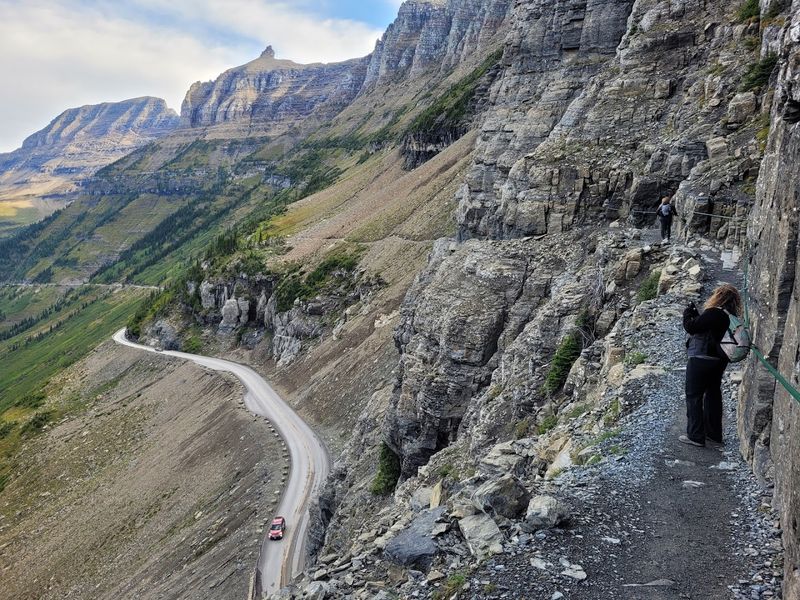
Get ready for an adrenaline rush on the famous cliff section that offers the most breathtaking views in the entire park.
A section of the Highline Trail near Logan Pass requires gripping a cable bolted into the cliff face. That moment of focus becomes the highlight of the whole day.
This legendary trail starts at Logan Pass along the Going-to-the-Sun Road. It stretches 11.8 miles to Granite Park Chalet (longer if continuing to The Loop).
The views across the park are staggering. Glacially carved valleys and wildflower-covered slopes stretch in every direction for miles as you walk.
Mountain goats are practically trail regulars here. They are often spotted resting just feet from passing hikers with casual, high-altitude confidence.
The trail is rated moderate to strenuous. Because there is minimal shade and significant exposure, sun protection and plenty of water are non-negotiable supplies.
Many hikers arrange a shuttle or a hitch back from the chalet end. This is a smart logistical move worth planning before you start your trek.
The best time to hike is mid-July through September. The park’s famous beargrass blooms in white plumes after the snow melts from the high passes.
Logan Pass itself fills up fast. Arriving early or using the park’s shuttle system is the key to avoiding a packed parking lot.
6. Iceberg Lake Trail
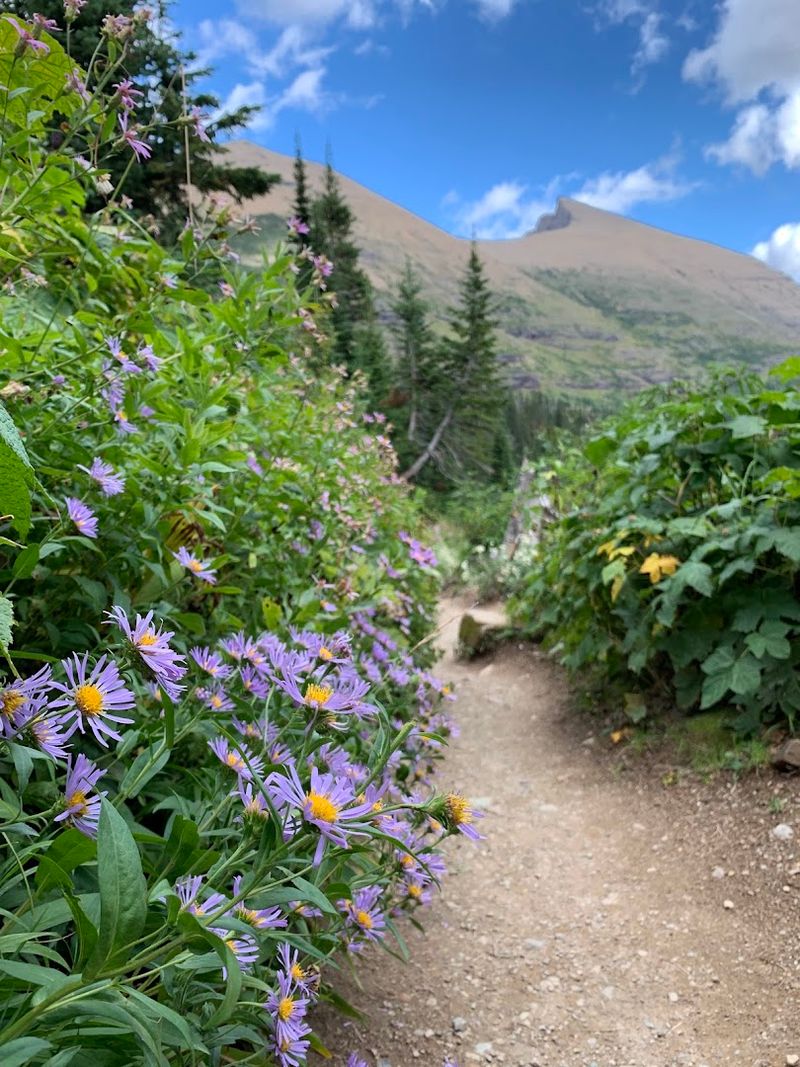
You won’t believe your eyes when you see actual icebergs that often drift across the lake’s surface into mid-summer.
Floating chunks of ice in a mountain lake during summer sounds like a trick. Iceberg Lake in Glacier National Park delivers exactly that and earns its name.
The Many Glacier area near the Swiftcurrent Motor Inn marks the start of this around 9.7-mile route. It winds through meadows before arriving at a stunning cliff-ringed cirque.
Ice chunks drift lazily across the lake’s surface even in August. The sheer walls block direct sunlight for most of the day, keeping the water cold.
The terrain is considered moderate. Around 1,200 feet of elevation gain is spread across gradual switchbacks that feel manageable for most hikers.
Wildflowers line the path in July. The rolling meadows in the lower section give way to more dramatic rocky terrain near the lake basin.
Black bears and grizzlies roam this corridor regularly. You should clip bear spray to your pack before you even leave the parking area.
The Many Glacier region is widely considered the most scenic corner of the park. This trail shows exactly why that reputation holds up so well.
Watching ice drift against a backdrop of vertical cliffs is a surreal experience. It rewards every mile of effort you put in on the way up.
7. Pitamakan-Dawson Loop, Two Medicine Lake
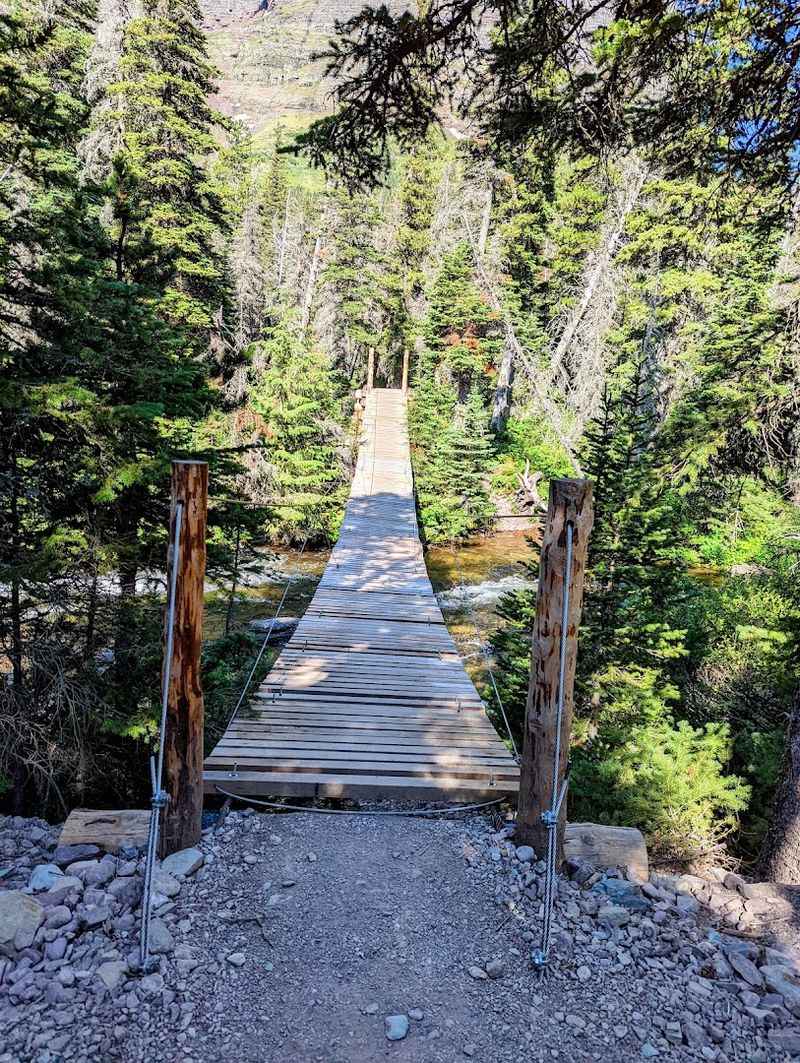
If you’re a serious hiker looking for the “grand slam” of mountain views, this epic loop is your ultimate test.
Some loops in Montana give you a taste of the backcountry. The Pitamakan-Dawson Loop gives you the whole feast in a single, challenging day.
Two Medicine Lake in the southern section of Glacier National Park serves as the starting point. This around 17-18-mile loop climbs to two high passes above 7,000 feet.
The total elevation gain pushes close to 3,600 feet. This strenuous category trek is best suited for experienced hikers comfortable with long, demanding days.
The reward for that effort is extraordinary. You get panoramic views of southern peaks and the brilliant blue expanse of Two Medicine Lake far below.
Blackfeet Nation has deep historical ties to this landscape. The trail names reflect that heritage, adding a meaningful layer to the scenic experience.
Wildlife sightings are frequent on this loop. Bighorn sheep are often spotted near the high passes while bears remain active in lower meadows.
Early starts are essential here. You need to avoid afternoon thunderstorms at elevation and complete the full distance before the sun goes down.
The Two Medicine area tends to see fewer hikers than northern sections. This gives the epic loop a quieter, more remote character that experts love.
8. Siyeh Pass Trail
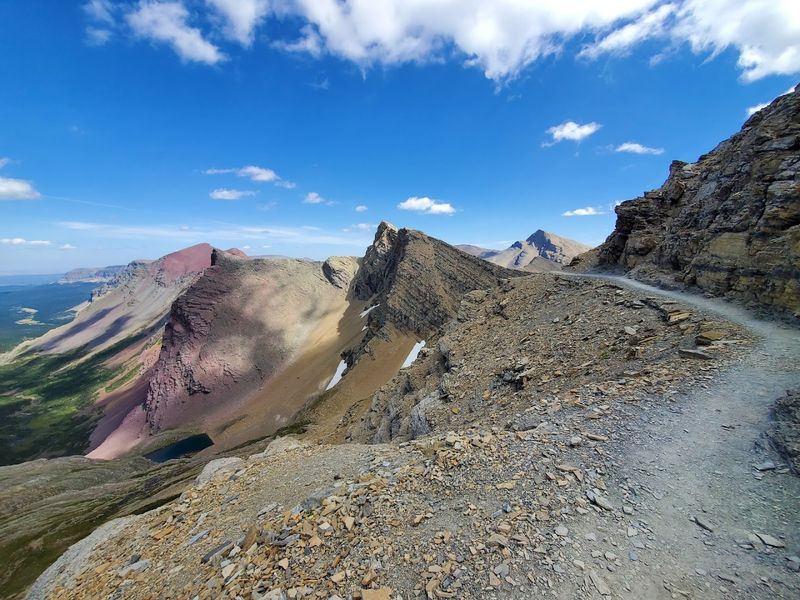
This hike is like stepping into a high-altitude fantasy world where the mountains change color with every step you take. I’m absolutely sure that you will love it if you give it a chance.
Crossing Siyeh Pass feels like walking through a geology textbook. It features ancient rock layers, cascading waterfalls, and views that seem to go on forever.
The Siyeh Bend Trailhead along the Going-to-the-Sun Road marks the beginning of this 10.3-mile traverse. Most hikers arrange a shuttle or car spot at the end.
The pass is at 8,100feet. This makes it one of the highest trail crossings in the park and a genuine high-alpine experience for climbers.
Elevation gain totals around 2,240 feet. The route is rated strenuous, with exposed sections near the pass that require careful footing on rocky terrain.
Preston Park is visible from the top. This sweeping alpine meadow is carpeted in wildflowers during peak summer, offering dramatic sightlines toward the peaks.
A red stripe of ancient algae called Grinnell Argillite runs through the rock walls. This geological feature gives the cliffs a striking hue unlike anything else.
Afternoon thunderstorms build quickly at this elevation. Hitting the trail at sunrise ensures you are off the exposed pass by the early afternoon.
Geological drama and wildflower meadows make this a complete hiking experience. It is one of the most rewarding challenges Glacier National Park offers.
9. St. Mary Falls Trail
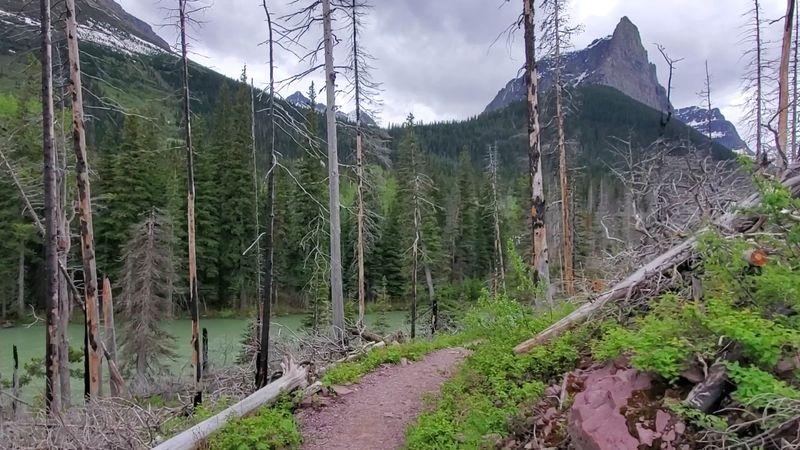
This is the perfect “warm-up” walk that offers massive scenery without the grueling climb of the higher peaks.
St. Mary Falls Trail is the answer if you want to introduce someone to the park without overwhelming them. It provides maximum beauty with minimal effort.
The east side of the Going-to-the-Sun Road houses the St. Mary Falls Trailhead. This route covers 1.2-1.4 miles round trip to the main falls.
You can extend the walk to Virginia Falls for 2–2.2 miles round trip total. The falls drop over red and orange rock while turquoise water rushes below.
The trail is rated easy to moderate. The well-maintained path works beautifully for families, beginners, and anyone wanting a shorter outing with a big payoff.
Virginia Falls is actually taller and arguably more dramatic. The extra distance is an easy decision for anyone with a little energy to spare.
The east side of the park tends to be drier and sunnier. This trail often stays accessible earlier in the season than the snow-buried high routes.
Cottonwood trees along the riverbanks turn golden in September. This wraps the trail in warm autumn color and gives fall hikers a different experience.