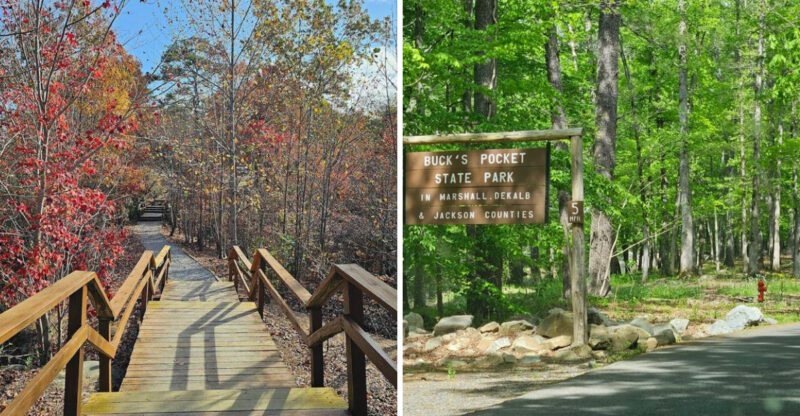
This Alabama Park Brings You To The Top Of The State With Views All Around
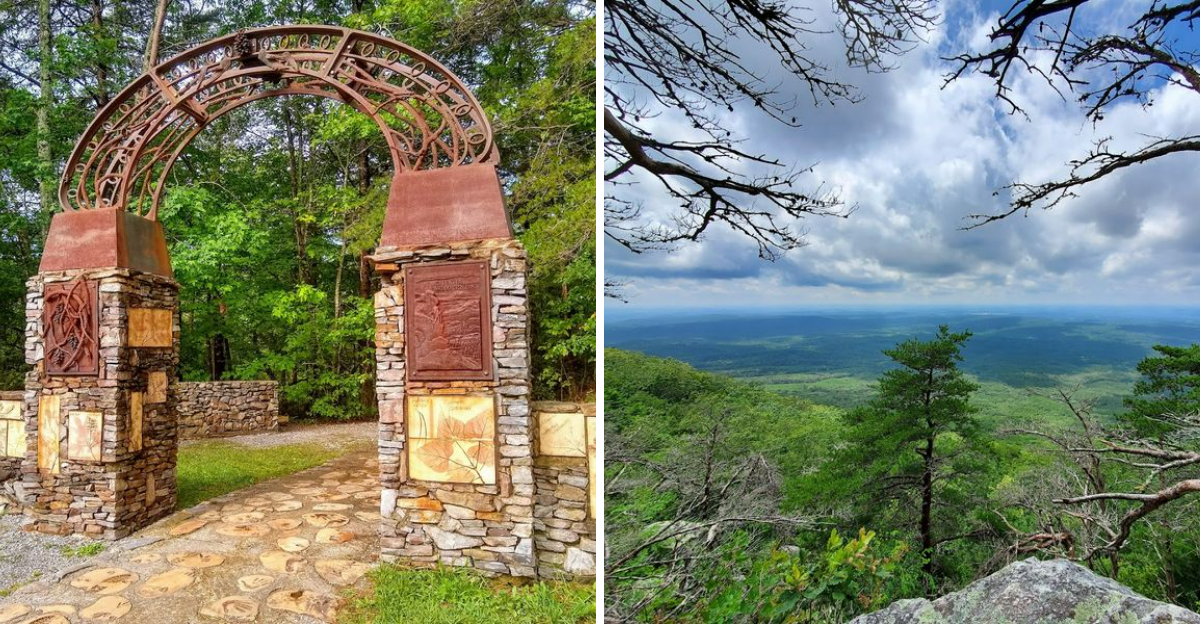
I almost didn’t stop. The sign was small, the turnoff easy to miss, and I had three other places on my list that day.
Best decision I ever made was ignoring that list. The road starts climbing and doesn’t apologize for it, ridge lines cracking open on both sides until the whole state is just sitting there below you, quiet and endless.
I had no idea Alabama was hiding something like this. Nobody I know talks about it, nobody posts about it, and somehow that makes it feel like yours the moment you arrive.
The highest point in the state and it feels like a place that hasn’t been ruined yet. No crowds, no noise, just you and every direction opening up at once.
Some places make you feel small. This one made me feel like I had been missing something my whole life.
At The Highest Point In Alabama
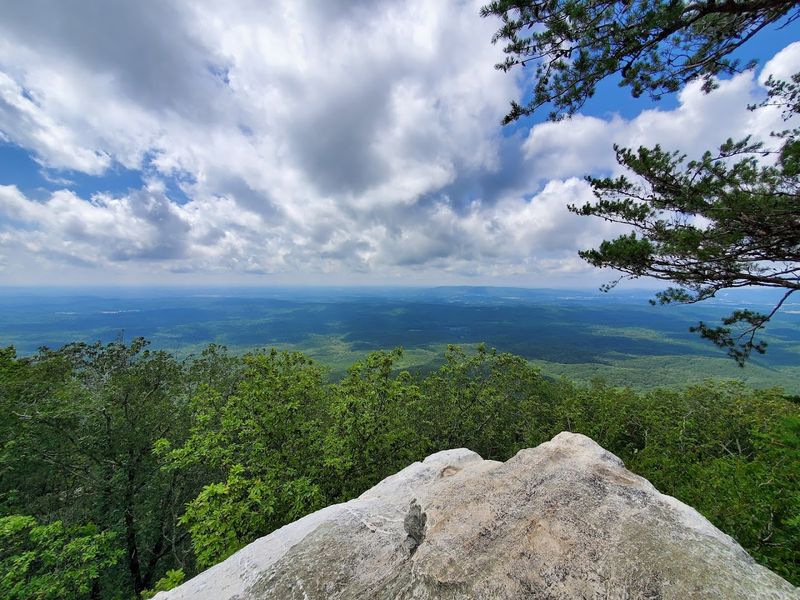
Most mountains make you work for the view. This one just hands it to you.
Standing at 2,407 feet above sea level, Cheaha Mountain is the highest point in the state, and the views from the top make that title feel completely earned. Ridge lines stack up in every direction and the whole state just sits there below you, quiet and wide open.
Getting to the summit is easier than you’d expect. You can drive most of the way up, or hike from the visitor center where short trails get you to the overlooks fast.
Either way, the payoff is instant.
The summit area has a playground nearby, making it a great family stop. Kids run around while adults stand at the edge trying to figure out exactly how far they can see.
There is something about standing at the literal top of a state that makes you feel small and completely alive at the same time.
Cheaha State Park sits along the Talladega Scenic Drive at 19644 AL-281, Delta, AL 36258. Open since 1933, it is Alabama’s oldest continuously operating state park, and that history shows in every trail and overlook you visit.
The Bald Rock Boardwalk Experience
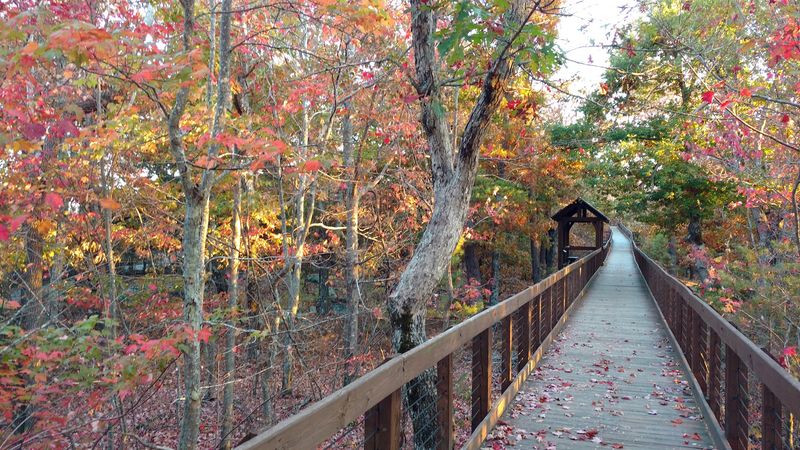
Bald Rock might be the most satisfying short walk in the entire state. The boardwalk leading out to it is smooth, well-maintained, and lined with informational signs that actually make you stop and read them.
The signs cover local geology, plant life, and park history in a way that feels engaging rather than textbook-dry. By the time you reach the rock itself, you feel like you earned the view with knowledge, not just steps.
The exposed granite of Bald Rock juts out over the treetops and gives you a sweeping panoramic view of the Talladega National Forest below. It is the kind of scene that makes you reach for your camera before your brain even registers what your eyes are seeing.
For those who want more of a challenge, the old trail to Bald Rock still exists alongside the boardwalk. It is rougher and steeper, but it rewards you with that old-school sense of effort before the view.
Wear solid footwear no matter which path you choose. The rock surface can be uneven, and the elevation means wind picks up fast.
Bring water, pack light, and give yourself time to just sit on the rock and take it all in without rushing back.
The Bunker Observation Tower
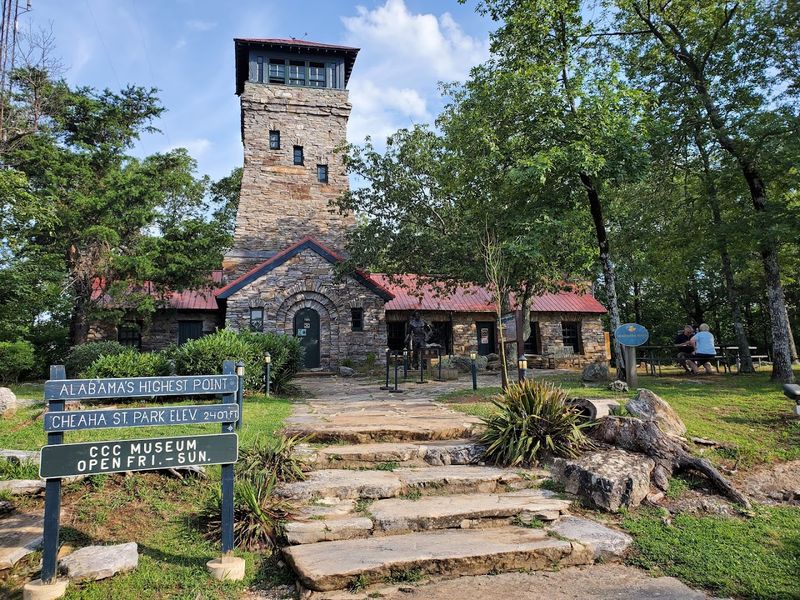
Bunker Tower is one of the park’s best-known landmarks. So I did not skip the tower, and I am glad I listened.
The Bunker Tower was built by the Civilian Conservation Corps back in the 1930s, and it still stands at the summit with that rugged, handcrafted quality that modern construction rarely replicates. Climbing the exterior stairs gives you a sense of genuine adventure, not a theme park version of it.
From the top, you get a 360-degree perspective that even the open overlooks cannot fully match. The elevation adds just enough height to push your line of sight past the nearest treeline and out toward distant ridges you could not see from ground level.
Go in knowing that, and you will still be impressed rather than disappointed.
The tower is well worth a stop. It pairs well with the CCC Museum nearby, which gives you context for why this structure exists and who built it.
The whole summit area feels like a layered history lesson that you walk through rather than read about. Plan at least an hour up here, maybe more if the weather is cooperating.
Hiking Trails That Change With Every Turn
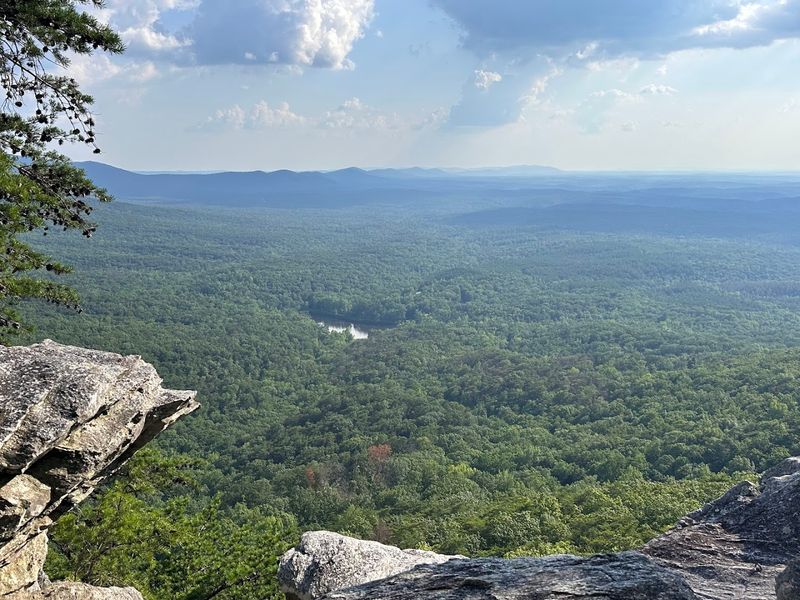
Cheaha does not offer just one trail and call it a day. The park has multiple hiking options that range from easy boardwalk strolls to more rugged trails with noticeable elevation changes.
Trails are accessible from different areas of the park. You can roll out of your tent and be on a trail within minutes, with no car required and no crowds to navigate first thing in the morning.
Both trails lead to vista points that reward the effort with gorgeous views over the surrounding forest. The terrain mixes exposed rock, dense hardwood canopy, and open ridge sections that feel completely different from one another even on the same hike.
Cell service can be limited in some areas, so download a trail map before you arrive or grab a paper copy from the visitor center. This is not a place to rely on GPS once you are past the summit area.
Bring more water than you think you need, especially in warmer months. The trails are well worth the preparation.
From easy walks to longer hikes, the trails here fit different paces and give you a reason to come back for more.
Camping Options For Every Style
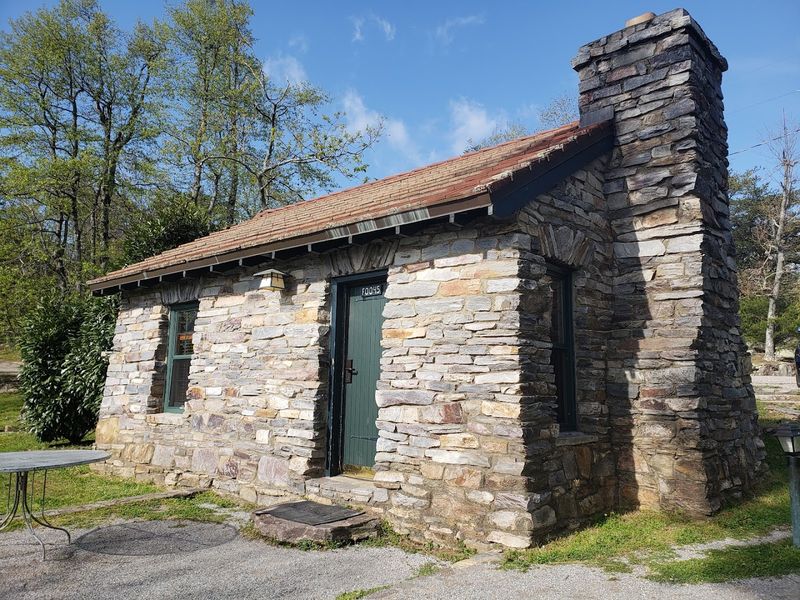
Camping at Cheaha feels like being handed a permission slip to fully disconnect. The CCC campground is quiet, especially early in the season, and the atmosphere is closer to backcountry than your typical RV park setup.
The upper campground offers spacious sites with views into the surrounding timber, and having easy access to nearby trails from the campground is genuinely useful. You wake up, lace up, and go.
That kind of trail access is hard to find at most state parks.
For those who prefer something with walls and a roof, the park also offers cabins and chalets. The chalets come with fireplaces, which makes them especially popular in fall when the leaf colors are at their peak and evenings get cool fast.
Pack everything you need before you make the drive up. The camp store offers basic supplies.
The long road in and out means a forgotten item is a real inconvenience rather than a quick errand.
Cell service can be limited in some campground areas, so let people know your plans before you arrive. That said, the quiet that comes with no signal is part of what makes camping here feel like a genuine reset rather than just a change of scenery.
Cabins And Chalets Worth Staying For
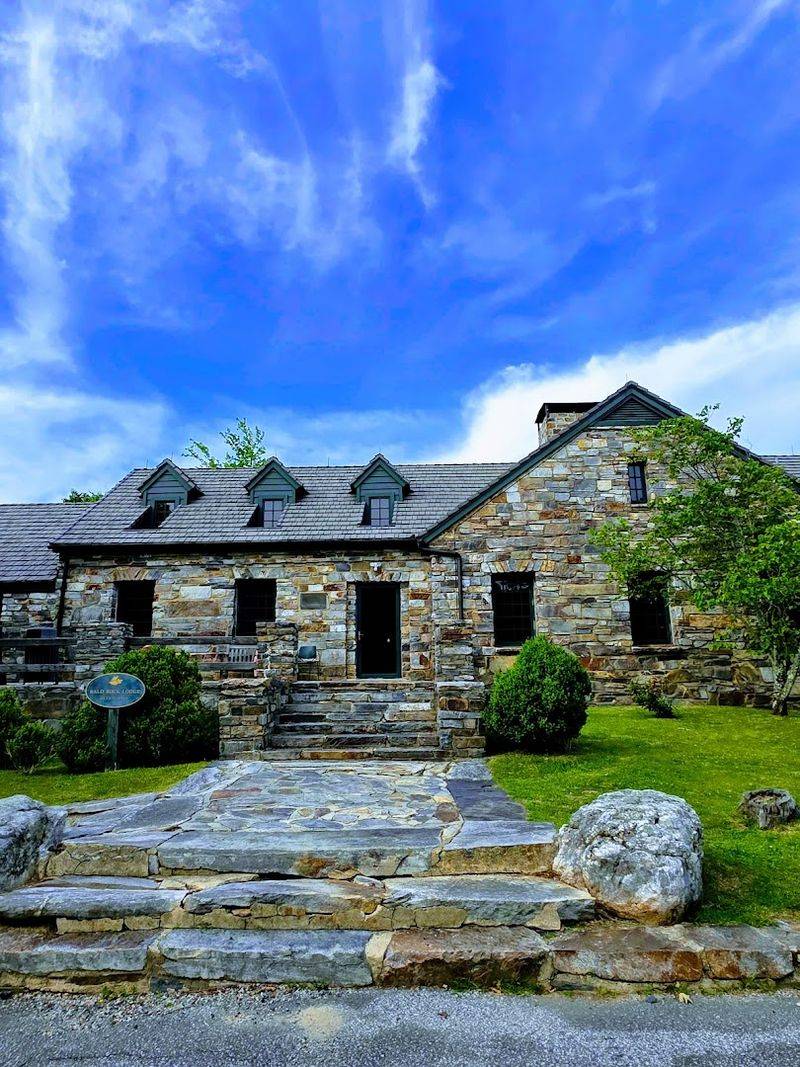
Rustic does not have to mean rough. The chalets here prove that point well.
Fireplaces, mountain surroundings, and real character make the stay feel memorable rather than just convenient.
Some guests have been returning year after year. That kind of loyalty says something real.
When people keep coming back on purpose, the experience is clearly delivering something worth repeating.
The cabins sit within the forested park grounds. Wildlife sightings are genuinely common here.
Deer show up regularly, and the surrounding Talladega National Forest adds a sense of wildness that no hotel parking lot can replicate.
Booking ahead is smart. Fall foliage season draws more visitors and availability tightens fast.
The autumn colors up here are worth planning around specifically.
A new lodge project is currently underway at the park. For now, the cabins and chalets remain the best way to spend a night at the highest point in the state.
The Scenic Drive Up Alabama Highway 281
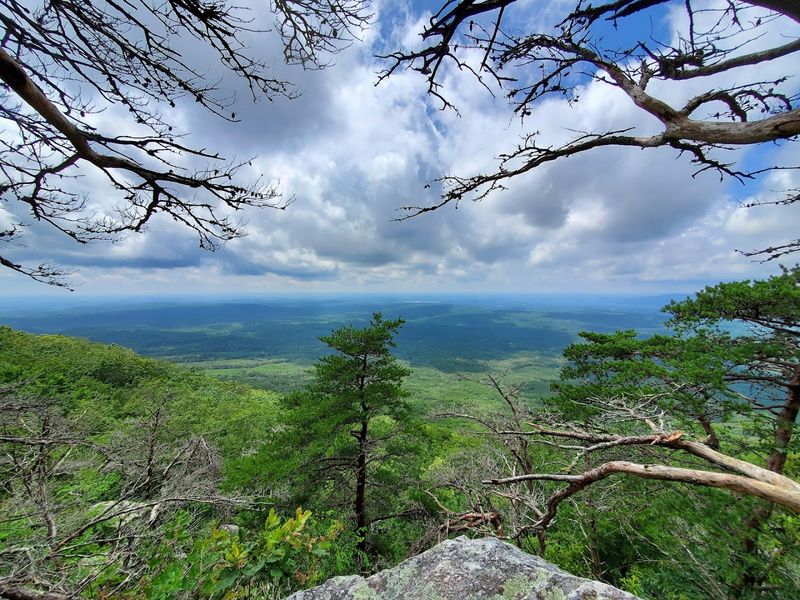
Before you even park the car, this place has already started impressing you. Highway 281, also called the Talladega Scenic Drive, is the main road into the park.
It is genuinely one of the better drives in the Southeast.
The road climbs steadily through the national forest. Trees press in close on both sides, then the ridge opens up and delivers views that catch you off guard.
I had music playing and stopped talking entirely just to watch.
Fall is especially dramatic. Reds, oranges, and yellows stack up along the roadside and every curve feels like a new painting.
Even in summer, the green canopy and mountain air make the approach feel like a proper event.
The park is reachable from several nearby towns including Oxford, Anniston, Heflin, and Talladega. Easy to base yourself nearby and make a full day of it without rushing.
Take your time on the drive up. Pull-offs and overlooks appear along the way before you even reach the main park area.
Treat the road as part of the experience, not just the commute.
Wildlife And Nature Watching
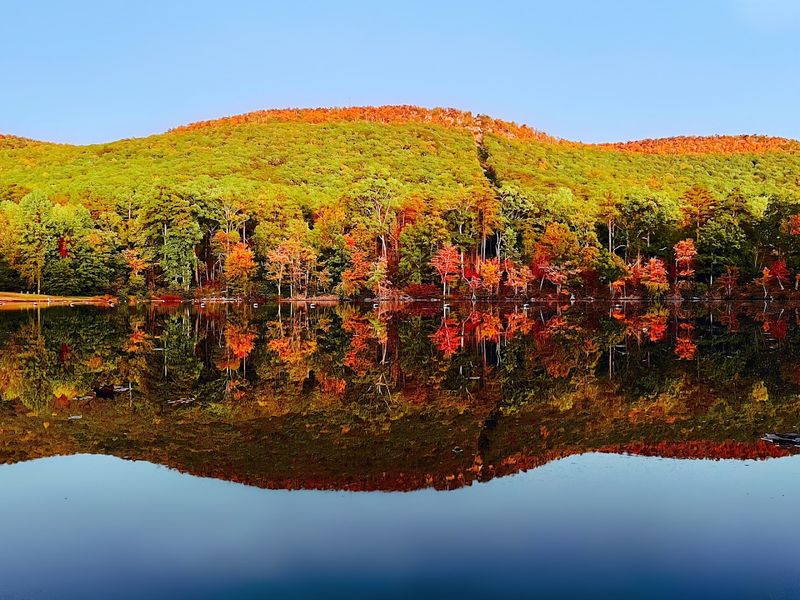
Wildlife is often seen at Cheaha. It shows up at the campsite, wanders along trail edges, and reminds you that you are a visitor in a place that belongs to something wilder than a weekend trip.
Deer sightings around the cabin and campground areas are common enough that guests stop mentioning them as surprises and start mentioning them as highlights.
The park sits inside the Talladega National Forest, which gives animals a vast connected habitat that keeps the park feeling genuinely alive.
Bird watching here is strong, especially along the forested trails where canopy species are active in the morning hours. The variety of terrain, from exposed rocky summits to dense woodland creek corridors, supports a wide range of species throughout the year.
Fall is peak season for both foliage and wildlife activity. Visitors who have come specifically for the fall colors report seeing wildlife as a bonus that made the trip feel even more complete.
Waterfalls are also more impressive in wetter seasons, adding another layer to the nature experience.
Leave the noise-canceling headphones at home for at least part of the trip. The sounds of the forest here, wind through the pines, birdsong, the distant rush of water, are part of what makes Cheaha feel less like a park and more like a world you stepped into by accident.
The CCC Museum And Park History
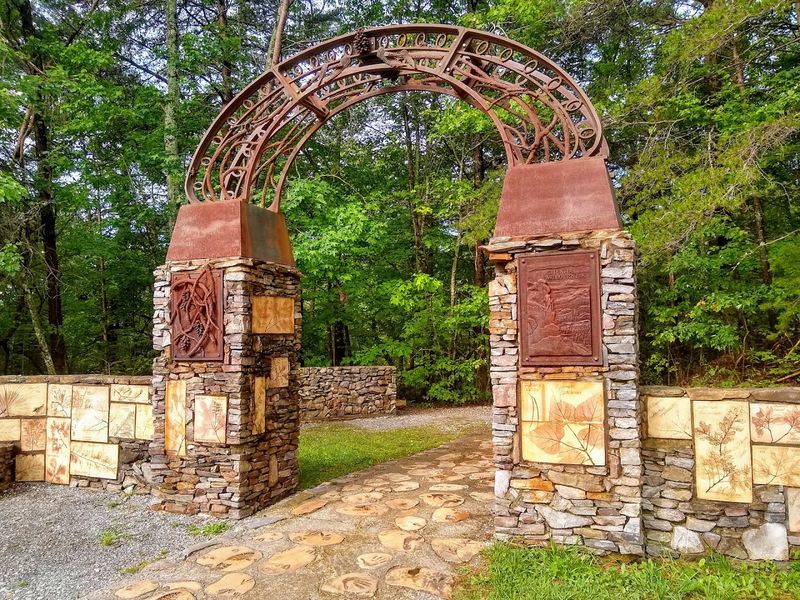
Not every state park has a museum worth slowing down for. This one earns the stop.
The CCC Museum on-site tells the story of the Civilian Conservation Corps workers who built much of what you see here. The trails, stone structures, and the tower itself all came from their hands.
The park opened in 1933. That is over 90 years of people climbing this mountain to stand at the top of their state.
The museum puts faces and context to that long history.
The exhibits cover tools, techniques, and daily life of workers who shaped this place during the Great Depression. The stone buildings around the park hit differently once you know who built them and under what circumstances.
Plan 20 to 30 minutes inside before heading out on trails. It reframes everything you see on the mountain.
The boardwalk, the tower, the stone walls along the paths all carry more meaning after.
The museum is small but specific. Specific is always better than general when it comes to local history.
If you like context with your scenery, this place rewards that instinct more than most parks its size.