The Fry Bread At This Thousand Year Old New Mexico Pueblo Village Tastes Like Nothing Else And That Is The Point
Some places earn their reputation quietly, one visitor at a time, and the people who find them tend to develop a slightly smug expression they cannot quite shake afterward.
I know because I have been wearing mine ever since a complete stranger at a New Mexico roadside stop told me to follow a certain road until something smelled interesting.
That is the kind of directions you either trust completely or ignore entirely. I trusted them, and I am still thinking about what happened next.
What I found was not a restaurant in the way most people use that word.
It was a room full of locals who clearly knew something the rest of the world had not figured out yet, and a kitchen producing food that made the drive feel like the easiest decision I had ever made.
History and flavor do not always show up together, but when they do in New Mexico, in the right place, with the right recipe, the combination does something to you that is very difficult to explain and absolutely impossible to forget.
History Is Still Living And Breathing Here
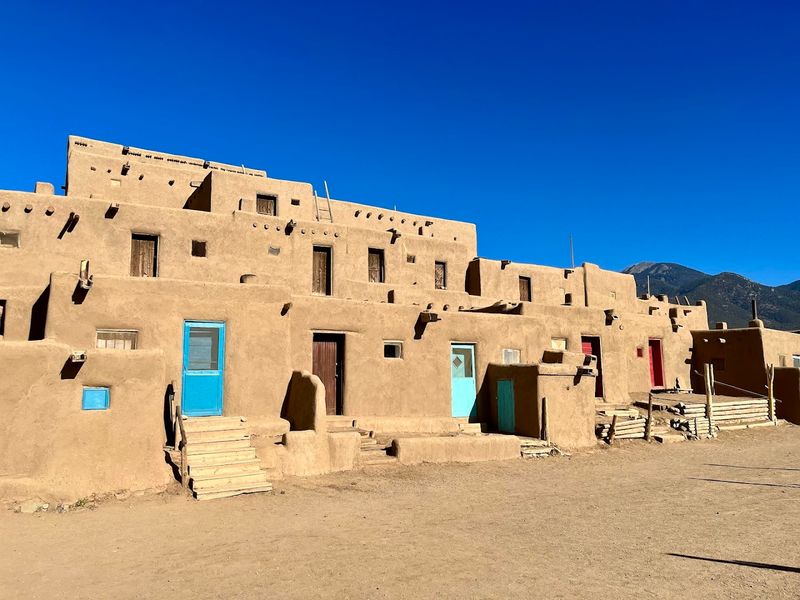
Taos Pueblo is one of the oldest continuously inhabited communities in North America. People have lived here for over a thousand years, and that is not a tourism slogan.
It is a documented, UNESCO-recognized fact that makes your jaw drop a little when it fully lands.
The pueblo sits at the base of the Sangre de Cristo Mountains, and the setting alone is enough to stop you mid-step.
Two massive adobe structures, Hlauuma and Hlaukwima, rise up on either side of the Rio Pueblo de Taos, and they look exactly as they have for centuries. No electricity.
No running water.
Residents choose this life deliberately, and that choice deserves deep respect.
Walking through the grounds with a guide, you feel the weight of time in a way that is hard to describe. The walls are thick, the air is dry, and the sounds are soft.
It is not a museum.
Real families live here, year-round, and that distinction changes everything about how you experience the visit.
Fry Bread That Actually Earns The Hype
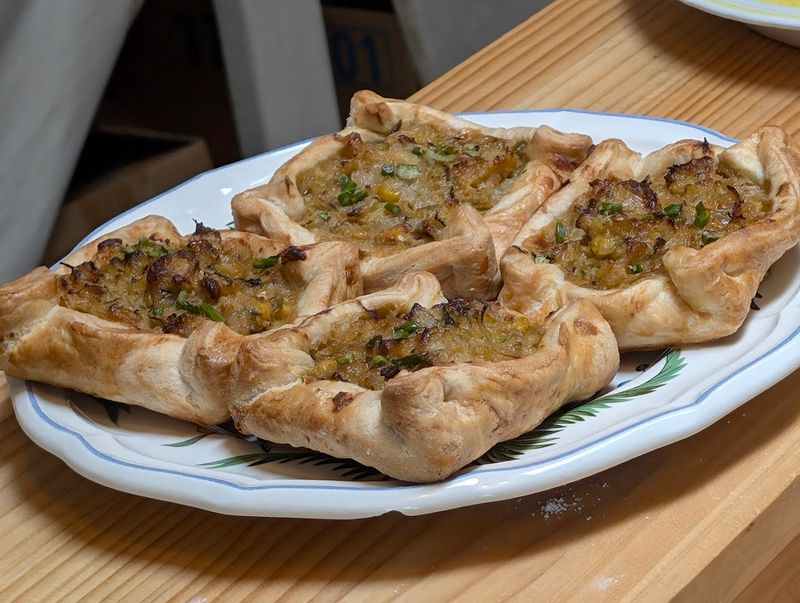
Forget everything you think you know about fry bread. What gets made at Taos Pueblo is a different experience entirely, and the difference starts with the hands that make it.
Recipes passed down through generations carry a kind of muscle memory that no cookbook can replicate.
The bread comes out golden, slightly crisp on the outside, and pillowy soft inside.
It has a faint richness from the fat used in frying, and the texture hits that rare sweet spot between chewy and airy. You eat it warm, usually outside, standing up, and somehow that makes it taste even better.
What makes this fry bread stand apart is not just the recipe. It is the context.
You are eating something made by a person whose family has fed people on this land for generations.
That connection is real, and you taste it. Some visitors say it is the best thing they ate in all of New Mexico, and I am not going to argue with them on that one.
The Adobe Walls Have Actual Stories To Tell
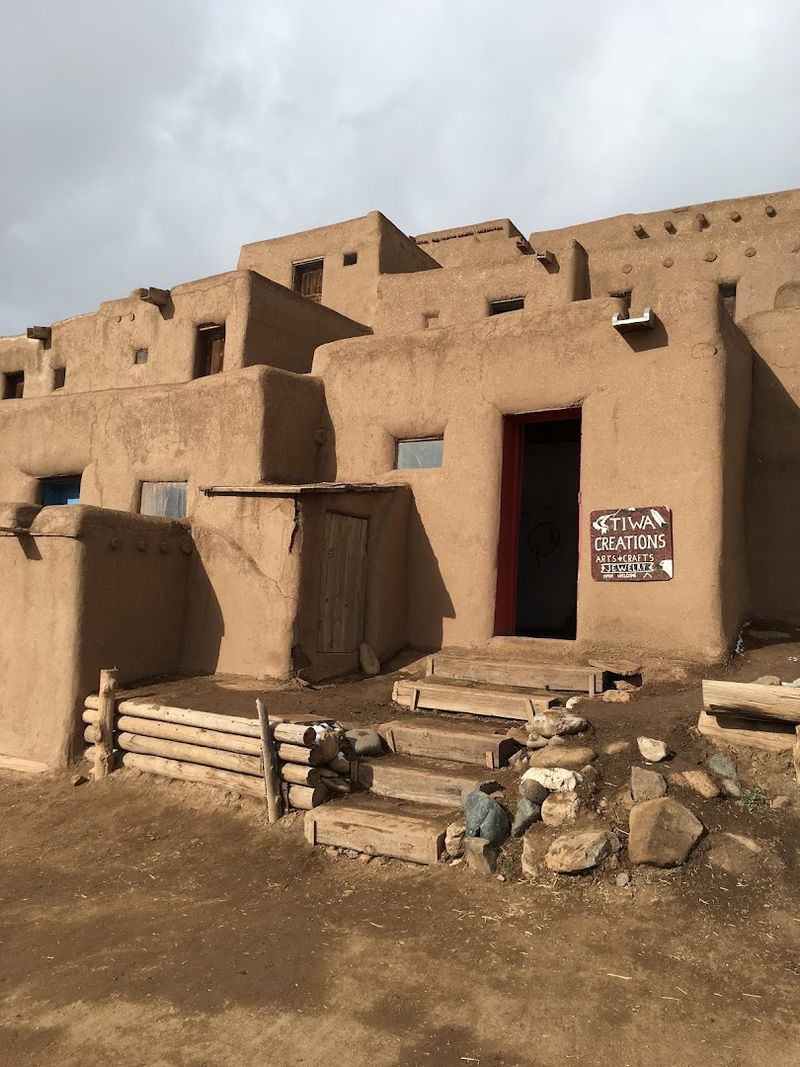
Adobe is not just a building material at Taos Pueblo, New Mexico. It is a living record.
The walls of the north and south houses have been continuously repaired and replastered by hand for over a thousand years, and the community does this work together.
That kind of collective care for a shared structure is genuinely rare in the modern world.
The original buildings were constructed without metal tools or nails. Mud, straw, and water were shaped into bricks and stacked with a precision that has outlasted countless newer structures around the world.
The walls reach up to five stories in some sections, and the upper floors were historically accessed by ladders that could be pulled up for protection.
Each layer of plaster applied over the centuries represents a family, a season, a decision to stay and preserve.
Standing against one of those walls and pressing your hand flat against the surface, you realize you are touching something that generations of people also touched.
That is not a small thing. It is quietly one of the most grounding experiences the pueblo offers.
Local Artists And The Market Stalls Worth Every Minute
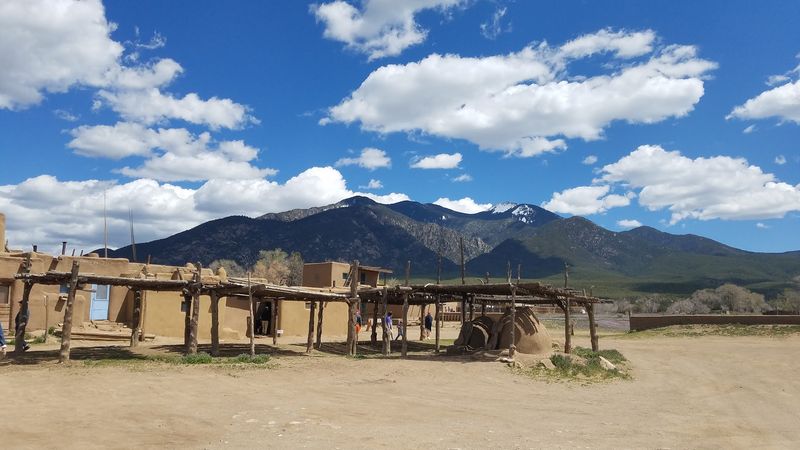
Right there on the pueblo grounds, you will find vendors selling handmade goods that you simply cannot find anywhere else.
Pottery, jewelry, drums, paintings, and beadwork are made by Taos Pueblo members and sold directly by the artists themselves. There is no middleman and no mass production involved.
I bought a small clay pot from a woman who told me her grandmother taught her the technique. The pot is not perfect in the geometric sense, and that is exactly why I love it.
Each piece carries the fingerprints, literally and figuratively, of the person who made it. That kind of provenance matters, and it is hard to put a price on it.
The prices are fair, and buying directly supports the community in a meaningful way. This is not souvenir shopping.
It is more like collecting something with a real story attached.
Spend time talking to the artists if they are open to conversation. The stories behind the work are often just as valuable as the pieces themselves, and you leave with something that genuinely means something.
The Rio Pueblo De Taos Runs Right Through The Heart Of It
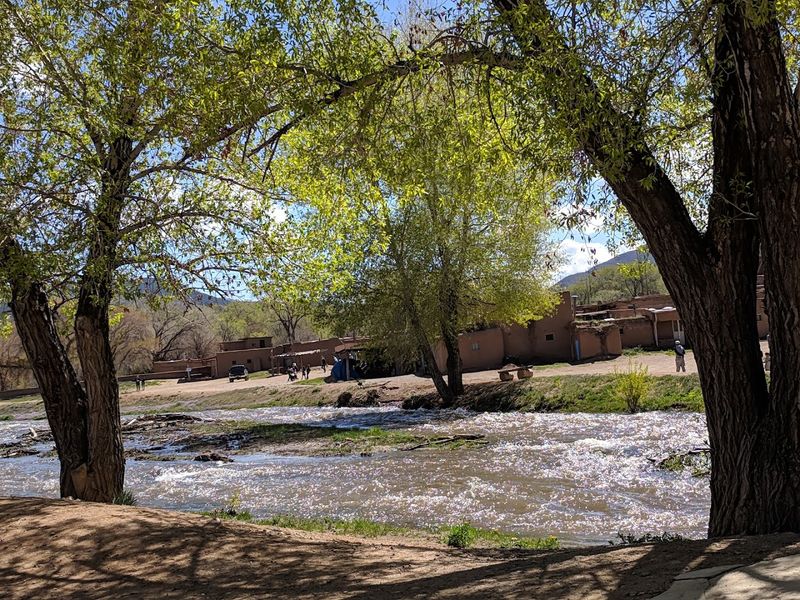
A small river runs directly through the center of Taos Pueblo, New Mexico, separating the north and south house complexes. The Rio Pueblo de Taos is not just scenic.
It is sacred.
The community draws its drinking water from this stream, and the upper reaches of the river within the Blue Lake watershed are protected tribal land, closed to all outside visitors.
Standing on the footbridge and watching the water move between the ancient walls is one of those moments that makes you put your phone away.
The sound of the river against the background of the mountains creates a quiet that feels deliberate. You notice yourself breathing differently.
The river has sustained this community for over a millennium. It shaped where the buildings were placed, how the community organized itself, and how residents relate to the land around them.
Water is not taken for granted here.
That relationship between people and their water source, maintained carefully over a thousand years, is something the modern world could stand to think about a little more seriously than it usually does.
Guided Tours Make The Whole Visit Click Into Place
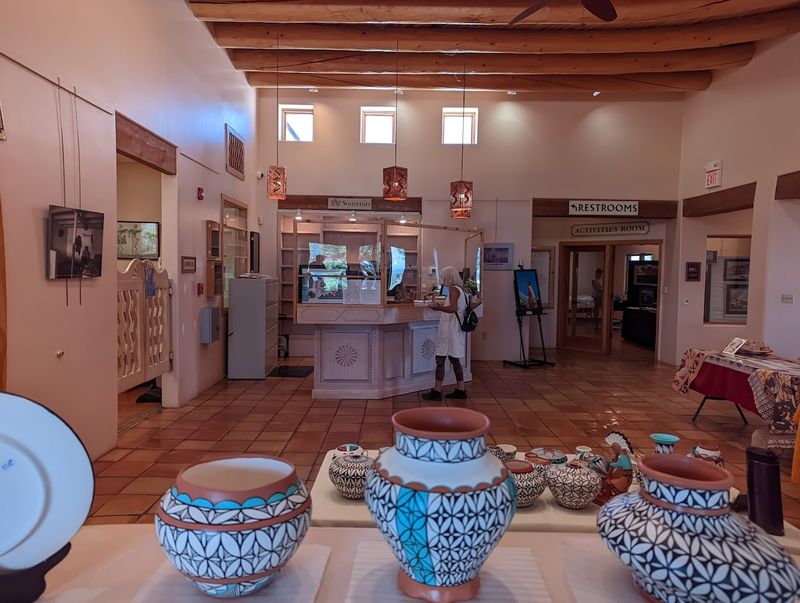
You can wander the open areas of Taos Pueblo on your own, but the guided tours are where the real understanding happens.
Guides are members of the Taos Pueblo community, and the information they share comes from lived experience, not a script written by an outside tourism company. That difference shows immediately.
On the tour I joined, the guide talked about the seasonal ceremonies, the structure of community life, and the ongoing legal and cultural battles the pueblo has navigated over centuries.
He spoke with pride and precision, and the group of strangers around me went from chatty tourists to genuinely attentive listeners within the first five minutes.
Tours typically last around an hour and cover the most significant areas of the grounds, including the historic San Geronimo Chapel and the ruins of the original mission church.
The guide answers questions openly and honestly, including the ones that get a little complicated. If you are visiting Taos Pueblo for the first time, do yourself a favor and book the tour.
It turns a beautiful place into a meaningful one, and that is a much better souvenir than anything sold in a gift shop.
San Geronimo Chapel And The Weight Of Centuries
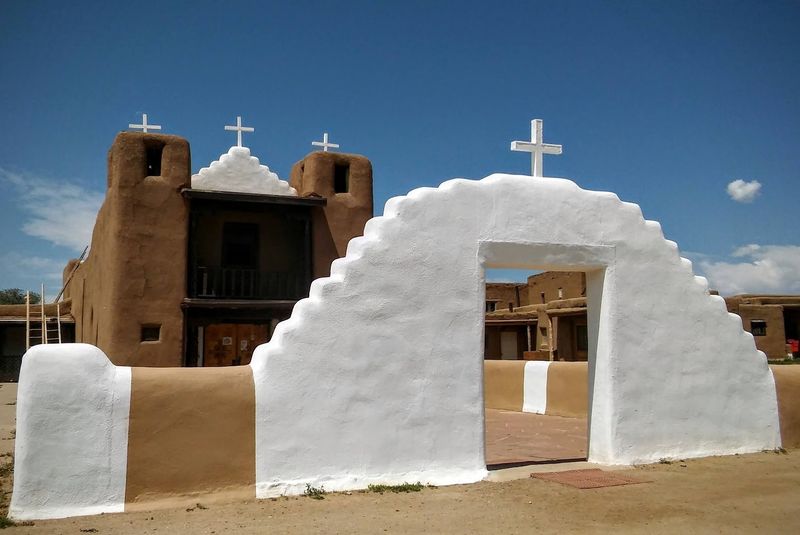
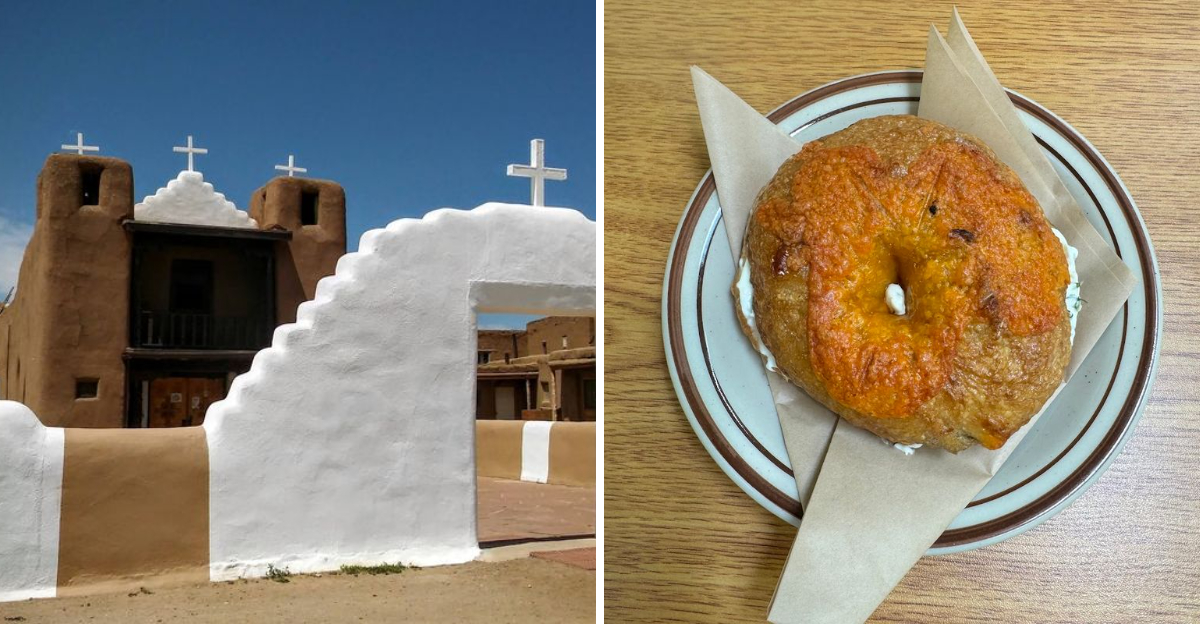
The San Geronimo Chapel at Taos Pueblo is a small, quietly powerful building that holds a complicated history.
The current chapel was built in 1850, replacing an earlier mission church that was destroyed during a period of significant conflict.
The ruins of the original church still stand nearby, used today as a cemetery, and the contrast between the two structures tells a layered story.
Inside the chapel, the decor blends Catholic iconography with Pueblo artistic tradition in a way that feels organic rather than forced.
The community has made the space its own over generations, and the result is something that belongs entirely to Taos Pueblo and nowhere else.
Visiting feels respectful rather than intrusive, especially when you take the time to read the posted guidelines before entering.
The ruins of the old church are equally striking.
The crumbling walls frame the sky in a way that feels almost architectural in its drama. It is one of those spots where a photograph never fully captures what you actually feel standing there.
Go early in the morning if you can.
The light hits the adobe at an angle that makes everything look like it was painted by someone who really knew what they were doing.
Why This Place Stays With You Long After You Leave
Most tourist spots fade from memory within a week. Taos Pueblo in New Mexico is not one of those places.
Something about it sticks, and I have been trying to figure out exactly why ever since my visit.
My best guess is that it is the combination of scale and intimacy. A thousand years of history, and yet the whole thing feels deeply personal.
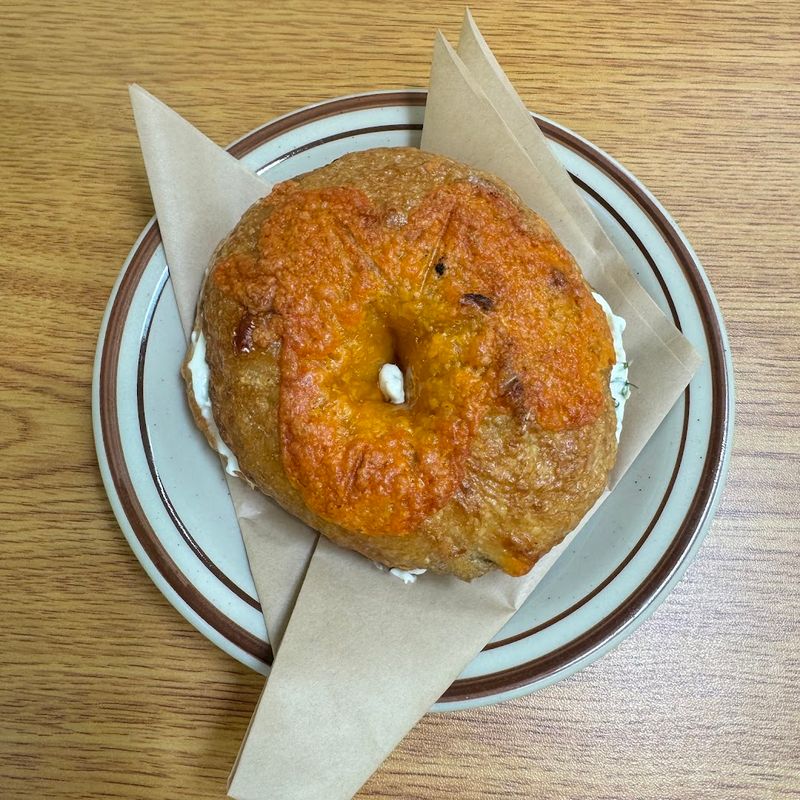
The fry bread plays a role in that, honestly. Food has a way of anchoring memory in a way that photographs do not.
I can still taste the warmth of it, the slight chew, the simplicity.
It was made with care and eaten in a place that demanded you pay attention. That combination does not happen often.
Taos Pueblo at 616 Paseo Del Pueblo Sur, New Mexico is open to visitors most days of the year, though it closes during certain ceremonial periods, so checking ahead is worth the two minutes it takes.
Admission fees go directly to the community. Come with curiosity, leave with respect, and bring an appetite.
The fry bread alone is reason enough to make the trip, and everything surrounding it only makes it better.