The North Carolina Outer Banks Has A Wild Horse Watching Tradition In Corolla Visitors Should Not Rush
A beach day changes fast when something wild moves across the sand like the shoreline belongs to it.
Along a remote stretch of the Outer Banks, a historic herd still roams free, carrying more than four centuries of North Carolina coastal story with it.
The magic comes from how unscripted it feels.
There is no neat viewing platform waiting to package the moment.
No one can make the horses appear on schedule. The dunes stay quiet until they suddenly do not.
A distant shape becomes movement, the beach seems to hold its breath, and the whole scene turns older than the vacation unfolding around it.
Patience matters here, and so does respect.
Getting a glimpse is never guaranteed, which makes the reward feel even stronger when it happens.
One ordinary day by the water can become the kind of memory people keep retelling long after the sand is gone from their shoes.
The Spanish Mustang Heritage Behind The Herd
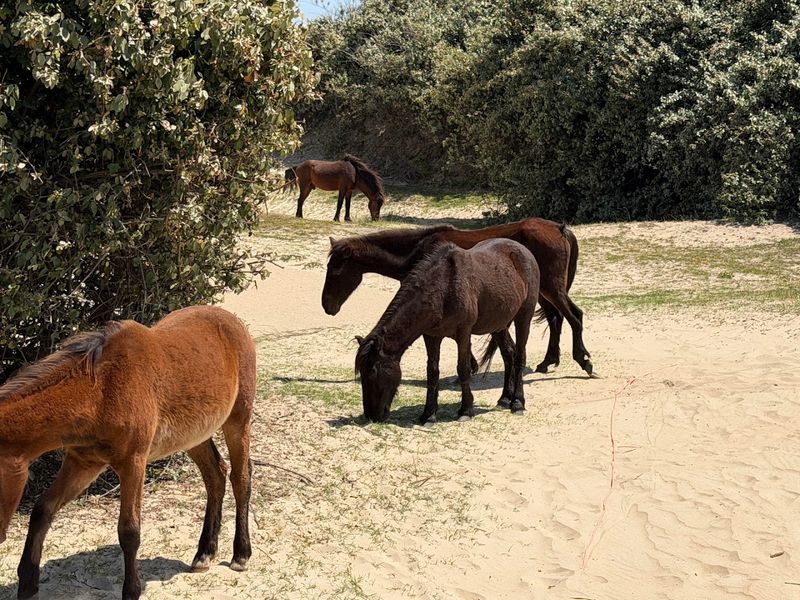
Corolla’s herd carries more history than many visitors realize before they arrive. Conservation and tourism sources identify these horses as Banker horses with Colonial Spanish Mustang roots, and their long presence on the northern beaches is central to how the area tells its story today.
North Carolina now recognizes the Corolla wild horse as the state horse, which helps explain why the herd feels bigger than a roadside attraction or casual beach novelty.
Questions remain about the exact route their ancestors took to the barrier islands, with both shipwreck and colonial-era theories part of the historical discussion. Still, seeing them in person makes the broader story feel much clearer.
Stocky frames, sturdy legs, and a weathered look suit a life shaped by salt air, blowing sand, heat, and scarce freshwater. Reading a little of that history before heading out changes the whole experience.
One distant stallion crossing a dune line can suddenly feel less like a photo opportunity and more like a surviving thread of coastal North Carolina itself.
Where The Horses Actually Live
Horse watching in Corolla starts with understanding where the herd actually lives. Sightings do not usually happen around the busiest commercial pockets near paved stretches of town.
Most visitors head north of Route 12 into the four wheel drive beach area that leads toward Carova, where sand replaces pavement and the pace changes almost immediately.
Tourism guidance for the Northern Outer Banks notes that the horses were relocated to the 4×4 area in 1997 as development increased, and that protected zone remains the core of the experience today.
Reaching it on your own requires a true four wheel drive vehicle, reduced tire pressure, and comfort driving in soft sand. Many travelers wisely leave that part to trained operators instead.
Sparse development, wide dunes, and scattered beach houses make the search feel raw in a way that is increasingly rare on the coast.
A flicking tail near the brush line or a silhouette above the dune grass often appears only after several quiet, careful, unhurried miles of looking.
Guided Tours Worth Every Minute
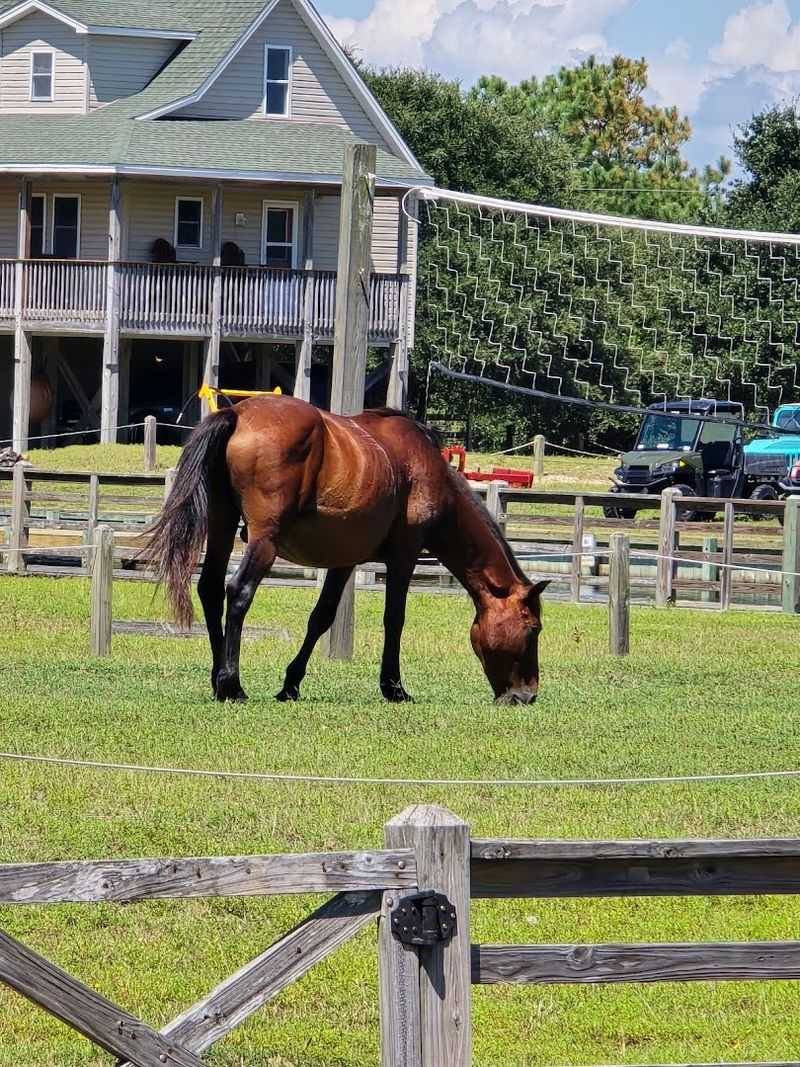
First time visitors often get the most out of Corolla by joining a guided trip instead of treating the search like a race.
Currituck tourism highlights guided wild horse tours as one of the best ways to see the herd. Local drivers know the terrain well, and experienced guides are better at reading the landscape than most first-time visitors.
Good tours do more than chase movement in the distance. Guides explain how the horses use the beach, marsh edges, and scrubby cover, and they help guests understand why a respectful sighting matters more than getting close.
Timing also works in your favor when you let professionals handle the route. Early and late runs are popular because heat, traffic, and flat midday light can make the outing feel less rewarding.
A skilled guide can turn a quiet stretch of sand into a richer story about habitat, herd behavior, and conservation. Instead of spending the trip worrying about getting stuck, visitors can pay attention to the horses and the landscape around them.
The 50-Foot Rule Visitors Must Follow
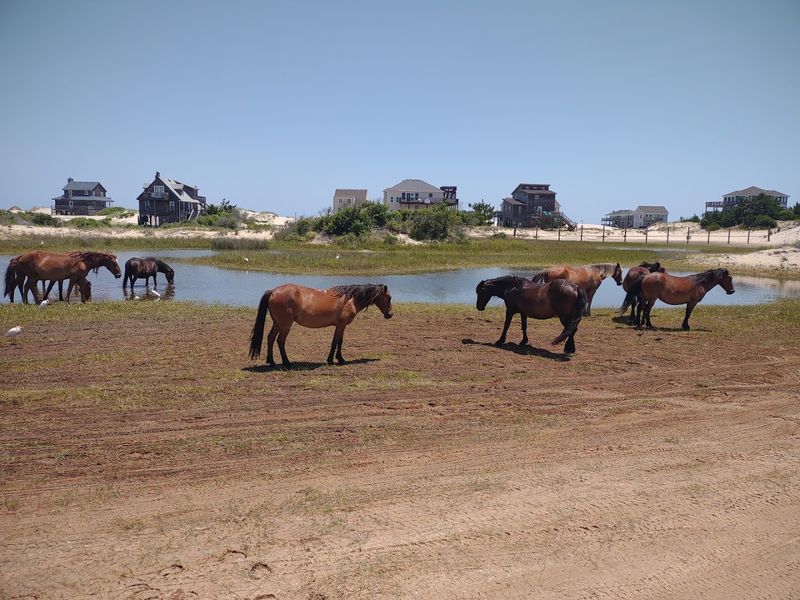
Respect is not optional in Corolla, and the most important rule is also the simplest one to remember. Visitors must stay at least fifty feet away from the wild horses at all times, even if a horse seems calm or wanders closer on its own.
Currituck tourism and the Corolla Wild Horse Fund repeat that warning clearly because the law is meant to protect both people and animals.
Wild horses are not trained for human interaction, and a quiet looking mare or stallion can react quickly when it feels crowded, blocked, or stressed.
Distance also improves the experience more than many first timers expect. Binoculars, a camera with a zoom lens, and a little patience usually produce better results than edging a vehicle forward for a tighter look.
Space gives the herd room to keep behaving naturally, and natural behavior is what makes Corolla special in the first place.
Once people stop pressing for a closer encounter, they often notice more subtle details, including how horses move together, pause, graze, and watch the shoreline.
Why Feeding The Horses Is Truly Dangerous
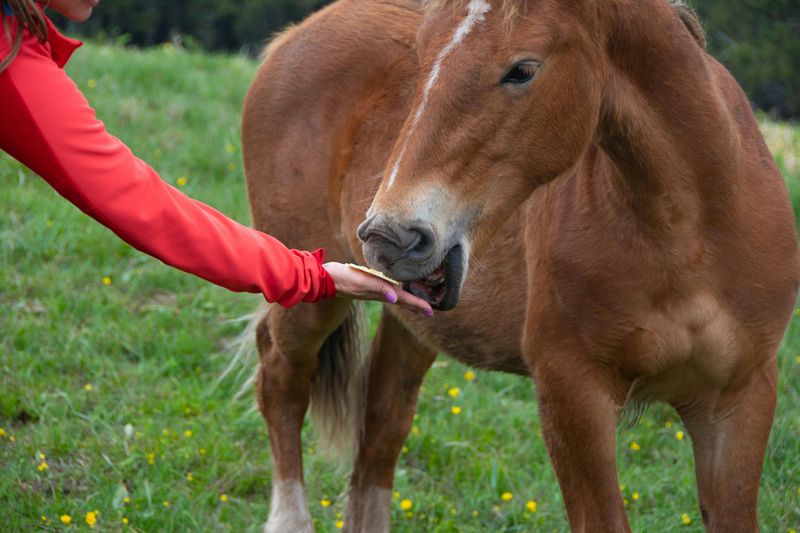
Feeding a wild horse may sound harmless to an unprepared visitor, but Corolla’s history offers a painful reminder that it is anything but kind.
The Corolla Wild Horse Fund has repeatedly used the 2020 passing of a yearling named Danny, who choked on an apple, to show why even familiar foods can be bad for this herd.
Banker horses survive on a specialized diet tied to their habitat, including native vegetation found on the northern beaches.
Apples, carrots, bread, and other human offerings can trigger choking, colic, and dangerous changes in behavior.
Once horses begin associating people or vehicles with food, the risks spread beyond digestion alone. Habituation can draw them closer to traffic, encourage unsafe approaches, and disrupt the caution that helps keep a wild herd wild.
Responsible horse watching in Corolla means bringing curiosity, not snacks.
Leaving food in the cooler and keeping hands to yourself may feel like a small act, yet it directly supports the herd’s survival and protects an experience that depends on the animals remaining as independent as possible.
The Wild Horse Museum In Corolla Village
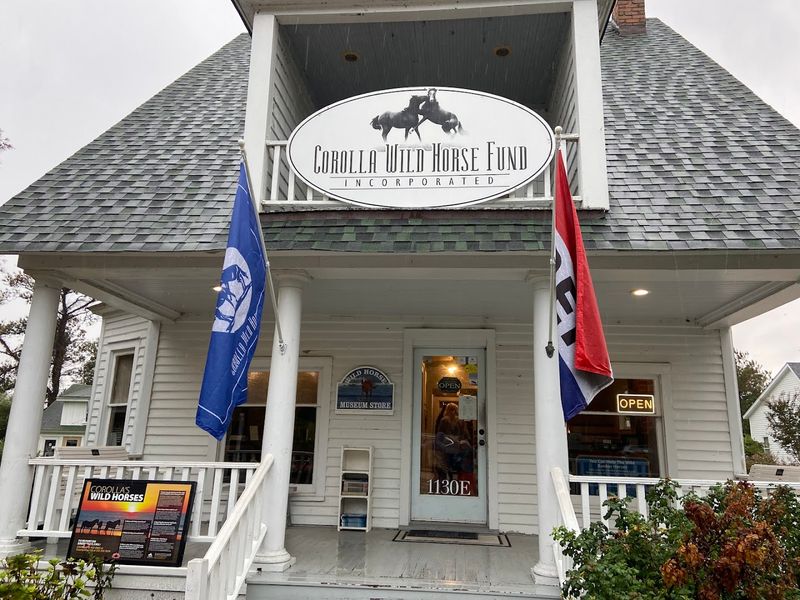
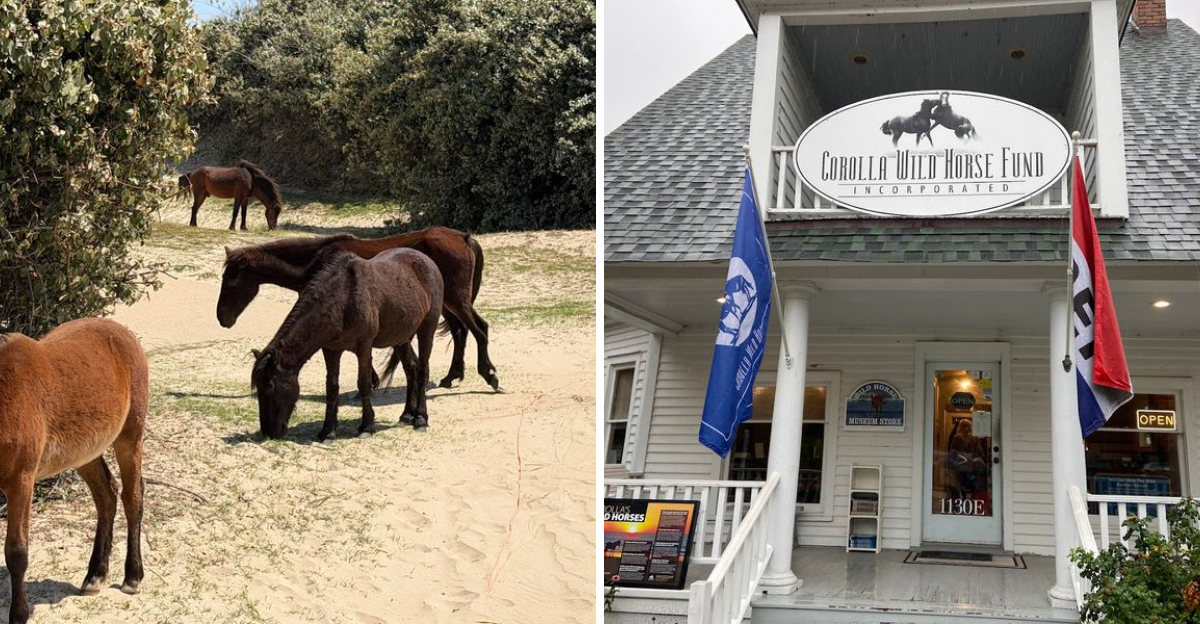
A beach drive is not the only way to understand what makes Corolla’s horses so important. Historic Corolla Village is also home to the Wild Horse Museum and Gift Shop operated by the Corolla Wild Horse Fund, and it gives visitors a useful starting point before they ever reach the 4×4 area.
Current fund information lists the museum at 1130E Corolla Village Road in Corolla, with seasonal public hours, making it an easy stop for families, photographers, and travelers who want context before scanning the dunes.
Exhibits and staff help connect the herd’s present day struggles with its older coastal history, and that background sharpens everything you notice later on the beach.
After learning how carefully the population is managed, why feeding is dangerous, and how fragile the habitat can be, a simple sighting feels more meaningful. Museum time also works well for travelers who never plan to drive the sand themselves.
Even without a beach excursion, the stop explains why the horses remain one of North Carolina’s most distinctive coastal stories.
Planning Your Visit With Patience In Mind
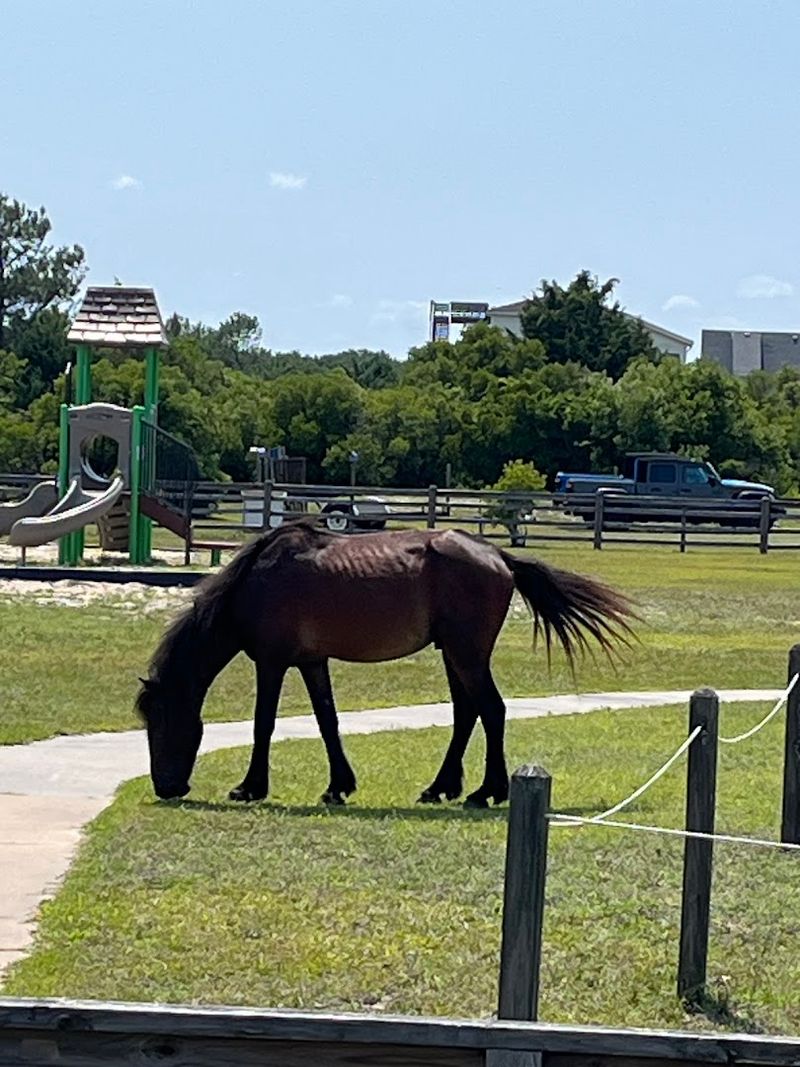
Best known horses often become part of Corolla’s folklore, and one of the names visitors still remember is Amadeo.
The Corolla Wild Horse Fund described him as a visitor favorite after his passing in 2020. He spent most of his life free on the beaches north of Corolla and was widely recognized as a powerful stallion.
Remembering horses like Amadeo helps explain why the tradition here feels emotional as well as scenic. People are not only scanning the shoreline for movement.
They are hoping to witness a living population with individual histories, family lines, and visible personalities shaped by the coast. Planning a visit with that mindset changes the entire outing.
Early light, slower driving, a respectful distance, and realistic expectations all matter, because sightings are never guaranteed. Still, uncertainty is part of what gives the experience its weight.
Corolla does not hand out neat, staged encounters. What it offers instead is rarer: the chance to meet a piece of North Carolina’s coastal history on its own terms, in its own time.
Amadeo, The Most Recognized Horse Of The Herd
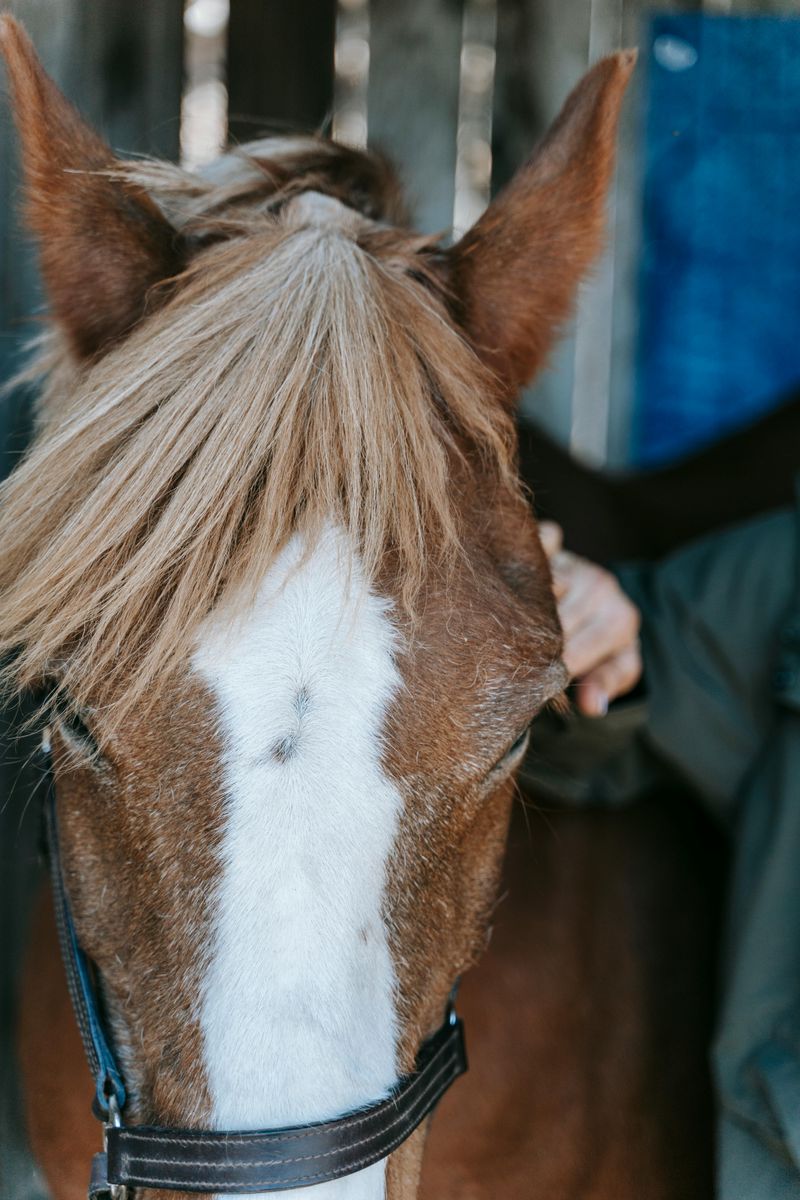
Some animals seem born for attention, and Amadeo carried that kind of unmistakable presence wherever he went.
One of the Corolla herd’s most memorable stallions, he was admired not only for his beauty, but for the resilience written into his story.
The Corolla Wild Horse Fund recorded him as a chestnut stallion with a flaxen mane and tail, a horse whose life changed dramatically after a violent clash with a rival left him blind and fighting for survival in the ocean.
Rescued in 2013, he went on to become one of the herd’s most beloved figures, often remembered as a kind of king of the northern beaches.
More than a familiar face, Amadeo came to symbolize the endurance of Corolla’s wild horses themselves. Seeing him, or simply knowing his story, gave visitors a powerful link to the Outer Banks’ untamed past.