These 9 Western Maryland Towns Along The Old National Road Never Stopped Feeding Travelers
There is a specific kind of hunger that only a long mountain drive can produce, and Western Maryland has been quietly solving it for two hundred years.
The Old National Road was America’s first federally funded highway.
It was built to move a young nation westward through the Appalachian ridges, and every town along its route understood from the beginning that hungry travelers need feeding. They have not stopped since.
I have driven this stretch of US Route 40 more times than I can count, through the kind of mountain towns that do not show up on anyone’s best-of list but absolutely should.
What keeps pulling me back is not the scenery, though the scenery is genuinely excellent. It is the food.
Simple, unhurried, and made by people who learned their recipes from someone who learned theirs from someone else.
Western Maryland does not need to announce itself. It just keeps the door open and the kitchen running, same as always.
1. Grantsville
Some places earn their reputation one plate at a time, and Grantsville has been doing exactly that since wagons first rolled through Garrett County.
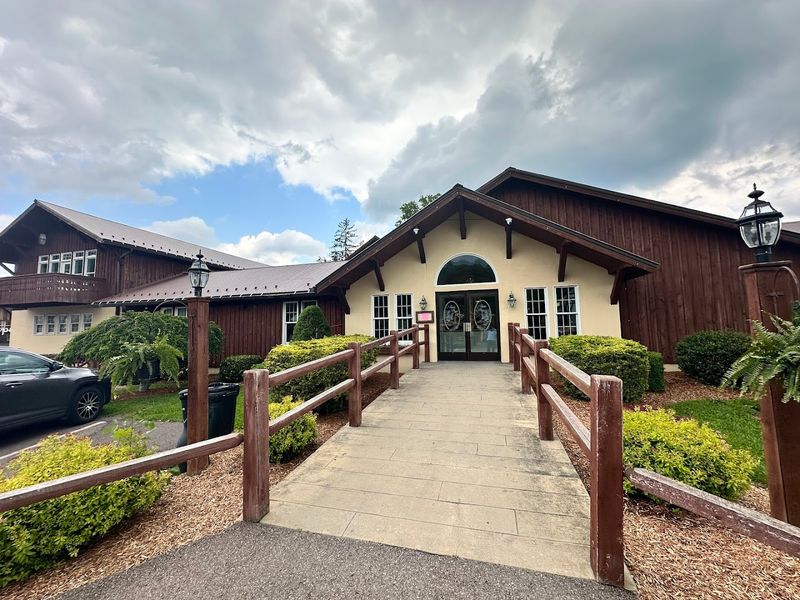
Sitting at the western edge of Maryland, this small mountain town is home to Spruce Forest Artisan Village and, more importantly to hungry road travelers, the Penn Alps Restaurant.
The building itself dates back to 1818 and was once a stagecoach stop on the National Road.
The menu leans into Pennsylvania Dutch tradition, which means you are looking at chicken pot pie, homemade soups, and baked goods that smell like someone’s grandmother took over the kitchen.
It is the kind of food that makes you slow down and actually sit at the table instead of eating in the car.
Locals have been coming here for decades, and first-timers always look a little surprised by how good it is.
Penn Alps Restaurant is located at 125 Casselman Road, Grantsville.
The Casselman River Bridge nearby is one of the oldest stone arch bridges in the country, which gives the whole stop a sense of history you did not expect from a lunch break.
2. Keyser’s Ridge
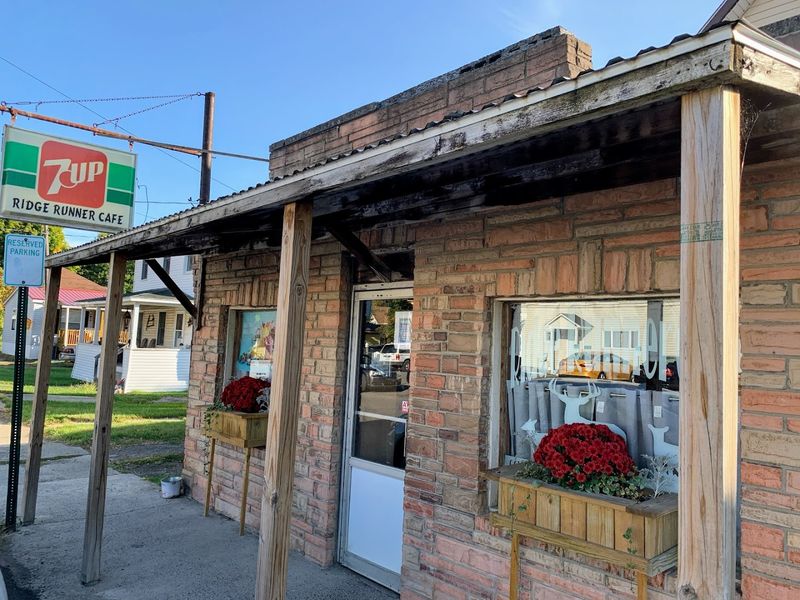
Keyser’s Ridge sits at one of the highest points along the entire National Road, and the wind up there is no joke.
Truckers have known about this stop for generations because when you are hauling a load over the Allegheny plateau, you need real food, not a granola bar.
The ridge has historically been a place where travelers paused before the long descent into the valleys below.
The dining options here are no-frills and completely honest about it. You get big portions, hot coffee, and service that moves fast because the people eating here have places to be.
There is a straightforwardness to a ridge-top diner that city restaurants spend a lot of money trying to fake and never quite pull off.
What makes Keyser’s Ridge memorable is the view paired with the meal. Eating breakfast at elevation while watching clouds move through the mountains below is a genuinely strange and wonderful experience.
The Ridge Runner Restaurant at 18443 National Highway, Keyser’s Ridge, has long served as that reliable pit stop where the coffee is strong and nobody is pretending the food is fancy. It is just good, and that is enough.
3. Frostburg
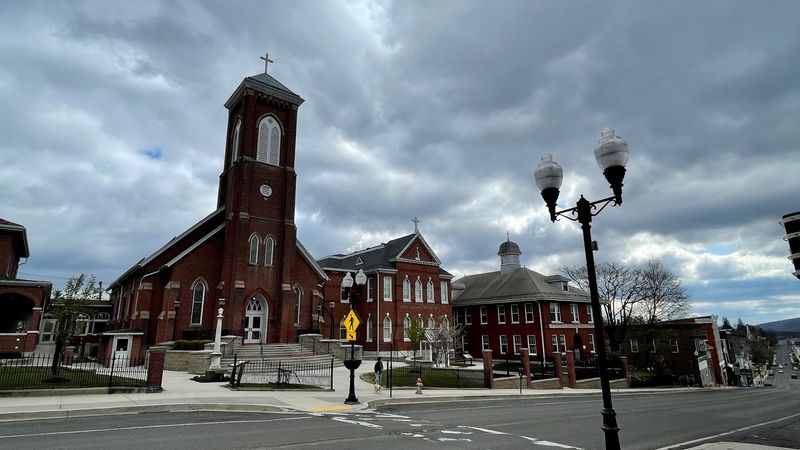
This is the kind of college town that surprises people who write it off as just another mountain stop.
Frostburg State University gives the downtown a lively energy, and the restaurants here have to compete for a crowd that actually knows what good food tastes like.
That competition has produced some genuinely impressive results over the years.
The Tombstone Saloon and Gunslinger Grille on Broadway Street leans into Frostburg’s frontier-era identity with a menu that is more serious than the name suggests.
But the real institution is the Princess Restaurant, which has been serving Italian-American comfort food since 1939.
Pasta, subs, and a dining room that has not changed much since your grandparents were young.
It is located at 13 West Main Street, Frostburg, and the consistency is almost alarming in the best possible way.
Frostburg also sits along the Great Allegheny Passage trail, so cyclists roll in hungry from long rides and the restaurants know how to handle a serious appetite.
The town has a natural rhythm built around feeding people who have been working hard outdoors, which makes every meal feel a little more earned and a lot more satisfying.
4. LaVale
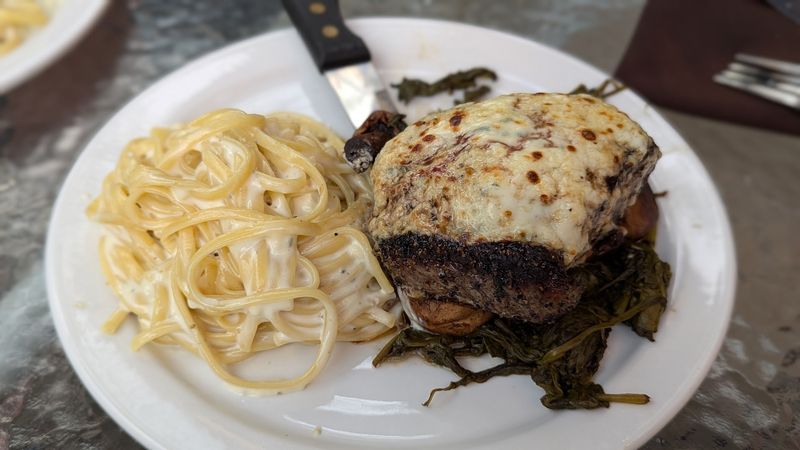
This town holds a very specific piece of American road history.
The LaVale Toll Gate House, built in 1836, is the only remaining toll gate house on the entire National Road and it is still standing right there on US Route 40.
Travelers once paid a toll here before continuing west, and the town grew up around that steady stream of passing people who needed to eat and rest.
Today, LaVale is essentially part of the greater Cumberland area and its dining scene reflects that suburban energy.
You will find everything from family-owned pizza spots to sit-down restaurants that draw people from across Allegany County.
The stretch along National Highway is well stocked with options that range from casual to surprisingly refined.
One local favorite is Ristorante Ottaviani, which brings genuine Italian cooking to a town that earned its food culture through centuries of feeding travelers.
Located at 1 Braddock Road, LaVale, the restaurant offers a dining experience that feels completely out of proportion with the size of the town, in the best way.
LaVale proves that a place does not need to be big or famous to have serious culinary pride baked right into its identity.
5. Cumberland
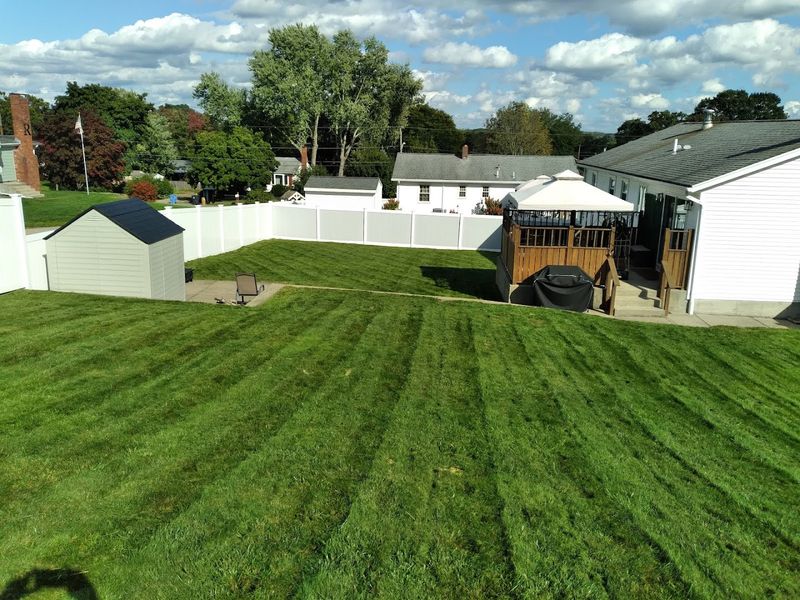
It was once called the Queen City of the Alleghenies, and that title was not handed out lightly.
At its peak, it was one of the most important transportation hubs in the entire country, sitting at the junction of the National Road, the C&O Canal, and the B&O Railroad.
All of that traffic meant one thing: people were always hungry here, and the city learned to feed them well.
The food scene in Cumberland today reflects that layered history.
Queen City Creamery and Deli on Harrison Street serves up homemade ice cream and sandwiches in a setting that feels like it belongs in a different era, and people love it for exactly that reason.
The Maryland Craft Beer Festival draws crowds each year, but the everyday dining scene is what keeps locals proud.
For something with more history on the plate, the Bittersweet Cafe has become a local institution for breakfast and lunch.
Cumberland’s downtown, anchored by the Western Maryland Railway Station at Canal Street, is worth a full afternoon of wandering and eating.
The city has restaurants that reflect its multicultural past and its stubborn refusal to stop being interesting.
6. Flintstone
Yes, the town is really called Flintstone, and no, the cartoon was not named after it.
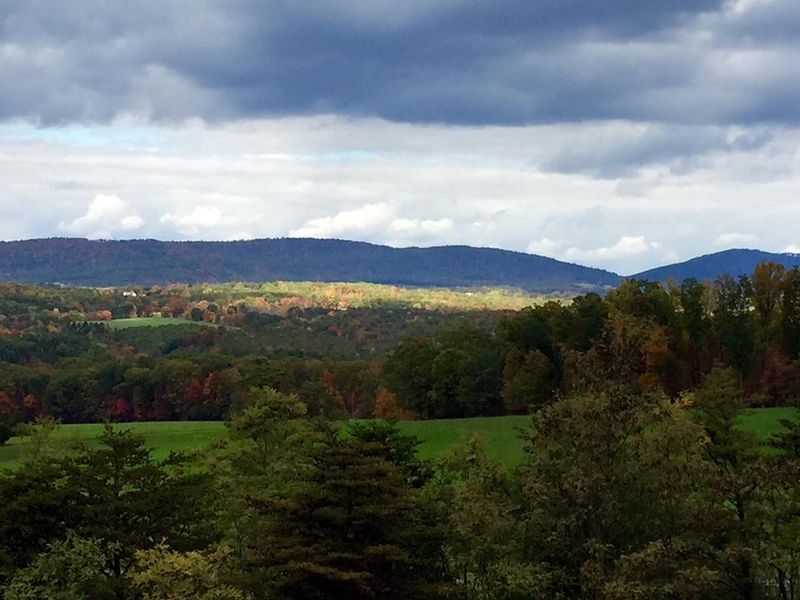
The actual Flintstone, Maryland, sits in a rural valley in Allegany County and has the quiet, unhurried energy of a place that has never tried to be anything other than exactly what it is.
That authenticity extends to the food, which tends to come from small local spots rather than chains.
Rocky Gap State Park nearby pulls in visitors from across the region, and Flintstone sits right along the path that travelers have used for centuries to move through the mountains.
The community has a deep connection to the land, and that shows up in the kind of cooking that prioritizes local ingredients and no-nonsense preparation over presentation.
The Flintstone area is also home to some of the most scenic stretches of the original National Road alignment, where you can still see old stone mileposts embedded in the ground.
Stopping to eat in a town this small and this genuine feels like a privilege.
Flintstone is located along US Route 40 in Allegany County, and the surrounding farmland supplies a freshness to local meals that you simply cannot replicate in a bigger city kitchen.
7. Little Orleans
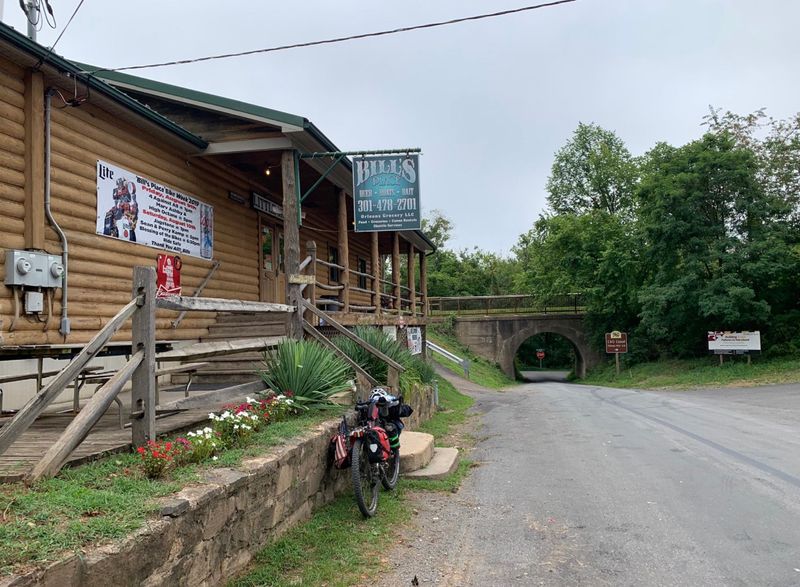
Little Orleans is the kind of place that makes you question your GPS. The town is so small that it barely registers on most maps, but the people who know it swear by it with an intensity that is almost suspicious.
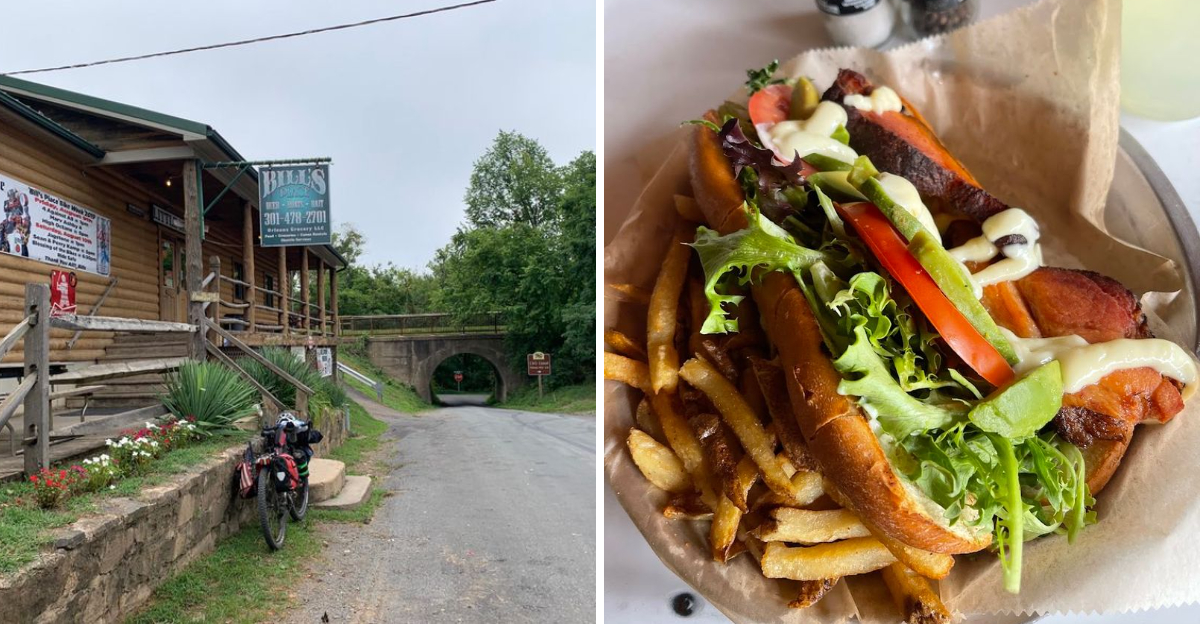
Sitting along the C&O Canal in Allegany County, Little Orleans has exactly one famous establishment: Bill’s Place, also known as Bill’s Place and Campground.
Bill’s Place at 18702 Orleans Road, Little Orleans, is a general store, grill, and campground all rolled into one slightly chaotic and completely wonderful operation.
Hikers and cyclists on the C&O Canal towpath have been stopping here for decades to grab a burger, a cold drink, and a chance to sit down on something that is not a bicycle seat. The menu is short and the portions are generous.
What makes Little Orleans genuinely special is the sense that time moves differently here. You are not eating in a restaurant designed to feel rustic.
You are eating in a place that simply is rustic, and has been since before rustic was a design trend. The Potomac River is right there, the hills close in on all sides, and the food tastes better because of all of it.
8. Hancock
This town holds a geographic distinction that most people do not know: it is the narrowest point in Maryland, where the state is only about two miles wide from the Pennsylvania border to the Potomac River.
That quirk of geography made Hancock a mandatory stop for travelers on the National Road, because there was literally no way around it. The town fed everyone who passed through, and it still does.
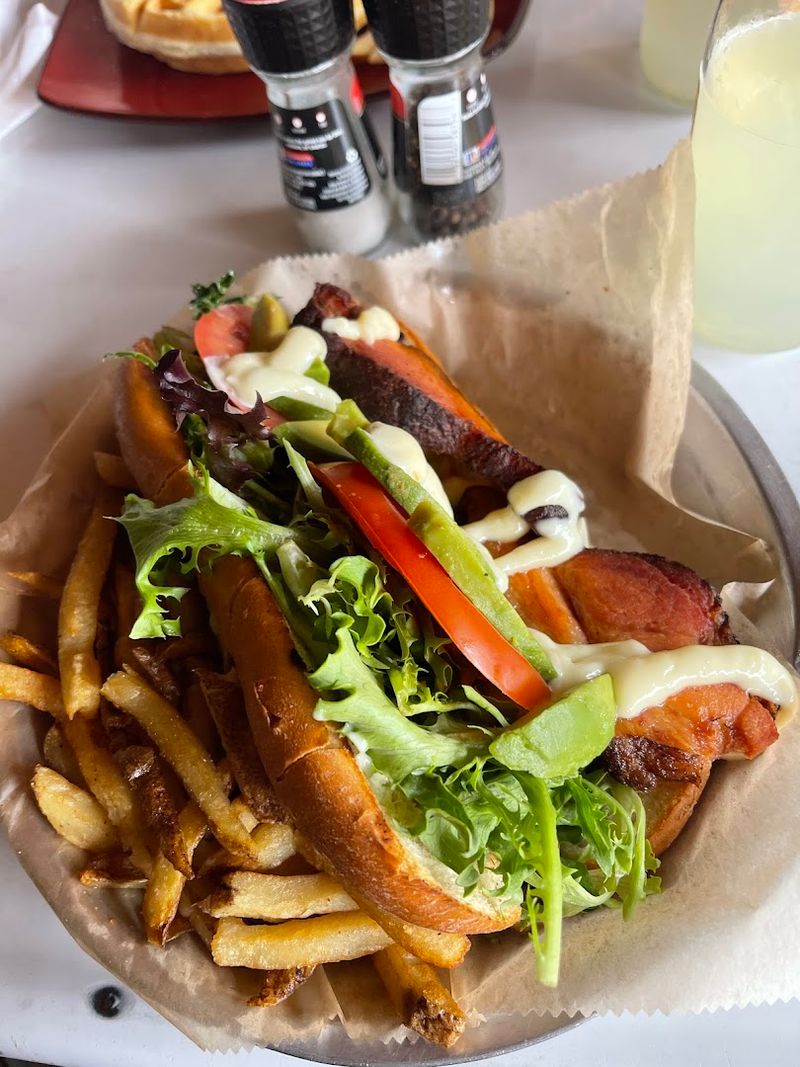
Buddylou’s Eats Drinks & Antiques is the kind of place that anchors a small town’s identity.
Locals meet here for breakfast on weekday mornings, families come in after church, and road-trippers discover it by accident and end up staying longer than planned.
The food is classic American diner with Maryland influences, meaning the crab soup shows up alongside the pancakes and nobody finds that unusual.
Hancock’s downtown along Main Street has a walkable, easy character that invites you to slow down. The C&O Canal runs right along the edge of town, adding a scenic backdrop to an already pleasant stop.
Buddylou’s Eats Drinks & Antiques is located at 11 E Main St, Hancock. Hancock is proof that the smallest geographic footprint can leave the biggest impression on a hungry traveler moving through the mountains.
9. Boonsboro
It might be the most literary small town in Maryland, and that is not something you expect to say about a place with fewer than 4,000 people.
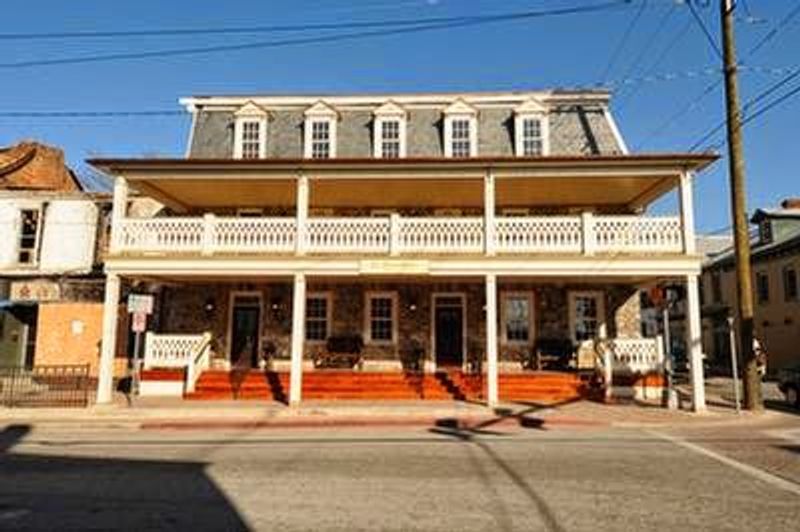
Author Nora Roberts put Boonsboro on the map in a big way when she renovated the historic Inn BoonsBoro and opened Turn the Page Bookstore right on Main Street.
The town leaned into it, and the result is a downtown that feels genuinely charming rather than manufactured.
The pizzeria, located inside the Inn BoonsBoro at 1 N. Main Street, Boonsboro, serves wood-fired pizza in a setting that manages to feel both upscale and completely relaxed at the same time.
The menu changes with the seasons and the ingredients reflect a serious commitment to quality. It is the kind of pizza that makes you reconsider every other pizza you have eaten recently.
Boonsboro also sits near Antietam National Battlefield and South Mountain State Battlefield, so the town carries a quiet historical weight that flavors everything, including the meals.
Washington Monument State Park is minutes away, offering a pre-dinner hike that makes the food taste even better when you finally sit down.
Boonsboro is where the National Road meets genuine small-town ambition, and the combination works beautifully.