10 Nevada Desert Spots Caught Between Hidden Beauty And Heavy Crowds
Nevada’s desert creates a mix of open space and unexpected activity in certain locations.
Some spots attract attention quickly, drawing visitors who want to see the same views at the same time. Still, there are moments when things settle and feel more personal.
Have you ever arrived somewhere expecting quiet, only to find others had the same idea?
These places show that contrast clearly. They shift between calm and busy without losing their appeal.
Timing can change everything. A short pause can reveal a different side of the same landscape.
That balance keeps each visit interesting and slightly unpredictable in ways that make people return again.
1. Red Rock Canyon National Conservation Area
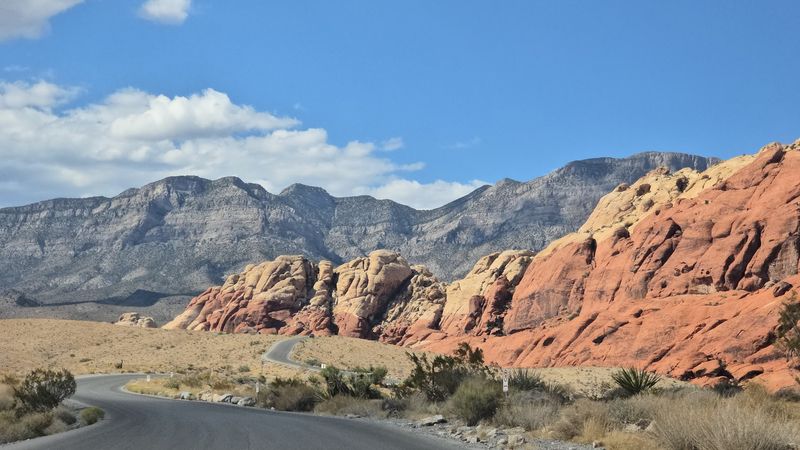
Trust me, the way these crimson peaks dominate the horizon makes every neon light in Vegas feel small.
Red Rock Canyon National Conservation Area sits just 17 miles west of Las Vegas, making it one of the most accessible wild landscapes in the American Southwest.
The 13-mile scenic loop drive is the main attraction, and it delivers views that feel almost too cinematic to be real. Dozens of hiking trails branch off from pullouts along the route, ranging from easy strolls to technical scrambles.
Rock climbers travel from across the country to tackle the iconic walls here. The canyon hosts over 2,000 climbing routes, which is genuinely remarkable for a public conservation area.
Weekends bring heavy traffic, especially between October and April when temperatures are mild. Arriving before 8 a.m. on a Saturday can mean the difference between a peaceful morning and a parking lot standoff.
Spring wildflowers add unexpected bursts of color against the red rock. The desert tortoise, a protected species, occasionally wanders across the trails, reminding you that this land belongs to its original residents first.
2. Valley Of Fire State Park
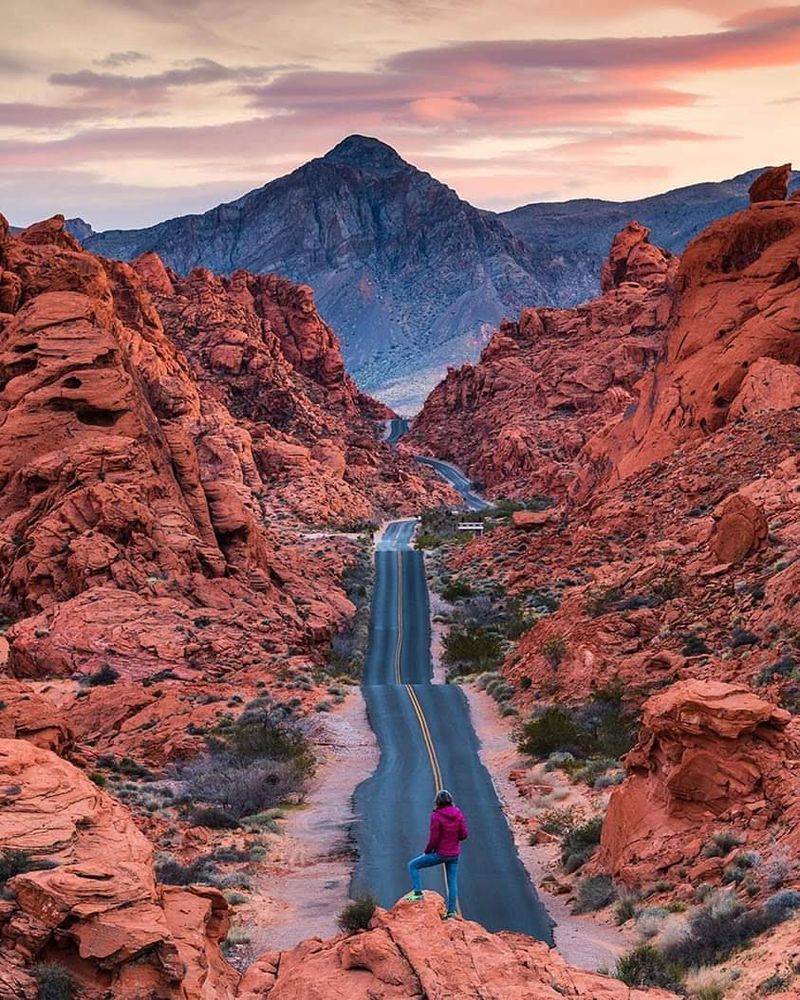
Would you believe me if I said these rocks look like they’ve been burning for a thousand years?
Driving into this park for the first time, the rocks seem to actually glow, as if lit from within by something ancient and stubborn. Valley of Fire State Park is located about 50 miles northeast of Las Vegas, near the town of Overton.
The park gets its name from the way its red Aztec sandstone formations reflect sunlight, especially at sunrise and sunset. Those are the magic hours when the landscape turns from rust to deep amber in a matter of minutes.
Petroglyphs created by ancient Indigenous cultures, including Ancestral Puebloans are scattered throughout the park. Mouse’s Tank Trail is one of the best short hikes for spotting these carvings up close.
Crowd levels have surged in recent years, partly due to social media exposure. The campground fills quickly on weekends, and parking at popular trailheads can become chaotic by mid-morning.
Visiting on a weekday, especially in late autumn or early spring, dramatically improves the experience. Summer temperatures regularly exceed 110 degrees Fahrenheit, which naturally thins the crowds but demands serious preparation.
The park’s Visitor Center has a small but informative exhibit on the geology and history of the region.
3. Lake Mead National Recreation Area
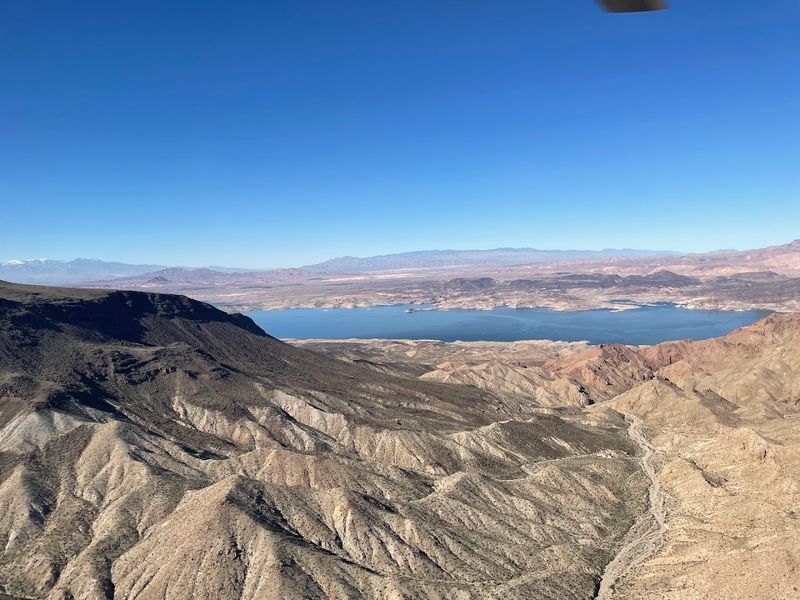
It is a total shock to the system when this massive blue expanse suddenly breaks the desert heat.
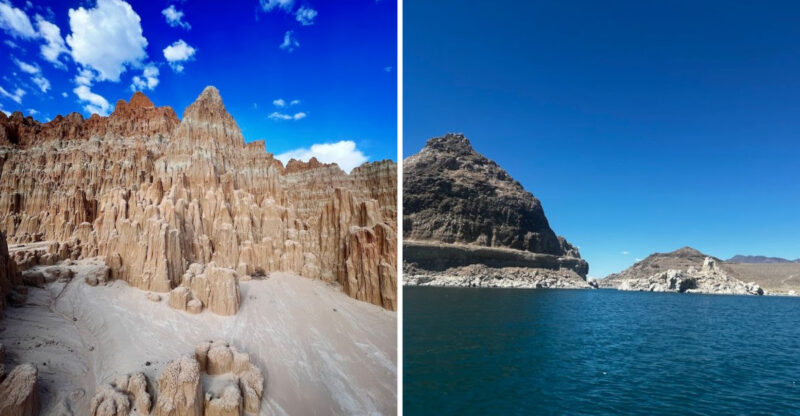
Not many places on Earth let you go from bone-dry desert to a massive glittering reservoir in the span of a single mile. Lake Mead National Recreation Area straddles the Nevada-Arizona border, with the town of Boulder City, serving as the nearest gateway community.
The lake itself was formed by the construction of Hoover Dam in the 1930s and remains one of the largest reservoirs in the United States by volume. Its shoreline stretches for roughly 759 miles, offering an enormous range of experiences in a single park.
Boating, kayaking, and fishing are the dominant activities in the busier sections near the marinas. Those areas can feel surprisingly crowded, especially around Memorial Day and Labor Day weekends.
Head further east or north along the lake’s quieter arms, and the solitude returns quickly. Hikes like the Historic Railroad Trail near Boulder City offer desert scenery without the marina chaos.
Wildlife watching is genuinely rewarding here. Desert bighorn sheep, coyotes, and a wide variety of bird species are regularly spotted along the shoreline.
Water levels have fluctuated significantly due to drought conditions in recent years, which has exposed previously submerged artifacts and structures.
4. Hoover Dam
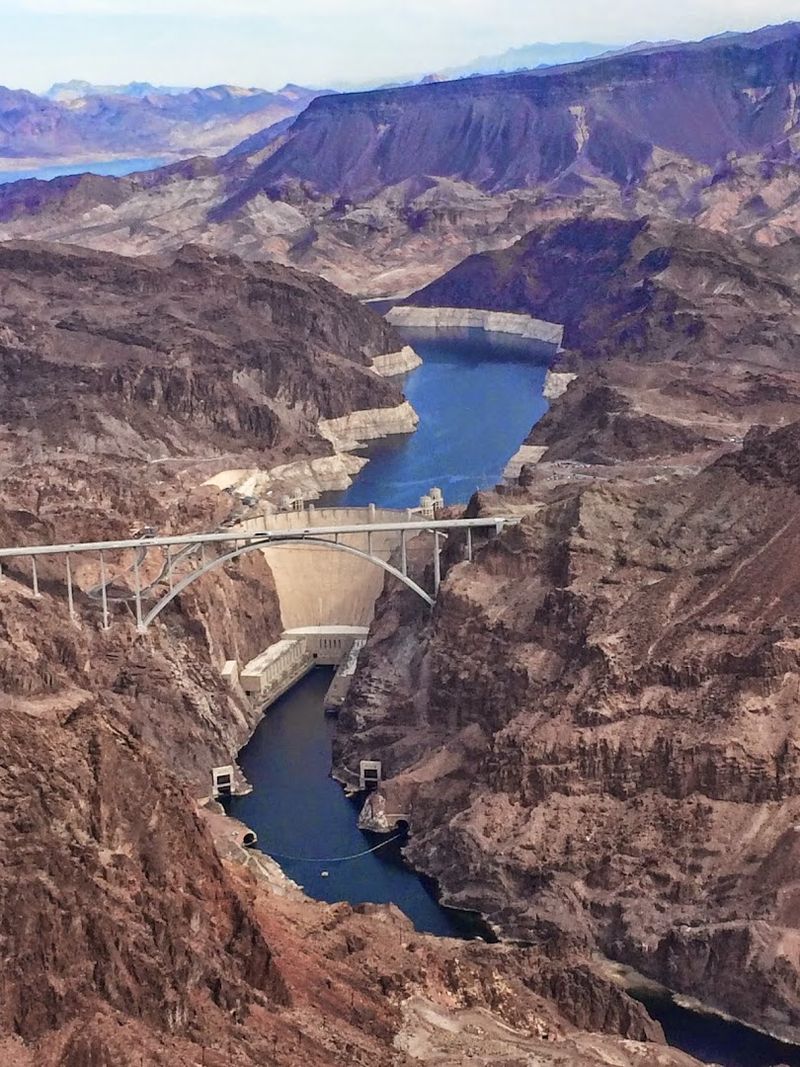
Few things feel as dizzying as realizing just how much power is surging beneath your very feet here. Hoover Dam sits on the border between Nevada and Arizona, accessible from the U.S.Route 93 near Boulder City.
Construction wrapped up in 1936, and at the time it was the largest dam in the world. That record has since been broken, but the engineering achievement still draws visitors from every corner of the globe.
The Bureau of Reclamation offers guided tours of the dam’s interior, including the massive turbine room. These tours book up fast, particularly during spring and summer, so reserving tickets online in advance is strongly recommended.
The pedestrian walkway along the top of the dam offers views straight down into Black Canyon that are genuinely dizzying. On one side you see the calm blue surface of Lake Mead, and on the other, the narrow rocky gorge below.
Parking fills quickly, and the access road can back up considerably during peak hours. Arriving early in the morning on a weekday is the most reliable way to beat the lines.
The surrounding desert landscape is stark and beautiful in its own right. Pale canyon walls and scrubby desert vegetation frame the structure in a way that no photograph quite captures completely.
5. Great Basin National Park
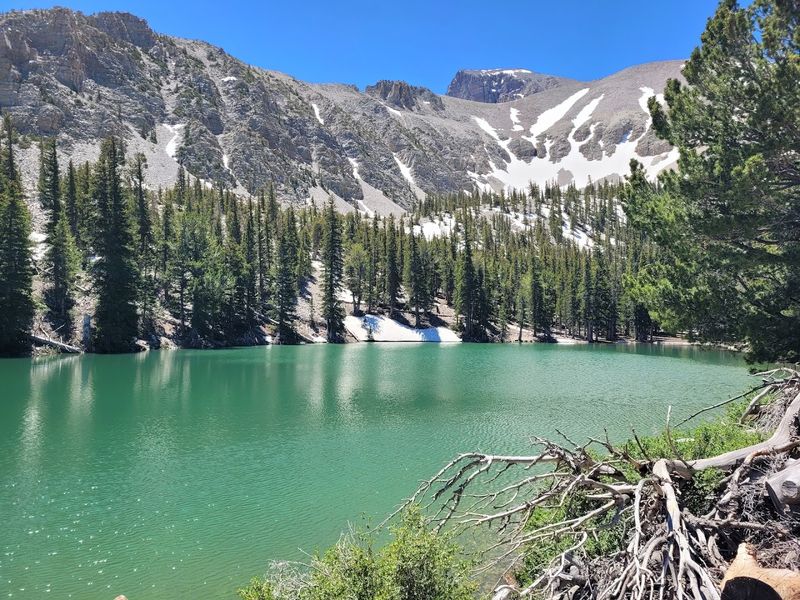
Who would’ve thought a desert mountain could hold the oldest living secrets of the entire planet?
Somewhere in the middle of Nevada, far from any city buzz, a mountain rises to nearly 13,000 feet out of the sagebrush desert. Great Basin National Park is located near the small town of Baker close to the Utah border in White Pine County.
Wheeler Peak is the park’s crown jewel, and the drive to the summit trailhead alone earns its reputation. Ancient bristlecone pine trees grow near the tree line, some of them over 4,000 years old, making them among the oldest living organisms on the planet.
Lehman Caves, tucked inside the park, feature impressive stalactite and stalagmite formations in a series of connected chambers. Guided cave tours run daily and are the only way to access the interior.
Crowd levels here are remarkably low compared to most national parks. The park sees fewer than 130,000 visitors annually, which is a fraction of what places like Zion or Yellowstone receive in a single month.
That low traffic makes Great Basin one of the best places in the continental United States for stargazing. The park holds an International Dark Sky designation, and the Milky Way is visible to the naked eye on clear nights.
6. Black Rock Desert
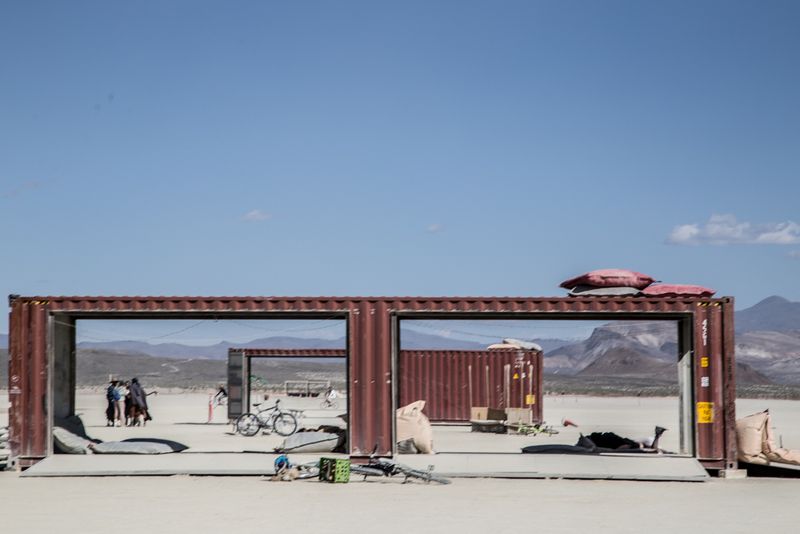
It’s surreal how the silence here is so total it almost has a sound of its own. Sounds strange?
I know it does, but you’ll have to experience it yourself to know what I’m talking about.
This enormous playa, one of the largest playa lakebeds in North America, sits in Humboldt County in northwestern Nevada, roughly 100 miles north of Reno.
The lakebed spans about 400 square miles and is so flat that the curvature of the Earth becomes visible from certain vantage points. Speed record attempts have taken place here for decades, drawn by the near-perfect surface conditions.
For most of the year, the playa is almost entirely deserted, offering a silence and emptiness that feels almost disorienting at first. Wildlife is sparse, but pronghorn antelope are occasionally spotted near the edges of the playa.
Then comes Burning Man, the annual arts and culture festival held every August, and the transformation is extreme. A temporary city of over 70,000 people materializes in the dust for roughly ten days before disappearing almost without a trace.
Outside of festival season, the Black Rock Desert is a genuine wilderness area managed by the Bureau of Land Management. Dispersed camping is allowed, and the hot springs near the town of Gerlach are a worthy side trip.
Cell service is essentially nonexistent out on the playa. Bringing a paper map and extra water is not optional, it is the baseline for a safe outing.
7. Rhyolite Ghost Town
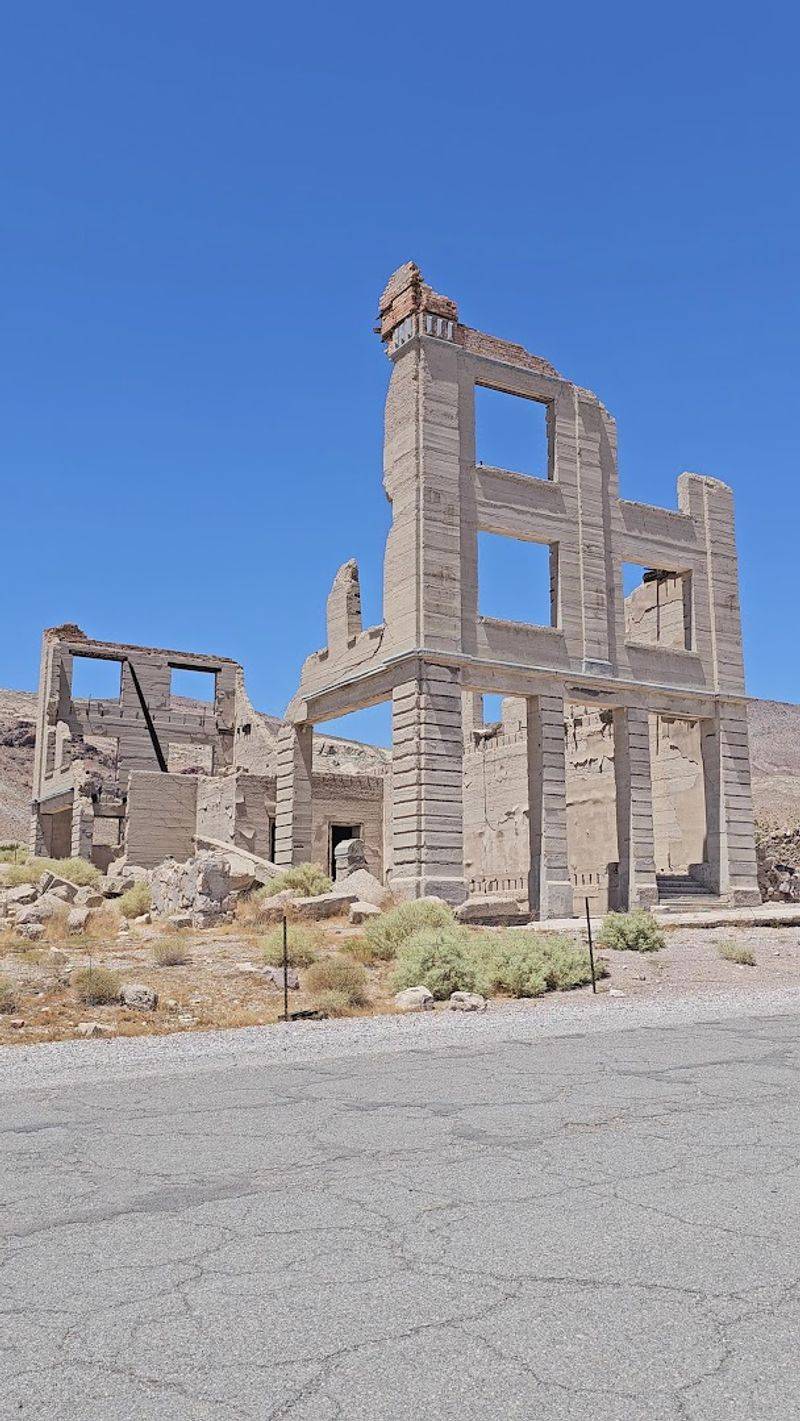
Isn’t it haunting to see how quickly a gold-fever dream can turn into sun-bleached, beautiful ruins?
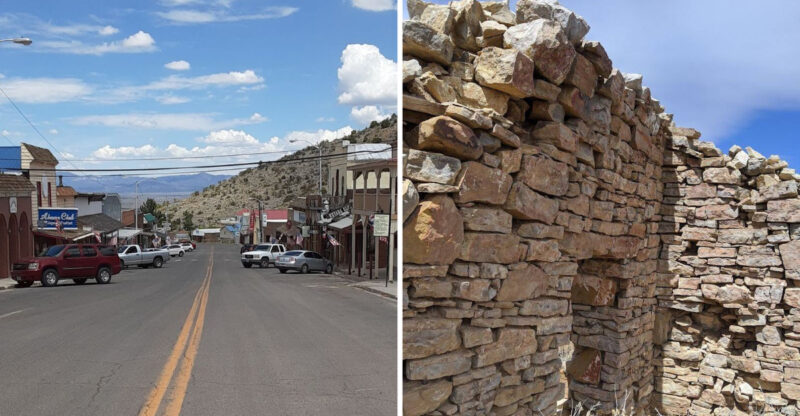
Rhyolite is a ghost town located in Nye County, just a few miles west of Beatty and near the Nevada-California border close to Death Valley.
The town boomed rapidly after a gold strike in 1904 and collapsed just as fast by 1916.
What remains today includes the skeletal frame of a three-story bank building, a crumbling train depot, and the famous Bottle House, built from 50,000 glass bottles by a prospector named Tom Kelly.
Photographers are drawn here consistently, and for good reason. The interplay of ruined architecture against the stark Mojave Desert backdrop creates compositions that feel almost cinematic without any effort.
Rhyolite sits adjacent to the Goldwell Open Air Museum at 1 Golden St, which adds an unexpected artistic element to the experience. Several large-scale sculptures, including a ghostly tableau of human figures, are installed in the desert near the ruins.
Crowds here tend to be modest and manageable most days. Weekend mornings draw more photographers and tourists, but the site never reaches the saturation levels of more famous Nevada landmarks.
Entry is free, and the site is open during daylight hours. Beatty has basic services including gas, food, and lodging for those planning an overnight trip.
8. Cathedral Gorge State Park
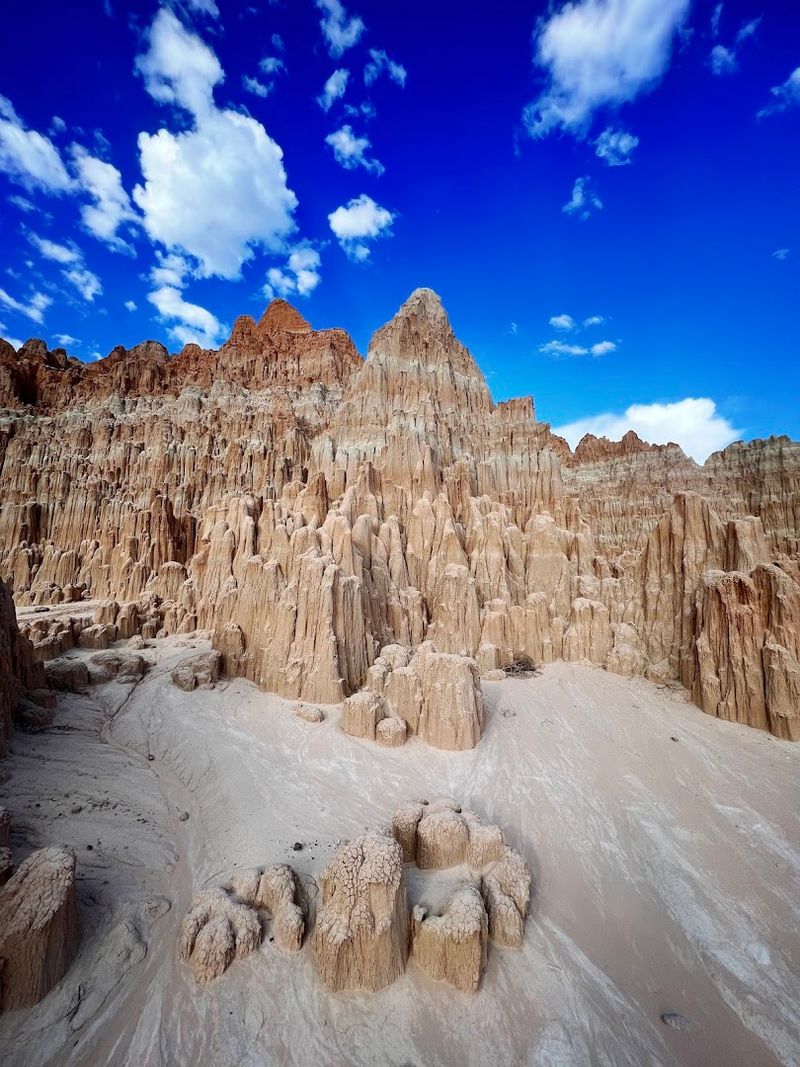
I’m sure you would find it fascinating how nature spent millions of years carving something that really looks like it belongs inside a Gothic cathedral, and tucked it into rural Nevada where most people drive right past.
Cathedral Gorge State Park is located near the small town of Panaca in Lincoln County, in the southeastern part of the state.
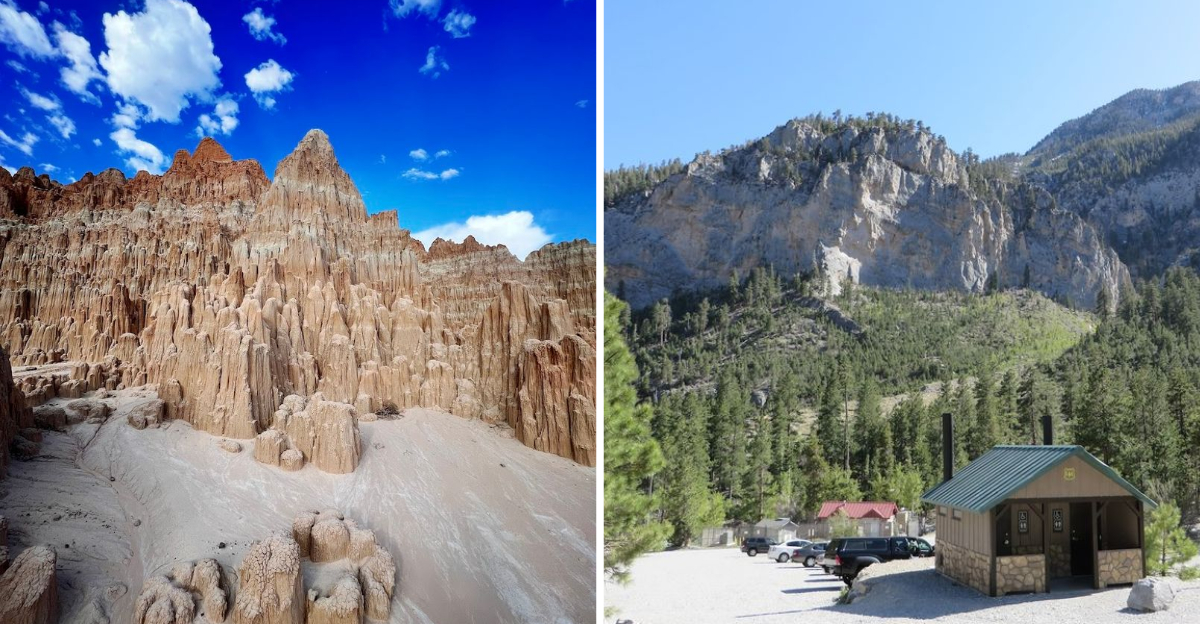
The park’s defining feature is its intricate network of narrow bentonite clay canyons, formed by the erosion of an ancient lake bed.
These slot-like passages wind between towering clay spires, creating a labyrinthine landscape that rewards slow exploration on foot.
Miller Point Overlook gives a sweeping aerial view of the gorge and is one of the most photographed spots in the park. Early morning light hits the formations from a low angle and brings out incredible texture in the pale clay walls.
Crowd levels remain relatively low, which is part of the park’s considerable appeal. It is gaining traction on hiking and photography forums, so the window of true quiet may not last forever.
Camping is available right inside the park, with basic facilities including restrooms and fire rings. Sleeping among the clay spires under a sky full of stars is an experience that feels genuinely removed from everyday life.
9. Death Valley National Park
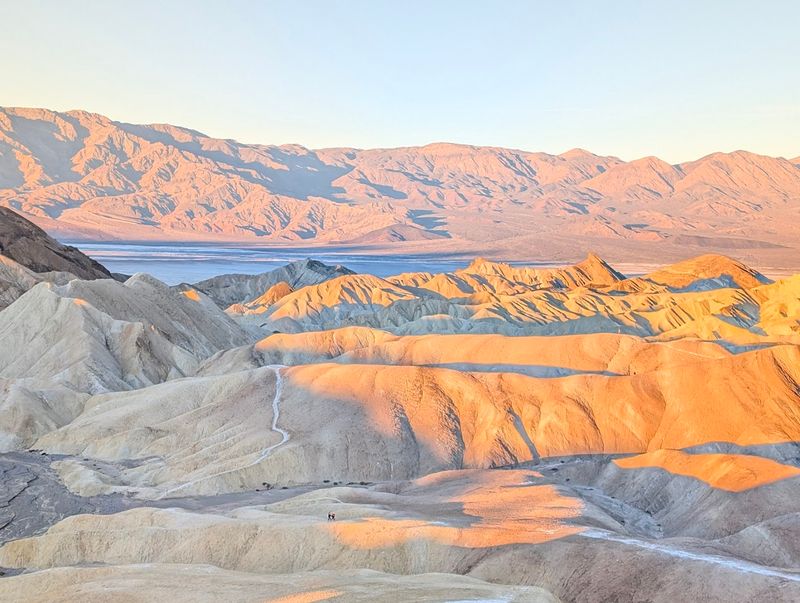
Imagine standing in a place so extreme that the ground beneath you is actually below the ocean’s level. I have to admit, that sent shivers down my spine!
Badwater Basin sits 282 feet below sea level, making it the lowest point in North America, and standing on its salt flat feels like being on another planet entirely.
Death Valley National Park spans the border of California and Nevada, with the Nevada side including areas near Beatty and the Amargosa Valley.
The park holds the record for the highest officially recorded air temperature on Earth, a reading of 134 degrees Fahrenheit logged in July 1913. Summer visits require serious planning, including dawn or dusk hiking and abundant water supplies.
Popular spots like Badwater Basin, Zabriskie Point, and Mesquite Flat Sand Dunes draw large crowds from October through April. Arriving at these icons before sunrise is one of the most reliable ways to experience them without the masses.
The park’s remote eastern and northern sections see far fewer visitors. Areas like Saline Valley and Eureka Dunes offer extraordinary scenery with almost no company.
Wildflower blooms following wet winters transform the valley floor into something almost unrecognizable. These superbloom events, though unpredictable, attract significant attention and temporary surges in visitor numbers.
Death Valley is the largest national park in the contiguous United States, covering over 3.4 million acres.
10. Spring Mountains National Recreation Area
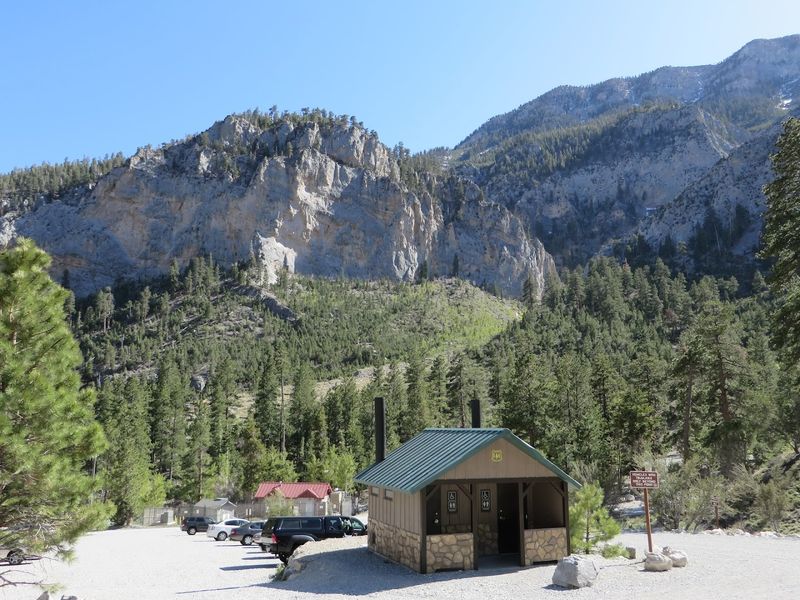
I suspect you’ll crave this pine-scented air the second you realize how cool the desert can actually be.
Just 35 miles northwest of the Las Vegas Strip, the temperature can drop 30 degrees. Spring Mountains National Recreation Area is part of the Humboldt-Toiyabe National Forest and centers around Mount Charleston in Clark County.
The area rises to over 11,900 feet at Charleston Peak, offering a genuine alpine environment in the middle of the Mojave Desert.
Dozens of hiking trails crisscross the mountain, ranging from short nature walks to the demanding long backcountry routes including multi-day loops around Charleston Peak.
Las Vegas locals treat this area as a seasonal refuge during summer months, when the city below bakes in triple-digit heat. Weekends from June through August see heavy traffic on the most accessible trails and picnic areas.
Ponderosa pine, white fir, and aspen groves cover the higher elevations, giving the landscape a character completely unlike anything in the surrounding desert.
Fall foliage in the aspen groves typically peaks in October and draws dedicated leaf-peepers from across the region.
The rare Palmer’s chipmunk lives only in the Spring Mountains and nowhere else on Earth. Spotting one along a trail is a small but genuinely memorable wildlife encounter.