This Giant Viaduct In New Jersey Remains A Quiet Relic Of The Past
Some ruins don’t whisper. They roar.
There’s a structure hiding in plain sight in the state of New Jersey, so massive it once held a world record, yet most people drive right past it without a second glance. Concrete and silence, that’s all you get at first.
Then the scale hits you. Then the history does.
This forgotten giant was built to last forever, abandoned like it never mattered, and left to the woods ever since. The state never tore it down.
Nobody really talks about it. But once you see it looming above the trees, trust me, you’ll have a hard time thinking about anything else.
A Structure That Redefined Early Concrete Engineering
They built something in 1910 that the entire world stopped to stare at. Nobody had ever poured concrete on this scale before, and the engineers behind the Paulinskill Viaduct knew exactly what they were doing.
When it was completed, it earned the title of the largest reinforced concrete structure in the world. That was not a small claim for its time.
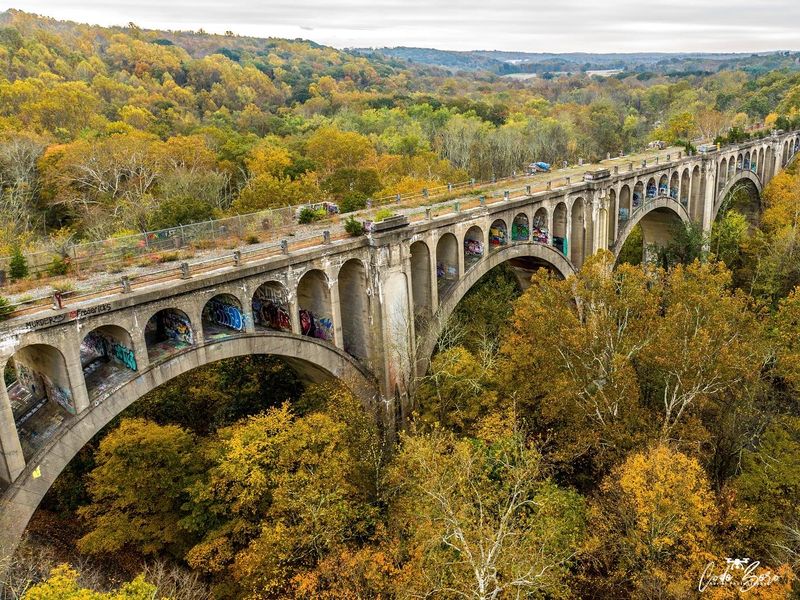
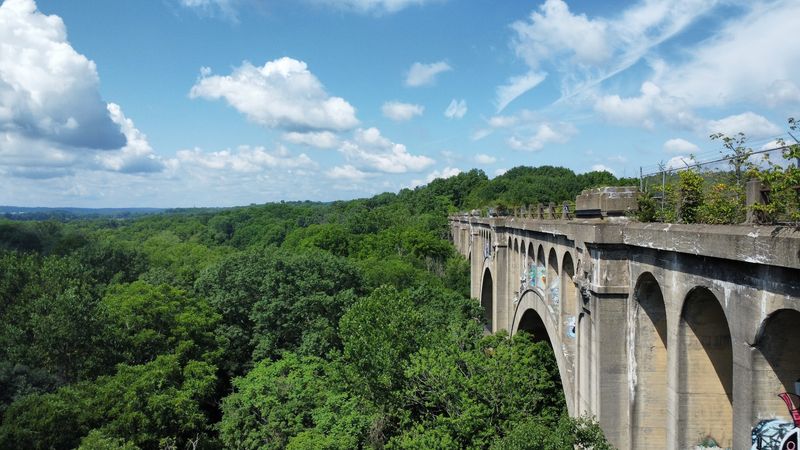
The bridge stretches roughly 1,100 feet in length and stands between 115 and 125 feet above the Paulins Kill Valley. Seven massive concrete arches, each spanning 120 feet, hold the whole thing together with quiet confidence.
Standing beneath it feels like standing under something that was never meant to be ignored. Chief engineer Lincoln Bush oversaw the design for the Delaware, Lackawanna and Western Railroad.
Two Philadelphia contracting firms, Reiter, Curtis and Hill and John Goll and Company, brought the vision to life. Construction began in 1908 and wrapped up in 1910, an impressive timeline for a project of this ambition.
The structure sits near Columbia, NJ 07832, where its scale still dominates the surrounding valley today. No photo truly captures how enormous this structure feels in person.
Built For Speed Not Scenery
Every great structure has a reason for existing, and this one had a very specific mission. The Delaware, Lackawanna and Western Railroad built the viaduct as part of the Lackawanna Cut-Off, a 28.45-mile rail line connecting Port Morris, New Jersey, to Slateford, Pennsylvania.
The goal was a straighter, flatter route that would save time and fuel on every single run.
The viaduct opened to regular rail traffic on Christmas Eve, 1911. That is a detail that somehow makes the whole story feel more cinematic.
Trains rolled across it for decades, carrying passengers and freight across a valley that would otherwise have demanded a much longer detour.
After the DL&W era ended, the Erie Lackawanna Railroad took over operations until 1976. Then Conrail ran trains across it until November 1978.
The last train crossed in 1979. By 1982, the bridge was officially closed, and the tracks were removed two years later in 1984.
What started as a bold solution to a geographic problem became a silent monument the moment the last train left. The valley got quiet, and the viaduct just stood there, waiting.
Decades Of Silence After The Last Train Left
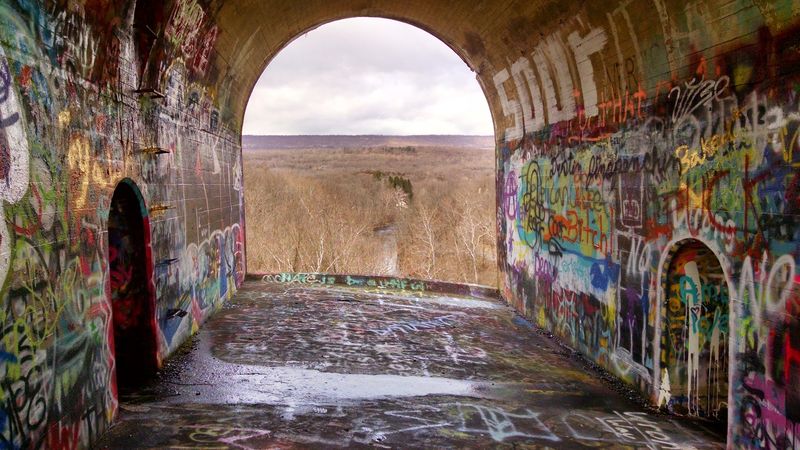
There is something quietly dramatic about a structure built for constant motion suddenly going still. After the tracks were removed in 1984, the viaduct entered a long chapter of abandonment.
Ivy crept up the concrete. Trees grew tall around the base.
The valley reclaimed its peace.
For years, the bridge just sat there in Knowlton Township, Warren County, slowly becoming part of the landscape rather than a feature above it. Vegetation wrapped around the arches like nature was trying to pull the whole thing back into the earth.
It did not succeed, because the concrete is genuinely that solid.
The internal chambers, originally designed for inspection access, became magnets for urban explorers once the bridge fell out of official use. Graffiti artists followed, turning the interior into an unofficial gallery of spray paint murals.
The contrast between the century-old engineering and the modern street art is striking in a way that feels completely unplanned. Some of the murals are genuinely impressive.
Others are just tags. Either way, the interior tells its own layered story of who has passed through since the trains stopped coming.
What It Feels Like To Stand Beneath It
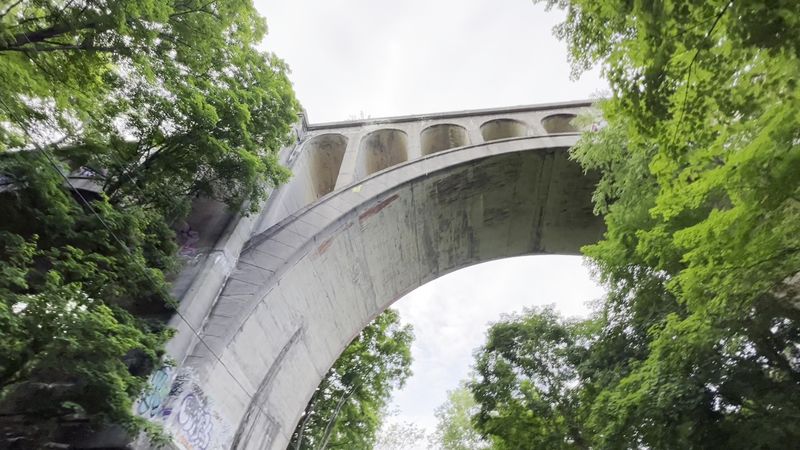
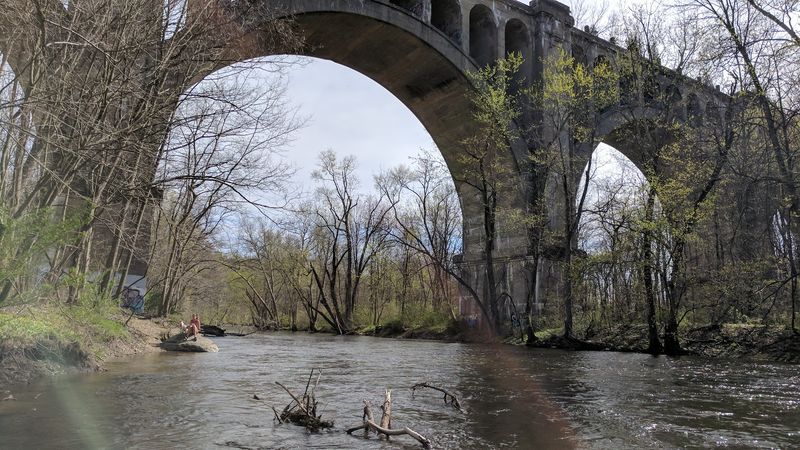
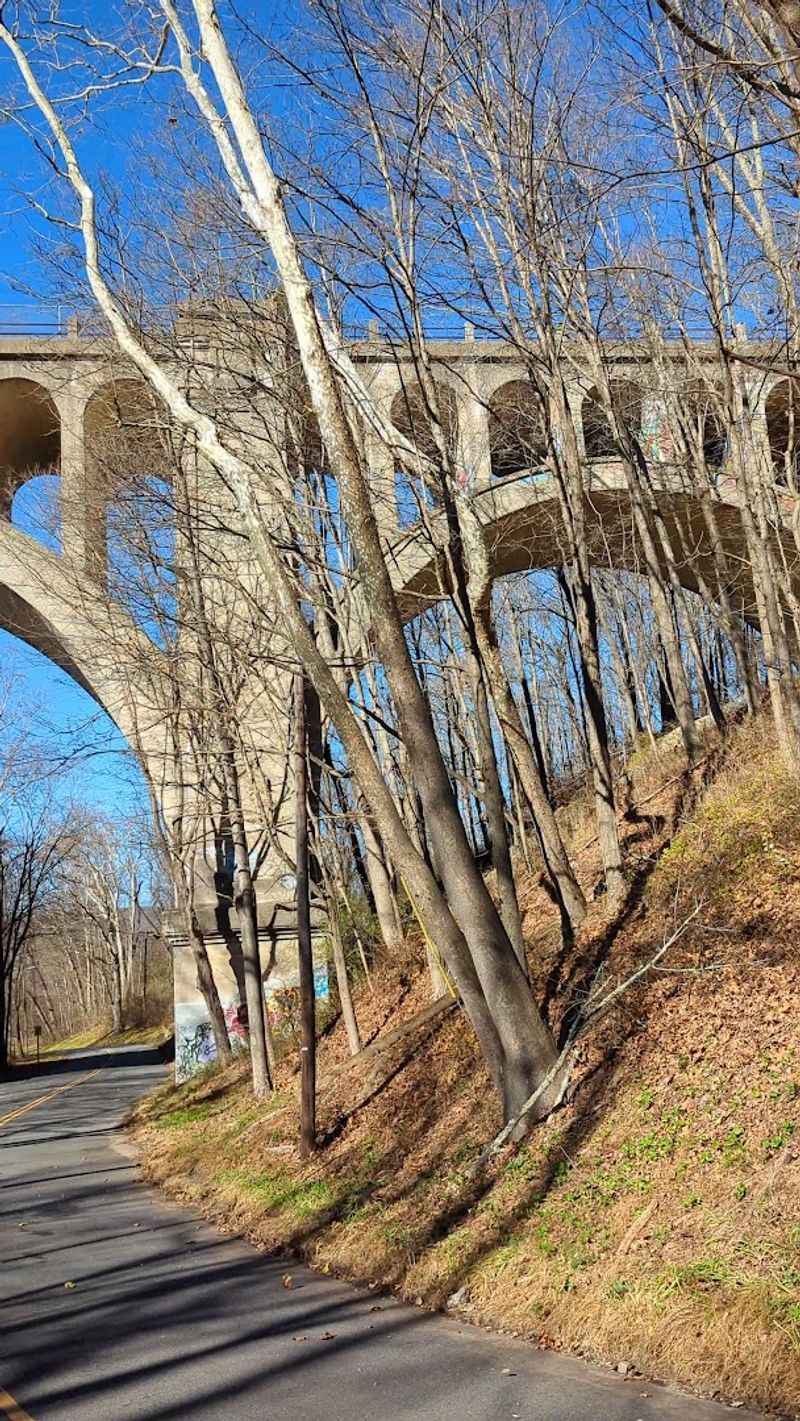
No amount of reading prepares you for the first time you stand directly under those arches. The structure overhead is so wide and so tall that your brain takes a moment to process the scale.
It is the kind of moment where you instinctively take a step back just to see more of it.
A flat trail runs underneath the viaduct along the Paulins Kill. The path is easy to walk and gives you multiple angles to take in the full length of the bridge.
There is also a sign near the base that explains the history of the area, which is worth reading before you wander off.
Wildlife is active around the structure. Deer are commonly spotted near the trail and surrounding woods.
The combination of the old concrete, the river, the trees, and the occasional deer wandering through makes the whole scene feel like something out of a nature documentary set in an alternate history. Flat terrain under the bridge makes it accessible for most visitors.
Climbing To The Top Is A Whole Different Experience
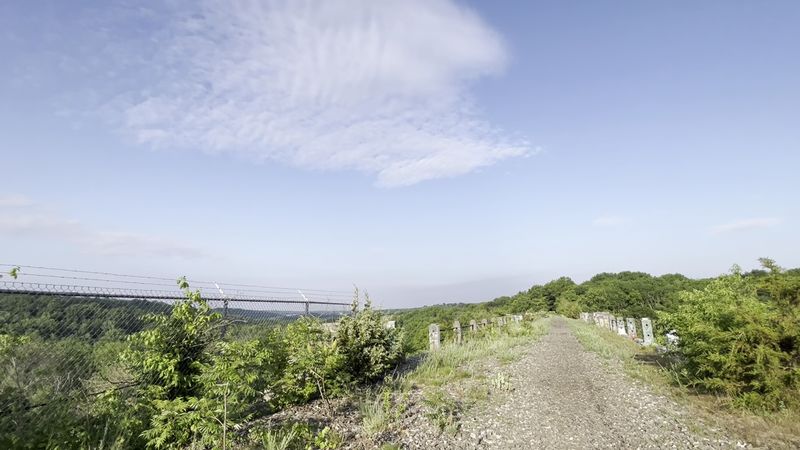
Getting to the top of this structure is not part of an official or maintained route, and that is important to understand before visiting. The sides of the viaduct are steep, with loose, uneven terrain that can be difficult to navigate safely.
There are no designated access points, railings, or safety features along the structure. For that reason, most visitors choose to experience the viaduct from below, where its full scale and design can be appreciated without taking unnecessary risks.
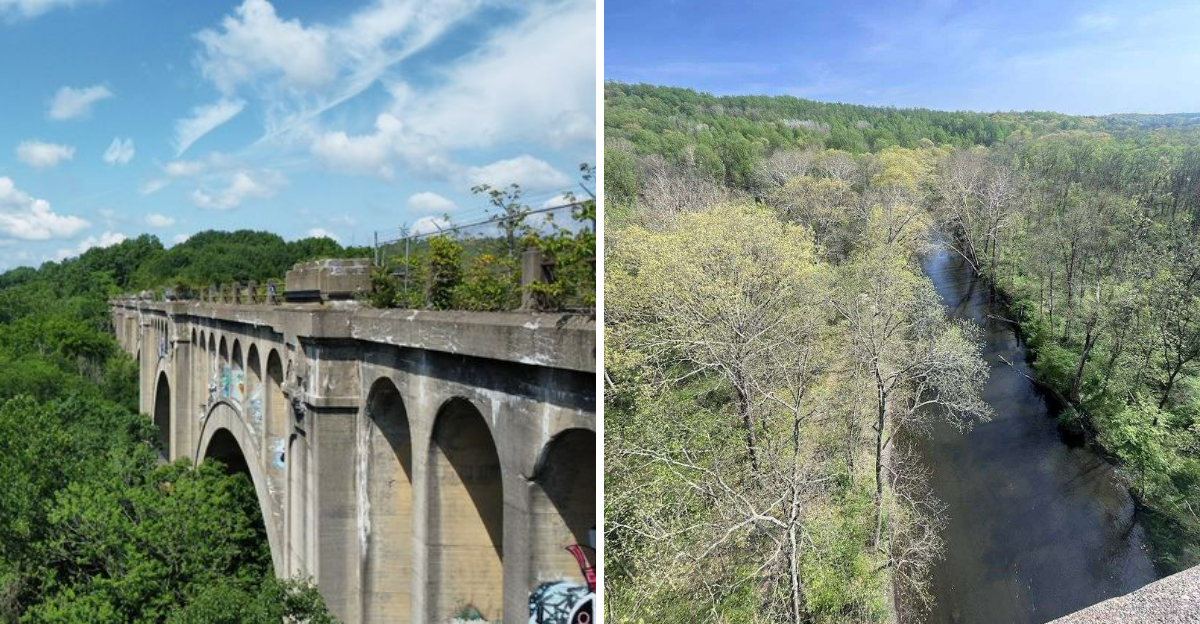
From the base and surrounding areas, the arches rise dramatically above the valley, creating a view that feels just as impressive as anything you would see from above.
Seasonal changes add another layer to the experience, with winter offering clearer sightlines through the trees and summer bringing a richer, more enclosed landscape.
Taking the time to explore the area around the viaduct allows you to enjoy its history, scale, and setting in a way that is both safe and memorable.
The Graffiti Art That Turned Concrete Into Canvas
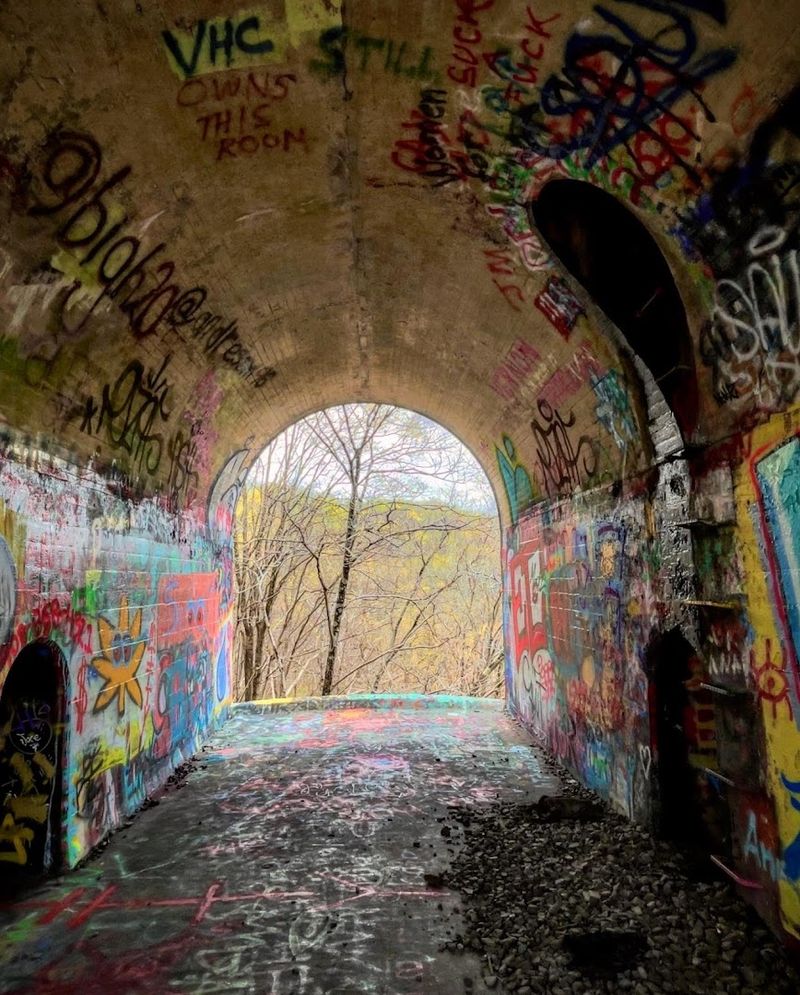
Street art and historic infrastructure do not always mix well, but something interesting happened inside the Paulinskill Viaduct. The interior chambers, accessible through open manholes in the concrete deck, became a canvas for murals that range from wildly creative to genuinely beautiful.
The quality of some of the work is hard to ignore.
The contrast between the century-old engineering and the layers of spray paint creates a visual experience that feels accidental and intentional at the same time. Some visitors come specifically for the art.
Others stumble onto it while exploring the structure and end up spending more time than expected just looking at the walls.
It is worth noting that accessing the interior through the manholes requires a slim build and a comfort level with tight spaces. The openings are not large.
Beyond the physical challenge, entering the viaduct is considered trespassing, and state police do enforce the posted signs. The art gets whitewashed periodically, so what you find on any given visit depends on timing.
The base of the structure also features murals on the exterior concrete surfaces, which are visible without any climbing at all. Those alone are worth the stop.
Future Rail Plans Could Affect The Corridor
Abandoned does not necessarily mean forgotten, and this viaduct has some serious momentum building around its future. NJ Transit has active plans to restore commuter rail service along parts of the Lackawanna Cut-Off.
The target is to open a section from Lake Hopatcong to Andover by 2027.
Amtrak has gone a step further, proposing to restore the remaining portion of the Cut-Off that includes the Paulinskill Viaduct itself. The goal is to eventually resume passenger service all the way to Scranton, Pennsylvania.
Engineers have assessed the structure and confirmed it is structurally sound for future rail use.
That is a remarkable finding for a bridge that has been sitting unused for over four decades. The concrete has weathered the years with surprising integrity.
If the plans move forward, the viaduct could go from a quiet relic to a functioning piece of modern transportation infrastructure. That kind of comeback story is rare in the world of historic structures.
For now, it stands in the valley as a bridge between what was and what might still be. Watching this space closely seems like a very reasonable thing to do over the next few years.
Photography Opportunities That Are Hard To Beat
Photographers have been making the trip to this viaduct for years, and the reasons are obvious the moment you arrive. The scale of the structure gives you natural framing options that most subjects simply cannot offer.
Every angle produces a different image.
Golden hour light hits the concrete arches in a way that turns the whole structure amber and warm. Winter visits are particularly rewarding for landscape shots because the bare trees reveal the full geometry of the seven arches against the sky.
Summer visits offer rich green contrast but can obscure the full length of the bridge from certain angles.
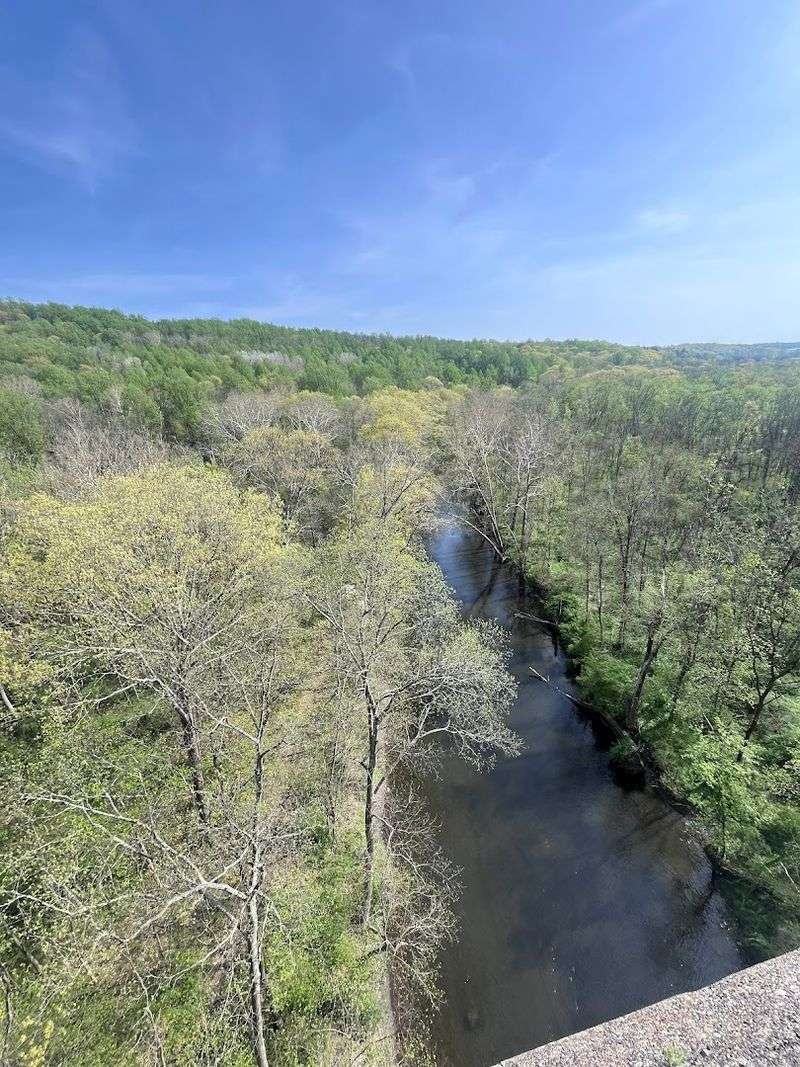
The view from the top looking down the valley is the kind of shot that performs well regardless of the season. The flat trail beneath the bridge gives you a straight-on perspective that emphasizes the repetition of the arches, which is visually satisfying in a very architectural way.
Sunrise visits tend to bring mist off the Paulins Kill river, which adds atmosphere without any effort on your part. Bring a wide-angle lens if you have one.
The structure is simply too large for a standard focal length to capture in a single frame without stepping back a significant distance.
Why This Place Deserves A Spot On Your List
Structures like this one do not come along often. People come once and immediately start planning a return.
The combination of history, scale, nature, and art in one location is genuinely unusual. You get a world-record engineering achievement, a century of railroad history, a wildlife-rich trail, and a rotating collection of murals all in the same stop.
That is a lot of value for a single afternoon.
Respect the posted signs, stay aware of your surroundings, and bring comfortable footwear if you plan to explore the surrounding trails. Parking near the structure can be limited, so arriving by bike or on foot along the trail is a smart approach.
Few places in this part of the state carry the same weight of history while still feeling this raw and unpolished. The viaduct does not need a visitor center or an interpretive trail to make an impression.
It just needs you to show up and look up.