North Carolina Is Home To 9 Aviation Museums That Flight Fans Will Love
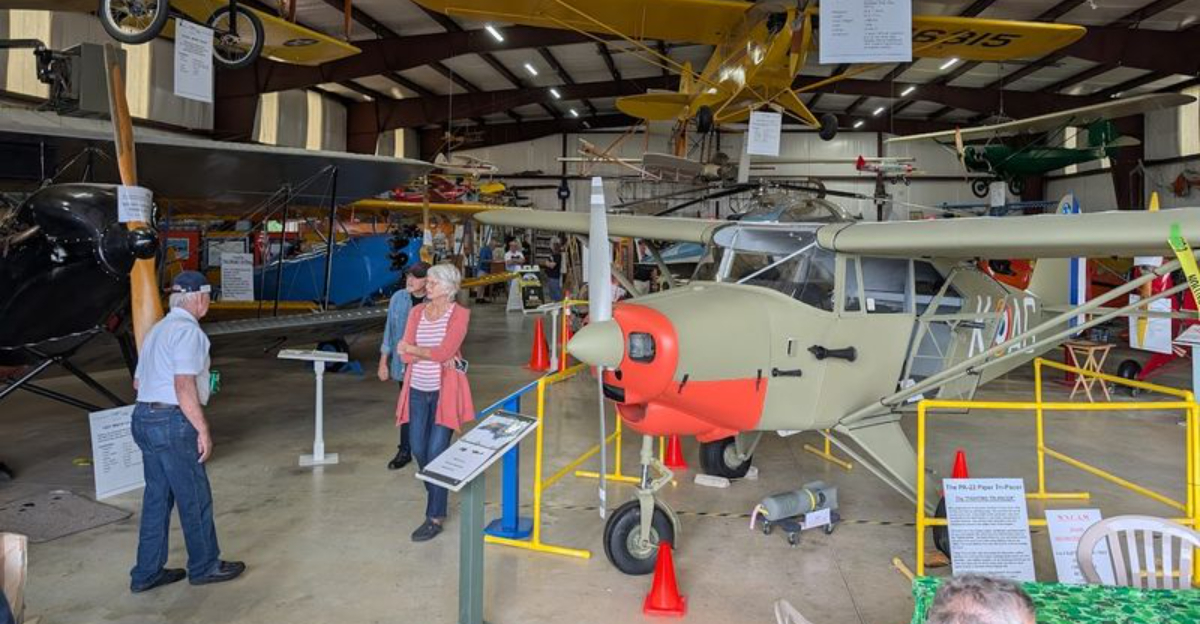
Flight history has a way of making ordinary road trips feel a lot more heroic.
North Carolina does that especially well, with places where first-flight legends, roaring engines, and the sheer audacity of getting a machine into the sky still feel wonderfully alive.
A visit can start with wide-eyed curiosity and end with the sudden urge to learn everything about propellers, pilots, and how humans looked at birds and decided, “Yes, we should absolutely try that.”
Anyone building a travel list with a little lift, a little wonder, and a lot more aviation magic than expected will want these museums on the route.
1. Sullenberger Aviation Museum
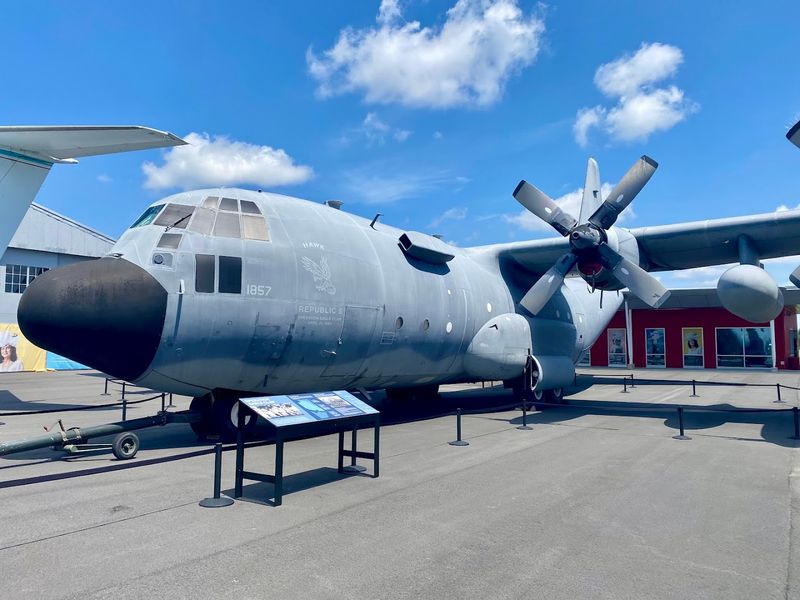
Jets, simulators, airport views, and one of the most famous emergency landings in modern aviation all come together at the Sullenberger Aviation Museum in Charlotte. Reopened on June 1, 2024, the reimagined museum sits at 4108 Minuteman Way on the Charlotte Douglas airport campus, where current public information lists hours of Tuesday through Saturday from 10 a.m. to 4:30 p.m. and Sunday from noon to 4:30 p.m.
More than 40 aircraft are on display, and the museum’s own description leans heavily into immersive storytelling and hands-on exhibits built to engage children and adults alike. A major part of the draw remains the Miracle on the Hudson story tied to Captain Chesley “Sully” Sullenberger, whose name now defines the museum and whose emergency landing of Flight 1549 is central to the museum’s identity.
Another important update arrived in 2025, when the Aviation City gallery opened inside a restored 1930s-era hangar, expanding the museum’s focus to commercial and military aviation history connected to Charlotte Douglas. STEM programming, camps, and workforce-development messaging also make this museum feel future-facing rather than only nostalgic.
It is one of the rare places where a historic aircraft collection and a modern aviation-education mission genuinely reinforce each other.
2. Hickory Aviation Museum
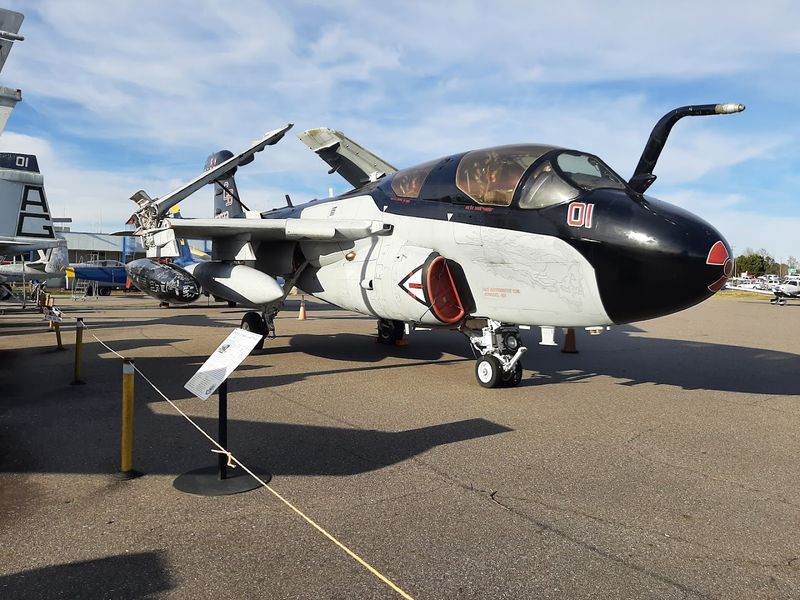
Calling itself the largest aviation museum in North Carolina is a bold claim, but Hickory Aviation Museum backs it up with an extraordinary collection that leaves visitors speechless. Parked at Hickory Regional Airport, the museum focuses on military aviation history spanning from World War II all the way to modern-day operations.
One of the most thrilling features is the chance to actually sit inside a real fighter jet cockpit, something that few other museums in the region offer.
The museum is located at 821 21st St NW, Hickory, NC 28601, and is scheduled to reopen on May 16, 2026, making it a highly anticipated destination for aviation enthusiasts across the state. The outdoor flight-line collection is massive, with aircraft positioned so visitors can get up close and truly appreciate their scale and craftsmanship.
A standout feature of the collection is the tribute to North Carolina natives Bill and George Preddy, celebrated WWII fighter aces whose stories inspire visitors young and old. Exhibits cover uniforms, equipment, and personal stories that bring the human side of aviation history into sharp focus.
Planning a trip to Hickory in 2026 means getting first access to what promises to be a freshly presented and deeply moving museum experience.
3. North Carolina Aviation Museum And Hall Of Fame
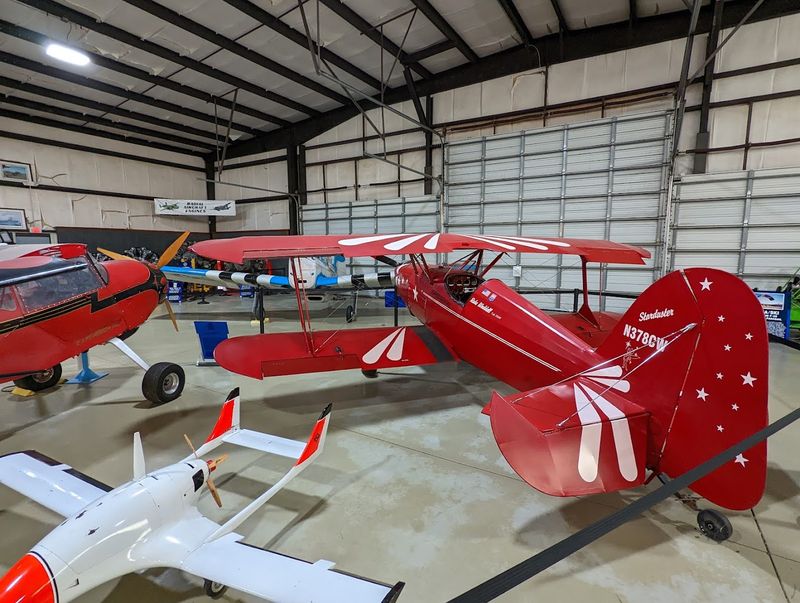
Asheboro’s aviation museum works well for people who want range. Military artifacts, civilian aircraft, simulators, and North Carolina aviation history all live under one roof at the North Carolina Aviation Museum and Hall of Fame, where current public information lists the address as 2222 Pilots View Road and the hours as Thursday through Sunday from 10 a.m. to 5 p.m.
The museum’s own pages emphasize a broad timeline that stretches from World War I to the present, which helps explain why the collection feels more like a statewide aviation survey than a single-theme niche stop. Another distinction matters just as much: this is also the official North Carolina Aviation Hall of Fame, which gives the museum a memorial role alongside its exhibit function.
Public materials continue to highlight one of its most memorable artifacts, a Piper J-3 Flitfire once flown by Orville Wright, a detail that gives the collection a direct connection to early flight history few regional museums can match. Simulators, military equipment, and rotating events help round out the visit, but the larger appeal is coherence.
Aircraft, Hall of Fame honors, and artifact displays all point back to North Carolina’s wider role in aviation history. For visitors who want one museum to cover a lot of ground without feeling scattered, Asheboro may be the strongest all-around stop on this list.
4. Wright Brothers Visitor Center At Wright Brothers National Memorial
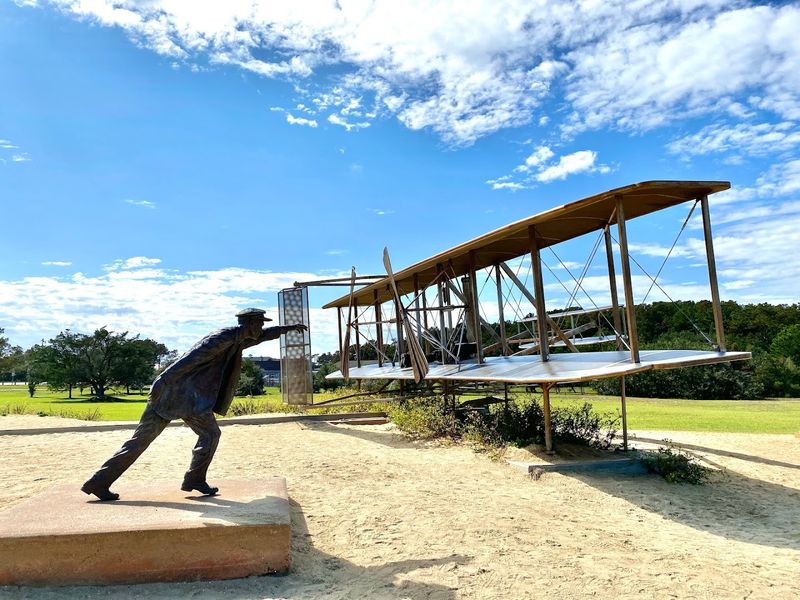
There is no more fitting place to start an aviation journey than the very spot where it all began. The Wright Brothers Visitor Center at Wright Brothers National Memorial in Kill Devil Hills marks the exact location where Orville and Wilbur Wright made history on December 17, 1903, completing the world’s first successful powered airplane flights.
Standing on those windswept grounds, it is easy to feel the weight of that monumental moment.
Found at 1000 N Croatan Hwy, Kill Devil Hills, NC 27948, the National Park Service manages this iconic site with care and enthusiasm. Inside the visitor center, a detailed reproduction of the 1903 Flyer takes center stage, surrounded by hands-on exhibits that walk visitors through the science, determination, and sheer courage that powered the Wright brothers’ achievement.
Rangers stationed throughout the memorial are known for their energy and deep knowledge, turning a simple visit into an engaging and educational experience. The granite monument rising from Kill Devil Hill is visible for miles and serves as a powerful symbol of human ingenuity.
North Carolina proudly claims this landmark as one of its greatest treasures, and rightly so. Families, students, and history lovers all leave with a renewed appreciation for what two brothers from Ohio accomplished on a quiet winter morning along the Outer Banks.
5. Dare County Regional Airport Museum
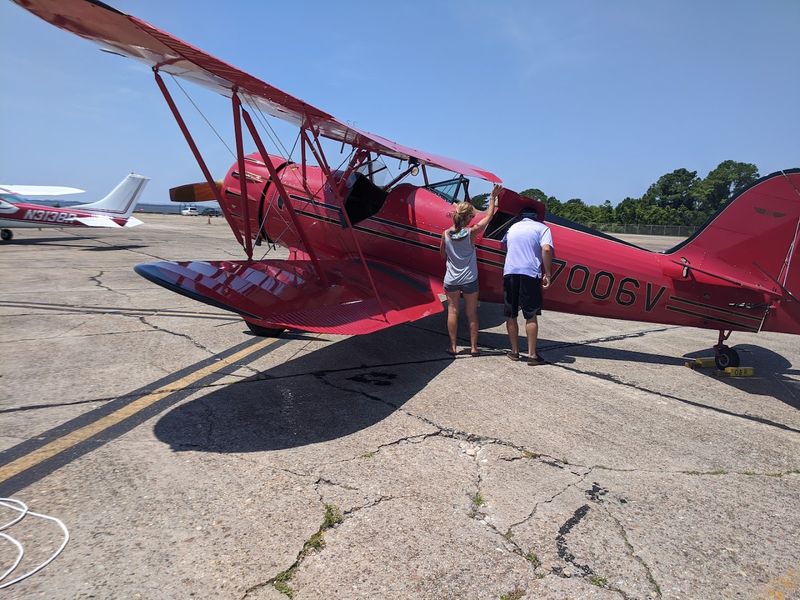
Manteo’s airport museum proves that a smaller aviation stop can carry enormous weight when its location and subject line up this well. The Dare County Regional Airport Museum is inside the west end of the terminal building at 410 Airport Road, and county and tourism pages continue to present it as an active museum in 2026.
What it lacks in size compared with the state’s bigger aviation institutions, it makes up for in focus. County history pages explain that the museum concentrates on the airport’s World War II role, especially the period when the site operated as Naval Auxiliary Air Station Manteo.
Public descriptions say the museum displays photographs, documents, uniforms, and artifacts tied to World War II squadrons that trained there, including material related to VF-17 and VF-50. That specificity gives the visit a different kind of force.
Instead of summarizing all of aviation, it lets visitors see how one North Carolina airfield fit into wartime coastal defense and training. Outer Banks travelers often know the Wright story already.
This museum expands that regional flight narrative into the 1940s and shows that aviation history on the coast did not stop with the first powered flight. It simply changed shape and kept going.
6. Western North Carolina Air Museum
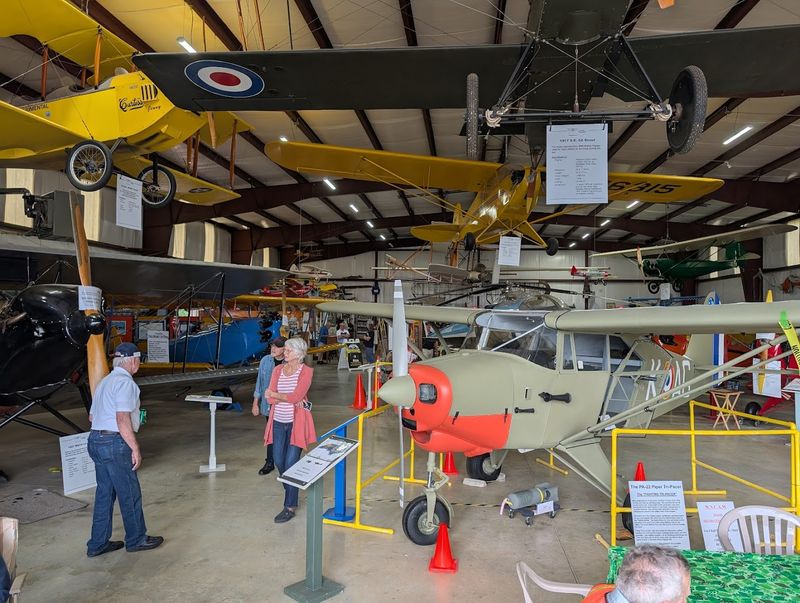
Hendersonville’s aviation museum feels especially rewarding for visitors who like aircraft up close and storytelling without a lot of formal distance. Current official information places the Western North Carolina Air Museum at 1340 Gilbert Street and emphasizes that admission and parking are free.
Public descriptions continue to frame it as a volunteer-driven museum spread across hangar space at the Hendersonville airport, where visitors can see aircraft, engines, manuals, models, and aviation artifacts spanning much of the twentieth century. The museum’s own site and recent local coverage both stress that volunteers and pilots help shape the visit, which is a major part of the appeal.
This is not the kind of museum built around polished separation between visitor and object. It leans into immediacy, conversation, and the pleasure of being close enough to really study what makes an aircraft compelling.
Operating schedules can vary more than at the state’s larger institutions, and even tourism listings recommend checking ahead for days and times, but that flexibility feels consistent with the museum’s more personal identity rather than a flaw. Western North Carolina is better known for mountain scenery than aviation collections, which makes this stop feel even more satisfying once the hangar doors are open and the aircraft are right there in front of you.
7. Eastern Carolina Aviation Exhibit
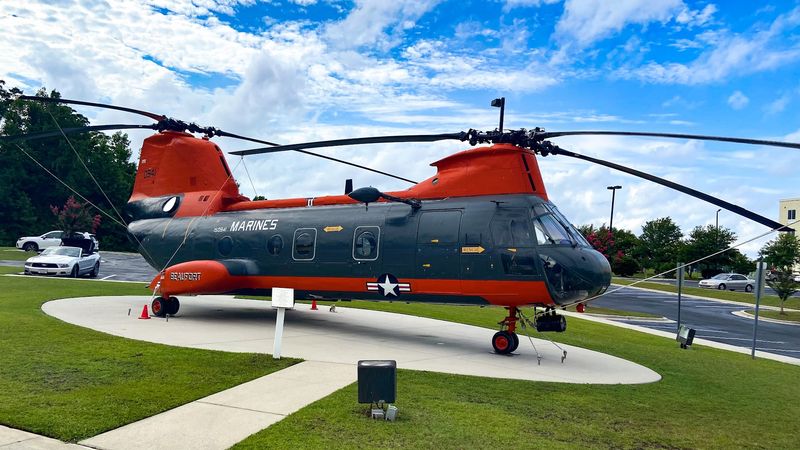
Marine Corps aviation is the central story in Havelock, and that gives the Eastern Carolina Aviation Exhibit a focus few other museums on this list can match. The exhibit is located inside the Havelock Tourist & Event Center at 201 Tourist Center Drive, and current public information says the displays are open Monday through Friday from 8 a.m. to 5 p.m. and Saturday from 10 a.m. to 5 p.m.
Exhibit pages explain that the collection highlights more than a century of aviation in the Havelock–Cherry Point area and celebrates the heritage of Marine aviation in eastern North Carolina. That local concentration is exactly why the museum works so well.
Instead of trying to tell every part of the aviation story at once, it commits to a regional military tradition that shaped the surrounding community in major ways. Current descriptions also note outside aircraft displays, which help tie the indoor historical interpretation back to the machines that defined the area’s aviation culture.
Havelock’s identity is inseparable from Cherry Point, and this exhibit seems designed to make visitors understand that connection clearly and quickly. For anyone interested in Marine Corps aviation, military flight history, or the deeper ties between a base and the town around it, this is a very strong stop.
8. James Rogers McConnell Air Museum
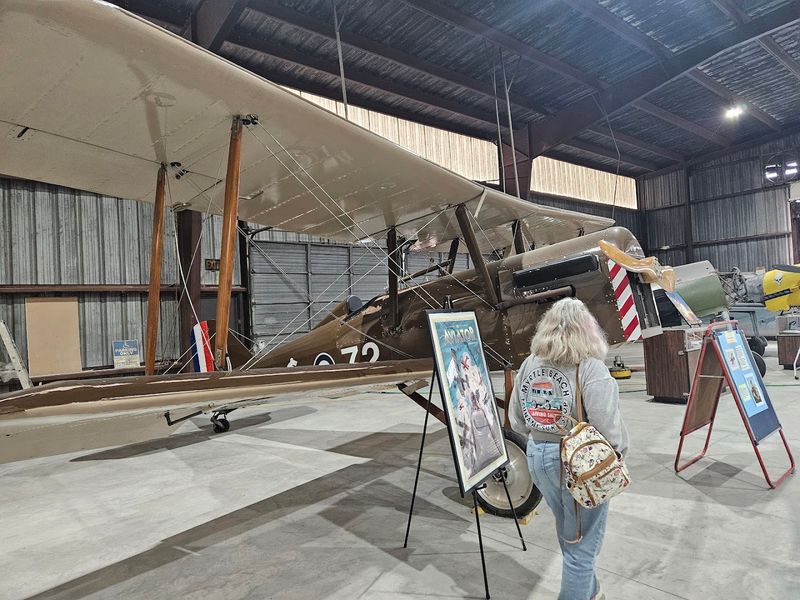
Opened in 2023, the James Rogers McConnell Air Museum is the newest addition to Moore County’s cultural landscape and the only museum in the county devoted exclusively to flying and flight history. Named after a celebrated American aviator who served with the Lafayette Escadrille during World War I, the museum carries a legacy of bravery and adventure in every exhibit.
For a smaller venue, it punches well above its weight in terms of storytelling and historical depth.
Located at 832 Dowd Rd, Carthage, NC 28327, the museum opens its doors to the public on weekends, making it a perfect destination for a Saturday or Sunday excursion through the Pinehurst area. Its official site confirms current visiting hours and provides details on the collection, which focuses on the full arc of aviation history from early pioneers through the jet age.
The Pinehurst-area tourism community has embraced this museum warmly since its opening, and word-of-mouth recommendations have steadily grown its visitor numbers. The intimate scale of the museum means staff members have time to engage personally with guests, turning a casual browse into a rich conversation about aviation’s past and future.
North Carolina is fortunate to have a museum like this one dedicated to preserving the story of a true flying hero whose contributions to early military aviation remain deeply inspiring decades later.
9. North Carolina Transportation Museum
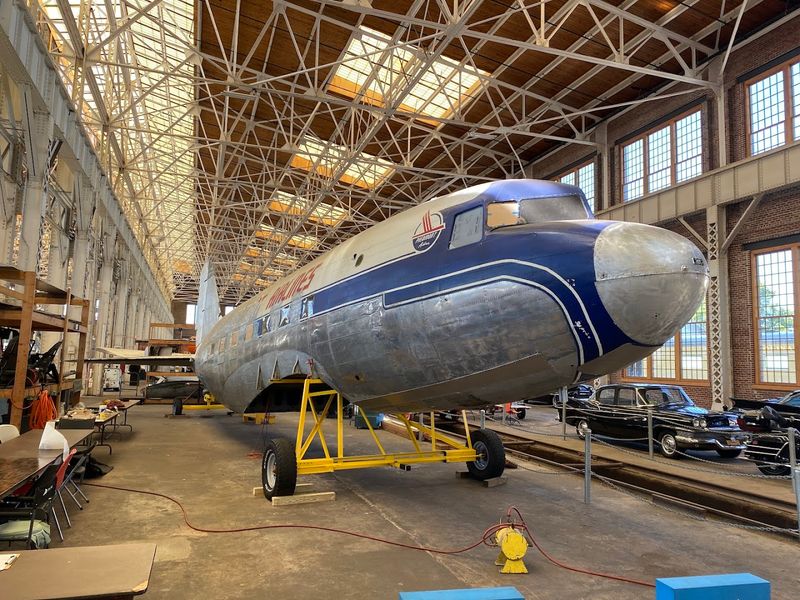
Spencer’s transportation museum earns its place on this list by treating flight as part of a much larger movement story rather than a side exhibit. The North Carolina Transportation Museum sits at 1 Samuel Spencer Drive, and current museum pages describe a 60-acre historic site devoted to rail, automotive, aviation, and broader transportation history.
That breadth works in its favor. Aviation fans may arrive for trains’ famous roundhouse surroundings and then find that air travel has a meaningful presence too.
State historical material specifically mentions a model of the Wright Flyer among the aviation-related exhibits at the museum, and older references continue to connect the museum with rotary-wing and hang-glider material as part of its broader transportation storytelling. What makes Spencer worth the stop is not sheer aircraft volume.
Context is the real payoff. By placing aviation beside rail and road history, the museum lets visitors see flying not as an isolated miracle but as part of the larger transformation in how North Carolina and the nation moved through the twentieth century.
Families especially benefit from that wider lens because the site can satisfy people with different transportation interests at once. For flight fans, it still adds a worthwhile and distinctly North Carolina chapter to the route.